Temporary Residential Lease - Occupation by Seller - Post-Closing
About this form
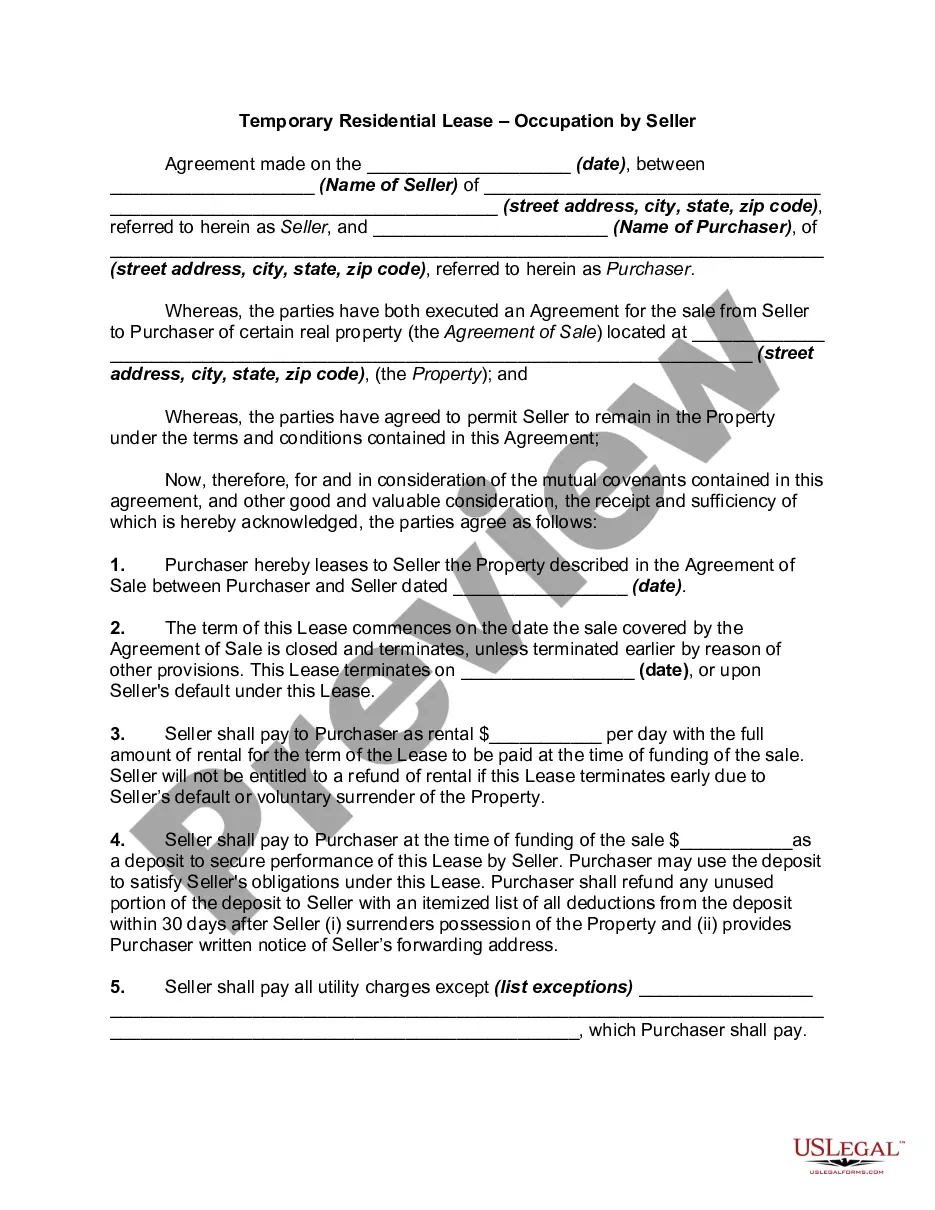
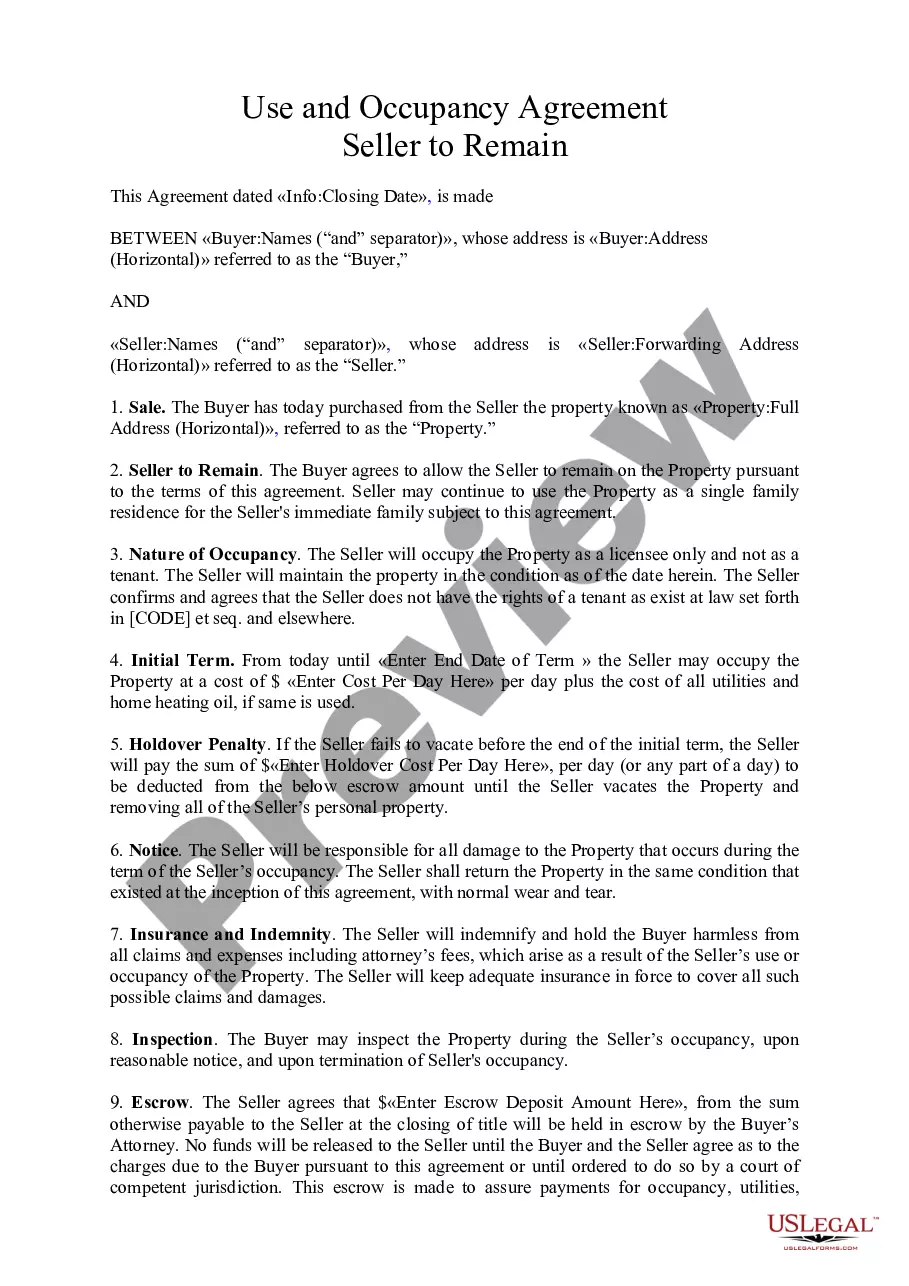
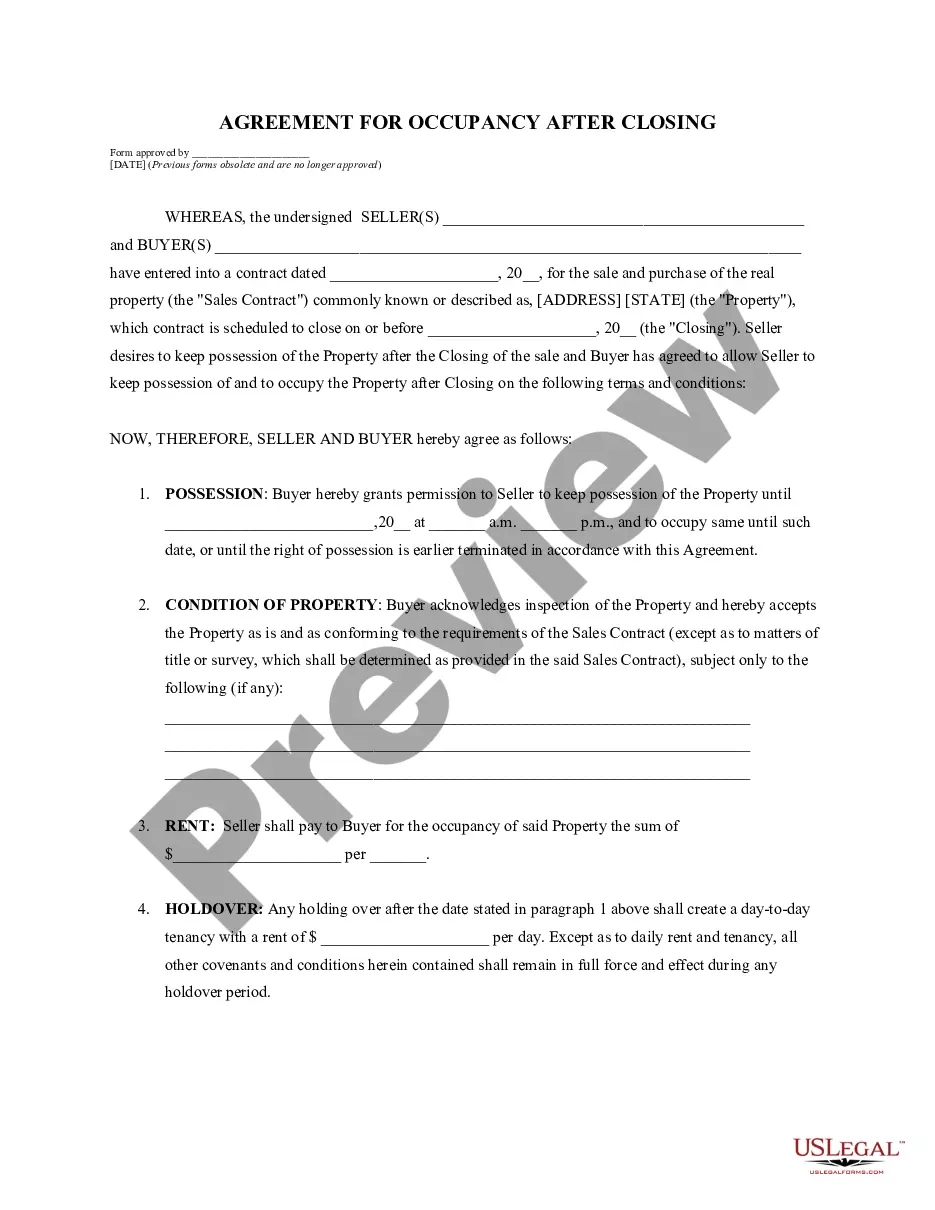
The Temporary Residential Lease - Occupation by Seller - Post-Closing is a legal document that allows the seller of a property to remain in that property after the closing date. This agreement specifies the terms of occupancy, including the rental rate, duration, and responsibilities of both the seller and the purchaser. It differs from typical rental agreements by linking directly to the sale of a property and ensuring the seller has a legally recognized right to stay temporarily after the transaction closes.
What’s included in this form
- Date of the agreement and parties involved: identifies the seller and purchaser.
- Property description: clearly states the address of the property being sold.
- Lease term: outlines the occupancy duration starting from the closing date.
- Rental payment: details the agreed rental amount and payment timing.
- Deposit requirement: specifies the deposit amount and its purpose.
- Utility responsibilities: clarifies which party is responsible for utilities.
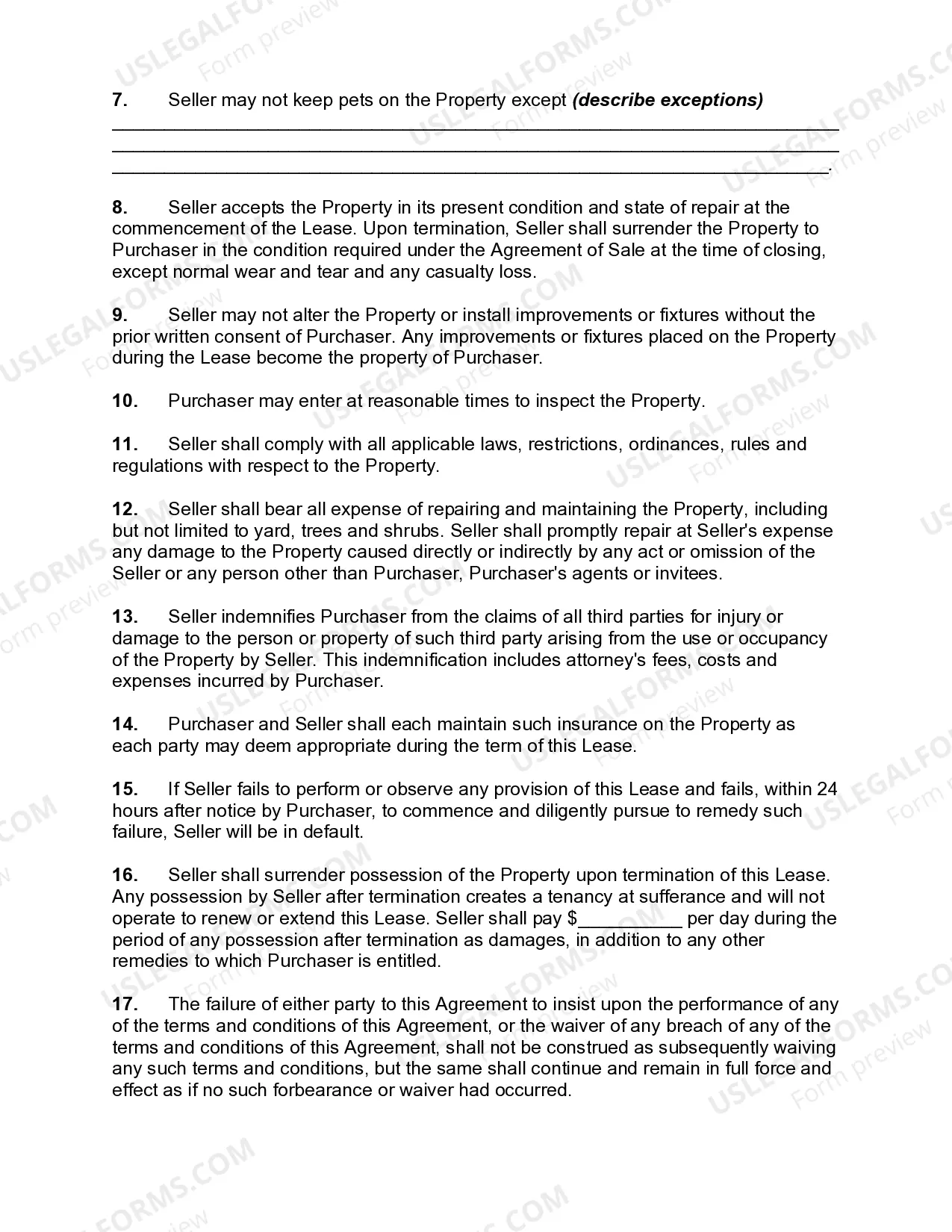
- Property condition: stipulates that the seller accepts the property as is.
- Indemnification: outlines the seller's responsibility for damages caused during occupancy.
- Legal compliance: requires adherence to local laws and regulations.
Common use cases
This form is used when a property is sold, but the seller needs to remain in the home for a specified period after the closing date. Common scenarios include sellers who need more time to find a new place to live or who have not yet completed their moving arrangements. Such an agreement helps both parties clarify their rights and responsibilities during this transitional phase.
Who should use this form
- Home sellers who plan to stay in their sold property for a brief period after closing.
- Purchasers looking to accommodate the seller's needs post-sale.
- Real estate agents facilitating transactions involving extended occupancy for sellers.
- Investors purchasing properties that may require temporary management by the seller.
Instructions for completing this form
- Fill in the date of the agreement and the names and addresses of the seller and purchaser.
- Describe the property being sold in detail.
- Specify the rental amount, security deposit, and the rental payment schedule.
- Include terms related to utility charges and any specific property conditions.
- Review and ensure all terms and clauses are agreeable to both parties before signing.
Notarization guidance
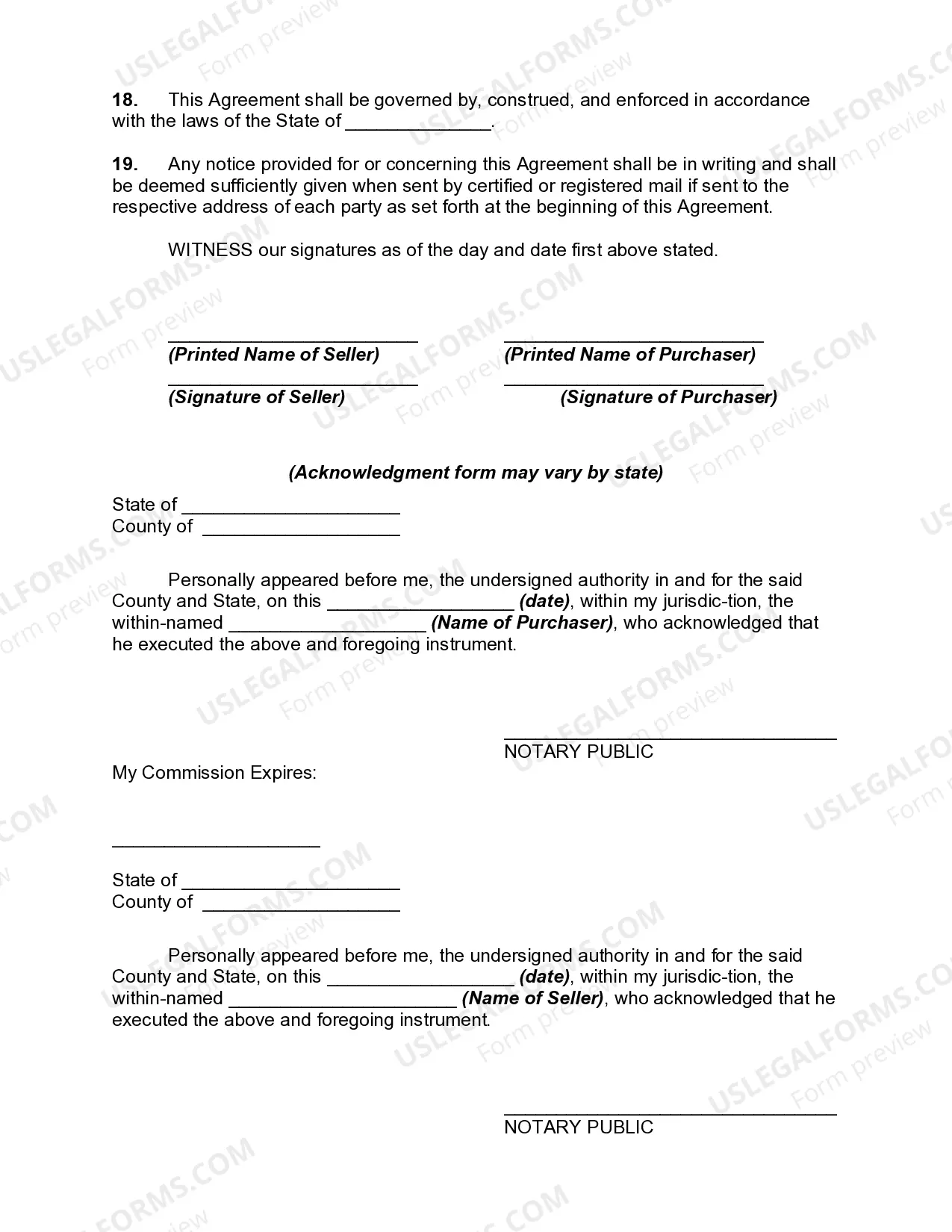
This form does not typically require notarization unless specified by local law. It's important to verify any additional requirements that may apply in your jurisdiction.
Get your form ready online
Our built-in tools help you complete, sign, share, and store your documents in one place.
Make edits, fill in missing information, and update formatting in US Legal Forms—just like you would in MS Word.
Download a copy, print it, send it by email, or mail it via USPS—whatever works best for your next step.
Sign and collect signatures with our SignNow integration. Send to multiple recipients, set reminders, and more. Go Premium to unlock E-Sign.
If this form requires notarization, complete it online through a secure video call—no need to meet a notary in person or wait for an appointment.
We protect your documents and personal data by following strict security and privacy standards.

Make edits, fill in missing information, and update formatting in US Legal Forms—just like you would in MS Word.

Download a copy, print it, send it by email, or mail it via USPS—whatever works best for your next step.

Sign and collect signatures with our SignNow integration. Send to multiple recipients, set reminders, and more. Go Premium to unlock E-Sign.

If this form requires notarization, complete it online through a secure video call—no need to meet a notary in person or wait for an appointment.

We protect your documents and personal data by following strict security and privacy standards.
Mistakes to watch out for
- Failing to specify the rental amount clearly, leading to potential disputes.
- Not including termination dates or conditions, which can create confusion.
- Overlooking local laws that may require additional disclosures or provisions.
- Neglecting to document any utility payment responsibilities, which can lead to disagreements.
Benefits of completing this form online
- Convenience: instantly download and customize the form to your needs.
- Editability: easily fill in specific details directly on your computer or device.
- Reliability: forms are drafted by licensed attorneys to ensure legal compliance.
Looking for another form?
Form popularity
FAQ
The contract terms will determine when you can move in after closing. In some cases, it will be immediately after the closing appointment. You will receive the keys and head straight to your new home. In other situations, the seller may request 30, 45 or even 60 days of occupancy after the closing of the home.
Do not check up on your credit report. Do not open a new credit. Do not close any credit accounts. Do not quit your job. Do not add to your credit cards' credit limit. Do not cosign a loan with anyone.
If a seller wants to stay in the home after closing, the buyer and seller should have a written agreement setting out the expectations for that post-closing possession between the parties. Sometimes a seller needs a day or two, or even a week, after closing.You've paid the money and the seller hasn't moved.
Most buyers wish to occupy the property right after closing.These types of deals, called Post-Occupancy Agreements (sometimes called Rent-Back Agreements), are agreements where the buyer of a property agrees to allow the seller of the property to stay in the home past the settlement date.
Post Closing is when the title company dots the i's and crosses the t's. This is where all of the documents signed at the closing table are properly filed and/or mailed to the appropriate parties and all necessary payments as itemized on the settlement statement (HUD) are sent out as scheduled.
It is always wise to be flexible when purchasing a new home. You may have to let the sellers have up to a week to 10 days before you can move in. Note also that your occupancy cannot be modified once it has been written into the contract it is, therefore, crucial that a reasonable date is specified.
A post closing occupancy agreement (also known as a post-closing possession agreement) allows a seller to continue to live in his home after settlement, under an arrangement where the seller is essentially renting the home back from the new purchaser.
A sale-leaseback enables a company to sell an asset to raise capital, then lets the company lease that asset back from the purchaser. In this way, a company can get both the cash and the asset it needs to operate its business.
A seller leaseback, also called a sale leaseback or rent back, is a transaction in which the seller sells the property and then leases back the property from the new owner.