Irrevocable Trust Agreement with Joint Trustors for Benefit of their Children with Spendthrift Trust Provisions
What is this form?
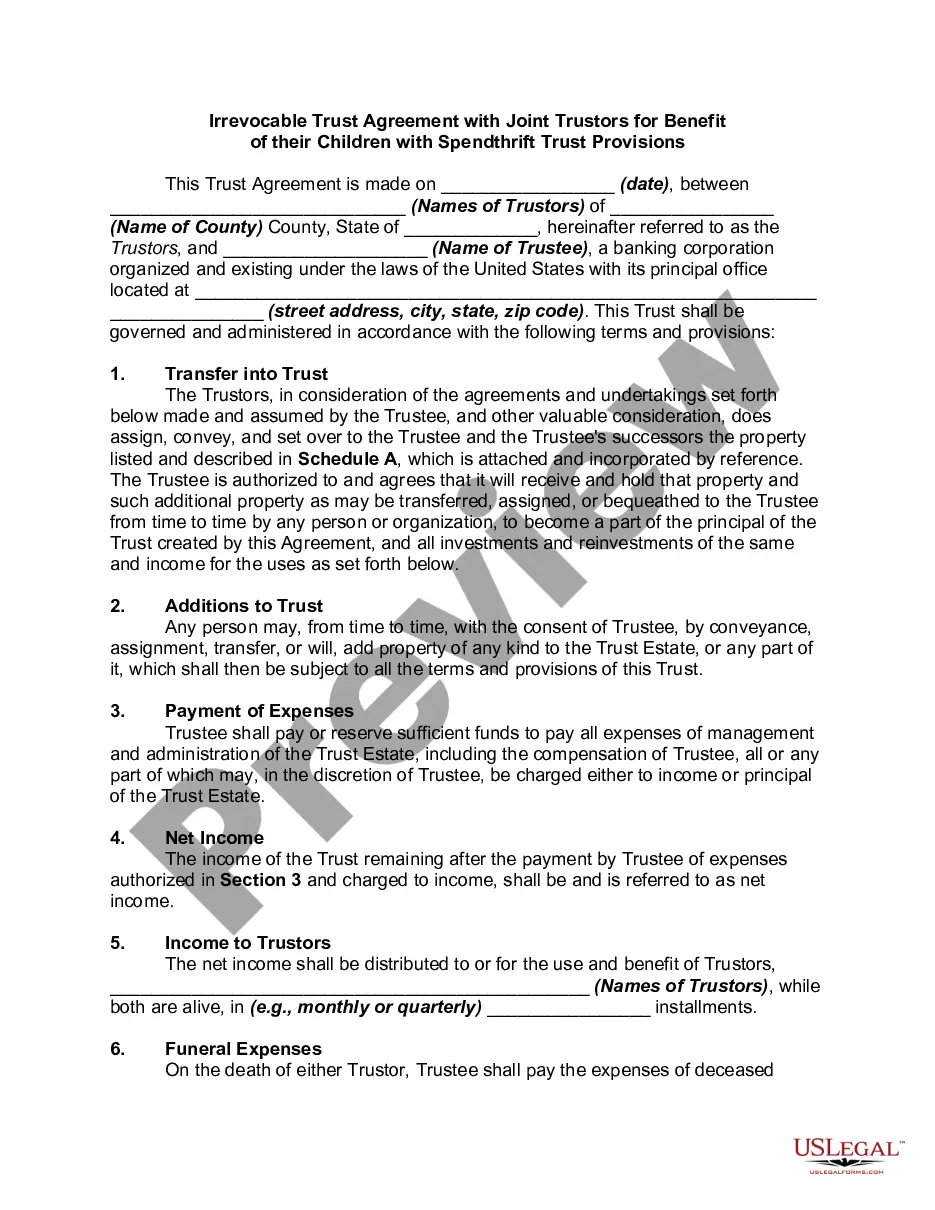
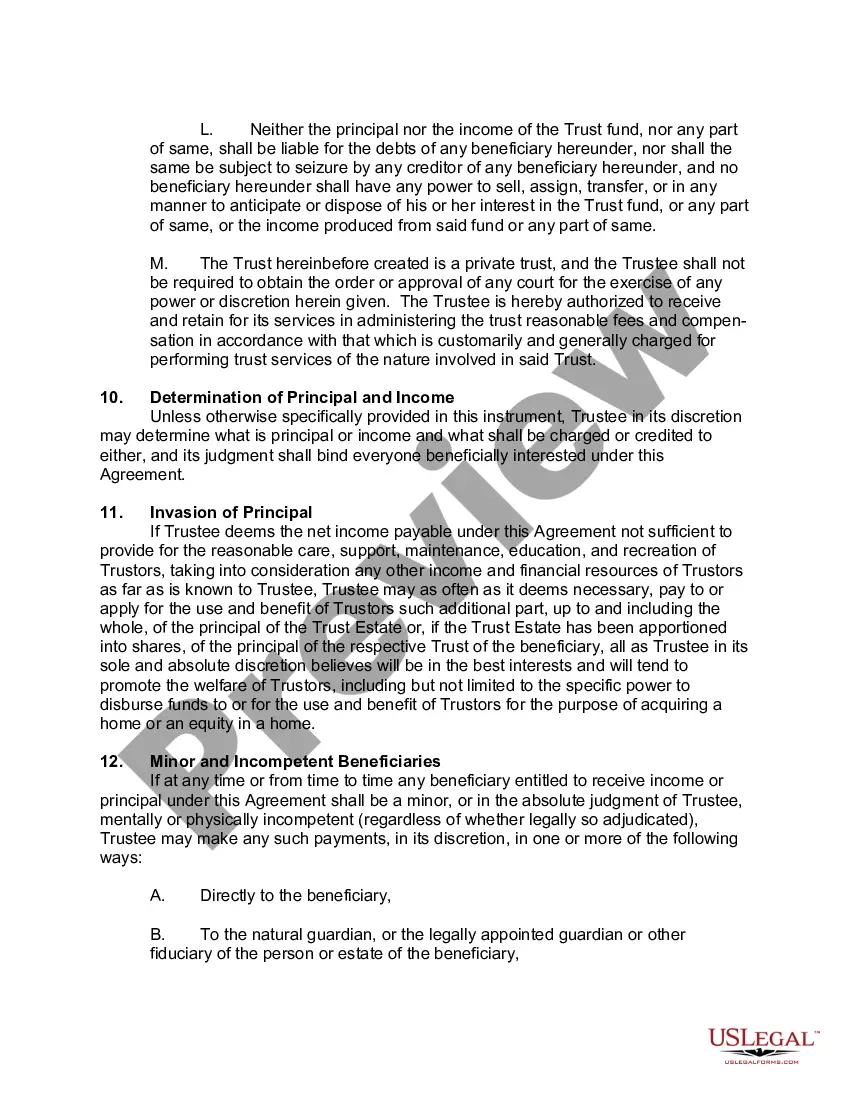
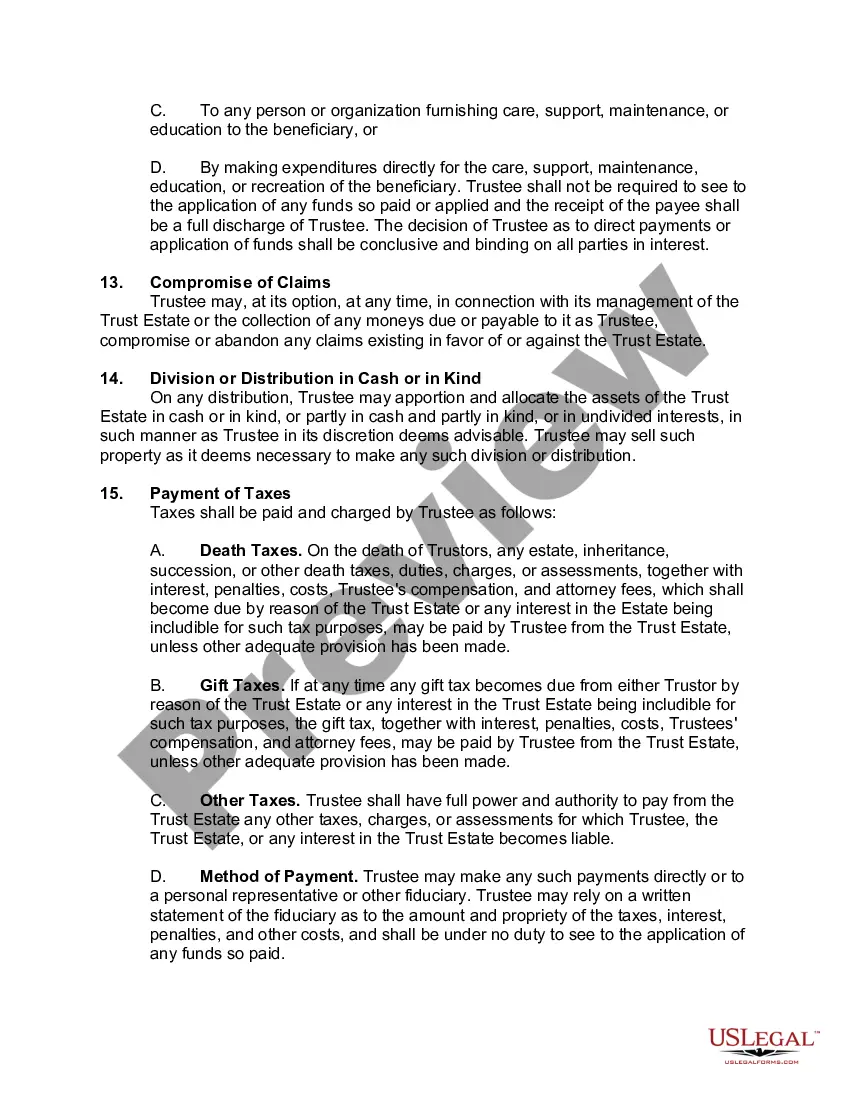
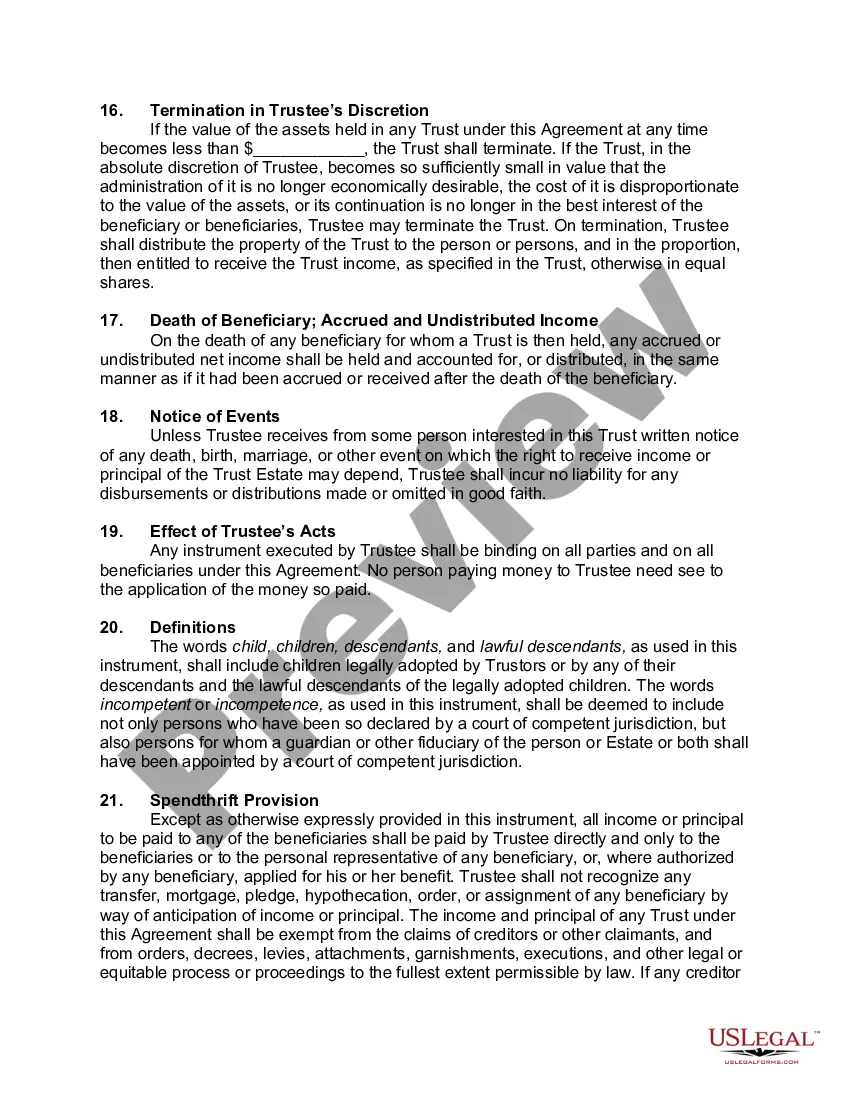
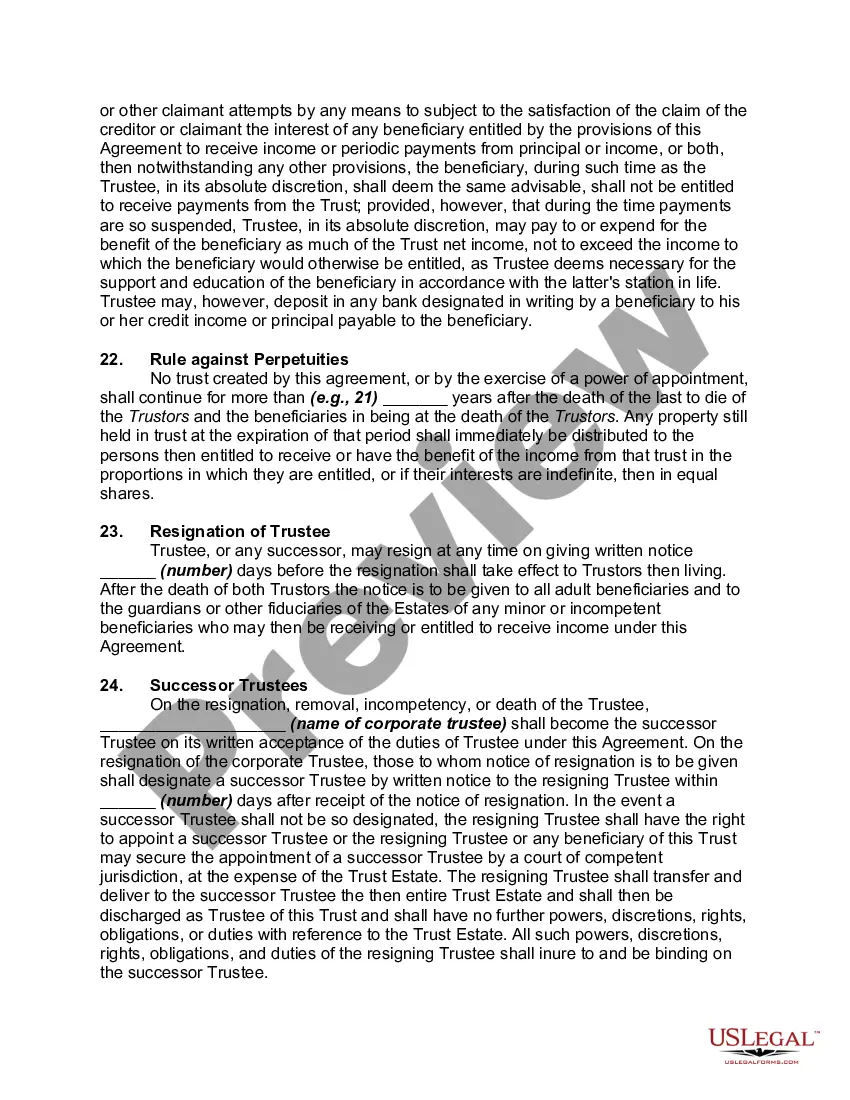
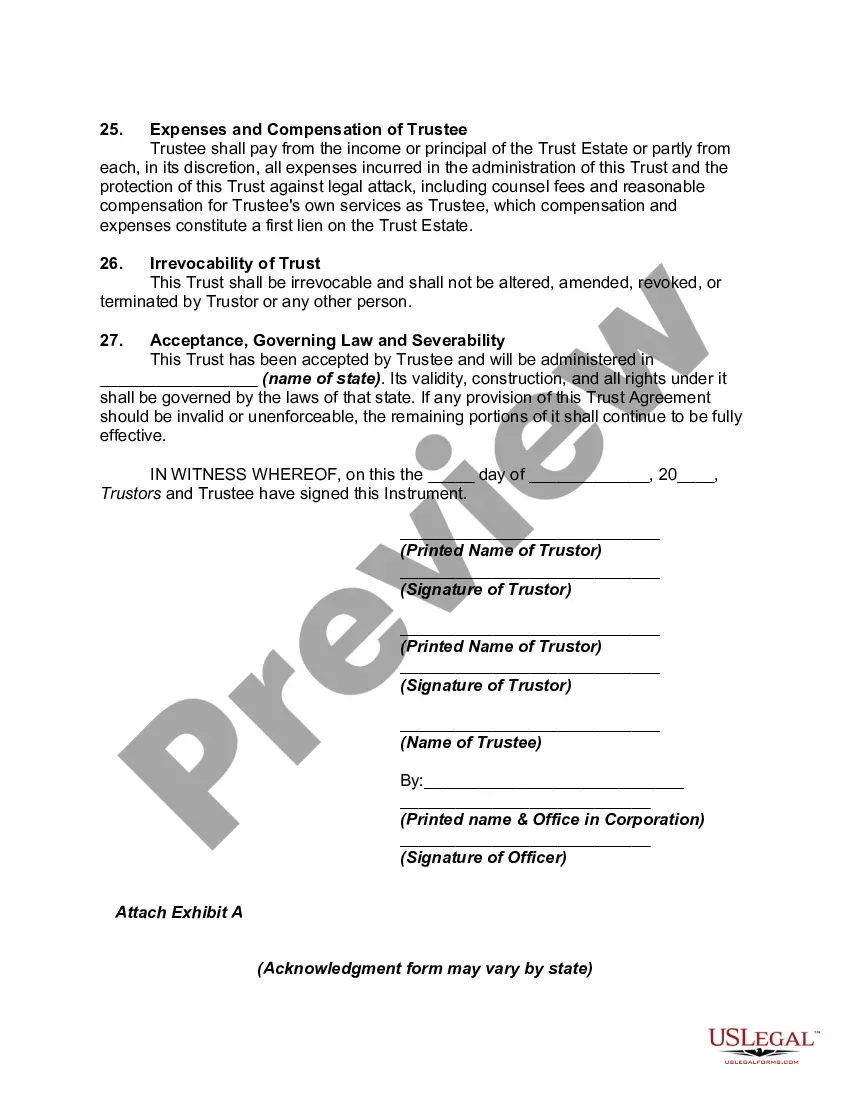
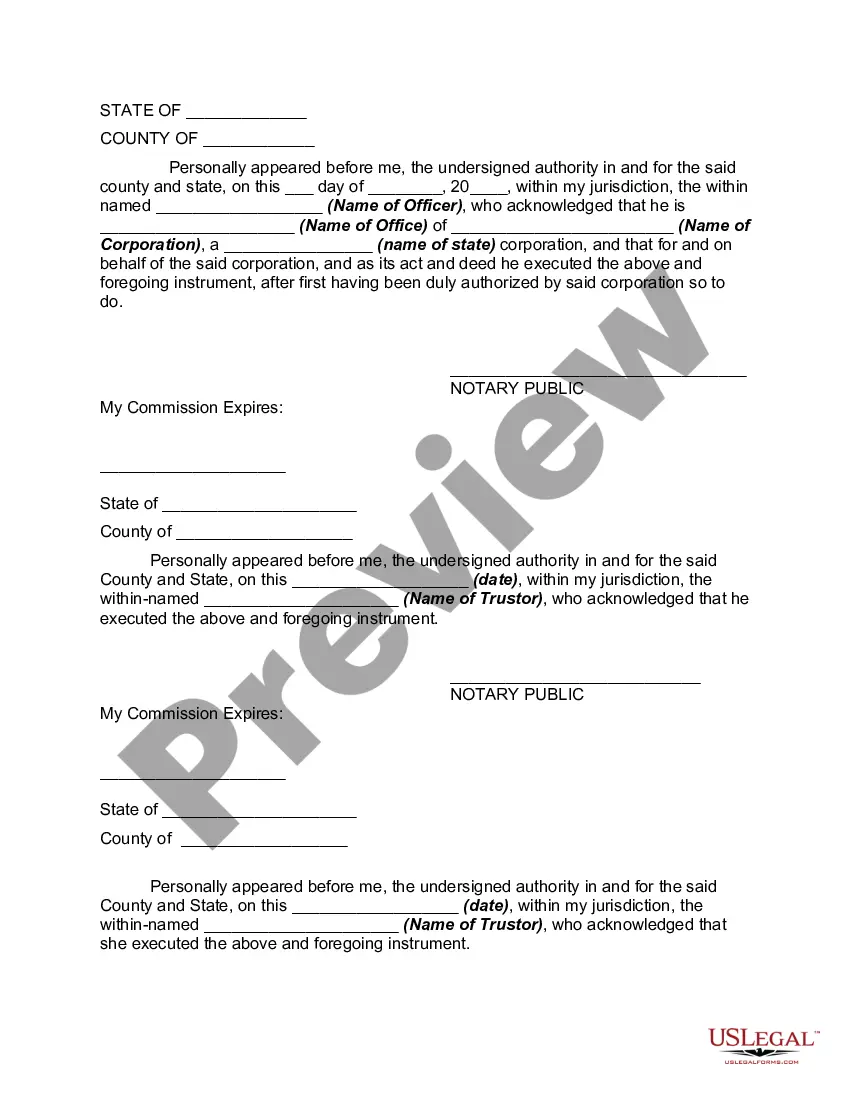
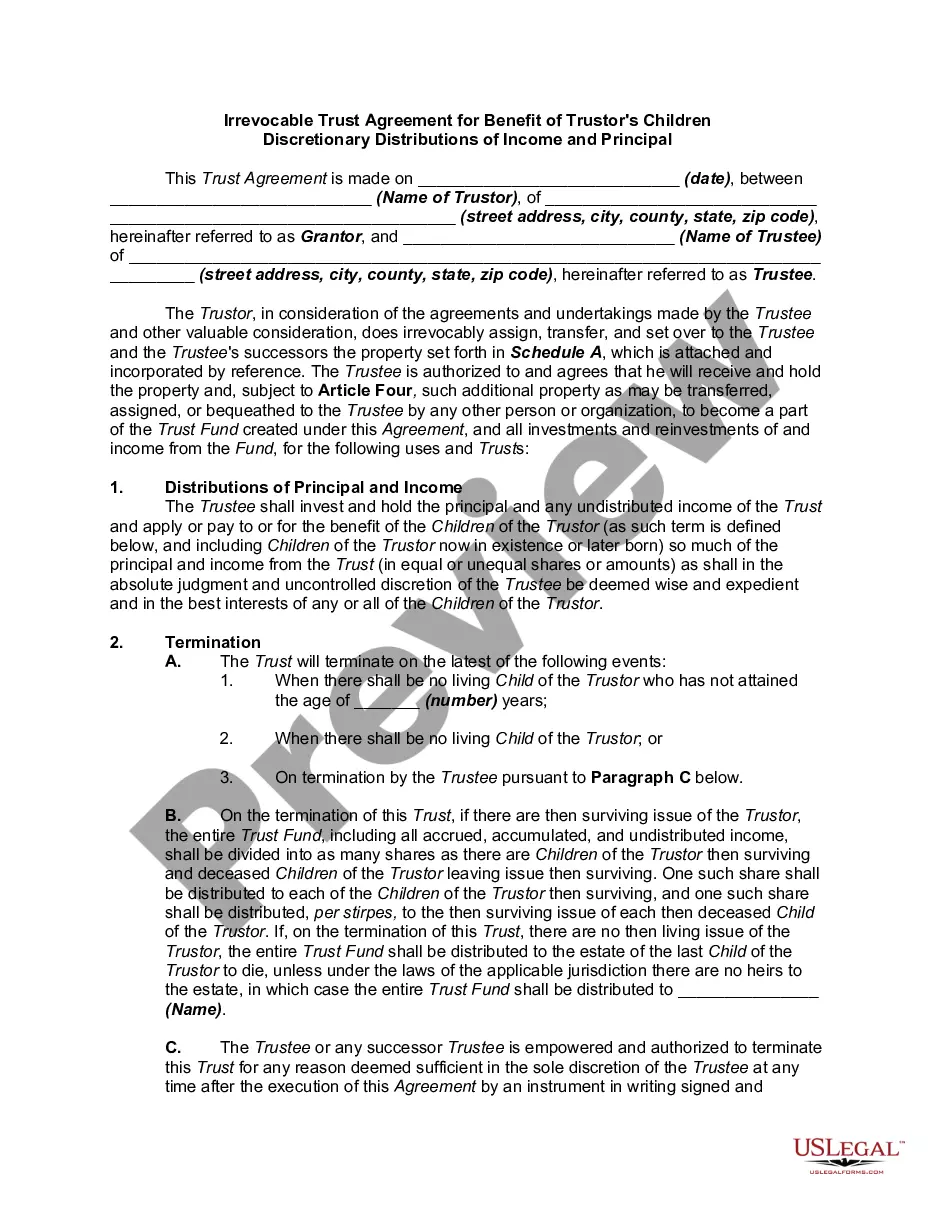
The Irrevocable Trust Agreement with Joint Trustors for Benefit of their Children with Spendthrift Trust Provisions is a legal document designed to establish an irrevocable trust. This type of trust prevents the trustor from altering or terminating the agreement once it is created, allowing for potential income and estate tax benefits. Unlike revocable trusts, irrevocable trusts require careful planning due to their unchangeable nature and strict legal requirements. This trust is specifically structured to provide financial benefits to the trustors' children, while also incorporating provisions to protect the assets from creditors through spendthrift protections.
Form components explained
- Transfer of property to the Trustee to establish the trust.
- Distribution terms for income to the trustors while they are alive.
- Provisions for the payment of the trustor's funeral expenses after death.
- Instructions for distribution to the trustors' children upon the death of the surviving trustor.
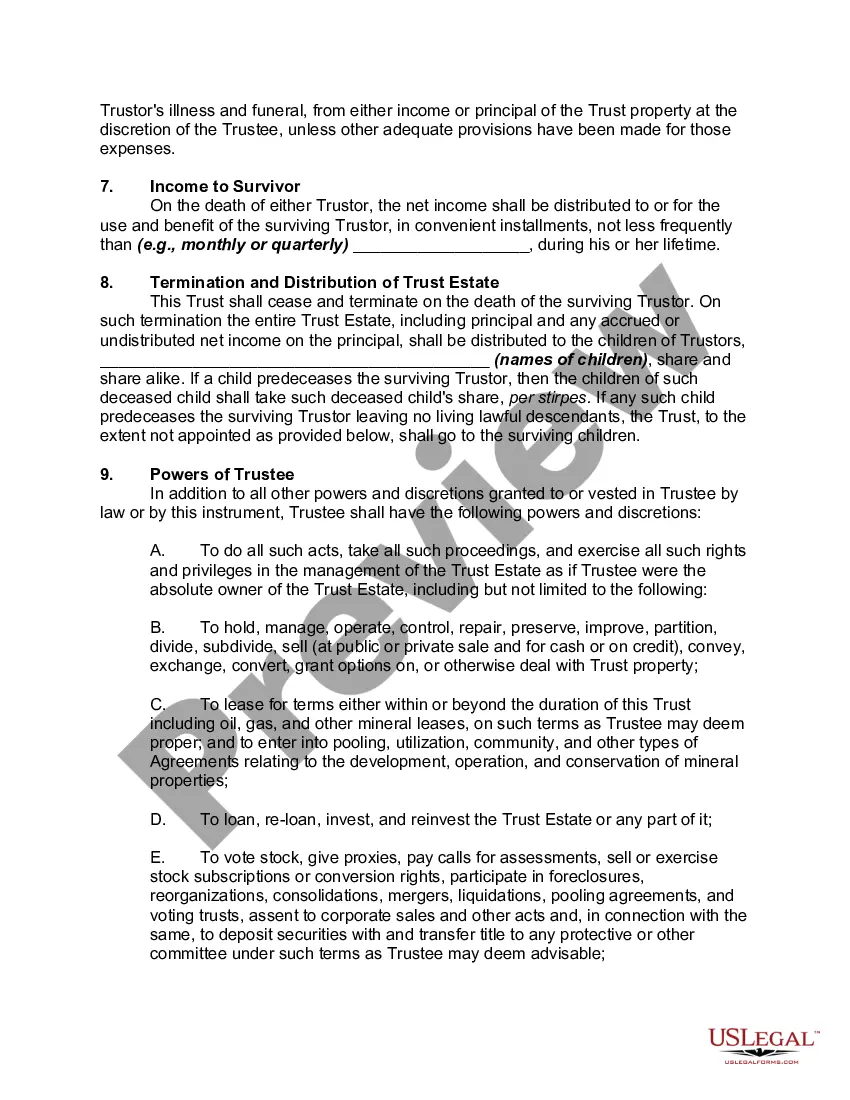
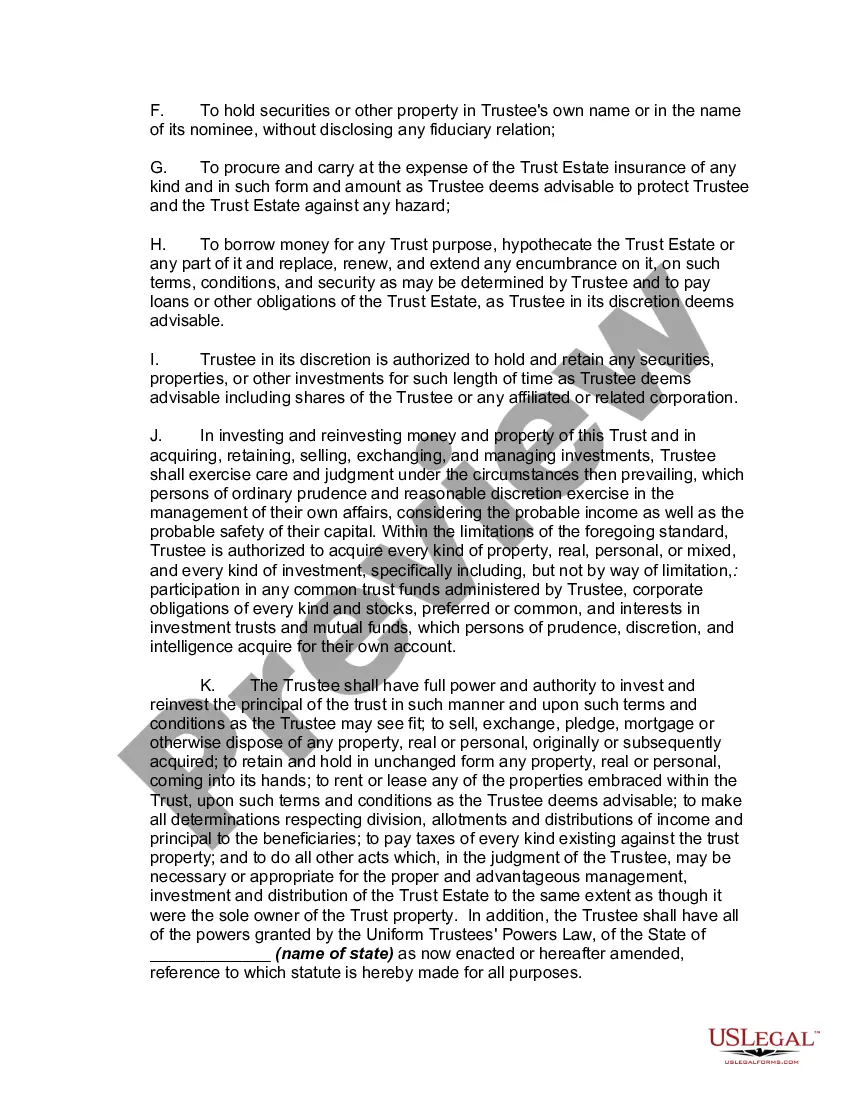
- Powers and duties of the Trustee, including management and investment authority.
- Spendthrift provisions to safeguard trust assets from creditors.



Situations where this form applies
This trust agreement is suitable for parents who wish to secure their children's financial future by placing assets in an irrevocable trust. It is particularly useful in scenarios where the parents want to ensure that the assets are protected from creditors or misappropriation by the children. This form is often utilized in estate planning to minimize estate taxes and provide a clear plan for asset management and distribution after the parents' demise.
Who should use this form
- Parents looking to establish an irrevocable trust for their children.
- Individuals concerned about asset protection from creditors.
- Those seeking to minimize estate taxes through trust provisions.
- Couples who want to ensure financial provisions for their children after both parents pass away.
How to prepare this document
- Identify the trustors and their corresponding details, including names and county.
- Designate a trustee, typically a financial institution or a trusted individual.
- Outline the property to be transferred into the trust, referring to Schedule A.
- Specify how income will be paid to the trustors during their lifetime.
- Indicate the distribution terms for the trust estate after the death of the last surviving trustor.
Does this document require notarization?
This form needs to be notarized to ensure legal validity. US Legal Forms provides secure online notarization powered by Notarize, allowing you to complete the process through a verified video call, available anytime.
Get your form ready online
Our built-in tools help you complete, sign, share, and store your documents in one place.
Make edits, fill in missing information, and update formatting in US Legal Forms—just like you would in MS Word.
Download a copy, print it, send it by email, or mail it via USPS—whatever works best for your next step.
Sign and collect signatures with our SignNow integration. Send to multiple recipients, set reminders, and more. Go Premium to unlock E-Sign.
If this form requires notarization, complete it online through a secure video call—no need to meet a notary in person or wait for an appointment.
We protect your documents and personal data by following strict security and privacy standards.

Make edits, fill in missing information, and update formatting in US Legal Forms—just like you would in MS Word.

Download a copy, print it, send it by email, or mail it via USPS—whatever works best for your next step.

Sign and collect signatures with our SignNow integration. Send to multiple recipients, set reminders, and more. Go Premium to unlock E-Sign.

If this form requires notarization, complete it online through a secure video call—no need to meet a notary in person or wait for an appointment.

We protect your documents and personal data by following strict security and privacy standards.
Mistakes to watch out for
- Failing to include all required details related to trust property.
- Not understanding the irrevocable nature of the agreement before signing.
- Inadequately specifying the terms of income distribution.
- Neglecting to consult with a legal professional for state-specific compliance.
Why use this form online
- Convenient access to customizable templates created by licensed attorneys.
- Instant downloads allow for immediate use in estate planning.
- Editability ensures that users can tailor the trust agreement to their specific needs.
- Reliable forms that comply with legal standards and best practices.
Looking for another form?
Form popularity
FAQ
The trust can pay for any amount of medical costs, as long as the trust pays the expenses directly to the medical provider or institution. Just remember that the terms of the trust are irrevocable regardless of how much you transfer into the trust's name.
Distribute trust assets outright The grantor can opt to have the beneficiaries receive trust property directly without any restrictions. The trustee can write the beneficiary a check, give them cash, and transfer real estate by drawing up a new deed or selling the house and giving them the proceeds.
When you're ready to transfer trust real estate to the beneficiary who is named in the trust document to receive it, you'll need to prepare, sign, and record a deed. That's the document that transfers title to the property from you, the trustee, to the new owner.
An irrevocable trust may be one option to consider. Transferring your assets into a trust can make them non-countable for Medicaid eligibility, although they could be subject to the Medicaid look-back period if the trust is set up within five years of your Medicaid application.
The main downside to an irrevocable trust is simple: It's not revocable or changeable. You no longer own the assets you've placed into the trust. In other words, if you place a million dollars in an irrevocable trust for your child and want to change your mind a few years later, you're out of luck.
Irrevocable trust: The purpose of the trust is outlined by an attorney in the trust document. Once established, an irrevocable trust usually cannot be changed. As soon as assets are transferred in, the trust becomes the asset owner. Grantor: This individual transfers ownership of property to the trust.
As noted above, an irrevocable trust must pay income tax on its earnings. However, a trust is also entitled to take a deduction for income distributions made to a beneficiary.As a trust beneficiary, then, you would owe income tax on distributions made from trust income but not from the principal.
The grantor (as an individual or couple) transfers their assets to an irrevocable trust. However, unlike other irrevocable trusts, the grantor can be the income beneficiary.The grantor can receive income from the trust to the maximum amount allowed by Medicaid.
You cannot control the trust's principal, although you may use the assets in the trust during your lifetime. If the family home is an asset in the irrevocable trust and is sold while the Medicaid recipient is alive and in a nursing home, the proceeds will not count as a resource toward Medicaid eligibility.