Connecticut Non-Marital Cohabitation Living Together Agreement

State:
Connecticut
Control #:
CT-513R
Format:
Word; 
Rich Text
Instant download

About this form

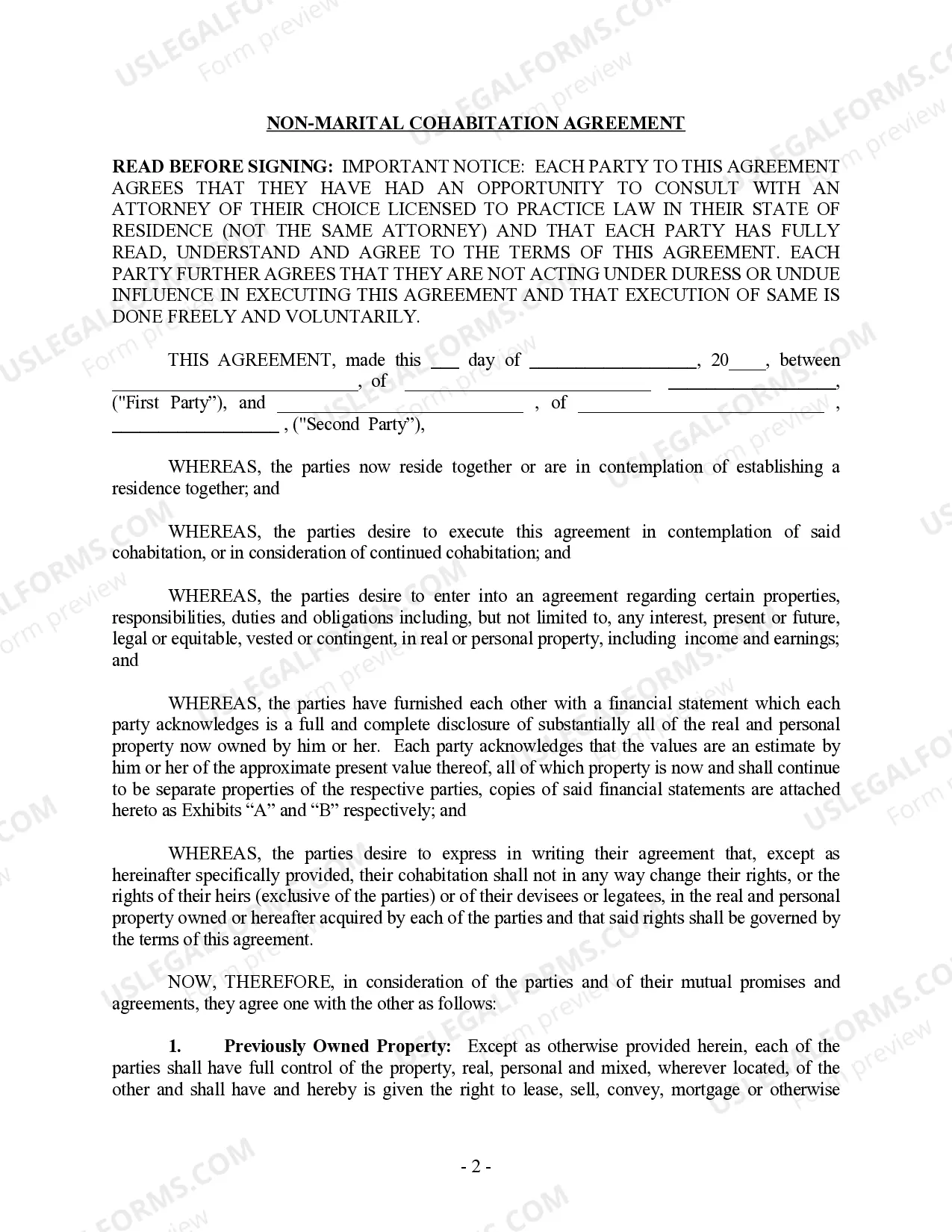
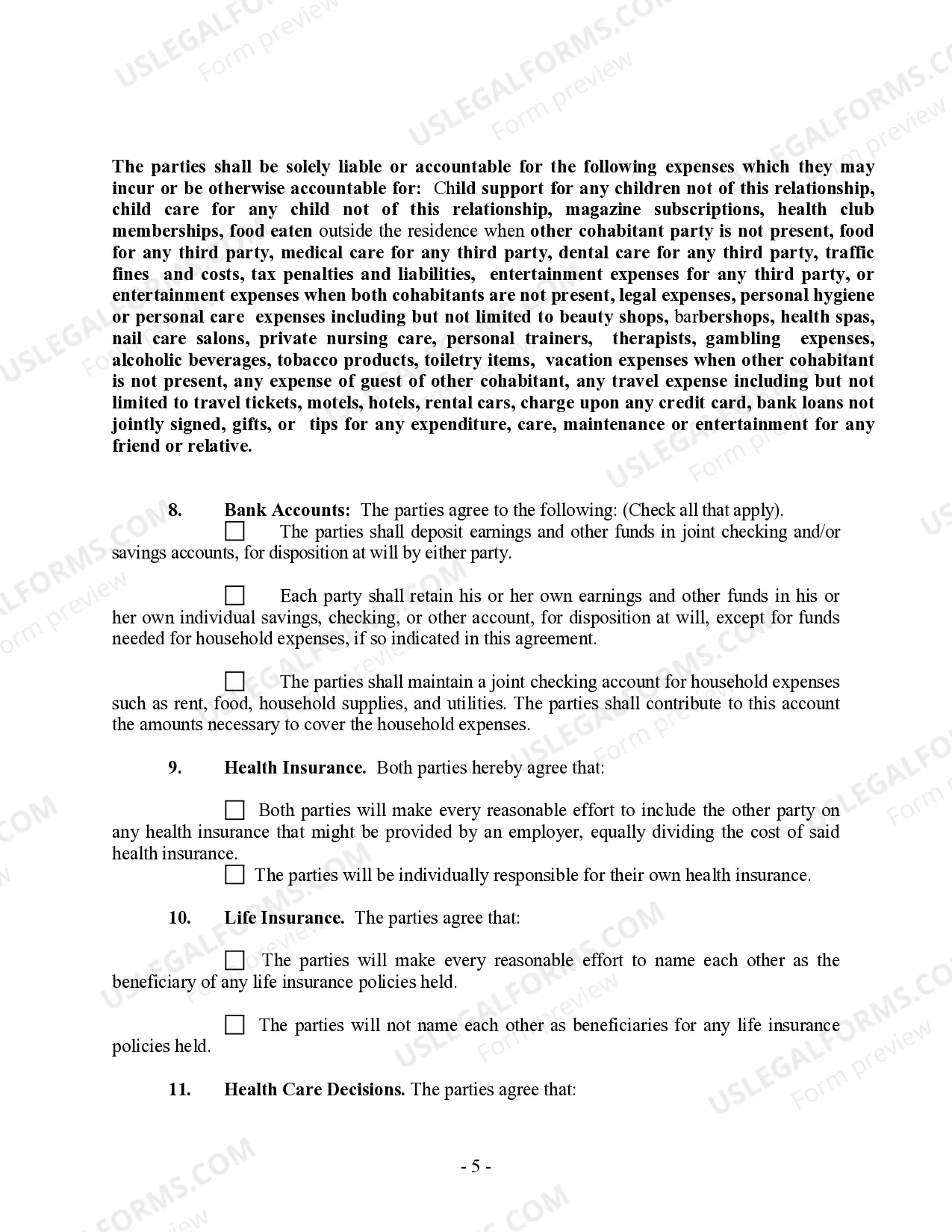
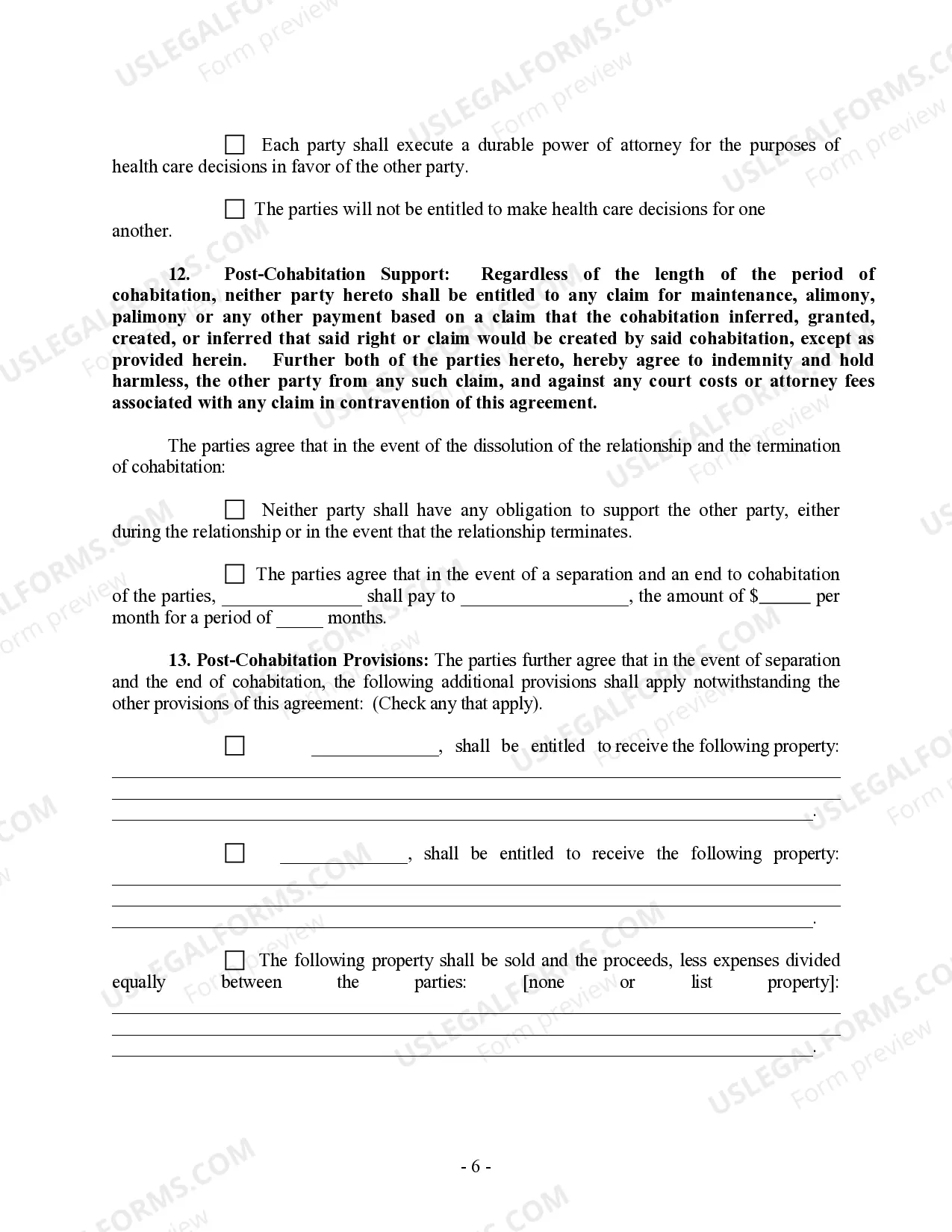
The Non-Marital Cohabitation Living Together Agreement is a legal document designed to outline the expectations and responsibilities of individuals living together in a non-marital relationship. It serves to clarify aspects such as financial obligations, property ownership, and procedures for property division in case the relationship ends. This agreement differs from marriage contracts by not creating any marital rights or duties, making it an essential tool for couples who wish to establish clear guidelines for their cohabitation arrangement.

Key components of this form

  • Identification of the parties involved.
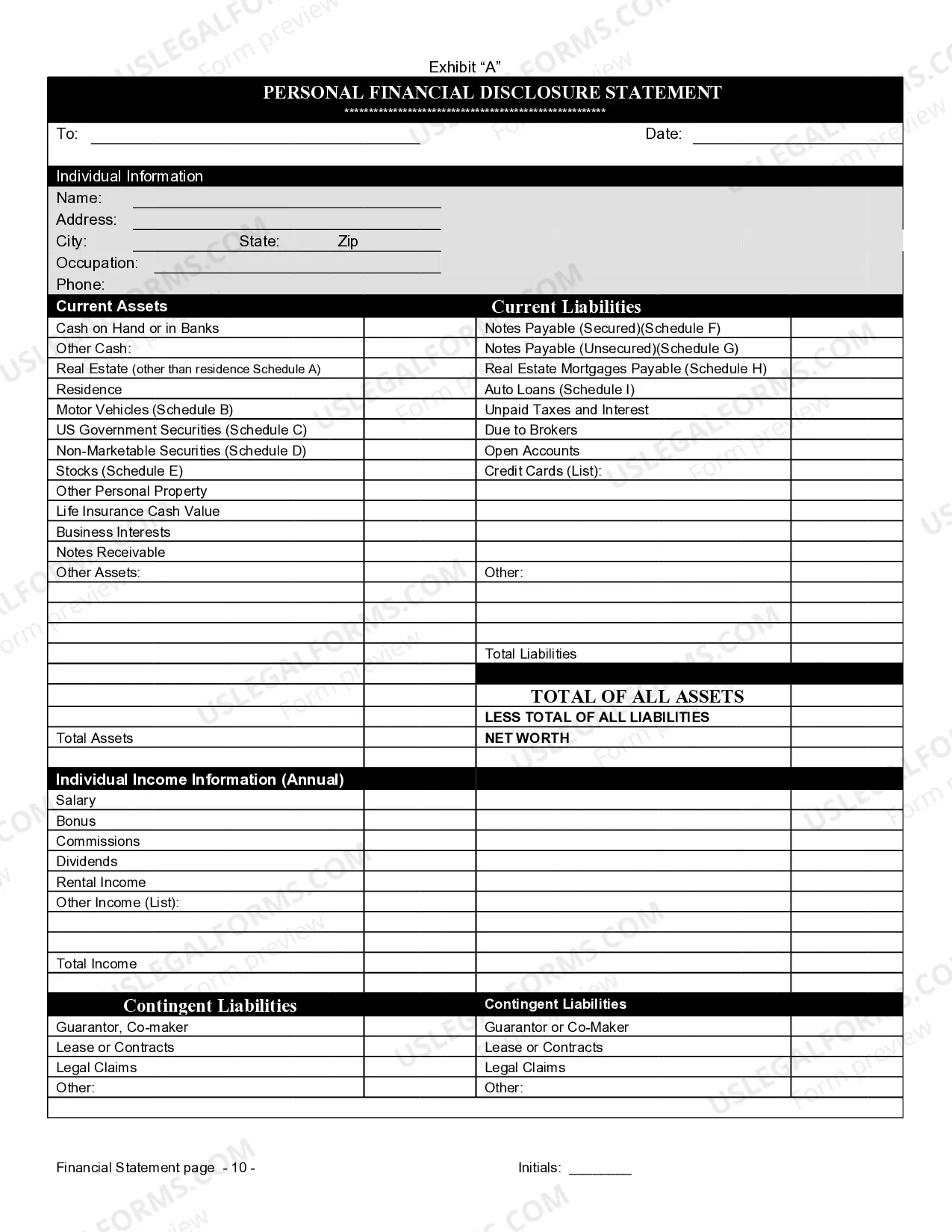
  • Disclosure of financial assets and liabilities.
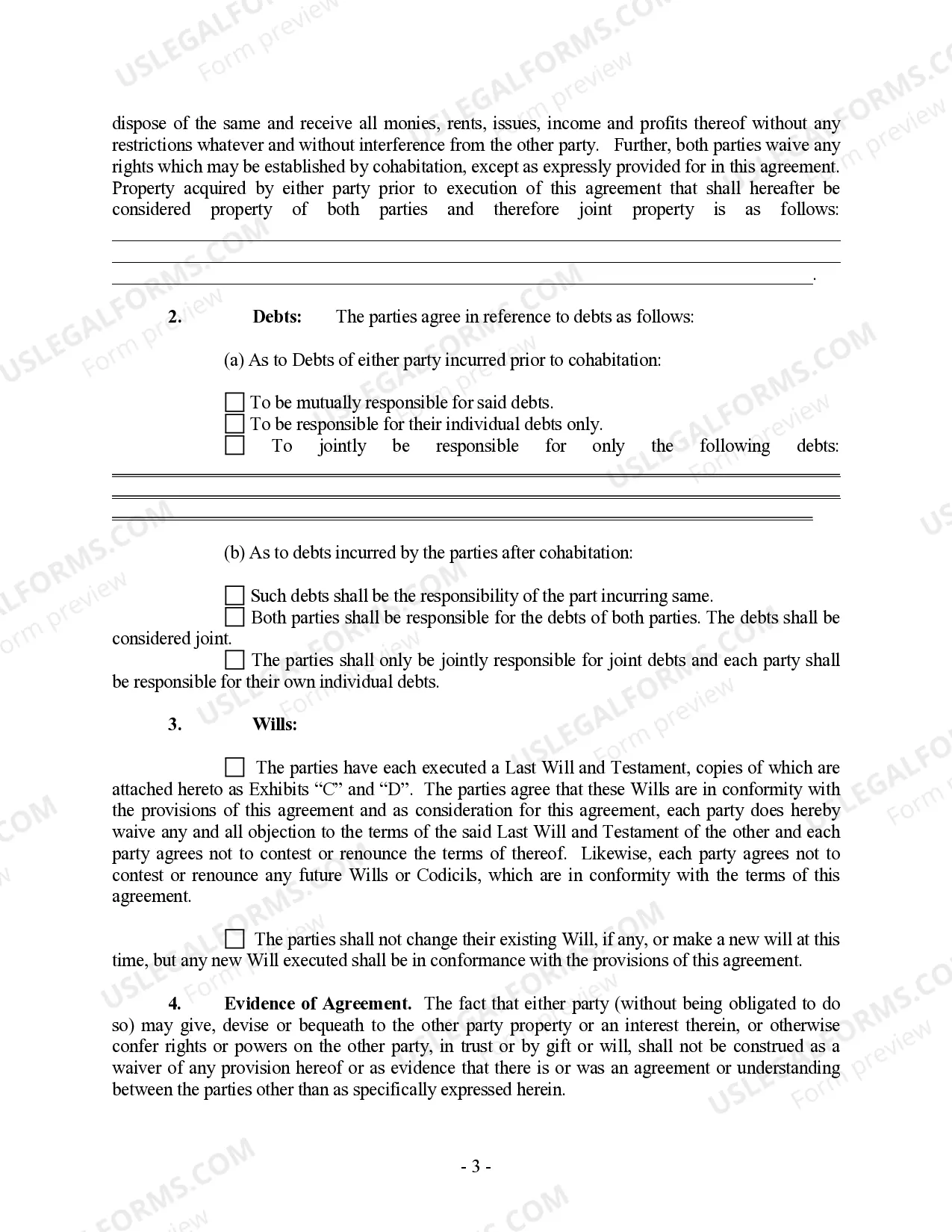
  • Terms regarding property ownership and division.
  • Responsibilities for debts incurred before and during cohabitation.
  • Provisions for health care decisions and life insurance beneficiaries.
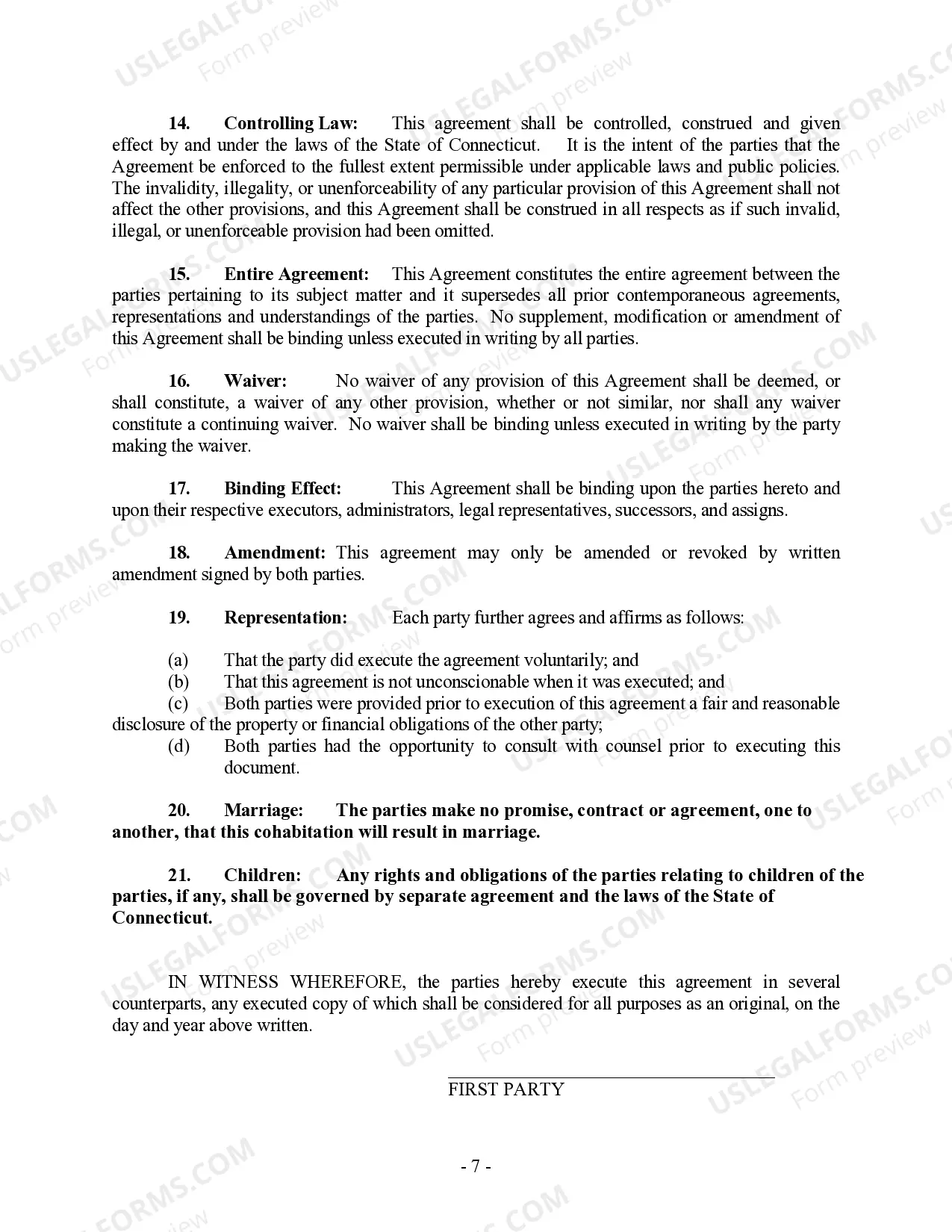
  • Guidelines for future amendments and legal jurisdiction.
Free preview
  • Preview Non-Marital Cohabitation Living Together Agreement
  • Preview Non-Marital Cohabitation Living Together Agreement
  • Preview Non-Marital Cohabitation Living Together Agreement
  • Preview Non-Marital Cohabitation Living Together Agreement
  • Preview Non-Marital Cohabitation Living Together Agreement
  • Preview Non-Marital Cohabitation Living Together Agreement
  • Preview Non-Marital Cohabitation Living Together Agreement
  • Preview Non-Marital Cohabitation Living Together Agreement
  • Preview Non-Marital Cohabitation Living Together Agreement
  • Preview Non-Marital Cohabitation Living Together Agreement
  • Preview Non-Marital Cohabitation Living Together Agreement

When to use this form

This form is useful for couples who choose to live together but do not intend to marry. It is particularly important for those who want to protect their individual assets and outline shared responsibilities. Additionally, it is beneficial when entering into a long-term cohabitation arrangement where financial and property matters need to be clearly defined to avoid disputes.

Who needs this form

  • Cohabitating couples seeking to establish clear financial and property terms.
  • Individuals with significant separate assets wanting to protect their property.
  • Couples considering a long-term partnership without marriage.
  • Those who want legal clarity regarding their rights and responsibilities.

Instructions for completing this form

  • Identify and enter the full names and addresses of both parties.
  • Complete the financial disclosure sections, including assets and liabilities.
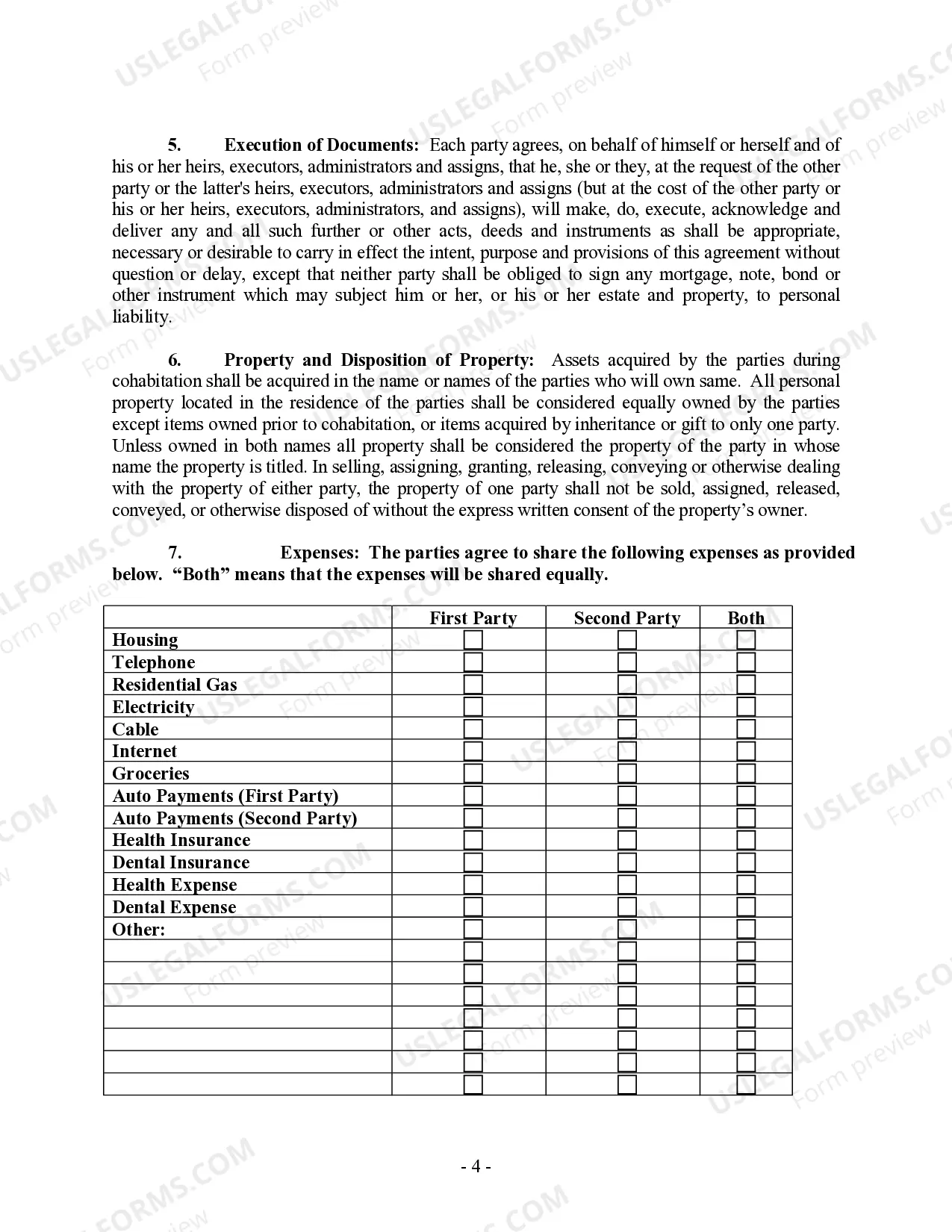
  • Specify the terms for shared expenses and debts incurred during the relationship.
  • Review and agree on property ownership and division terms.
  • Each party should sign and date the agreement in the presence of a notary public, if required.

Notarization requirements for this form

To make this form legally binding, it must be notarized. Our online notarization service, powered by Notarize, lets you verify and sign documents remotely through an encrypted video session.

Get your form ready online

Our built-in tools help you complete, sign, share, and store your documents in one place.

Built-in online Word editor

Make edits, fill in missing information, and update formatting in US Legal Forms—just like you would in MS Word.

Export easily

Download a copy, print it, send it by email, or mail it via USPS—whatever works best for your next step.

E-sign your document

Sign and collect signatures with our SignNow integration. Send to multiple recipients, set reminders, and more. Go Premium to unlock E-Sign.

Notarize online 24/7

If this form requires notarization, complete it online through a secure video call—no need to meet a notary in person or wait for an appointment.

Store your document securely

We protect your documents and personal data by following strict security and privacy standards.

Form selector

Make edits, fill in missing information, and update formatting in US Legal Forms—just like you would in MS Word.

Form selector

Download a copy, print it, send it by email, or mail it via USPS—whatever works best for your next step.

Form selector

Sign and collect signatures with our SignNow integration. Send to multiple recipients, set reminders, and more. Go Premium to unlock E-Sign.

Form selector

If this form requires notarization, complete it online through a secure video call—no need to meet a notary in person or wait for an appointment.

Form selector

We protect your documents and personal data by following strict security and privacy standards.

Common mistakes

  • Failing to fully disclose all assets and debts can lead to legal issues.
  • Not understanding the terms may result in disputes later.
  • Neglecting to have the agreement notarized when required can invalidate it.
  • Not revising the agreement as circumstances change, such as the acquisition of new property.

Benefits of completing this form online

  • Access to customizable templates that simplify the completion process.
  • Convenience of filling out and saving your agreement electronically.
  • Ability to print or download the completed agreement for easy sharing or notarization.
  • Guidance provided throughout the document ensures clarity and compliance with legal standards.

Looking for another form?

This field is required
Virginia
Select state

Form popularity

FAQ

Living with your boyfriend does not mean you are legally married. Cohabitation allows you to share a life together without the formalities of marriage. However, understanding your rights and responsibilities is crucial, particularly in Connecticut. A Connecticut Non-Marital Cohabitation Living Together Agreement can help ensure you both are on the same page regarding your relationship and living arrangements.

You can write your own cohabitation agreement, but it’s advisable to ensure it meets legal standards. Drafting a clear and detailed Connecticut Non-Marital Cohabitation Living Together Agreement helps protect your assets and clarify responsibilities. Consulting legal resources like US Legal Forms can provide guidance and templates for creating a comprehensive agreement.

Yes, cohabitation is synonymous with living together. It describes an arrangement where two individuals share a residence and life without being legally married. While the two terms often are used interchangeably, cohabitation may carry specific legal connotations. For a clearer understanding of your rights, consider a Connecticut Non-Marital Cohabitation Living Together Agreement.

The legal term for an unmarried couple living together is commonly referred to as cohabitation. This term signifies a shared domestic life without the formalities of marriage. Many states, including Connecticut, recognize cohabitation, which can lead to unique legal considerations. A Connecticut Non-Marital Cohabitation Living Together Agreement can outline rights and expectations for both partners.

If you live with your partner, your relationship status is often considered cohabitation. This situation does not automatically grant you marital rights or responsibilities. However, understanding the implications of your living arrangement is essential. A Connecticut Non-Marital Cohabitation Living Together Agreement can help clarify your status and protect your interests.

In the eyes of the law, simply living together for a certain number of years does not automatically mean you are considered married. Each state has its own requirements regarding common law marriage, and Connecticut does not recognize it. However, a Connecticut Non-Marital Cohabitation Living Together Agreement can help clarify your rights and responsibilities while living together. This awareness can safeguard your interests and promote a harmonious relationship.

Writing a cohabitation agreement involves several steps, including identifying the issues you want to address. Begin by discussing your expectations regarding finances, property, and other important areas. You can use templates from platforms like uslegalforms to create a Connecticut Non-Marital Cohabitation Living Together Agreement. This approach simplifies the process and ensures you cover all necessary legal points.

Yes, if you are living with your boyfriend, you can refer to your relationship as cohabitation. This status may affect various legal matters, including property rights and financial responsibilities. A Connecticut Non-Marital Cohabitation Living Together Agreement can help you clarify these aspects and protect your interests. Having such an agreement in place gives both partners peace of mind.

When you live with your partner without being married, it is commonly referred to as cohabitation. In Connecticut, couples may want to consider a Connecticut Non-Marital Cohabitation Living Together Agreement to establish clear expectations. This agreement can outline each person’s rights and responsibilities, ensuring a smoother living arrangement. It provides legal clarity and can help prevent disputes in the future.

The legal term for a couple living together without being married is typically referred to as cohabitation. In Connecticut, cohabiting couples should be aware that they do not automatically share legal rights like married couples do. Establishing a Connecticut Non-Marital Cohabitation Living Together Agreement is a proactive step to ensure your partnership is legally safeguarded.

Trusted and secure by over 3 million people of the world’s leading companies

Connecticut Non-Marital Cohabitation Living Together Agreement