Demand for Accounting from a Fiduciary
What this document covers
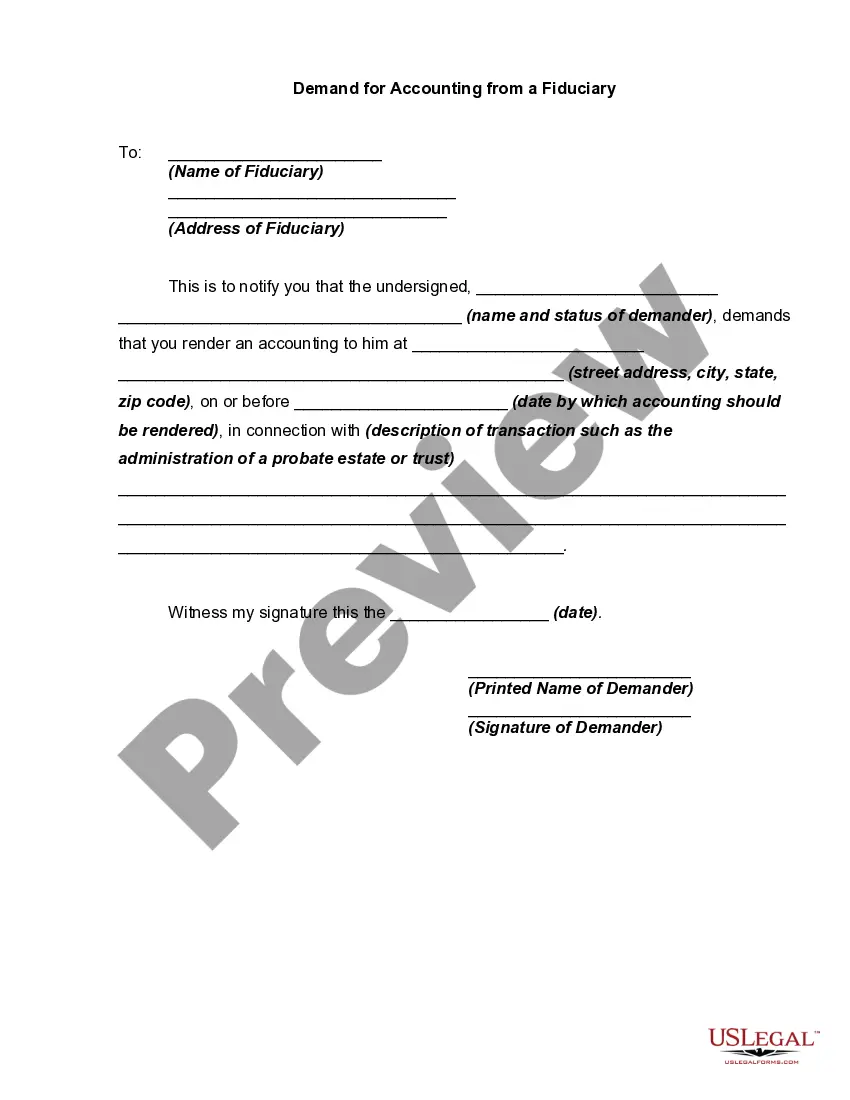
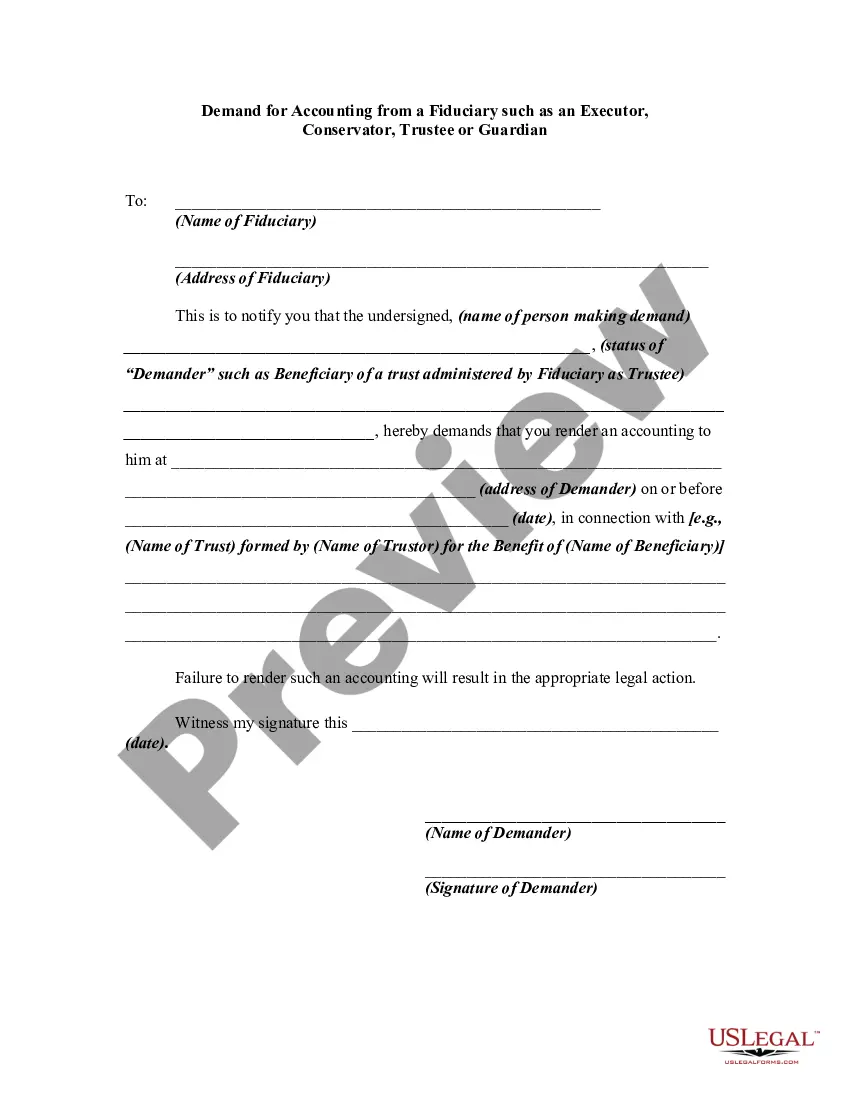
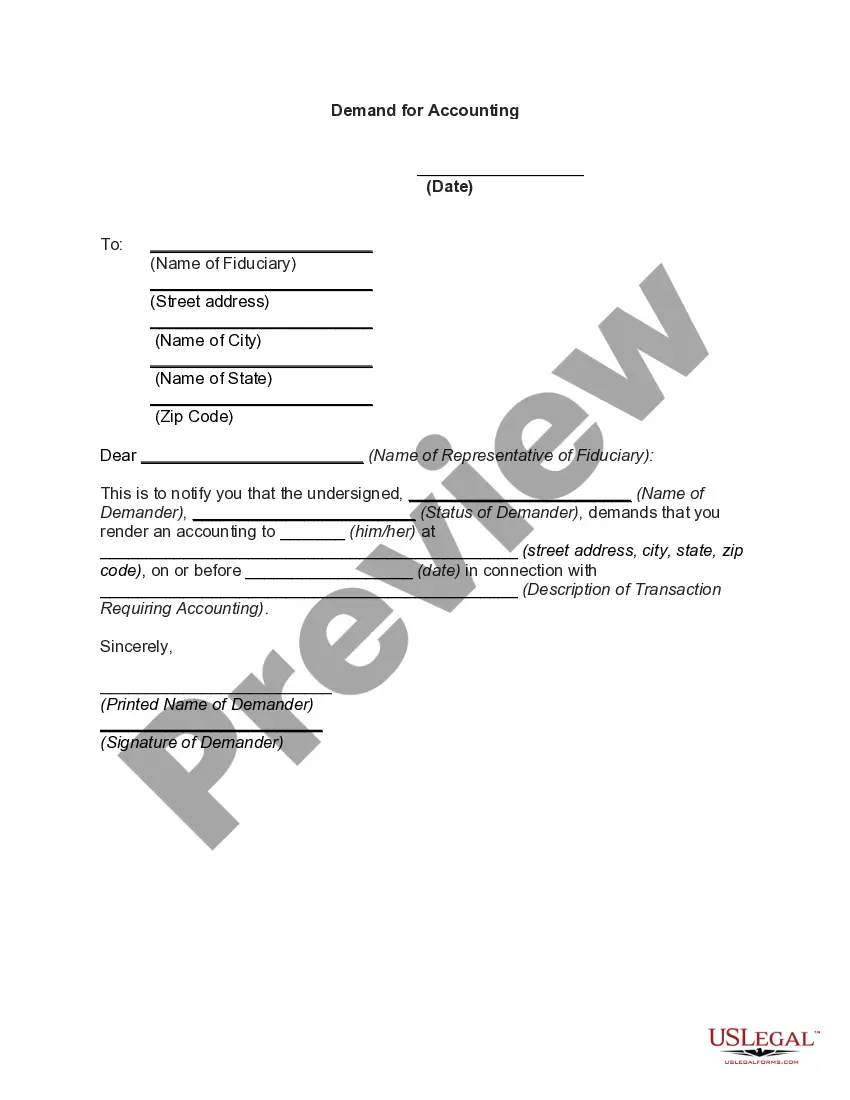
The Demand for Accounting from a Fiduciary is a legal document used to formally request an accounting of financial transactions managed by a fiduciary, such as a trustee or executor. This form serves as an essential first step before initiating a legal action if a fiduciary refuses to provide this accounting. Unlike other accounting forms, this specific demand establishes the obligation of the fiduciary to report on their stewardship of assets.
What’s included in this form
- Sender's name and contact information
- Name and address of the fiduciary
- Description of the specific transaction or account in question
- Deadline for the fiduciary to respond with the accounting
- Signature and printed name of the person making the demand
Situations where this form applies
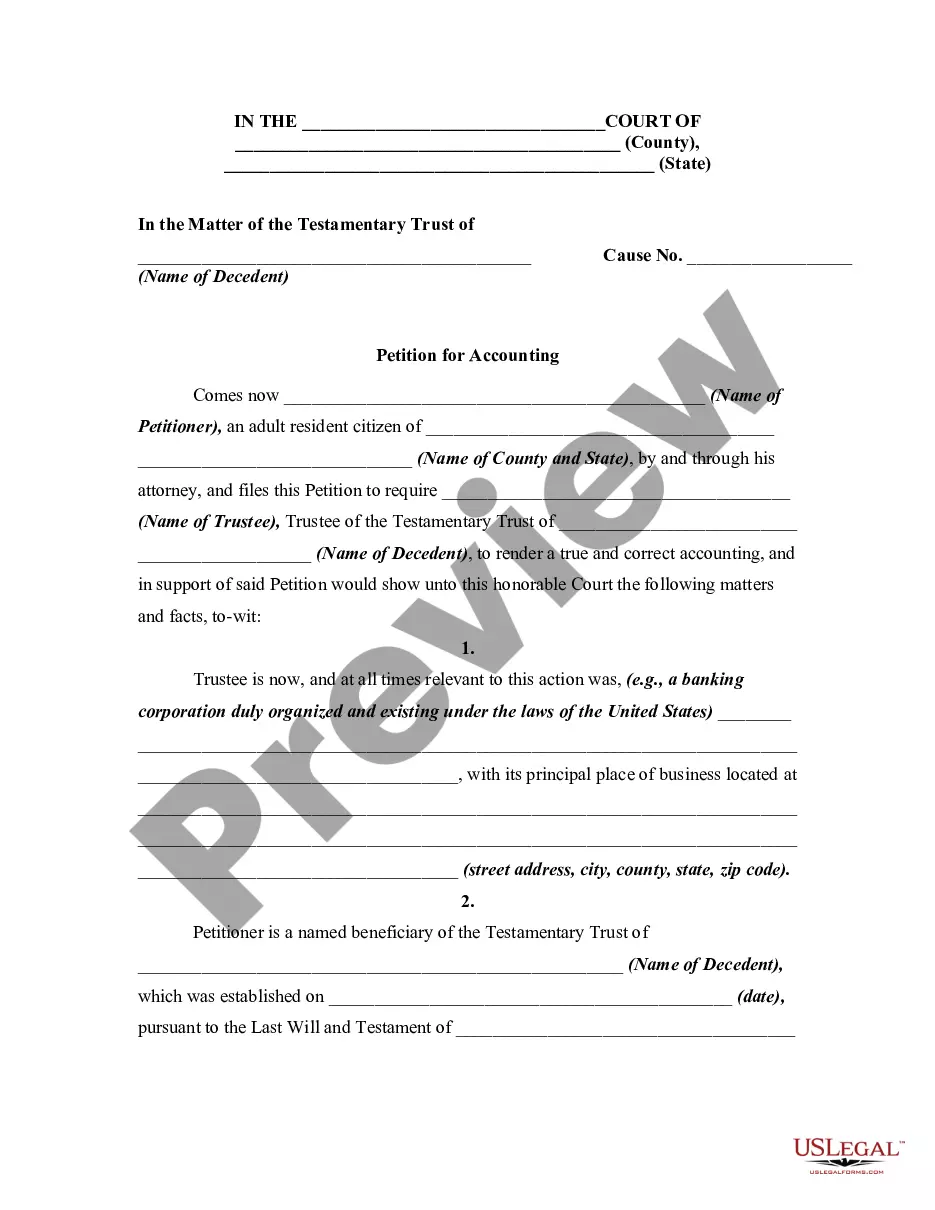
This form is necessary when a fiduciary, such as a trustee or personal representative, has not voluntarily provided an accounting of their management of assets. It is typically used in scenarios involving trust administration, probate estates, or other situations where financial transparency is required by the person or entity with a legal right to demand it.
Who can use this document
- Beneficiaries of a trust
- Heirs of a deceased individual with a probated estate
- Anyone who has a legal interest in understanding the financial dealings of a fiduciary
- Individuals seeking to enforce their legal right to an accounting
Instructions for completing this form
- Identify the parties: Enter the name and address of the fiduciary as well as the requester.
- Specify the accounting details: Describe the transaction or asset management that requires an accounting.
- Set a deadline: Provide a specific date by which the fiduciary must respond.
- Sign the form: Include the printed name and signature of the person demanding the accounting.
- Make copies: Retain a copy for your records and send the original to the fiduciary.
Does this document require notarization?
This form usually doesn’t need to be notarized. However, local laws or specific transactions may require it. Our online notarization service, powered by Notarize, lets you complete it remotely through a secure video session, available 24/7.
Get your form ready online
Our built-in tools help you complete, sign, share, and store your documents in one place.
Make edits, fill in missing information, and update formatting in US Legal Forms—just like you would in MS Word.
Download a copy, print it, send it by email, or mail it via USPS—whatever works best for your next step.
Sign and collect signatures with our SignNow integration. Send to multiple recipients, set reminders, and more. Go Premium to unlock E-Sign.
If this form requires notarization, complete it online through a secure video call—no need to meet a notary in person or wait for an appointment.
We protect your documents and personal data by following strict security and privacy standards.

Make edits, fill in missing information, and update formatting in US Legal Forms—just like you would in MS Word.

Download a copy, print it, send it by email, or mail it via USPS—whatever works best for your next step.

Sign and collect signatures with our SignNow integration. Send to multiple recipients, set reminders, and more. Go Premium to unlock E-Sign.

If this form requires notarization, complete it online through a secure video call—no need to meet a notary in person or wait for an appointment.

We protect your documents and personal data by following strict security and privacy standards.
Common mistakes to avoid
- Failing to specify the transaction or assets involved in the request.
- Not providing complete contact information for both parties.
- Omitting a clear deadline for the fiduciary's response.
- Not signing the form before delivery to the fiduciary.
Benefits of using this form online
- Convenient access to a professionally drafted template.
- Easy customization to fit specific state legal requirements.
- Immediate download option for quick filing.
- Assurance of compliance with legal standards set by licensed attorneys.
Legal use & context
- The demand for accounting is a recognized legal document that can support claims in court if the fiduciary fails to comply.
- This form aids in safeguarding the rights of beneficiaries and other interested parties.
- Failure to respond to a valid demand could have legal repercussions for the fiduciary.
Key takeaways
- This form is essential for demanding an accounting from a fiduciary.
- It establishes a formal request that can precede legal action.
- Ensure all details are clearly filled out, especially regarding the transaction.
- Consult state-specific regulations to ensure compliance.
Looking for another form?

Form popularity
FAQ
If the trustee fails to account, he or she is in violation of the statute and his or her fiduciary duty. If the beneficiaries are harmed by the lack of accounting, the trustee may be liable. Further, the court may become involved, may levy sanctions and could even remove the trustee.
Generally, the trustee only has to provide the annual accounting to each beneficiary to whom income or principal is required or authorized in the trustee's discretion to be currently distributed. The trust document has to be read and interpreted to determine who is entitled to accountings.
Before distributing assets to beneficiaries, the executor must pay valid debts and expenses, subject to any exclusions provided under state probate laws.The executor must maintain receipts and related documents and provide a detailed accounting to estate beneficiaries.
A fiduciary accounting is a comprehensive report of the activity within a trust, estate or conservatorship during a specific time period. It shows all of the receipts and disbursements managed by the executor or trustee, properly allocating all transactions between principal and income.
Basic accounting refers to the process of recording a company's financial transactions. It involves analyzing, summarizing and reporting these transactions to regulators, oversight agencies and tax collection entities.This is why businesses must be proficient in accounting in order to make good decisions.
Create a New Business Account. Set Budget Aside for Tax Purposes. Always Keep Your Records Organised. Track Your Expenses. Maintain Daily Records. Leave an Audit Trail. Stay on Top of Your Accounts Receivable. Keep Tax Deadlines in Mind.
Employee Timesheets. Train your employees to consistently keep track of daily, weekly and monthly amounts of time spent in office or on the clock. Income Statement. Journal Sheet. Bank Reconciliation Form. Balance Sheet. Delivery Docket.
Accounting forms are used to record and report these economic transactions that are a combination of accounting registers. These are also used to depict the financial condition of a company and to manage the business in avoiding or eliminating costly mistakes.