Agreement to Compromise Debt by Returning Secured Property
About this form
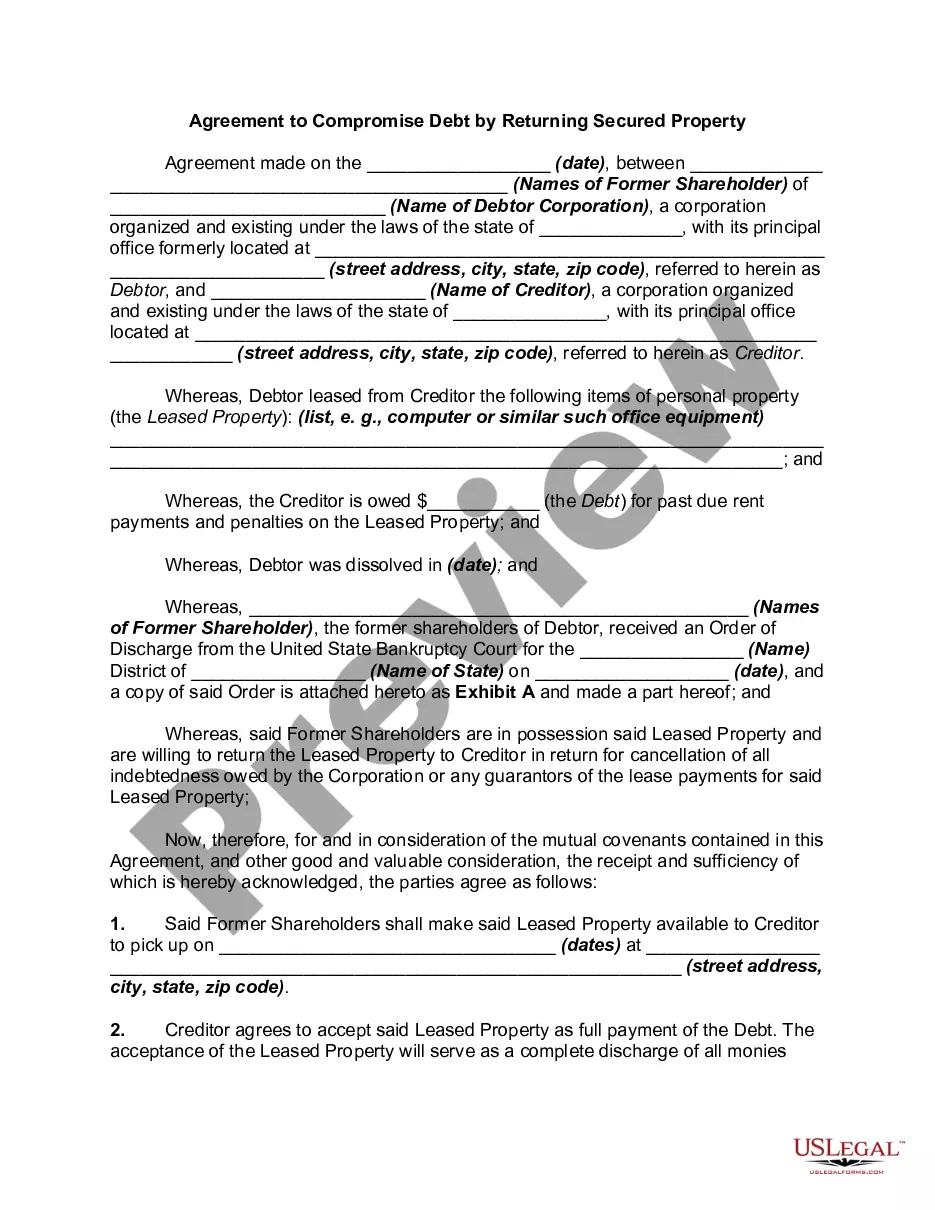
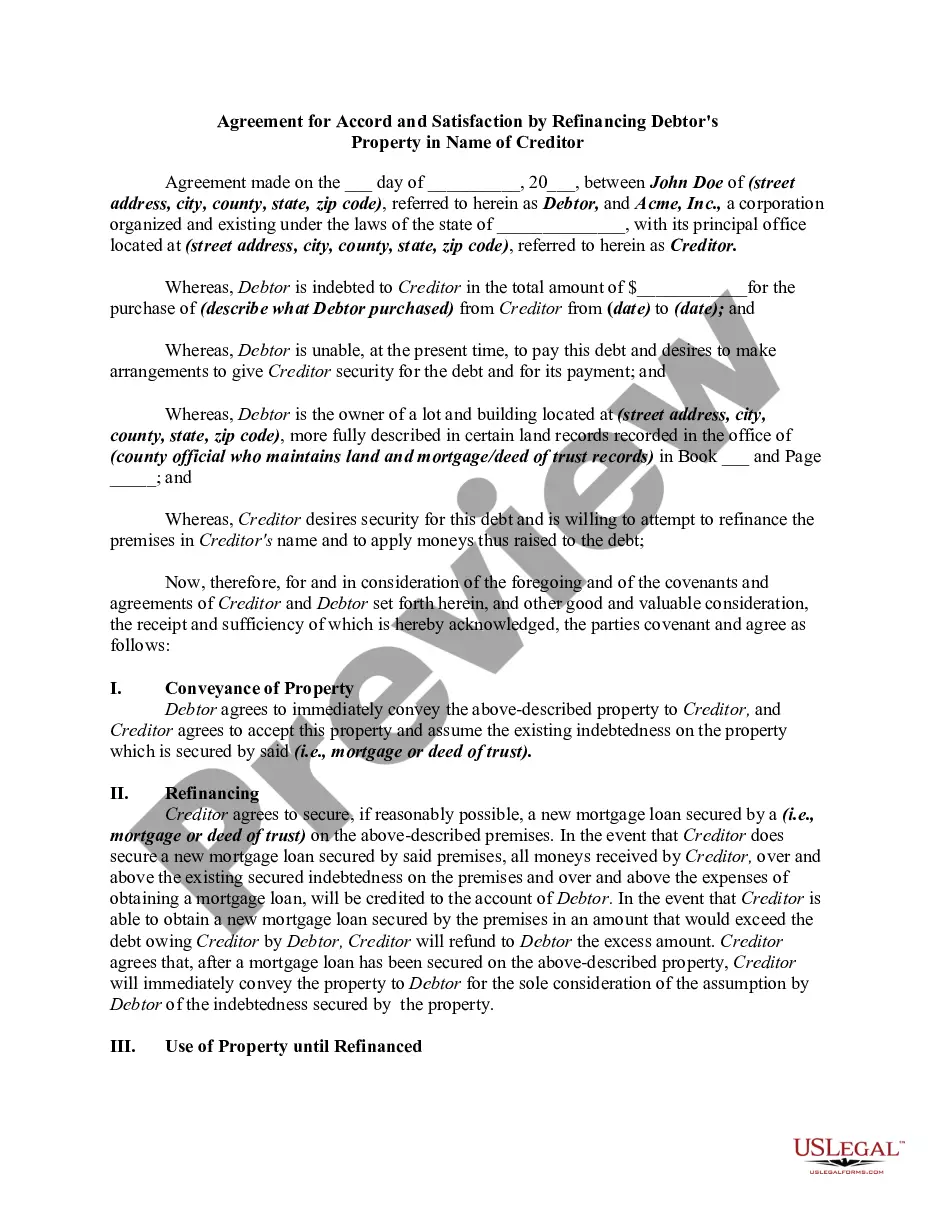
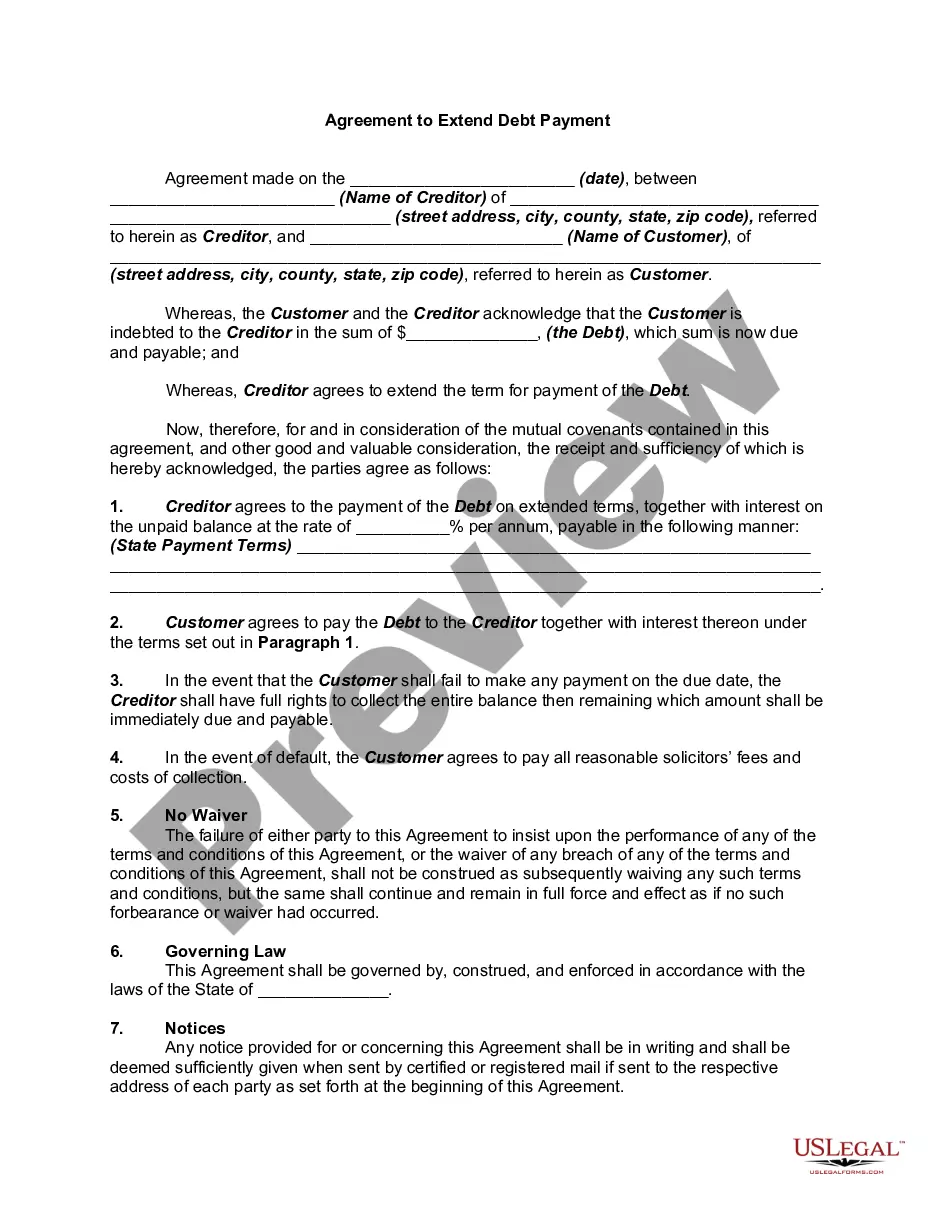
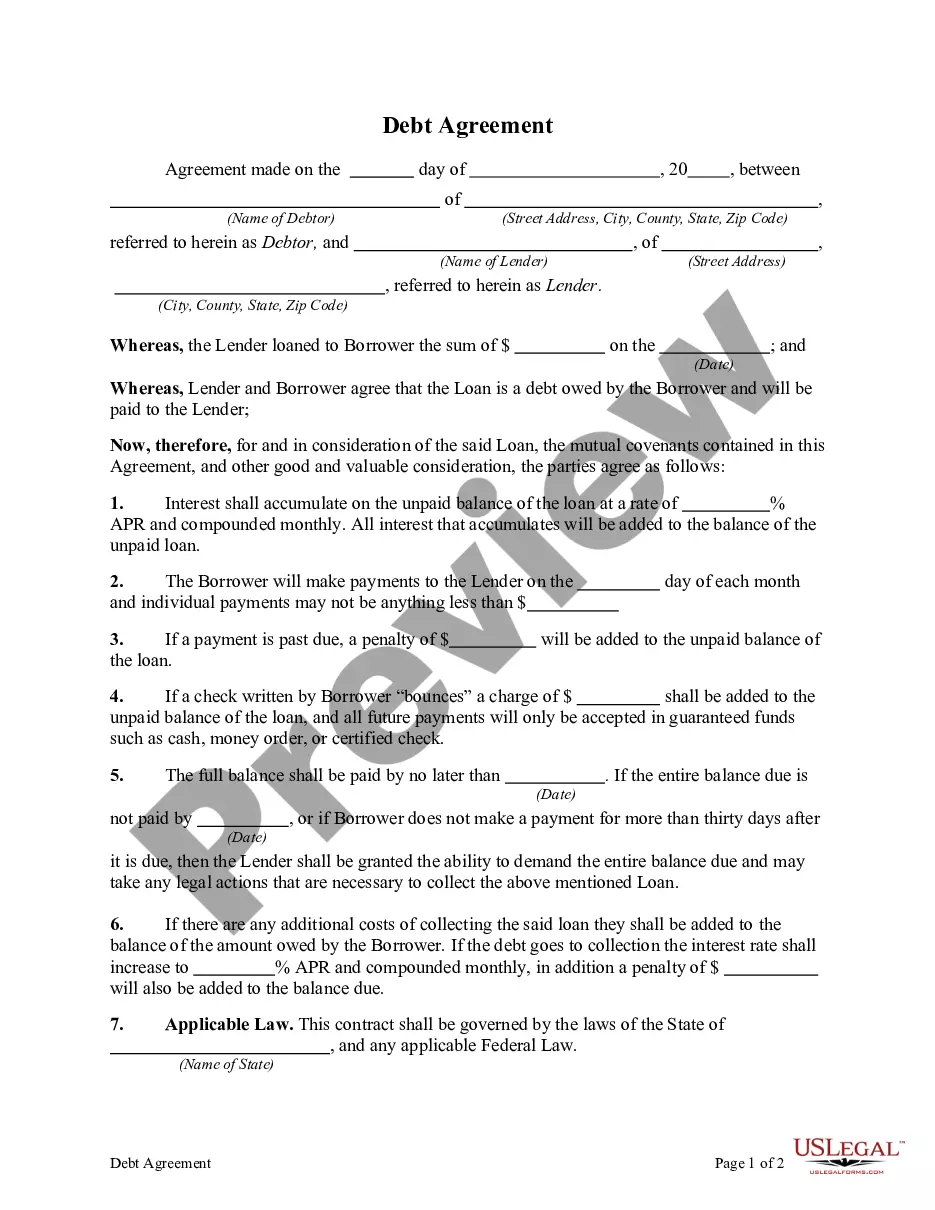
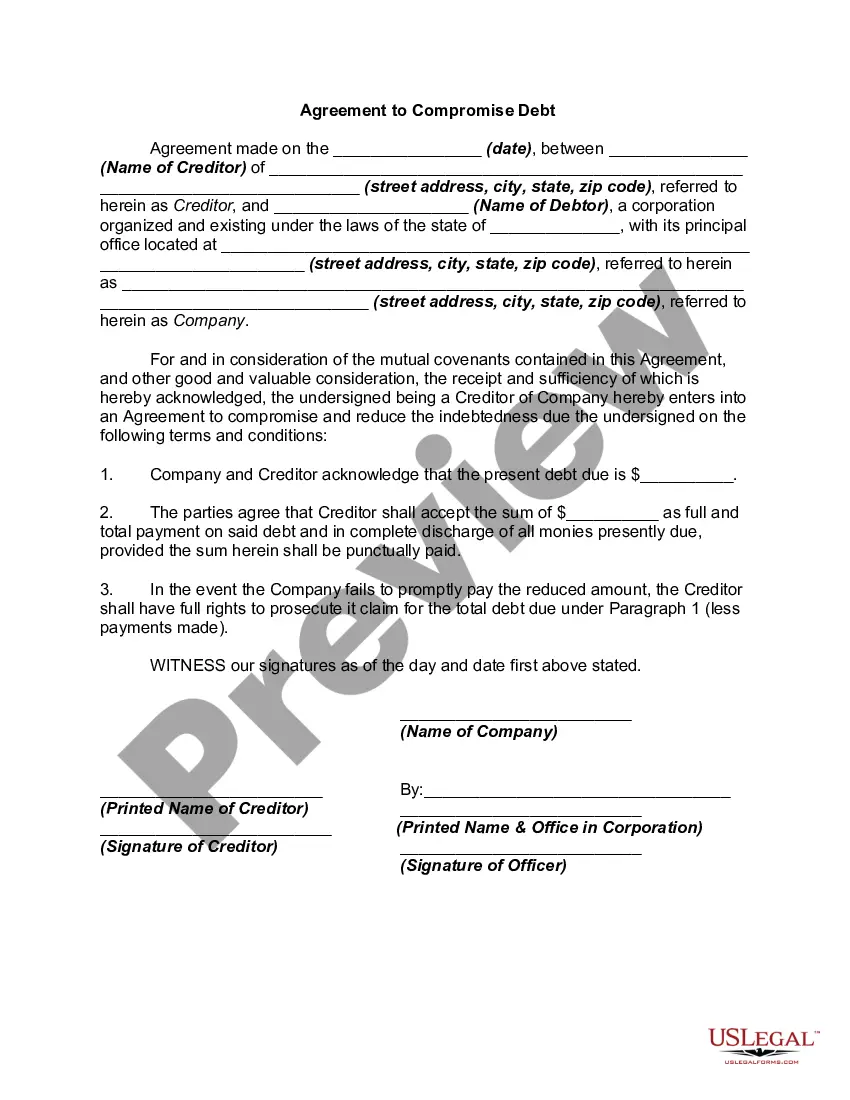
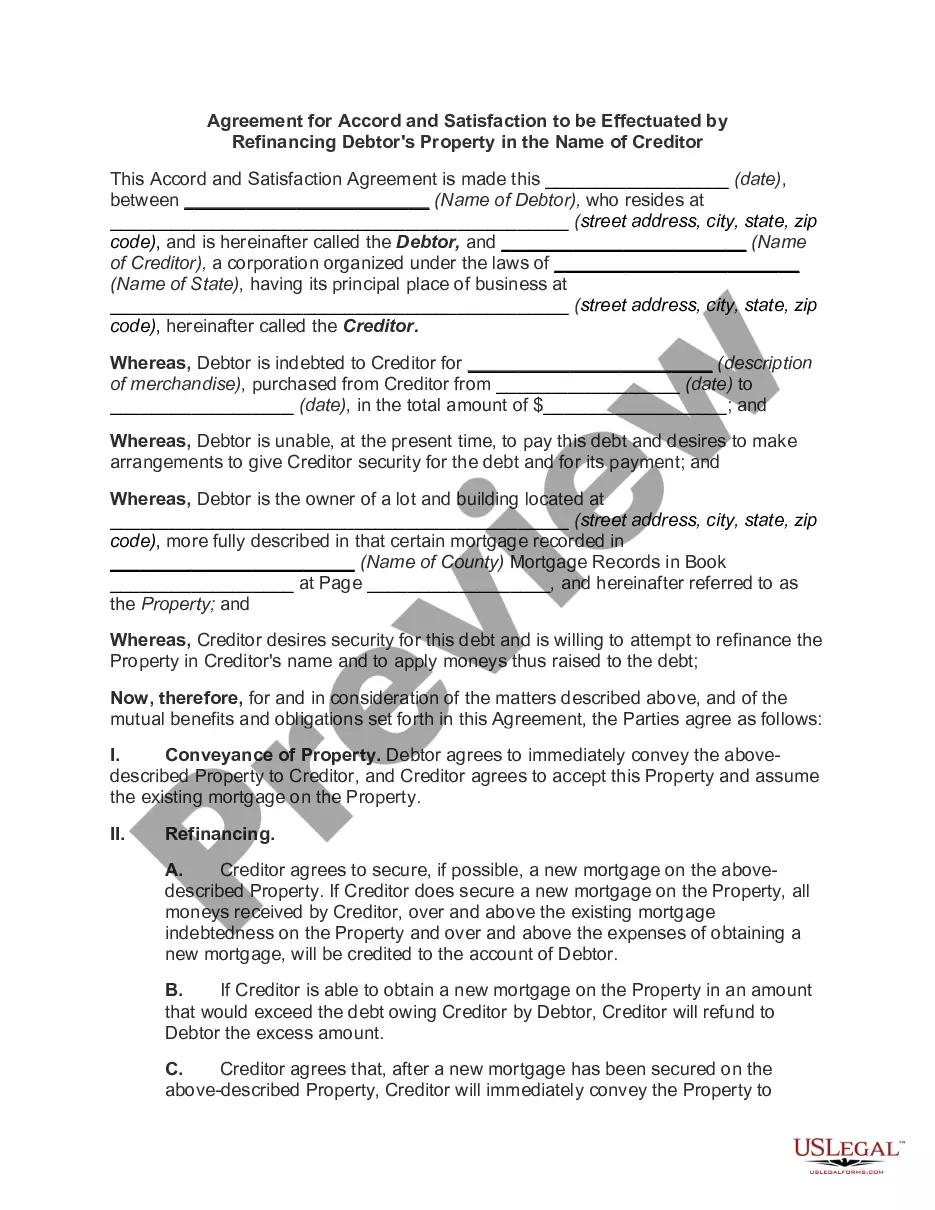
The Agreement to Compromise Debt by Returning Secured Property is a legal document that allows a debtor to return leased property to a creditor in exchange for the cancellation of outstanding lease payments. This agreement is particularly useful when the debtor is unable to meet their financial obligations but has the capacity to return the leased items, thereby providing a favorable resolution for both parties. Unlike other debt settlement forms, this agreement specifically addresses the return of secured property as a means of satisfying debt obligations.
Main sections of this form
- Identification of the parties involved: Names and addresses of the debtor and creditor.
- Description of the leased property: Detailed list of items that are being returned.
- Debt amount: Clear statement of the total debt being compromised.
- Terms of the agreement: Conditions under which the creditor agrees to accept the return of property as full payment.
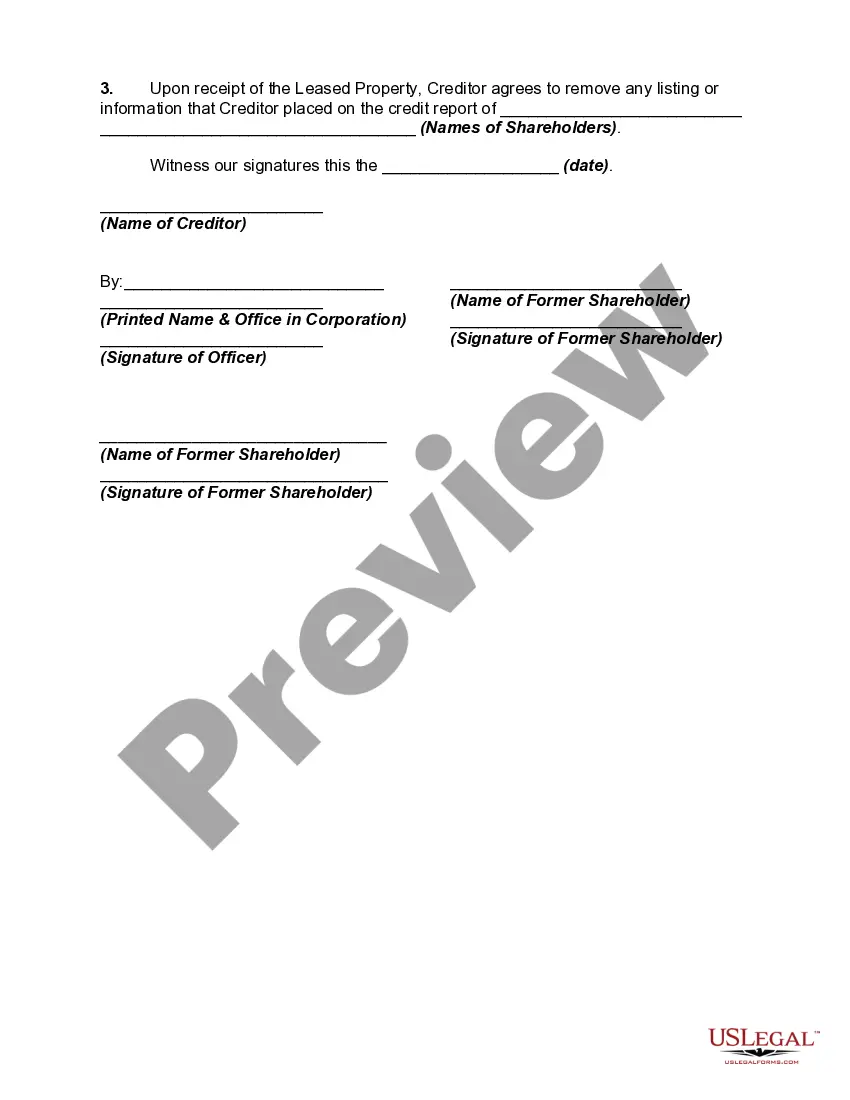
- Signature block: Spaces for the parties to acknowledge the agreement officially.
When to use this document
This form is commonly used in situations where a corporation (debtor) has incurred significant debt related to leased equipment and has become unable to continue making lease payments. After dissolution or bankruptcy proceedings, this agreement allows former shareholders to return leased property and settle outstanding debts with the creditor effectively. It serves as a resolution method that prevents further collections and liabilities associated with the debt.
Who needs this form
- Businesses that have leased property but can no longer meet lease payments.
- Former shareholders of a dissolved corporation seeking to resolve debts through the return of leased items.
- Creditors looking for a straightforward method to settle outstanding debts with a debtor.
- Individuals or business representatives responsible for negotiating debt settlements.
Completing this form step by step
- Identify the parties involved by providing their full names and addresses.
- Specify the leased property by listing all items being returned to the creditor.
- Enter the total debt amount being forgiven by the creditor.
- Fill in the date of the agreement and the scheduled date for property return.
- Ensure all parties sign and date the agreement to make it legally binding.
Does this document require notarization?
This form does not typically require notarization to be legally valid. However, some jurisdictions or document types may still require it. US Legal Forms provides secure online notarization powered by Notarize, available 24/7 for added convenience.
Get your form ready online
Our built-in tools help you complete, sign, share, and store your documents in one place.
Make edits, fill in missing information, and update formatting in US Legal Forms—just like you would in MS Word.
Download a copy, print it, send it by email, or mail it via USPS—whatever works best for your next step.
Sign and collect signatures with our SignNow integration. Send to multiple recipients, set reminders, and more. Go Premium to unlock E-Sign.
If this form requires notarization, complete it online through a secure video call—no need to meet a notary in person or wait for an appointment.
We protect your documents and personal data by following strict security and privacy standards.

Make edits, fill in missing information, and update formatting in US Legal Forms—just like you would in MS Word.

Download a copy, print it, send it by email, or mail it via USPS—whatever works best for your next step.

Sign and collect signatures with our SignNow integration. Send to multiple recipients, set reminders, and more. Go Premium to unlock E-Sign.

If this form requires notarization, complete it online through a secure video call—no need to meet a notary in person or wait for an appointment.

We protect your documents and personal data by following strict security and privacy standards.
Common mistakes to avoid
- Not including all required signatures from both debtor and creditor.
- Failing to provide a complete description of the leased property.
- Leaving out the total debt amount, leading to confusion later.
- Not specifying the return date for the leased property.
Benefits of using this form online
- Convenience of downloading and completing the form at any time.
- Editability allows you to fill in specific details according to your situation.
- Access to professionally drafted templates ensures that legal standards are met.
- Immediate availability provides quick resolution to debt issues.
Summary of main points
- The Agreement to Compromise Debt by Returning Secured Property helps settle lease obligations through property return.
- Key parties must be clearly identified, and the property must be specifically defined.
- Signed agreements are essential for both parties to protect their rights.
Looking for another form?
Form popularity
FAQ
For OIC-DATC, taxpayers will need to: File a Form 656, Offer in Compromise. Attach financial statements (Form 433A-OIC for individuals and Form 433B-OIC for businesses). Submit supporting documentation to prove their asset values, liabilities, and monthly income and living expenses.
For OIC-DATC, taxpayers will need to: File a Form 656, Offer in Compromise. Attach financial statements (Form 433A-OIC for individuals and Form 433B-OIC for businesses). Submit supporting documentation to prove their asset values, liabilities, and monthly income and living expenses.
More In Help 202. To qualify for an OIC, the taxpayer must have filed all tax returns, made all required estimated tax payments for the current year, and made all required federal tax deposits for the current quarter if the taxpayer is a business owner with employees.
Upfront OIC costs Besides the user fee of $205, the IRS will want the taxpayer to pay part of the OIC offer amount with the application. If the taxpayer selects the lump sum payment method, the IRS will want 20% of the offer amount. In our example, that would be 20% of $12,400 or $2,480.
It's called an Offer in Compromise. Before applying for an Offer in Compromise, here are some things to know: In general, the IRS cannot accept a settlement offer if the taxpayer can afford to pay what they owe.A taxpayer must file all required tax returns first before the IRS can consider a settlement offer.
The address to which you'll mail your completed Form 433-A and offer in compromise will vary depending on where you live. If you live in one of the following states, you'll mail your application to Memphis IRS Center COIC Unit, P.O. Box 30803, AMC, Memphis, TN, 38130-0803: Arizona. California.
An offer in compromise (OIC) is an agreement between a taxpayer and the Internal Revenue Service that settles a taxpayer's tax liabilities for less than the full amount owed. Taxpayers who can fully pay the liabilities through an installment agreement or other means, generally won't qualify for an OIC in most cases.
For these three forms, the difference is that the IRS Forms 433A and 433B are both six pages while the IRS Form 433F is two pages long. Also, the IRS Form 433A is for self-employed or wage earners while the IRS Form 433B is for businesses and the IRS Form 433F makes work easier since it includes both.
The formula for this one is: (available income per month x 12) + amount of available assets based on Form 433-A(OIC) = Amount IRS will accept for an Offer In Compromise that is paid within 5 months of acceptance.