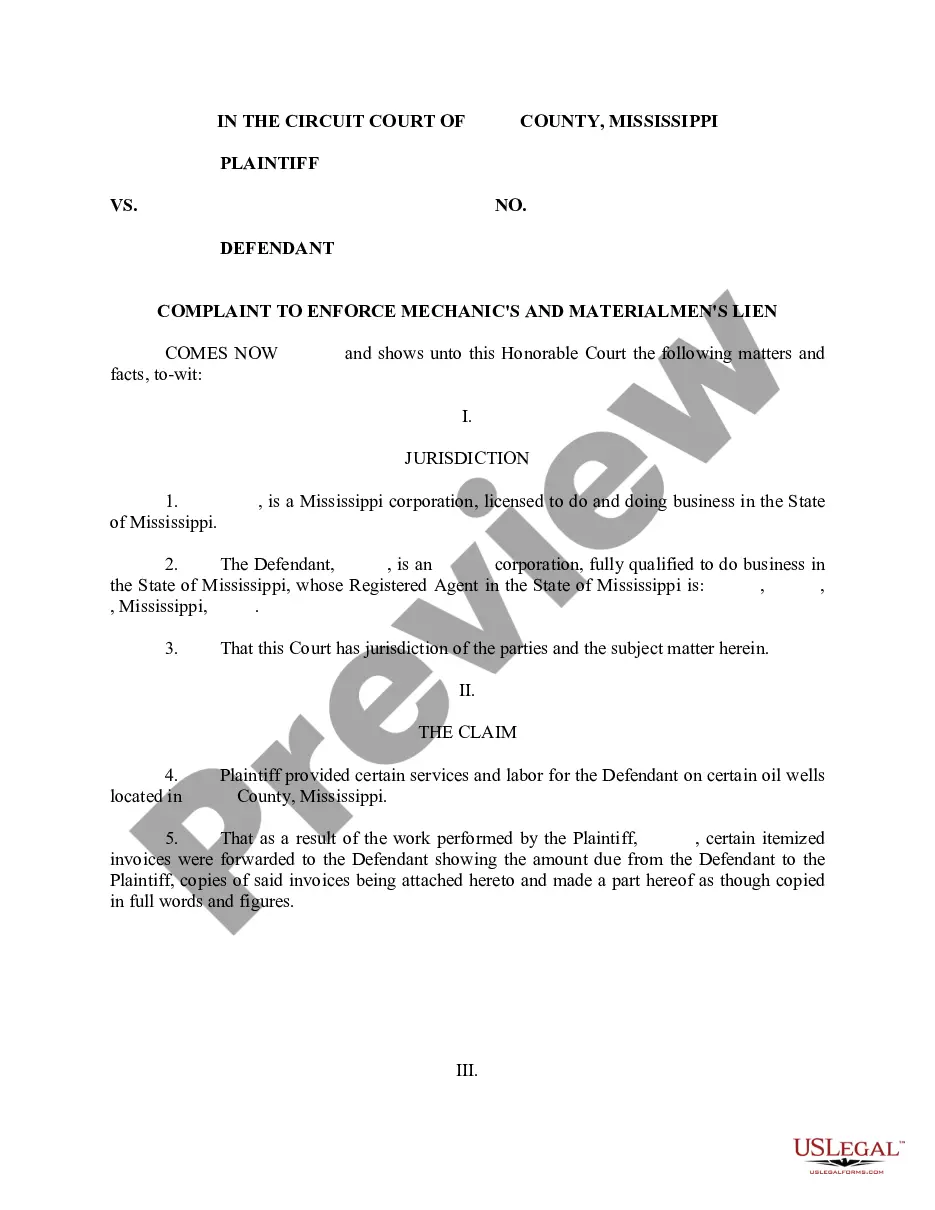
California Information Regarding Rights After Attorney - Client Fee Arbitration
What is this form?
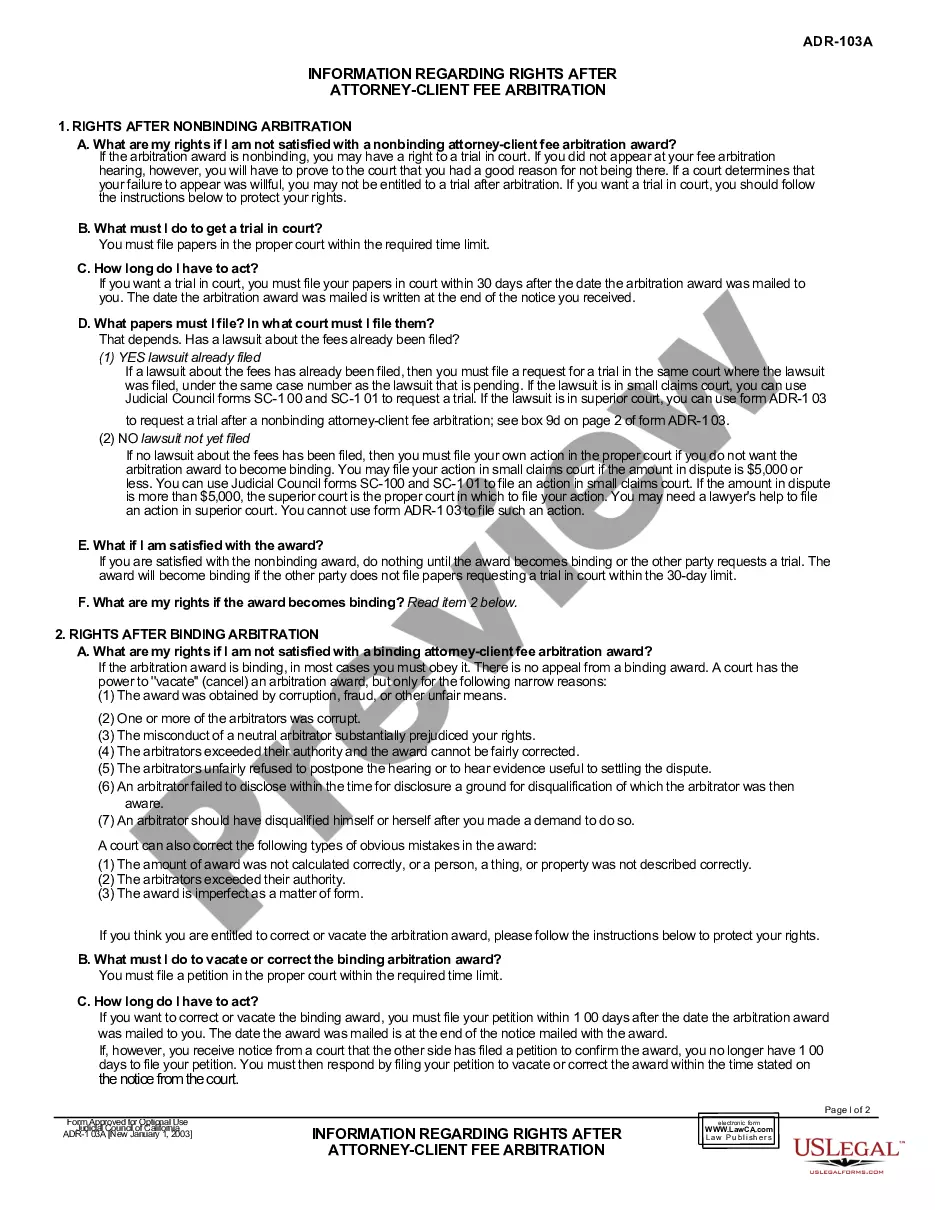
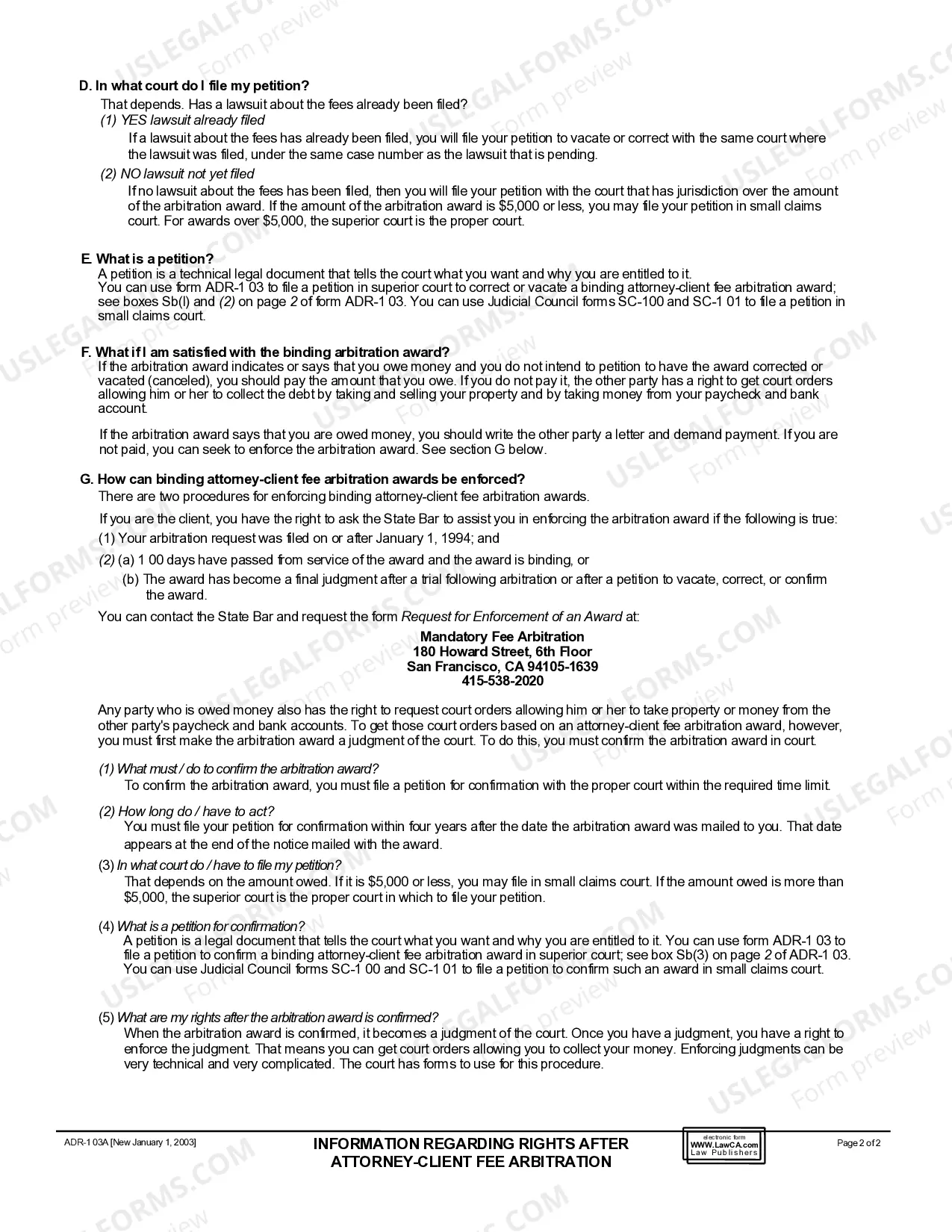
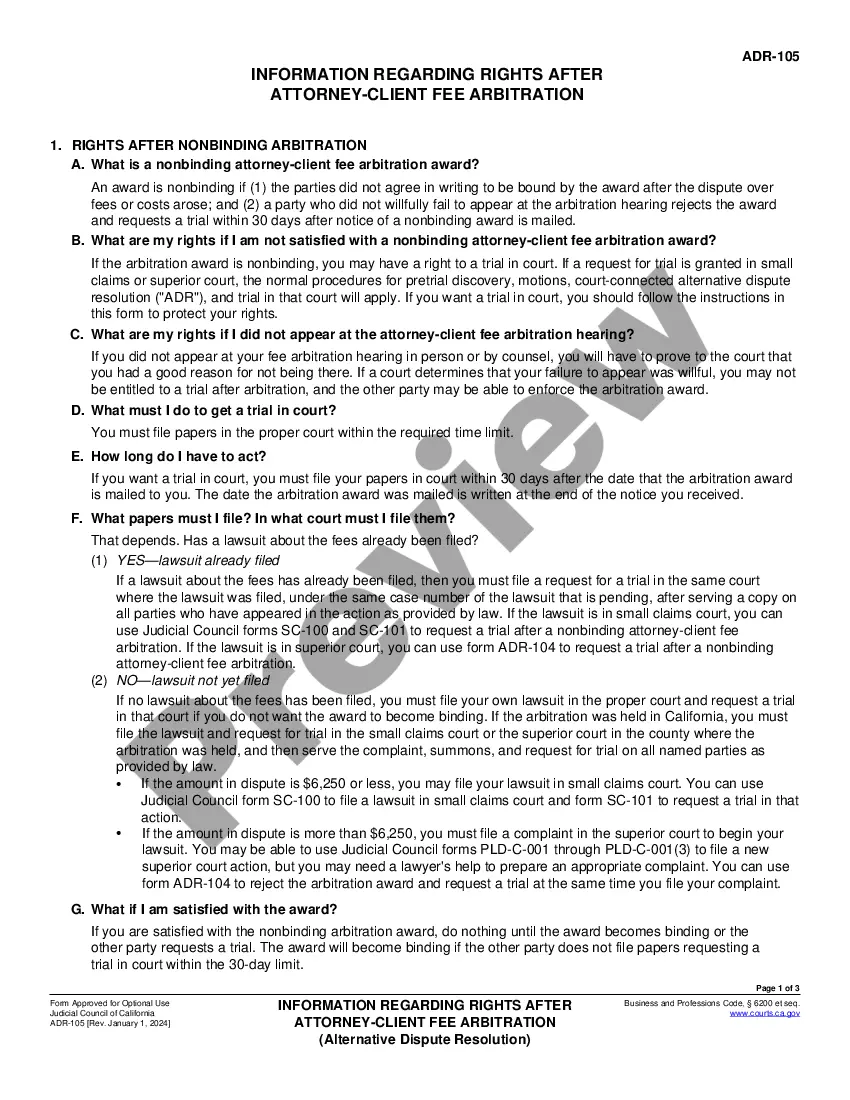
The Information Regarding Rights After Attorney-Client Fee Arbitration form outlines the rights and options available to parties following a fee arbitration process. It distinguishes between nonbinding and binding arbitration outcomes, providing essential information on how to proceed if one is dissatisfied with the arbitration award. This form is crucial for understanding legal recourse and ensuring that all parties know their rights after arbitration, helping prevent misunderstandings and protecting interests in legal fee disputes.
What’s included in this form
- Explanation of rights following nonbinding arbitration, including options for requesting a trial.
- Details on the timeline for filing petitions related to arbitration awards.
- Instructions on how to handle situations where a binding arbitration award is received.
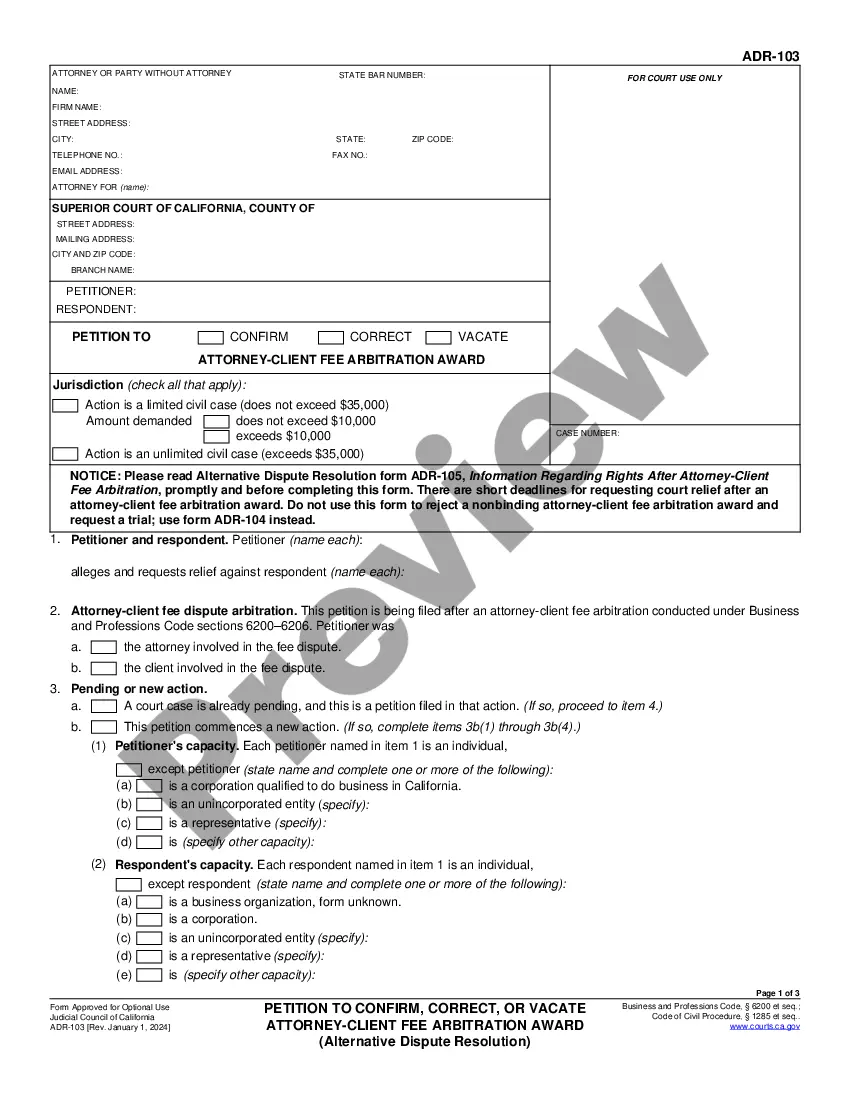
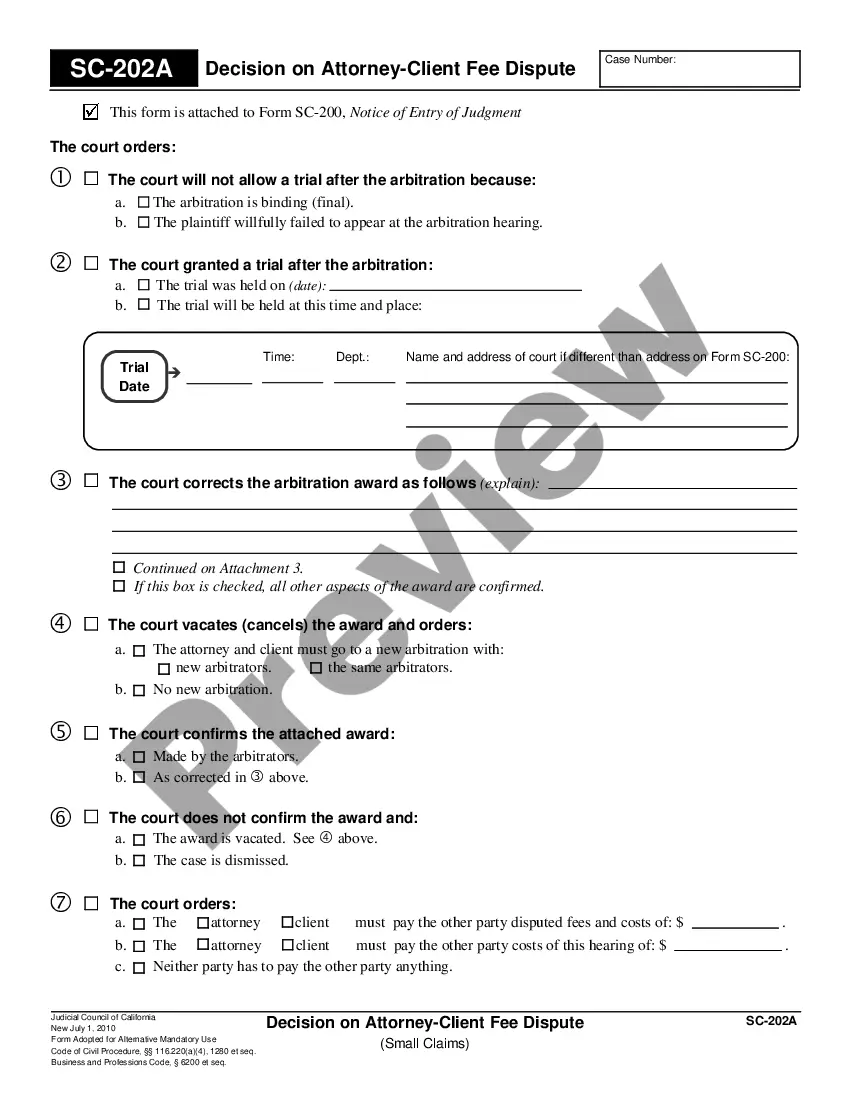
- Clarification of the court procedures for confirming, vacating, or correcting arbitration awards.
- Contact information for the Mandatory Fee Arbitration corporation for further inquiries.
When this form is needed
This form should be used after an attorney-client fee arbitration has occurred and one or both parties are unsure about their rights or next steps. It is particularly relevant if a party wishes to challenge a nonbinding award or respond to a binding award effectively. Using this form helps clarify available actions and ensures compliance with legal timeframes and filing requirements.
Who should use this form
- Clients involved in fee arbitration with their attorney who are considering their next legal steps.
- Attorneys representing clients who need to clarify rights and obligations after fee arbitration.
- Parties who have received either a binding or nonbinding arbitration award and require guidance on how to respond.
How to complete this form
- Review the arbitration award received to understand its binding or nonbinding nature.
- Determine the appropriate court in which to file any petitions or responses related to the award.
- Complete any required forms accurately, ensuring you include all necessary details such as case numbers and the reason for seeking a trial or correction.
- File your papers within the specified timeframes to protect your rights, keeping copies for your records.
- Contact the Mandatory Fee Arbitration corporation if you require further clarification or have questions.
Is notarization required?
This form does not typically require notarization unless specified by local law. Users should verify their specific jurisdiction's requirements to ensure compliance.
Get your form ready online
Our built-in tools help you complete, sign, share, and store your documents in one place.
Make edits, fill in missing information, and update formatting in US Legal Forms—just like you would in MS Word.
Download a copy, print it, send it by email, or mail it via USPS—whatever works best for your next step.
Sign and collect signatures with our SignNow integration. Send to multiple recipients, set reminders, and more. Go Premium to unlock E-Sign.
If this form requires notarization, complete it online through a secure video call—no need to meet a notary in person or wait for an appointment.
We protect your documents and personal data by following strict security and privacy standards.

Make edits, fill in missing information, and update formatting in US Legal Forms—just like you would in MS Word.

Download a copy, print it, send it by email, or mail it via USPS—whatever works best for your next step.

Sign and collect signatures with our SignNow integration. Send to multiple recipients, set reminders, and more. Go Premium to unlock E-Sign.

If this form requires notarization, complete it online through a secure video call—no need to meet a notary in person or wait for an appointment.

We protect your documents and personal data by following strict security and privacy standards.
Common mistakes
- Failing to file a petition within the designated time limits.
- Not providing necessary documentation or information when submitting forms to the court.
- Misunderstanding the nature of the arbitration award (binding vs. nonbinding).
- Ignoring the requirement to prove a valid reason for not attending the arbitration hearing if applicable.
Benefits of using this form online
- Convenience of downloading forms in multiple formats including Word and Rich Text.
- Editable text allows users to tailor the document to their specific situation.
- Access to expert-drafted templates ensures legal comprehensiveness and compliance.
- Time-saving as the process can be completed from home without the need for in-person visits.
Legal use & context
- This form provides legally binding information for rights after attorney-client fee arbitration.
- Understanding your rights is crucial for taking appropriate legal action when needed.
- The form can help protect your interests in case of disputes regarding arbitration awards.
- This form outlines rights after nonbinding and binding attorney-client fee arbitration.
- Timely action is crucial; know the deadlines for filing petitions or requesting trials.
- Understanding the distinction between nonbinding and binding arbitration awards is essential.
Looking for another form?

Form popularity
FAQ
An attorney-client relationship can form when any of the following occurs: A formal letter of engagement or contract for legal services is signed by the attorney and client. A client pays a retainer or makes a payment to an attorney in exchange for legal services.
An attorney's client will be either plaintiff or defendant depending on whether he/she sues someone or is sued, respectively. This conveys the client's role in the process, though, not their relation to the attorney.
Attorney-client privilege refers to a legal privilege that works to keep confidential communications between an attorney and his or her client secret. The privilege is asserted in the face of a legal demand for the communications, such as a discovery request or a demand that the lawyer testify under oath.
In that sense, the privilege is the client's, not the lawyer'sthe client can decide to forfeit (or waive) the privilege, but the lawyer cannot. The privilege generally stays in effect even after the attorney-client relationship ends, and even after the client dies.
An attorney-client relationship is formed when a lawyer agrees to provide legal assistance to someone seeking the lawyer's services. The scope of the representation depends on the terms of the agreement.