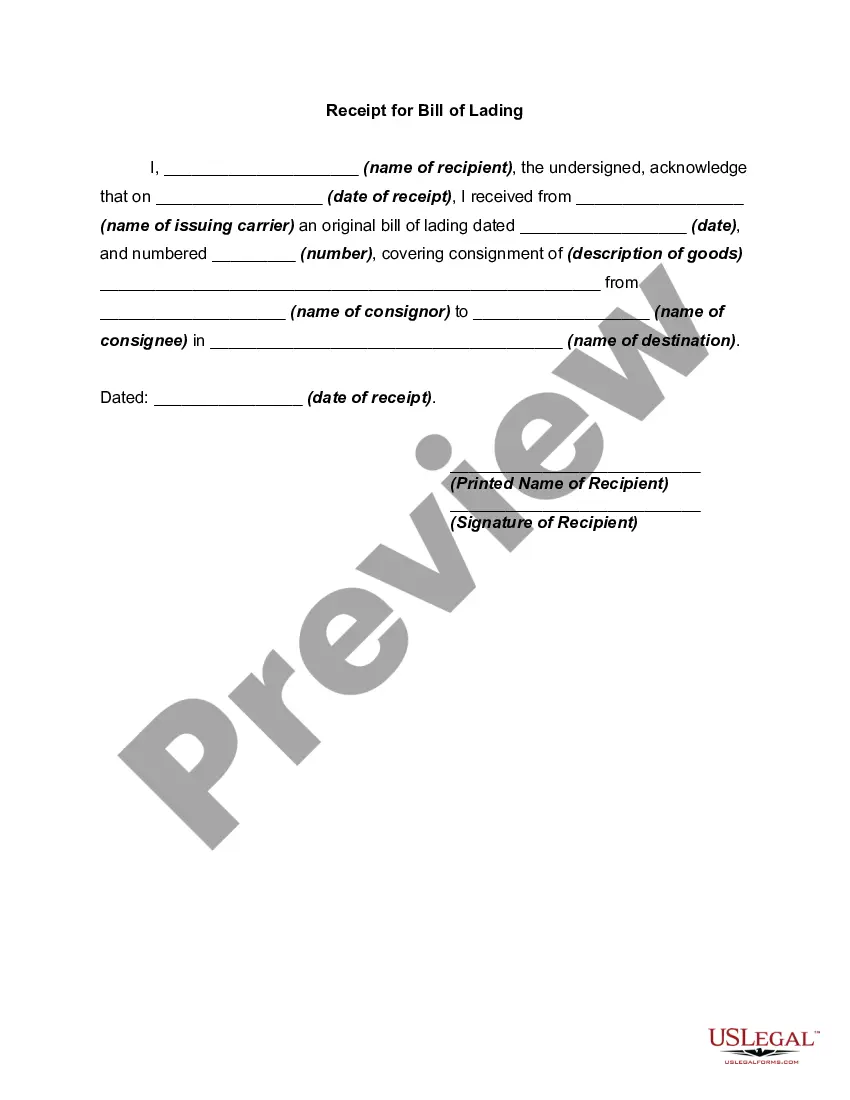
Receipt for Bill of Lading
Understanding this form
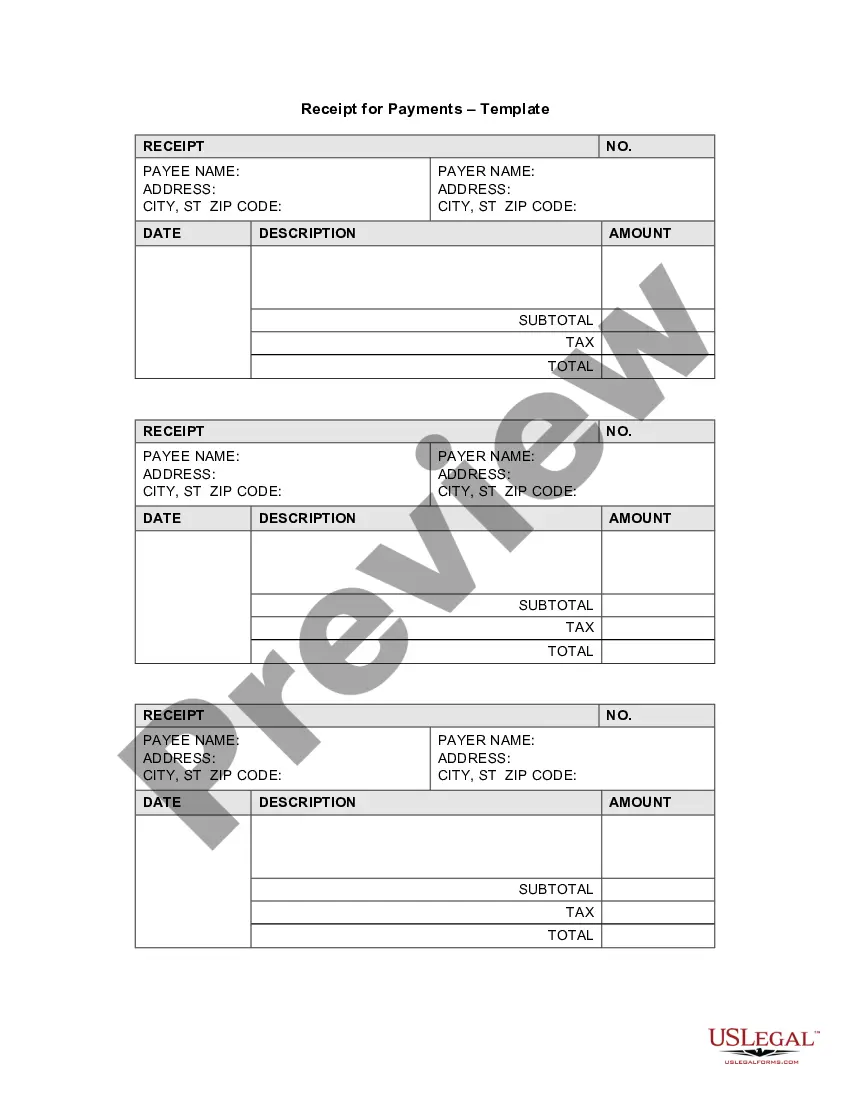
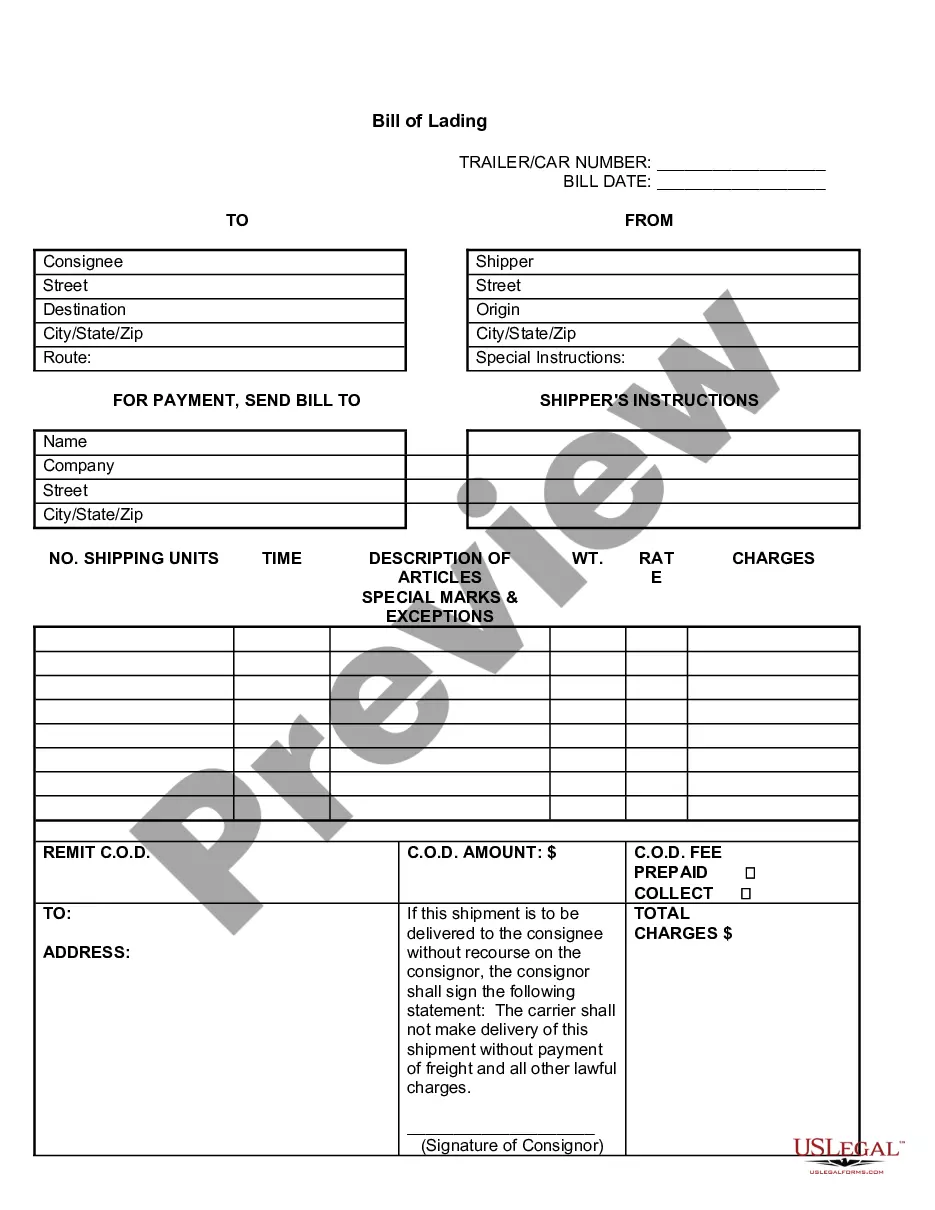
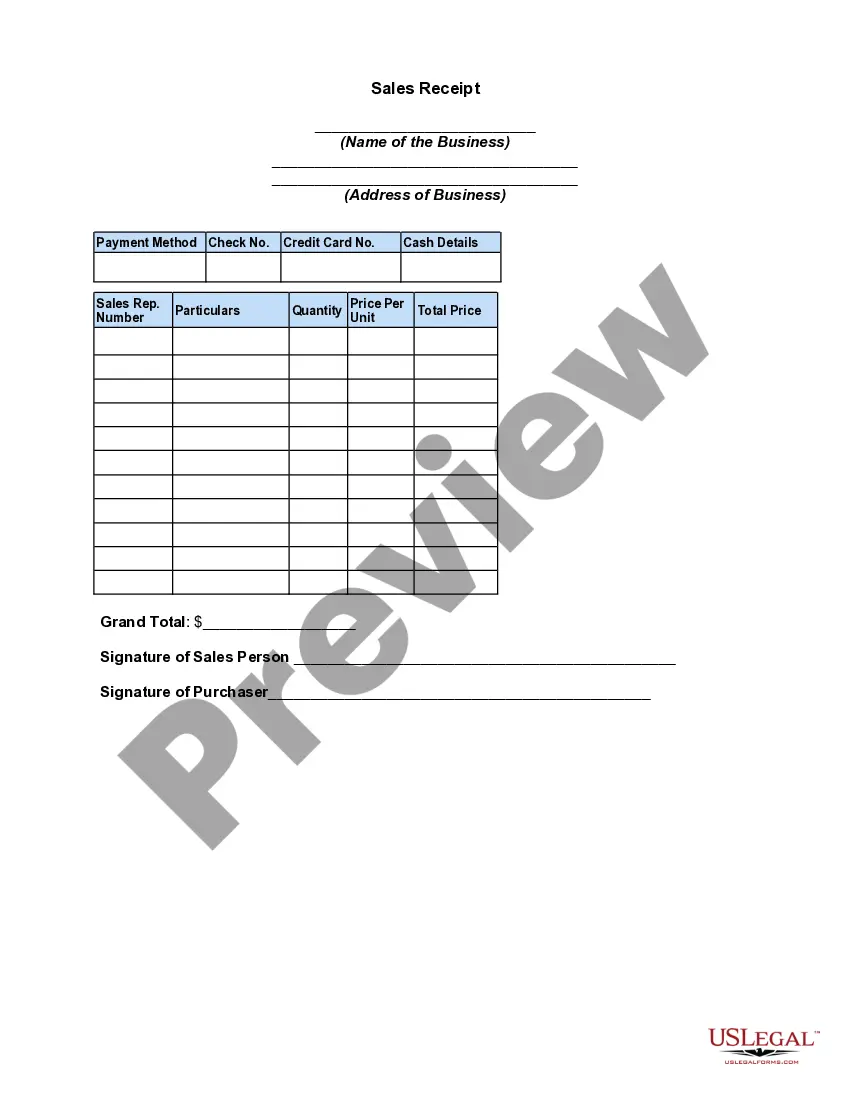
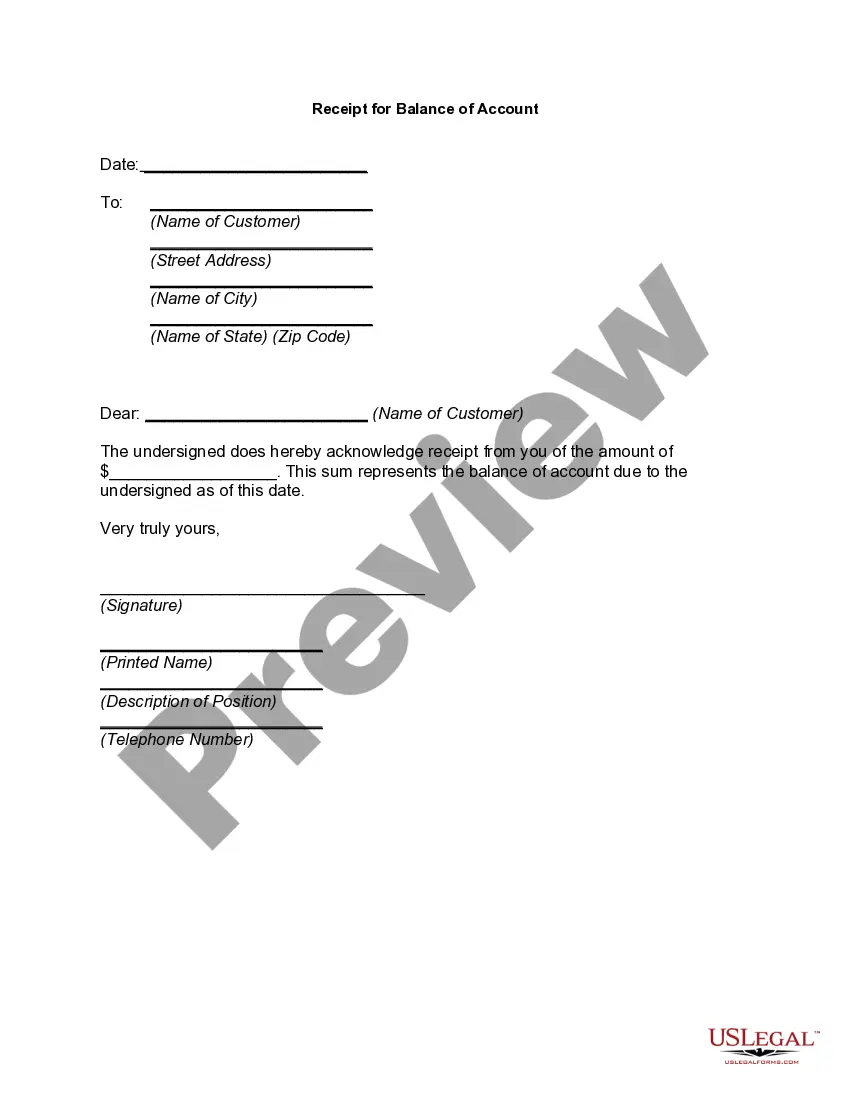
The Receipt for Bill of Lading is a legal document that serves as a confirmation of receipt for goods transported by a carrier, such as a trucking company or shipping line. This form functions as both a receipt and a contract, ensuring that the shipper receives payment, while also providing the recipient with proof of entitlement to the goods listed in the bill of lading. Unlike general receipts, this form incorporates specific details related to the shipment, making it essential for businesses involved in freight transport and distribution.
Key components of this form
- Name of the recipient who acknowledges receipt.
- Date on which the goods were received.
- Details of the issuing carrier including name and signature.
- Bill of lading date and number.
- Description of the goods being transported.
- Names of the consignor and consignee along with the destination.
Common use cases
This form is necessary when goods are shipped and received via a carrier. Business owners should use it when they want to document the transfer of property from a shipper to a buyer, ensuring clarity in the transaction. It's also relevant in situations where proof of receipt might be required for returns, exchanges, or legal disputes regarding delivery.
Who can use this document
- Shippers of goods looking to secure payment and confirm the transfer of property.
- Recipients of goods who need proof of delivery for their records.
- Businesses engaged in freight transport that require documentation of shipments.
How to complete this form
- Identify the recipient and write their name in the designated field.
- Enter the date on which the goods were received.
- Specify the name of the issuing carrier and include their signature.
- Fill in the original bill of lading date and the serial number.
- Provide a detailed description of the goods being transported.
- Include the names of the consignor and consignee along with the destination address.
Does this form need to be notarized?
This form does not typically require notarization to be legally valid. However, some jurisdictions or document types may still require it. US Legal Forms provides secure online notarization powered by Notarize, available 24/7 for added convenience.
Get your form ready online
Our built-in tools help you complete, sign, share, and store your documents in one place.
Make edits, fill in missing information, and update formatting in US Legal Forms—just like you would in MS Word.
Download a copy, print it, send it by email, or mail it via USPS—whatever works best for your next step.
Sign and collect signatures with our SignNow integration. Send to multiple recipients, set reminders, and more. Go Premium to unlock E-Sign.
If this form requires notarization, complete it online through a secure video call—no need to meet a notary in person or wait for an appointment.
We protect your documents and personal data by following strict security and privacy standards.

Make edits, fill in missing information, and update formatting in US Legal Forms—just like you would in MS Word.

Download a copy, print it, send it by email, or mail it via USPS—whatever works best for your next step.

Sign and collect signatures with our SignNow integration. Send to multiple recipients, set reminders, and more. Go Premium to unlock E-Sign.

If this form requires notarization, complete it online through a secure video call—no need to meet a notary in person or wait for an appointment.

We protect your documents and personal data by following strict security and privacy standards.
Common mistakes
- Failing to include all required signatures and dates.
- Not providing an accurate description of the goods.
- Omitting details about the consignor and consignee.
Benefits of completing this form online
- Convenient access to templates that are drafted by licensed attorneys.
- Quick download and customization to fit specific needs.
- Reliable forms that comply with current legal standards.
Looking for another form?


Form popularity
FAQ
(1) Your name and address, or the name and address of the motor carrier issuing the bill of lading. (2) The names and addresses of any other motor carriers, when known, who will participate in transportation of the shipment.
Definition: Bill of lading (BOL) is one of the most important documents in the shipping process.A completed BOL legally shows that the carrier has received the freight as described and is obligated to deliver that freight in good condition to the consignee.
It is a conclusive receipt, i.e. an acknowledgement that the goods have been loaded; and. it contains or evidences the terms of the contract of carriage; and. it serves as a document of title to the goods, subject to the nemo dat rule.
Place of Receipt : This is the place where the cargo is handed over by the shipper or his agent to the carrier (shipping line) or its agent ..If this area is filled (example : ICD Bengaluru), it means that the carrier has undertaken to move the container or cargo from the Port of Discharge to the Place of Delivery..
Start by adding the date that you're creating the document. Enter a bill of lading number. Apply the appropriate barcode. Enter any necessary ID number or PRO number provided by the shipper. Enter your PO or reference number.
Shipper and receiver (or consignee) names and complete address. The date of the shipment. The number of shipping units. The freight classification. The exact weight of the shipment. The declared value of the freight.
Shipping Instructions or SI is a document that provides detailed specifications of a shipment, like Container number, Seal number, exact number of packages, HS code of the commodity, etc., The instructions in the document are used to create your Bill of Lading or Sea Waybill.
The bill of lading (BOL) works as a receipt of freight services, a contract between a freight carrier and shipper and a document of title. The bill of lading is a legally binding document providing the driver and the carrier all the details needed to process the freight shipment and invoice it correctly.
An example of a bill of lading is the form that is provided by a moving company to a third-party carrier, which will be delivering store fixtures for them to a retail location.The third-party then hands the bill of lading over to the store as a receipt for the goods, once the delivery has been made.