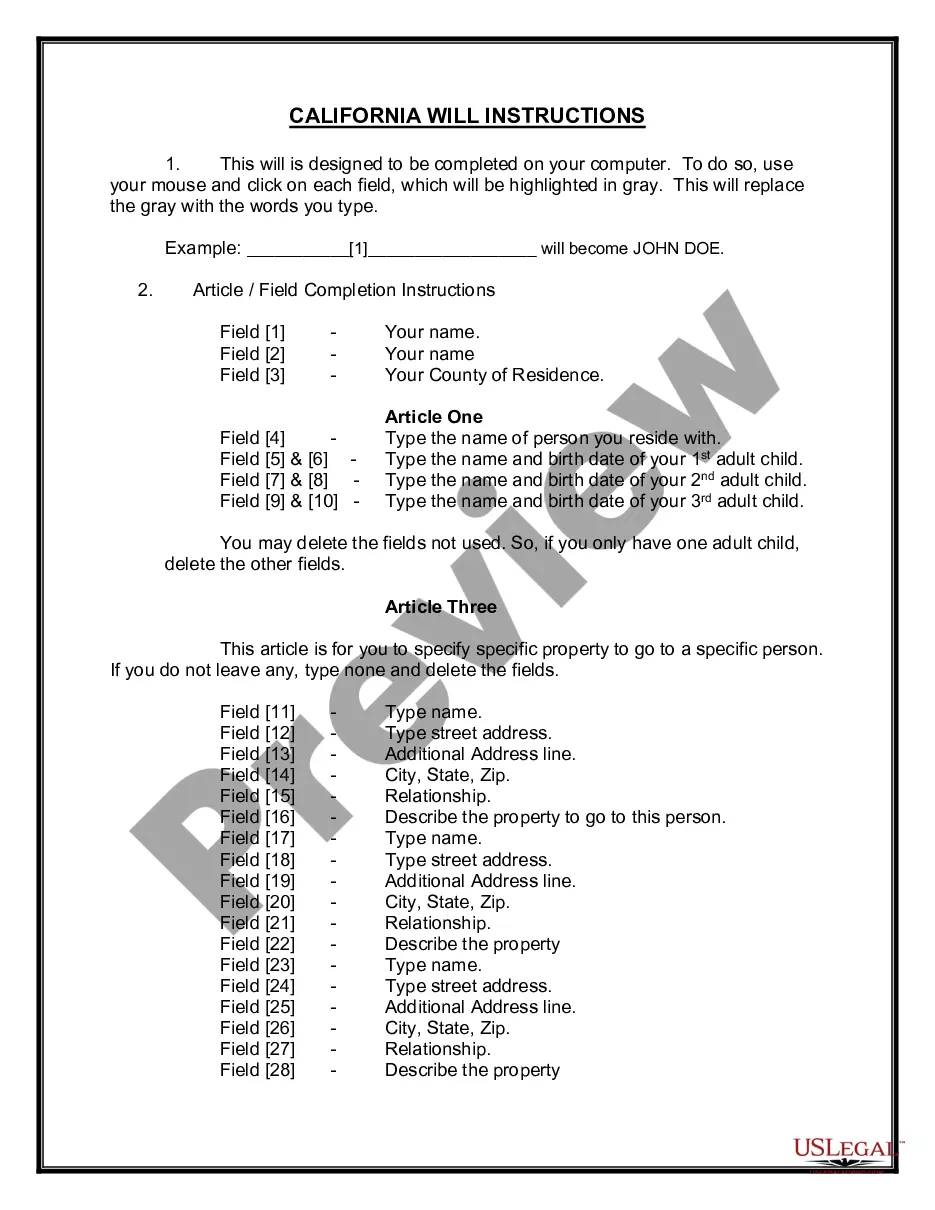
Complaint to Reform Deed - Mistake in Erroneous Names of Two Grantees
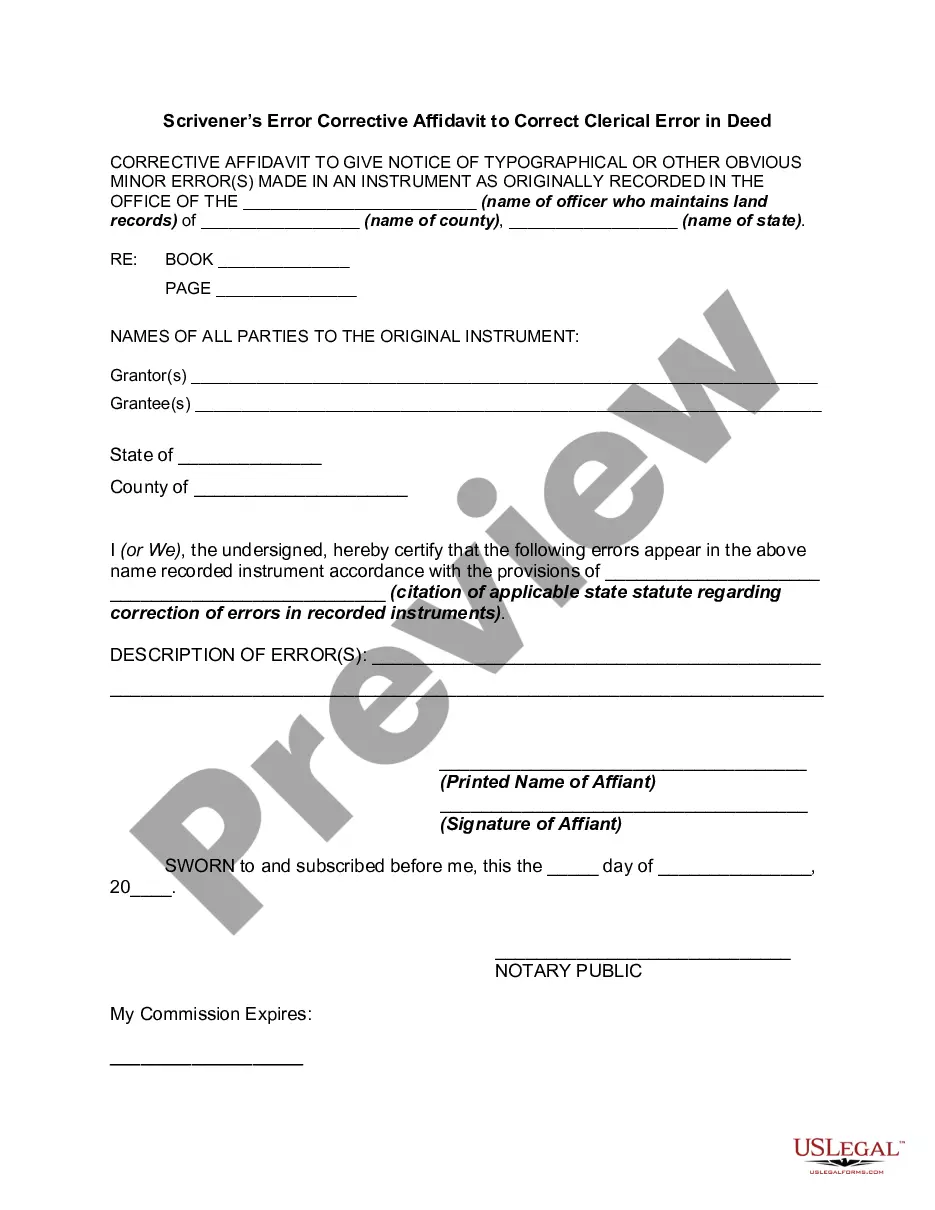
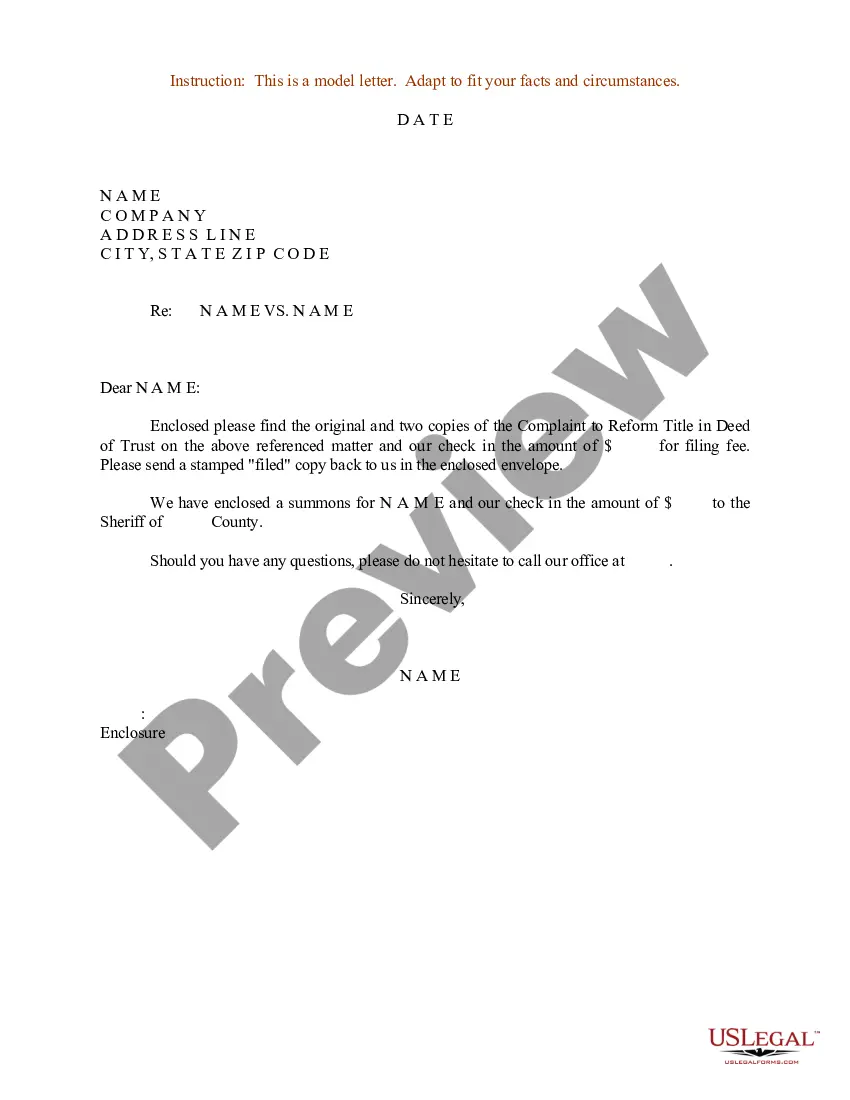
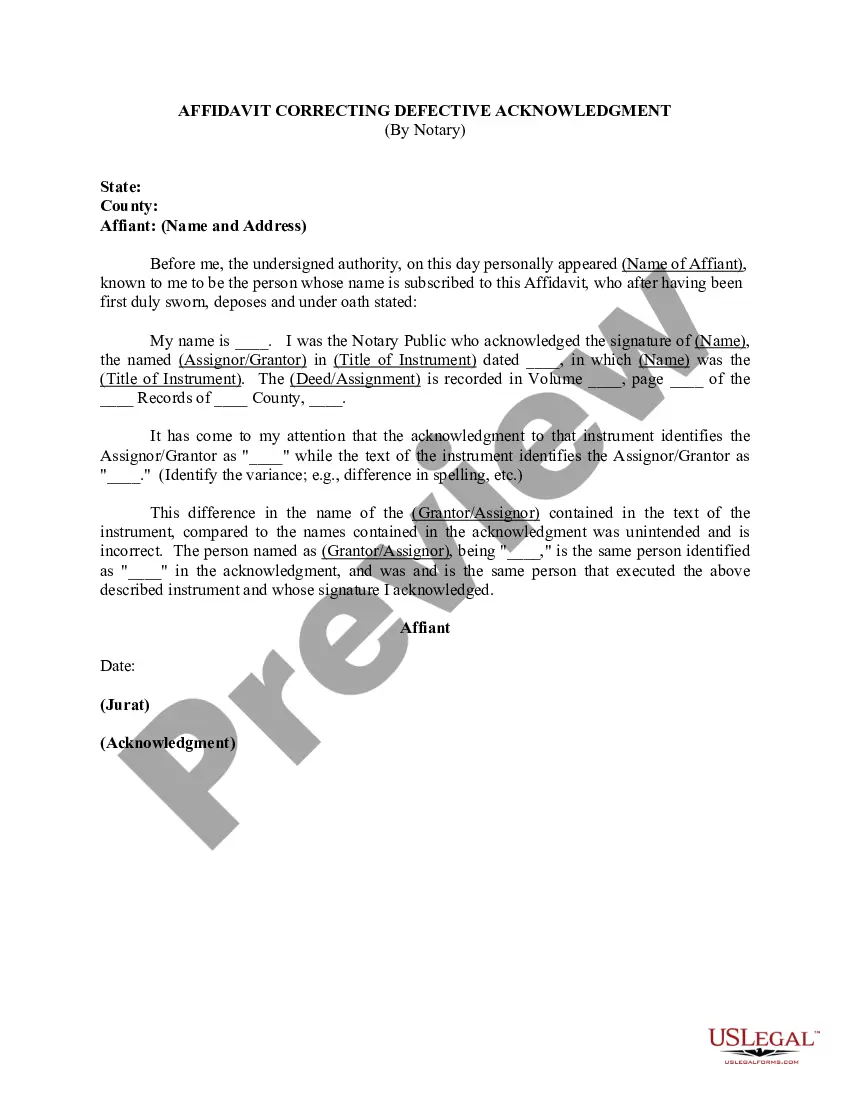
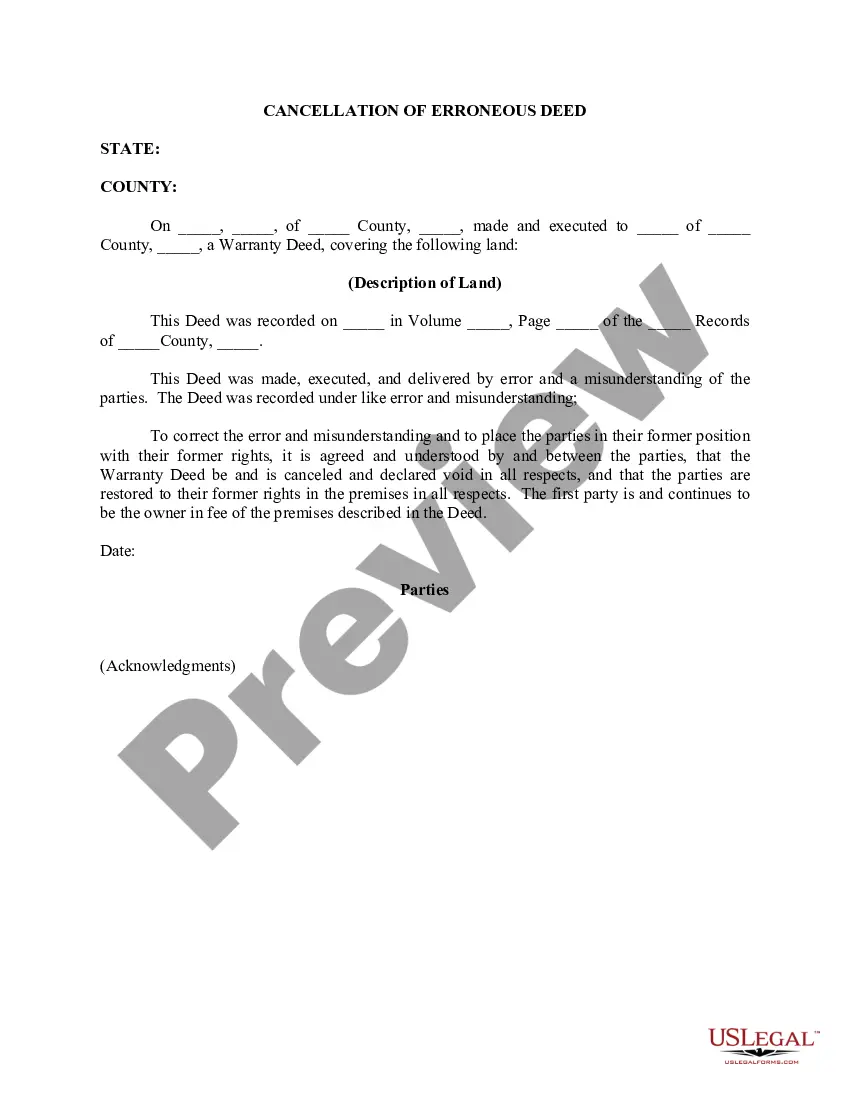
What is this form?
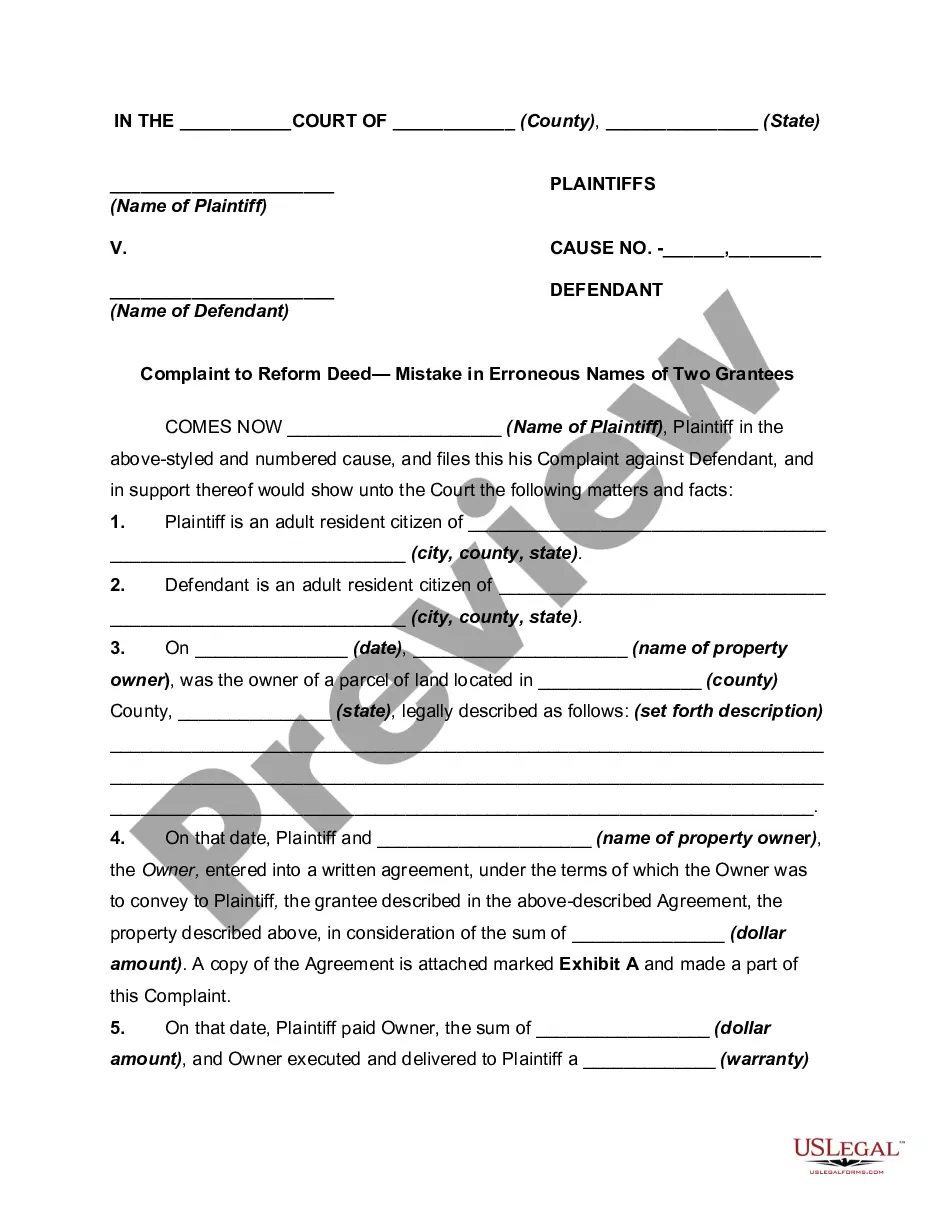
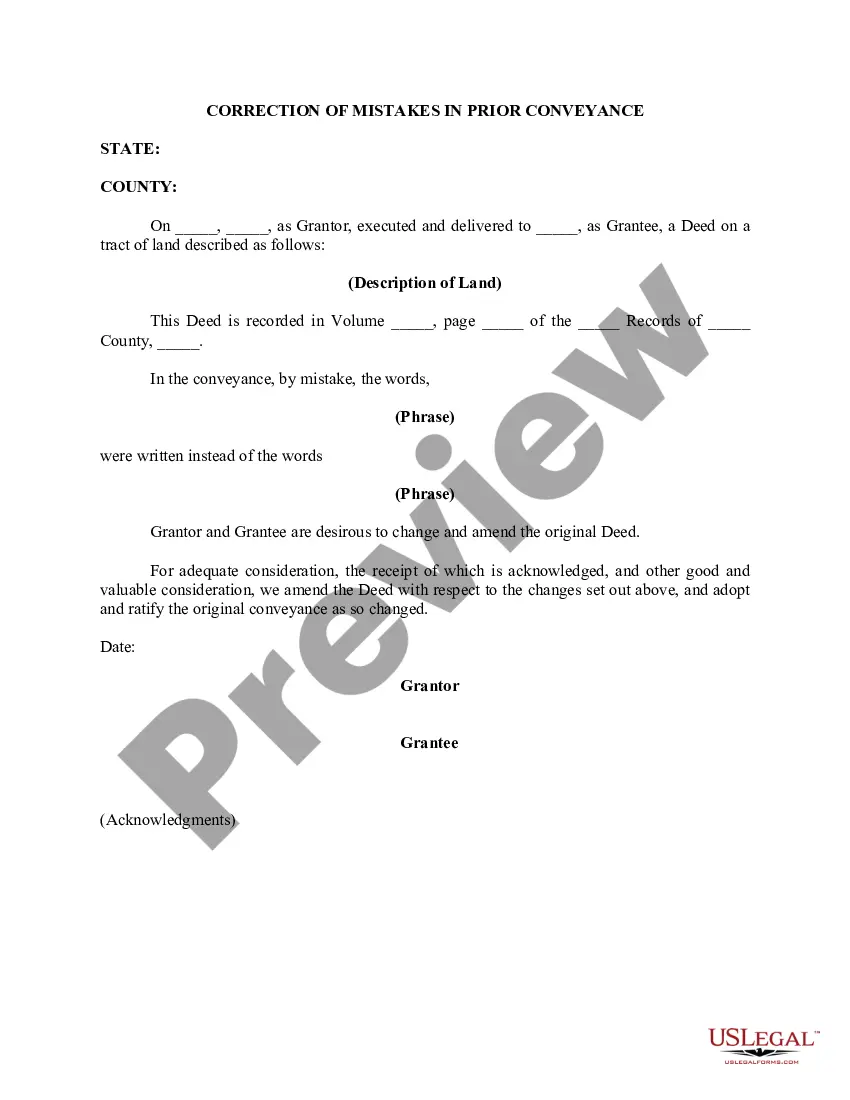
The Complaint to Reform Deed is a legal document used to request a court to correct a mistake in a deed, specifically when the names of two grantees have been erroneously listed. This form helps ensure that the deed accurately reflects the original intent of the parties involved, thereby securing the rightful ownership of the property. Unlike a standard deed, which merely conveys property rights, this form specifically addresses and seeks to remedy material mistakes in the title records.
Key components of this form
- Plaintiff and defendant information, including names and residence details.
- Property description, stating the exact location and legal description of the parcel involved.
- Details of the original agreement between the property owner and the plaintiff, including consideration.
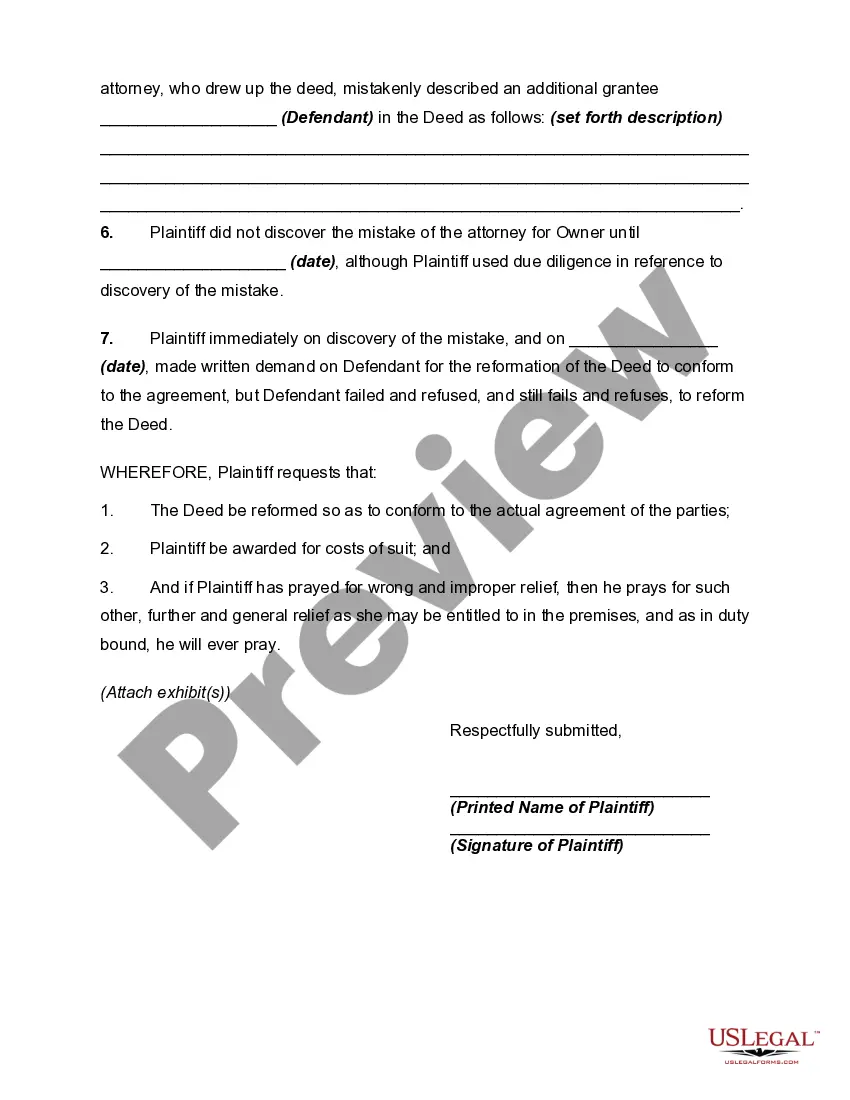
- Notification of the discovered mistake and demand for reformation.
- Requested relief from the court, including correction of the deed and coverage of court costs.
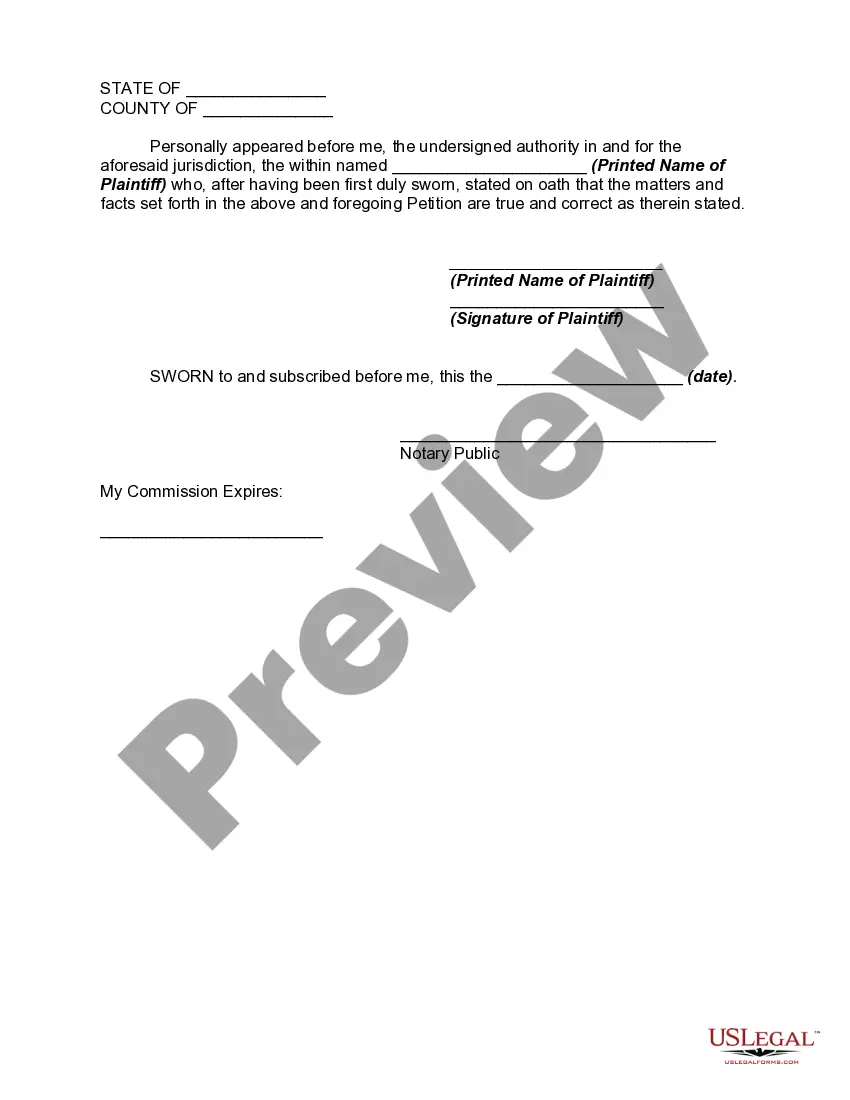
- Signature section for the plaintiff and a notary acknowledgment for document validation.
When to use this form
This form is necessary when a material mistake has been made in the recording of a deed, particularly concerning the names of grantees involved in a real estate transaction. It is typically utilized when the plaintiff wishes to clarify ownership following an erroneous title that could complicate future sale or reference of the property. Common scenarios include when an attorney mistakenly includes an additional grantee or omits a necessary correction during the deed's preparation.
Who should use this form
- Property owners who have discovered mistakes in their deeds.
- Individuals needing to confirm their rightful ownership of real estate after an error has been recorded.
- Legal representatives preparing to file a lawsuit for deed reformation.
- Parties involved in a real estate transaction where the title includes inaccuracies.
Steps to complete this form
- Identify the parties involved, listing the plaintiff and defendant's names along with their residential addresses.
- Provide a detailed description of the property, including its legal boundaries and key identifiers.
- Include the date of the original agreement and the amount of consideration exchanged.
- Clearly state the nature of the mistake discovered in the deed and the action taken to address it.
- Outline the specific changes requested from the court regarding the deed correction.
- Complete the signature section and arrange for notarization if required.
Is notarization required?
This document requires notarization to meet legal standards. US Legal Forms provides secure online notarization powered by Notarize, allowing you to complete the process through a verified video call, available 24/7.
Get your form ready online
Our built-in tools help you complete, sign, share, and store your documents in one place.
Make edits, fill in missing information, and update formatting in US Legal Forms—just like you would in MS Word.
Download a copy, print it, send it by email, or mail it via USPS—whatever works best for your next step.
Sign and collect signatures with our SignNow integration. Send to multiple recipients, set reminders, and more. Go Premium to unlock E-Sign.
If this form requires notarization, complete it online through a secure video call—no need to meet a notary in person or wait for an appointment.
We protect your documents and personal data by following strict security and privacy standards.

Make edits, fill in missing information, and update formatting in US Legal Forms—just like you would in MS Word.

Download a copy, print it, send it by email, or mail it via USPS—whatever works best for your next step.

Sign and collect signatures with our SignNow integration. Send to multiple recipients, set reminders, and more. Go Premium to unlock E-Sign.

If this form requires notarization, complete it online through a secure video call—no need to meet a notary in person or wait for an appointment.

We protect your documents and personal data by following strict security and privacy standards.
Avoid these common issues
- Failing to include all necessary details of the property, which may lead to delays.
- Omitting signatures or not notarizing the document if required by local laws.
- Neglecting to properly notify all defendants, which can invalidate the action.
- Providing inaccurate information about the date of the discovery of the error.
Advantages of online completion
- Immediate access to professionally drafted templates that ensure legal compliance.
- Easy to edit and customize for specific situations and jurisdictions.
- Reduces the need for costly attorney fees for simple reformation requests.
- Secure download with the capability to save and modify as needed.
Legal use & context
- The form enables property owners to rectify common errors associated with property deeds.
- It serves as an important legal tool to clarify ownership rights in real estate transactions.
- Failure to address mistakes in deeds can lead to disputes and challenges in property ownership.
Key takeaways
- The Complaint to Reform Deed addresses specific mistakes concerning grantee names.
- This form is vital for ensuring clear property ownership and preventing disputes.
- Accurate completion and notarization of the form are essential for legal validity.
Looking for another form?

Form popularity
FAQ
The Complaint to Reform Deed - Mistake in Erroneous Names of Two Grantees is a court filing used to correct a deed that mislists the two grantees. It seeks a judicial order to reform the title so it reflects the parties' original intent and correct a material error in the recording. Relief typically includes correcting the deed and may include court costs.
Common deed-related mistakes include misnamed or omitted grantees, typos in the legal description, or other clerical errors in the transfer documents. This form is designed to address misnaming of grantees by prompting a court to reform the deed so the title matches the original agreement.
This form provides the procedural path to file a complaint to reform the deed in court to fix the grantees’ names. It requires the plaintiff and defendant information, a precise property description, details of the original agreement (including consideration), notice of the discovered mistake, and the relief sought to correct the deed and cover court costs.
Yes. A misspelled or misidentified name can create uncertainty about ownership and future transfers. This form is used to obtain a court-ordered reform of the deed to accurately reflect the rightful owners and to correct the title as described in the relief requested.
Filing the Complaint to Reform Deed starts a court process to fix a material mistake in the deed. The form outlines the information required (parties, property description, original agreement details, notice of the mistake, and the requested relief) and the court will decide whether reform is appropriate.
Unlike a standard deed, this form starts a court-ordered reform of the title to correct a material error—the erroneous names of two grantees. It does not simply convey property rights; it seeks to align the deed with the original agreement and secure the requested relief, including the deed correction and any court costs.