Disclaimer of Right to Inherit or Inheritance - All Property from Estate or Trust
Understanding this form
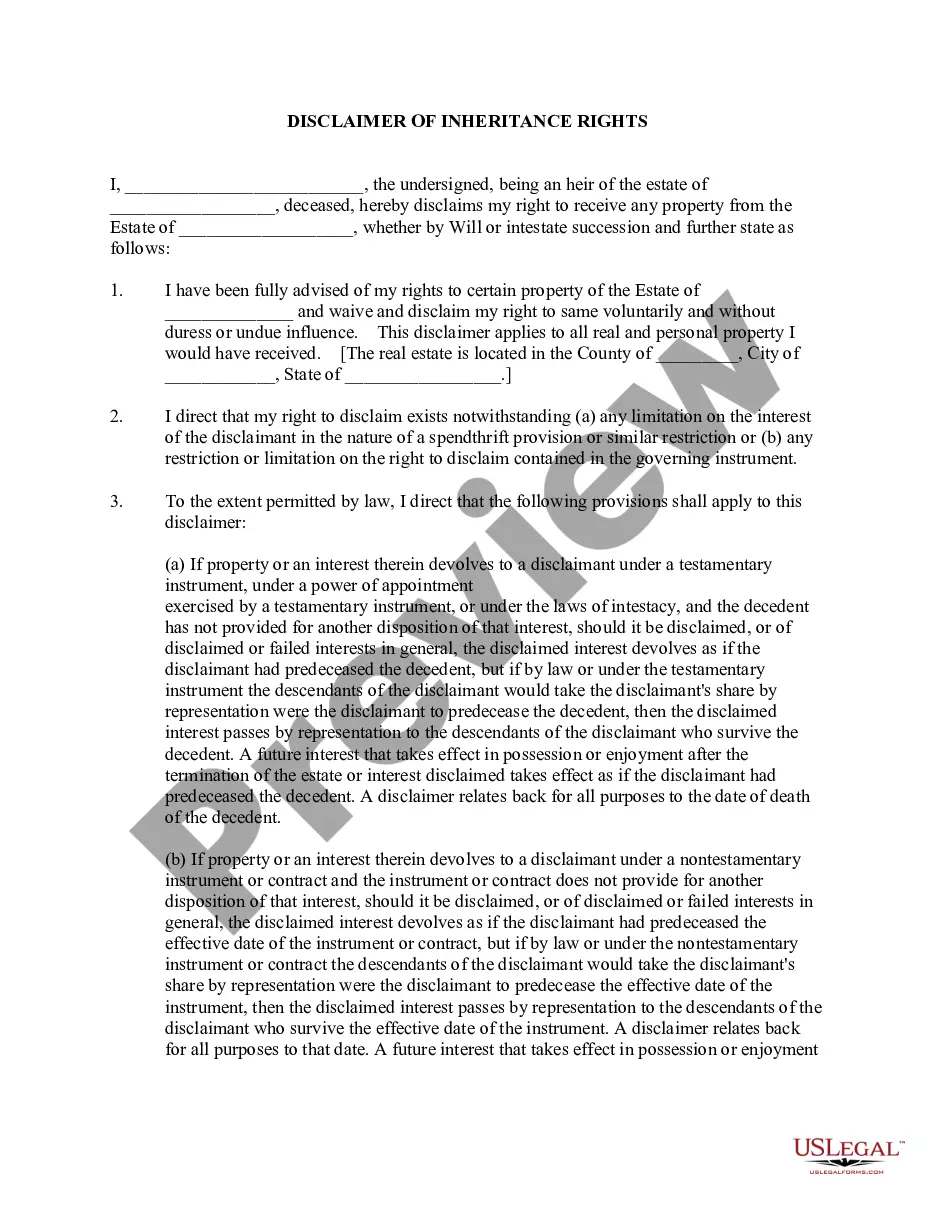
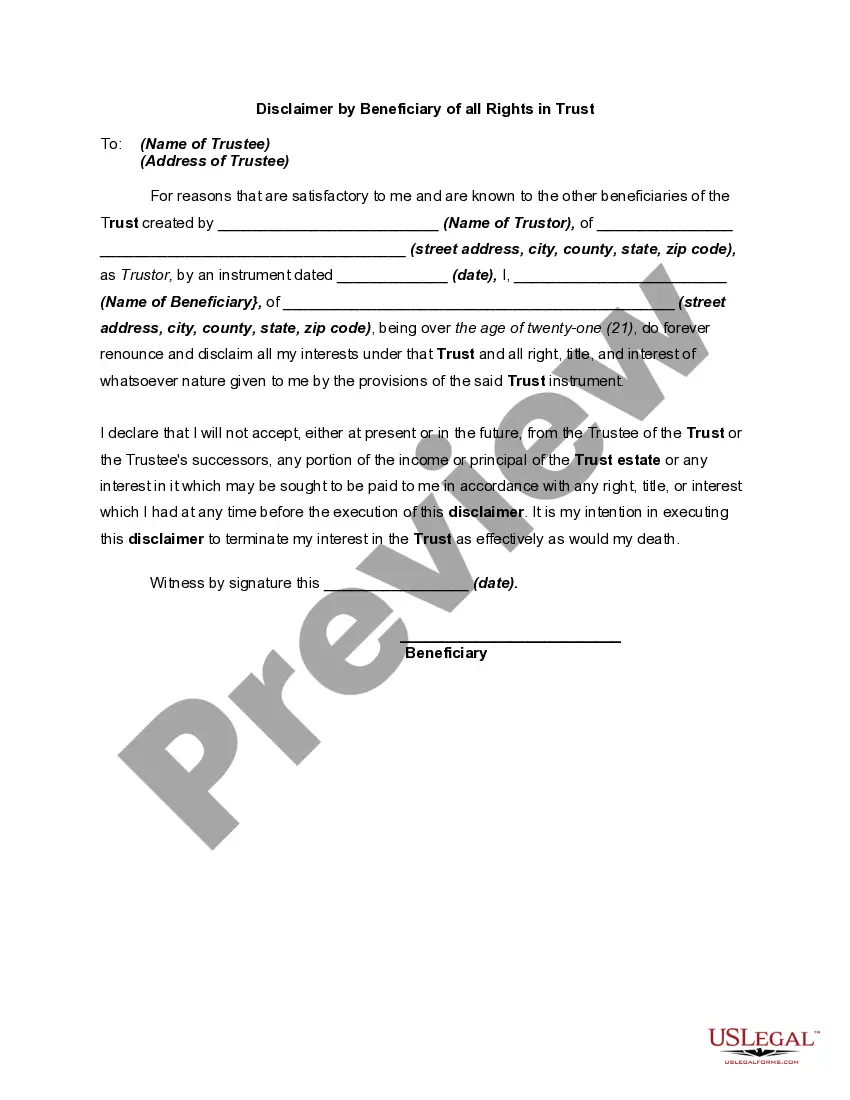
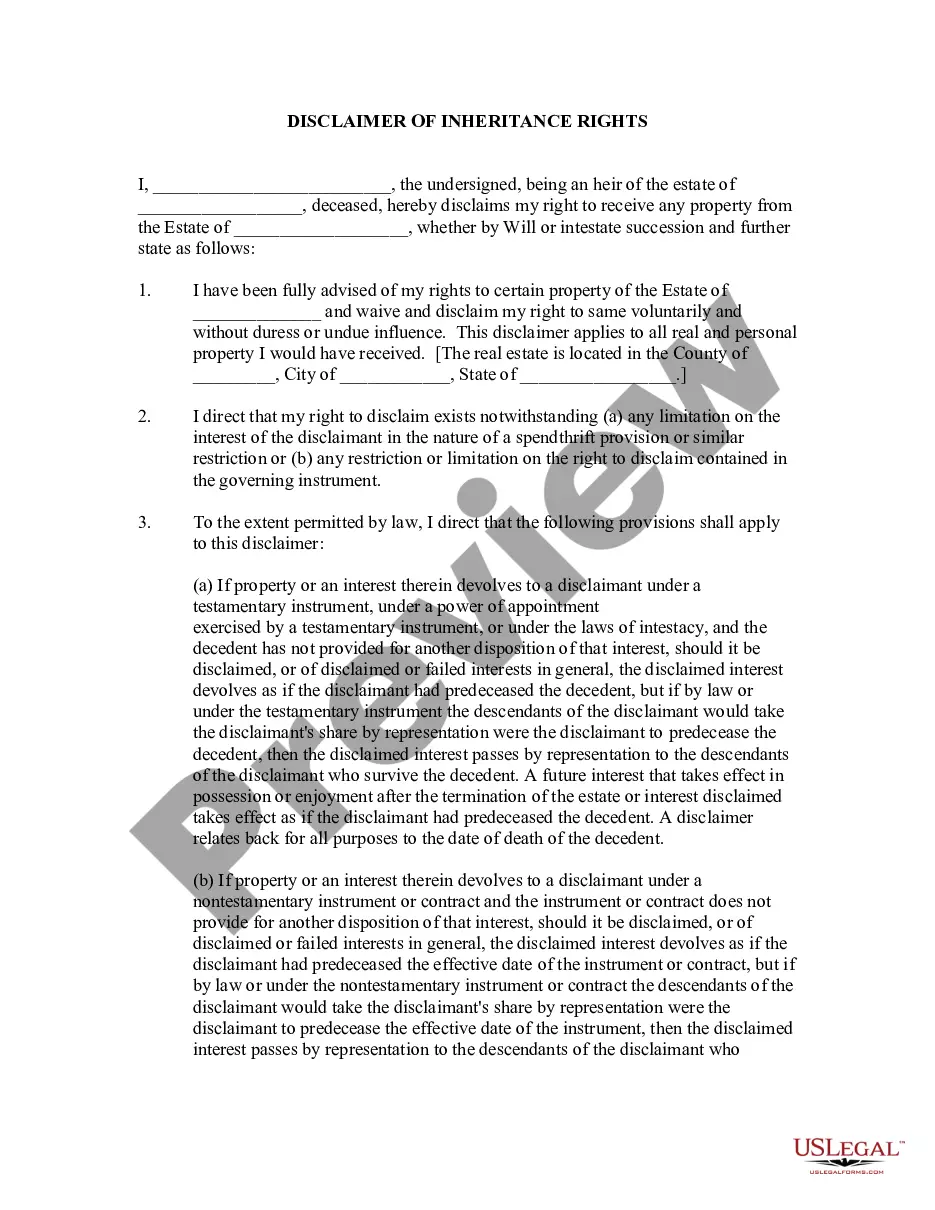
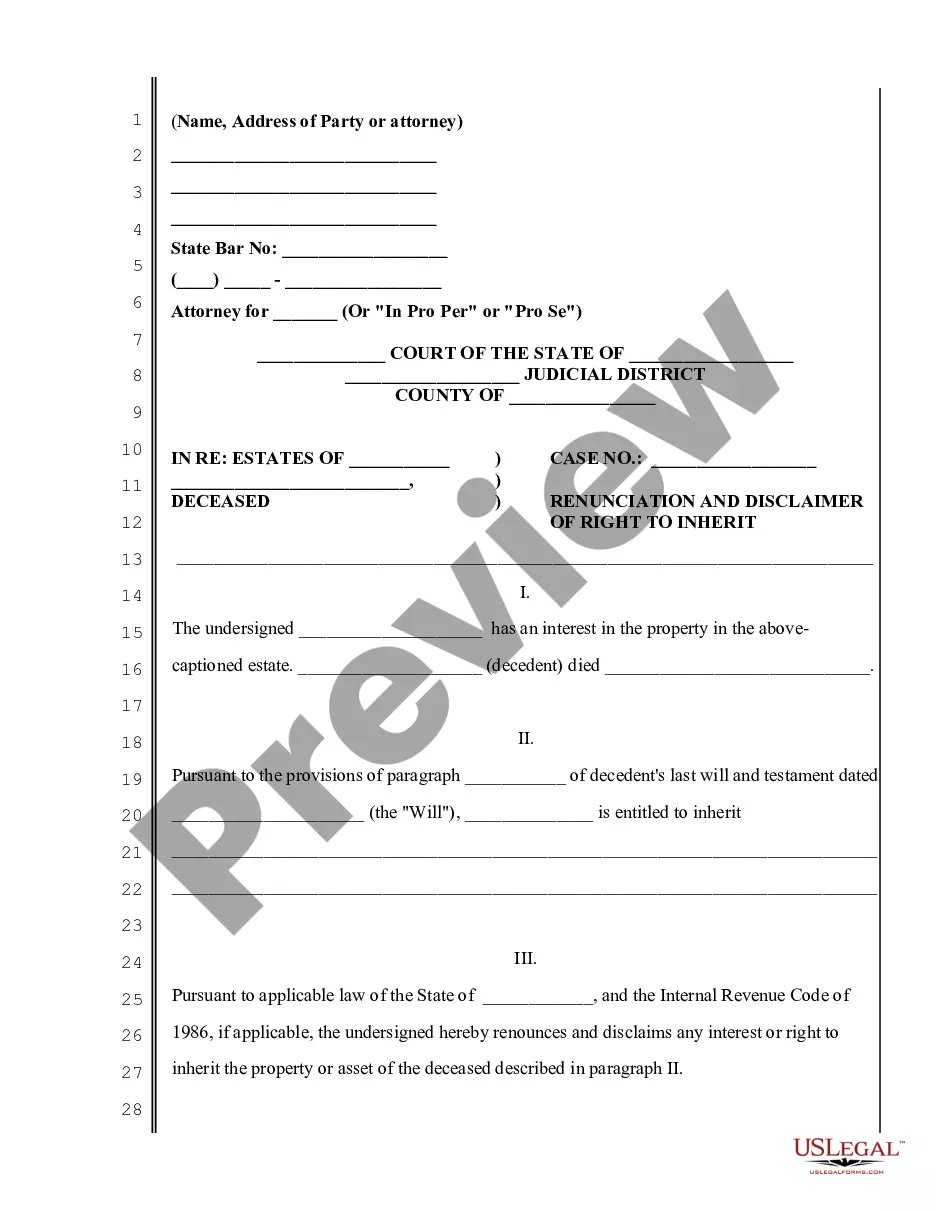
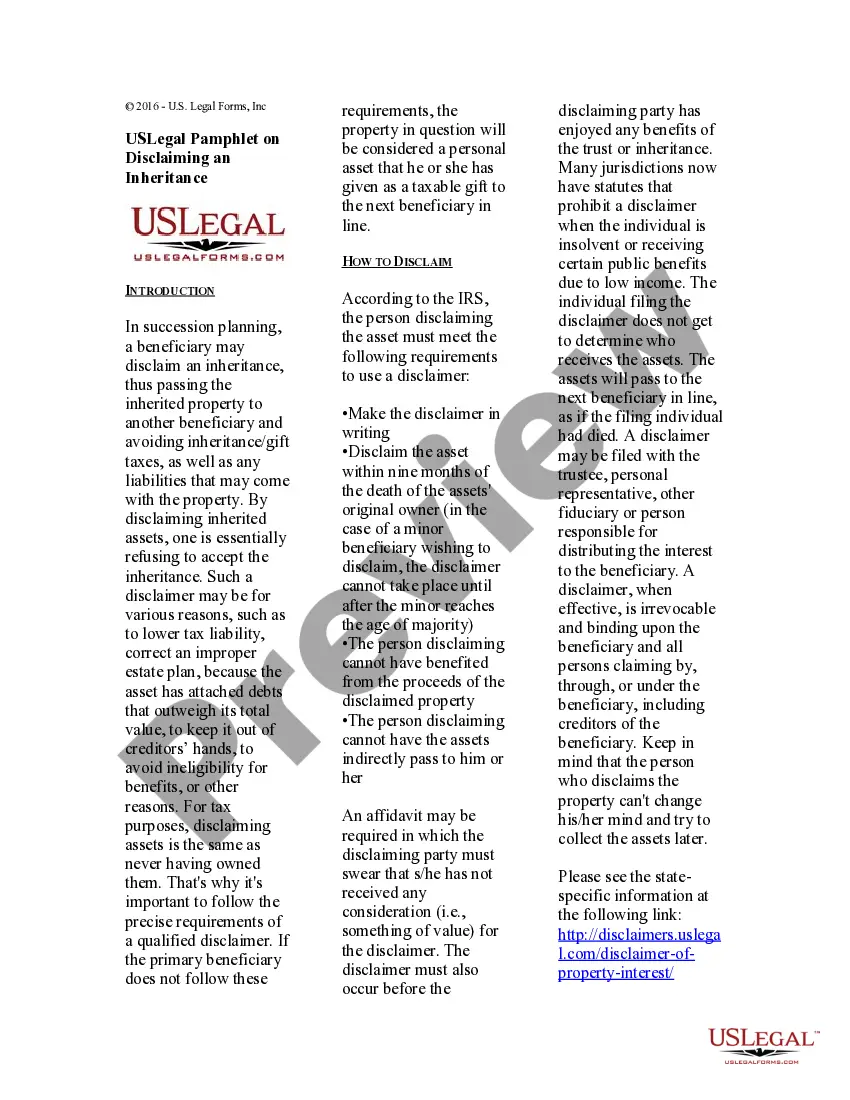
The Disclaimer of Right to Inherit or Inheritance - All Property from Estate or Trust is a legal document that allows an heir to formally refuse their right to inherit property from a deceased person's estate. This disclaimer is relevant in circumstances involving a will, intestate succession, or a trust. Using this form can clarify your intentions and protect you from any unintended legal consequences regarding inheritance.
What’s included in this form
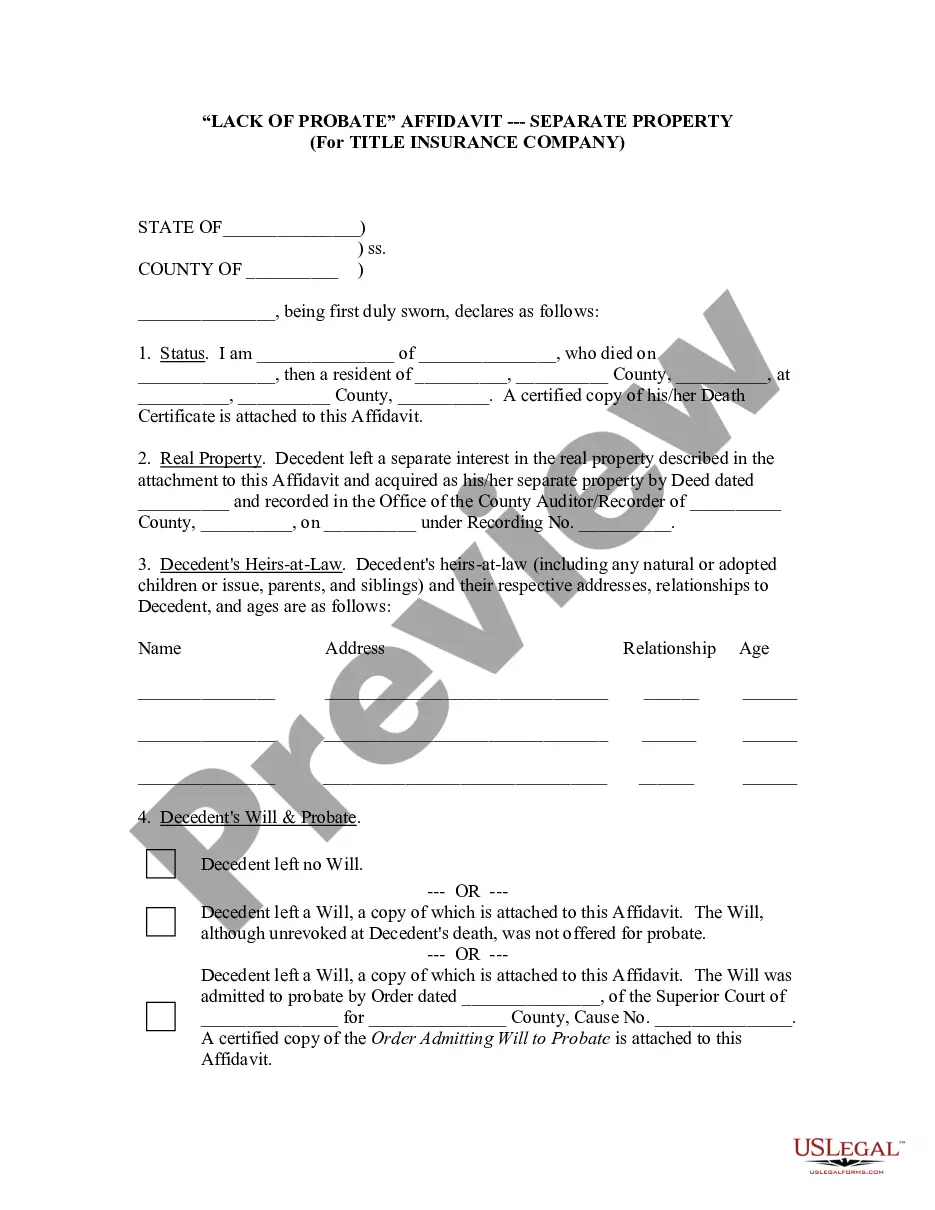
- Identification of the disclaimant and the deceased.
- A statement of voluntary disclaimer of the right to inherit.
- Details about the property being disclaimed.
- Legal provisions regarding the effects of the disclaimer.
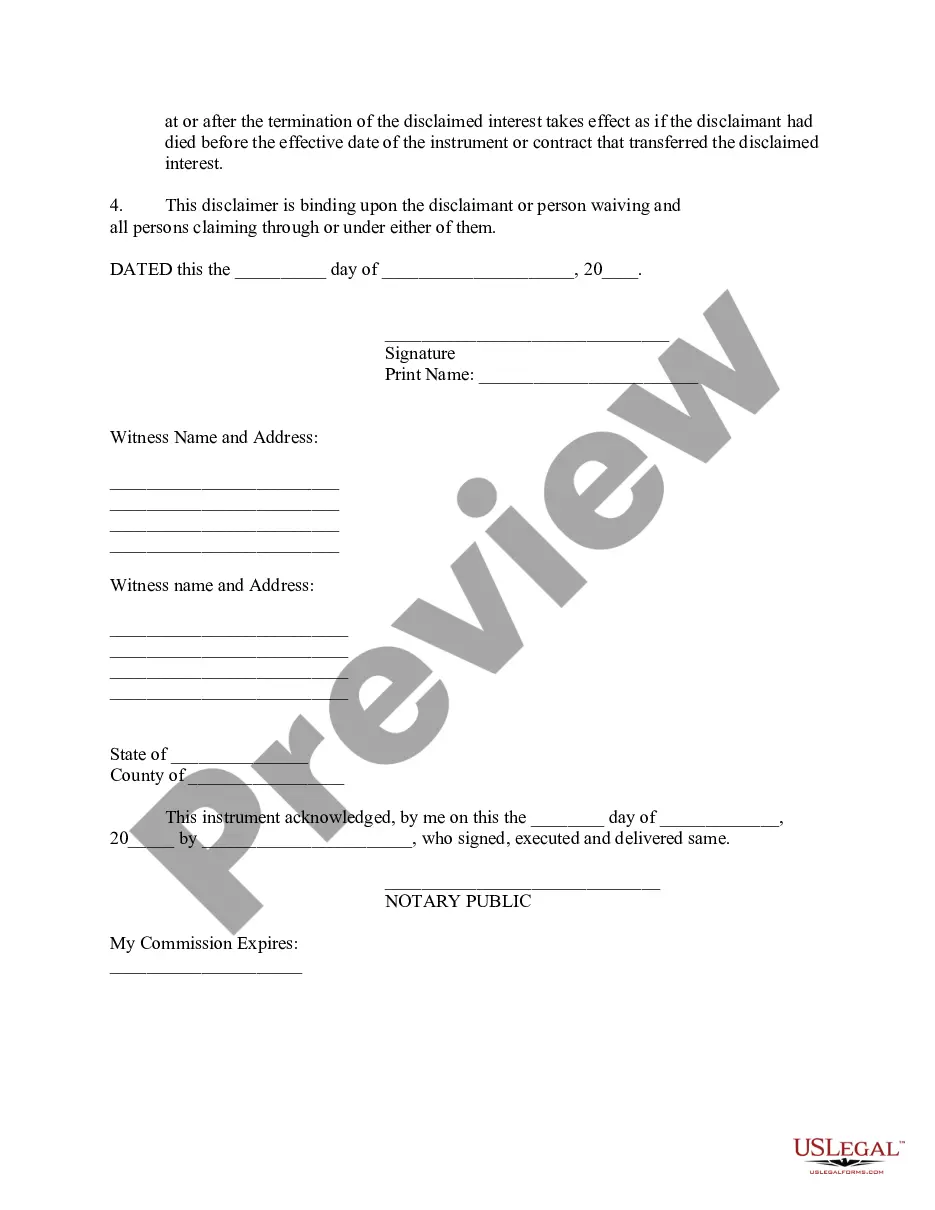
- Signature fields for the disclaimant and witnesses.
- A notary public section for formal acknowledgment.
Common use cases
This form is used in situations where an heir decides not to accept their inheritance for personal, financial, or legal reasons. It may be necessary to avoid potential tax liabilities, financial encumbrances, or disputes among family members regarding the estate.
Who can use this document
This disclaimer form is intended for:
- Heirs of a deceased person who wish to refuse their inheritance.
- Individuals who want to legally clarify their decision regarding an estate.
- Those involved in an estate administration process who need to document the disclaimer.
Steps to complete this form
- Identify yourself as the disclaimant by entering your name.
- Provide the name of the deceased and relevant details about the estate.
- Clearly state your intention to disclaim your right to inherit the property.
- Sign and date the form in the presence of witnesses as required.
- Have the document notarized to ensure it meets legal standards.
Does this document require notarization?
Notarization is required for this form to take effect. Our online notarization service, powered by Notarize, lets you verify and sign documents remotely through an encrypted video session, available 24/7.
Get your form ready online
Our built-in tools help you complete, sign, share, and store your documents in one place.
Make edits, fill in missing information, and update formatting in US Legal Forms—just like you would in MS Word.
Download a copy, print it, send it by email, or mail it via USPS—whatever works best for your next step.
Sign and collect signatures with our SignNow integration. Send to multiple recipients, set reminders, and more. Go Premium to unlock E-Sign.
If this form requires notarization, complete it online through a secure video call—no need to meet a notary in person or wait for an appointment.
We protect your documents and personal data by following strict security and privacy standards.

Make edits, fill in missing information, and update formatting in US Legal Forms—just like you would in MS Word.

Download a copy, print it, send it by email, or mail it via USPS—whatever works best for your next step.

Sign and collect signatures with our SignNow integration. Send to multiple recipients, set reminders, and more. Go Premium to unlock E-Sign.

If this form requires notarization, complete it online through a secure video call—no need to meet a notary in person or wait for an appointment.

We protect your documents and personal data by following strict security and privacy standards.
Common mistakes to avoid
- Failing to provide complete information about the deceased's estate.
- Not signing or dating the form, which may render it invalid.
- Neglecting to have the disclaimer witnessed or notarized as required.
- Submitting the form without understanding the legal implications of the disclaimer.
Benefits of completing this form online
- Convenient access to the form from any device at any time.
- Editable templates allow personalization to fit specific needs.
- Certainity of receiving a legally-reviewed document drafted by licensed attorneys.
- Easy storage and retrieval after downloading the completed form.
Main things to remember
- This form allows an heir to formally reject an inheritance.
- It is essential for ensuring proper legal documentation of the decision.
- All disclaimers should be made in accordance with state laws.
- Notarization is required for the validity of the form.
Looking for another form?
Form popularity
FAQ
The Disclaimer of Right to Inherit or Inheritance - All Property from Estate or Trust is a legal document used by an heir to formally refuse the right to inherit property from a deceased person’s estate or trust. It’s relevant in wills, intestate cases, and trusts, and it lists the disclaimant and deceased, the property being disclaimed, the effects of the disclaimer, and requires signatures and a notary.
To write an inheritance disclaimer using this form, fill out the identification of the disclaimant and the deceased, state your voluntary disclaimer of the right to inherit, provide details about the property being disclaimed, and note the legal effects. Then sign in the presence of witnesses and have a notary acknowledge.
The form includes a notary public section for formal acknowledgment, and notarization may be required by state law depending on the jurisdiction. Always verify with a local attorney or the appropriate court or probate administrator to ensure proper execution. This form provides the notary section to facilitate that process.
In this form, 'disclaim any or all property' means the heir formally refuses the right to inherit the property described in the document. The disclaimer records the decision, and the property then passes under the will, trust terms, or state intestacy rules as applicable, per the form’s listed legal effects.
The form requires the disclaimer’s signature, signatures of witnesses, and a notary public acknowledgment. The signature fields for the disclaimer and witnesses, plus a notary section, are shown in the form components to formalize the disclaimer. The witnesses provide corroboration of execution, and the notary confirms the identities and the voluntary nature of the disclaimer.
This form specifically disclaims all property from an estate or trust, rather than just a single asset. It includes identification of both the disclaimant and deceased, a detailed property description, and a full execution package with signatures, witnesses, and a notary, aligning with multi-state probate practice.