Letter to Foreclosure Attorney - General Demand to Stop Foreclosure and Reasons
About this form
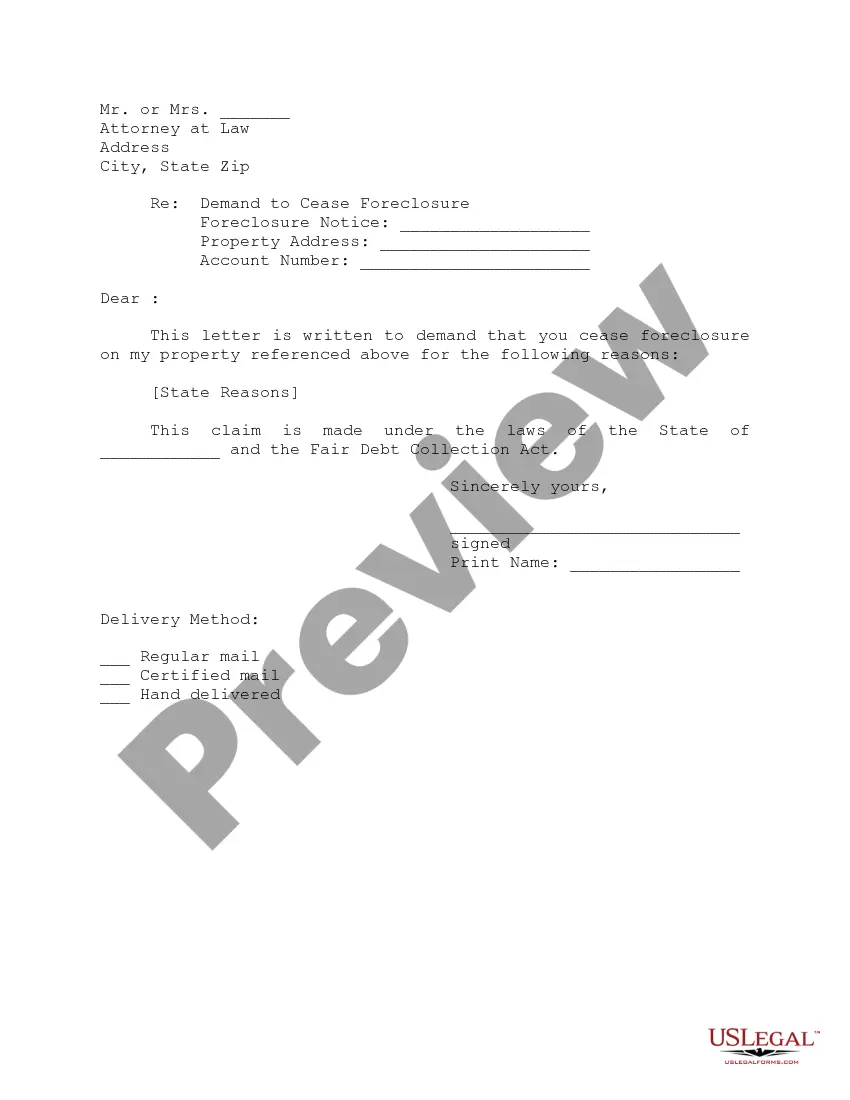
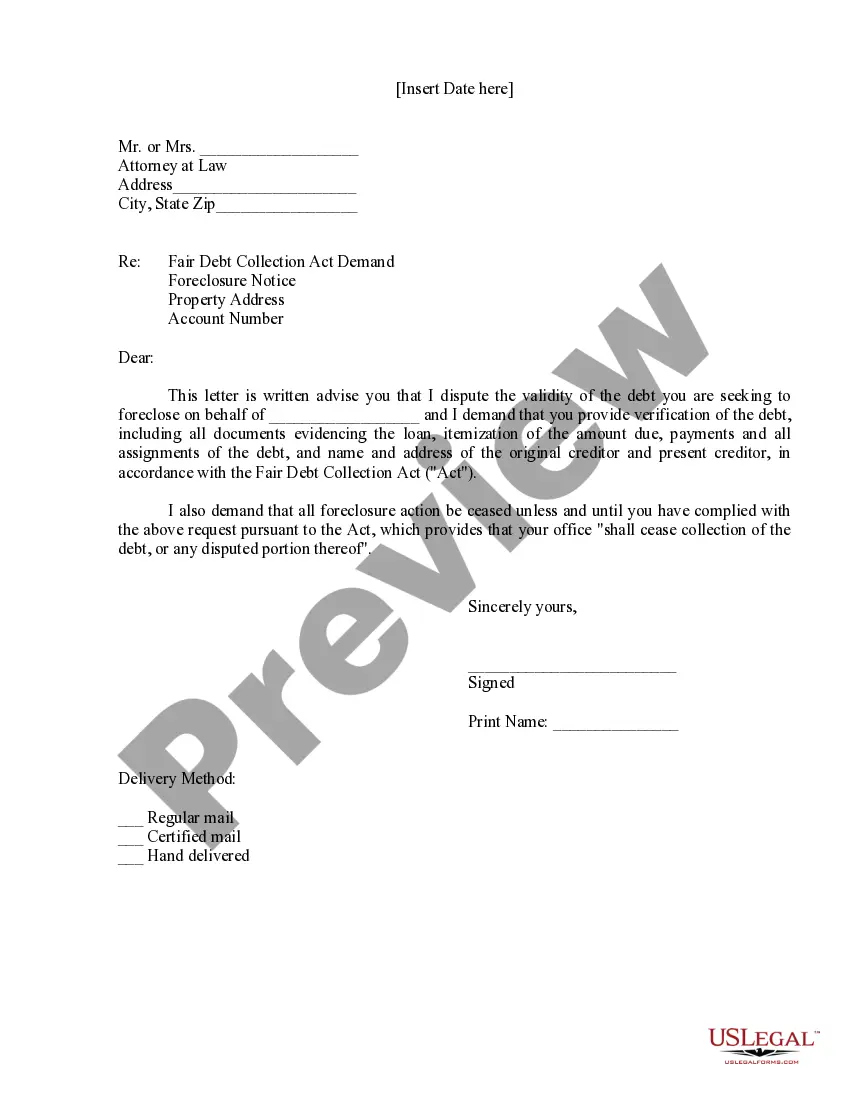
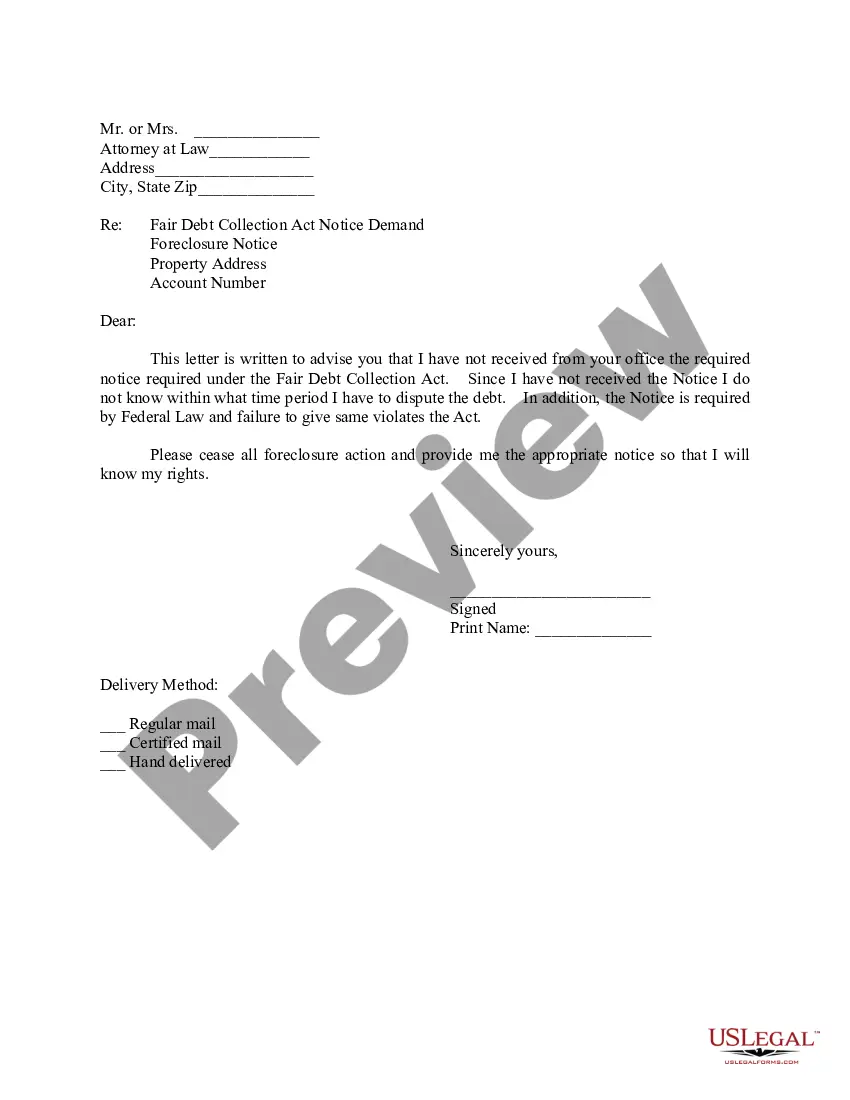
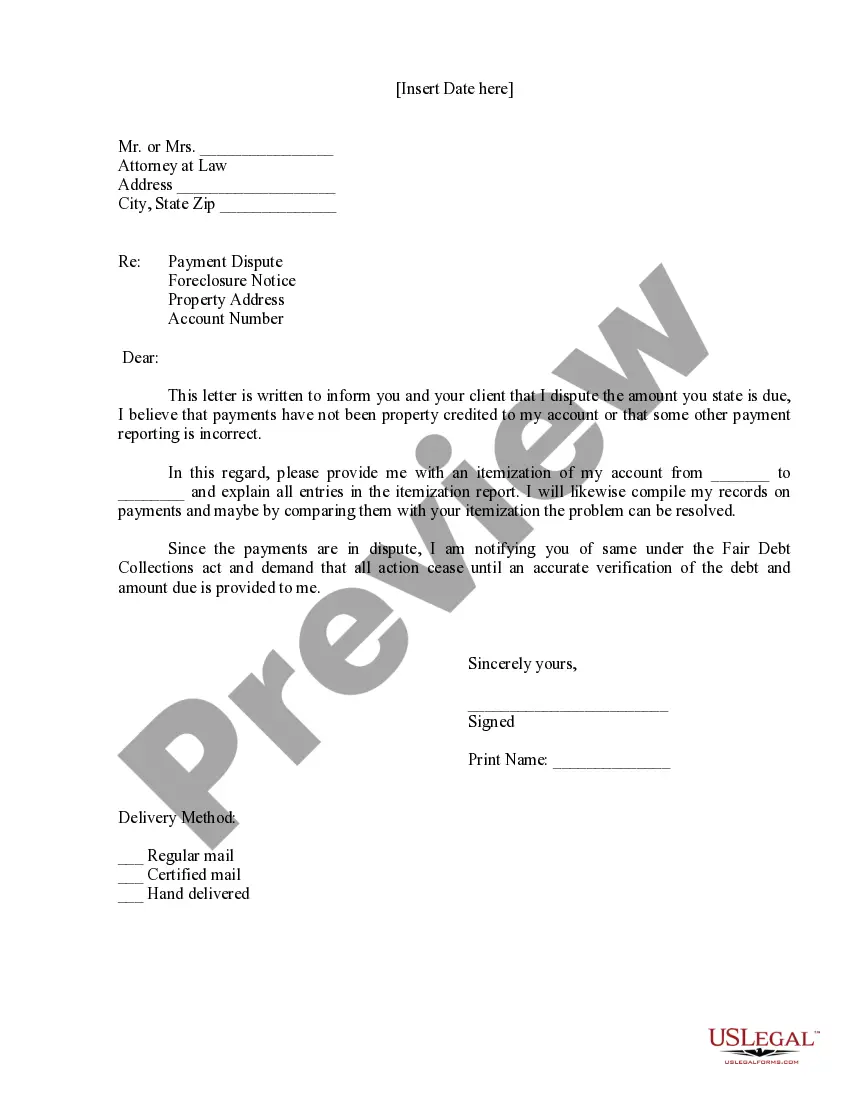
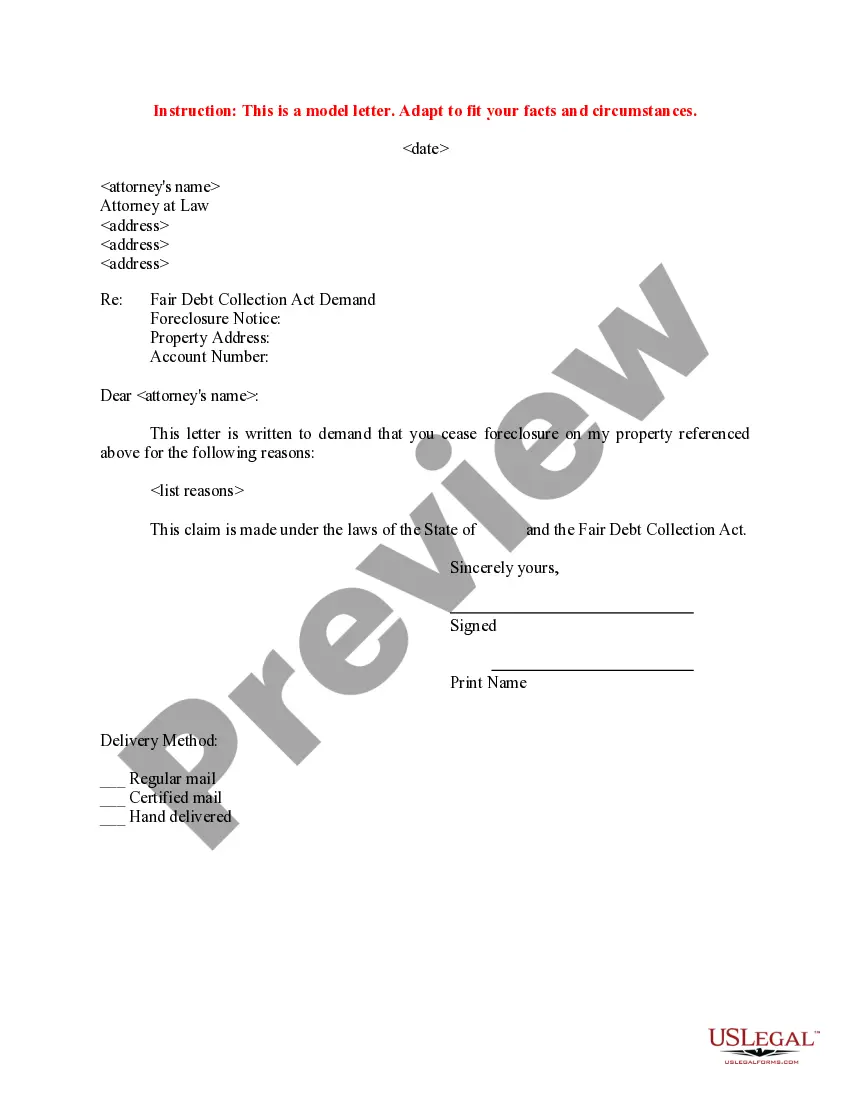
The Letter to Foreclosure Attorney - General Demand to Stop Foreclosure and Reasons is a legal document used by homeowners to formally request a halt to foreclosure proceedings on their property. This letter outlines specific reasons for the demand, helping to protect the homeowner's rights under applicable state laws and the Fair Debt Collection Act. This form serves as a crucial step in addressing foreclosure issues and is distinct from other legal documents related to real estate or debt collection processes.
What’s included in this form
- Attorney at Law and sender's address section.
- Subject line indicating the demand to cease foreclosure.
- Property address and account number fields.
- A section for stating the reasons for the demand.
- Legal jurisdiction reference to the applicable state laws.
- Signature and printed name section for the sender.
When this form is needed
This form is needed when a homeowner receives a foreclosure notice and wishes to formally demand that the foreclosure process stop. It is useful in situations where a homeowner believes that the foreclosure is unjust, seeks to negotiate terms with the lender, or requires time to resolve outstanding debts. This letter can be an initial step before seeking legal counsel or taking further action regarding the foreclosure.
Who needs this form
- Homeowners facing foreclosure on their property.
- Individuals seeking to protect their rights under foreclosure laws.
- People who believe they have a valid reason to contest the foreclosure process.
Completing this form step by step
- Fill in your name and address at the top as the sender.
- Provide the attorney's name and address below yours.
- Specify the subject and include the property address and account number.
- Clearly articulate your reasons for demanding the cessation of foreclosure.
- Sign the letter and print your name beneath the signature.
- Select your delivery method to ensure it is sent properly.
Does this form need to be notarized?
This form does not typically require notarization to be legally valid. However, some jurisdictions or document types may still require it. US Legal Forms provides secure online notarization powered by Notarize, available 24/7 for added convenience.
Get your form ready online
Our built-in tools help you complete, sign, share, and store your documents in one place.
Make edits, fill in missing information, and update formatting in US Legal Forms—just like you would in MS Word.
Download a copy, print it, send it by email, or mail it via USPS—whatever works best for your next step.
Sign and collect signatures with our SignNow integration. Send to multiple recipients, set reminders, and more. Go Premium to unlock E-Sign.
If this form requires notarization, complete it online through a secure video call—no need to meet a notary in person or wait for an appointment.
We protect your documents and personal data by following strict security and privacy standards.

Make edits, fill in missing information, and update formatting in US Legal Forms—just like you would in MS Word.

Download a copy, print it, send it by email, or mail it via USPS—whatever works best for your next step.

Sign and collect signatures with our SignNow integration. Send to multiple recipients, set reminders, and more. Go Premium to unlock E-Sign.

If this form requires notarization, complete it online through a secure video call—no need to meet a notary in person or wait for an appointment.

We protect your documents and personal data by following strict security and privacy standards.
Avoid these common issues
- Failing to provide specific reasons for the request.
- Not including accurate property or account information.
- Using vague language that does not clearly communicate the demand.
- Forgetting to sign the letter.
- Sending the letter without confirming the right delivery method.
Advantages of online completion
- Immediate access to a professionally drafted legal template.
- Editability, allowing customization to fit specific circumstances.
- Convenient downloading for personal use without the need for in-person consultation.
- Streamlined process to address foreclosure matters quickly.
Legal use & context
- This demand letter can serve as a formal record of your request to stop foreclosure.
- Proper use of this form may help to buy time to negotiate with lenders or resolve payment issues.
- While it does not prevent foreclosure automatically, it demonstrates the homeowner's intention to contest the action.
Summary of main points
- This letter acts as a formal request to halt foreclosure proceedings on your property.
- Clearly stating your reasons is crucial for the effectiveness of the letter.
- Timely submission can help in negotiating a resolution with the lender.
Looking for another form?








Form popularity
FAQ
Many courts require you to make a formal demand for payment before filing your lawsuit. But even if writing a formal demand letter isn't legally necessary, there are two reasons why sending one makes sense: In as many as one-third of all disputes, your demand letter will catalyze settlement.
As noted above, demand letters are generally written by a lawyer on behalf of an individual or corporation, although the sender may sometimes write it themselves.Although they are not legally required, demand letters are frequently used in contract law, tort law, and commercial law cases.
Establish facts. Don't assume everyone knows the facts. Refer to evidence. If there's evidence (like a contract), you don't need to include it, but you should refer to it. Make a demand. Be specific as to what you want. Set a deadline and establish method of payment. Offer a consequence.
The general rule is that you do not need a lawyer to write a personal injury demand letter in a small and easy case. But, if your case is more complicated or involves larger damages, you probably need a lawyer.
According to our database of legal fees, an attorney practicing on their own will charge anywhere between $750 and $1,200 to write and send a demand letter. A smaller law firm will charge anywhere from $1,000 to $1,500 for their services.
Although an attorney often writes the demand letter, you can also do it yourself in several cases:If you have a fairly simple legal issue and you want to go through the process yourself, without an attorney.
Involved parties information (the claimant and recipient's information) The date when the debt was incurred. If there is a dispute, the date when there was improper charging should be included.
Type your letter. Concisely review the main facts. Be polite. Write with your goal in mind. Ask for exactly what you want. Set a deadline. End the letter by stating you will promptly pursue legal remedies if the other party does not meet your demand. Make and keep copies.
Although they are not legally required, demand letters are frequently used in contract law, tort law, and commercial law cases. Most courts consider the recipient sending a demand letter as a measure of good faith to try to come to a resolution.