Antenuptial or Prenuptial Agreement with Release of Rights of Husband in Property of Wife
About this form
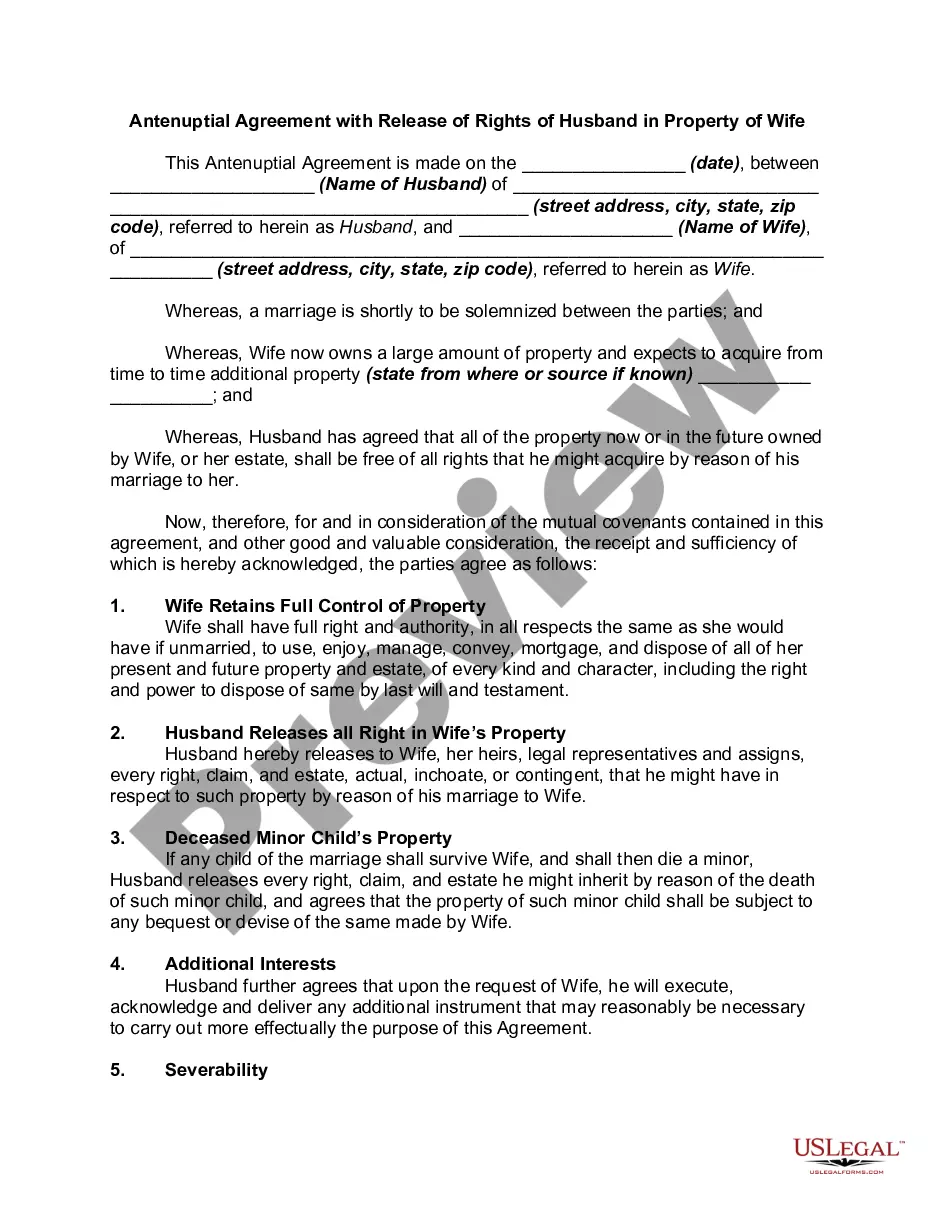
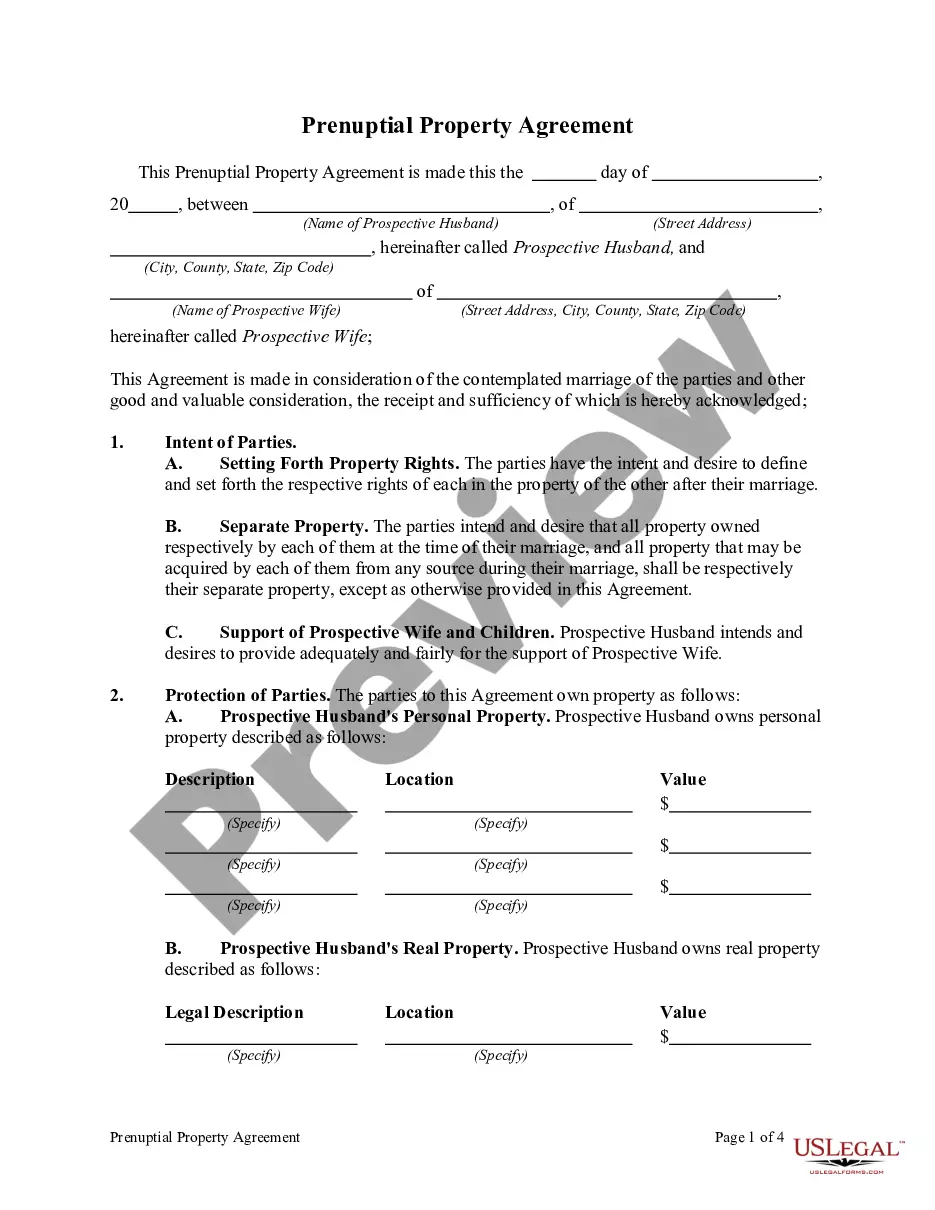
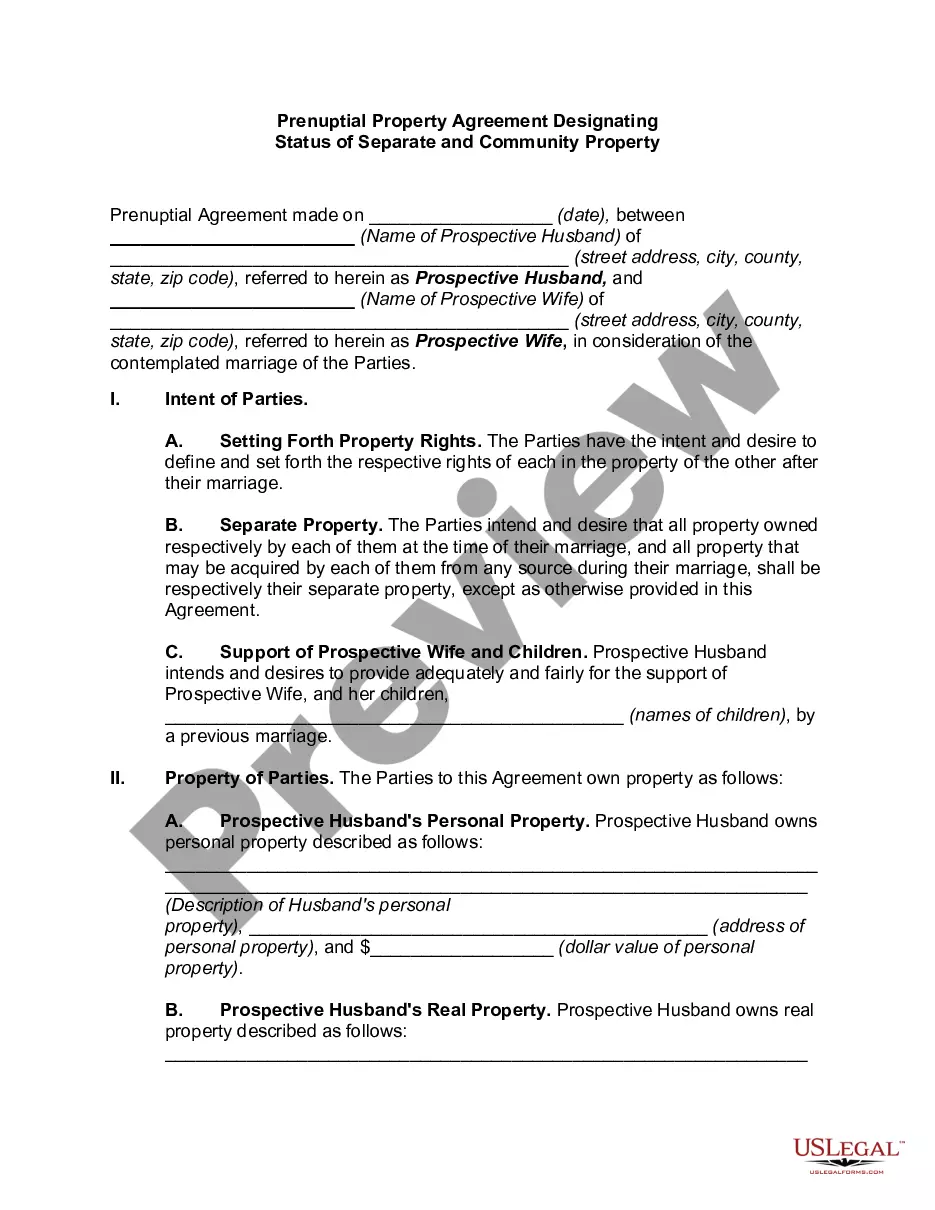
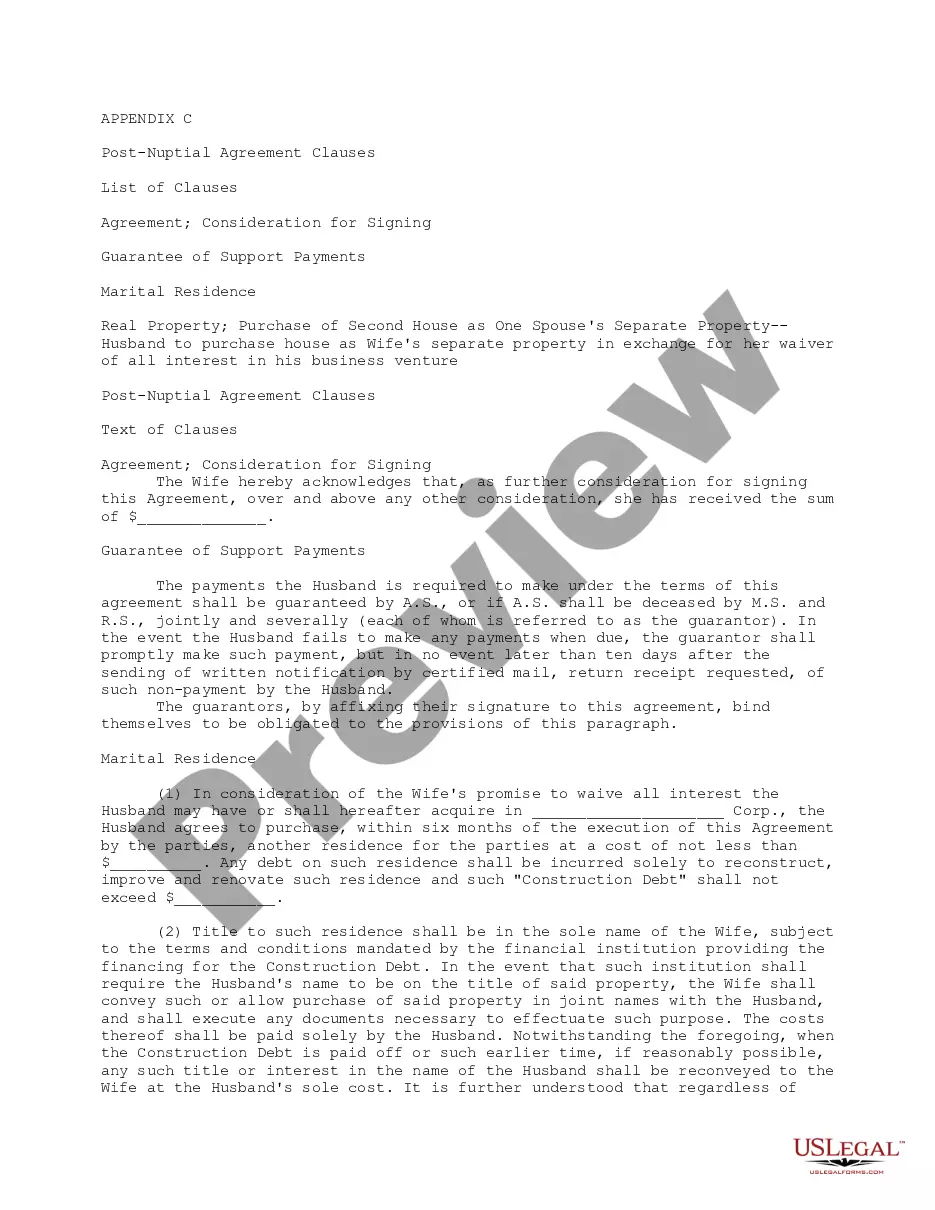
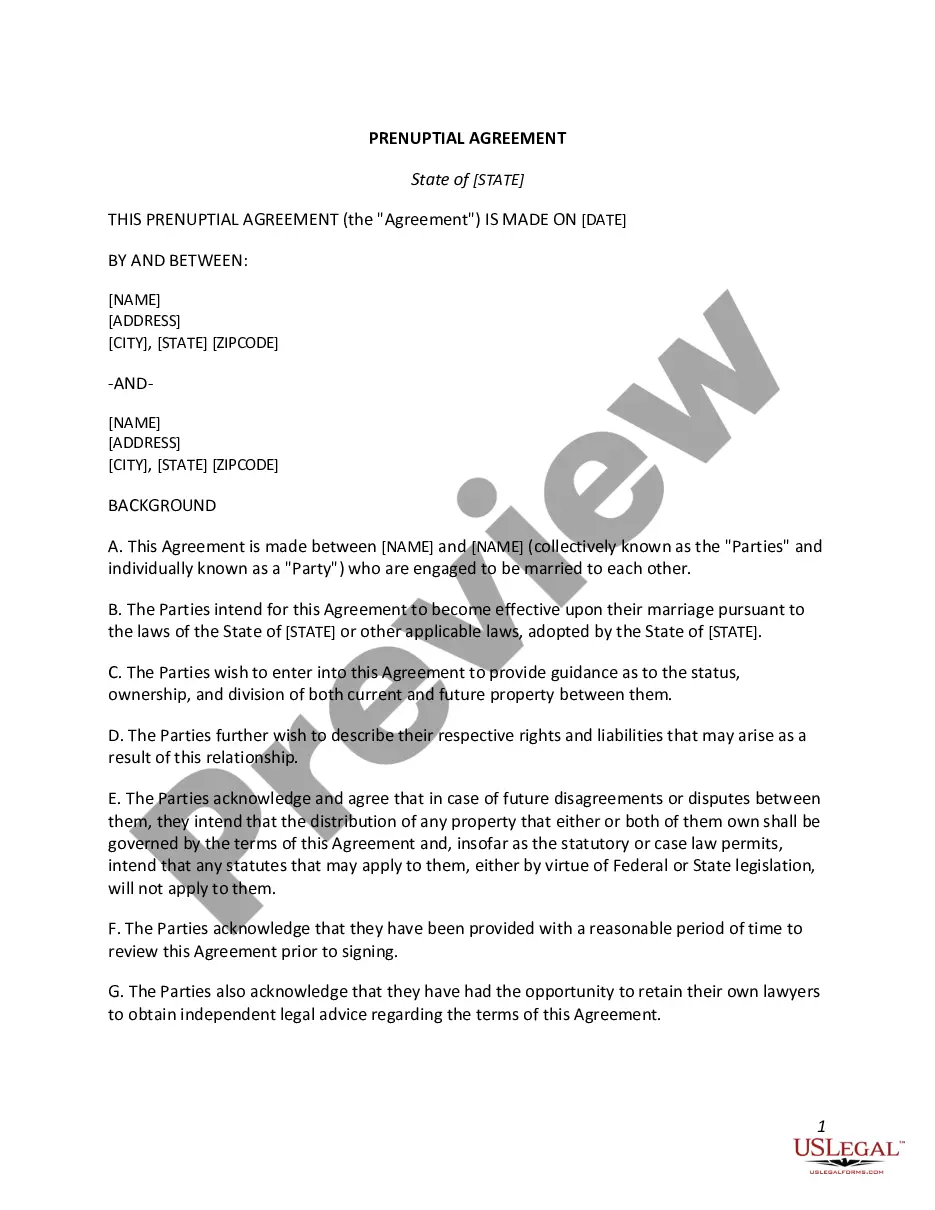
An antenuptial agreement, also known as a prenuptial agreement, is a legally binding contract entered into by two individuals who plan to marry. This agreement specifies each person's property rights before marriage, detailing what will happen to assets in the event of divorce or separation. This specific form includes a release of rights of the husband with respect to the wife's property, ensuring that the wife retains full control of her assets. Unlike a typical marital property agreement, this form focuses particularly on protecting the wife's interests and property from claims by the husband.
Key parts of this document
- Identification of the parties: Lists the full names and addresses of the husband and wife.
- Property descriptions: Outlines the property owned by the wife and future acquisitions.
- Rights release: Details that the husband relinquishes any claims to the wifeâs property.
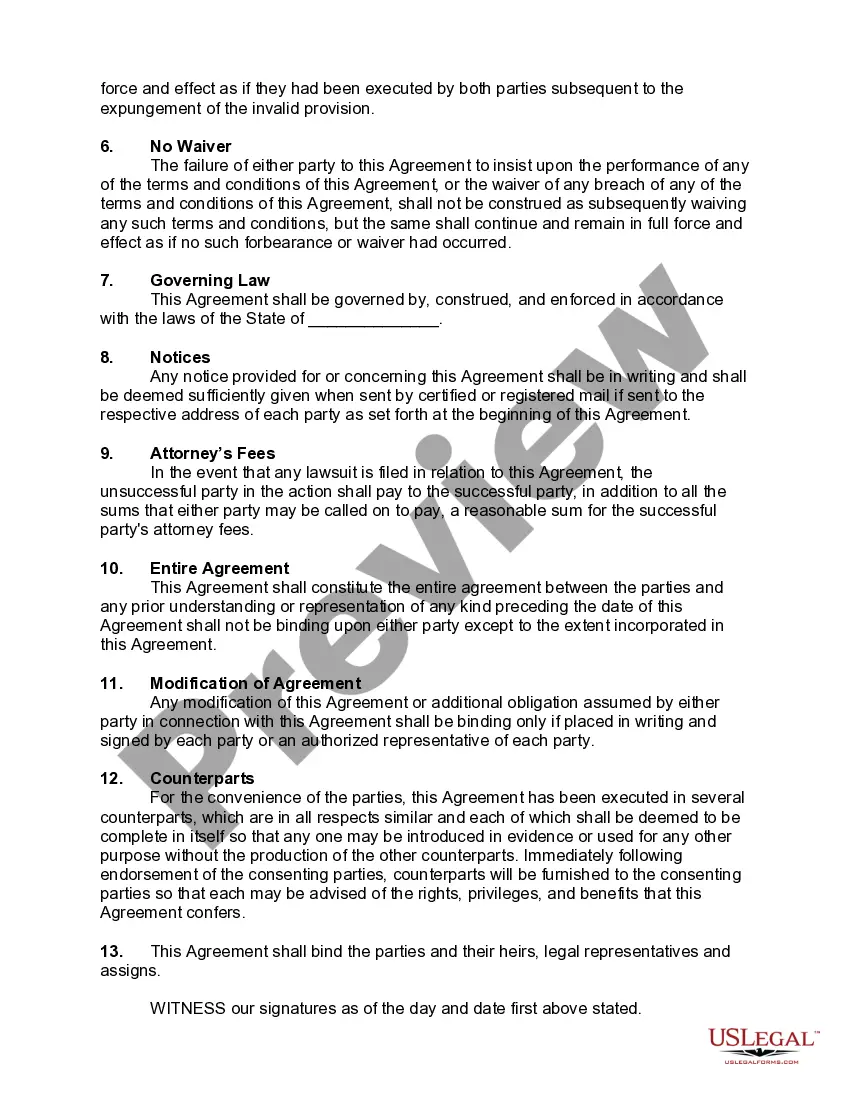
- Severability clause: Ensures that if one part of the agreement is invalid, the rest remains in effect.
- Governing law: States which jurisdictionâs laws apply to the agreement.
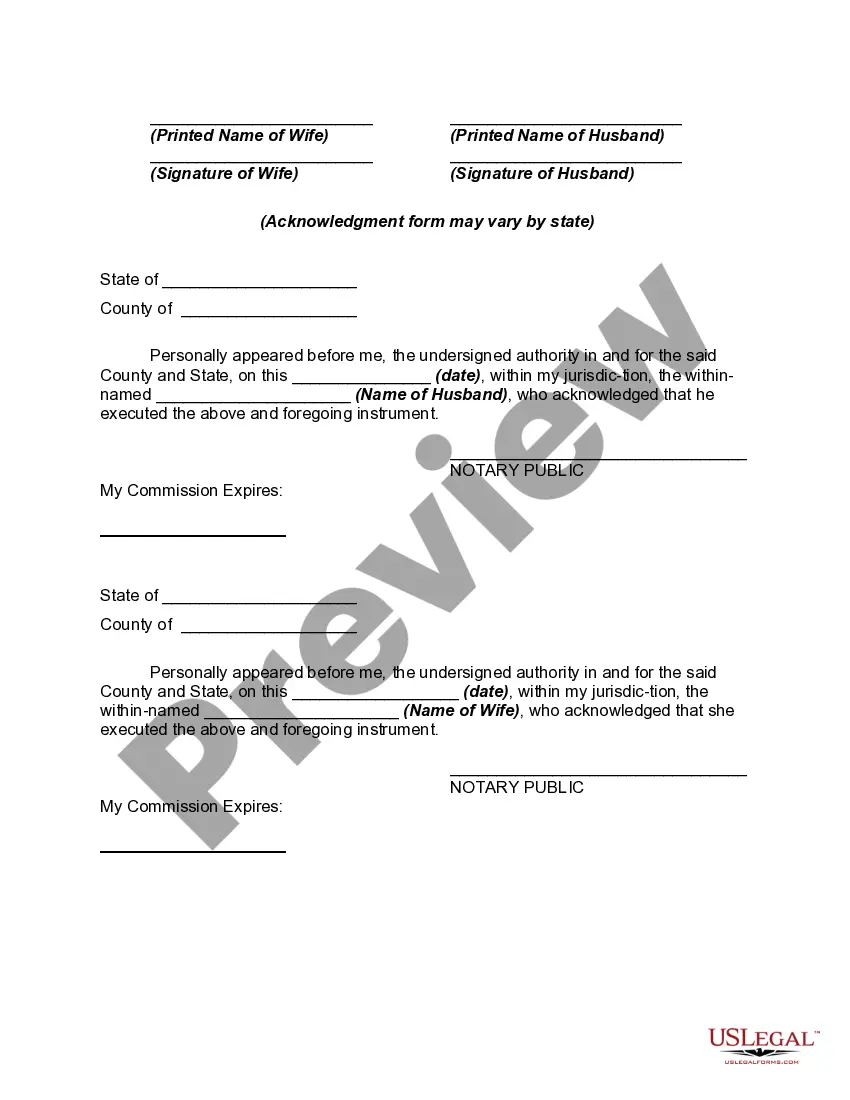
- Signature and notarization sections: Provides space for both parties to sign, along with notary acknowledgment if required.
Situations where this form applies
This antenuptial agreement should be used by couples who wish to clarify property rights and responsibilities before marriage. It is especially important in situations where one partner has significant assets, or in cases where both parties have prior obligations (such as children from previous relationships) that could complicate future claims to property. Using this form can help prevent disputes regarding property and financial matters in the event of a divorce or separation.
Who can use this document
- Couples planning to marry, particularly those with unequal assets.
- Individuals who want to protect personal property acquired before marriage.
- Partners with previous marriages or children from prior relationships.
- Anyone seeking to clarify financial responsibilities and privileges before tying the knot.
How to complete this form
- Identify the parties: Fill in the names and addresses of both the husband and wife at the beginning of the form.
- Specify the property: Clearly list the current and future property owned by the wife, including any other sources.
- Complete the clauses: Ensure all sections of the agreement are clearly filled in, including the rights release.
- Enter dates and signatures: Include the date of signing and obtain the signatures of both parties.
- Arrange notarization: If required, locate a notary public to witness and acknowledge the signatures.
Does this form need to be notarized?
This form does not typically require notarization unless specified by local law. However, having it notarized can add an extra layer of legal validity to the agreement, ensuring that both parties cannot deny the legitimacy of their signatures.
Get your form ready online
Our built-in tools help you complete, sign, share, and store your documents in one place.
Make edits, fill in missing information, and update formatting in US Legal Forms—just like you would in MS Word.
Download a copy, print it, send it by email, or mail it via USPS—whatever works best for your next step.
Sign and collect signatures with our SignNow integration. Send to multiple recipients, set reminders, and more. Go Premium to unlock E-Sign.
If this form requires notarization, complete it online through a secure video call—no need to meet a notary in person or wait for an appointment.
We protect your documents and personal data by following strict security and privacy standards.

Make edits, fill in missing information, and update formatting in US Legal Forms—just like you would in MS Word.

Download a copy, print it, send it by email, or mail it via USPS—whatever works best for your next step.

Sign and collect signatures with our SignNow integration. Send to multiple recipients, set reminders, and more. Go Premium to unlock E-Sign.

If this form requires notarization, complete it online through a secure video call—no need to meet a notary in person or wait for an appointment.

We protect your documents and personal data by following strict security and privacy standards.
Common mistakes to avoid
- Failing to fully disclose assets and debts on both sides.
- Not seeking legal advice, which may lead to enforceability issues later.
- Omitting key clauses that protect both partiesâ interests.
- Not having signatures properly notarized where required.
- Using outdated forms that do not comply with current laws.
Why complete this form online
- Convenience: Download and complete the form at your own pace from home.
- Editability: Modify the form as needed to suit your specific circumstances.
- Reliability: Access correctly drafted documents created by licensed attorneys, tailored to your needs.
Looking for another form?
Form popularity
FAQ
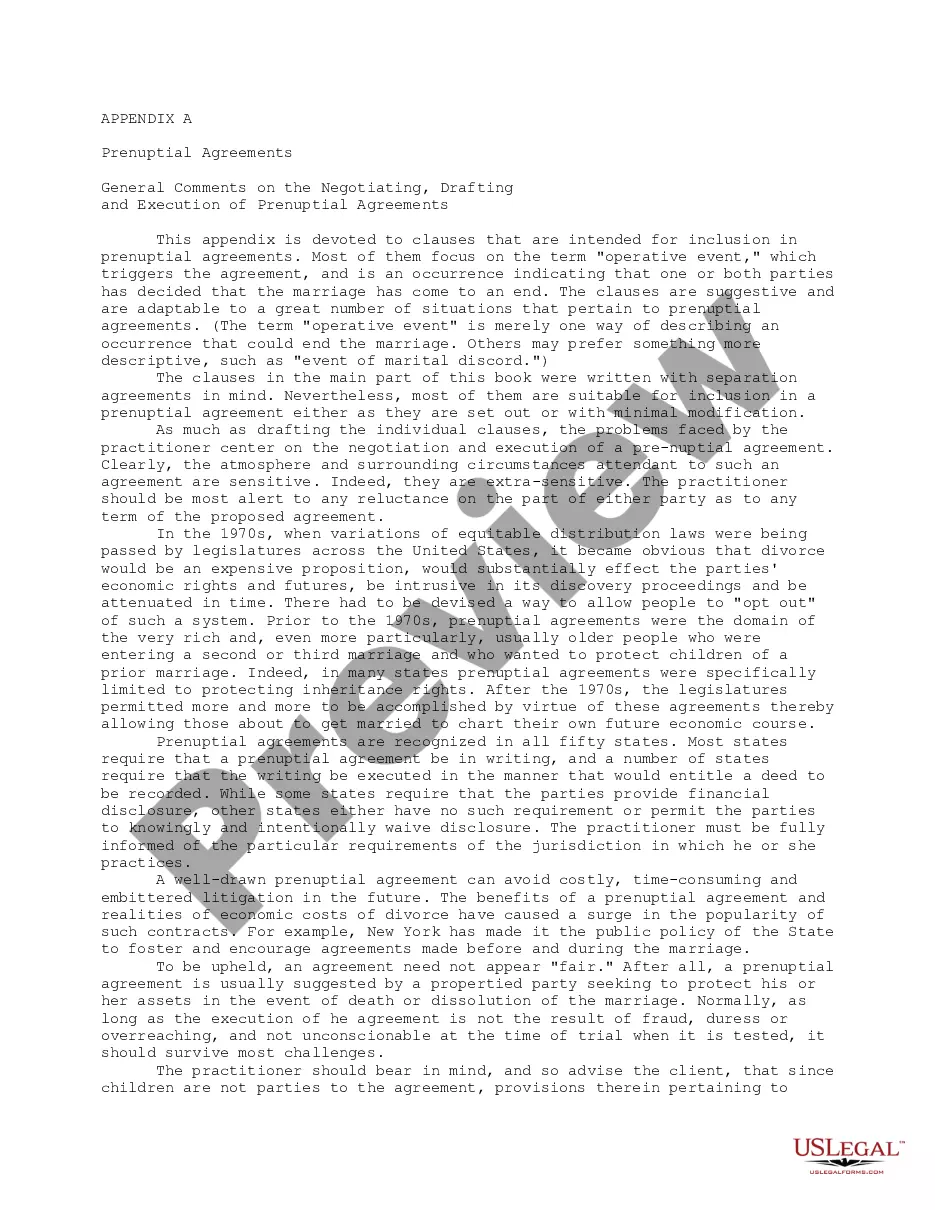
Regardless of your state's property division laws, a prenuptial agreement lets you decide how marital property will be divided in the event of a divorce.In this sense, a prenuptial agreement can "override" community property or equitable distribution laws.
Marriage. You don't have to visit an attorney to draft a Prenup Contract, but Prenuptial Agreements must be in writing to be legally valid. It is in your best interest to use a Prenuptial Agreements form that has been reviewed by an attorney rather than creating one completely from scratch.
A prenuptial agreement is a legally binding contract that dictates the division of premarital assets, but it can also include other agreements between the parties. A will, on the other hand, dictates the distribution of an individual's assets to their heirs when they pass away.
However, a prenuptial agreement, or "prenup," can also have an impact on inheritance in the event of a spouse's death.Then, when the surviving spouse later dies, those assets will be passed on to his or her children, leaving the children of the first spouse out in the cold.
Many people are not aware that prenuptial agreements may also protect your assets in the event of death. Such provisions can have a significant impact on the surviving spouse's future financial status.Pursuant to the agreement, both parties waived all rights to the other's property as a surviving spouse.
When a prenuptial agreement and a last will and testament are in conflict, the prenuptial agreement often takes precedence, but the decision is in the hands of a probate court.A last will and testament states a deceased person's wishes for their estate after their death.
The three most common grounds for nullifying a prenup are unconscionability, failure to disclose, or duress and coercion.Duress and coercion can also invalidate a prenup. If the prenup was signed the day before your wedding, it may appear that the parties didn't have much time to fully review the agreement.
A prenuptial agreement can state that the income earned by a spouse is that spouse's separate property, nullifying the default rule in community property states.
Putting the Agreement in Writing. Identify the parties and the document. After titling the document something like Premarital Agreement, you want to identify the two parties by full, legal names and state that they are both willingly entering into the agreement. State the intent of marriage.