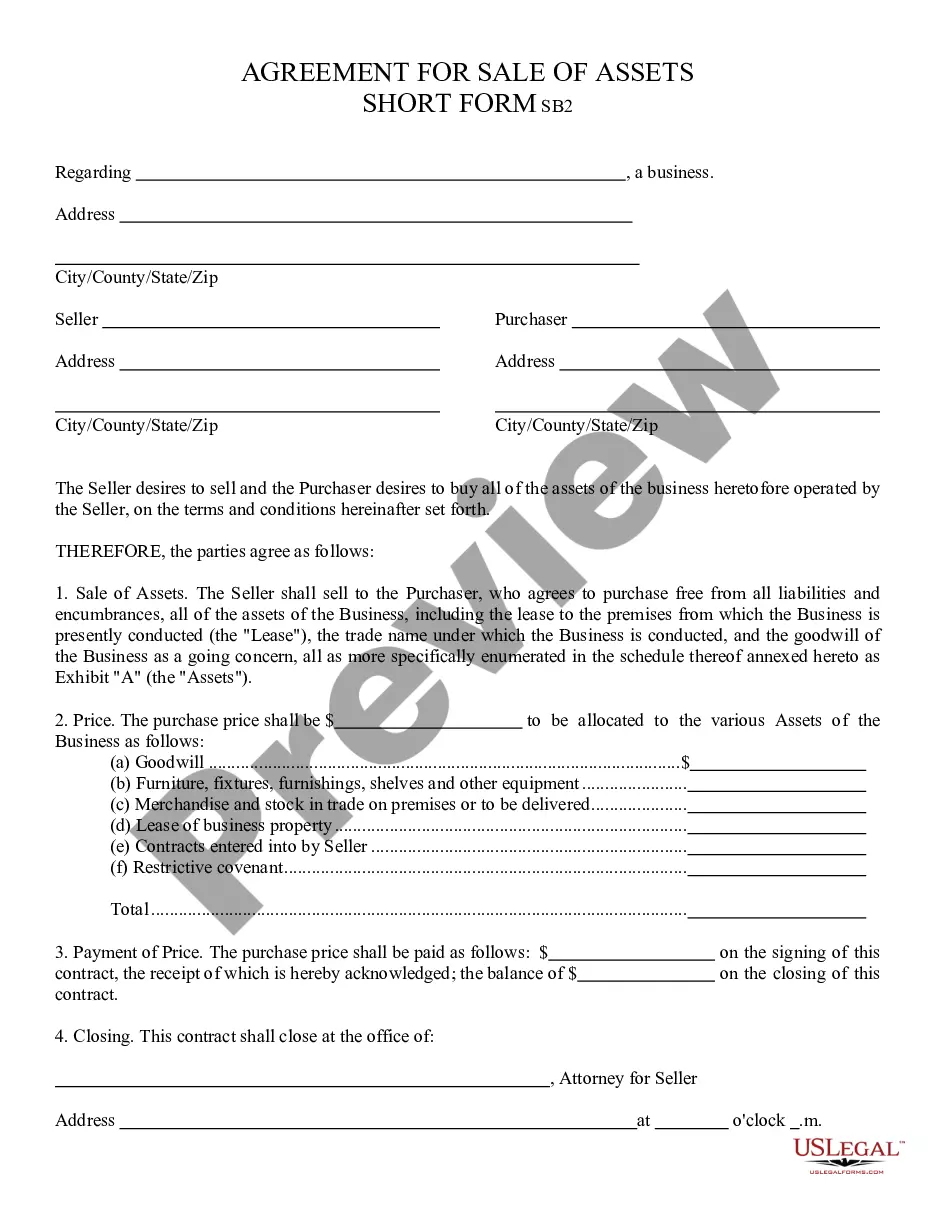
Agreement to Partners to Incorporate Partnership
Overview of this form
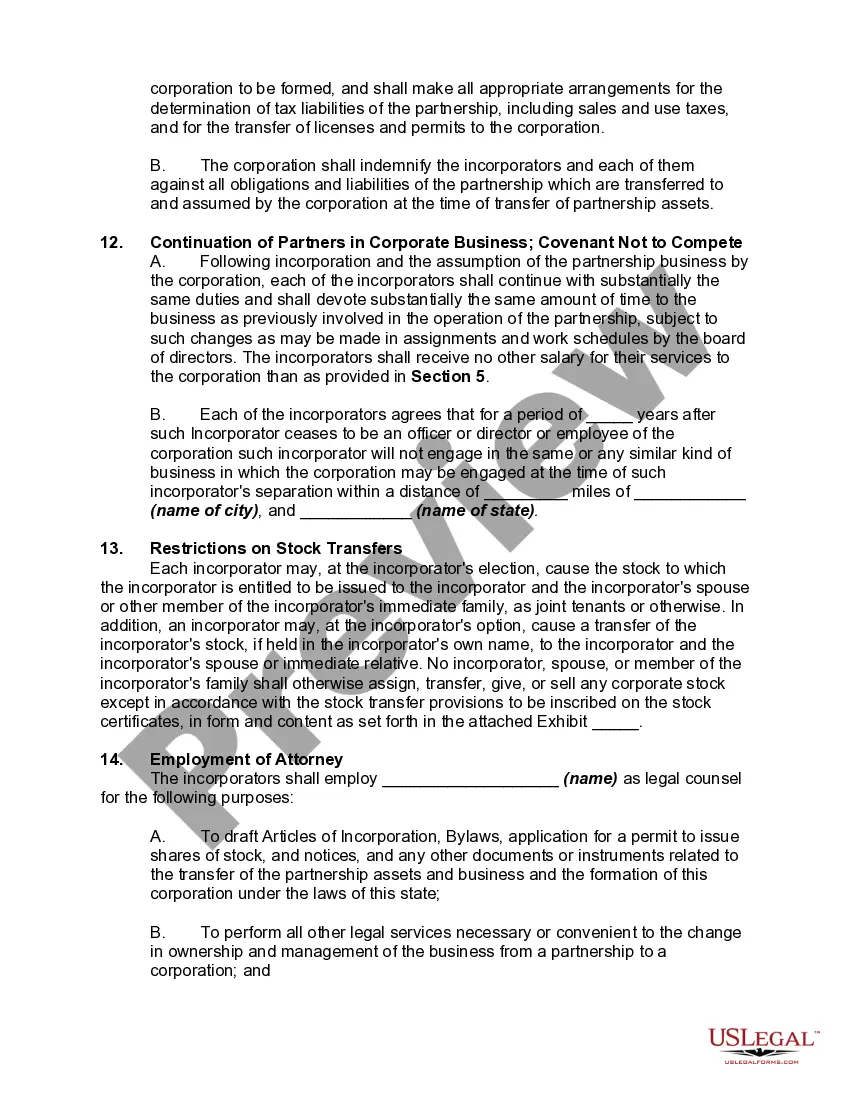
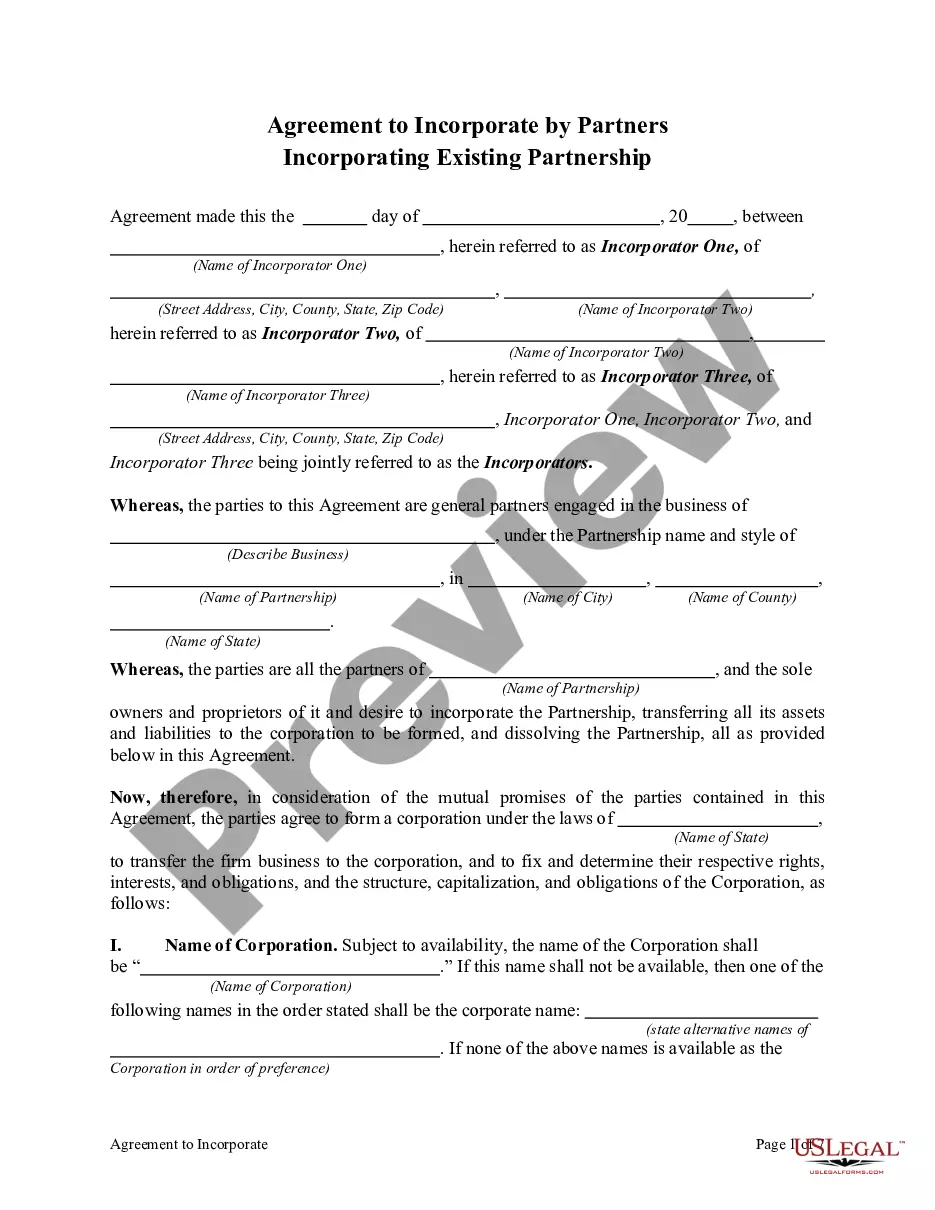
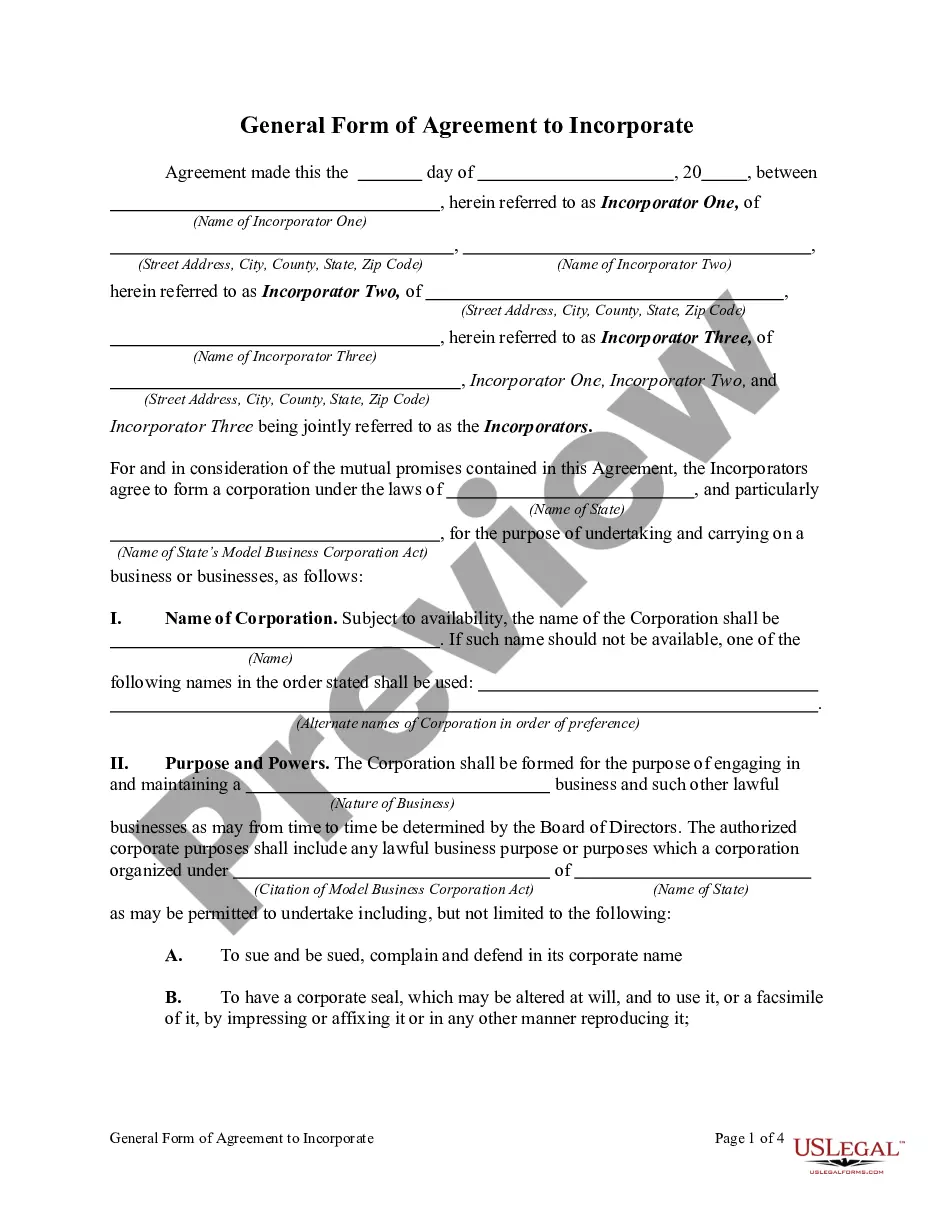
The Agreement to Partners to Incorporate Partnership is a legal document that formalizes the intention of partners in a business to transition their partnership into a corporation. This agreement outlines the roles, rights, and responsibilities of the partners as they create a new corporate entity. Unlike standard partnership agreements, this document specifically details the process of incorporation, including the transfer of assets, liabilities, and ownership interests, ensuring clarity and compliance with state laws.
Key parts of this document
- Details of the partners involved, including names and addresses.
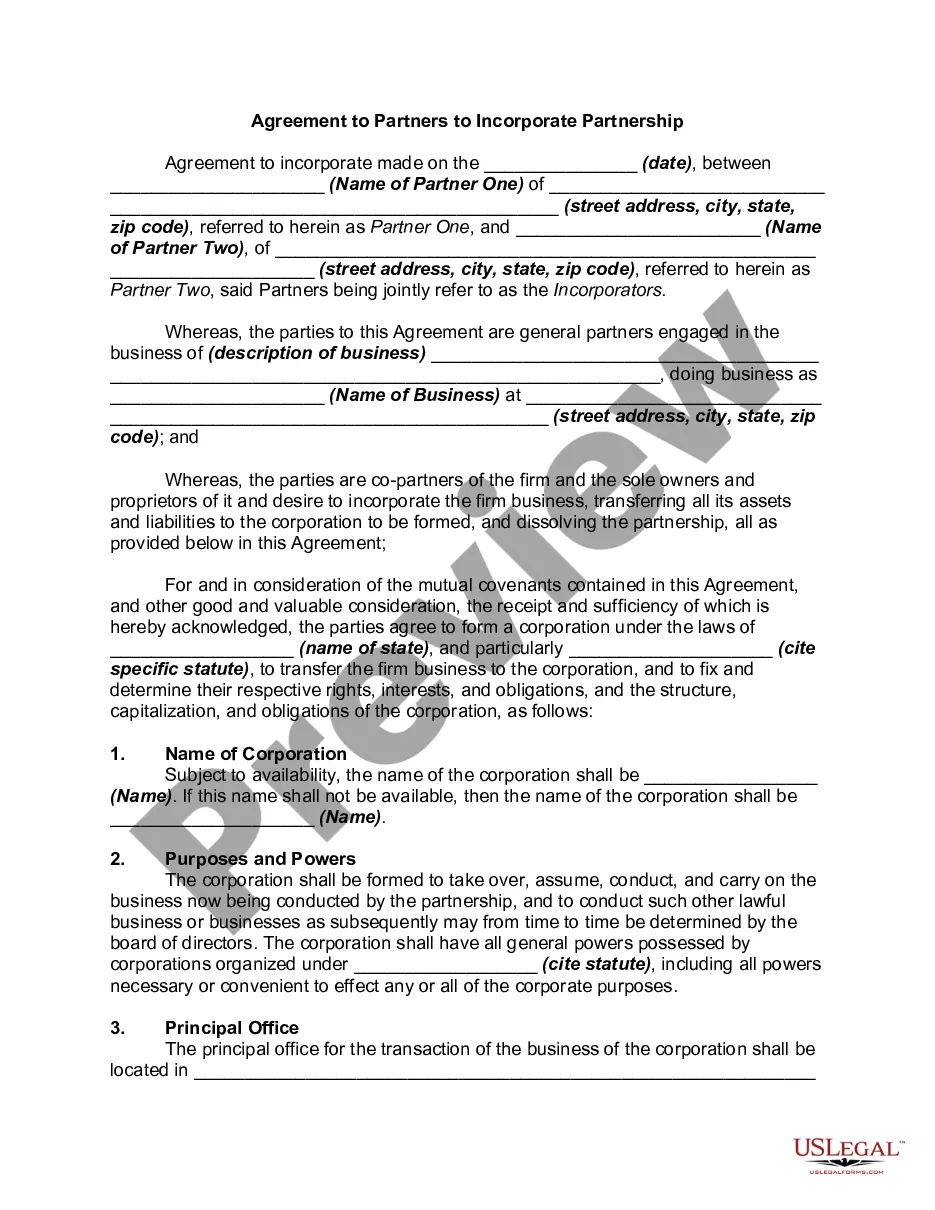
- Provisions for naming the new corporation and outlining its purposes and powers.
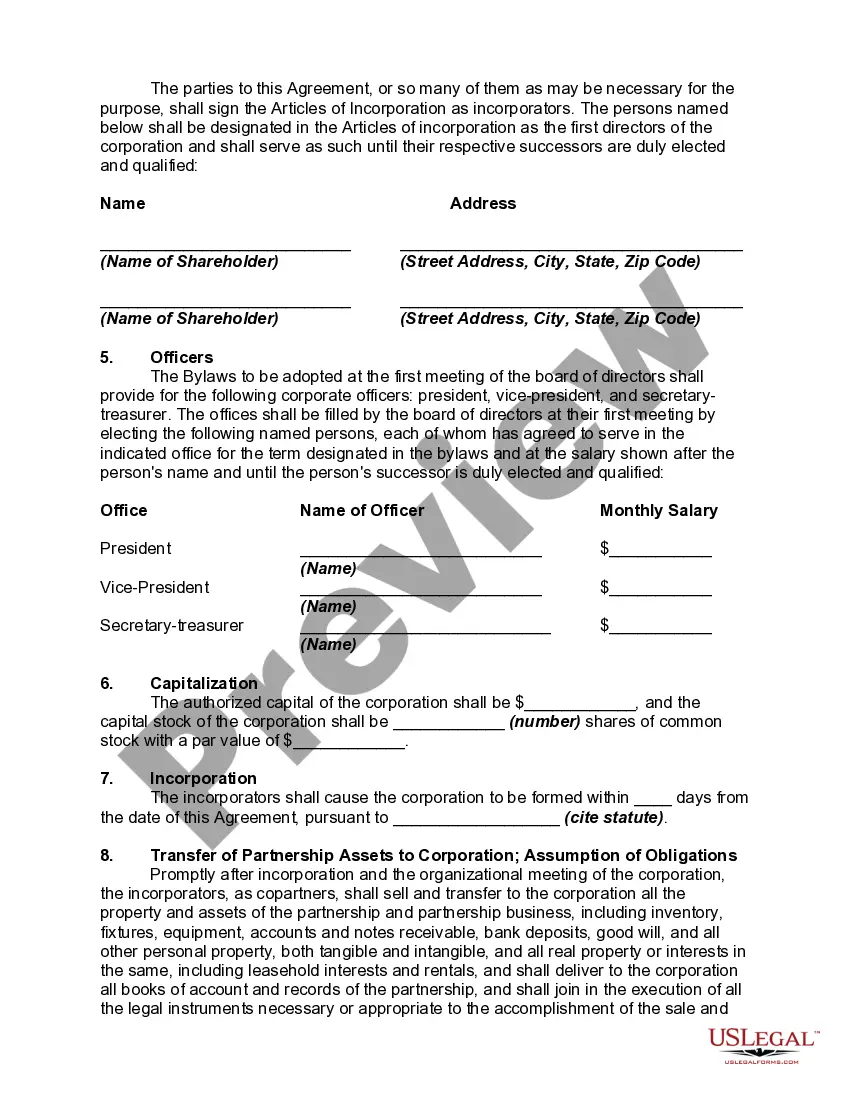
- Structure of the corporation, including directors and officers.
- Determination of capitalization and share distribution among partners.
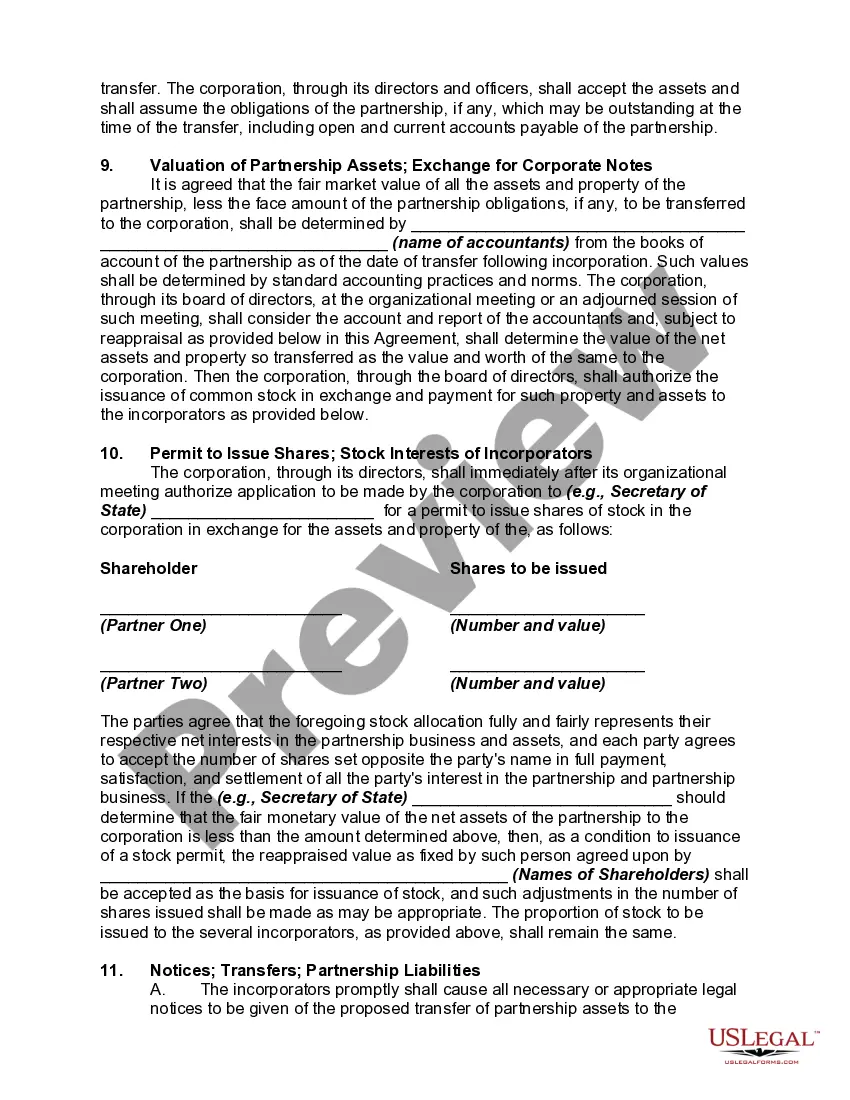
- Procedures for transferring partnership assets to the new corporation.
- Indemnification clauses for partners against partnership liabilities.


When this form is needed
This form should be used when two or more partners decide to incorporate their business, transitioning from a partnership structure to a corporate one. It is ideal for situations where the partners wish to formalize the incorporation process, allocate shares, and define the structure and operation of the new corporation. This agreement is essential for ensuring that all parties understand their roles and obligations during and after the incorporation process.
Who this form is for
- Business partners looking to incorporate their partnership.
- Partners who wish to clearly delineate their rights and responsibilities after transitioning to corporate status.
- Individuals seeking legal compliance during the incorporation process.
- Entrepreneurs who are converting their business structure for liability protection or investment purposes.
Completing this form step by step
- Identify the partners by entering their names and addresses at the beginning of the agreement.
- Choose a name for the corporation and confirm its availability.
- Define the purposes for which the corporation is formed, outlining its business activities.
- Detail the capitalization by specifying the number of shares and their nominal value.
- Complete the sections regarding the transfer of partnership assets and the issuance of shares to partners.
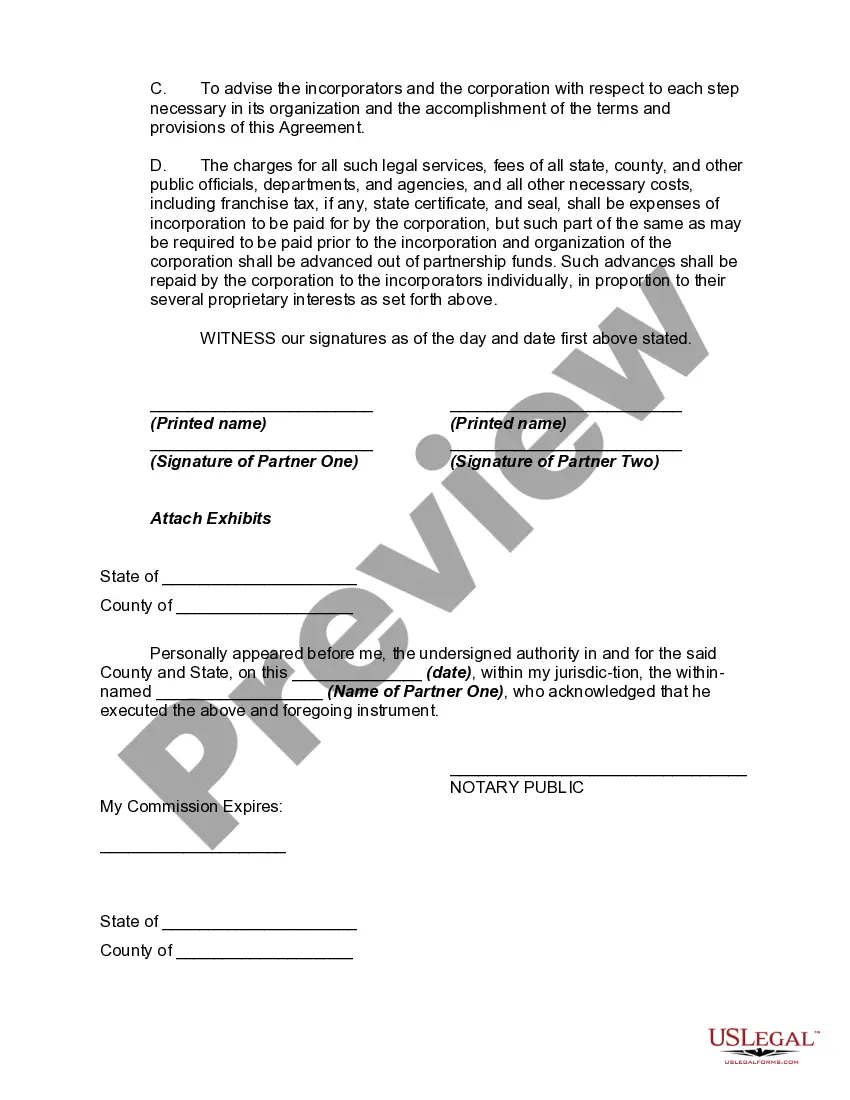
- Ensure all partners sign and date the agreement to formalize it.
Does this form need to be notarized?
This form does not typically require notarization unless specified by local law. It is advisable to check specific state regulations to confirm if notarization is necessary for the Agreement to Partners to Incorporate Partnership.
Get your form ready online
Our built-in tools help you complete, sign, share, and store your documents in one place.
Make edits, fill in missing information, and update formatting in US Legal Forms—just like you would in MS Word.
Download a copy, print it, send it by email, or mail it via USPS—whatever works best for your next step.
Sign and collect signatures with our SignNow integration. Send to multiple recipients, set reminders, and more. Go Premium to unlock E-Sign.
If this form requires notarization, complete it online through a secure video call—no need to meet a notary in person or wait for an appointment.
We protect your documents and personal data by following strict security and privacy standards.

Make edits, fill in missing information, and update formatting in US Legal Forms—just like you would in MS Word.

Download a copy, print it, send it by email, or mail it via USPS—whatever works best for your next step.

Sign and collect signatures with our SignNow integration. Send to multiple recipients, set reminders, and more. Go Premium to unlock E-Sign.

If this form requires notarization, complete it online through a secure video call—no need to meet a notary in person or wait for an appointment.

We protect your documents and personal data by following strict security and privacy standards.
Typical mistakes to avoid
- Failing to check the availability of the chosen corporate name.
- Not properly documenting the transfer of assets from the partnership to the corporation.
- Overlooking state-specific incorporation laws and requirements.
- Neglecting to include indemnification clauses for the partners.
- Forgetting to secure the necessary signatures and notarization, if required.
Benefits of completing this form online
- Easy accessibility: Download and complete the form from anywhere.
- Editable templates: Customize the form to meet specific business needs.
- Expertly drafted: Templates are created by licensed attorneys to ensure legality and compliance.
- Time-saving: Quickly complete the incorporation process without unnecessary delays.
Quick recap
- The Agreement to Partners to Incorporate Partnership is essential for transitioning a partnership into a corporation.
- Complete all sections accurately to prevent legal issues post-incorporation.
- Consult local laws to ensure compliance and proper filing with state authorities.
Looking for another form?


Form popularity
FAQ
Create a preliminary plan for an alliance. This plan should detail how the alliance will benefit both companies. Approach the key decision maker. Build a relationship with your contact first. Present your idea. Listen and adapt your proposal as necessary.
Share the same values. Choose a partner with complementary skills. Have a track record together. Clearly define each partner's role and responsibilities. Select the right business structure. Put it in writing. Be honest with each other.
In addition, any individual partner can usually bind the whole business to a contract or other business deal. For instance, if your partner signs a yearlong contract with a supplier to buy inventory at a price your business can't afford, you can be held personally responsible for the money owed under the contract.
Name of your partnership. Contributions to the partnership and percentage of ownership. Division of profits, losses and draws. Partners' authority. Withdrawal or death of a partner.
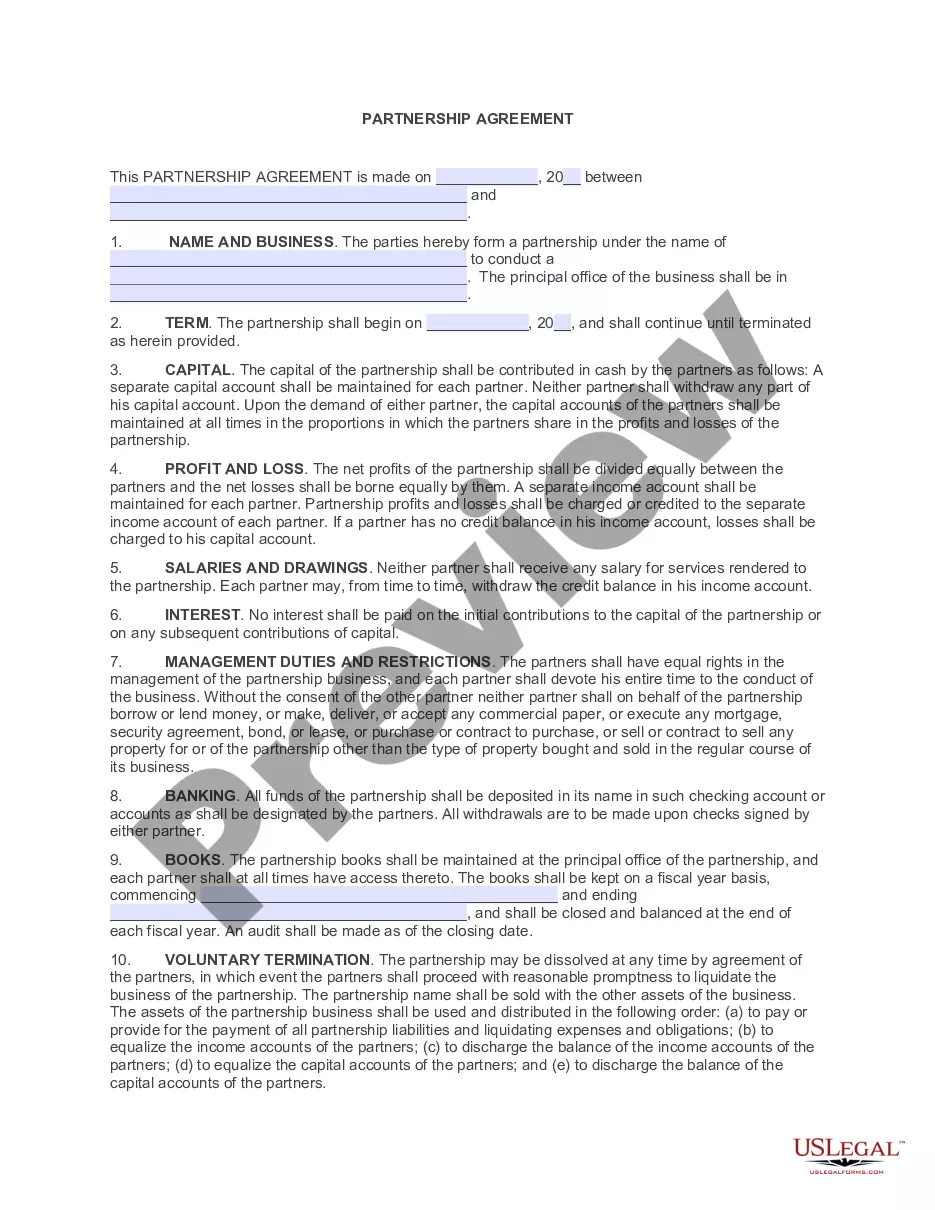
Forming a PartnershipPartnerships exist between two or more people who want to go into business together. In most states, creating a legally binding partnership requires nothing more than a verbal agreement and a handshake.
Name of the partnership. Contributions to the partnership. Allocation of profits, losses, and draws. Partners' authority. Partnership decision-making. Management duties. Admitting new partners. Withdrawal or death of a partner.
Although there's no requirement for a written partnership agreement, often it's a very good idea to have such a document to prevent internal squabbling (about profits, direction of the company, etc.) and give the partnership solid direction. Limited liability partnerships do have a writing requirement.
Although there's no requirement for a written partnership agreement, often it's a very good idea to have such a document to prevent internal squabbling (about profits, direction of the company, etc.) and give the partnership solid direction. Limited liability partnerships do have a writing requirement.