Hawaii Commercial Sublease
Overview of this form
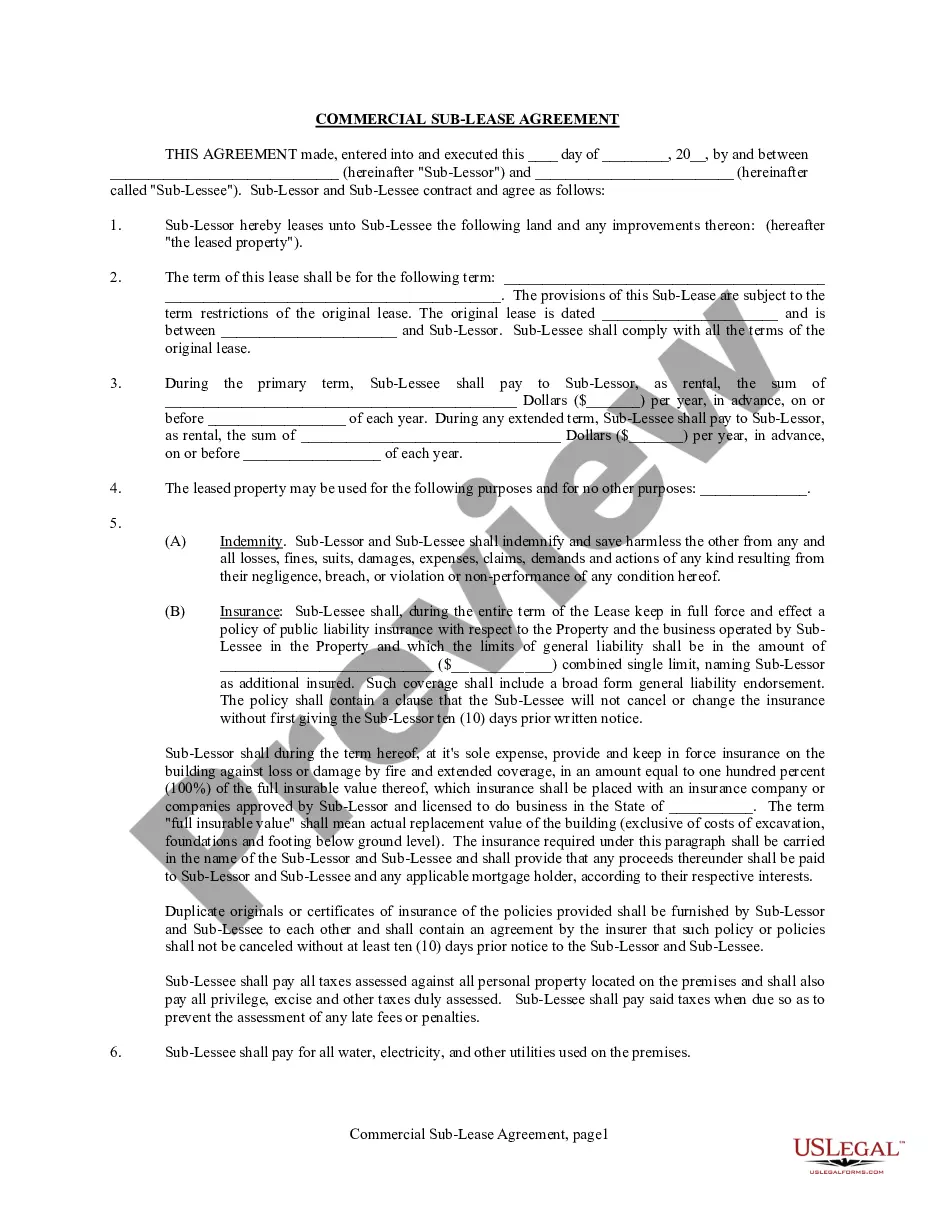
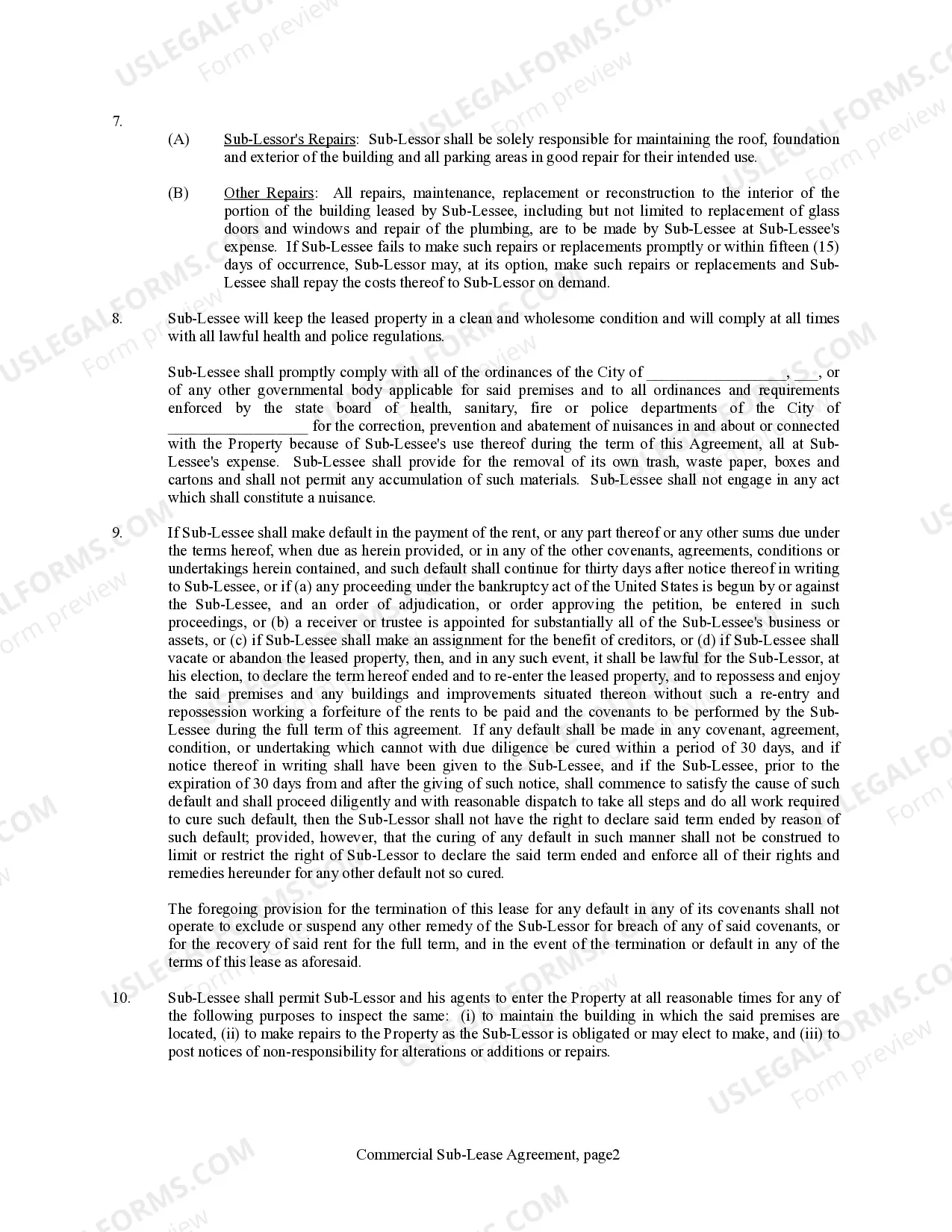
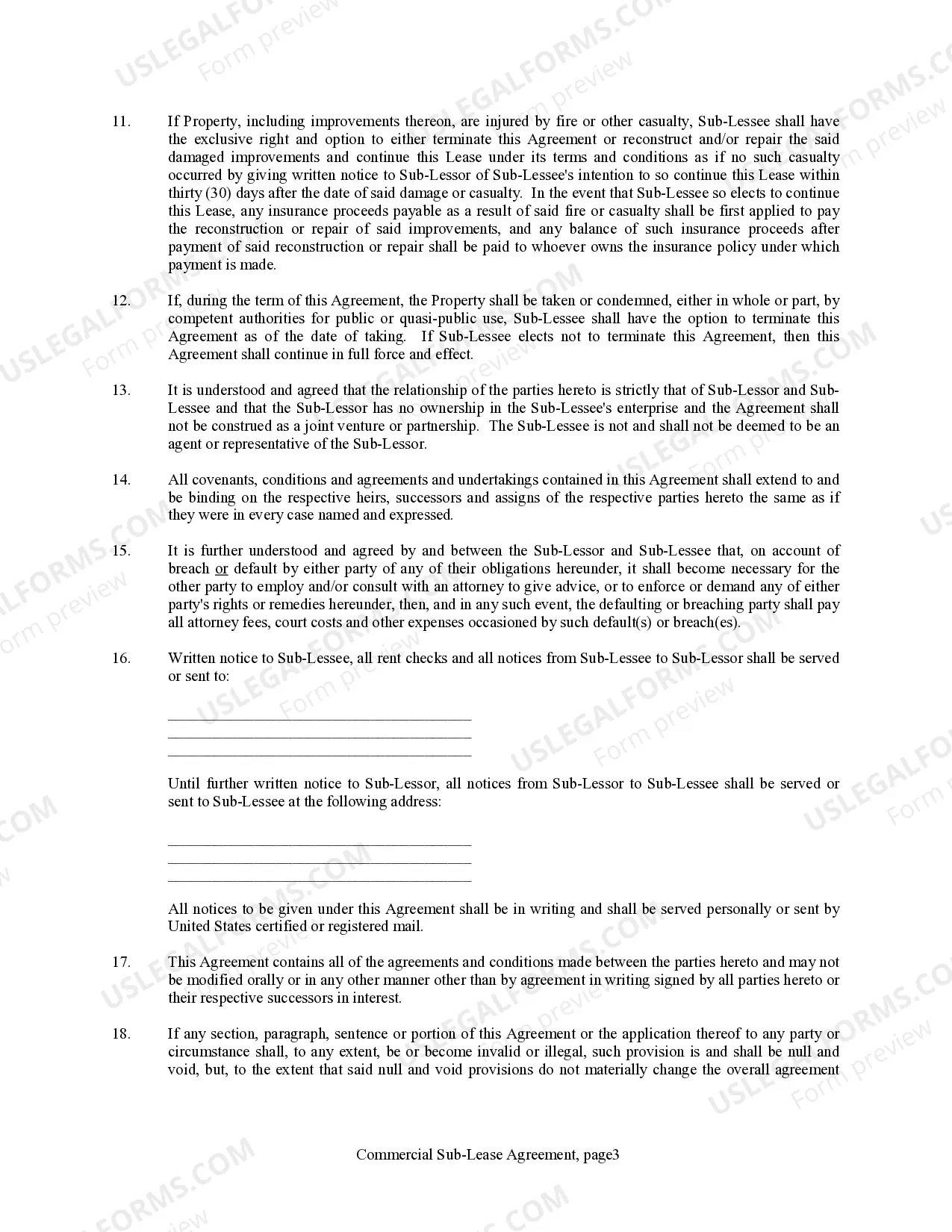
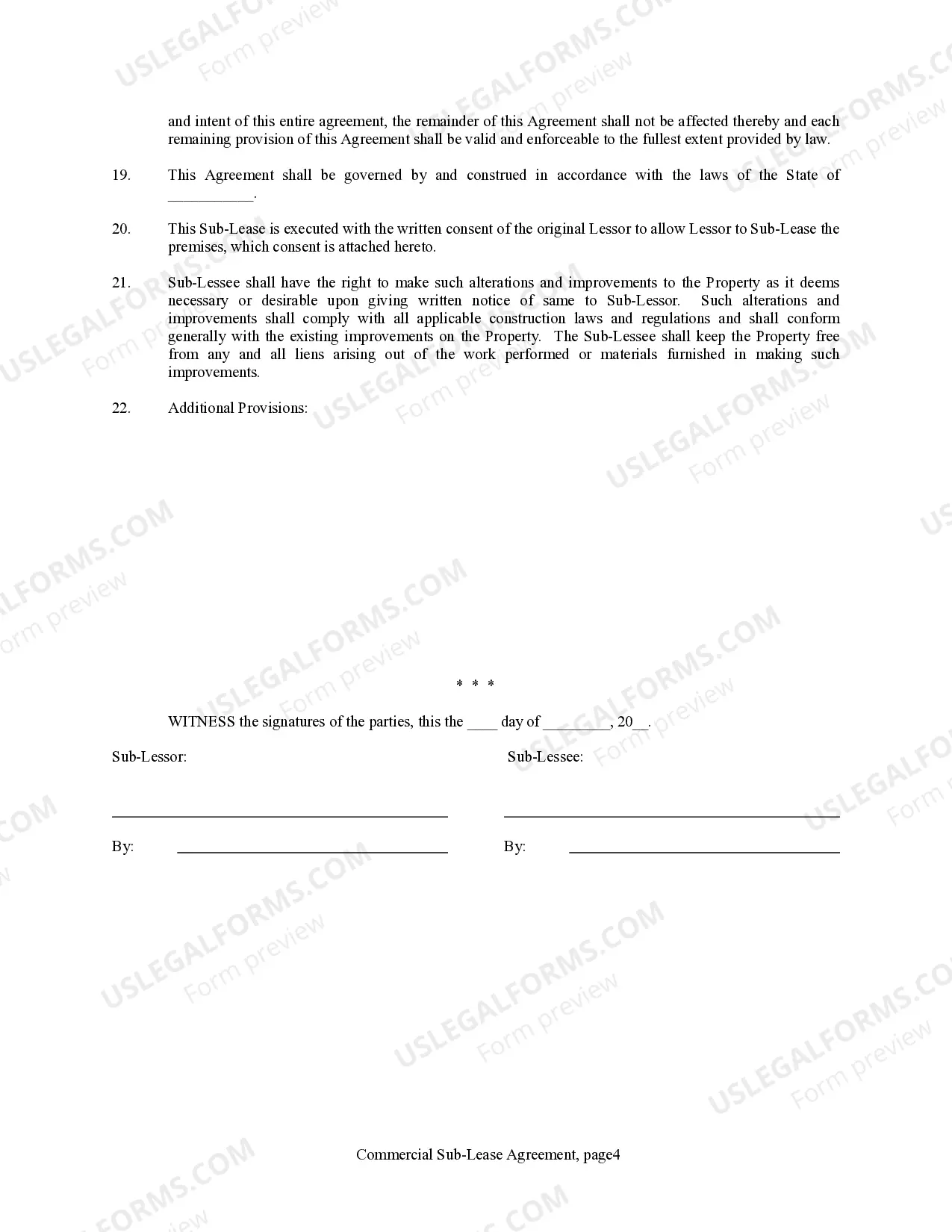
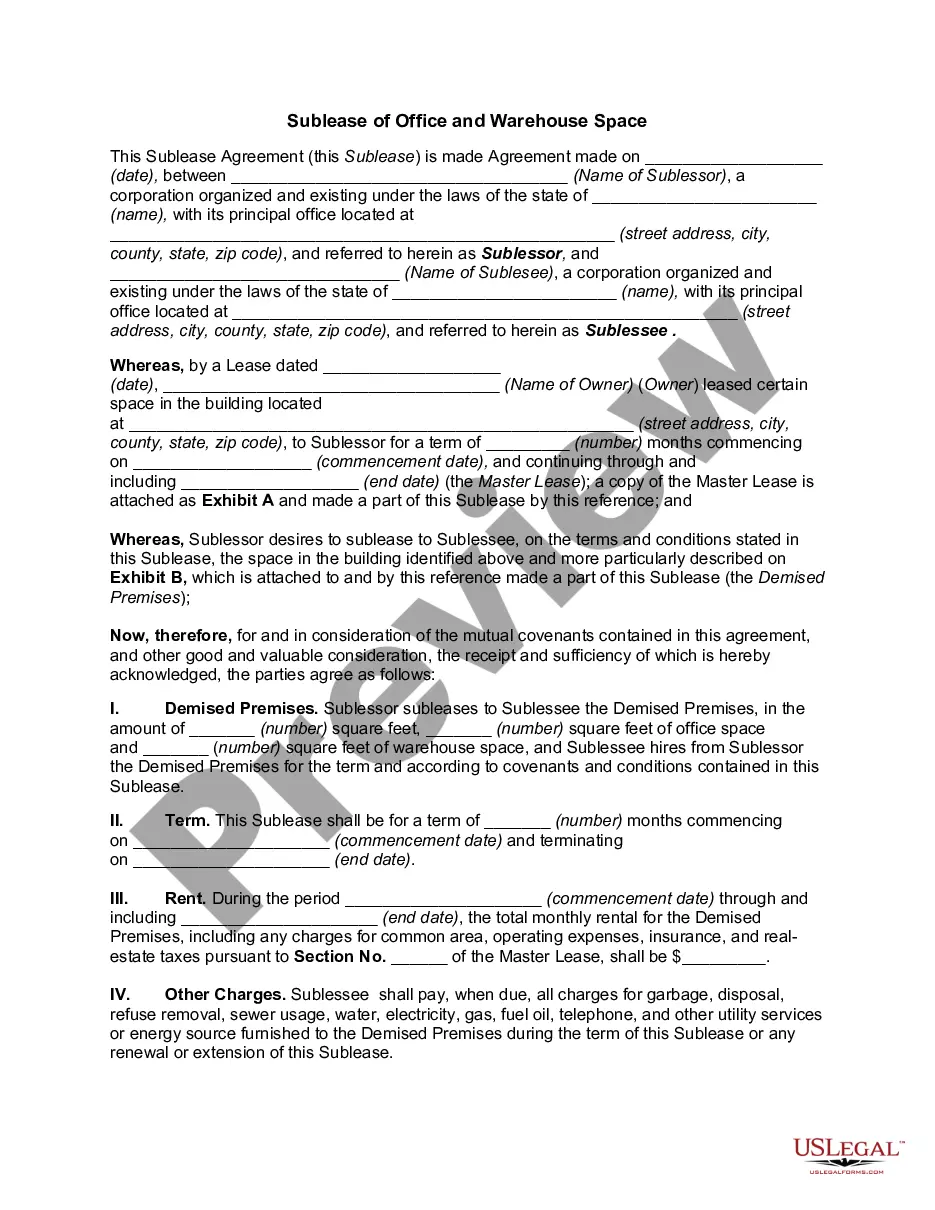
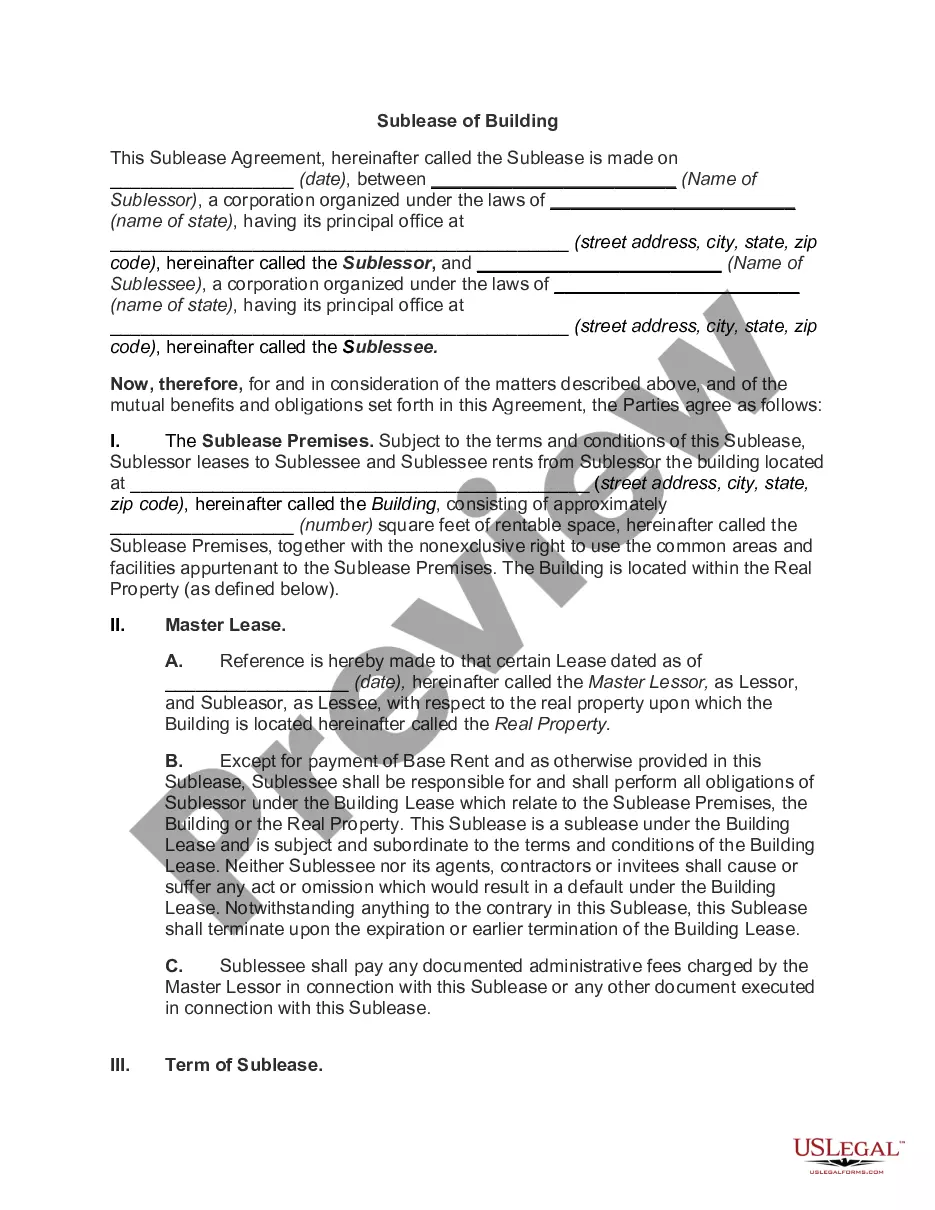
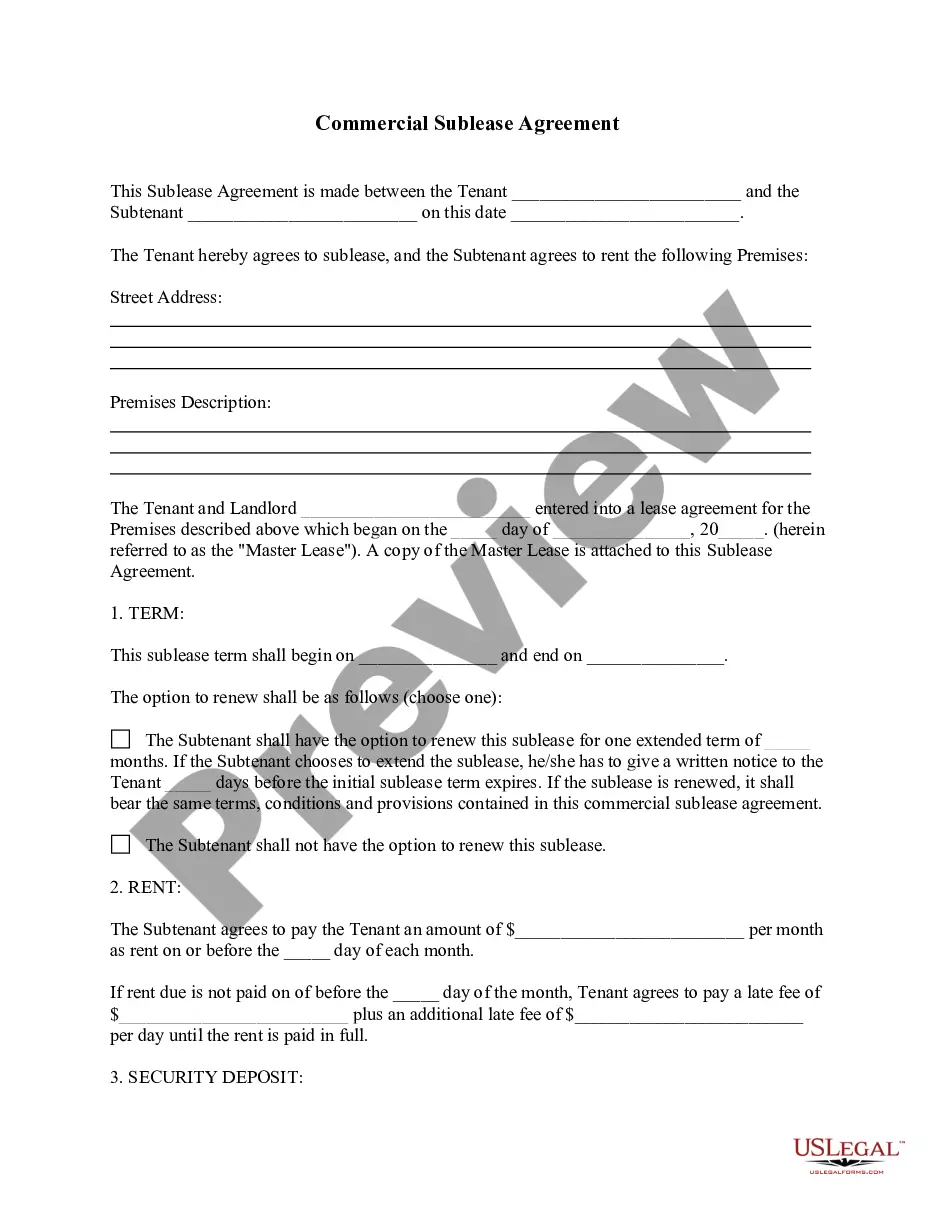
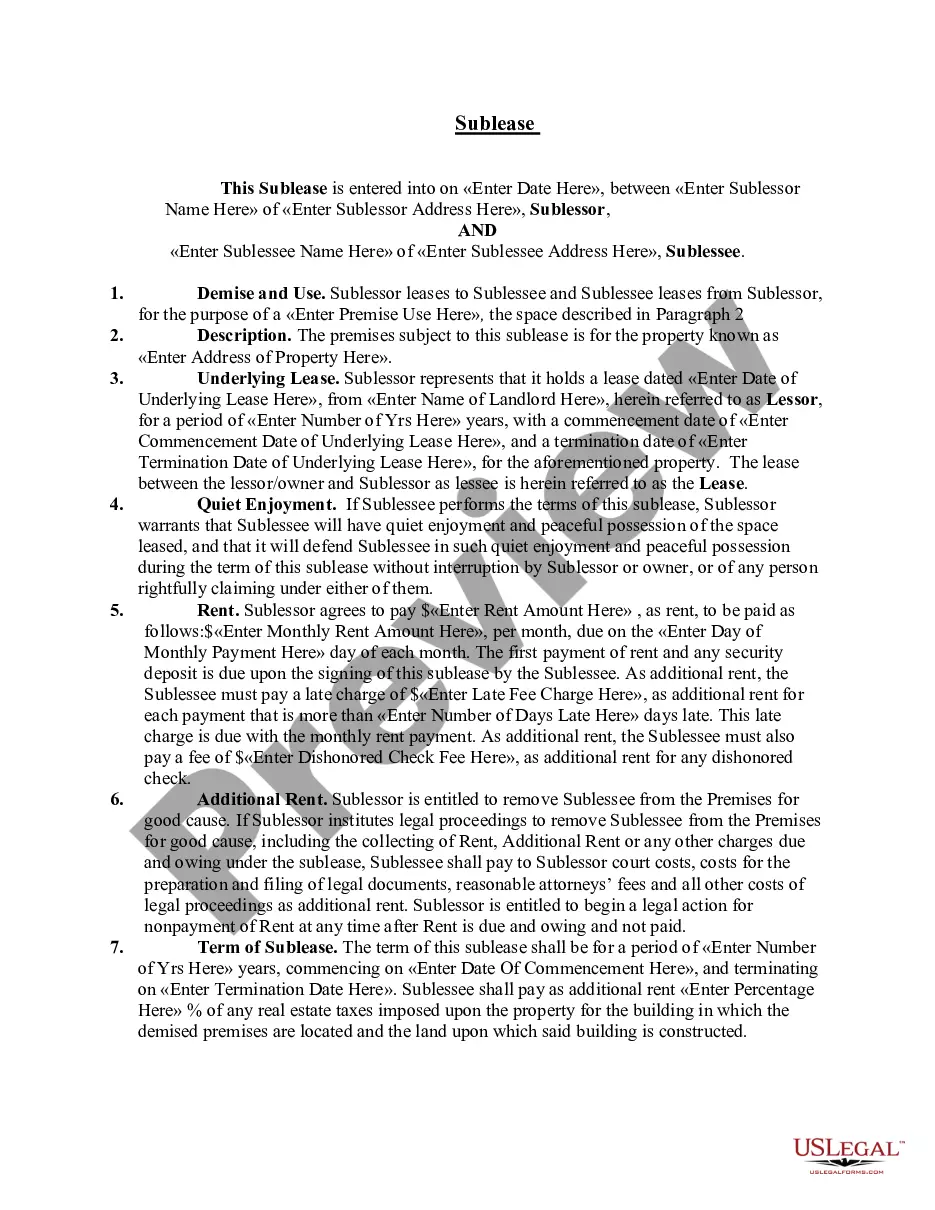
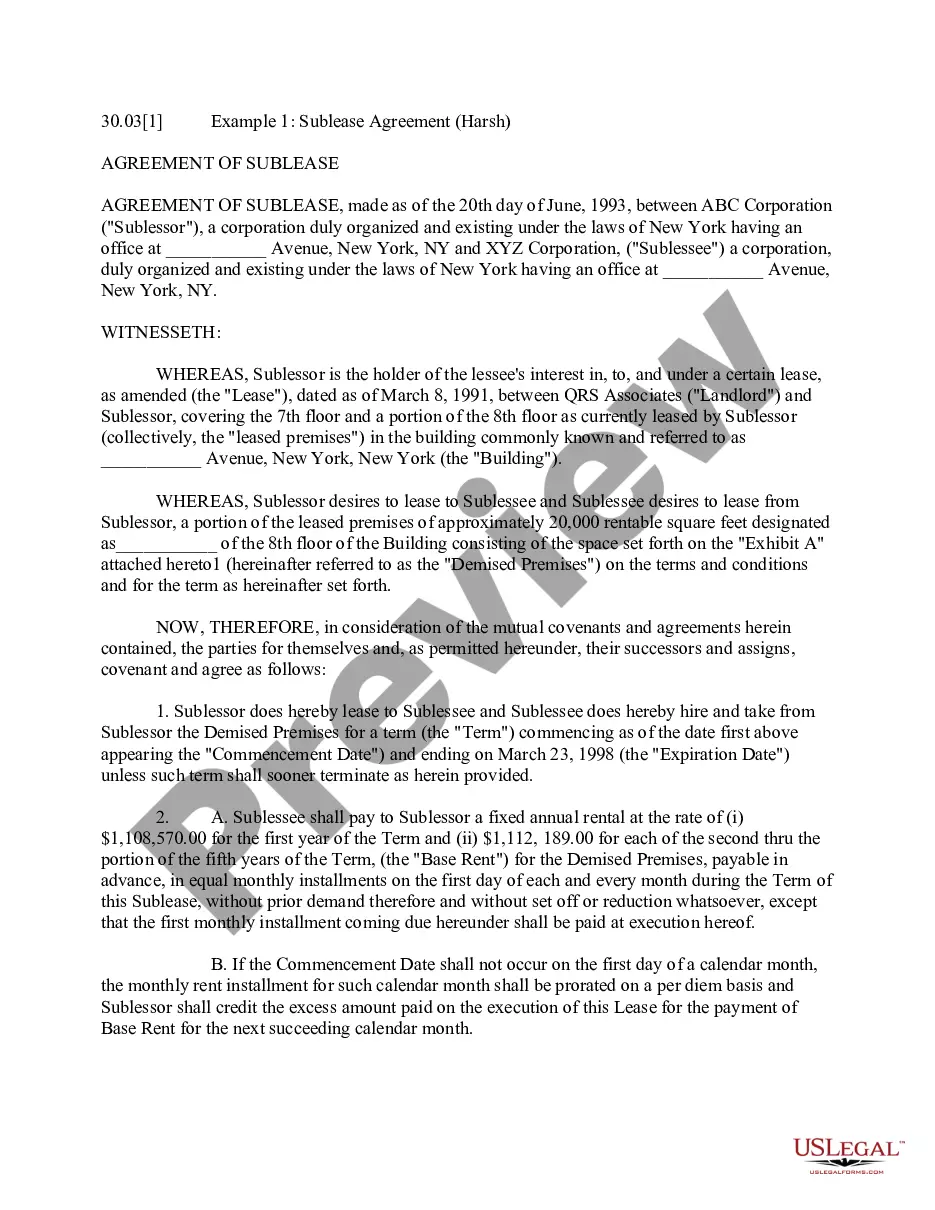
The Commercial Sublease form is a legal document that allows an existing tenant (Sub-Lessor) to rent out their leased commercial property to another party (Sub-Lessee) in the state of Hawaii. This agreement outlines the rights and responsibilities of both parties in relation to the subleasing arrangement. It differs from other leasing documents by specifically addressing the sublease relationship while maintaining compliance with the original lease terms.
Key components of this form
- Identification of the Sub-Lessor and Sub-Lessee
- Description of the leased property and its intended use
- Rental payment terms including amount and frequency
- Responsibilities for maintenance, repairs, and utilities
- Indemnity clauses and insurance requirements
- Terms for termination and default conditions
When to use this form
This form should be used when an existing tenant seeks to sublet their commercial space to another individual or business. It is essential in situations where a tenant wants to reduce costs or needs to vacate the property temporarily while maintaining their lease obligations. The Commercial Sublease form can also be beneficial if the original lease permits subletting under certain conditions.
Who can use this document
This form is suitable for:
- Current tenants (Sub-Lessors) looking to sublet their commercial property in Hawaii
- Individuals or businesses (Sub-Lessees) seeking commercial space from an existing tenant
- Property managers and real estate professionals involved in commercial leasing
Completing this form step by step
- Identify and enter the names of the Sub-Lessor and Sub-Lessee at the beginning of the document.
- Describe the property being leased, including its location and any improvements.
- Specify the rental payment amount and the due date for payments.
- Detail the term of the lease, indicating start and end dates.
- Include any insurance requirements and maintenance responsibilities.
- Ensure both parties sign and date the agreement to validate the terms.
Notarization guidance
Notarization is generally not required for this form. However, certain states or situations might demand it. You can complete notarization online through US Legal Forms, powered by Notarize, using a verified video call available anytime.
Get your form ready online
Our built-in tools help you complete, sign, share, and store your documents in one place.
Make edits, fill in missing information, and update formatting in US Legal Forms—just like you would in MS Word.
Download a copy, print it, send it by email, or mail it via USPS—whatever works best for your next step.
Sign and collect signatures with our SignNow integration. Send to multiple recipients, set reminders, and more. Go Premium to unlock E-Sign.
If this form requires notarization, complete it online through a secure video call—no need to meet a notary in person or wait for an appointment.
We protect your documents and personal data by following strict security and privacy standards.

Make edits, fill in missing information, and update formatting in US Legal Forms—just like you would in MS Word.

Download a copy, print it, send it by email, or mail it via USPS—whatever works best for your next step.

Sign and collect signatures with our SignNow integration. Send to multiple recipients, set reminders, and more. Go Premium to unlock E-Sign.

If this form requires notarization, complete it online through a secure video call—no need to meet a notary in person or wait for an appointment.

We protect your documents and personal data by following strict security and privacy standards.
Typical mistakes to avoid
- Failing to attach the original lease agreement, as required.
- Not specifying the duration of the sublease.
- Omitting agreed payment terms or dates.
- Neglecting to clarify maintenance and repair responsibilities.
- Forgetting to obtain the original lessor's consent if required by the original lease.
Benefits of completing this form online
- Convenience of downloading and printing the form at your convenience.
- Editable fields allow for easy customization to fit specific leasing needs.
- Access to attorney-drafted forms ensures legal compliance and protection.
Looking for another form?
Form popularity
FAQ
Filling out a commercial lease agreement requires careful attention to detail. You'll need to clearly outline the terms of the lease, specify the rental amount, and detail the responsibilities of both parties. For a seamless process, consider using platforms like uslegalforms, which provide templates and guidance specifically for Hawaii Commercial Sublease agreements.
The 90-day rule in Hawaii states that if a tenant intends to sublease for more than 90 days, they must follow specific legal processes. This may include more intensive landlord approvals and could invoke additional regulations. Being aware of this rule will help you navigate a Hawaii Commercial Sublease effectively and avoid possible legal pitfalls.
Landlords often dislike subleasing because it can complicate their management of the property. When a tenant subleases, the landlord loses direct control over the new subtenant, which can lead to issues like maintenance concerns and lease violations. Understanding these dynamics can help you negotiate a smoother Hawaii Commercial Sublease.
In Hawaii, you cannot generally sublet a commercial property without obtaining permission from your landlord. The original lease agreement typically outlines the requirements for subleasing, and failing to seek approval can lead to potential eviction. Always check your lease terms for specific conditions regarding a Hawaii Commercial Sublease.
Subleasing a commercial property is not illegal; however, it is subject to the terms of the original lease and local laws. Failure to adhere to these terms can lead to significant consequences, including eviction. To ensure a legal and smooth process, always consult your lease and consider guidance from USLegalForms when navigating your Hawaii Commercial Sublease.
A sublet clause in a commercial lease outlines the conditions under which a tenant can lease their space to another party. This clause typically covers the necessary permissions, obligations, and restrictions related to subleasing. As a tenant, understanding this clause is crucial for navigating a Hawaii Commercial Sublease smoothly.
To exit a commercial sublease, review the terms outlined in your sublease agreement. Ideally, your agreement should specify the process for termination, which might involve notifying the sublessee or obtaining landlord approval. If complications arise, consider seeking legal guidance or utilizing resources like USLegalForms to facilitate your exit from the Hawaii Commercial Sublease.
Commercial subleasing refers to the practice of a tenant leasing out their rented commercial space to another business or individual. In this arrangement, the original tenant is still accountable to the landlord while earning income from the sublease. This can be a strategic move for businesses looking to reduce expenses during transitional periods. Understanding commercial subleasing can enhance your Hawaii Commercial Sublease experience.
Subleasing is not illegal in Hawaii, but certain restrictions may apply based on the original lease agreement and local laws. It's essential to check your lease terms, as some landlords may place limitations on the practice. Compliance with these stipulations allows tenants to navigate a Hawaii Commercial Sublease safely.
A commercial sublease involves one tenant leasing all or part of their rented commercial space to another party, known as the sublessee. The original tenant, or sublessor, remains responsible for the primary lease with the landlord. Therefore, both parties must follow the terms set within the primary lease agreement. Mastering this process is vital for an effective Hawaii Commercial Sublease.