Agreement to Incorporate by Partners Incorporating Existing Partnership
Overview of this form
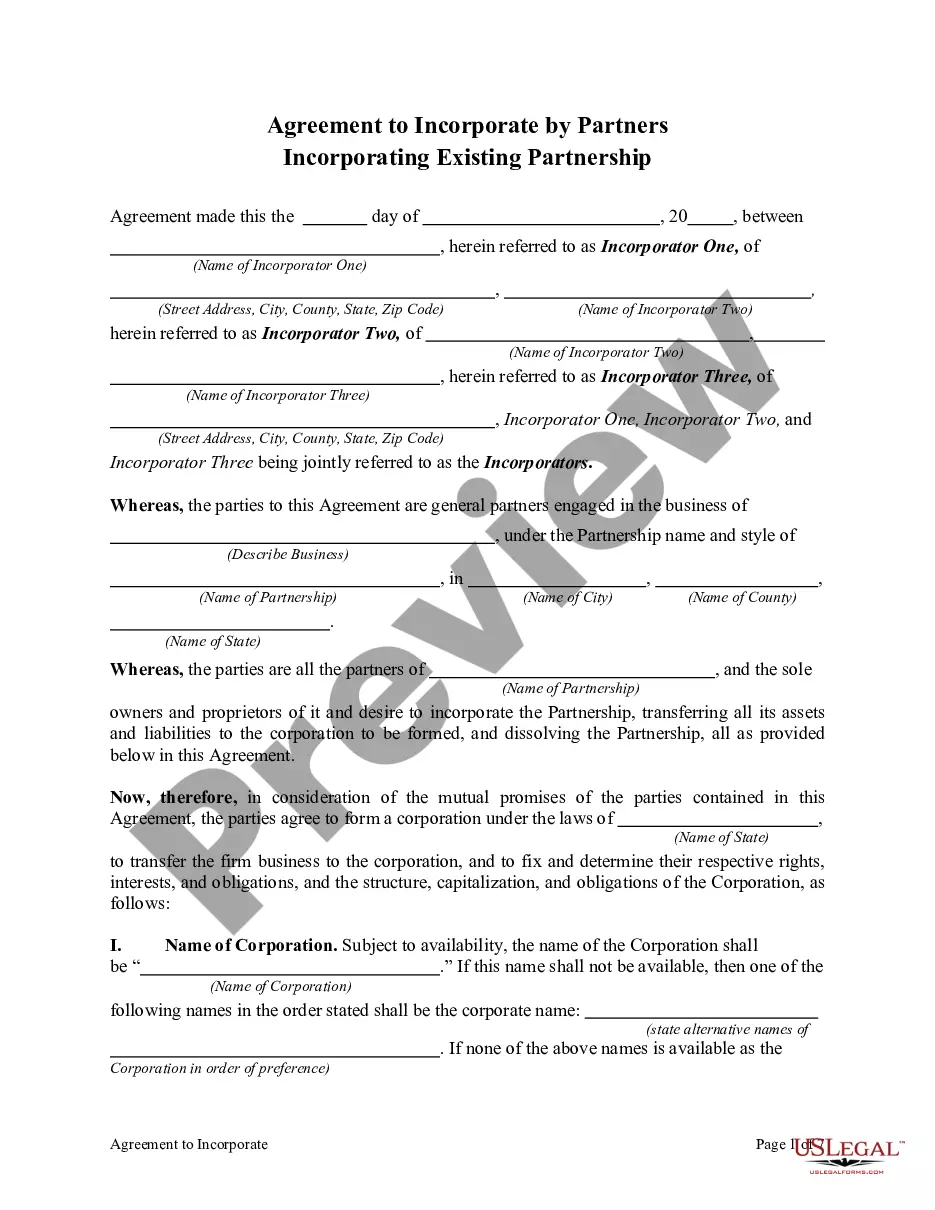
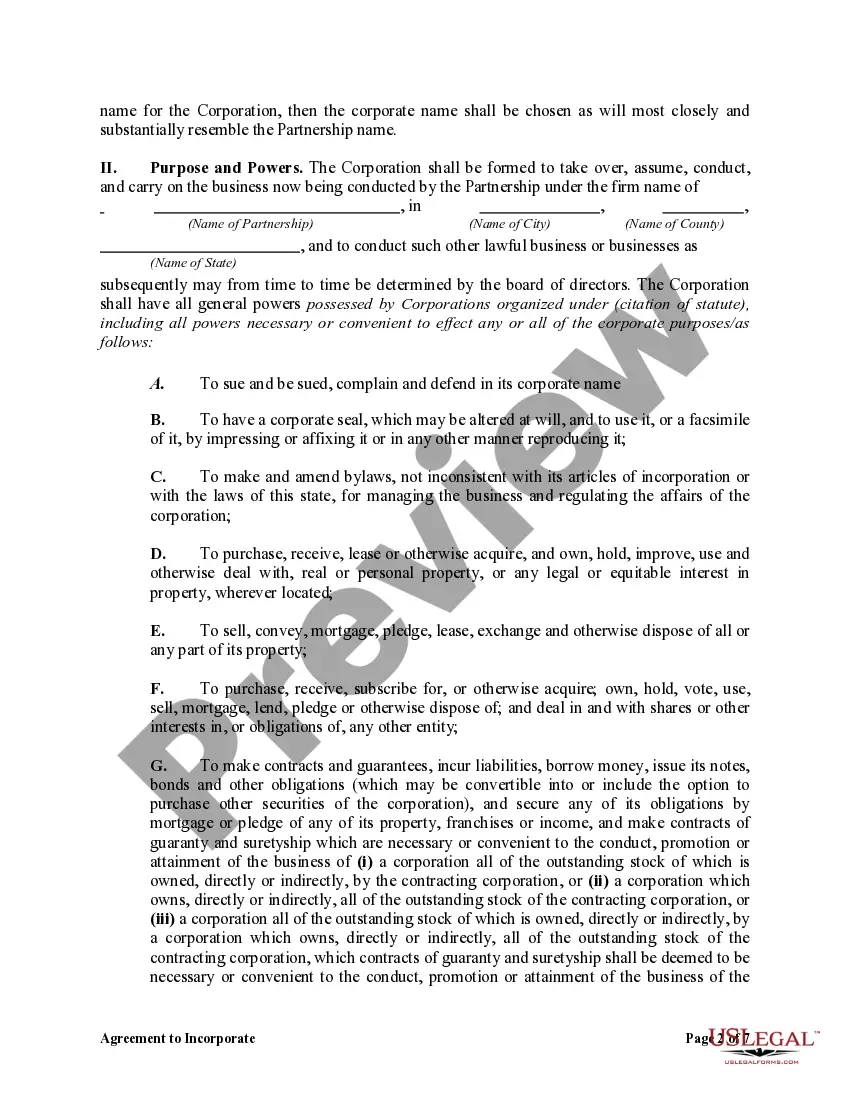
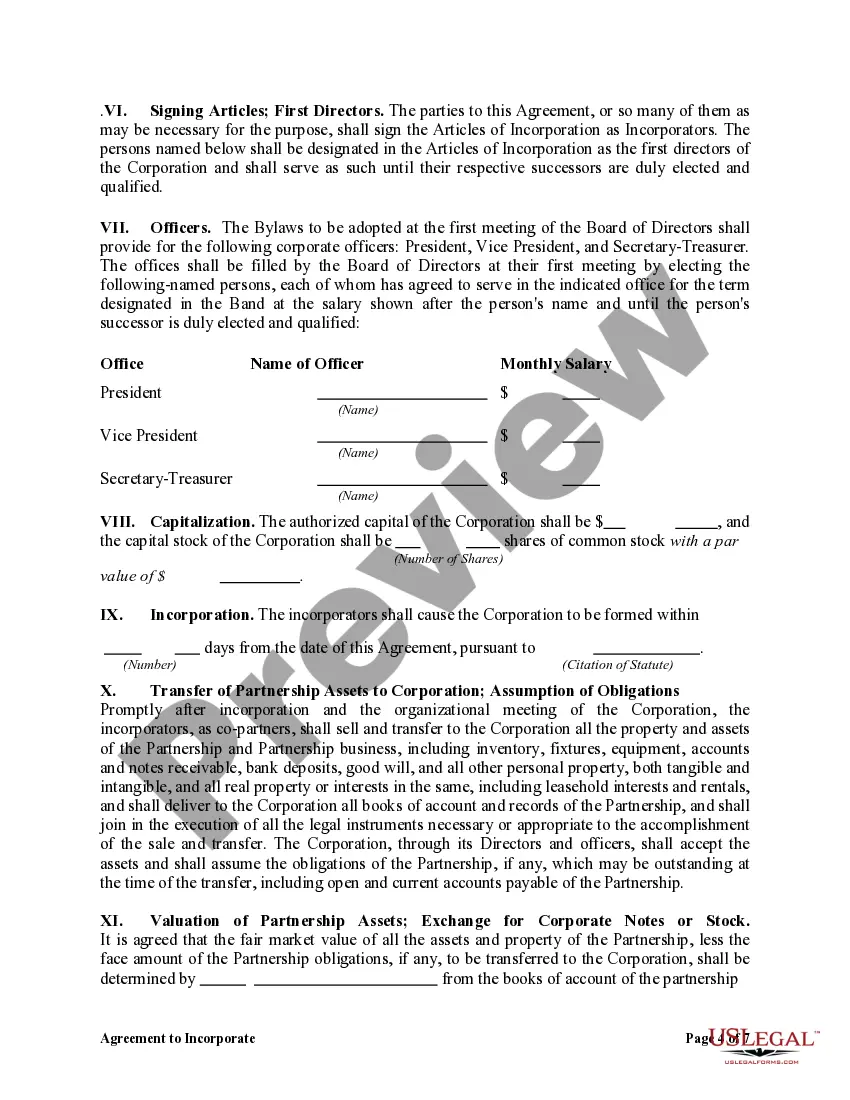
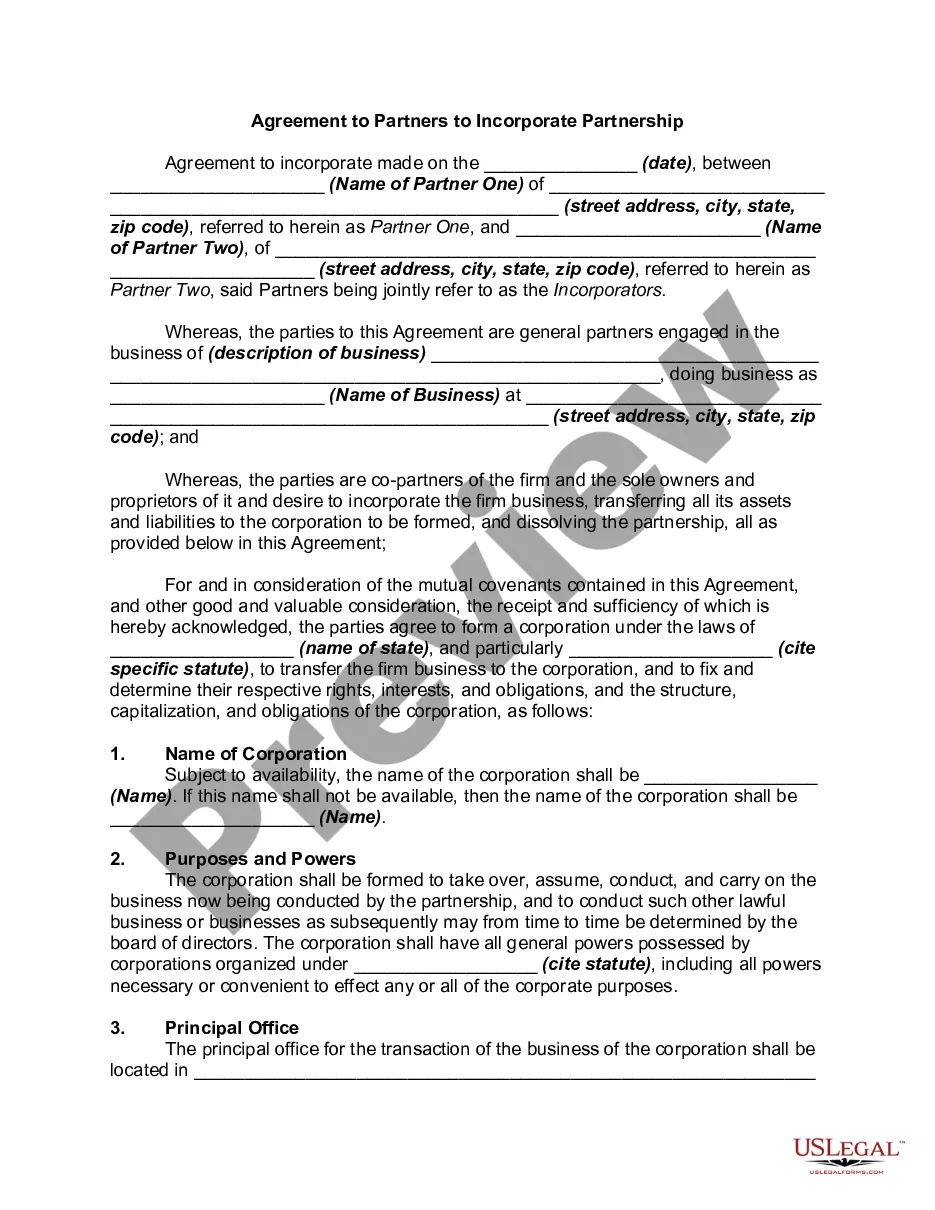
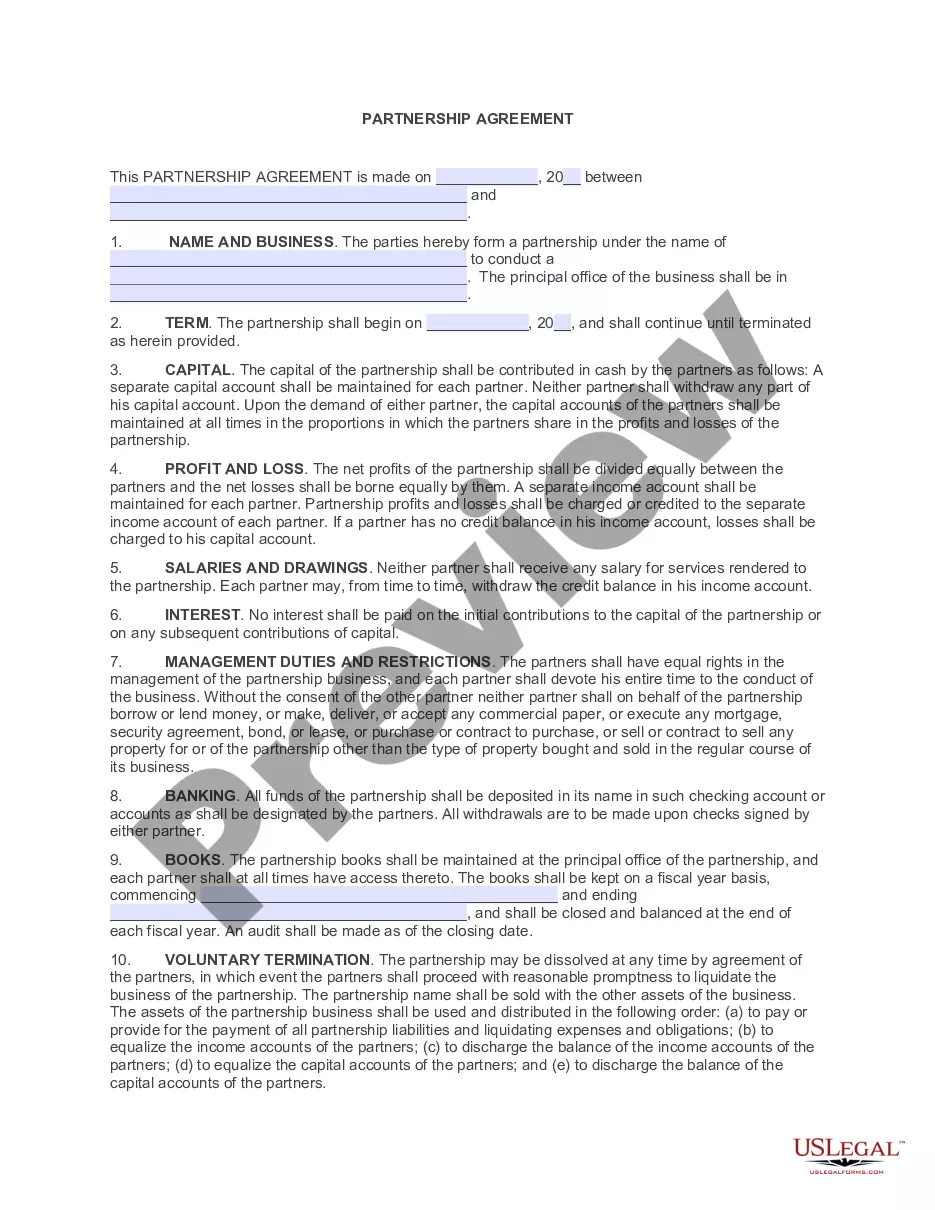
The Agreement to Incorporate by Partners Incorporating Existing Partnership is a legal document that facilitates the transition of a partnership into a corporation. This form is specifically designed for partners who wish to incorporate their existing business partnership while retaining the benefits of limited liability. Unlike general partnership agreements, this incorporation agreement formalizes the structure and management of a corporation, providing necessary legal protections for personal assets.
Main sections of this form
- Incorporator obligations and responsibilities
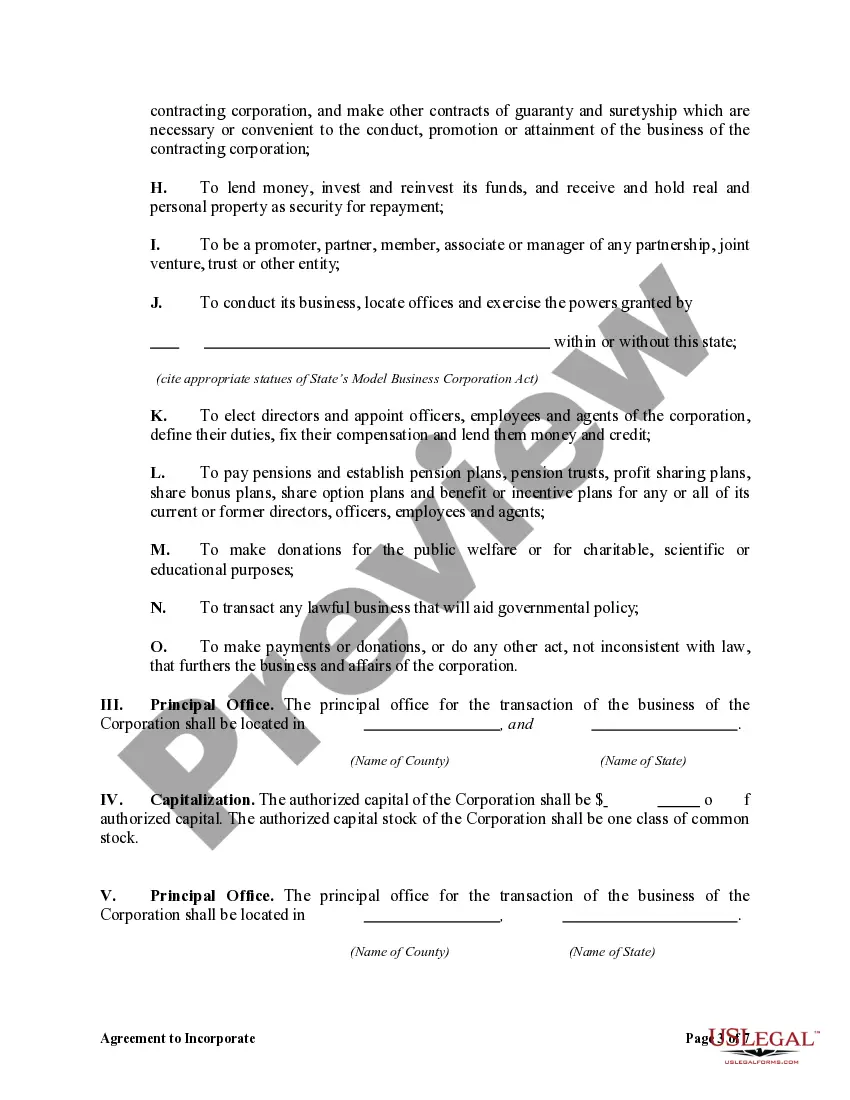
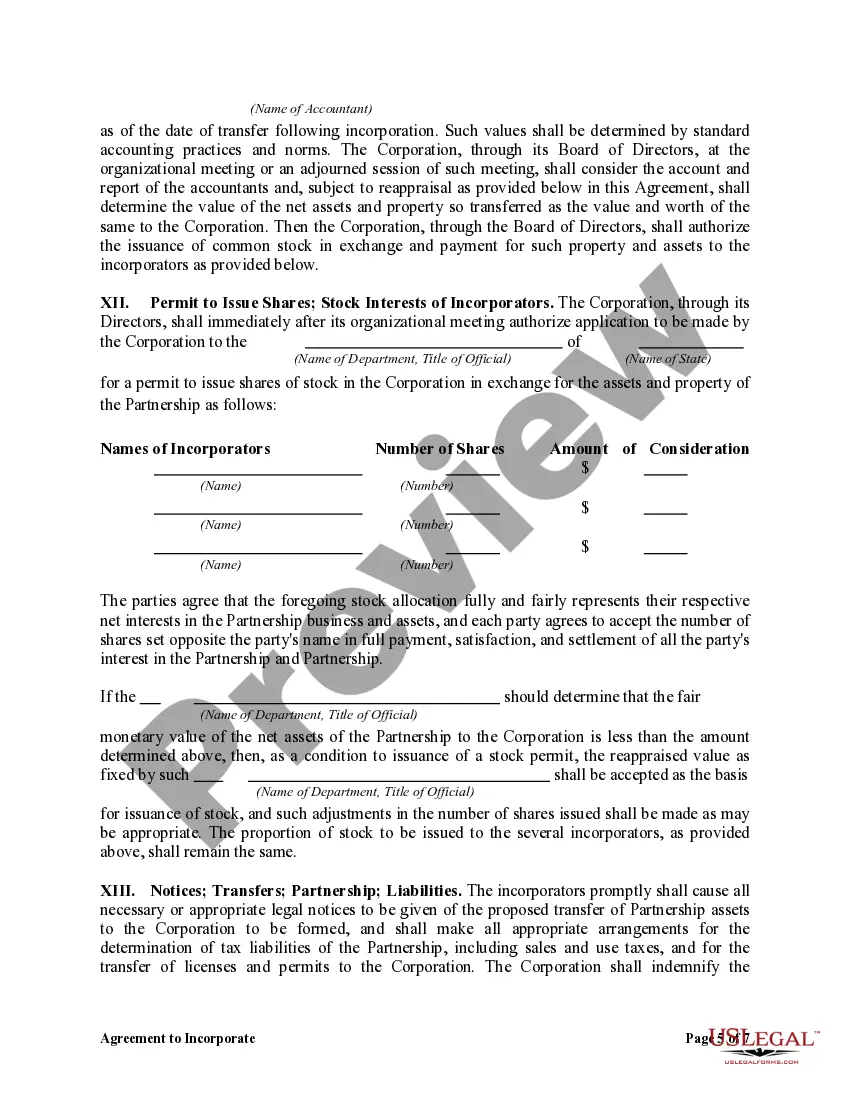
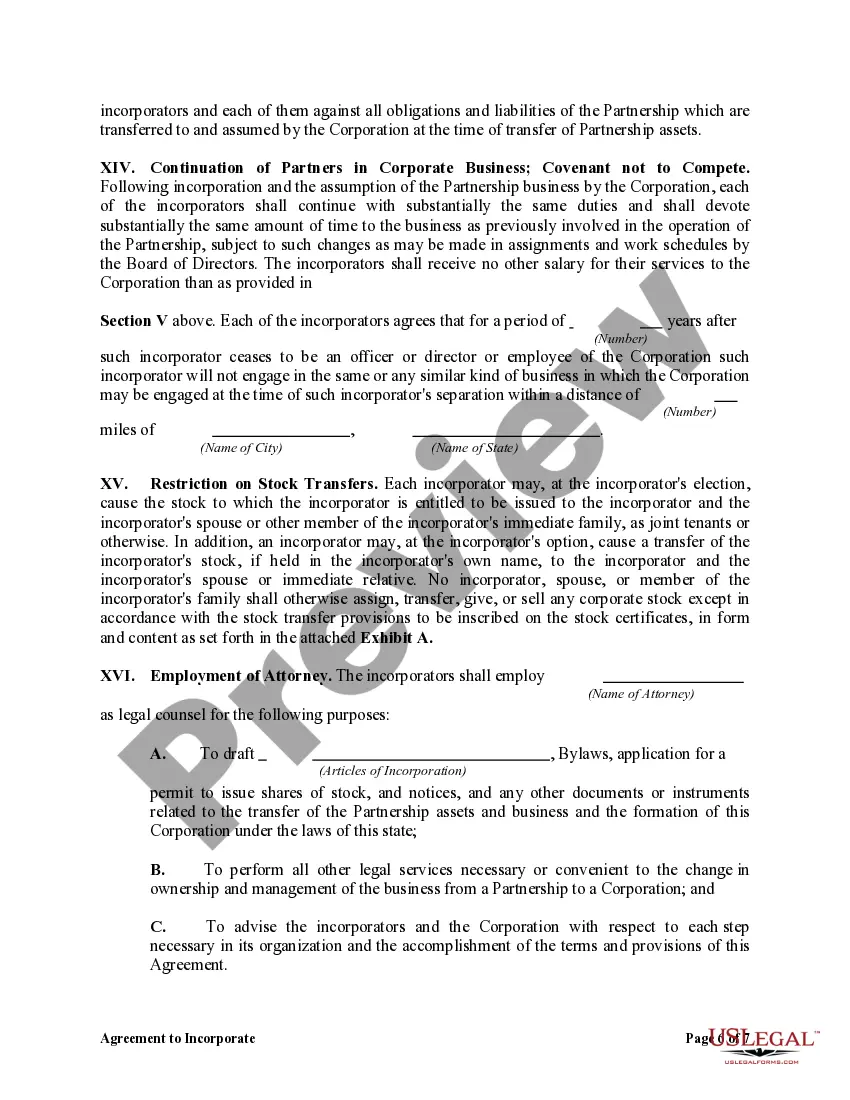
- Transfer of partnership assets and liabilities to the new corporation
- Bylaws for corporate governance
- Election of corporate officers and their responsibilities
- Provisions for making contracts and financial dealings
- Indemnification clauses for incorporators against partnership liabilities
When this form is needed
This form is useful in various scenarios, including when a group of partners wants to protect their personal assets by forming a corporation. It is applicable when the partners wish to maintain the existing business structure while ensuring continuity and limited liability. Additionally, it can be used if the partnership seeks to adapt to new business needs or attract investors.
Who should use this form
The following parties should consider using this form:
- Business partners looking to incorporate their existing partnership
- Individuals seeking to limit personal liability while operating a business
- Partners interested in establishing a formal corporate structure and governance
How to complete this form
- Identify the names and addresses of the incorporators.
- Specify the partnership assets and liabilities being transferred to the corporation.
- Enter the proposed bylaws governing the corporation.
- Designate the corporate officers and their respective responsibilities.
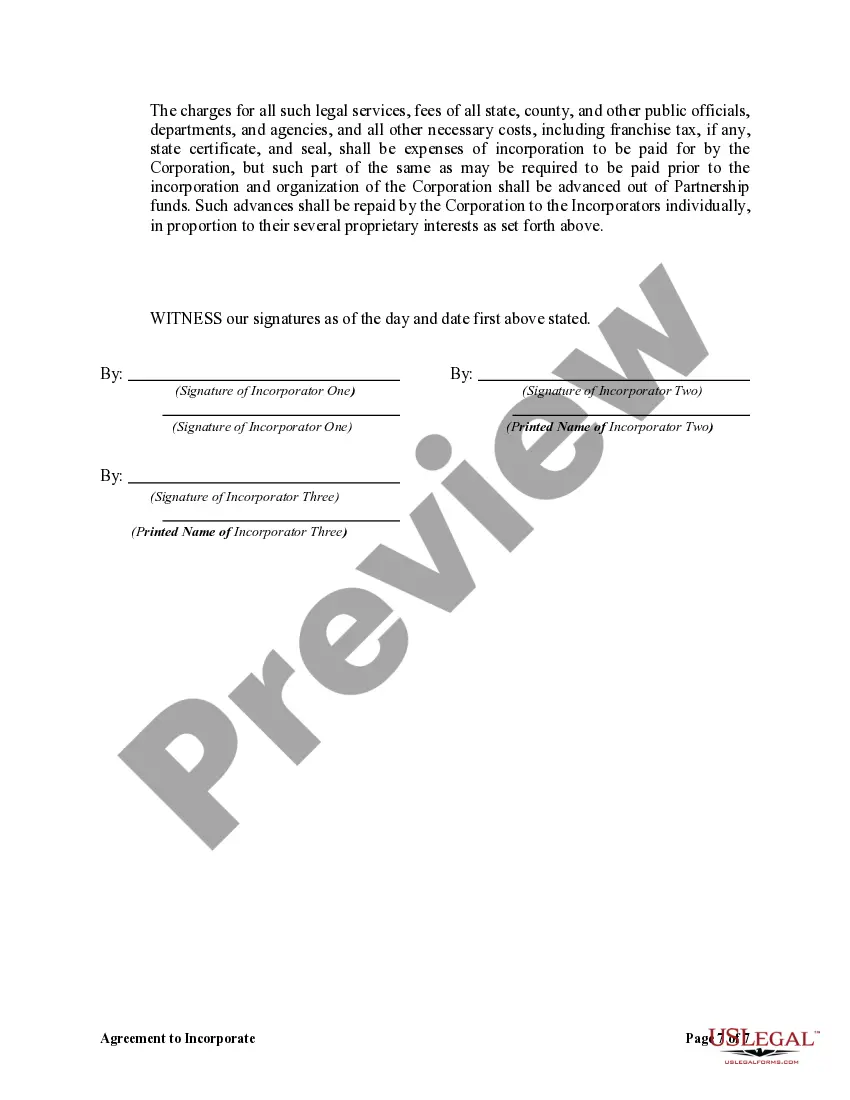
- Include the necessary signatures of all incorporators to validate the agreement.
Is notarization required?
Notarization is not commonly needed for this form. However, certain documents or local rules may make it necessary. Our notarization service, powered by Notarize, allows you to finalize it securely online anytime, day or night.
Get your form ready online
Our built-in tools help you complete, sign, share, and store your documents in one place.
Make edits, fill in missing information, and update formatting in US Legal Forms—just like you would in MS Word.
Download a copy, print it, send it by email, or mail it via USPS—whatever works best for your next step.
Sign and collect signatures with our SignNow integration. Send to multiple recipients, set reminders, and more. Go Premium to unlock E-Sign.
If this form requires notarization, complete it online through a secure video call—no need to meet a notary in person or wait for an appointment.
We protect your documents and personal data by following strict security and privacy standards.

Make edits, fill in missing information, and update formatting in US Legal Forms—just like you would in MS Word.

Download a copy, print it, send it by email, or mail it via USPS—whatever works best for your next step.

Sign and collect signatures with our SignNow integration. Send to multiple recipients, set reminders, and more. Go Premium to unlock E-Sign.

If this form requires notarization, complete it online through a secure video call—no need to meet a notary in person or wait for an appointment.

We protect your documents and personal data by following strict security and privacy standards.
Mistakes to watch out for
- Failing to accurately list all partnership assets and liabilities.
- Not obtaining the required signatures from all partners.
- Omitting bylaws or incorrectly drafting them.
- Neglecting to comply with state-specific incorporation requirements.
Why complete this form online
- Convenience of filling out and downloading the form from anywhere.
- Editability that allows users to customize for their unique needs.
- Access to legal templates written by licensed attorneys for reliability.
Legal use & context
- This form helps ensure the proper legal transfer of partnership assets to a corporation.
- It establishes liability protection for the incorporators under corporate law.
- It allows for the orderly management of the newly formed corporation through established bylaws and elected officers.
Key takeaways
- The Agreement to Incorporate is vital for partners wishing to take their business to a corporate structure.
- Accurate completion and adherence to local laws are crucial for effectiveness.
- This form provides critical legal protections and formal governance for the new corporation.
Looking for another form?
Form popularity
FAQ
Name of the partnership. Contributions to the partnership. Allocation of profits, losses, and draws. Partners' authority. Partnership decision-making. Management duties. Admitting new partners. Withdrawal or death of a partner.
Choose a name for your business. Choosing a name for your new partnership is a critical task. Create a partnership agreement. Secure an Employer Identification Number. Open a bank account. Secure licenses and permits. Maintain other regulatory and tax requirements.
Share the same values. Choose a partner with complementary skills. Have a track record together. Clearly define each partner's role and responsibilities. Select the right business structure. Put it in writing. Be honest with each other.
Name of your partnership. Contributions to the partnership and percentage of ownership. Division of profits, losses and draws. Partners' authority. Withdrawal or death of a partner.
Although each partnership agreement differs based on business objectives, certain terms should be detailed in the document, including percentage of ownership, division of profit and loss, length of the partnership, decision making and resolving disputes, partner authority, and withdrawal or death of a partner.
Choose a business name. File a fictitious business name statement with the county clerk. Draft and sign a partnership agreement. Obtain licenses, permits, and zoning clearances. Obtain an Employer Identification Number.
Create a preliminary plan for an alliance. This plan should detail how the alliance will benefit both companies. Approach the key decision maker. Build a relationship with your contact first. Present your idea. Listen and adapt your proposal as necessary.
Although there's no requirement for a written partnership agreement, often it's a very good idea to have such a document to prevent internal squabbling (about profits, direction of the company, etc.) and give the partnership solid direction. Limited liability partnerships do have a writing requirement.