Rider to Lease of Office Building with Rules and Regulations Including
Understanding this form
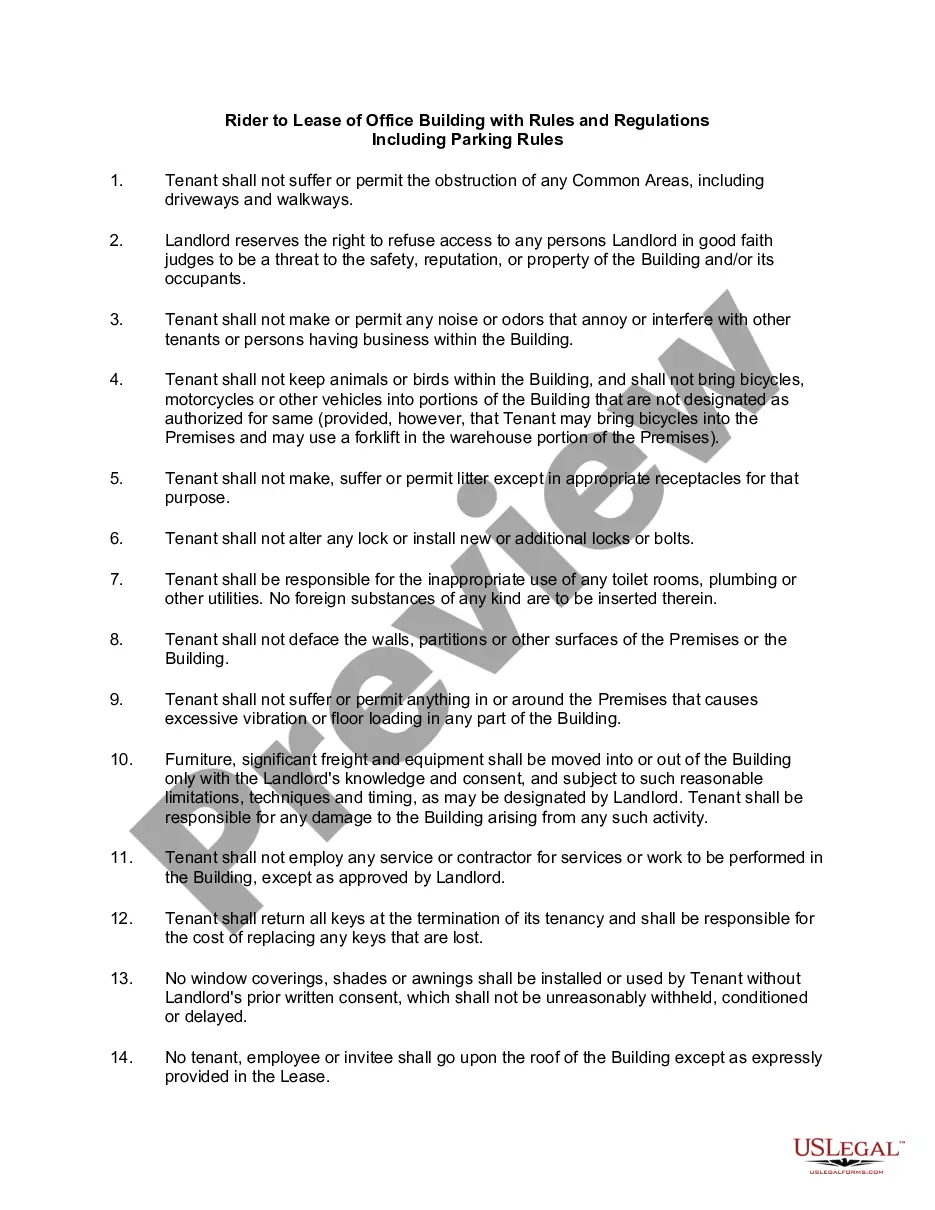
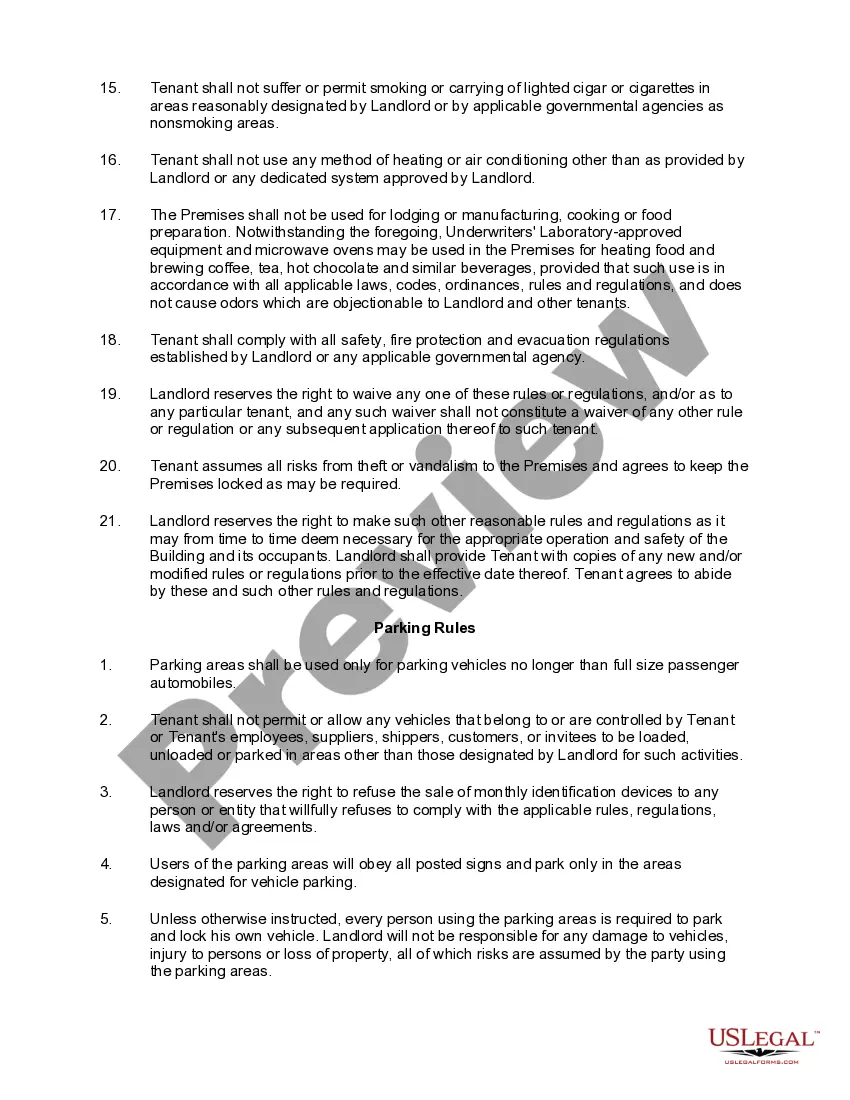
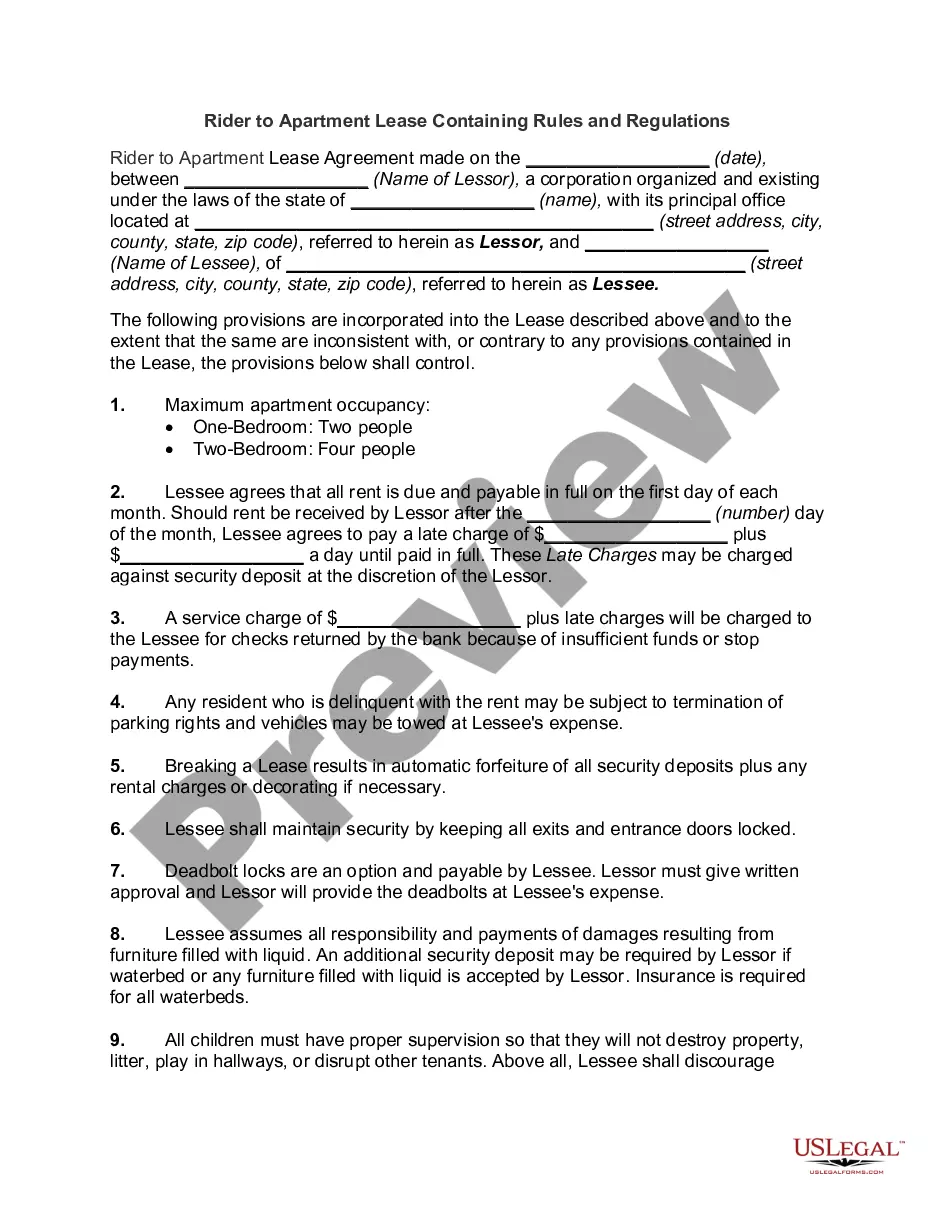
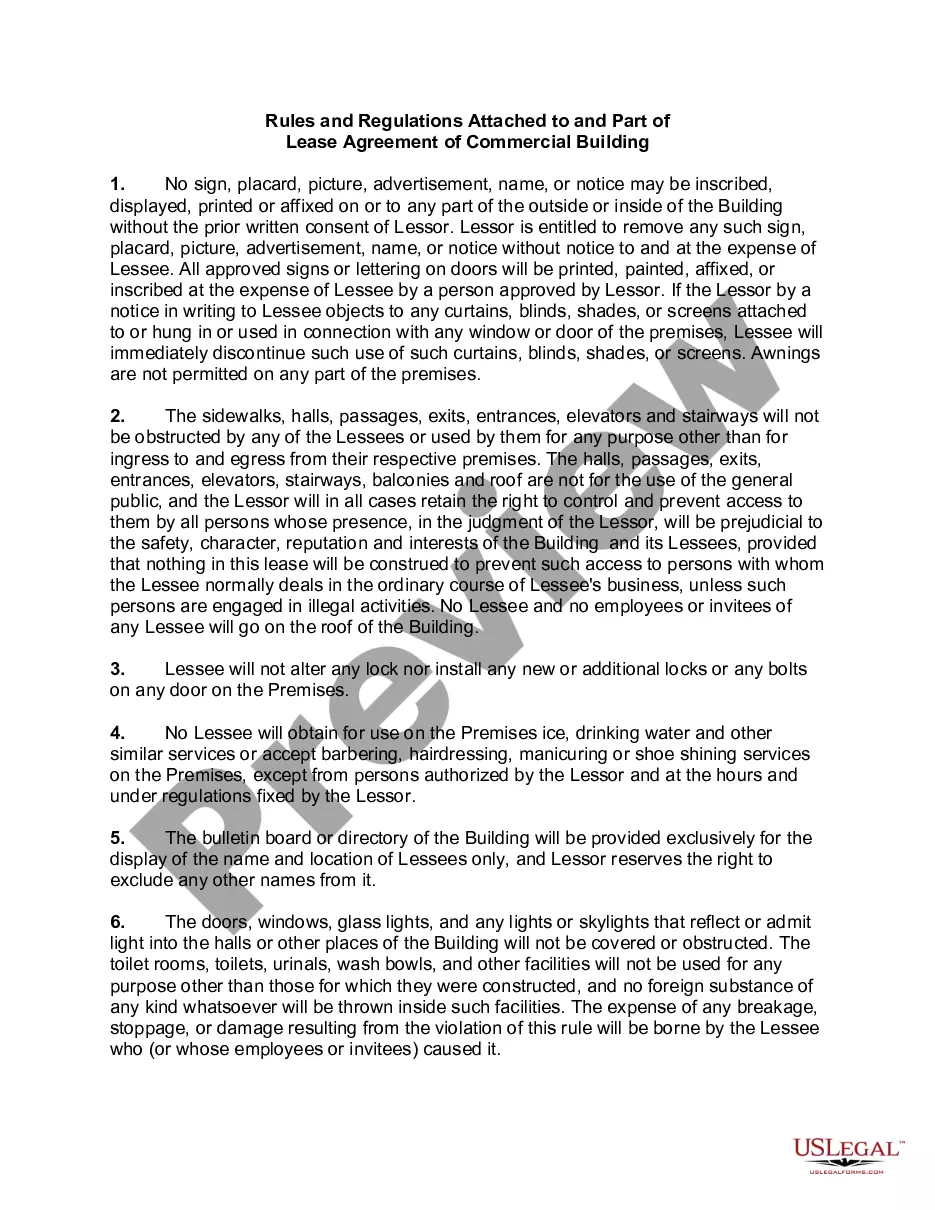
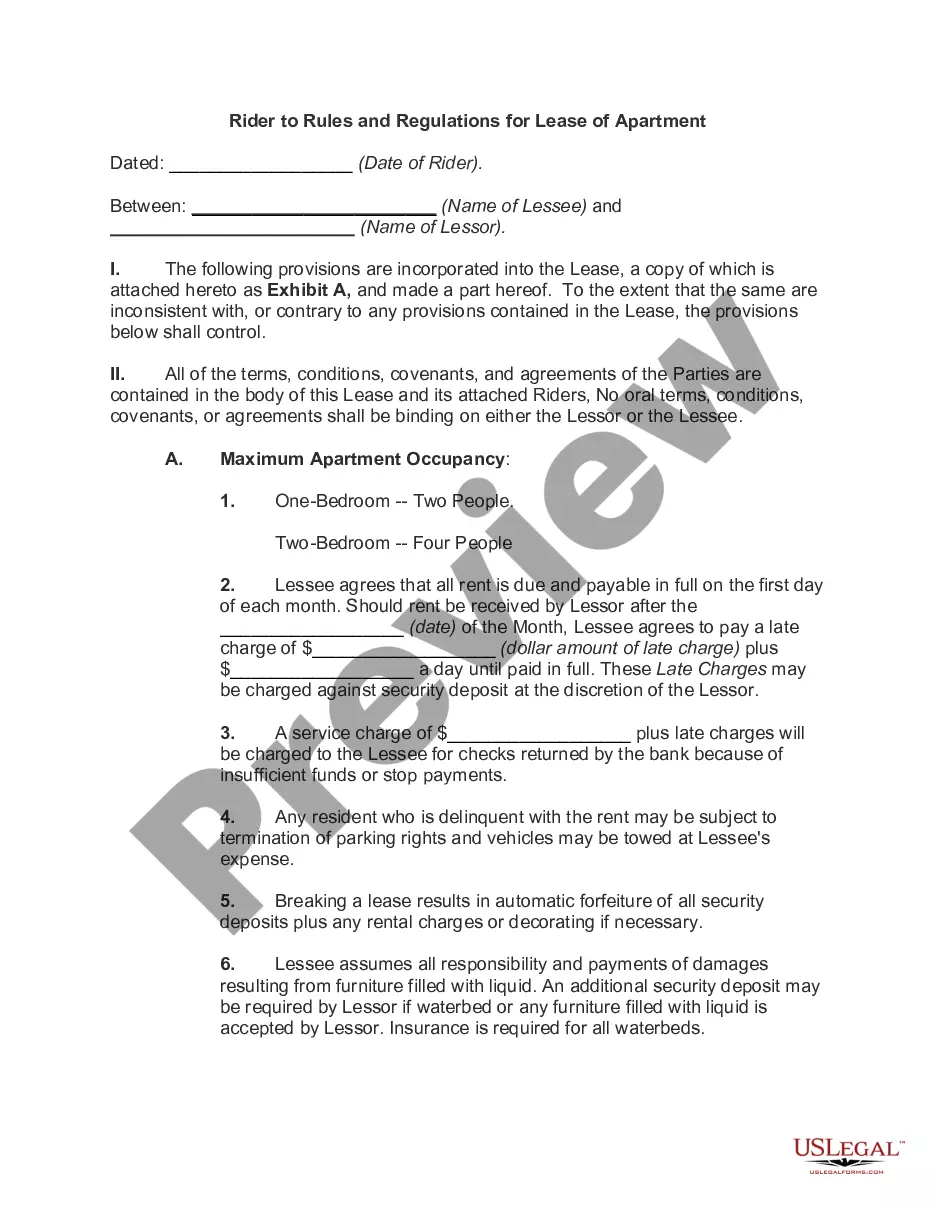
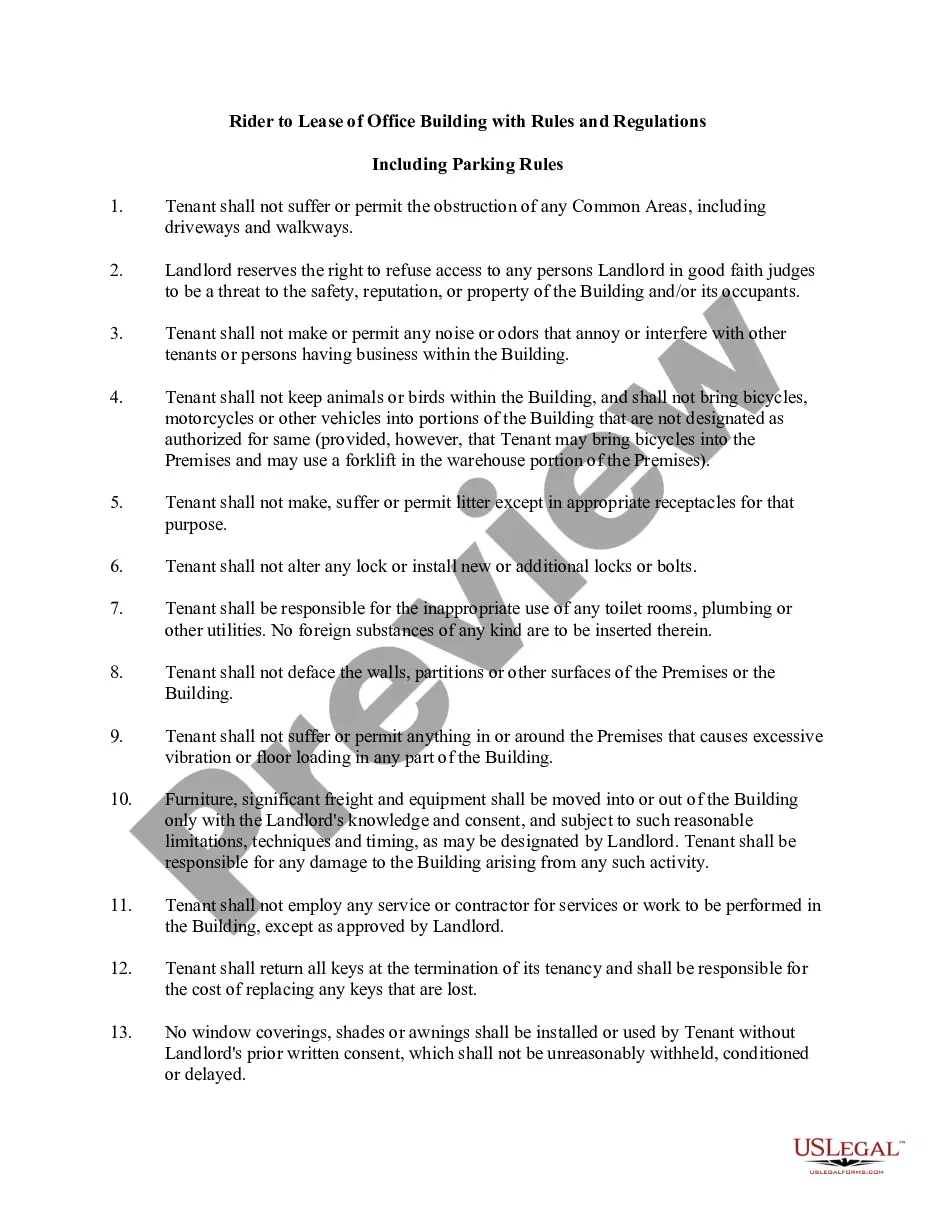
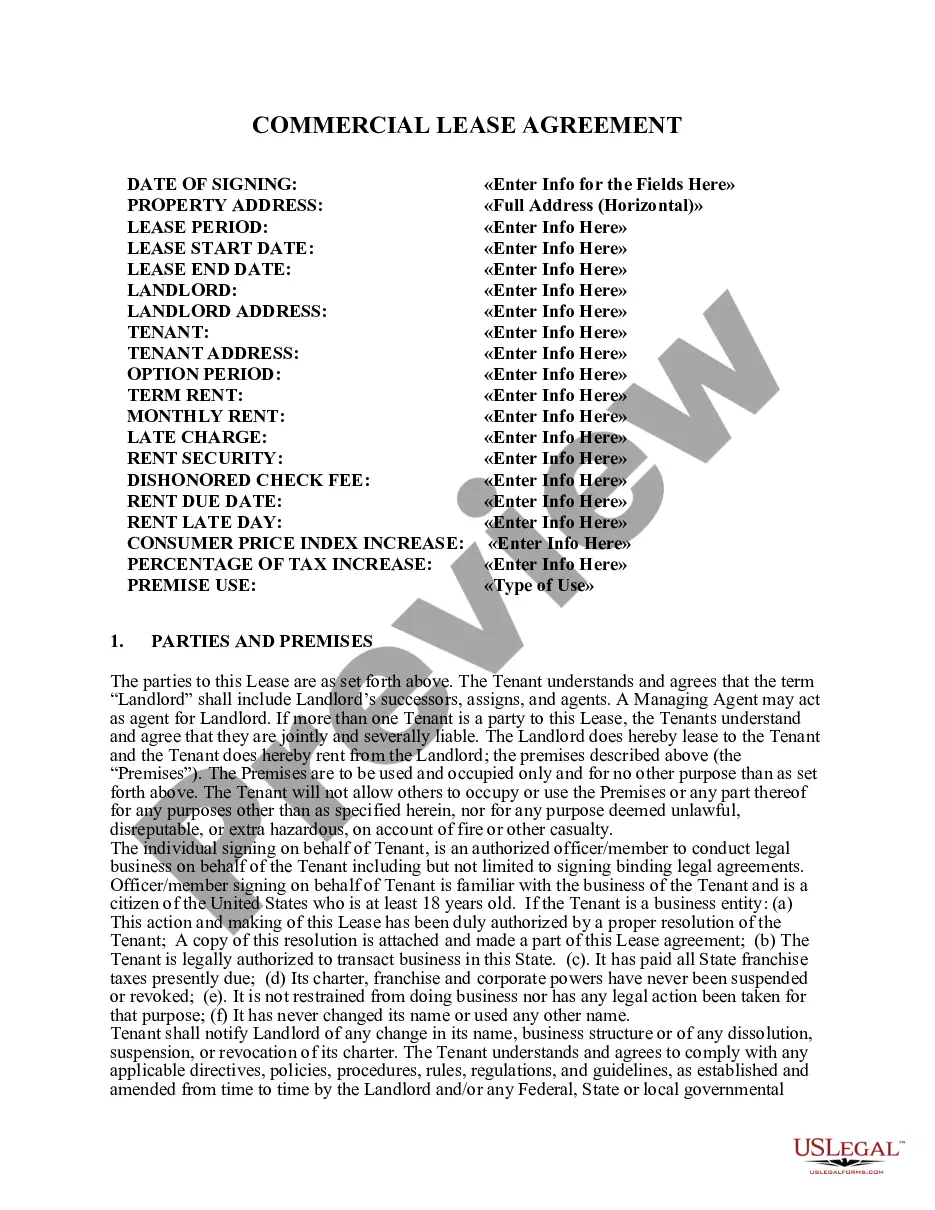
The Rider to Lease of Office Building with Rules and Regulations is an essential legal document that supplements a lease agreement between a landlord and tenant. This rider includes specific rules and regulations that govern the use of the office premises, ensuring clarity and mutual understanding of responsibilities. Unlike a standard lease, this rider provides detailed guidelines to maintain order and safety within the building and its common areas, making it crucial for tenants to understand their obligations.
Key parts of this document
- Rules regarding the use of common areas and restrictions on obstruction
- Provisions related to safety and access control by the landlord
- Guidelines on noise, odors, and overall conduct of tenants
- Regulations about moving furniture and equipment into the building
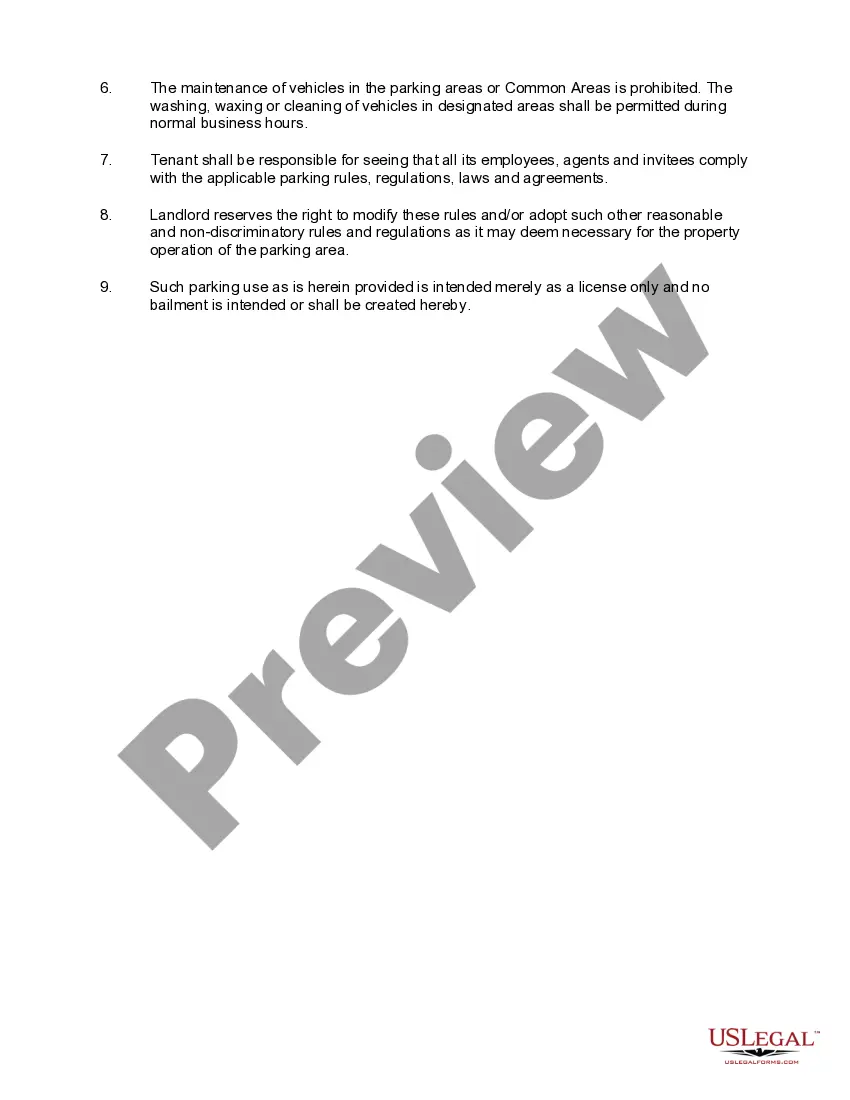
- Parking rules and responsibilities of tenants regarding vehicle usage
- Requirements for returning keys and ensuring safety compliance
When to use this form
This rider should be used in conjunction with a lease agreement for an office building when it is necessary to outline additional rules and regulations. It is particularly relevant when establishing standards for tenant behavior, ensuring shared spaces are maintained, and clarifying the obligations of all parties involved. Use this form when drafting a lease to avoid potential disputes over property use and tenant responsibilities.
Who can use this document
- Landlords seeking to clarify the rules governing office space leases
- Property management professionals overseeing multiple tenants
- Tenants entering into a lease agreement who need to understand their obligations
- Attorneys preparing lease agreements or riders for their clients
Completing this form step by step
- Review the lease agreement and identify applicable sections for the rider.
- Clearly define tenant responsibilities and restrictions in the rules.
- Include any specific regulations relevant to your building or property.
- Ensure that both landlord and tenant sign and date the rider.
- Provide copies of the completed document to all parties involved.
Does this form need to be notarized?
This form usually doesn’t need to be notarized. However, local laws or specific transactions may require it. Our online notarization service, powered by Notarize, lets you complete it remotely through a secure video session, available 24/7.
Get your form ready online
Our built-in tools help you complete, sign, share, and store your documents in one place.
Make edits, fill in missing information, and update formatting in US Legal Forms—just like you would in MS Word.
Download a copy, print it, send it by email, or mail it via USPS—whatever works best for your next step.
Sign and collect signatures with our SignNow integration. Send to multiple recipients, set reminders, and more. Go Premium to unlock E-Sign.
If this form requires notarization, complete it online through a secure video call—no need to meet a notary in person or wait for an appointment.
We protect your documents and personal data by following strict security and privacy standards.

Make edits, fill in missing information, and update formatting in US Legal Forms—just like you would in MS Word.

Download a copy, print it, send it by email, or mail it via USPS—whatever works best for your next step.

Sign and collect signatures with our SignNow integration. Send to multiple recipients, set reminders, and more. Go Premium to unlock E-Sign.

If this form requires notarization, complete it online through a secure video call—no need to meet a notary in person or wait for an appointment.

We protect your documents and personal data by following strict security and privacy standards.
Common mistakes to avoid
- Failing to include important local laws or regulations in the rider.
- Not clearly defining tenant responsibilities leading to conflicts.
- Leaving sections of the rider unsigned or undated.
- Overcomplicating rules that could lead to tenant confusion.
Benefits of using this form online
- Convenience of accessing and downloading instant forms.
- Editability to tailor the document to specific needs and situations.
- Reliable, attorney-drafted templates to ensure legal compliance.
Summary of main points
- The Rider outlines rules and regulations essential for the smooth operation of the office space.
- Clear documentation helps prevent misunderstandings between the landlord and tenants.
- Landlords should adapt the form to comply with specific local laws and regulations.
Looking for another form?




Form popularity
FAQ
Yes, someone can live with the tenant without being on the lease. However, it is important to distinguish the difference between a guest and a long-term guest.
As long as the contract spells out specific details and both parties have signed that they agree to the contract's terms, a handwritten contract is legally binding and enforceable in court.
Names of all tenants. Limits on occupancy. Term of the tenancy. Rent. Deposits and fees. Repairs and maintenance. Entry to rental property. Restrictions on tenant illegal activity.
ESSENTIAL ELEMENTS OF A VALID LEASE AGREEMENT. Competent Parties. Legal Purpose. Statute of Frauds. Reversionary Right. Property Description. Mutual Assent (Offer and Acceptance) Consideration.
A LEASE RIDER is an addition to the lease indicating a specific condition of that lease that varies from the printed terms of the lease document.Refer to your lease or termination/extension construction riders for further details about this project.
Names of All Tenants and Occupants. Description of Rental Property. Term of the Tenancy. Rental Price. Security Deposits and Fees. Repair and Maintenance Policies. Landlord's Right to Enter Rental Property. Rules and Important Policies.
Name the parties. A simple rental agreement form needs to name the parties signing the lease and where they live. Describe the premises. Define the term of the lease. Set how much rent is owed. Assign a security deposit amount. Finalize the lease.
The Introduction. The beginning of the lease agreement should contain the name of the landlord and tenant, as well as a statement of the agreement into which they are entering. Rent. Deposit. Taxes. Property Insurance. Utilities and Amenities. Remodeling and Improvements. Repairs and Maintenance.
Inspect the Property and Record Any Current Damages. Know What's Included in the Rent. Can You Make Adjustments and Customizations? Clearly Understand the Terms Within the Agreement and Anticipate Problems. Communicate with Your Landlord About Your Expectations.