Married Person's Will with Children with a Credit Shelter Trust for Spouse
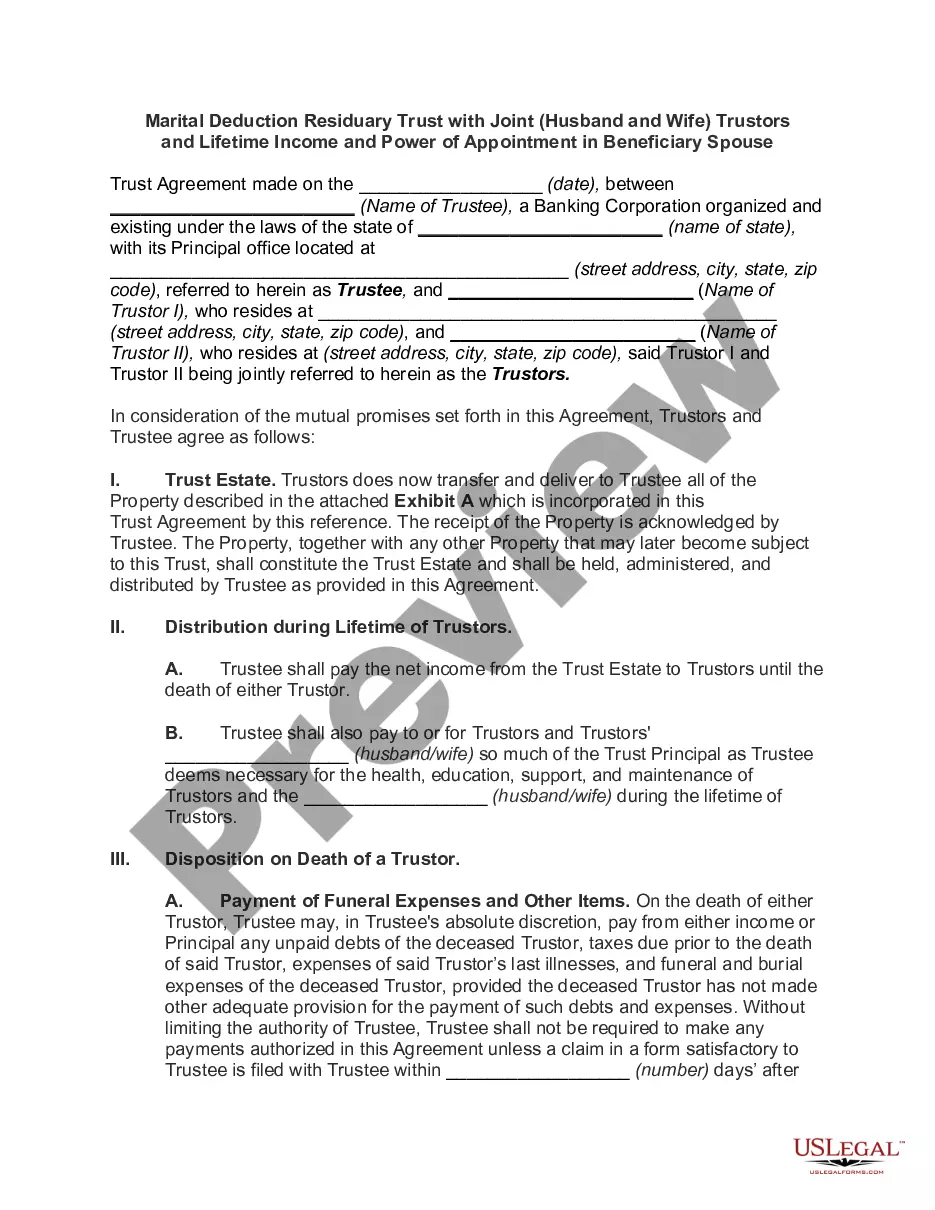
What is this form?
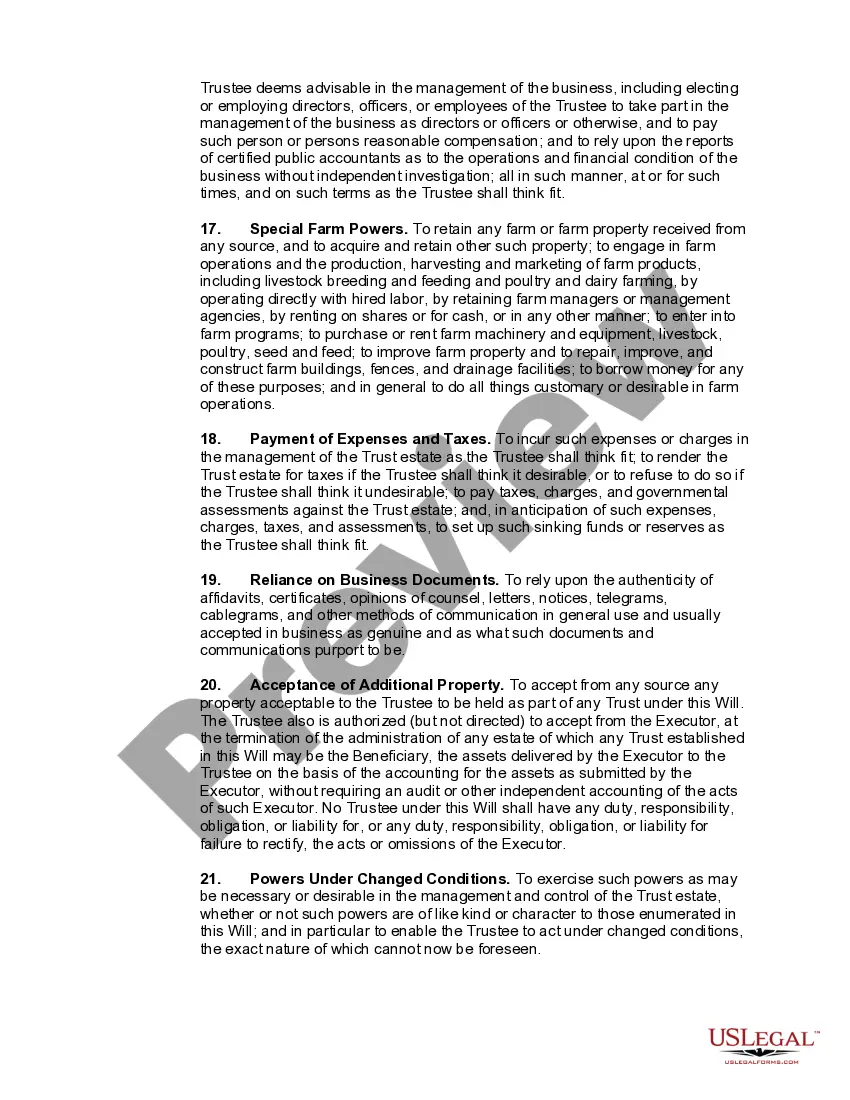
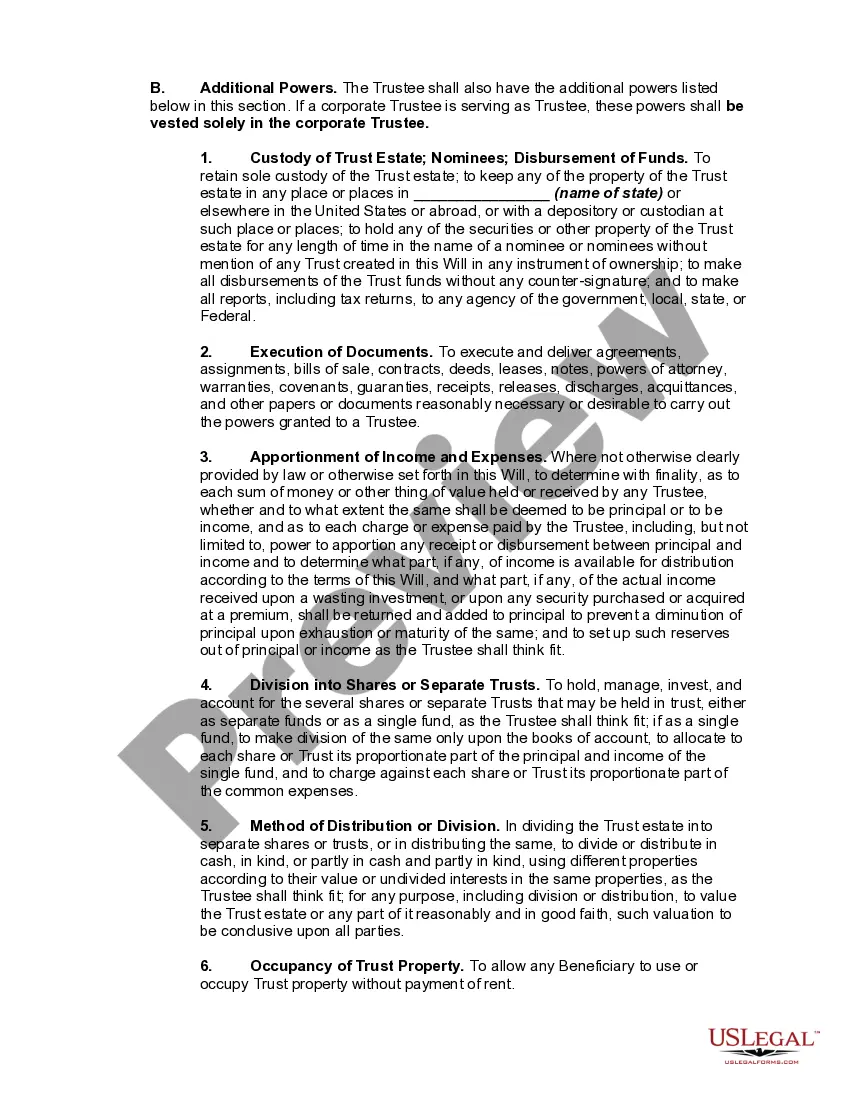
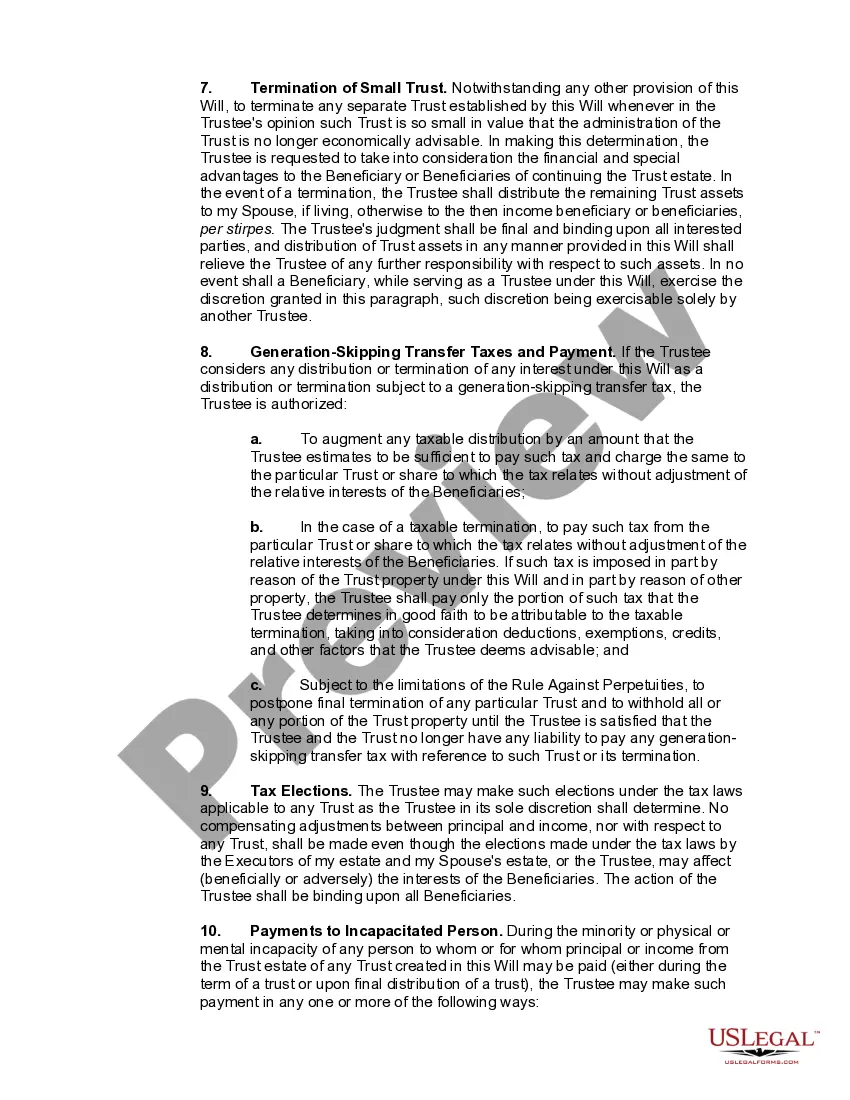
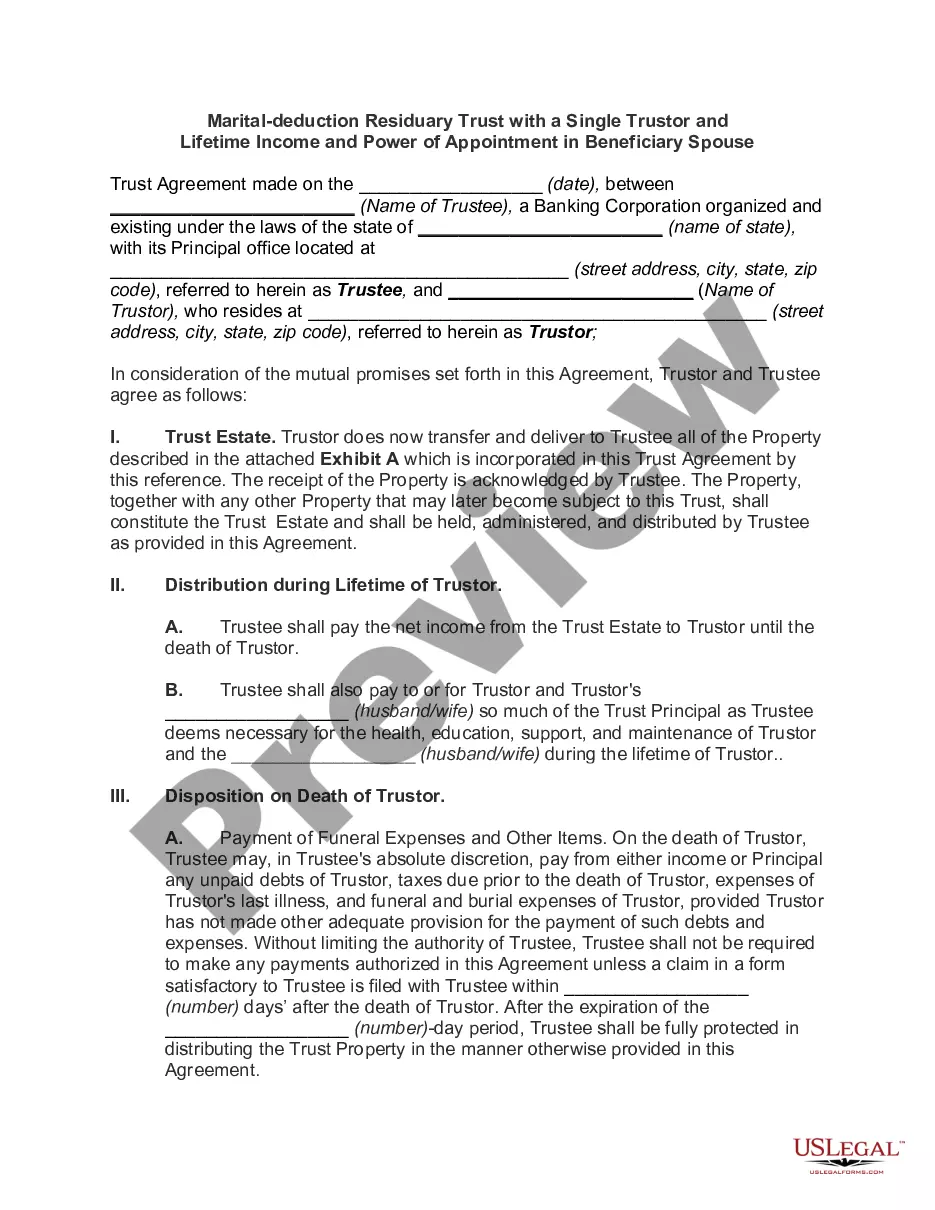
This form is a Married Person's Will with Children with a Credit Shelter Trust for Spouse. It serves as a legal document that outlines how a married individual wishes to distribute their assets upon death while providing for their spouse and children. This will includes provisions for a credit shelter trust to minimize estate taxes and ensure financial security for both the surviving spouse and offspring.
What’s included in this form
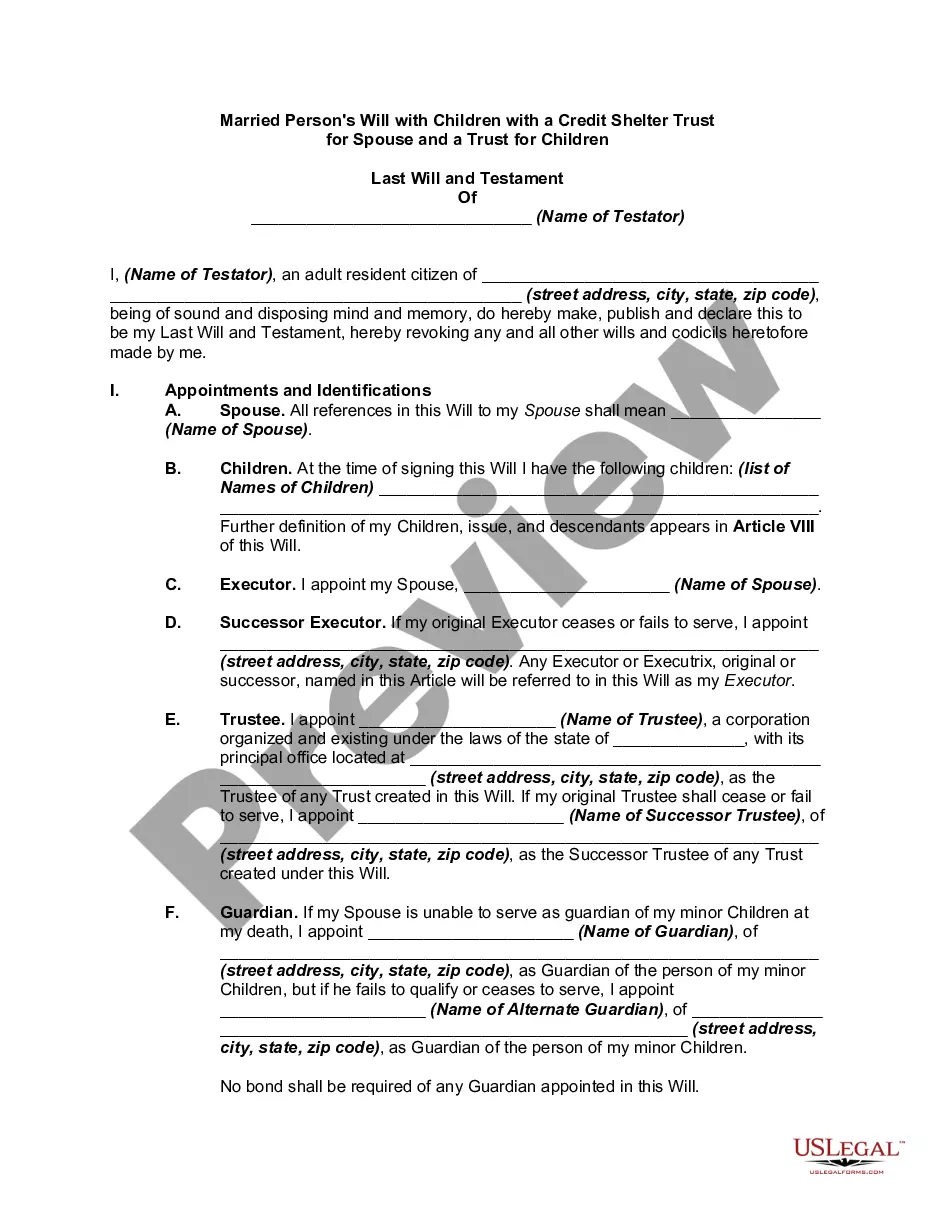
- Personal details of the testator, including name and address.
- Identification of the spouse and children.
- Appointments for executor, successor executor, trustee, and guardian of minor children.
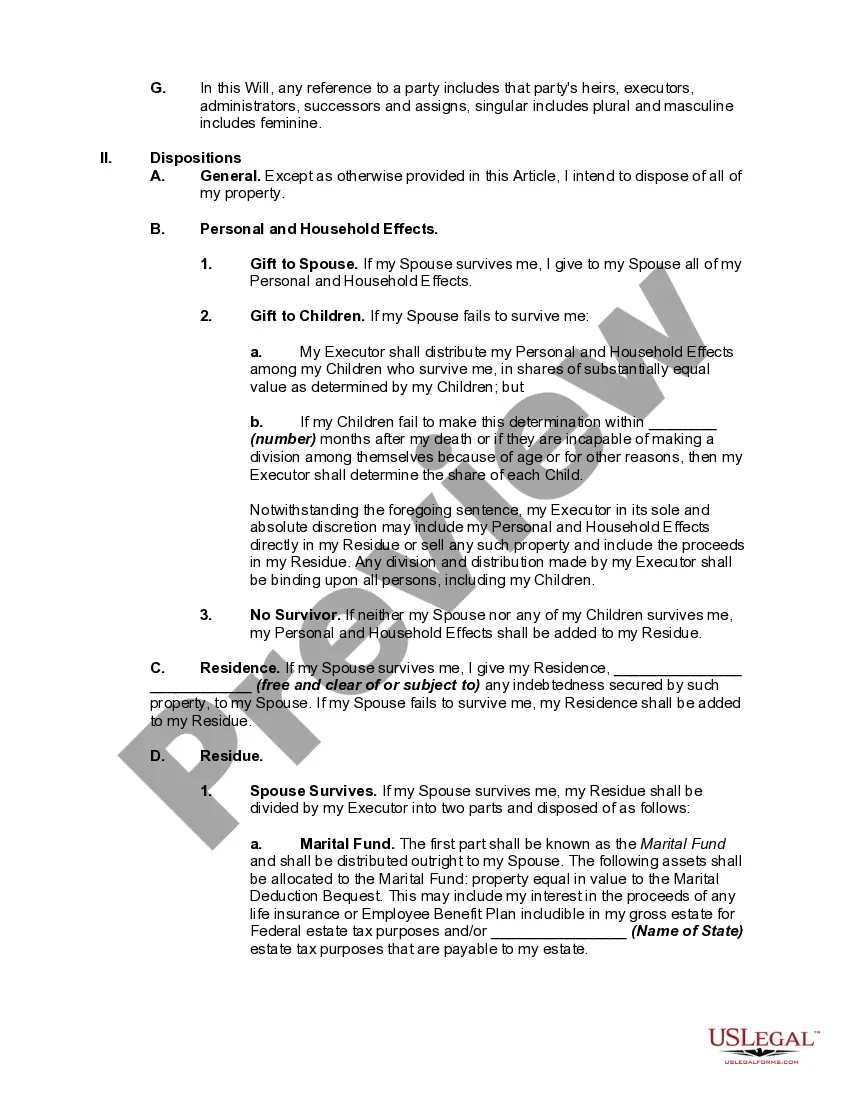
- Provisions for the distribution of personal and household effects.
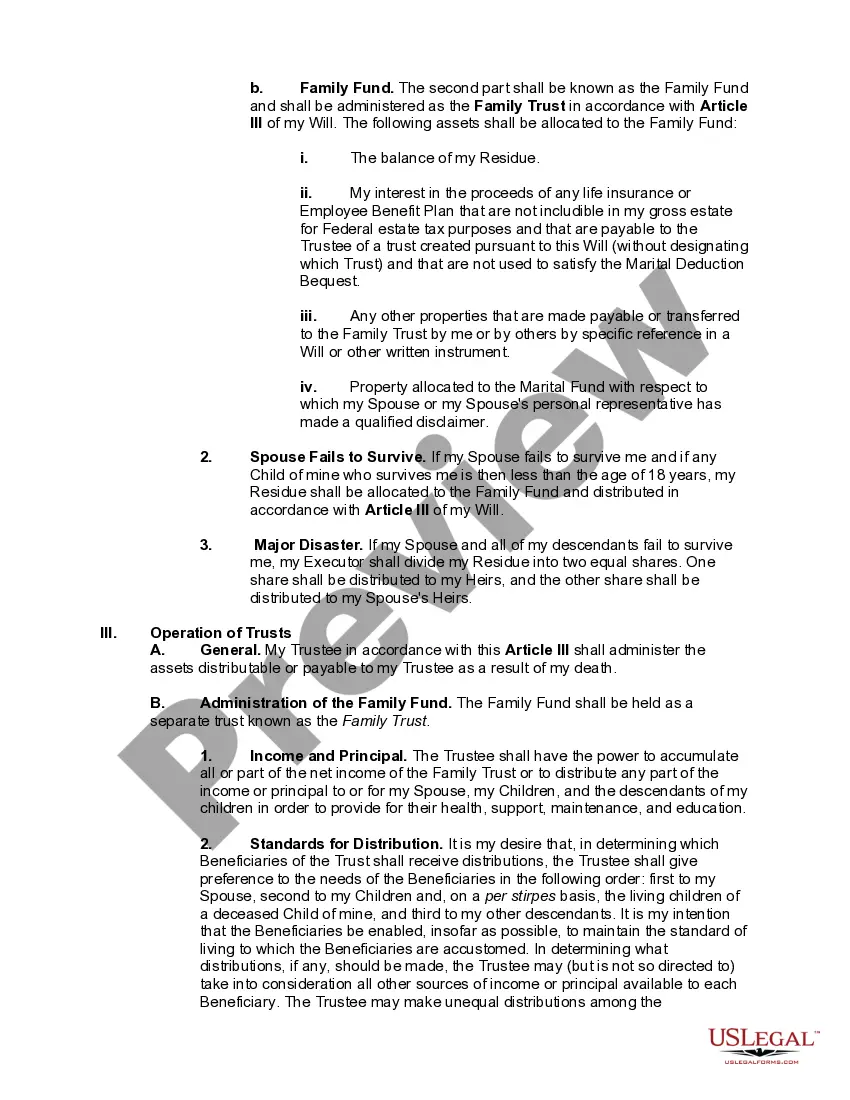
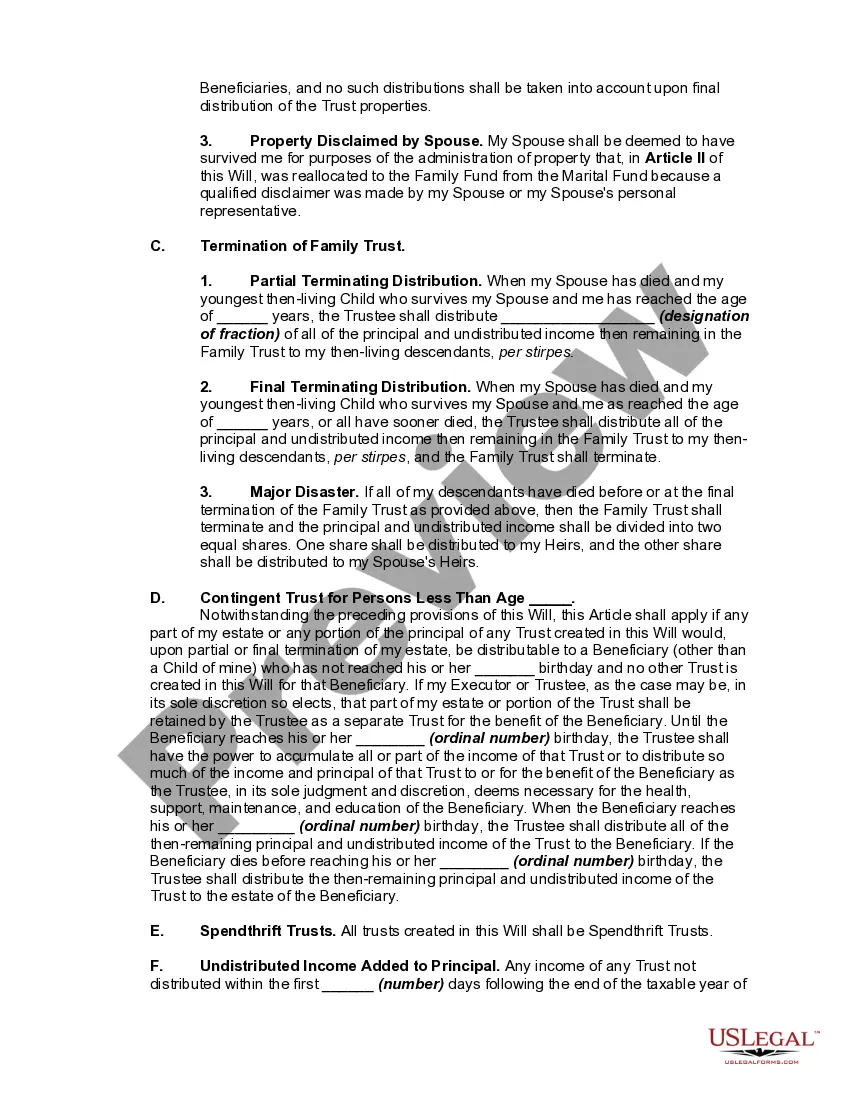
- Establishment of a marital fund and a family fund within the will.
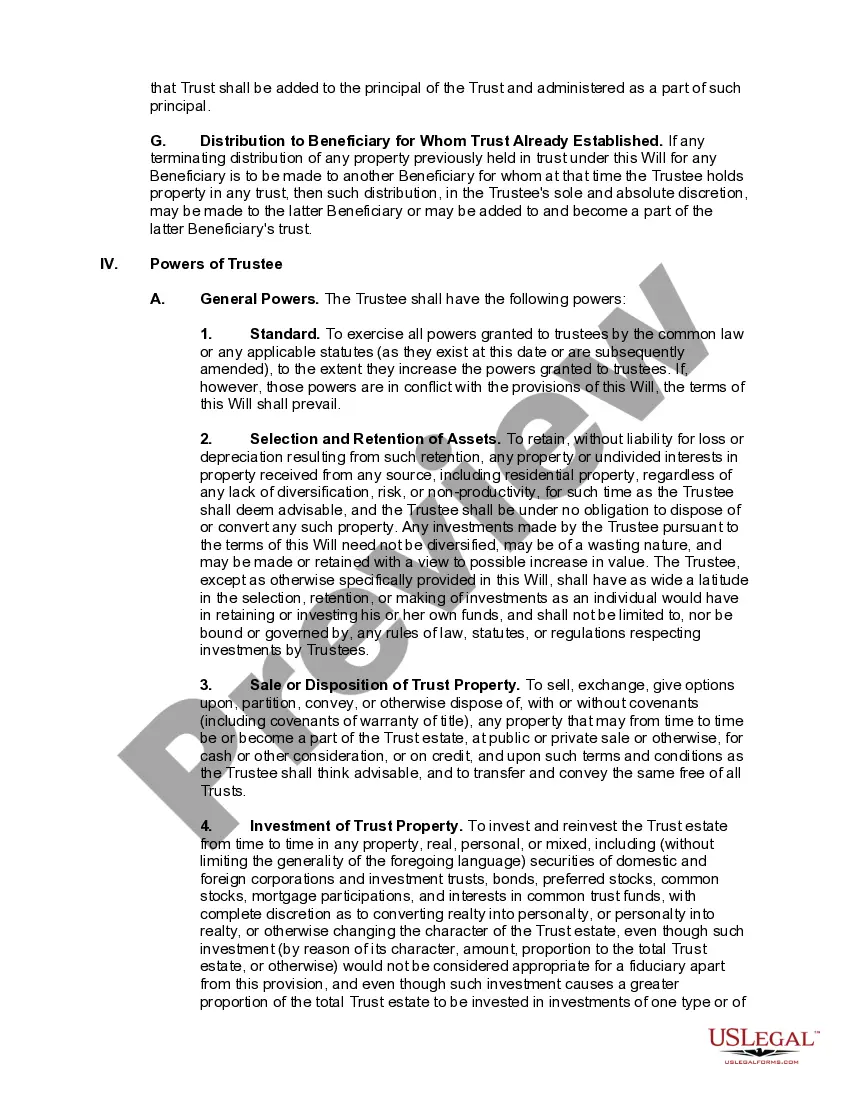
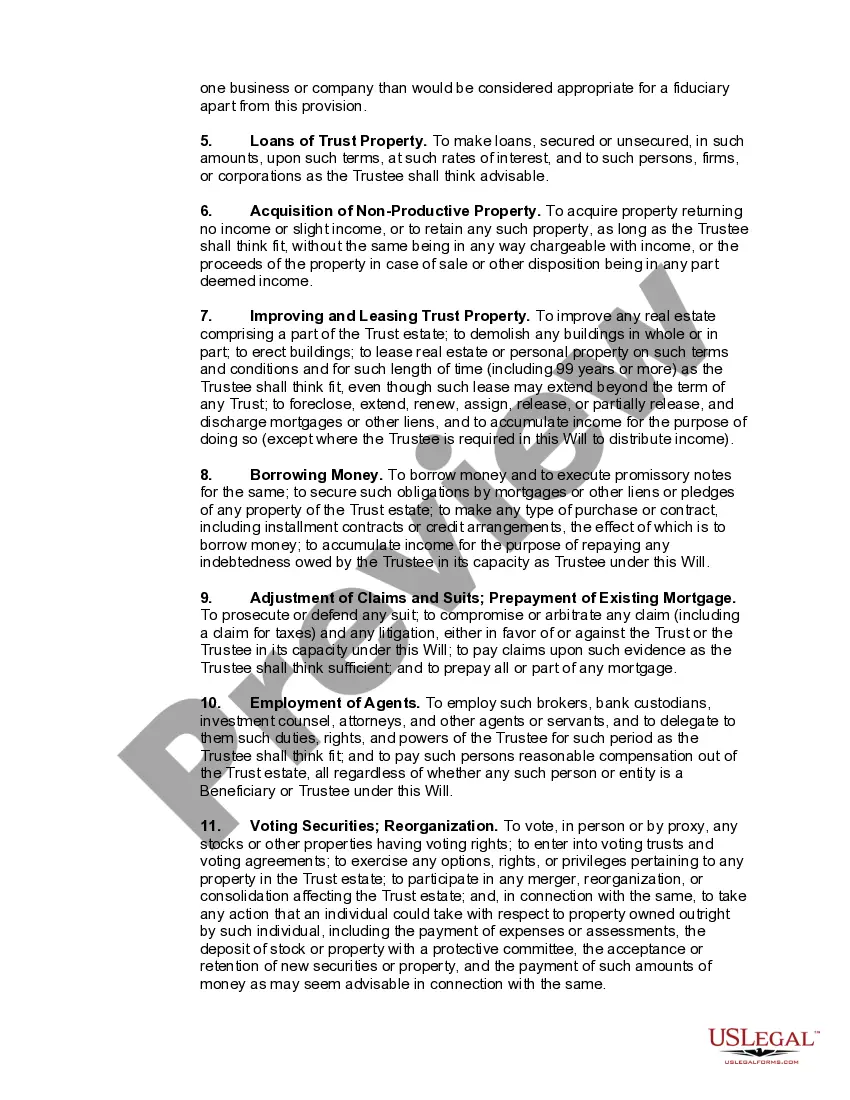
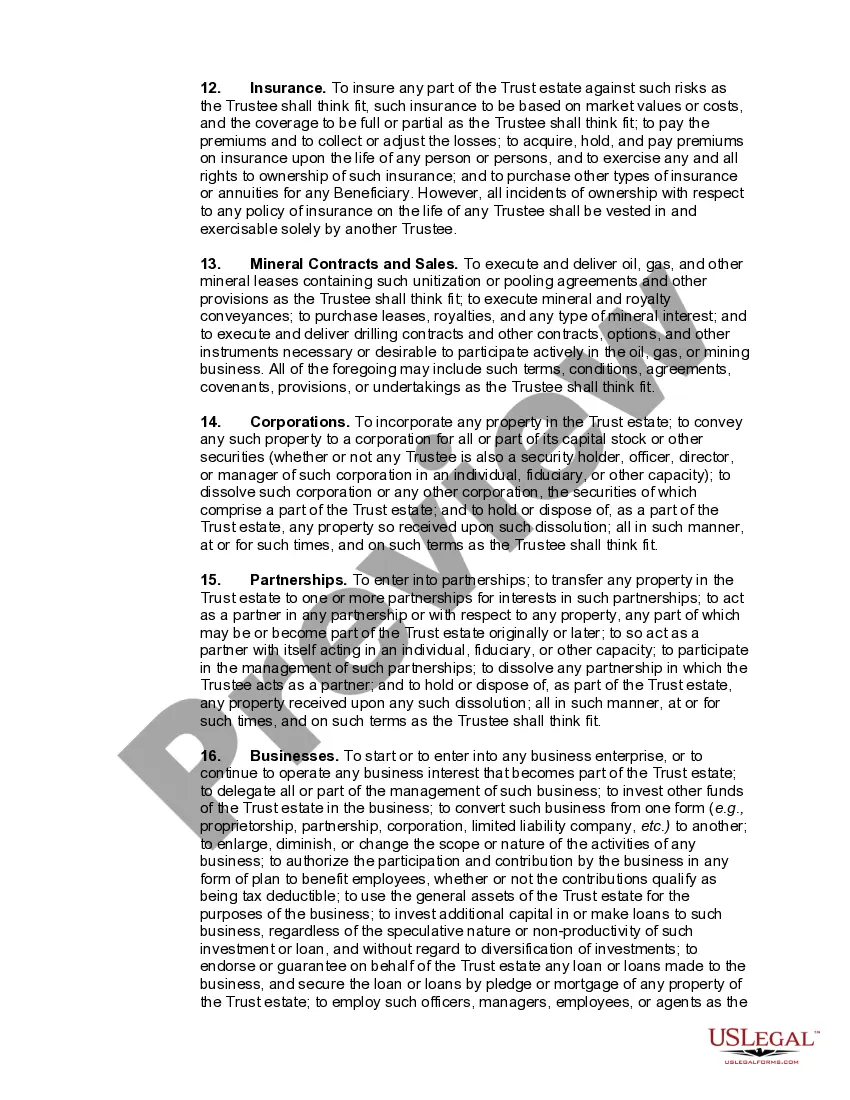
- Clauses regarding trusts and the management of estate assets.




When to use this document
This form is necessary when a married individual with children wants to specify how their estate should be handled after their death. It is especially useful for those seeking to minimize estate taxes through a credit shelter trust, ensuring their spouse and children are adequately provided for. It would be appropriate to use this will if you anticipate potential tax liabilities or wish to create a structured financial plan for your heirs.
Intended users of this form
- Married individuals with children who want to create a detailed estate plan.
- Those with substantial assets, including non-probate assets, subject to estate taxes.
- Individuals looking to establish provisions for the long-term care of their spouse and children.
How to complete this form
- Identify yourself as the testator by providing your full name and address.
- List your spouse's name and the names of your children.
- Appoint an executor to manage your estate and a guardian for any minor children.
- Detail how your estate will be distributed, including any specific bequests to your spouse and children.
- Include necessary provisions for the creation and management of trusts, if applicable.
Does this form need to be notarized?
This form must be notarized to be legally valid. US Legal Forms provides secure online notarization powered by Notarize, allowing you to complete the process through a verified video call.
Get your form ready online
Our built-in tools help you complete, sign, share, and store your documents in one place.
Make edits, fill in missing information, and update formatting in US Legal Forms—just like you would in MS Word.
Download a copy, print it, send it by email, or mail it via USPS—whatever works best for your next step.
Sign and collect signatures with our SignNow integration. Send to multiple recipients, set reminders, and more. Go Premium to unlock E-Sign.
If this form requires notarization, complete it online through a secure video call—no need to meet a notary in person or wait for an appointment.
We protect your documents and personal data by following strict security and privacy standards.

Make edits, fill in missing information, and update formatting in US Legal Forms—just like you would in MS Word.

Download a copy, print it, send it by email, or mail it via USPS—whatever works best for your next step.

Sign and collect signatures with our SignNow integration. Send to multiple recipients, set reminders, and more. Go Premium to unlock E-Sign.

If this form requires notarization, complete it online through a secure video call—no need to meet a notary in person or wait for an appointment.

We protect your documents and personal data by following strict security and privacy standards.
Mistakes to watch out for
- Failing to update the will after significant life changes (e.g., divorce, new children).
- Not clearly identifying all beneficiaries.
- Overlooking the specific requirements for witnesses in your state.
Why complete this form online
- Convenience of completing the form from home at your own pace.
- Editable template that allows customization to fit your specific needs.
- Access to legal resources to ensure compliance with state laws.
Legal use & context
- This will becomes legally binding upon proper execution in accordance with state laws.
- The provisions concerning trust creation and distribution must comply with local regulations to be enforceable.
- Failure to follow the formalities can lead to disputes and potential invalidation of the will.
Main things to remember
- A Married Person's Will effectively addresses the needs of spouses with children.
- Trust provisions can help manage estate taxes while providing for the family.
- Consult local laws to ensure all state-specific requirements are met for validity.
- Regular updates to the will are essential following significant life changes.
Looking for another form?








Form popularity
FAQ
The "A Trust" is also commonly referred to as the "Marital Trust," "QTIP Trust," or "Marital Deduction Trust." The "B Trust" is also commonly referred to as the "Bypass Trust," "Credit Shelter Trust," or "Family Trust."
A credit shelter trust (CST) is a trust created after the death of the first spouse in a married couple. Assets placed in the trust are generally held apart from the estate of the surviving spouse, so they may pass tax-free to the remaining beneficiaries at the death of the surviving spouse.
At the time of your death, the assets in your family trust are protected by the exemption, and the assets in your marital trust are protected by the marital deduction. No estate taxes are due.
Joint trusts are easier to fund and maintain.In a joint trust, after the death of the first spouse, the surviving spouse has complete control of the assets. When separate trusts are used, the deceased spouses' trust becomes irrevocable and the surviving spouse has limited control over assets.
Yes, the surviving spouse may serve as trustee of the credit shelter trust.All of the assets in the credit shelter trust, including any appreciation in value during the surviving spouse's lifetime, pass free of estate tax to the beneficiaries.
For starters, in California children do not have a right to inherit any property from a parent. In other words, a parent can disinherit a child, leaving them nothing.You can either challenge your parent's Will or you may be classified as an omitted child.
Decide if you want to get help or use a do-it-yourself software program. Select your beneficiaries. Choose the executor for your will. Pick a guardian for your kids. Be specific about who gets what. Be realistic about who gets what. If there's more you want to say, attach a letter to the will.
Naming a guardian in your Will ensures that you choose who would care for your children, not the courts. In most cases, if your child's other parent survives you, they assume guardianship without any other special actions.The guardian is not responsible to meet the child's financial needs with his or her own money.
Choose an online legal services provider or locate a will template. Carefully consider your distribution wishes. Identify a personal representative/executor. Understand the requirements to make your will legal. Make sure someone else knows about your will. Consult a lawyer if you have a more complicated estate.