Assignment of Domain Name along with an Asset Purchase Agreement
Understanding this form
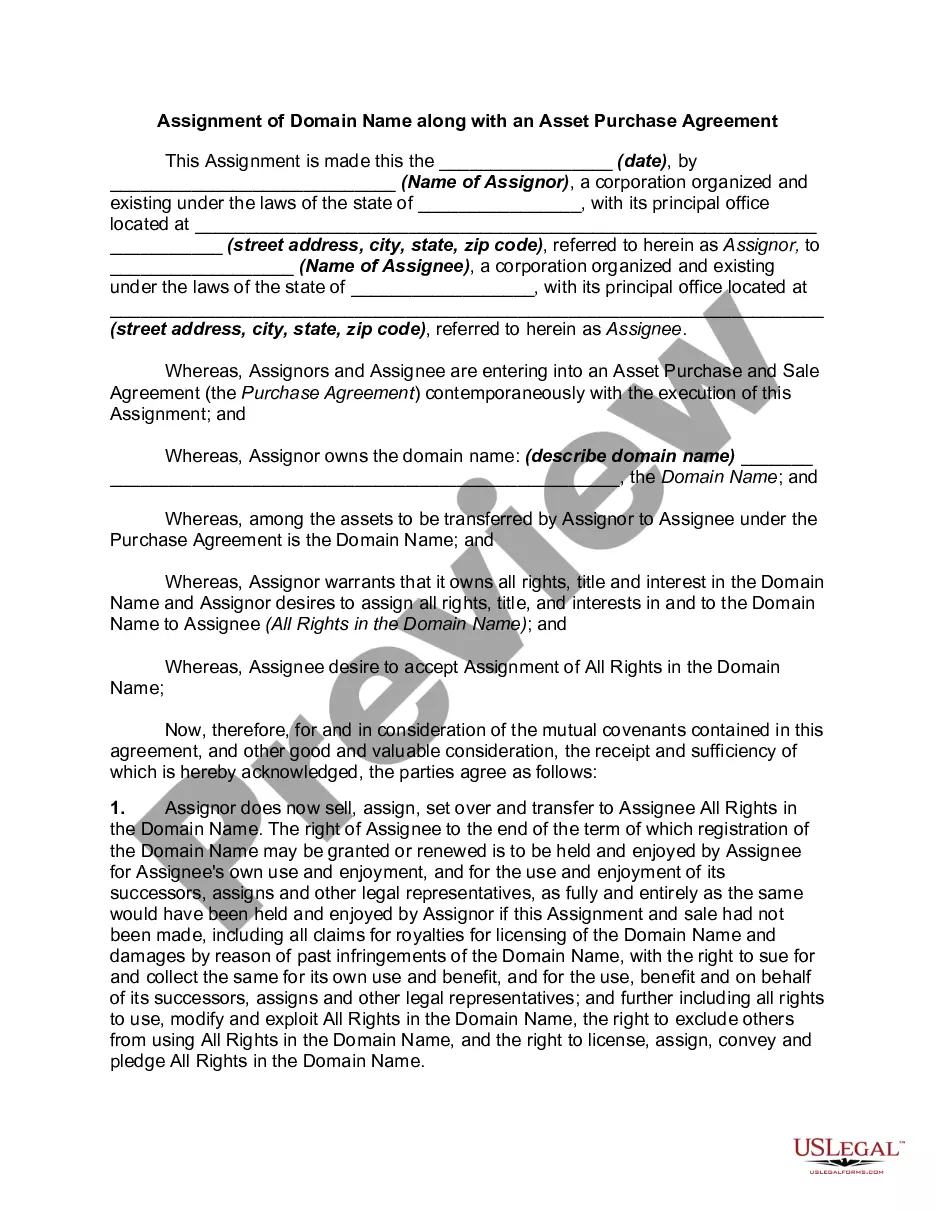
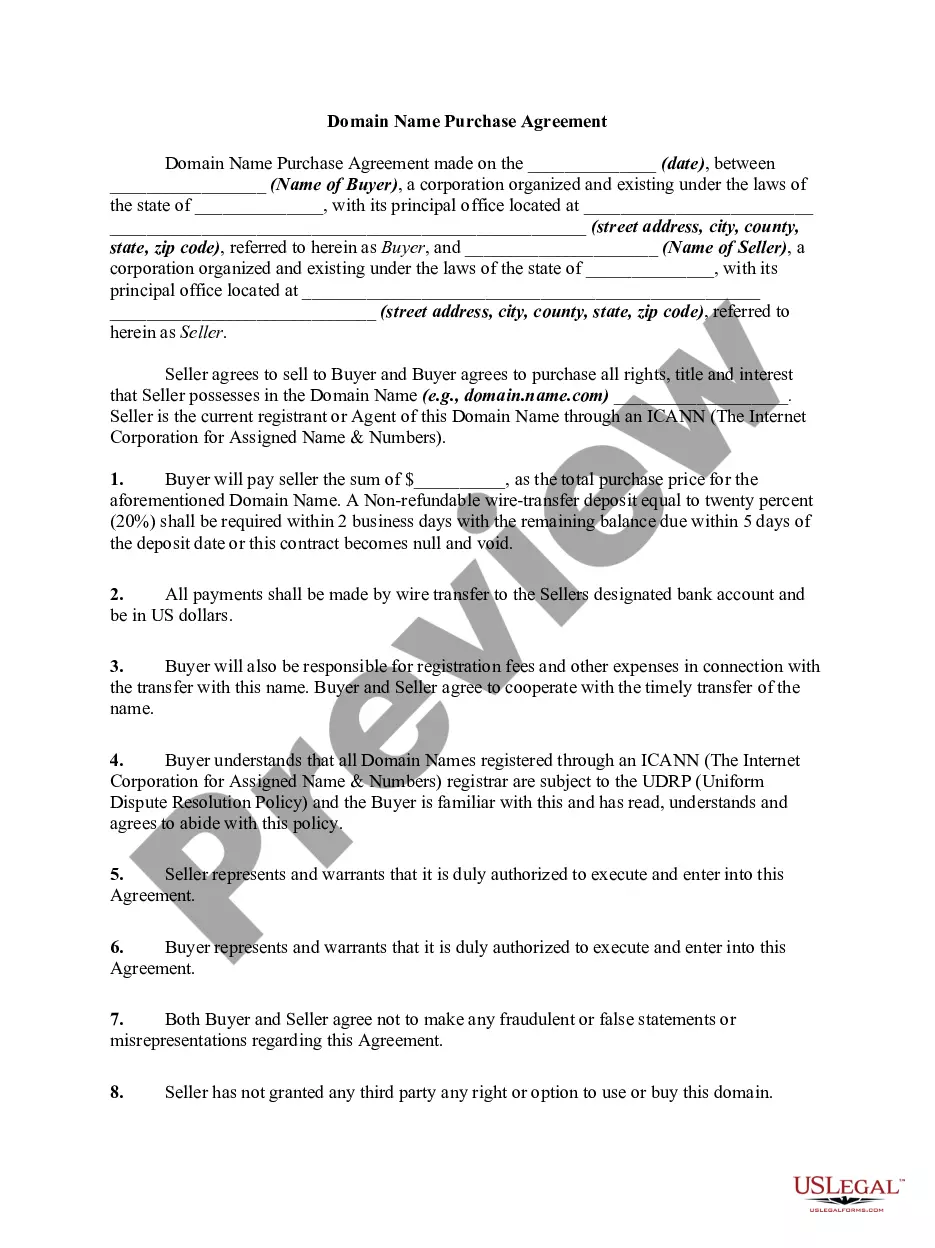
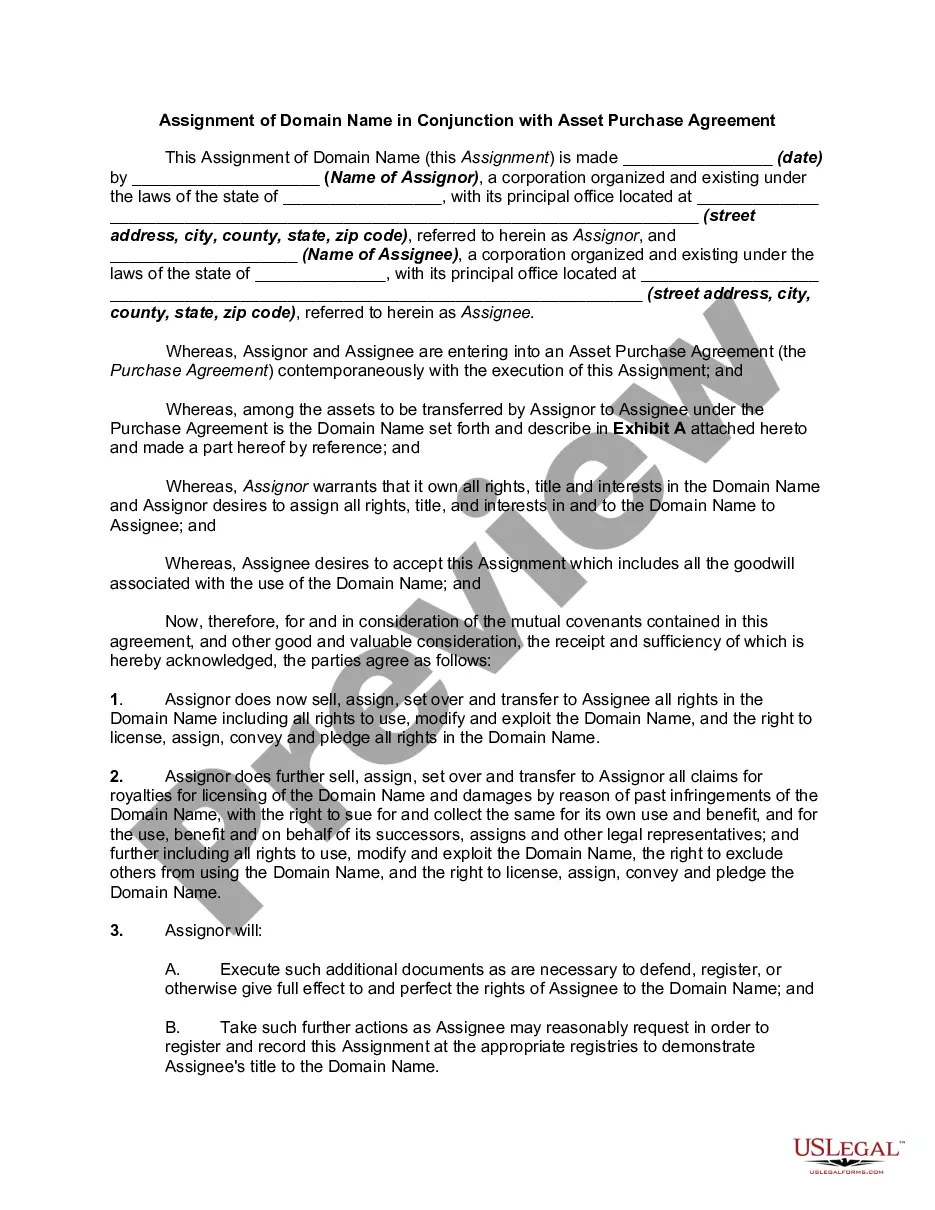
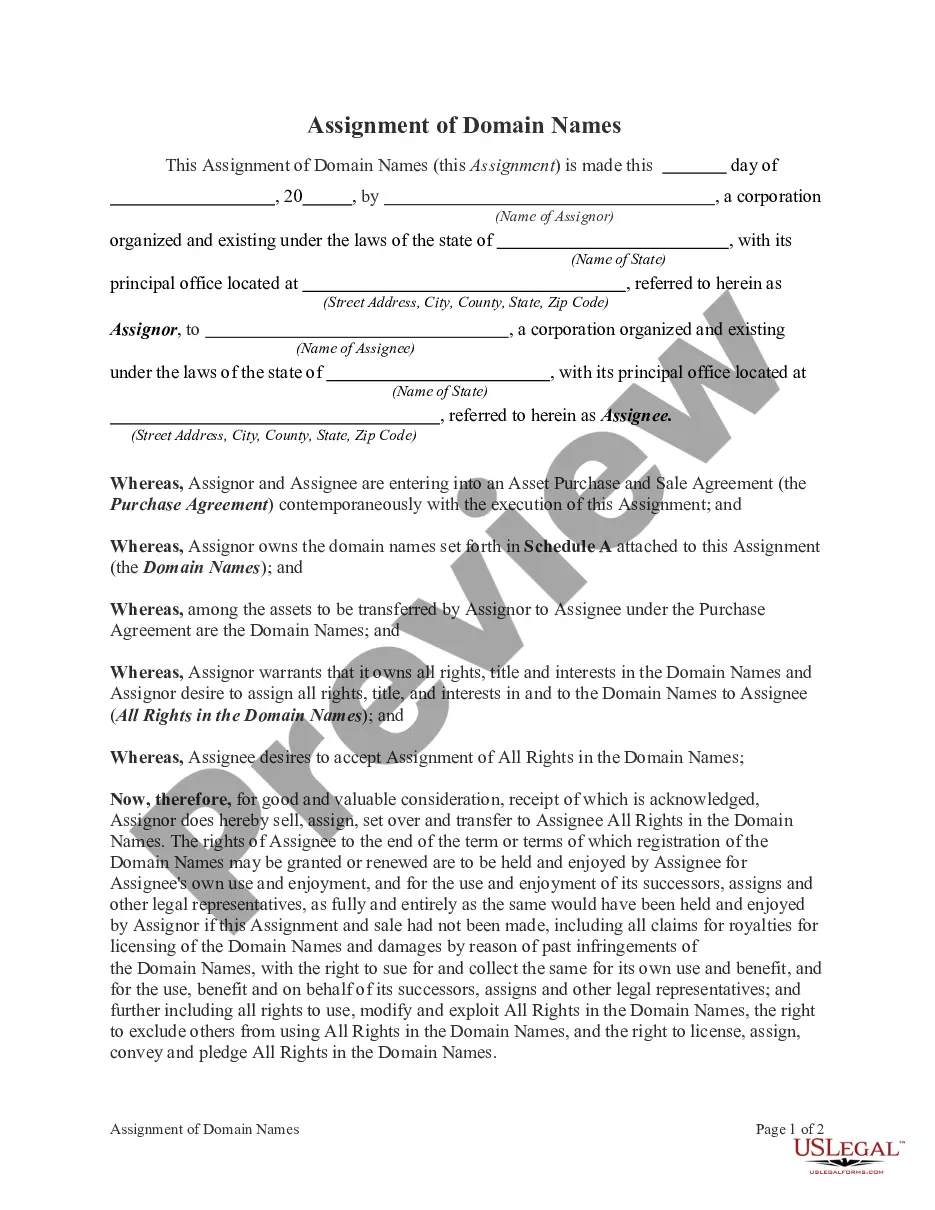
The Assignment of Domain Name along with an Asset Purchase Agreement is a legal document that facilitates the transfer of ownership of a domain name from one party (the Assignor) to another party (the Assignee). This form ensures that the party receiving the domain name acquires all rights, title, and interest in it under an Asset Purchase Agreement. It is essential for individuals or businesses engaging in the buying or selling of domain names as part of a broader asset transaction, setting it apart from other forms that may not specifically address domain name assignments.
Form components explained
- Date of the assignment agreement.
- Names and addresses of both the Assignor and Assignee.
- Description of the domain name being transferred.
- Warranties regarding ownership and rights of the Assignor.
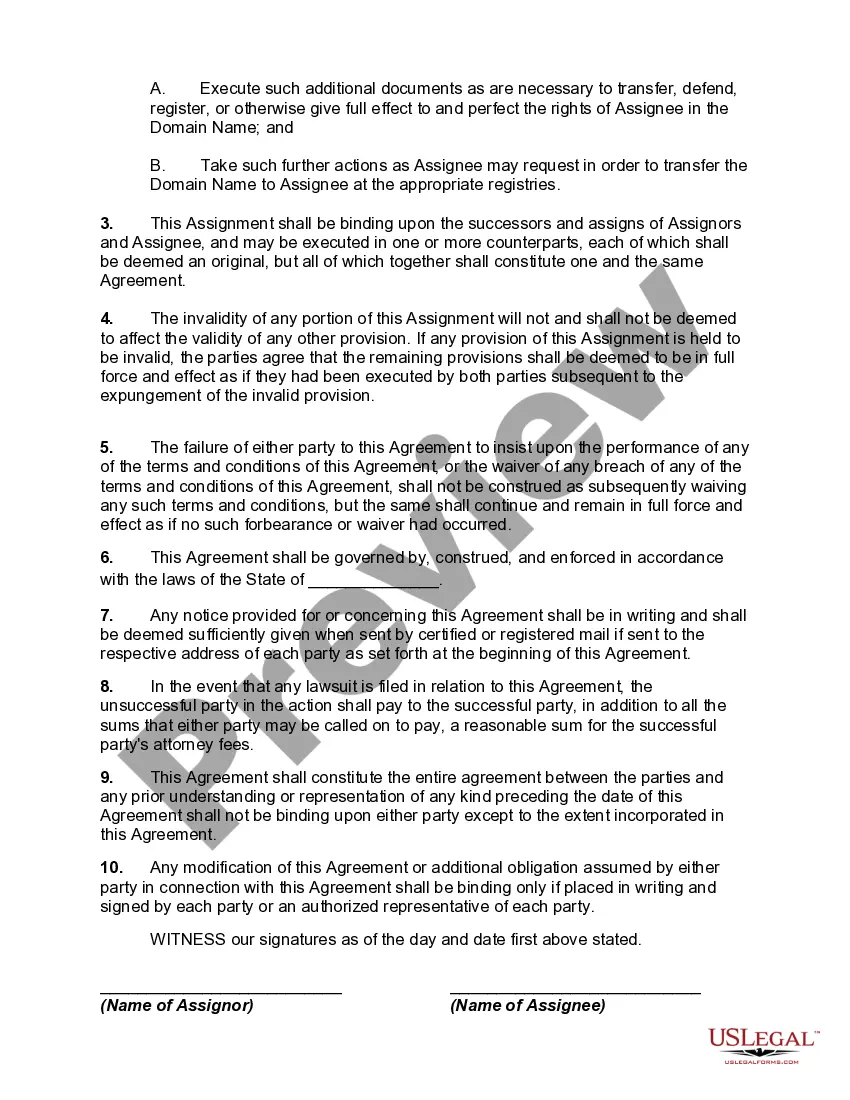
- Clauses detailing the actions required by Assignor for transferring rights.
- Provisions regarding the binding effects on successors and assigns.
When to use this form
This form should be used when a business or individual wishes to sell or transfer ownership of a domain name to another person or entity. It is recommended in situations where the domain name is an integral part of a business sale or asset transfer. This form formalizes the agreement and protects the rights of both parties involved in the transaction.
Who should use this form
- Business owners transferring domain names as part of an asset sale.
- Individuals buying or selling domain names.
- Legal professionals assisting clients with domain name transactions.
- Investors in online businesses who are acquiring rights to internet properties.
Instructions for completing this form
- Identify and enter the date of the assignment.
- Fill in the name and address of both the Assignor and Assignee.
- Clearly describe the domain name being transferred.
- Ensure that the Assignor warrants ownership and all rights to the domain name.
- Both parties should sign and date the agreement to validate it.
Does this document require notarization?
This form usually doesn’t need to be notarized. However, local laws or specific transactions may require it. Our online notarization service, powered by Notarize, lets you complete it remotely through a secure video session, available 24/7.
Get your form ready online
Our built-in tools help you complete, sign, share, and store your documents in one place.
Make edits, fill in missing information, and update formatting in US Legal Forms—just like you would in MS Word.
Download a copy, print it, send it by email, or mail it via USPS—whatever works best for your next step.
Sign and collect signatures with our SignNow integration. Send to multiple recipients, set reminders, and more. Go Premium to unlock E-Sign.
If this form requires notarization, complete it online through a secure video call—no need to meet a notary in person or wait for an appointment.
We protect your documents and personal data by following strict security and privacy standards.

Make edits, fill in missing information, and update formatting in US Legal Forms—just like you would in MS Word.

Download a copy, print it, send it by email, or mail it via USPS—whatever works best for your next step.

Sign and collect signatures with our SignNow integration. Send to multiple recipients, set reminders, and more. Go Premium to unlock E-Sign.

If this form requires notarization, complete it online through a secure video call—no need to meet a notary in person or wait for an appointment.

We protect your documents and personal data by following strict security and privacy standards.
Common mistakes to avoid
- Failing to accurately describe the domain name.
- Not having both parties sign the document.
- Neglecting to keep a copy for personal records.
- Assuming no need for additional documentation for domain transfer.
Benefits of using this form online
- Convenient access and immediate download of the form.
- Editable fields allow for customization to meet your specific needs.
- Reliability of legal templates drafted by licensed attorneys.
- Instant documentation, saving time and effort in legal processes.
Legal use & context
- The form establishes a clear record of the transfer, protecting both parties' interests.
- It is enforceable in court as long as it complies with applicable laws.
- Incorporates essential clauses to address any disputes regarding rights to the domain name.
What to keep in mind
- The Assignment of Domain Name along with an Asset Purchase Agreement is crucial for legally transferring domain name ownership.
- Accurate completion of the form is essential to avoid common pitfalls.
- Consulting legal expertise can enhance the protection of your interests in the transfer process.
Looking for another form?




Form popularity
FAQ
To make domain names widely available, ICANN allows companies to apply for accreditation and become a domain registrar. These companies then compete with each other to sell domain name licenses which allows you to get better service and tools when you purchase your domain name.
The right to use a domain name is delegated by domain name registrars, which are accredited by the Internet Corporation for Assigned Names and Numbers (ICANN), the organization charged with overseeing the name and number systems of the Internet.
No one owns domain names; they merely pay for the use of them for a while. The public deals with domain name registrars, which often take the form of web hosting providers or other entities that provide online services. Users pay registries to register their domain names, but who do they register them with?
(B) Domain names and IP addresses are assigned randomly.
Domain structure. A complete domain name is known as a fully qualified domain name (FQDN). A FQDN states the exact position of a target computer within the tree hierarchy of the domain name system and is made up of two parts: the host name and the domain name.
Domain names are the unique, human-readable Internet addresses of websites. They are made up of three parts: a top-level domain (sometimes called an extension or domain suffix), a domain name (or IP address), and an optional subdomain.
The making of a good domain name It's a good idea not to exceed 2-3 words. You want people to remember your domain name and type it accurately. Complicated or uncommon words or names may be hard to remember and spell correctly. Relevant words help users find you in a search and recognize what you do at a glance.
A domain name takes the form of two main elements. For example, the domain name Facebook.com consists of the website's name (Facebook) and the domain name extension (.com). When a company (or a person) purchases a domain name, they're able to specify which server the domain name points to.