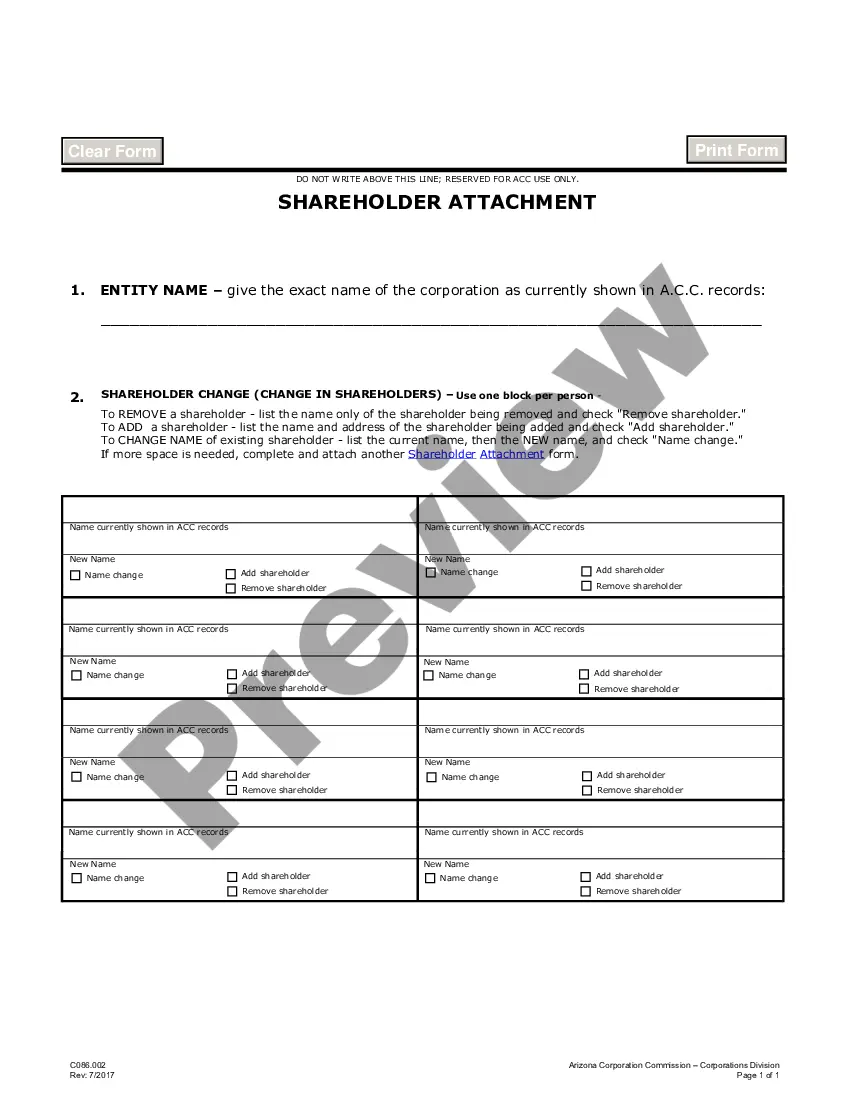
Checklist of Matters to be Considered in Drafting a Lease of a Commercial Building
About this form
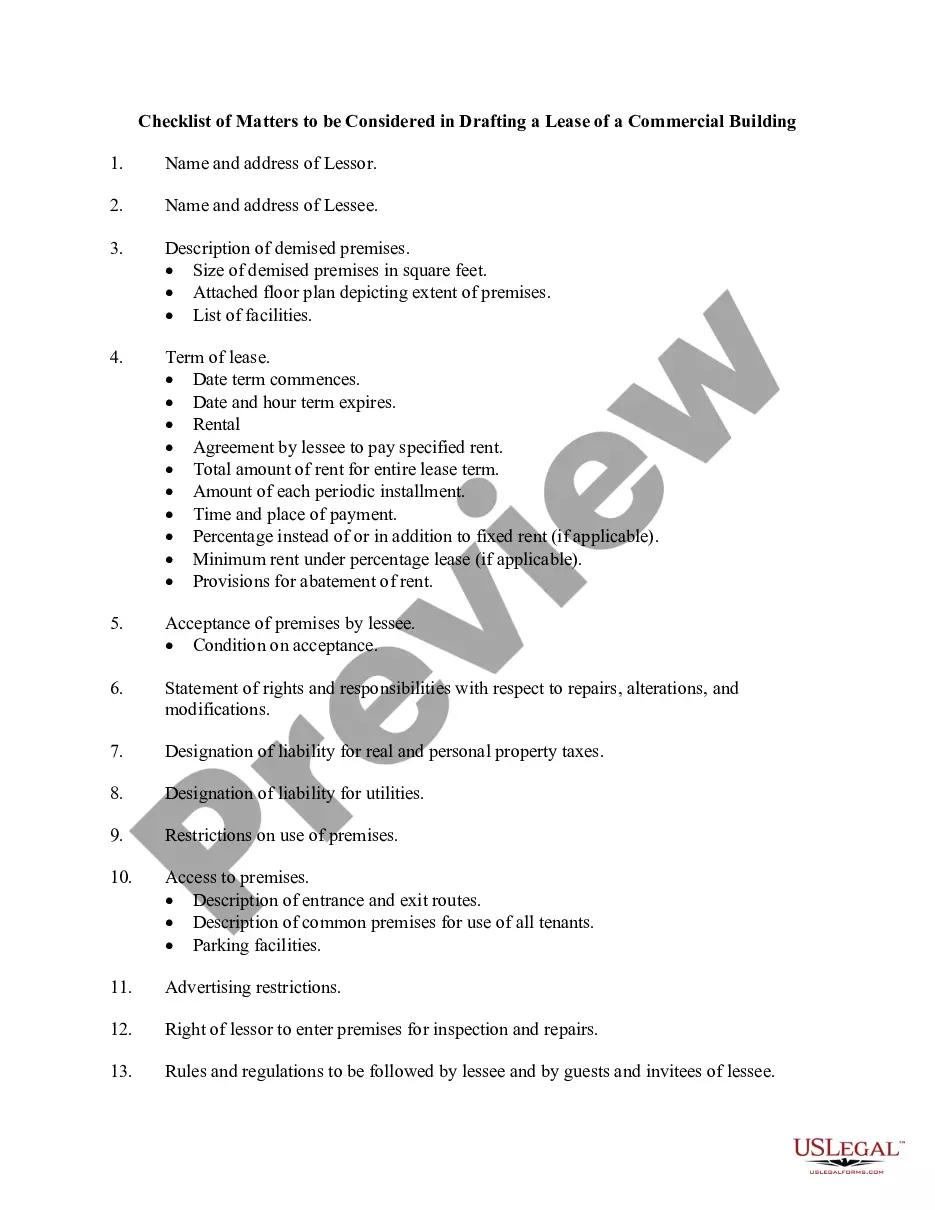
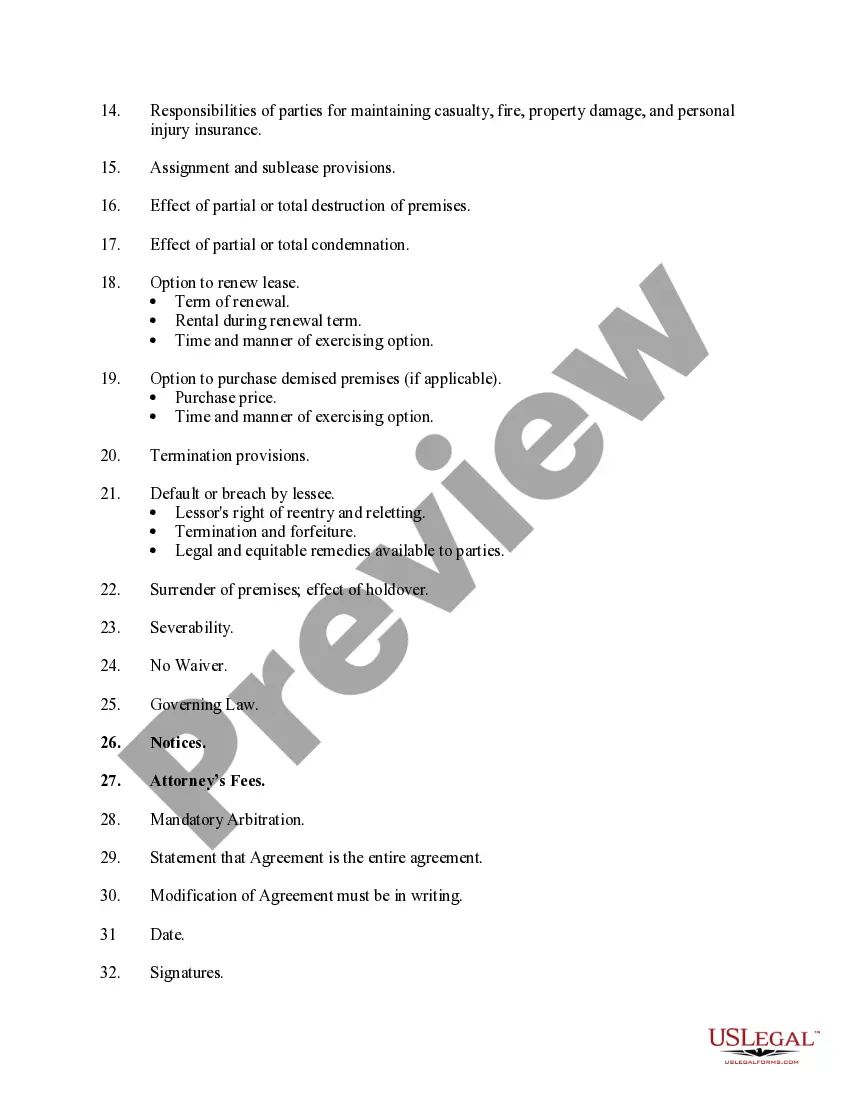
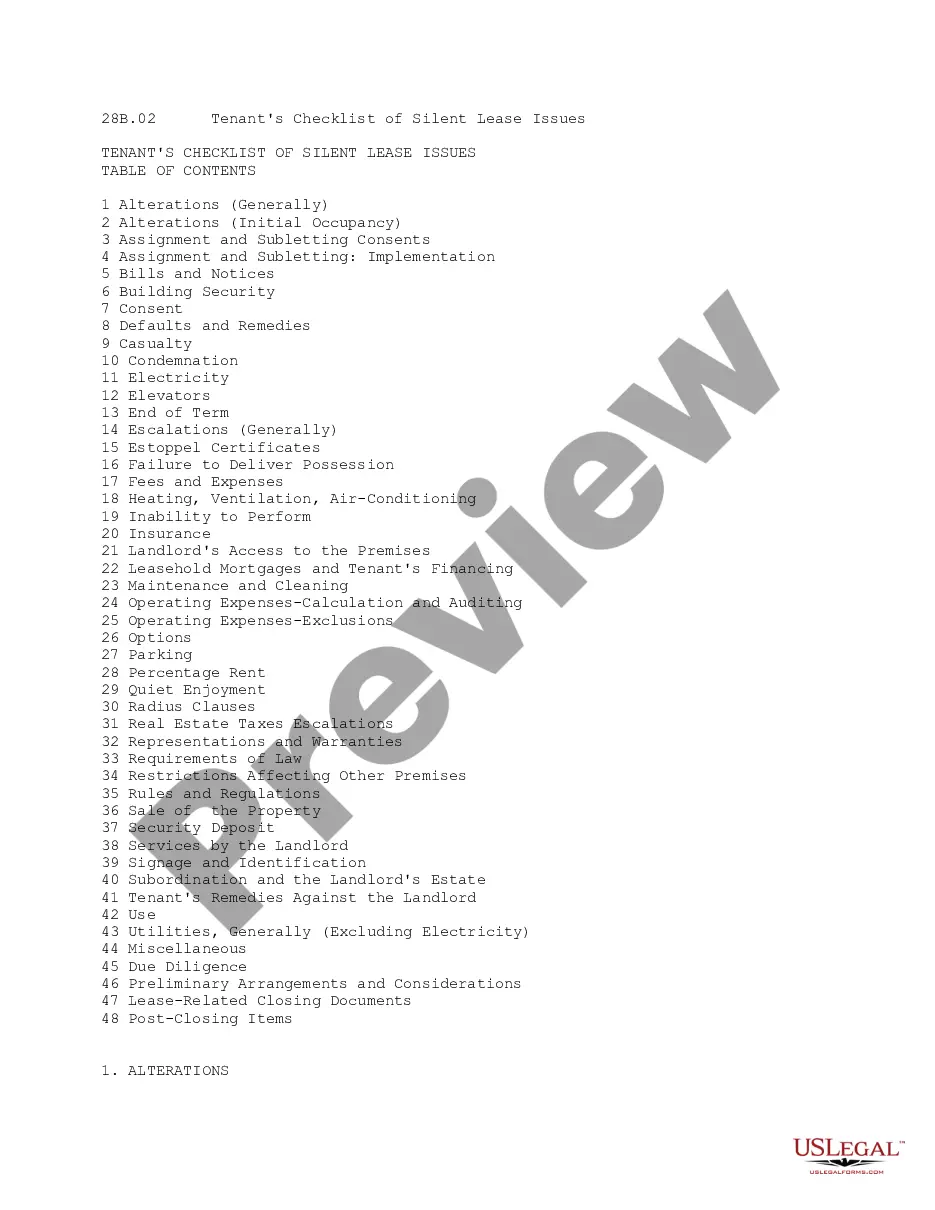
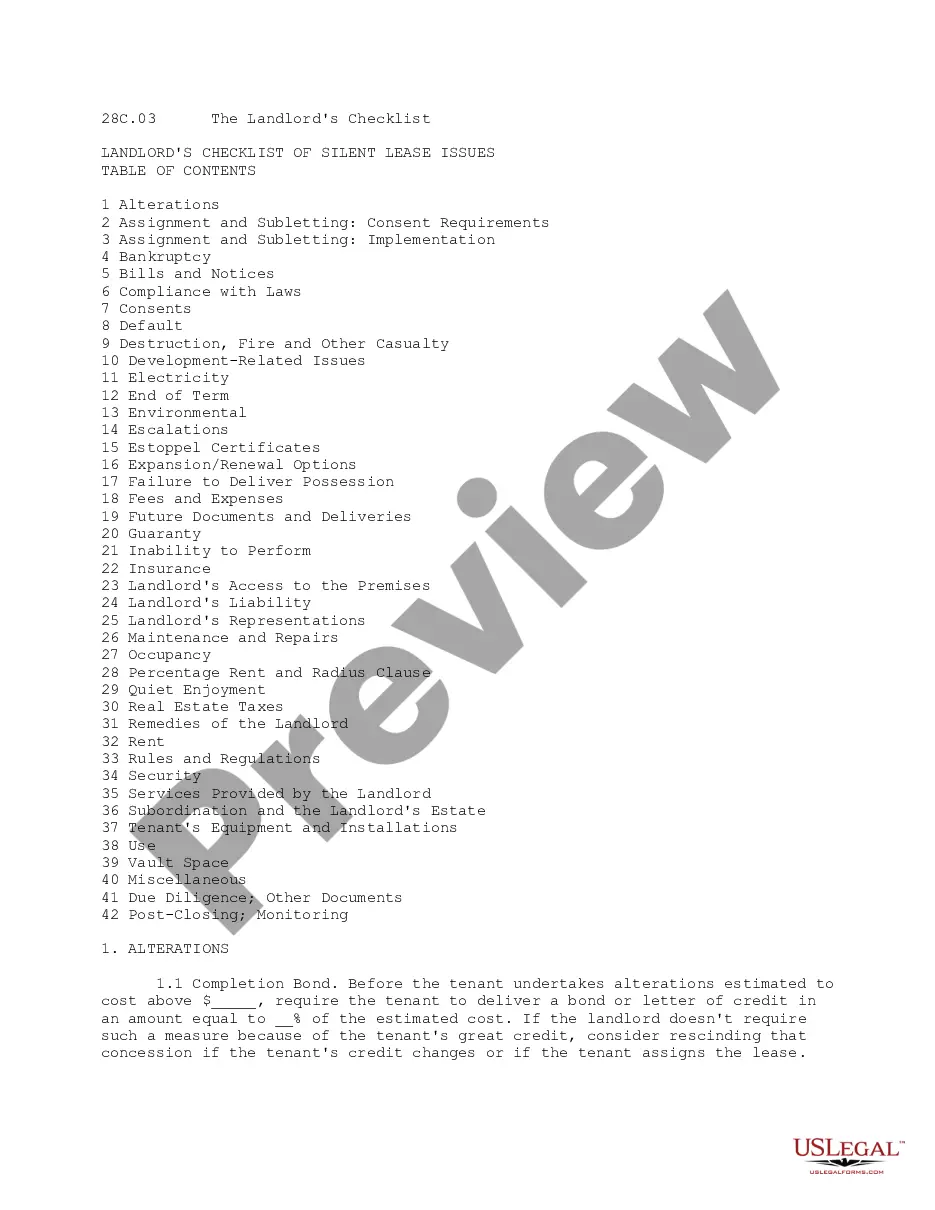
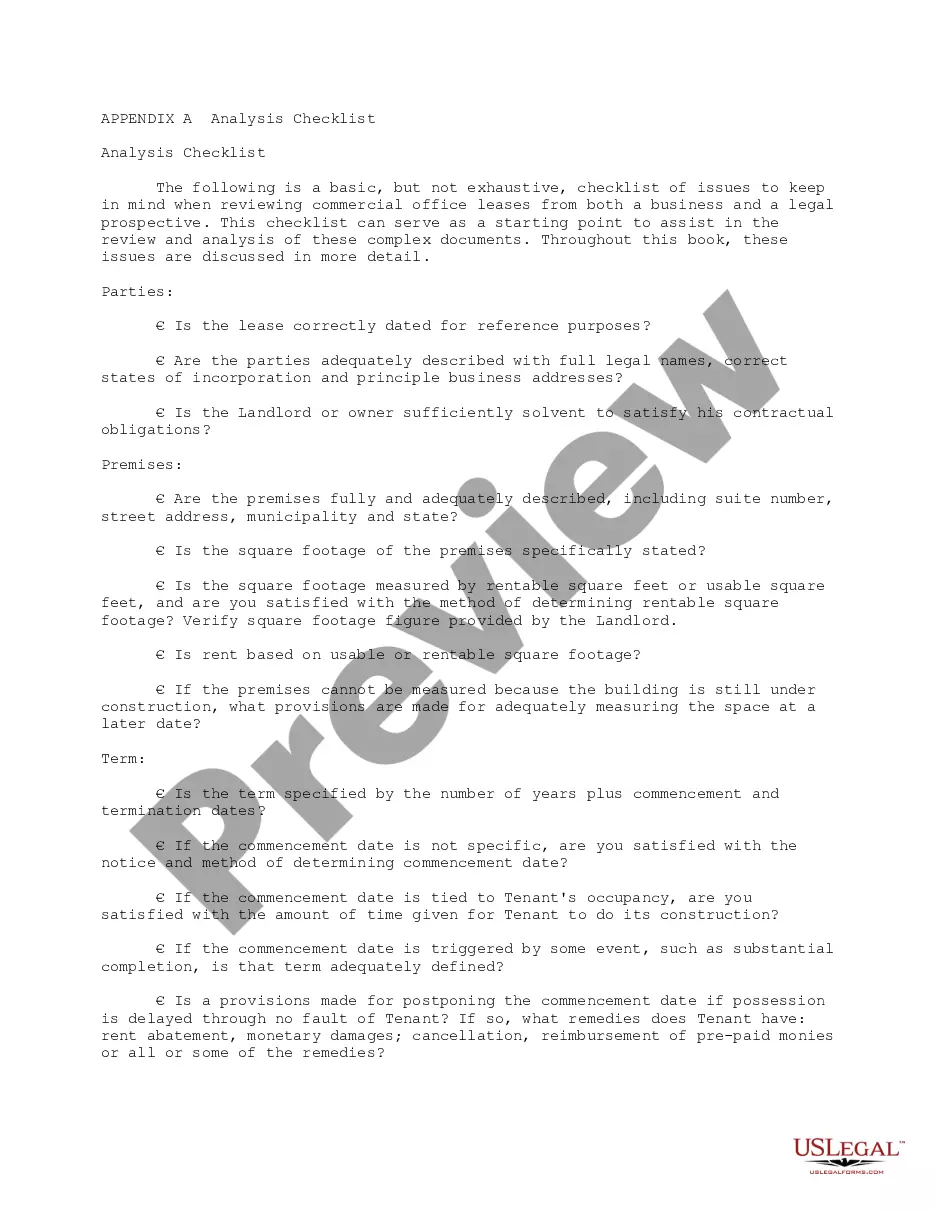
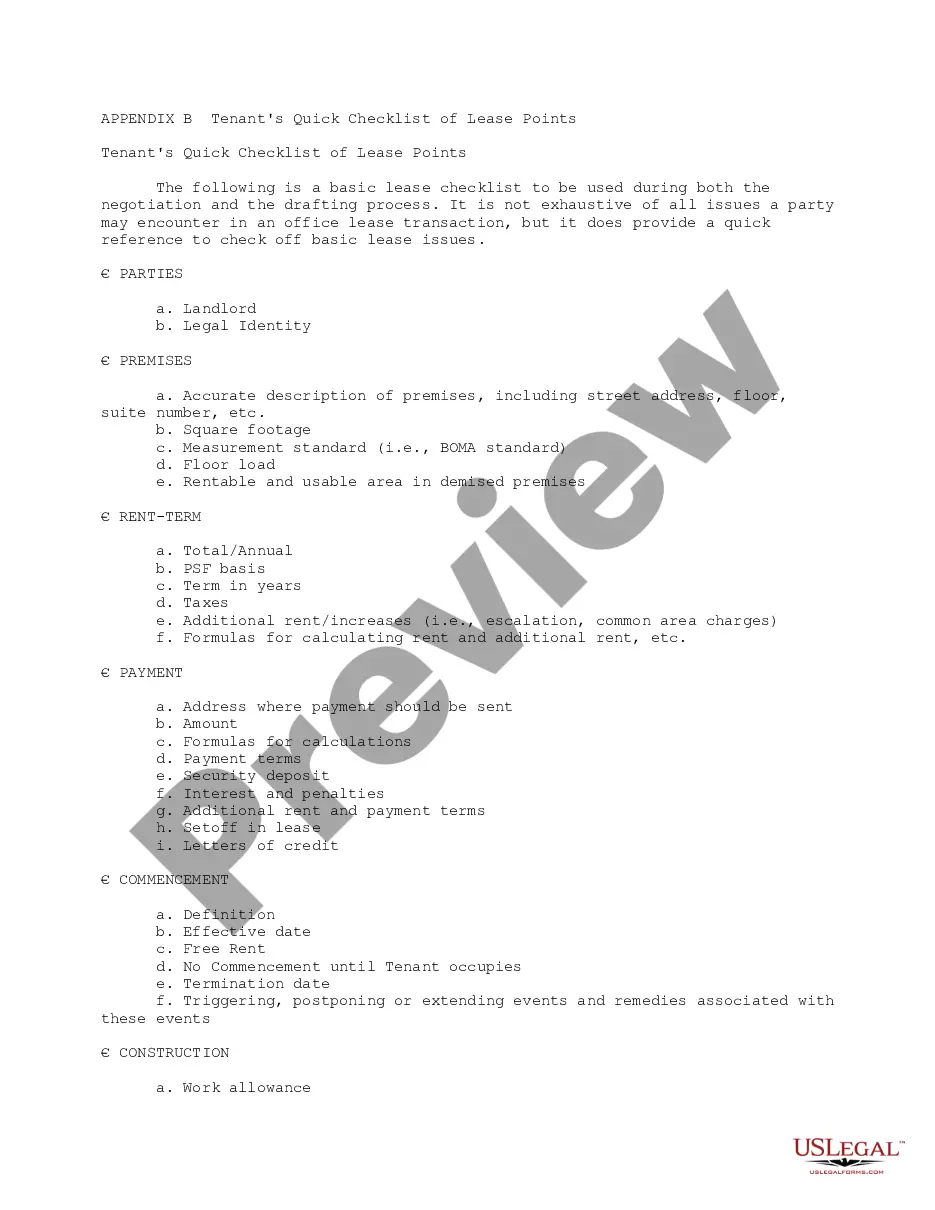
The Checklist of Matters to be Considered in Drafting a Lease of a Commercial Building is a detailed guide designed to simplify the process of drafting a lease agreement. It covers essential elements that both lessors and lessees must consider, differentiating it from general lease agreements by focusing specifically on commercial properties. This form ensures that all critical terms and conditions are included for a legally sound lease.
What’s included in this form
- Name and address of the lessor.
- Name and address of the lessee.
- Description of the leased premises, including size and facilities.
- Term of lease, including commencement and expiration dates.
- Rental agreement stipulating the total rent and payment schedule.
- Conditions for acceptance of the premises by the lessee.
- Responsibilities concerning repairs and alterations.
- Liability designations for property taxes and utilities.
- Restrictions on the use of the premises.
- Provisions for subleasing and assignment rights.
- Options for renewal or purchase of the premises.

When to use this form
This checklist is essential when negotiating a lease for a commercial building. Use it if you are a property owner looking to draft a comprehensive lease agreement or a business owner needing to understand the terms of a lease before signing. The form helps ensure that all parties are aware of their rights and obligations within the lease.
Who needs this form
- Property owners (lessors) leasing commercial space.
- Businesses (lessees) seeking commercial premises.
- Real estate attorneys drafting or reviewing commercial leases.
- Real estate agents advising clients on lease agreements.
How to prepare this document
- Identify the parties involvedâlessor and lessee.
- Provide a detailed description of the commercial premises, including size and floor plans.
- Specify the lease term with clear commencement and expiration dates.
- Enter the rental amounts and payment schedule.
- Include any specific clauses related to repairs, use restrictions, and insurance responsibilities.
- Obtain signatures from both parties once all terms are agreed upon.
Does this document require notarization?
In most cases, this form does not require notarization. However, some jurisdictions or signing circumstances might. US Legal Forms offers online notarization powered by Notarize, accessible 24/7 for a quick, remote process.
Get your form ready online
Our built-in tools help you complete, sign, share, and store your documents in one place.
Make edits, fill in missing information, and update formatting in US Legal Forms—just like you would in MS Word.
Download a copy, print it, send it by email, or mail it via USPS—whatever works best for your next step.
Sign and collect signatures with our SignNow integration. Send to multiple recipients, set reminders, and more. Go Premium to unlock E-Sign.
If this form requires notarization, complete it online through a secure video call—no need to meet a notary in person or wait for an appointment.
We protect your documents and personal data by following strict security and privacy standards.

Make edits, fill in missing information, and update formatting in US Legal Forms—just like you would in MS Word.

Download a copy, print it, send it by email, or mail it via USPS—whatever works best for your next step.

Sign and collect signatures with our SignNow integration. Send to multiple recipients, set reminders, and more. Go Premium to unlock E-Sign.

If this form requires notarization, complete it online through a secure video call—no need to meet a notary in person or wait for an appointment.

We protect your documents and personal data by following strict security and privacy standards.
Common mistakes to avoid
- Failing to specify the size and layout of the premises clearly.
- Not addressing maintenance responsibilities and repair obligations.
- Ignoring local laws that may affect lease terms.
- Overlooking rental payment details and consequences for late payments.
Benefits of using this form online
- Access the checklist anytime, ensuring you have the latest information.
- Edit the form easily to customize it to your specific circumstances.
- Reliability of having templates drafted by licensed attorneys.
- Convenient download options for immediate use.
Legal use & context
- This form serves as a comprehensive guide to ensure that all relevant lease conditions are considered and documented.
- The use of this checklist helps protect the interests of both lessors and lessees by promoting clarity and mutual understanding.
- Consultation with a legal professional is recommended to tailor the checklist to specific legal requirements and local regulations.
Key takeaways
- This checklist helps ensure that all critical aspects of a commercial lease are considered.
- It serves as a guide for landlords and tenants to avoid disputes.
- Review state-specific regulations for compliance before finalizing any lease.
Looking for another form?
Form popularity
FAQ
A rental inspection checklist is a tool used by landlords or property managers to ensure that rental properties are in good condition before, during, and after the tenant's occupation. Conducting a rental inspection involves a thorough visual check of the property's rooms and exterior.
Names of All Tenants and Occupants. Description of Rental Property. Term of the Tenancy. Rental Price. Security Deposits and Fees. Repair and Maintenance Policies. Landlord's Right to Enter Rental Property. Rules and Important Policies.
Tenant's Name. Tenant's Address, Including Unit Number. Date of Move-In. Date of Move-Out (When Occurs). Date of Move-In Inspection. Date of Move-Out Inspection. Tenant Signature. Landlord Signature.
Start by making any minor repairs caused by you. Give the shower and bath a good scrub. Thoroughly clean the kitchen. Clean the patio and sweep or wash down the driveway. Tidy up the garden and mow the lawn. Leave vacuuming and cleaning floors until a day or so before the inspection.
Why You Should Carry Out a Rental House Inspection You can assess how your tenant treats the property. You can check on any maintenance issues that need your attention, such as health and safety requirements.They may be able to tell you information about how your tenants are behaving that you might otherwise miss.
The Parties & Personal Guarantees. Lease Term & Renewals. Rent Payments and Expenses. Business Protection Clauses.
Tenant's Name. Tenant's Address, Including Unit Number. Date of Move-In. Date of Move-Out (When Occurs). Date of Move-In Inspection. Date of Move-Out Inspection.
Inspect the Property and Record Any Current Damages. Know What's Included in the Rent. Can You Make Adjustments and Customizations? Clearly Understand the Terms Within the Agreement and Anticipate Problems. Communicate with Your Landlord About Your Expectations.
Names of all tenants. Limits on occupancy. Term of the tenancy. Rent. Deposits and fees. Repairs and maintenance. Entry to rental property. Restrictions on tenant illegal activity.