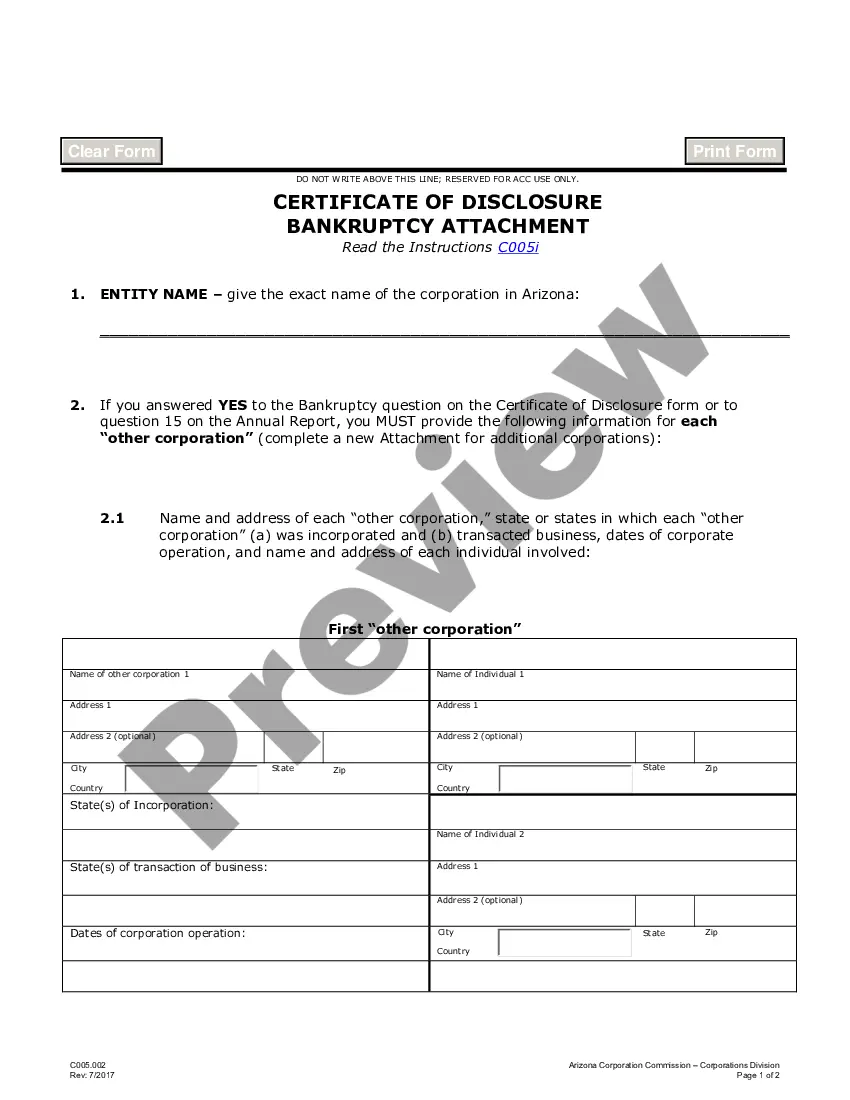
Agreement to Lease Commercial Property with Building on the Property to be Built by Lessor Demolition of Present Building
Overview of this form
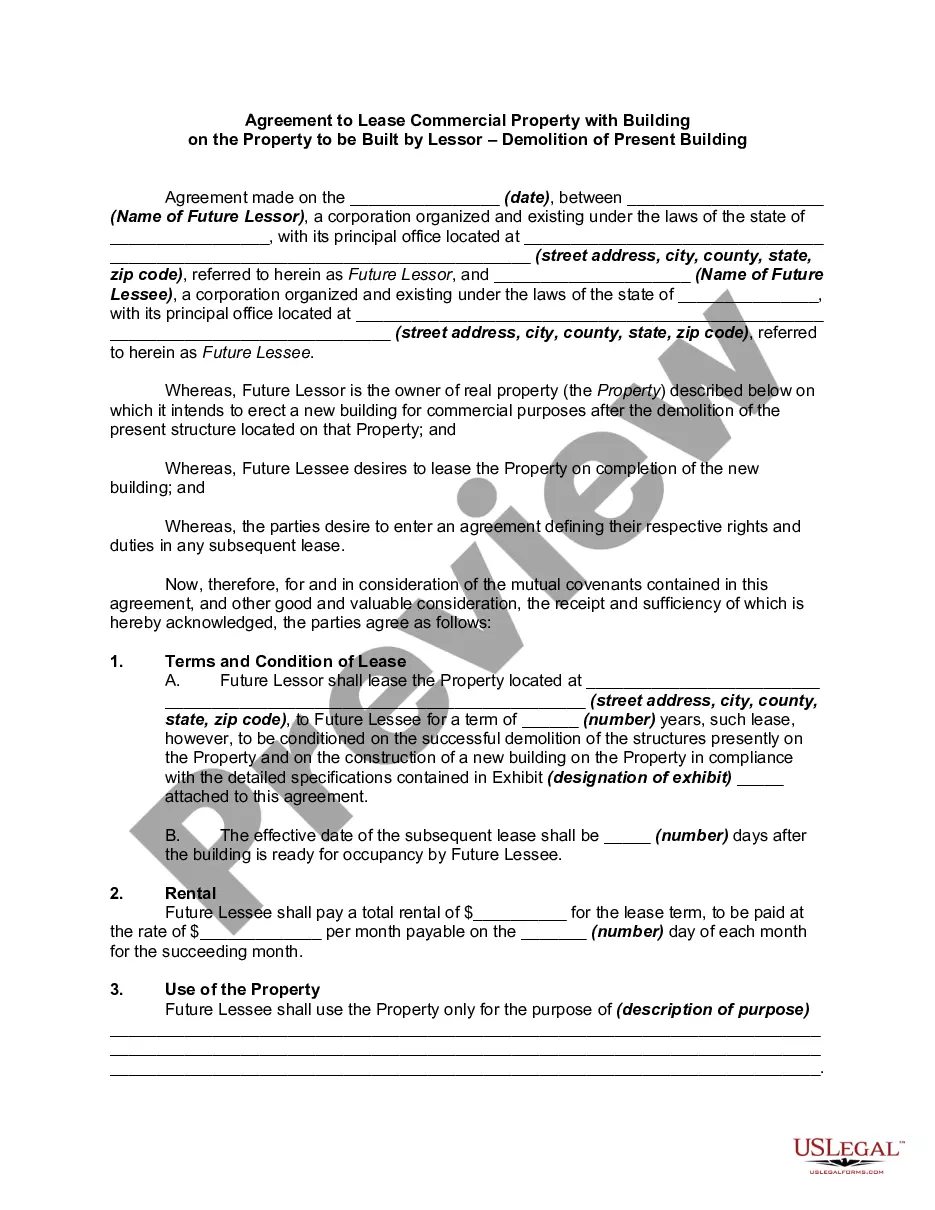
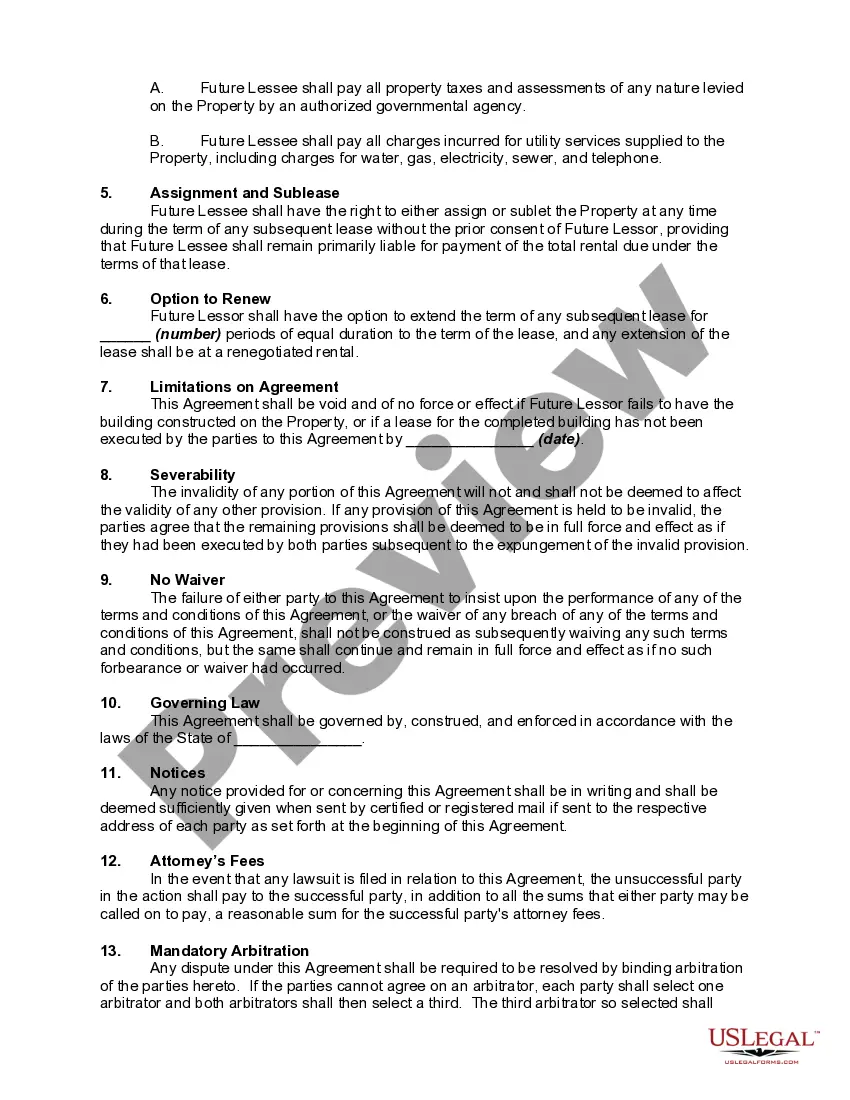
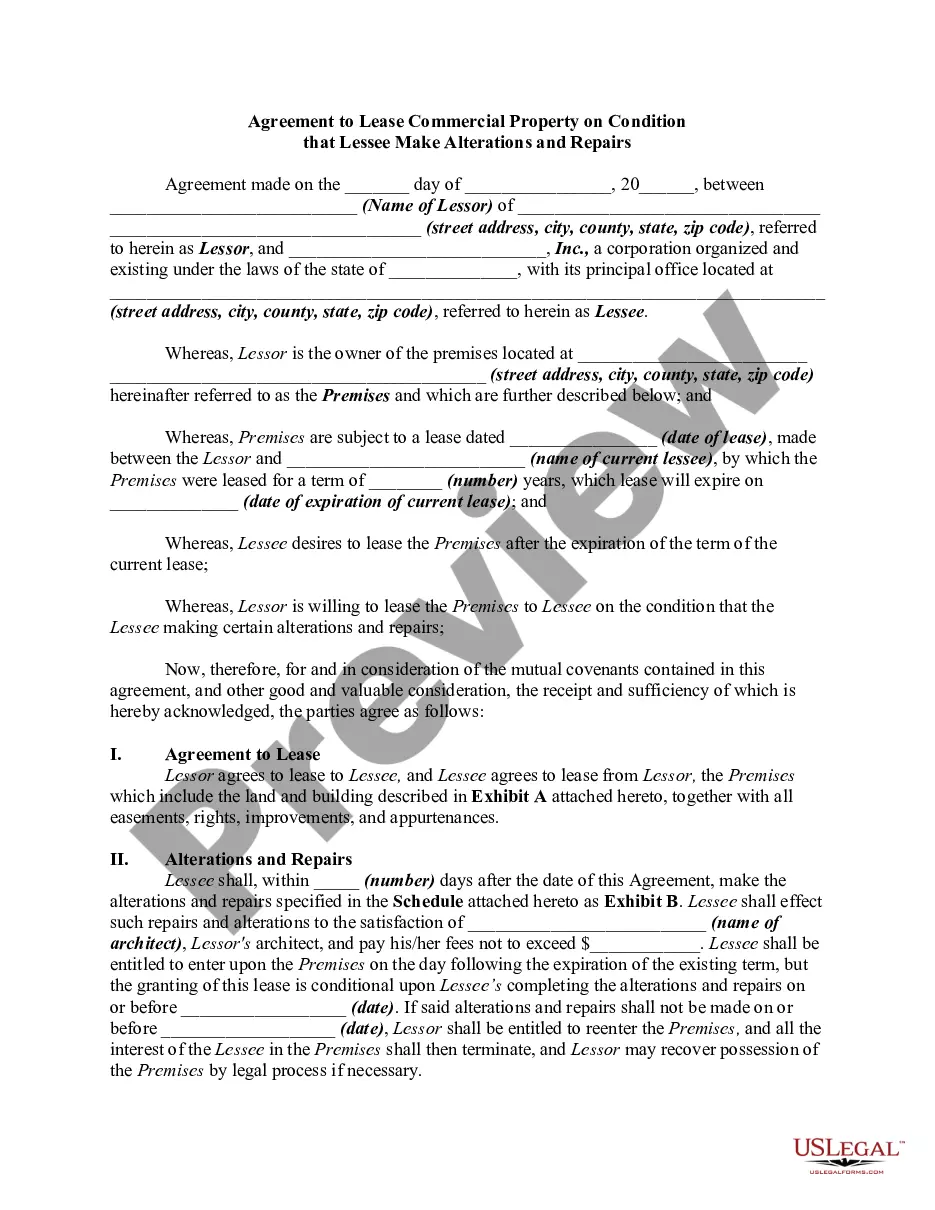
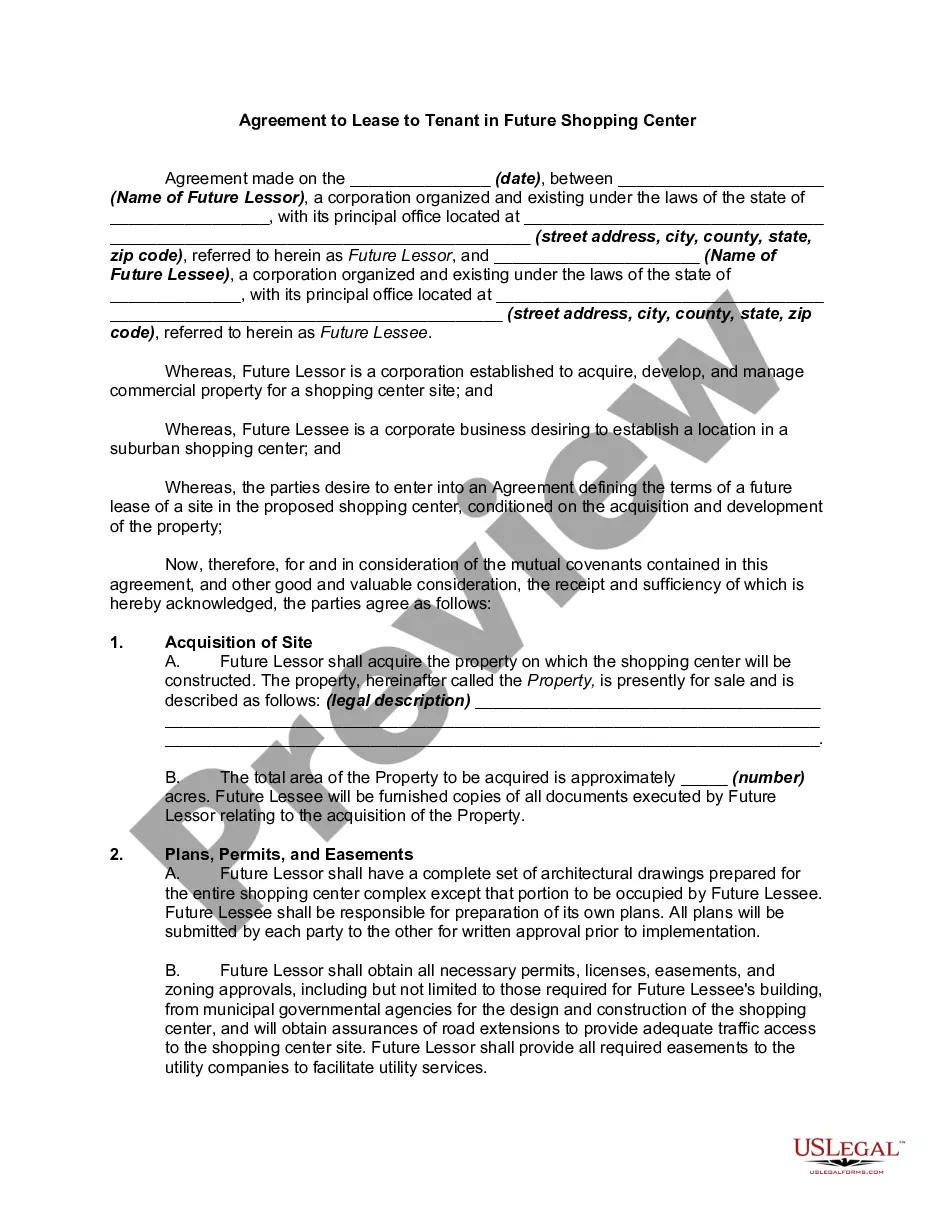
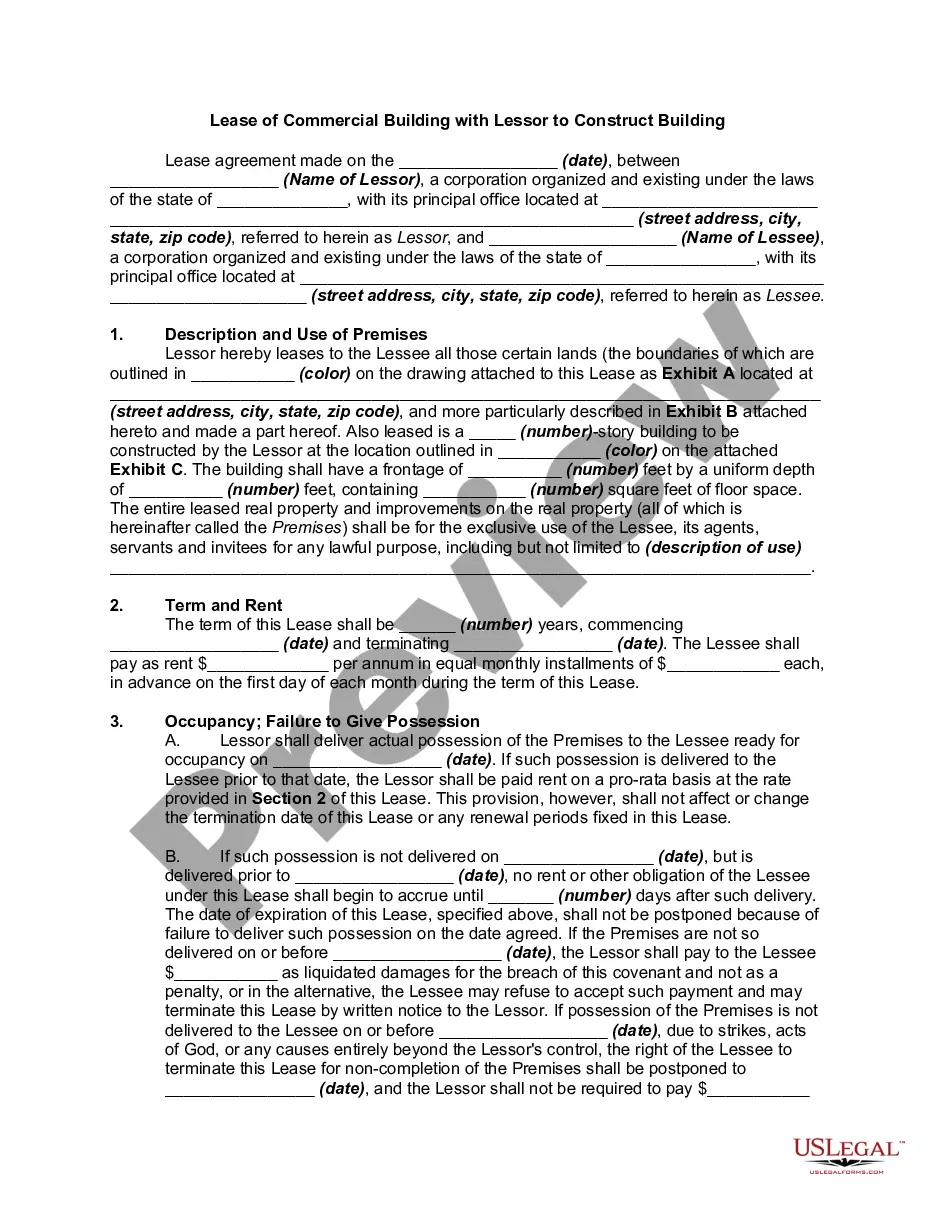
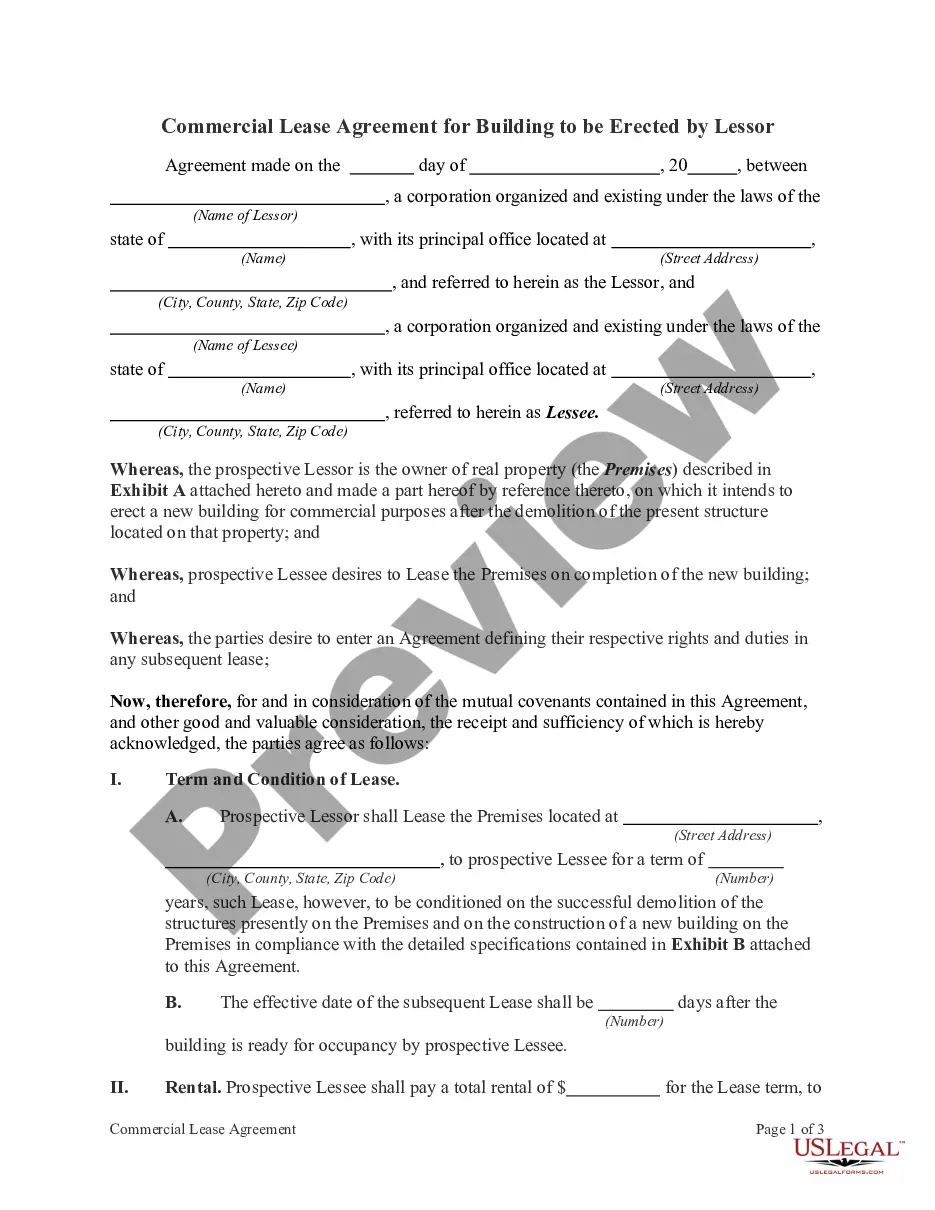
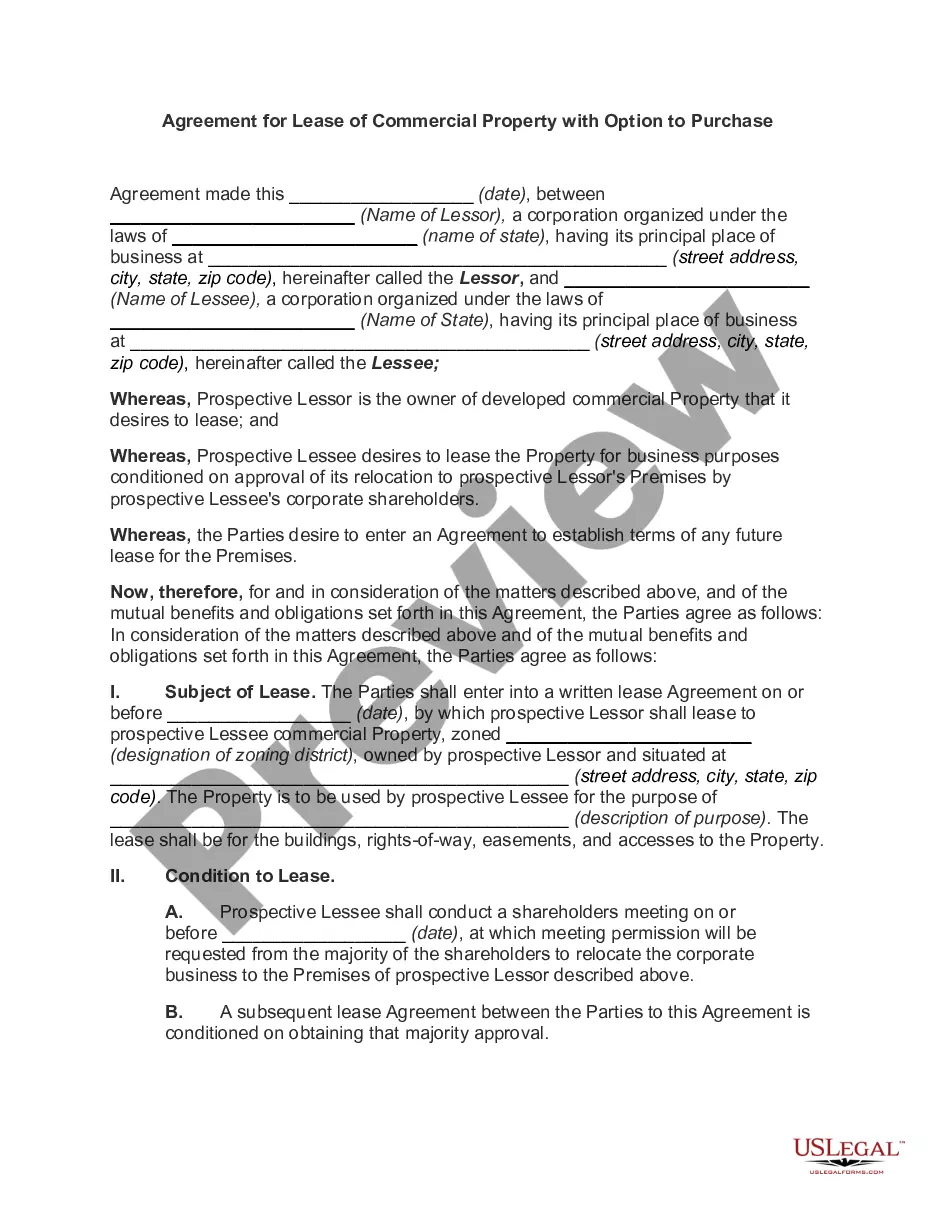
The Agreement to Lease Commercial Property with Building on the Property to be Built by Lessor Demolition of Present Building is a legal document that outlines the terms under which a lessee can lease a property on which a new building will be constructed after demolishing the existing structure. This form is unique as it includes provisions for the construction and demolition process, ensuring that both parties understand their obligations prior to the commencement of the lease.
What’s included in this form
- Date the agreement is made
- Names and details of the future lessor and lessee
- Terms and conditions of the lease
- Rent amount and payment schedule
- Usage rights of the property
- Responsibilities for taxes and utilities
- Conditions for assignment and subleasing
- Option to renew the lease
- Limitation clauses regarding construction and lease execution
- Governing law and dispute resolution through arbitration
Common use cases
This form is ideal for situations where a property owner (lessor) plans to demolish an existing structure to construct a new building intended for commercial use. It is often used in commercial real estate transactions where the future lessee expresses interest in leasing the completed building upon its completion. It's necessary when leasing space that requires significant modifications, ensuring both parties are aligned on future expectations.
Intended users of this form
- Property owners seeking to lease a newly constructed commercial building
- Businesses looking to secure a lease for a future property
- Real estate attorneys involved in commercial property agreements
- Corporations engaged in development projects and tenant negotiations
How to prepare this document
- Identify and enter the names of the future lessor and lessee.
- Fill in the property address and descriptions.
- Specify the terms of the lease, including duration and rental amount.
- Outline the intended use of the property.
- Complete any clauses regarding utilities, taxes, assignment, and subleasing.
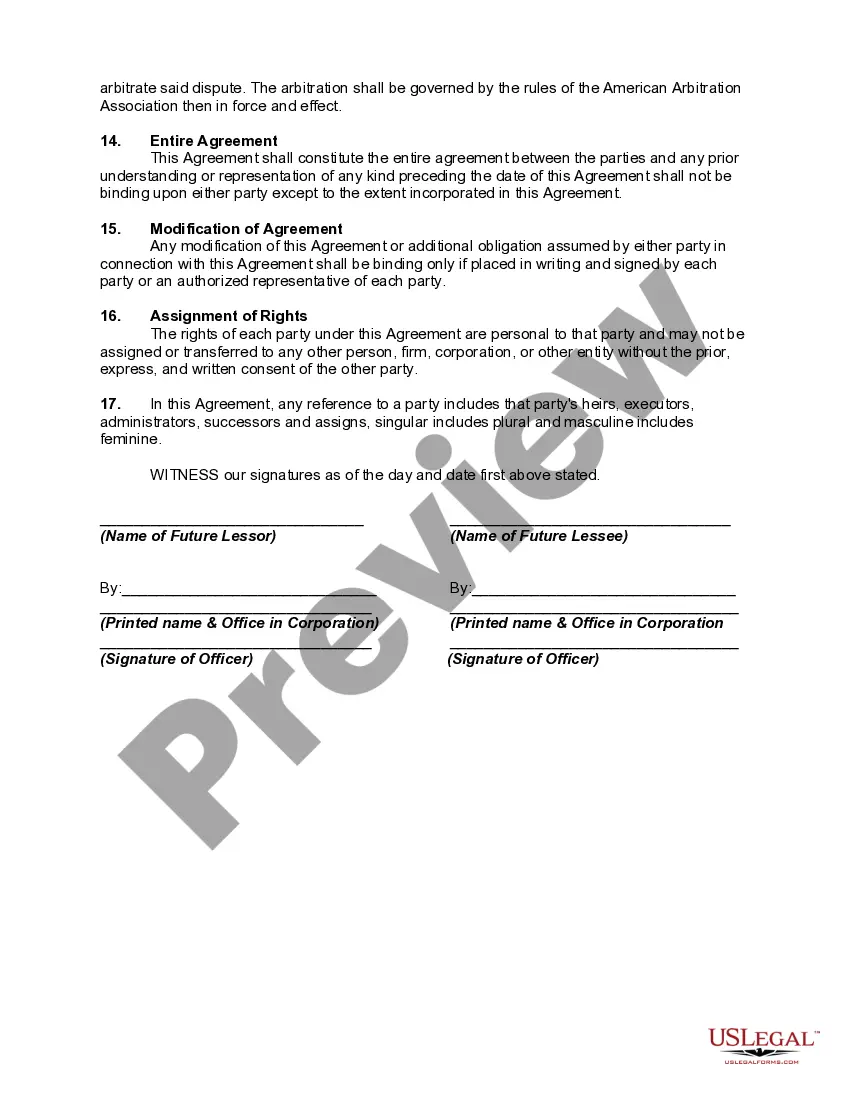
- Ensure both parties sign and date the agreement.
Notarization requirements for this form
This form does not typically require notarization unless specified by local law. Ensure to check the laws applicable in your jurisdiction or consult with a legal expert if you are unsure.
Get your form ready online
Our built-in tools help you complete, sign, share, and store your documents in one place.
Make edits, fill in missing information, and update formatting in US Legal Forms—just like you would in MS Word.
Download a copy, print it, send it by email, or mail it via USPS—whatever works best for your next step.
Sign and collect signatures with our SignNow integration. Send to multiple recipients, set reminders, and more. Go Premium to unlock E-Sign.
If this form requires notarization, complete it online through a secure video call—no need to meet a notary in person or wait for an appointment.
We protect your documents and personal data by following strict security and privacy standards.

Make edits, fill in missing information, and update formatting in US Legal Forms—just like you would in MS Word.

Download a copy, print it, send it by email, or mail it via USPS—whatever works best for your next step.

Sign and collect signatures with our SignNow integration. Send to multiple recipients, set reminders, and more. Go Premium to unlock E-Sign.

If this form requires notarization, complete it online through a secure video call—no need to meet a notary in person or wait for an appointment.

We protect your documents and personal data by following strict security and privacy standards.
Avoid these common issues
- Failing to specify the exact address of the property, which can lead to disputes.
- Not including a clear timeline for construction and lease commencement.
- Overlooking responsibilities for utilities and property taxes.
- Neglecting to review local laws affecting lease agreements and construction.
- Leaving out signatures, making the agreement unenforceable.
Benefits of completing this form online
- Convenient access to templates at any time.
- Editability allows users to tailor the form to specific needs.
- Reliable legal format drafted by licensed attorneys.
- Instant download for speedy use and implementation.
Legal use & context
- This form provides a legally binding agreement once executed by both parties.
- It establishes clear expectations for both the Lessor and Lessee regarding property lease terms and conditions.
- Understanding the legal responsibilities outlined can help prevent future disputes.
Main things to remember
- The agreement is essential when leasing a property with a building under construction.
- Clear definitions and terms protect both parties' interests.
- Always ensure compliance with local legal requirements for the lease to be enforceable.
Looking for another form?
Form popularity
FAQ
A ground lease involves leasing land for a long-term periodtypically for 50 to 99 yearsto a tenant who constructs a building on the property.Many landlords use ground leases as a way to retain ownership of their property for planning reasons, to avoid any capital gains, and to generate income and revenue.
A ground lease is an agreement between a landowner and a tenant, in which the tenant leases land for a new build. The lessee is the owner of the building only, and is responsible for all the expenses and costs associated to constructing and maintaining a business location on a leased piece of land.
Name the parties. A simple rental agreement form needs to name the parties signing the lease and where they live. Describe the premises. Define the term of the lease. Set how much rent is owed. Assign a security deposit amount. Finalize the lease.
Ground leases can provide great investment opportunities for people who want to deploy capital in real estate while never having to think about property management.The value of the rental stream and the landlord's position will typically end up well below half the value of the land and building as a whole.
Disadvantages. The most significant downside to owning a home on leased land relates to building equity. For many people, home ownership is a major source of wealth. With a leased-land property, you risk losing all of your equity at lease expiration, depending on the terms of the surrender clause.
The lease should state who is responsible for arranging and paying for buildings insurance. With most leases, the landlord arranges and pays for buildings insurance but then passes on the costs (or an appropriate proportion, in shared premises) either as part of the service charge or as a separately itemised charge.
The Introduction. The beginning of the lease agreement should contain the name of the landlord and tenant, as well as a statement of the agreement into which they are entering. Rent. Deposit. Taxes. Property Insurance. Utilities and Amenities. Remodeling and Improvements. Repairs and Maintenance.
A ground lease involves a landowner granting a long-term lease on a parcel of land to someone so they can construct a building on it. In return the landowner then receives a steady long-term income flow in the form of a ground rent.