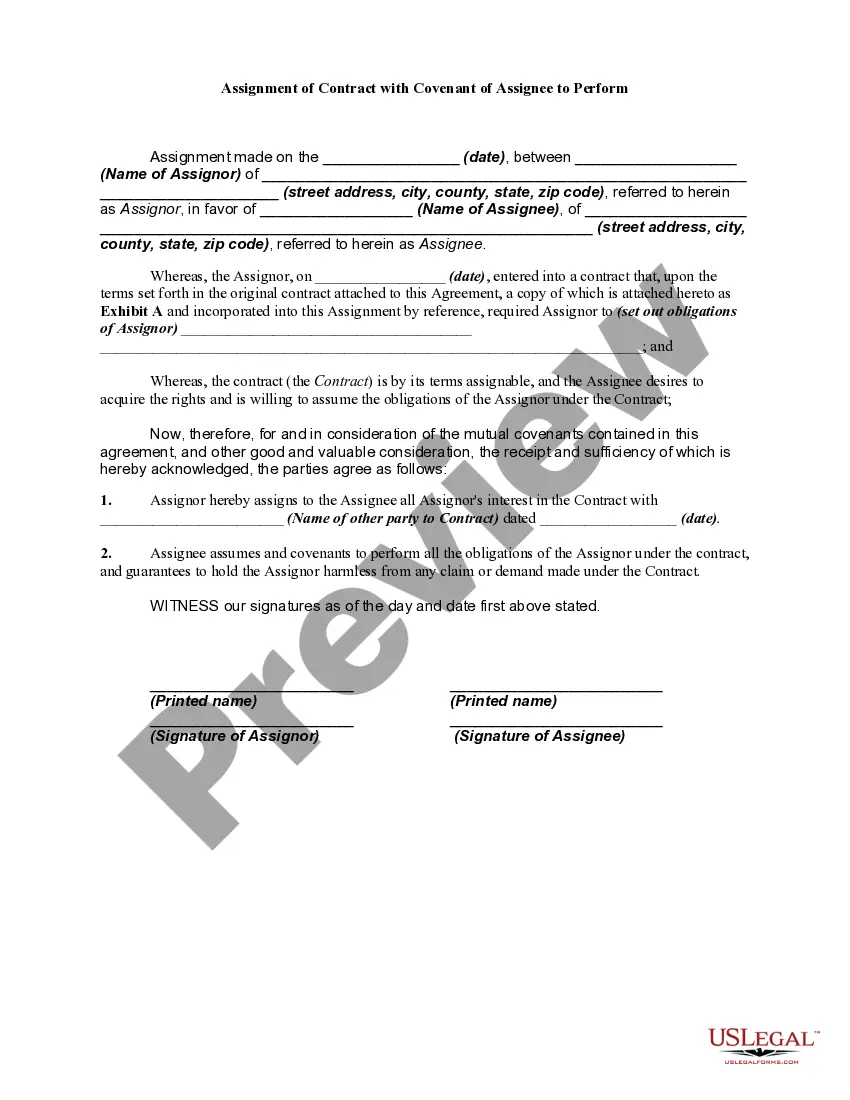
Assignment of Contract with Covenant of Assignee to Perform
What is this form?
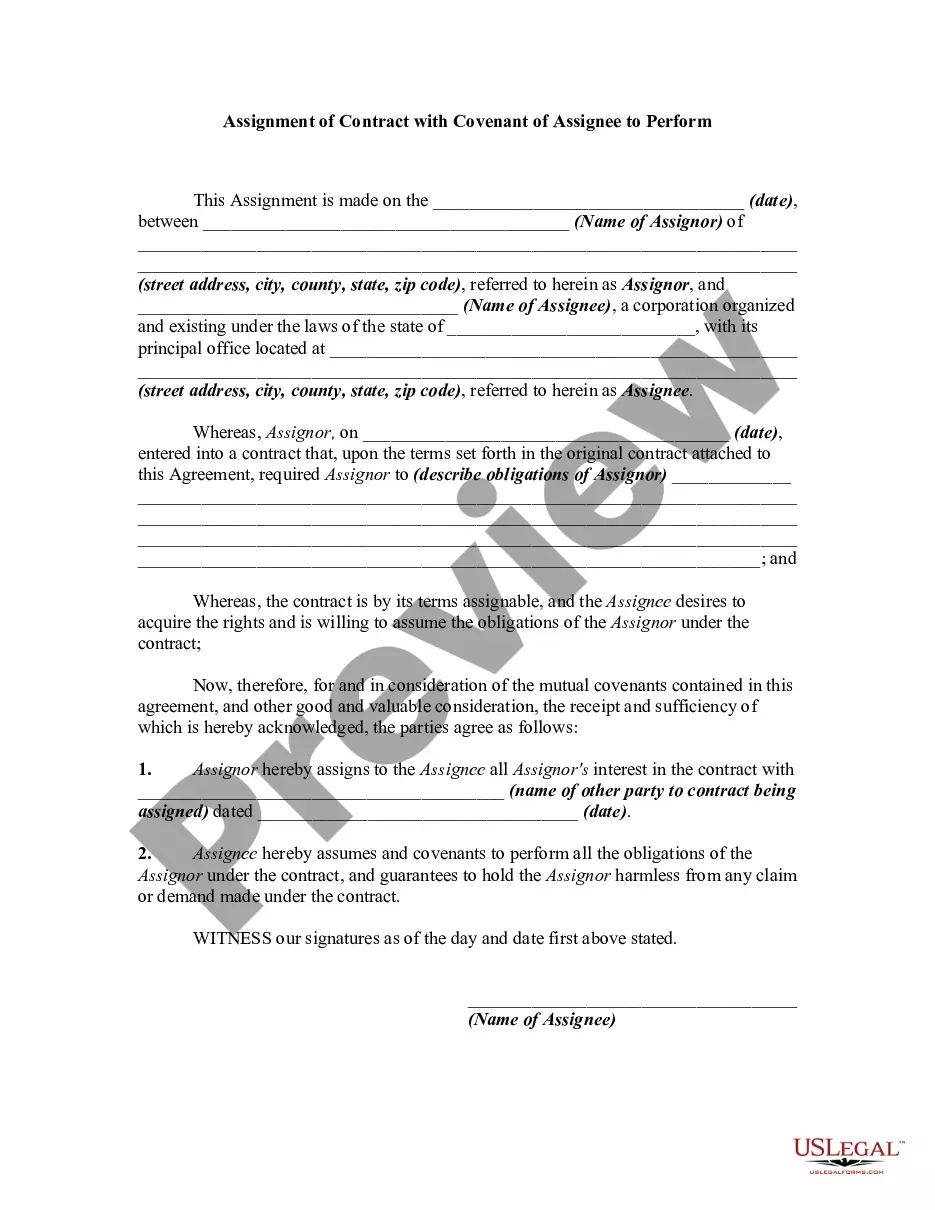
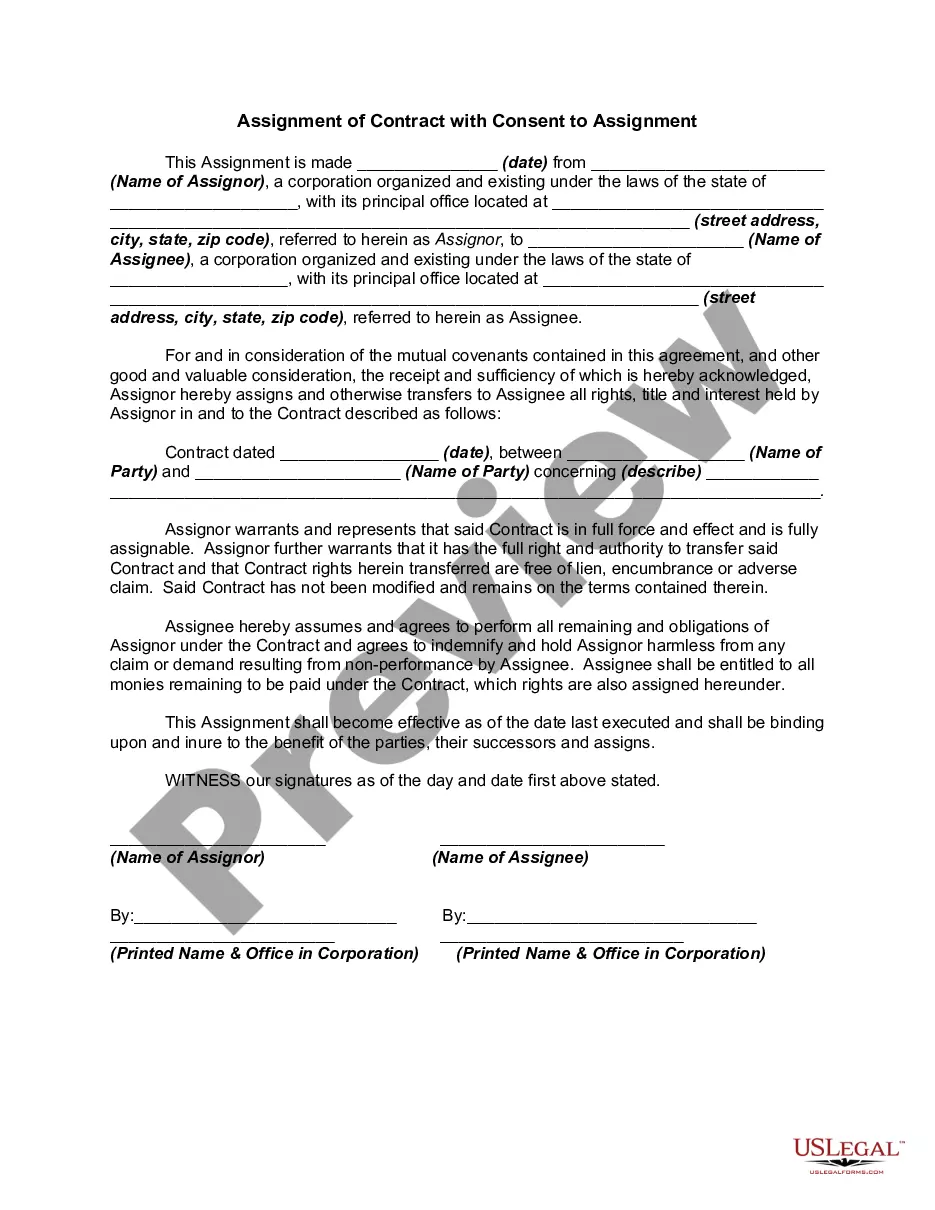
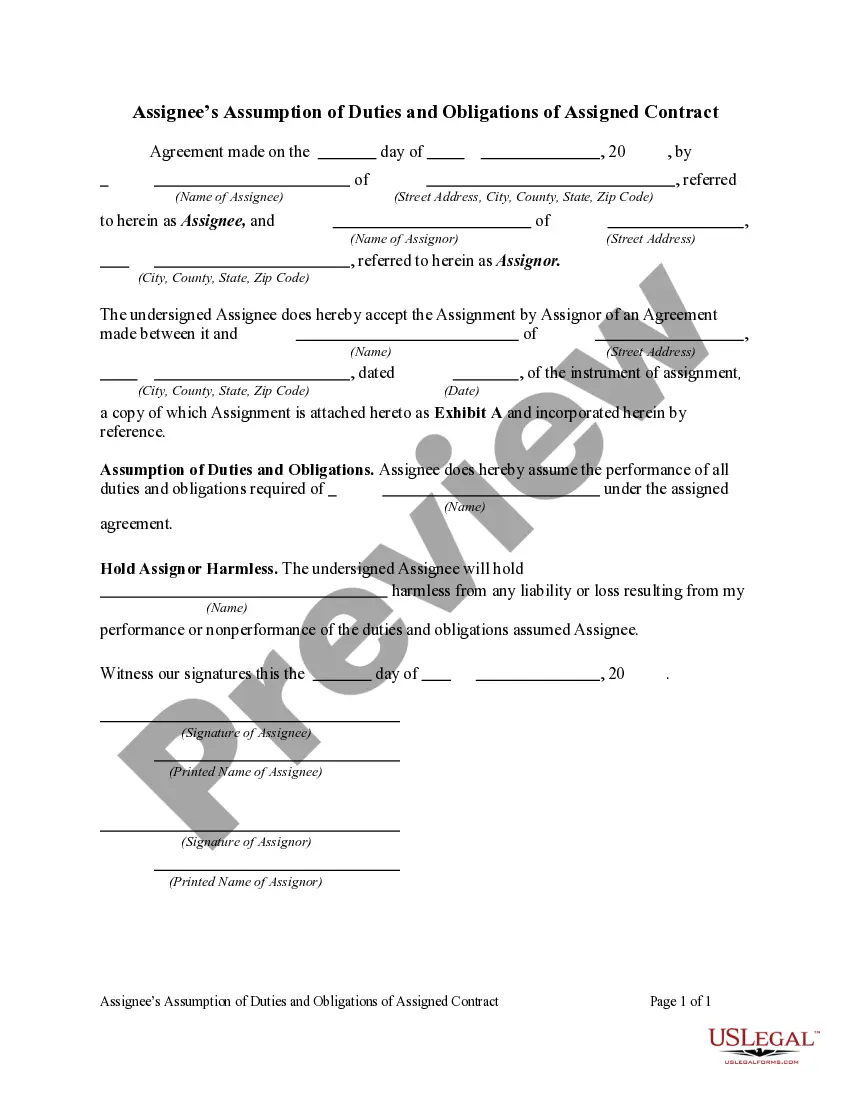
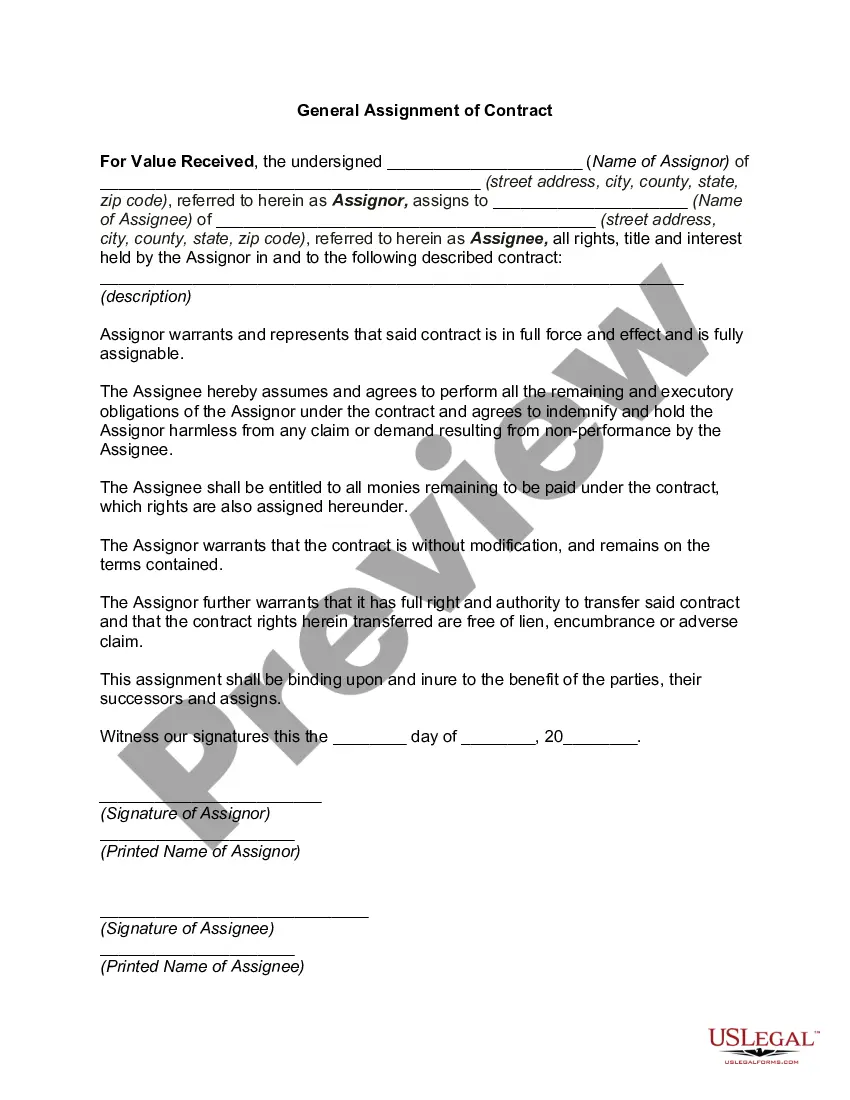
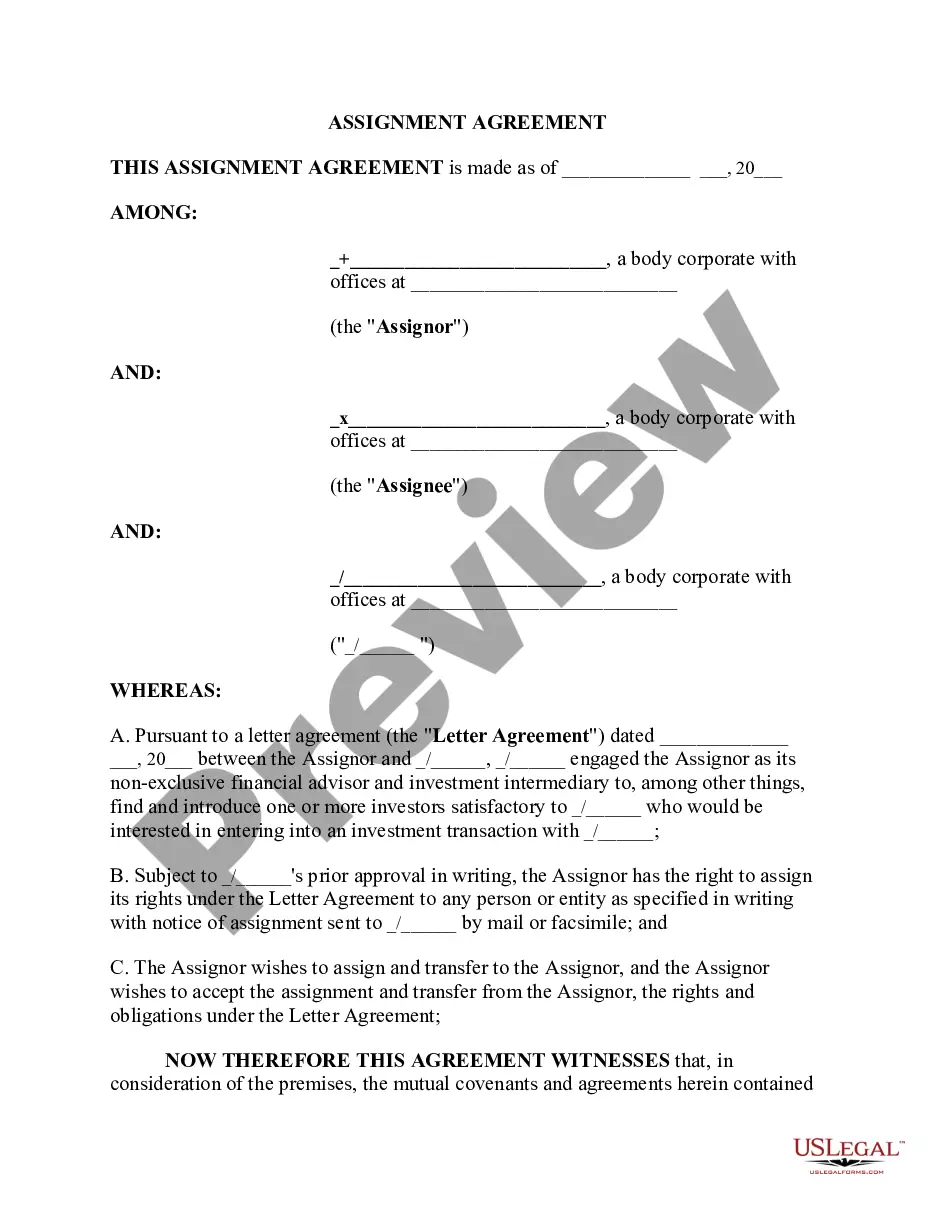
The Assignment of Contract with Covenant of Assignee to Perform is a legal document used to transfer contractual rights and obligations from one party (the assignor) to another (the assignee). This form clarifies the responsibilities of both parties involved in the assignment and ensures that the assignee agrees to uphold the contractual obligations previously held by the assignor. It is essential in situations where rights under a contract need to be legally reassigned, providing a clear record of the transaction.
Main sections of this form
- Date of assignment
- Name and address of the assignor
- Name and address of the assignee
- Description of the original contract
- Consent and obligations assumed by the assignee
- Signatures of both the assignor and assignee
Common use cases
This form is typically used in scenarios where a party needs to delegate their rights and obligations under an existing contract to another party. Common situations include business mergers, selling a business, or transferring lease agreements. If the original contract allows for assignment and you want to ensure the new party is legally bound to the same terms, this form is essential.
Who needs this form
- Businesses transferring contracts as part of a merger or acquisition
- Individuals leasing property who wish to transfer their lease
- Contractors subcontracting work
- Any individual or entity wishing to assign their rights under a contract
How to prepare this document
- Identify the date of the assignment.
- Fill in the names and addresses of both the assignor and the assignee.
- Clearly describe the original contract and its obligations.
- State that the assignee assumes the obligations of the assignor under the original contract.
- Ensure both parties sign and date the form to validate the assignment.
Does this form need to be notarized?
This form does not typically require notarization unless specified by local law. Itâs advisable to check your state's specific requirements to ensure compliance.
Get your form ready online
Our built-in tools help you complete, sign, share, and store your documents in one place.
Make edits, fill in missing information, and update formatting in US Legal Forms—just like you would in MS Word.
Download a copy, print it, send it by email, or mail it via USPS—whatever works best for your next step.
Sign and collect signatures with our SignNow integration. Send to multiple recipients, set reminders, and more. Go Premium to unlock E-Sign.
If this form requires notarization, complete it online through a secure video call—no need to meet a notary in person or wait for an appointment.
We protect your documents and personal data by following strict security and privacy standards.

Make edits, fill in missing information, and update formatting in US Legal Forms—just like you would in MS Word.

Download a copy, print it, send it by email, or mail it via USPS—whatever works best for your next step.

Sign and collect signatures with our SignNow integration. Send to multiple recipients, set reminders, and more. Go Premium to unlock E-Sign.

If this form requires notarization, complete it online through a secure video call—no need to meet a notary in person or wait for an appointment.

We protect your documents and personal data by following strict security and privacy standards.
Typical mistakes to avoid
- Failing to include the original contract as an attachment.
- Not specifying the obligations the assignee is assuming.
- Omitting signatures or dates, which can render the form invalid.
- Using the form without reviewing state-specific laws and requirements.
Why use this form online
- Easy access to legally vetted templates created by licensed attorneys.
- Immediate download and printing options for quick use.
- Editability allows for customization to suit specific situations.
- Availability of guidance on how to correctly fill out and use the form.
Looking for another form?


Form popularity
FAQ
Assignment is a common practice in contracts law.The assignee is the party that receives the rights and obligations under the contract, but wasn't an original party to the contract. The assignor was an original party to the contract and is the party that transfers its contractual rights to another party.
In your Assignment Agreement, you should include information like: the name of the person handing over contractual duties (called "the assignor"); the recipient of the contractual rights and obligations (called "the assignee"); the other party to the original contract (called "the obligor"); the name of the contract
In other words, the assignee can sue the obligor if they fail to render the rights and benefits. This is usually the most common situation in assignment lawsuits. Also, it is common for the assignor to remain liable to the obligor.
In order for an assignment to be a legal assignment, the assignment must be agreed in writing, signed by the assignor, and the other party to the contract must be given notice of the assignment.Contracts often require the consent of the other party before any assignment can take place.
The ASSIGNNEE should notify the obligor. If an obligor renders performance to the assignor without notice of the assignment, the obligor has no further liability under the contract to pay the correct party which would now be the assignee.