Motion in Limine Regarding The Testimony of Lay Witnesses
What this document covers
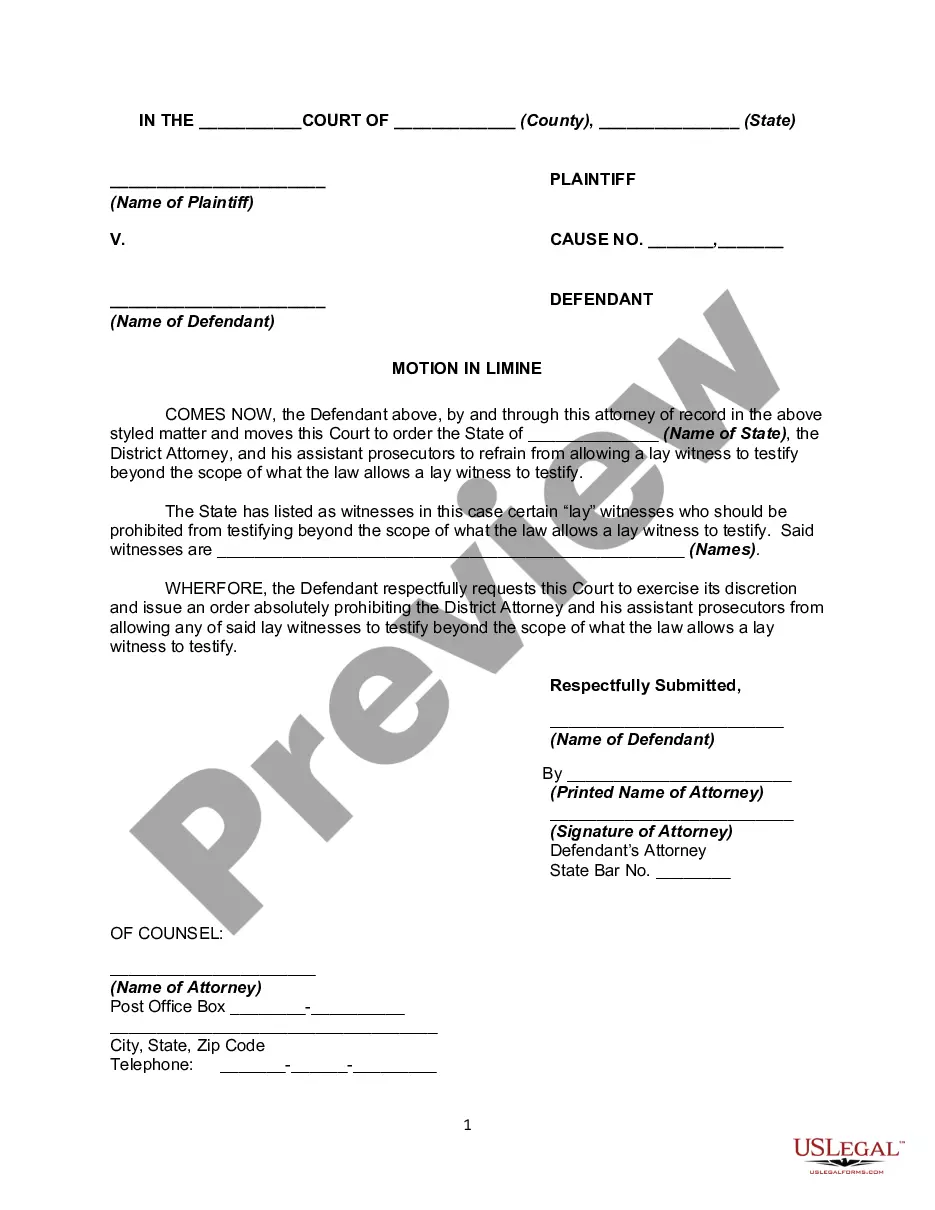
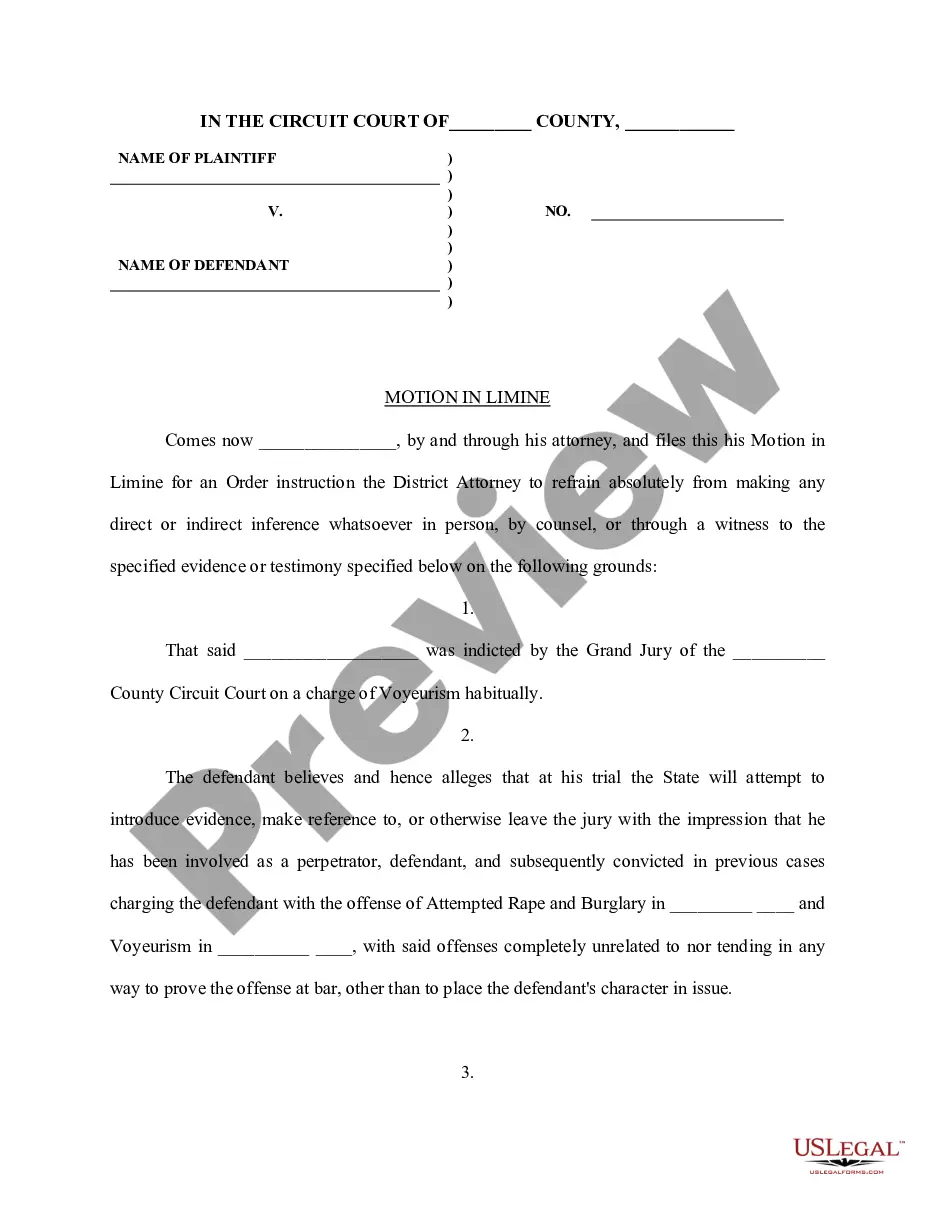
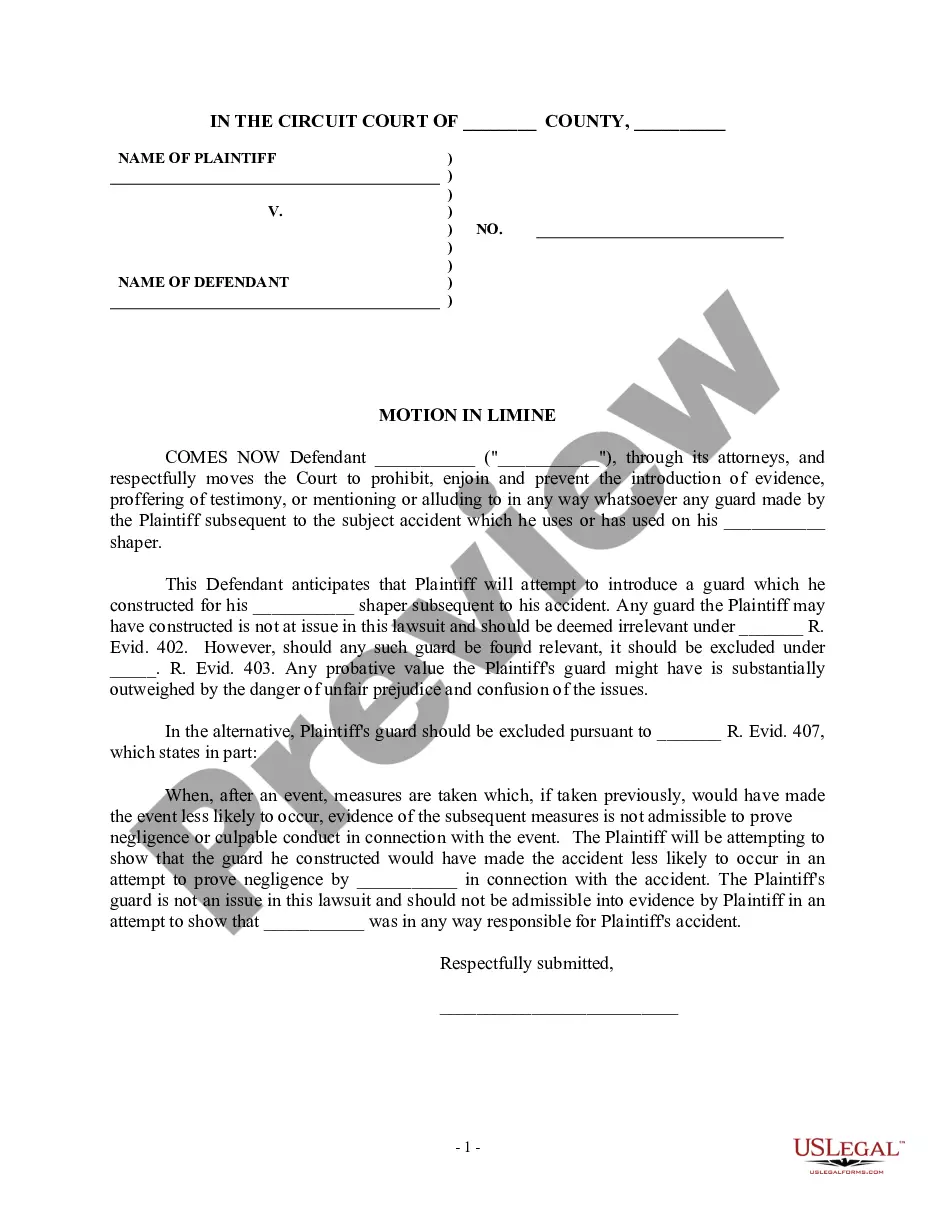
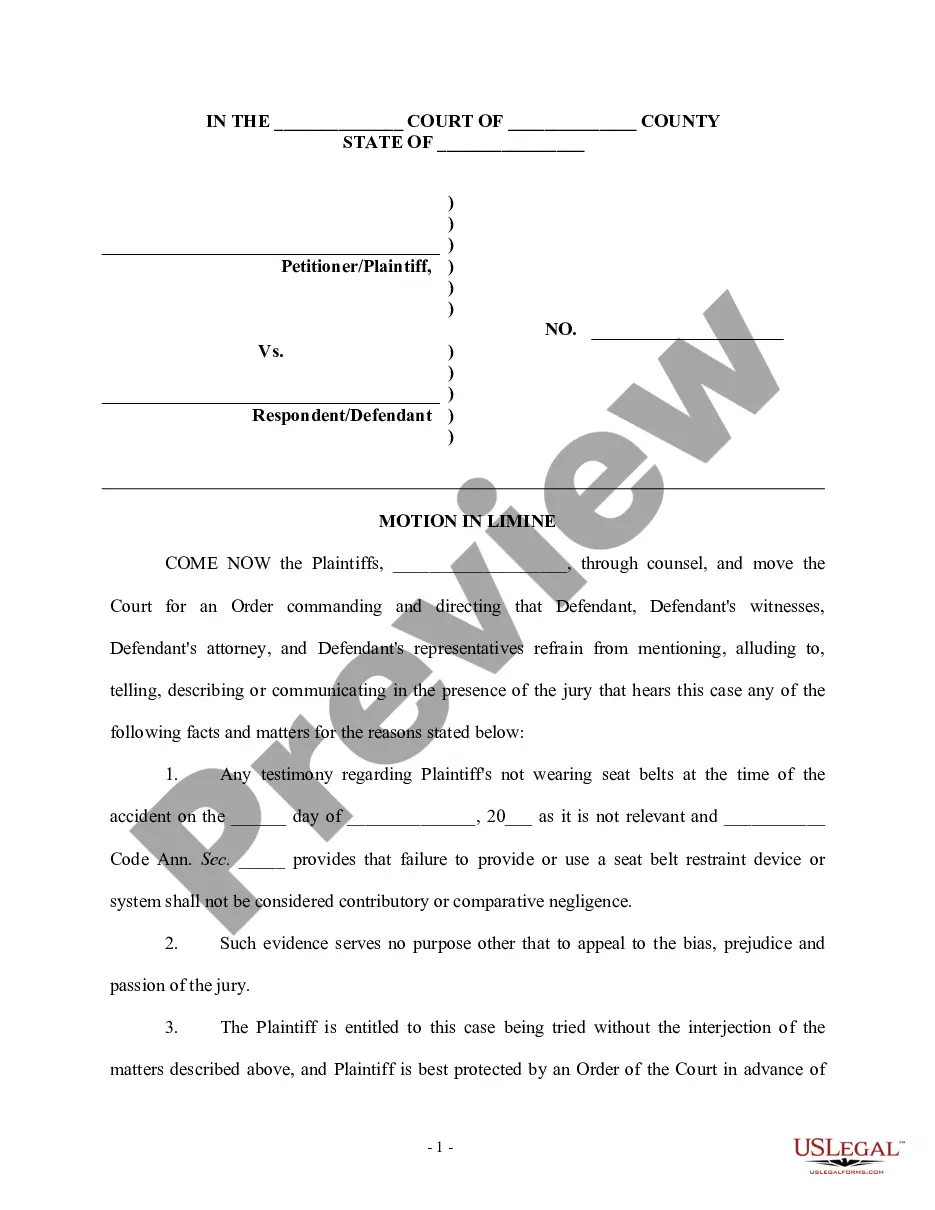
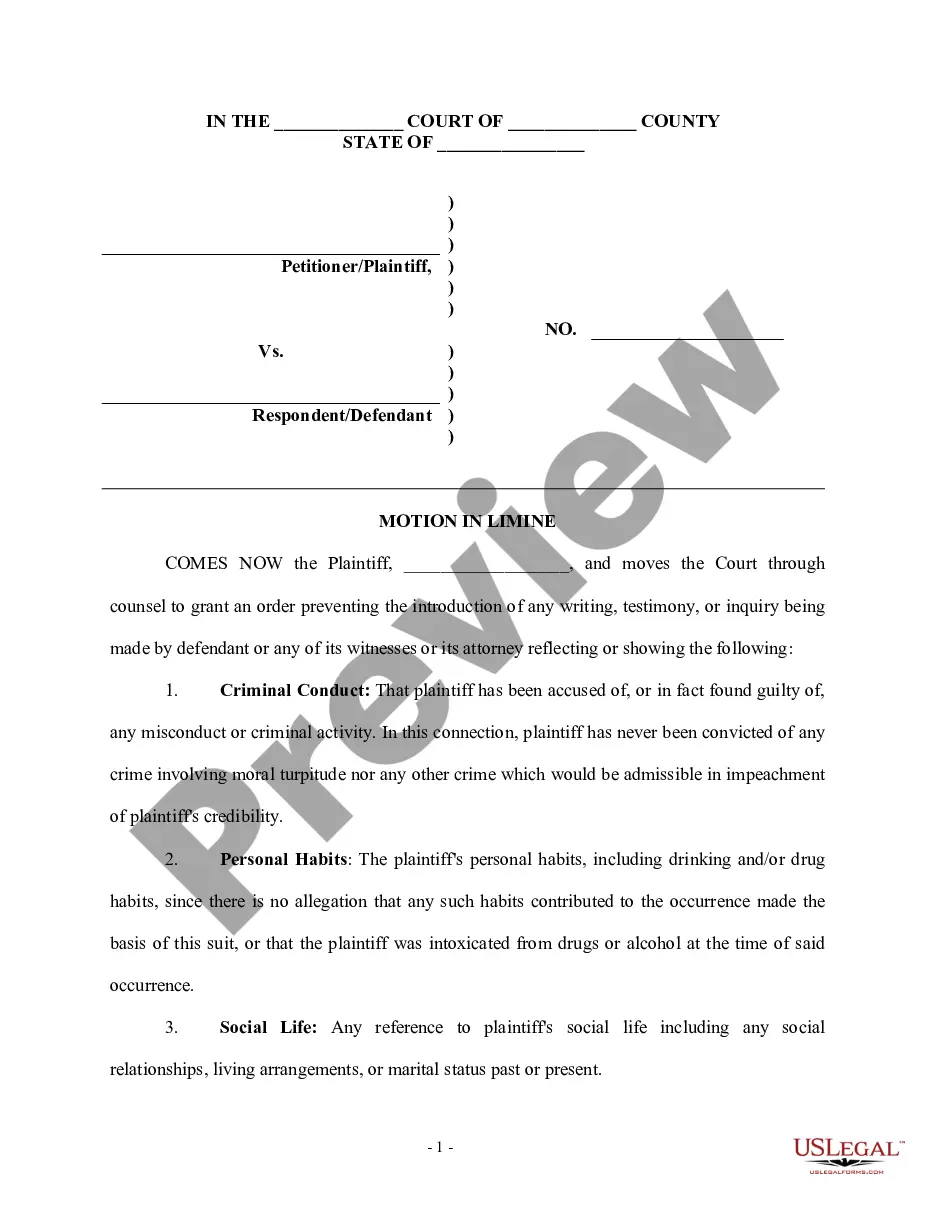
The Motion in Limine Regarding the Testimony of Lay Witnesses is a legal document that requests the court to limit or prohibit the testimony of lay witnesses during a trial. Lay witnesses are individuals who testify based on their personal knowledge and experiences rather than expert opinions or specialized training. This motion is crucial for ensuring that witness testimonies adhere to legal standards and do not exceed the permissible scope allowed by law.
Main sections of this form
- Introduction stating the parties involved and the purpose of the motion.
- Name of the State in which the case is being heard.
- List of lay witnesses whose testimony is being challenged.
- Request for the court to prohibit testimony beyond legal limits for lay witnesses.
- Signature and details of the attorney representing the defendant.
When this form is needed
You should use this motion when you believe that lay witnesses for the opposing party are likely to provide testimony that goes beyond what is allowed. This motion helps to prevent irrelevant or inappropriate testimony during a trial, thereby protecting the integrity of the case.
Who this form is for
This form is intended for:
- Defendants in civil or criminal cases.
- Attorneys representing defendants who anticipate lay witness testimony.
- Legal professionals seeking guidance on limiting witness testimonies.
How to prepare this document
Follow these steps to complete the Motion in Limine:
- Identify and list the parties involved in the case, including the plaintiff and defendant.
- Specify the state where the case is filed.
- Enumerate the names of the lay witnesses whose testimony you wish to limit.
- State the specific request for the court to prohibit certain testimony.
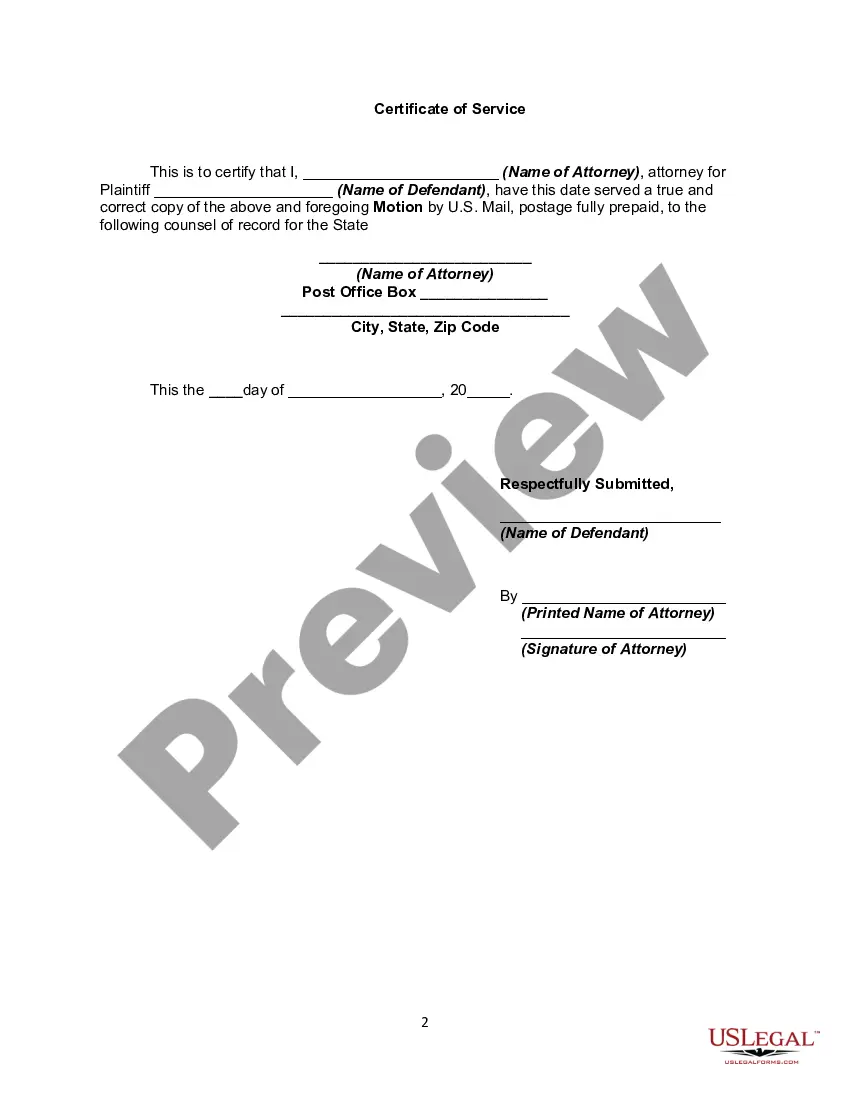
- Include the attorney's name, signature, and contact information for filing purposes.
Is notarization required?
This form does not typically require notarization unless specified by local law. Always check local requirements to ensure compliance with court filing procedures.
Get your form ready online
Our built-in tools help you complete, sign, share, and store your documents in one place.
Make edits, fill in missing information, and update formatting in US Legal Forms—just like you would in MS Word.
Download a copy, print it, send it by email, or mail it via USPS—whatever works best for your next step.
Sign and collect signatures with our SignNow integration. Send to multiple recipients, set reminders, and more. Go Premium to unlock E-Sign.
If this form requires notarization, complete it online through a secure video call—no need to meet a notary in person or wait for an appointment.
We protect your documents and personal data by following strict security and privacy standards.

Make edits, fill in missing information, and update formatting in US Legal Forms—just like you would in MS Word.

Download a copy, print it, send it by email, or mail it via USPS—whatever works best for your next step.

Sign and collect signatures with our SignNow integration. Send to multiple recipients, set reminders, and more. Go Premium to unlock E-Sign.

If this form requires notarization, complete it online through a secure video call—no need to meet a notary in person or wait for an appointment.

We protect your documents and personal data by following strict security and privacy standards.
Typical mistakes to avoid
- Failing to clearly specify the lay witnessesâ names.
- Not citing legal authority or precedent to support the motion.
- Insufficiently detailing the types of testimony being challenged.
- Omitting the necessary signatures from the attorney.
Benefits of completing this form online
- Easy online access to download and complete the form.
- Editable template that allows customization to fit specific case needs.
- Reliable legal language drafted by licensed attorneys.
Looking for another form?



Form popularity
FAQ
Motions in limine can be made verbally and must take place outside the presence of the jury.Please note that because the phrase in limine is a direct foreign language borrowing, it is appropriate to present it in italics.
The term in limineor on the thresholdmisleadingly suggests that any motion filed shortly before the start of trial is a motion in limine.There are many advantages to an advance ruling on the evidentiary issues outside the presence of the jury, and motions in limine are a powerful tool for astute trial attorneys.
Generally, a party in a lawsuit files a motion in limine to exclude evidence from a trial because the evidence isn't relevant or because its prejudicial effect substantially outweighs its probative value. You can oppose the motion in limine by drafting and filing your own motion in opposition.
Your motion in limine should be broken into two sections: (1) Factual Background and (2) Argument. The Factual Background section of your Memorandum should include all of the facts necessary for the judge to resolve every issue raised in your motion. appropriate, include procedural posture, as well.
The term in limineor on the thresholdmisleadingly suggests that any motion filed shortly before the start of trial is a motion in limine.There are many advantages to an advance ruling on the evidentiary issues outside the presence of the jury, and motions in limine are a powerful tool for astute trial attorneys.
There is also authority for the proposition that if a motion in limine is denied, the party opposing the evidence can be the first to offer the objectionable evidence without waiving the merits of the evidentiary objection on appeal.
Lay witnesses are allowed to testify abut any relevant event that was observed with one or more of the five senses (sight, hearing, smell, touch, or taste).
At common law, lay witnesses could testify to facts, but unlike experts, could not offer opinions, inferences, or conclusions.Once Rule 701 of the Federal Rules of Evidence was enacted, the restrictions on lay opinions began to loosen. Now, both lay and expert opinions are admissible at trial, to varying degrees.
Examples of motions in limine would be that the attorney for the defendant may ask the judge to refuse to admit into evidence any personal information, or medical, criminal or financial records, using the legal grounds that these records are irrelevant, immaterial, unreliable, or unduly prejudicial, and/or that their