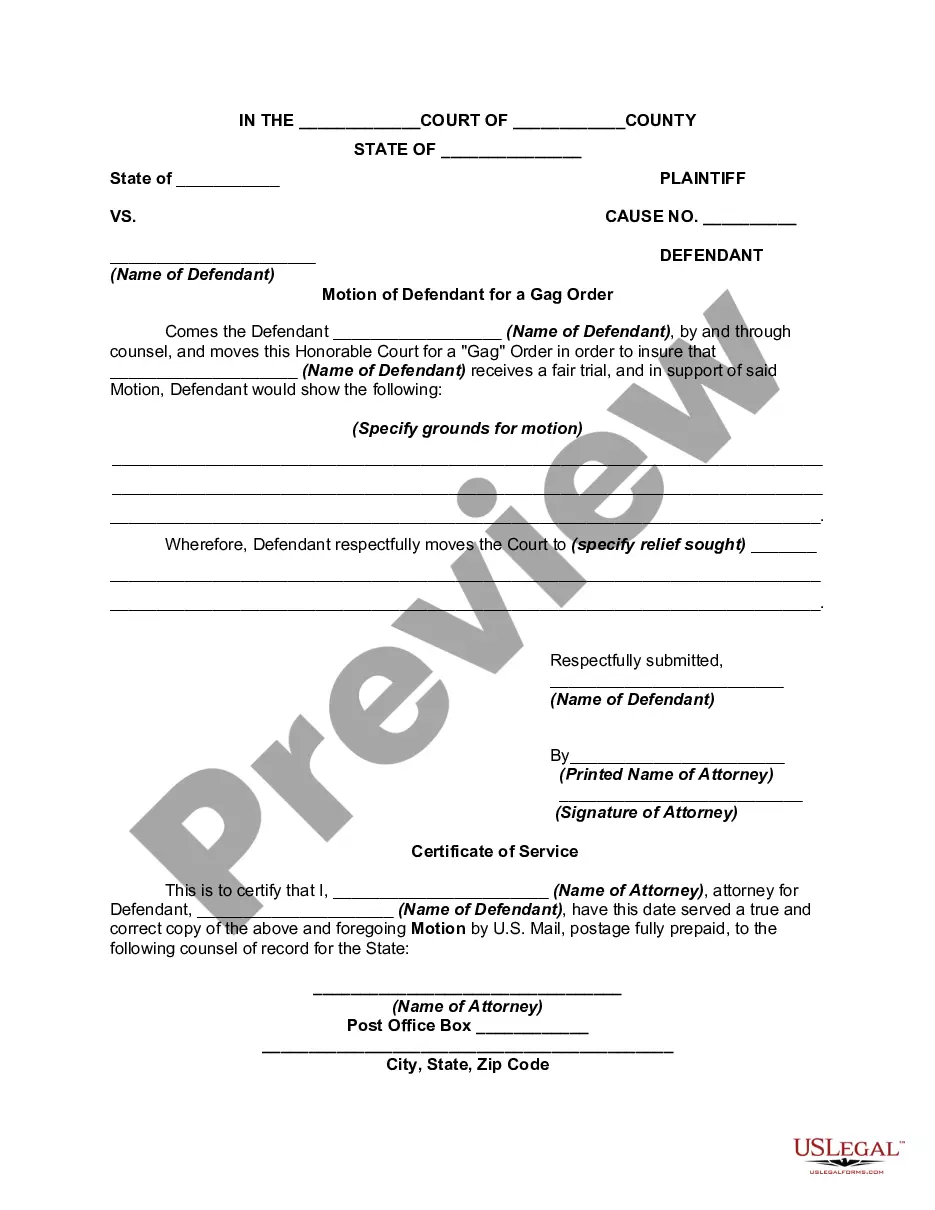
Motion of Defendant for a Gag Order
About this form
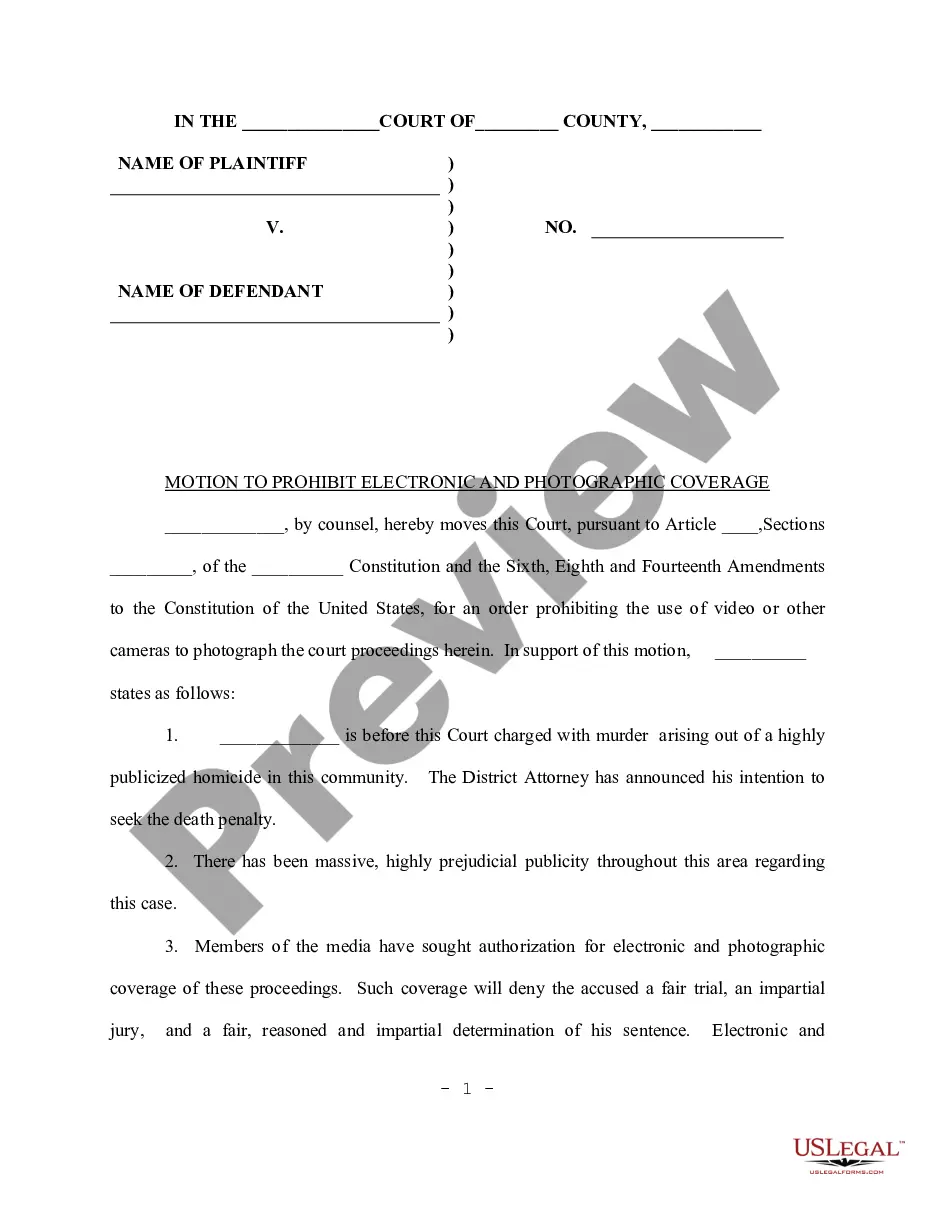
The Motion of Defendant for a Gag Order is a legal request made by a defendant in a lawsuit or criminal trial to restrict the release of information that could prejudice the case. This form is essential for ensuring a fair trial by minimizing potential biases from public statements or media coverage. Unlike general motions or other requests, a gag order specifically focuses on limiting external communication about the case to protect the defendant's rights and maintain the integrity of the judicial process.
Key components of this form
- Heading: Identifies the state and court involved in the case.
- Motion details: Specifies the defendant's name and the grounds for requesting the gag order.
- Relief sought: Outlines the specific actions the court is being asked to take.
- Certificate of service: Confirms that other parties have been notified of the motion.
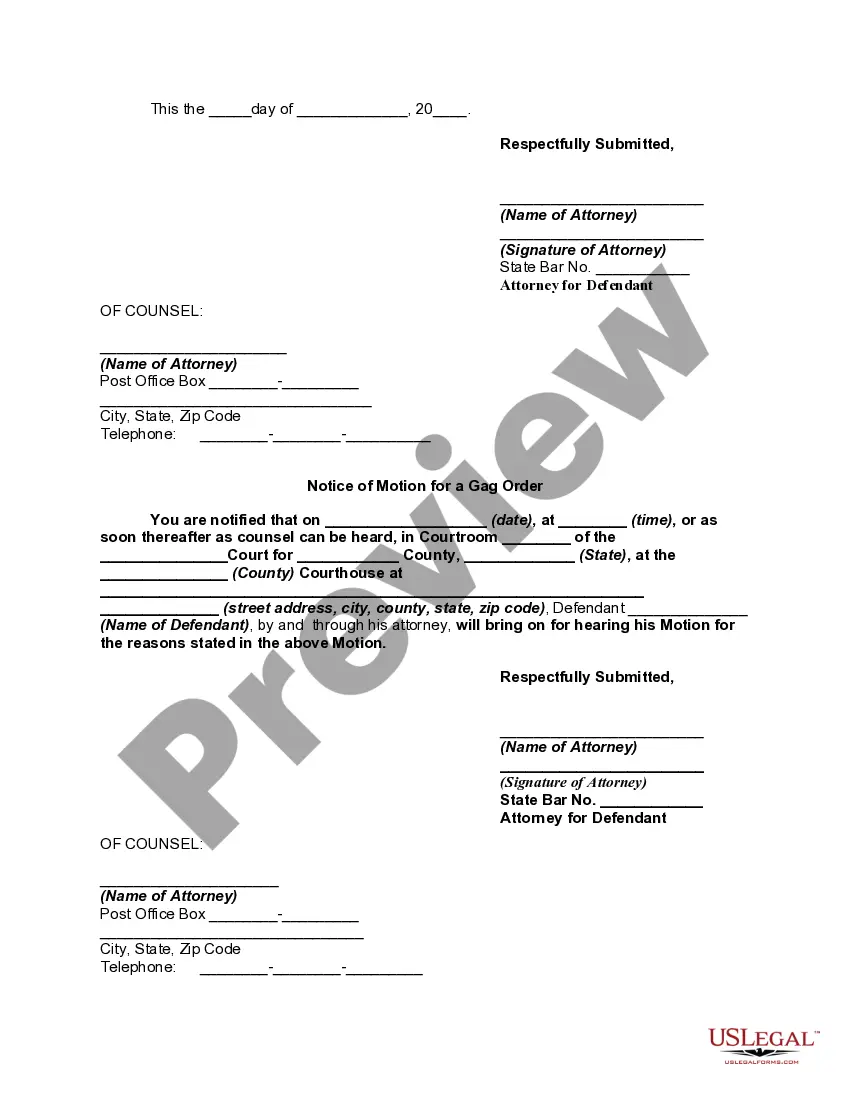
- Notice of motion: Describes when and where the motion will be heard in court.
Common use cases
This form should be used when the defendant believes that public statements or media coverage could harm their right to a fair trial. It is particularly relevant in cases that attract significant media attention or involve sensitive subjects, where jurors may be swayed by external information. Filing this motion may be necessary to limit the exposure of the case to prejudice and ensure impartiality during trial proceedings.
Who should use this form
- Defendants in a criminal case seeking a fair trial.
- Defendants involved in highly publicized civil litigation.
- Attorneys representing defendants who need to limit external influences on the trial.
How to prepare this document
- Identify the parties involved in the case, including the plaintiff and defendant names.
- Clearly state the grounds for the motion in the provided section.
- Specify the relief sought from the court, detailing the rationale behind the request.
- Fill in the certificate of service, ensuring all relevant parties are notified.
- Complete the notice of motion section with the hearing date and location.
Is notarization required?
Notarization is generally not required for this form. However, certain states or situations might demand it. You can complete notarization online through US Legal Forms, powered by Notarize, using a verified video call available anytime.
Get your form ready online
Our built-in tools help you complete, sign, share, and store your documents in one place.
Make edits, fill in missing information, and update formatting in US Legal Forms—just like you would in MS Word.
Download a copy, print it, send it by email, or mail it via USPS—whatever works best for your next step.
Sign and collect signatures with our SignNow integration. Send to multiple recipients, set reminders, and more. Go Premium to unlock E-Sign.
If this form requires notarization, complete it online through a secure video call—no need to meet a notary in person or wait for an appointment.
We protect your documents and personal data by following strict security and privacy standards.

Make edits, fill in missing information, and update formatting in US Legal Forms—just like you would in MS Word.

Download a copy, print it, send it by email, or mail it via USPS—whatever works best for your next step.

Sign and collect signatures with our SignNow integration. Send to multiple recipients, set reminders, and more. Go Premium to unlock E-Sign.

If this form requires notarization, complete it online through a secure video call—no need to meet a notary in person or wait for an appointment.

We protect your documents and personal data by following strict security and privacy standards.
Typical mistakes to avoid
- Failing to provide adequate grounds for the motion.
- Not following local court rules for motion submissions.
- Neglecting to notify all relevant parties in the certificate of service.
Why complete this form online
- Convenience of downloading and printing the form on demand.
- Editability allows for easy customization to fit specific case needs.
- Access to templates drafted by licensed attorneys ensures accuracy.
Looking for another form?
Form popularity
FAQ
Gag orders issued by a court, government, or private entity require an individual to refrain from making public comments. Typically, judges issue injunctions barring trial participants including attorneys, litigants, and witnesses from discussing trial related material outside the courtroom.
To prevent the companies from doing so, federal law enforcement typically obtains a non-disclosure order pursuant to 18 U.S.C. § 2705(b) from a federal magistrate court. These gag orders have generally not had a definite expiration date.
What Happens When People Violate Gag Orders? Anytime you violate an order of the courtincluding a gag orderyou could be found guilty of contempt. If you're facing contempt charges for violating a gag order, you should speak with a criminal defense attorney as soon as possible.
U.S. Court of Appeals rules gag orders are unconstitutional, unenforceable.The ruling holds that gag orders equate to hush money to keep victims quiet, making them unconstitutional.
What Happens if You Break a Gag Order? If you break a gag order, a court may find you in contempt and issue a fine or sentence you to jail time. If you break a non-disclosure agreement, a company may have a right to sue. You may lose your job or face other punishments.
A court order to gag or bind an unruly defendant or remove her or him from the courtroom in order to prevent further interruptions in a trial.However, the U.S. Supreme Court has upheld the constitutionality of the practice in cases where a defendant is particularly disruptive.
According to the Court, it is constitutionally permissible to subordinate the First Amendment rights of attorneys participating in a pending case to a party's interest in obtaining a fair trial.By statute or court rule, gag orders are often placed on grand jury participants.
California courts have not expressly addressed media standing to challenge gag orders. However, one court recognized the right of a third party to challenge a gag order because of its interest in the case.