Affidavit of Attorney Claiming Irreparable Harm in Support of Motion for Preliminary Injunction
What is this form?
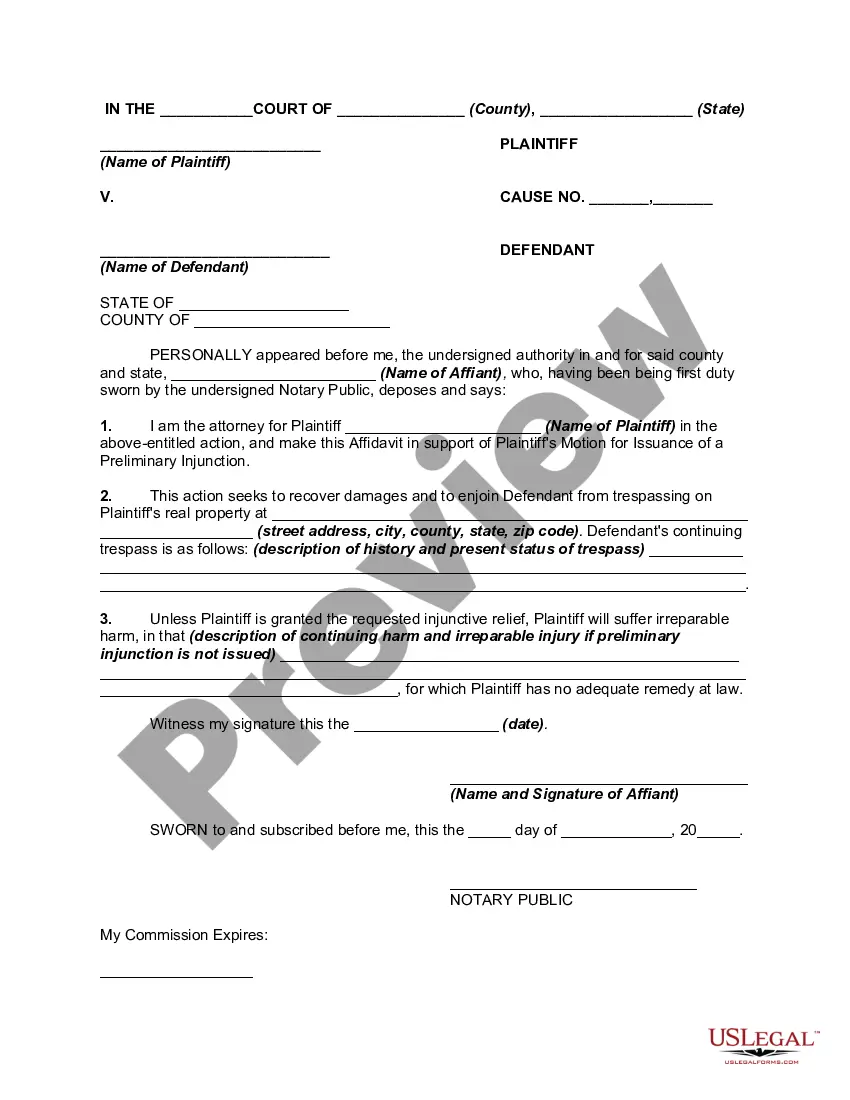
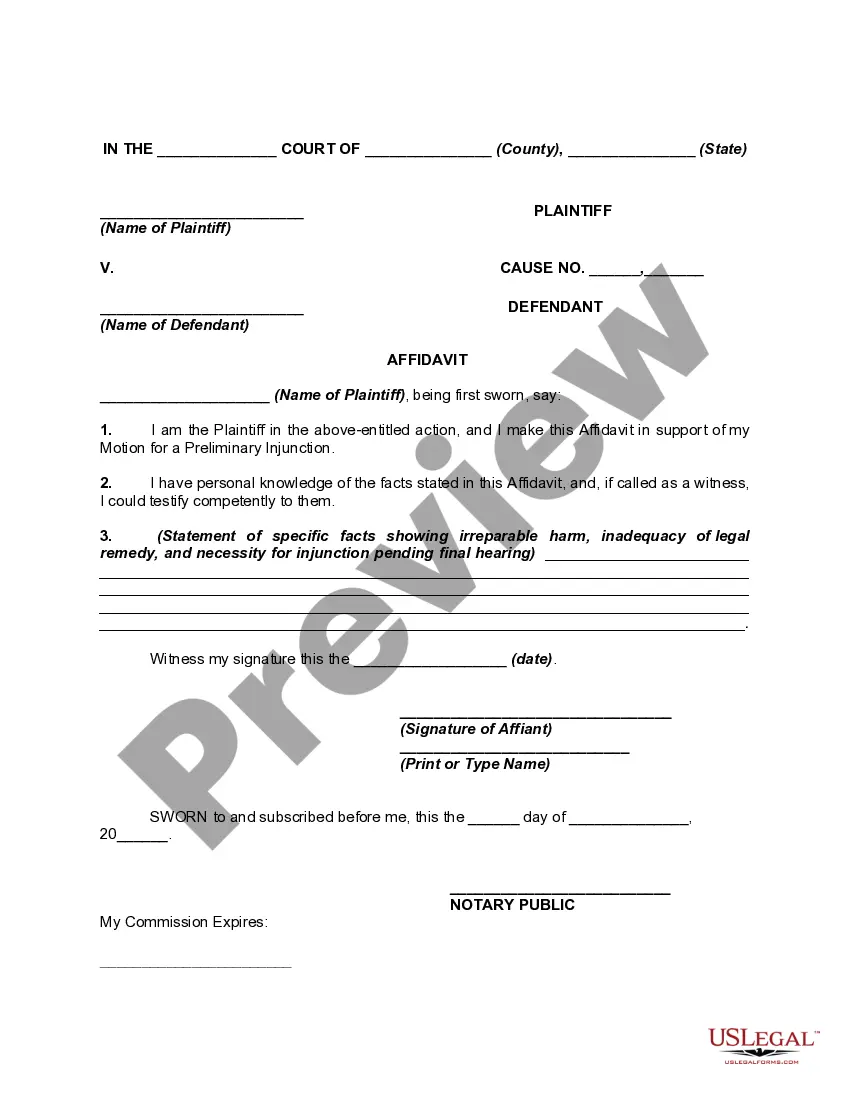
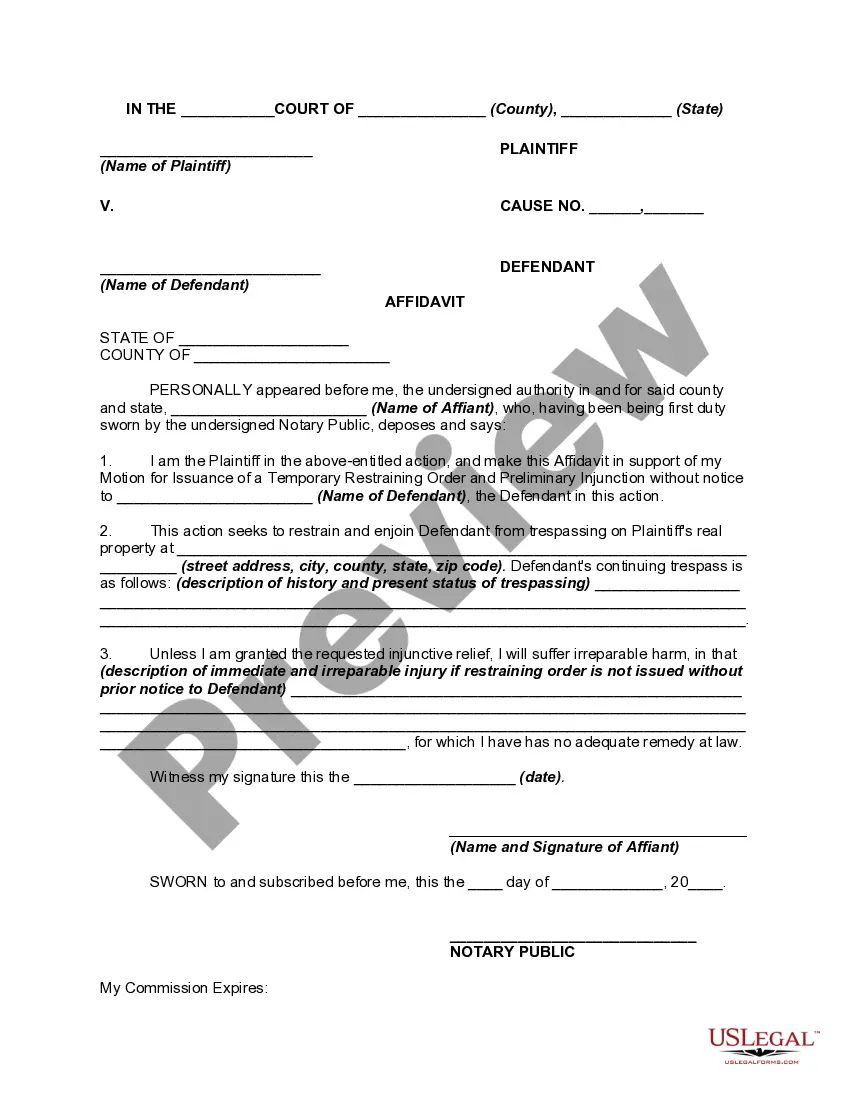
The Affidavit of Attorney Claiming Irreparable Harm in Support of Motion for Preliminary Injunction is a legal document that allows an attorney to assert that their client faces immediate and unrepairable harm without court intervention. This affidavit is crucial when seeking a preliminary injunction, as it helps demonstrate the necessity of urgent judicial action to avoid suffering damage that cannot be compensated by monetary means. Unlike other forms of injunction applications, this affidavit specifically articulates the ongoing harm and the lack of an adequate remedy at law.
Key parts of this document
- Name of the plaintiff and defendant.
- Cause number for the legal action.
- Description of the property and details of the trespass.
- Statement of irreparable harm and inadequate legal remedy.
- Signature of the affiant and notary public verification.

When this form is needed
This form is typically used in situations where a plaintiff is facing ongoing actions by a defendant that cause harm to their property or rights. Common scenarios include disputes over property access, environmental damage, or situations jeopardizing child welfare. The affidavit serves to justify the need for an immediate injunction to prevent further harm that cannot easily be reversed.
Who can use this document
This form is intended for:
- Attorneys representing plaintiffs in civil litigation.
- Individuals seeking legal protection from imminent harm.
- Parties involved in property disputes requiring immediate judicial action.
Completing this form step by step
- Identify and list the names of all parties involved as plaintiff and defendant.
- Specify the cause number of the legal action.
- Provide a clear description of the property involved and details regarding the trespass.
- Outline the continuing harm and articulate why the plaintiff lacks an adequate legal remedy.
- Sign the affidavit in the presence of a notary public and include the date.
Notarization requirements for this form
Yes, this form must be notarized to be legally valid. The signature of the affiant requires verification by a notary public to confirm its authenticity. US Legal Forms provides integrated online notarization, offering 24/7 secure video call options, ensuring your process is smooth and compliant without the need for travel.
Get your form ready online
Our built-in tools help you complete, sign, share, and store your documents in one place.
Make edits, fill in missing information, and update formatting in US Legal Forms—just like you would in MS Word.
Download a copy, print it, send it by email, or mail it via USPS—whatever works best for your next step.
Sign and collect signatures with our SignNow integration. Send to multiple recipients, set reminders, and more. Go Premium to unlock E-Sign.
If this form requires notarization, complete it online through a secure video call—no need to meet a notary in person or wait for an appointment.
We protect your documents and personal data by following strict security and privacy standards.

Make edits, fill in missing information, and update formatting in US Legal Forms—just like you would in MS Word.

Download a copy, print it, send it by email, or mail it via USPS—whatever works best for your next step.

Sign and collect signatures with our SignNow integration. Send to multiple recipients, set reminders, and more. Go Premium to unlock E-Sign.

If this form requires notarization, complete it online through a secure video call—no need to meet a notary in person or wait for an appointment.

We protect your documents and personal data by following strict security and privacy standards.
Avoid these common issues
- Failing to provide a detailed description of the trespass and harm.
- Not specifying the cause number or relevant parties.
- Omitting the affiant's signature or notary verification.
- Using vague language that does not convincingly demonstrate irreparable harm.
Why complete this form online
- Convenience of downloading and completing the form at your pace.
- Editable format allows for easy customization to meet specific requirements.
- Access to templates drafted by licensed attorneys, ensuring reliability.
- Immediate availability without the need for physical paperwork.
Looking for another form?






Form popularity
FAQ
Term Definition Preliminary Relief - relief granted early on as part of a larger action that follows it. Application in Divorce Preliminary relief often follows a preliminary injunction, which stops one party doing something harmful to another party.A restraining order may be a preliminary to an permanent injunction.
Injunctive relief, also known as an injunction, is a remedy which restrains a party from doing certain acts or requires a party to act in a certain way. It is generally only available when there is no other remedy at law and irreparable harm will result if the relief is not granted.
A preliminary injunction is an injunction that may be granted before or during trial, with the goal of preserving the status quo before final judgment.
Establishment of Prima Facie case. Balance of convenience in favour. Irreparable damages.
Definition: An injunction is a court order requiring a person to do or cease doing a specific action.Choosing whether to grant temporary injunctive relief is up to the discretion of the court. Permanent injunctions are issued as a final judgment in a case, where monetary damages will not suffice.
In determining whether to grant or deny a preliminary injunctive relief, the courts generally look to several of the factors including: (1) the plaintiff's likelihood of prevailing on the merits;(2) a showing of irreparable injury to plaintiff if relief is not granted; (3) the threatened injury to the movant is
The movant usually needs to prove that he or she will suffer irreparable harm if the preliminary injunction or temporary restraining order is not granted. Examples of Irreparable Harm: Injury to reputation or goodwill. Deprivation of constitutional rights, such as the right to free speech.
Preliminary injunction is an order granted at any stage of an action or proceeding prior to the judgment or final order, requiring a party or a court, agency or a person to perform to refrain from performing a particular act or acts.
Injunctive relief, also known as an injunction, is a remedy which restrains a party from doing certain acts or requires a party to act in a certain way.Due to its coercive force, a grant of injunctive relief is subject to immediate review by an appellate court.