Arizona Revocation of Transfer on Death Deed or TOD - Beneficiary Deed for Individual to Two Individuals
What is this form?
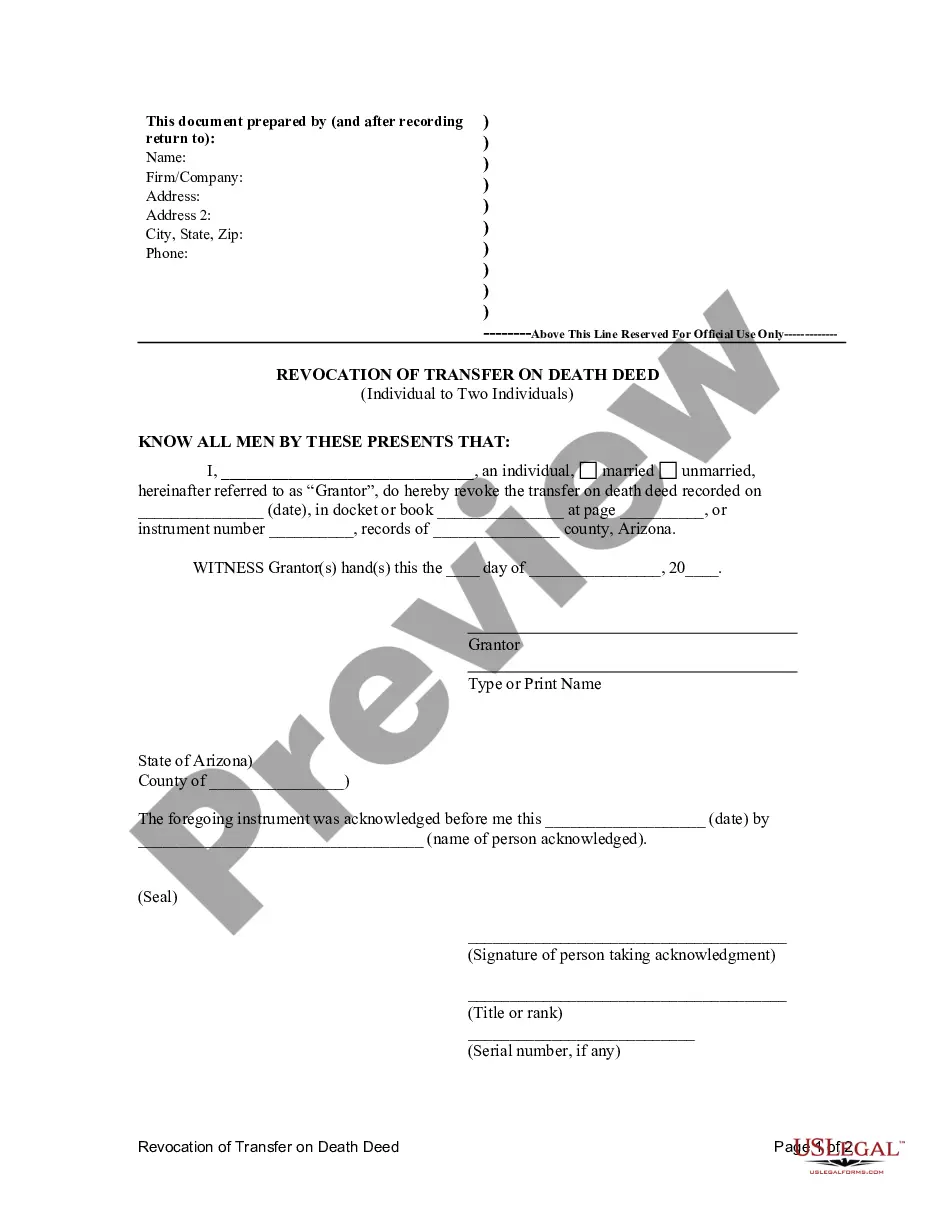
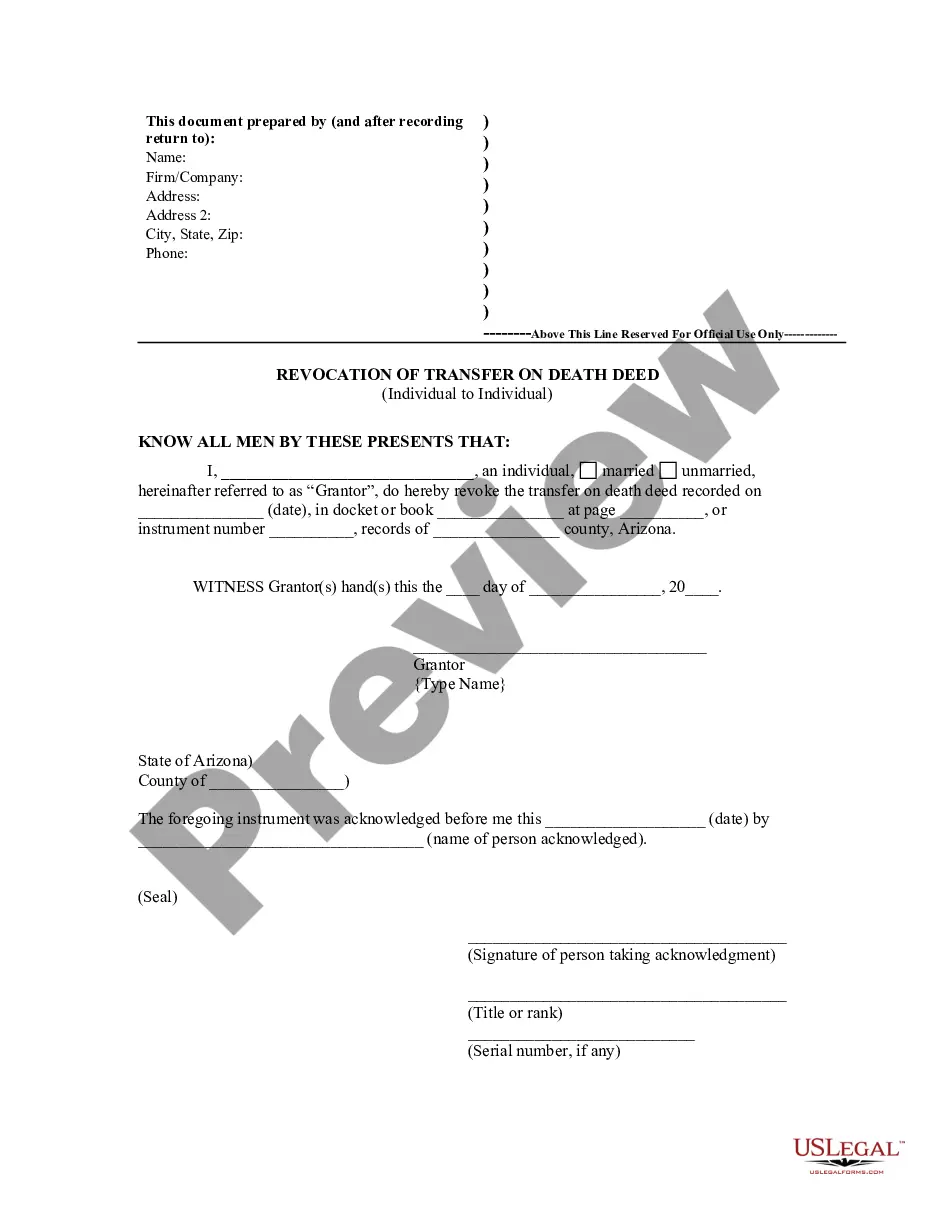
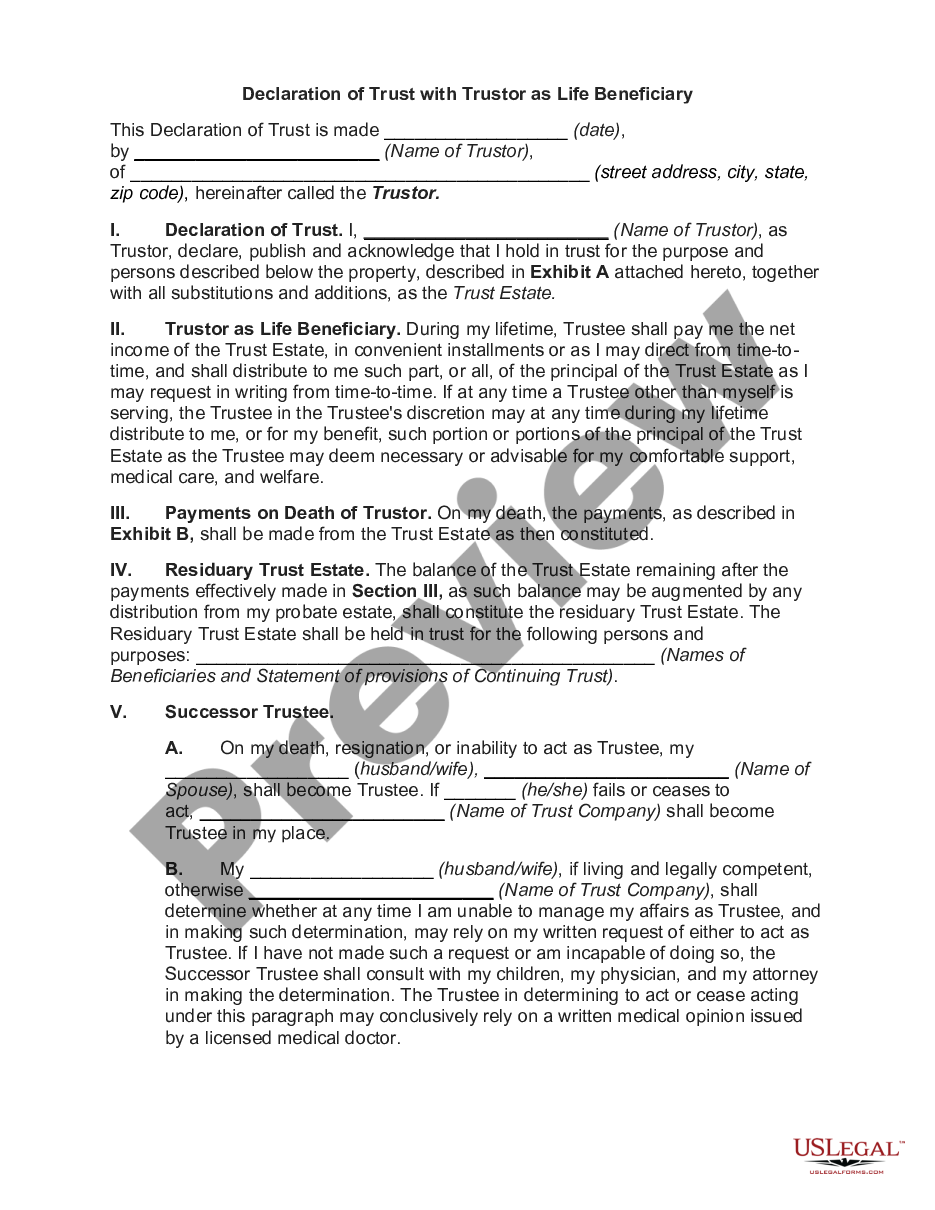
The Revocation of Transfer on Death Deed, commonly known as a TOD Beneficiary Deed, is a legal document used to cancel a previously executed transfer on death deed. This form is specifically designed for an individual who wishes to revoke their intent to transfer property to multiple beneficiaries upon their death. Unlike a will, which can be overridden by later modifications, a properly recorded TOD deed may not be revoked through a will, making this revocation form essential for maintaining legal clarity regarding property distribution.
Key parts of this document
- Identification of the grantor (the individual revoking the deed).
- Date of execution, documenting when the revocation is signed.
- Signature lines for the grantor, providing legal authenticity.
- Recording requirements for submission to the county recorder's office.




When this form is needed
This form should be used when an individual wants to undo a previous transfer on death deed that designates two individuals as beneficiaries of their property. Situations may include a change in relationships, such as divorce or other personal circumstances that necessitate altering beneficiary designations. It is critical to execute this form before the death of the property owner to ensure its legality.
Who should use this form
- Individuals who have previously executed a transfer on death deed.
- Property owners looking to change the designated beneficiaries of their asset.
- Anyone needing to clarify or update their property transfer plans.
Completing this form step by step
- Identify the grantor by entering their full name and details.
- Fill in the date of revocation to establish a clear timeline.
- Ensure the grantor signs the form in the presence of a witness, if required.
- Submit the completed form to the county recorder's office where the property is located.
Does this document require notarization?
To make this form legally binding, it must be notarized. Our online notarization service, powered by Notarize, lets you verify and sign documents remotely through an encrypted video session.
Get your form ready online
Our built-in tools help you complete, sign, share, and store your documents in one place.
Make edits, fill in missing information, and update formatting in US Legal Forms—just like you would in MS Word.
Download a copy, print it, send it by email, or mail it via USPS—whatever works best for your next step.
Sign and collect signatures with our SignNow integration. Send to multiple recipients, set reminders, and more. Go Premium to unlock E-Sign.
If this form requires notarization, complete it online through a secure video call—no need to meet a notary in person or wait for an appointment.
We protect your documents and personal data by following strict security and privacy standards.

Make edits, fill in missing information, and update formatting in US Legal Forms—just like you would in MS Word.

Download a copy, print it, send it by email, or mail it via USPS—whatever works best for your next step.

Sign and collect signatures with our SignNow integration. Send to multiple recipients, set reminders, and more. Go Premium to unlock E-Sign.

If this form requires notarization, complete it online through a secure video call—no need to meet a notary in person or wait for an appointment.

We protect your documents and personal data by following strict security and privacy standards.
Mistakes to watch out for
- Failing to record the revocation with the county recorder, rendering it ineffective.
- Not signing the document in front of a witness or not having the necessary notarization where required.
- Assuming the revocation is valid without following the specific legal procedures dictated by state law.
Benefits of using this form online
- Convenience of downloading and completing the form from home.
- Editability allows users to tailor the document to their specific needs.
- Access to reliable, legally sound templates drafted by licensed attorneys.
Looking for another form?

Form popularity
FAQ
Yes, you can contest a Transfer On Death Deed in Arizona, especially if you believe it was created under undue influence, fraud, or if you were not aware of its existence. The Arizona Revocation of Transfer on Death Deed or TOD - Beneficiary Deed for Individual to Two Individuals allows you the right to challenge the deed in court. It is important to gather all relevant information, documents, and evidence to support your claim. Consulting with a legal expert can help guide you through this complex process and enhance your chances of a successful contest.
To revoke a beneficiary deed in Arizona, you must create a formal revocation document. This document should include the property details and indicate your intent to revoke the existing beneficiary deed. After signing the revocation in front of a notary, file it with the county recorder's office. This action will legally cancel your previous beneficiary deed, maintaining compliance with the Arizona Revocation of Transfer on Death Deed or TOD - Beneficiary Deed for Individual to Two Individuals.
To remove someone from a deed in Arizona, you typically need to prepare a new deed that specifically revokes the previous one. The new deed should detail the property description and the changes in ownership. After signing in the presence of a notary, file the updated deed with the county recorder. This process helps ensure that the changes are legally recognized, particularly in relation to the Arizona Revocation of Transfer on Death Deed or TOD - Beneficiary Deed for Individual to Two Individuals.
To record a beneficiary deed in Arizona, start by completing the beneficiary deed form. Ensure that it includes specific details like the property description and the names of both the original owner and the beneficiaries. Next, you will need to sign the document in front of a notary. Finally, file the deed with the county recorder's office where the property is located. Doing this properly secures the deed under the Arizona Revocation of Transfer on Death Deed or TOD - Beneficiary Deed for Individual to Two Individuals.
Yes, a beneficiary deed in Arizona is designed to avoid probate, allowing the property to transfer directly to the named beneficiaries upon the owner's death. This process streamlines property transfer and minimizes administrative burdens. Utilizing the Arizona Revocation of Transfer on Death Deed or TOD - Beneficiary Deed for Individual to Two Individuals effectively enables property owners to plan their estates with efficiency and clarity.
After the death of the property owner, if a valid beneficiary deed exists, the named beneficiaries need to file it with the county recorder's office along with a death certificate. This action formalizes the transfer of ownership and ensures that the property bypasses probate. Proper execution of the Arizona Revocation of Transfer on Death Deed or TOD - Beneficiary Deed for Individual to Two Individuals simplifies this process.
Yes, a beneficiary deed can be contested under certain circumstances, especially if there are claims of undue influence, fraud, or lack of capacity at the time the deed was created. In cases of dispute, consulting an expert in Arizona estate law can provide guidance. Understanding the nuances of the Arizona Revocation of Transfer on Death Deed or TOD - Beneficiary Deed for Individual to Two Individuals will help in navigating these challenges effectively.
To record a beneficiary deed in Arizona, prepare the deed according to state requirements, ensuring it includes specific details such as property descriptions and beneficiary names. Next, take the completed document to the county recorder’s office for filing. Recording the Arizona Revocation of Transfer on Death Deed or TOD - Beneficiary Deed for Individual to Two Individuals is crucial to ensuring the deed is legally recognized.
Revoking a beneficiary deed in Arizona involves preparing a formal revocation document that clearly states your intention to cancel the deed. This document must be signed and recorded with the county recorder's office where the original deed was filed. Ensure that the revocation is filed before the death of the property owner to prevent complications with the Arizona Revocation of Transfer on Death Deed or TOD - Beneficiary Deed for Individual to Two Individuals.
To transfer a property deed from a deceased relative in Arizona, you first need to determine whether there is a valid Arizona Revocation of Transfer on Death Deed or TOD - Beneficiary Deed for Individual to Two Individuals. If such a deed exists and designates you as a beneficiary, you will need to file the appropriate paperwork with the county recorder's office. Additionally, you may require a death certificate and any necessary identification to complete the transfer process.