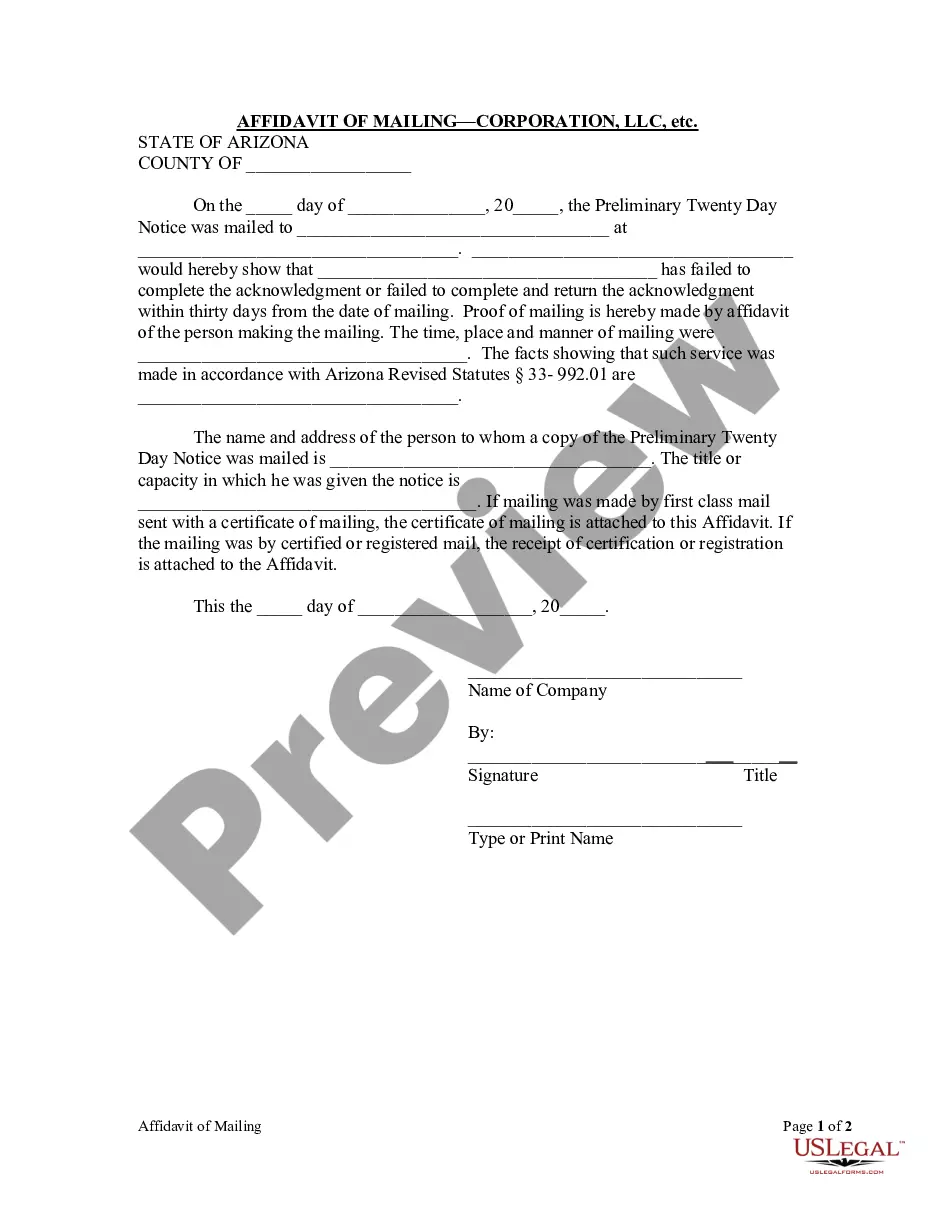
Lease of Space or Booth to Sell and Concessions - Vending, Farmers Markets or Flea Markets
What is this form?
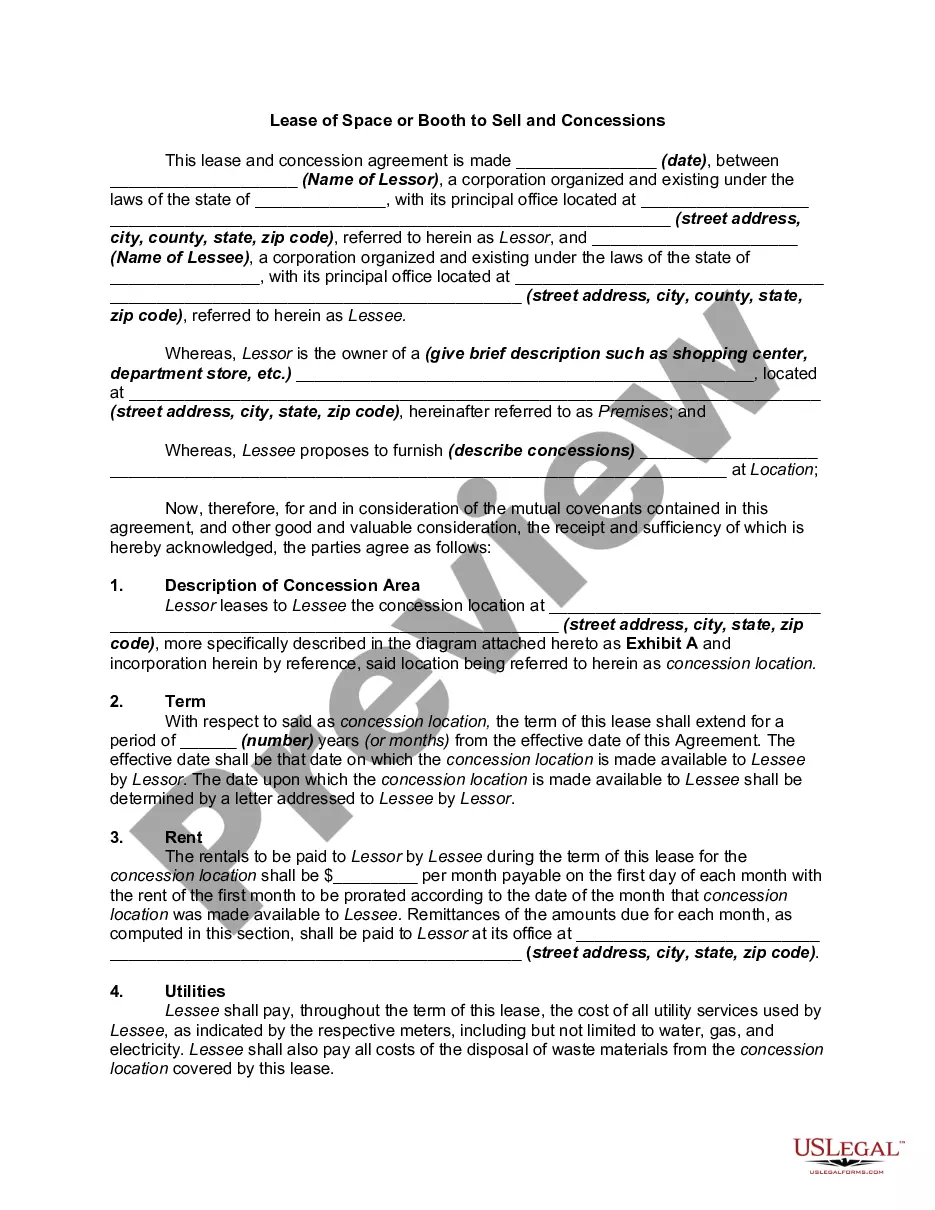
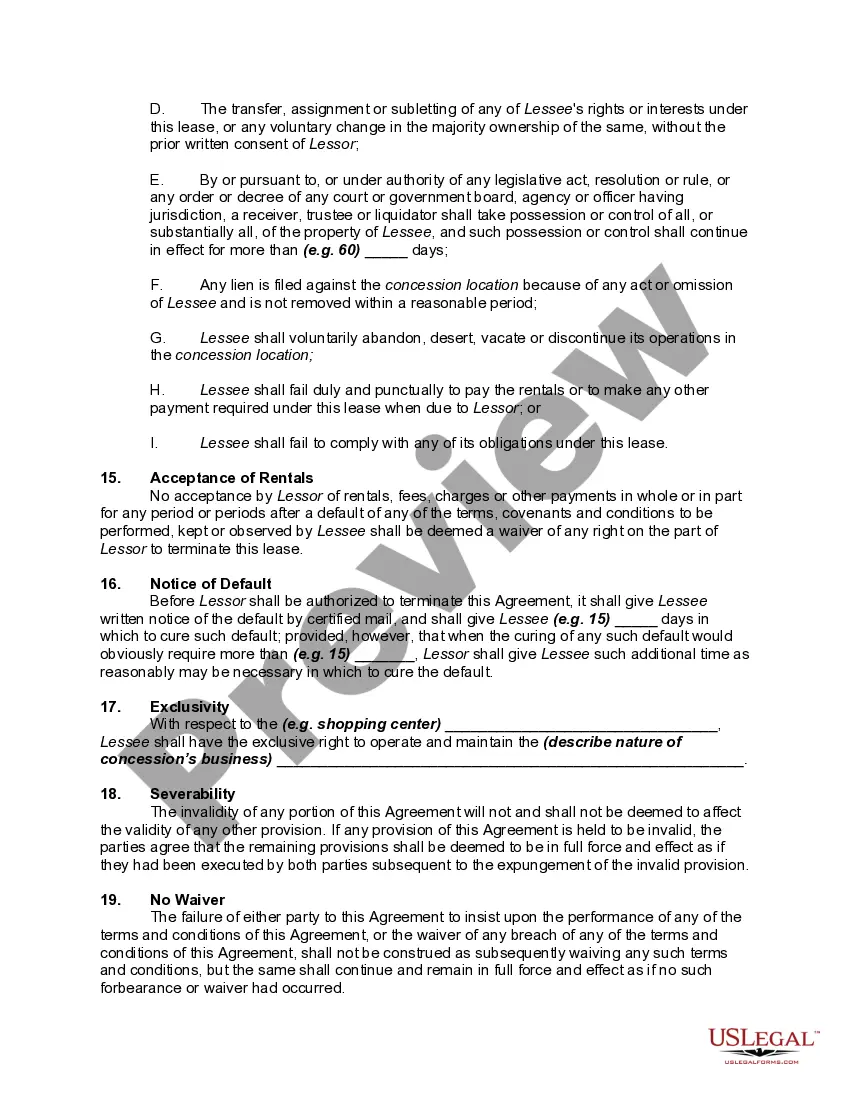
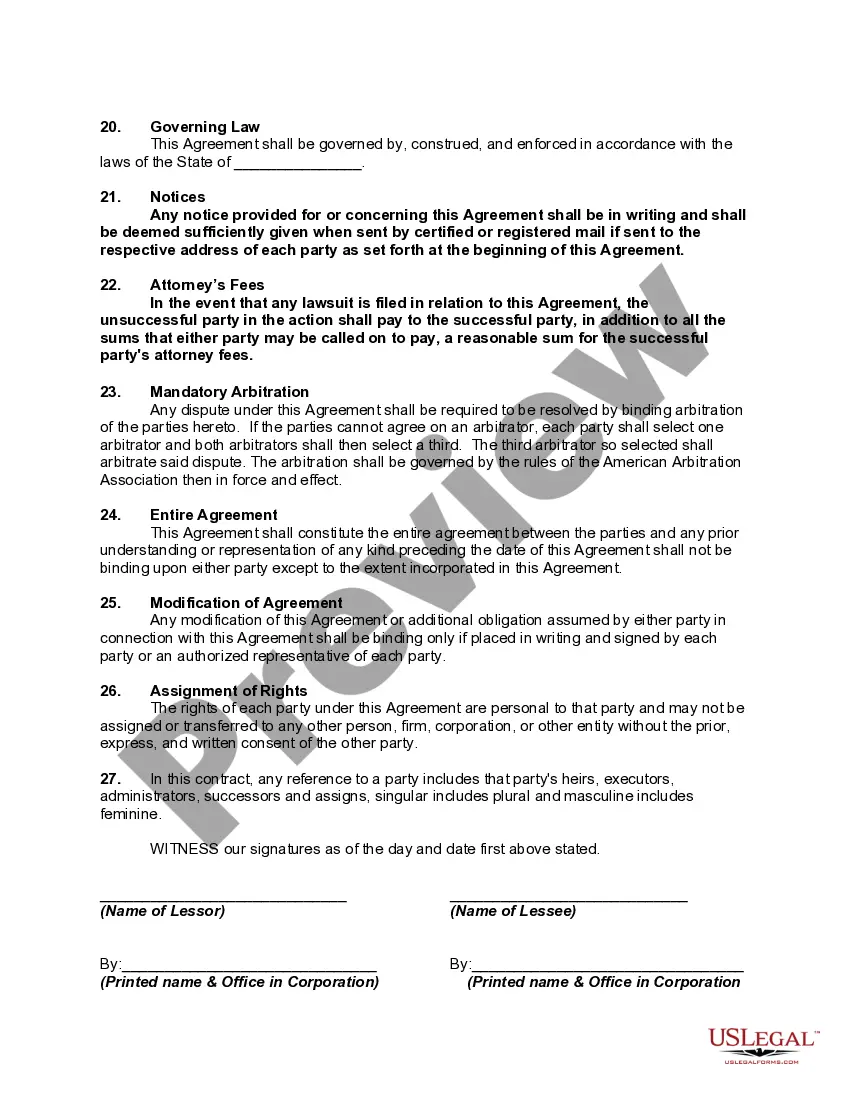
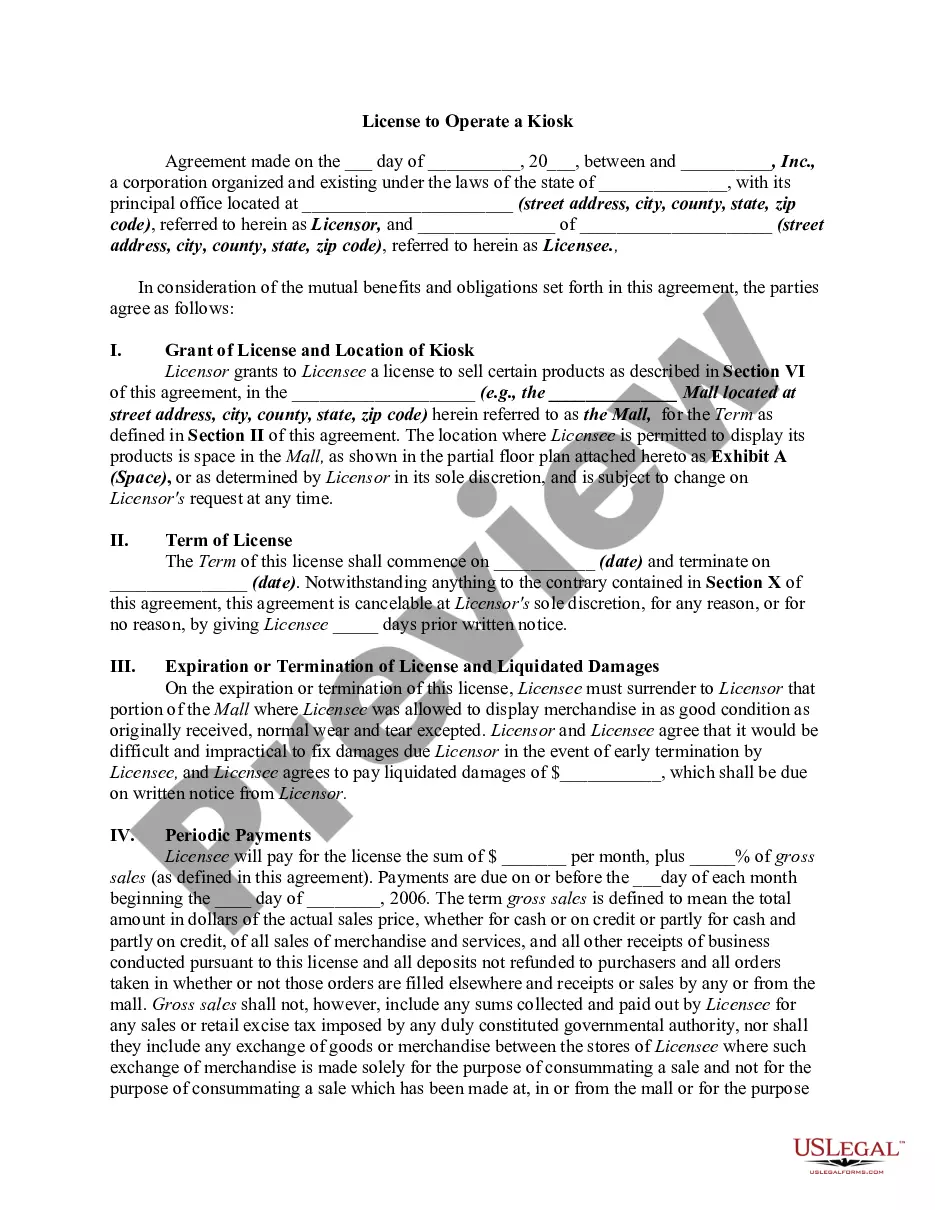
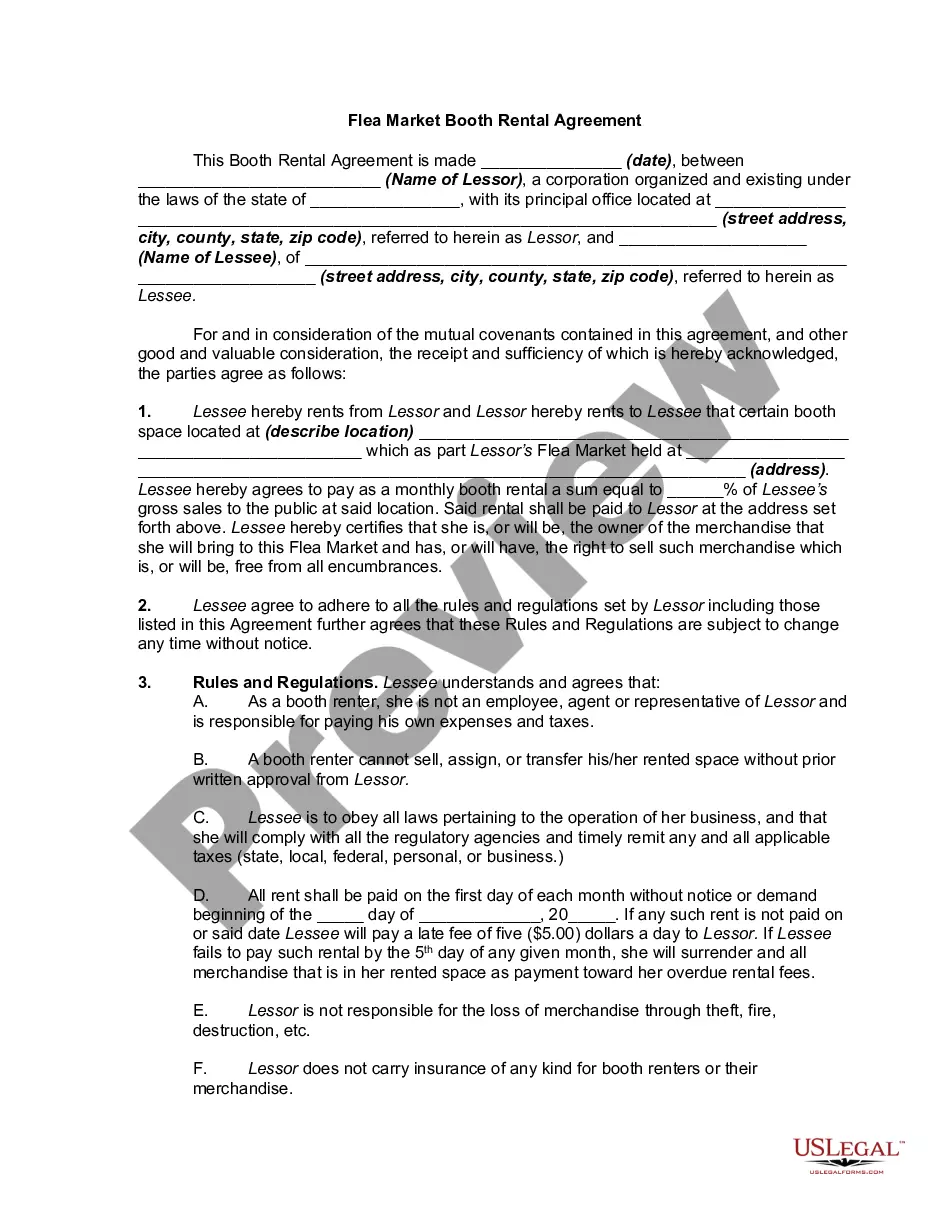
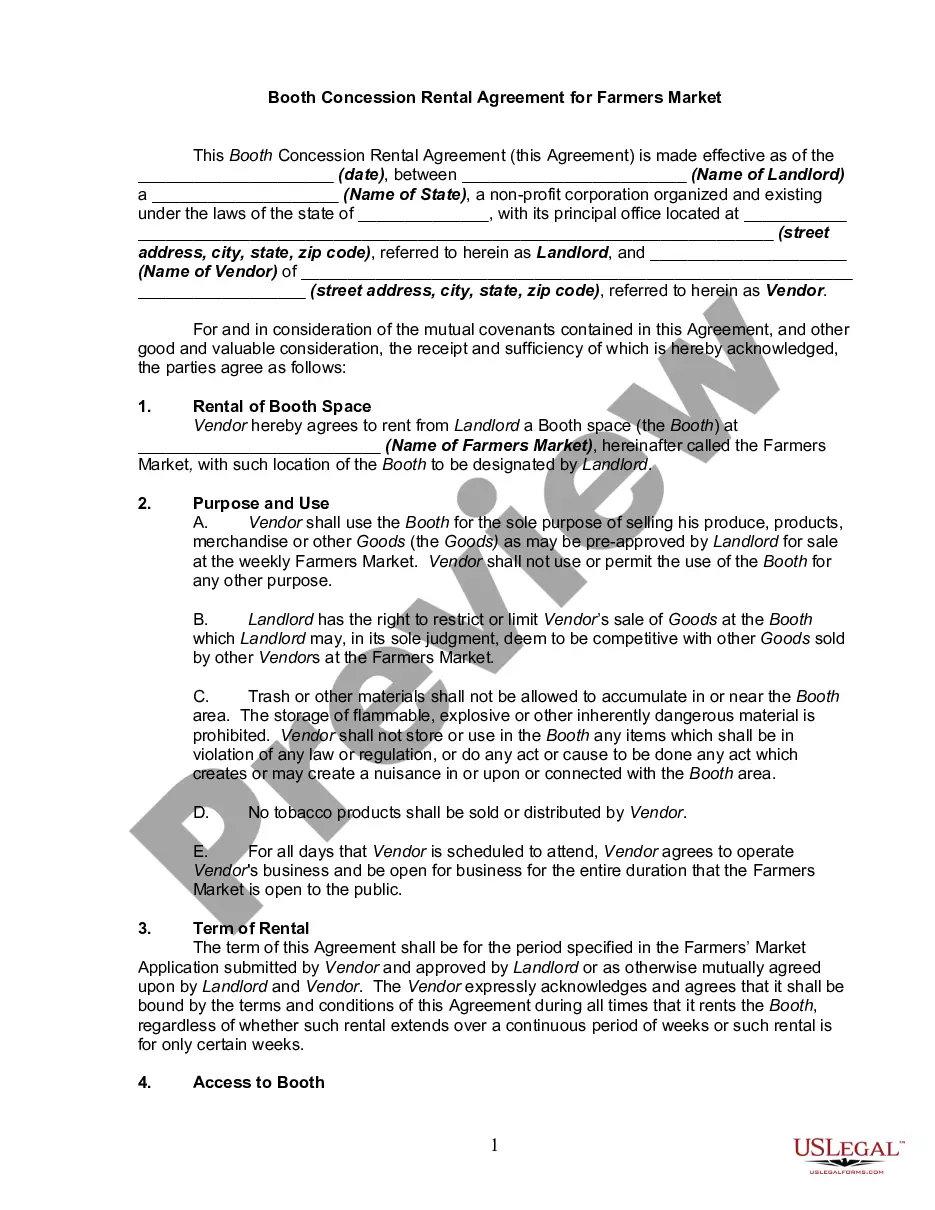
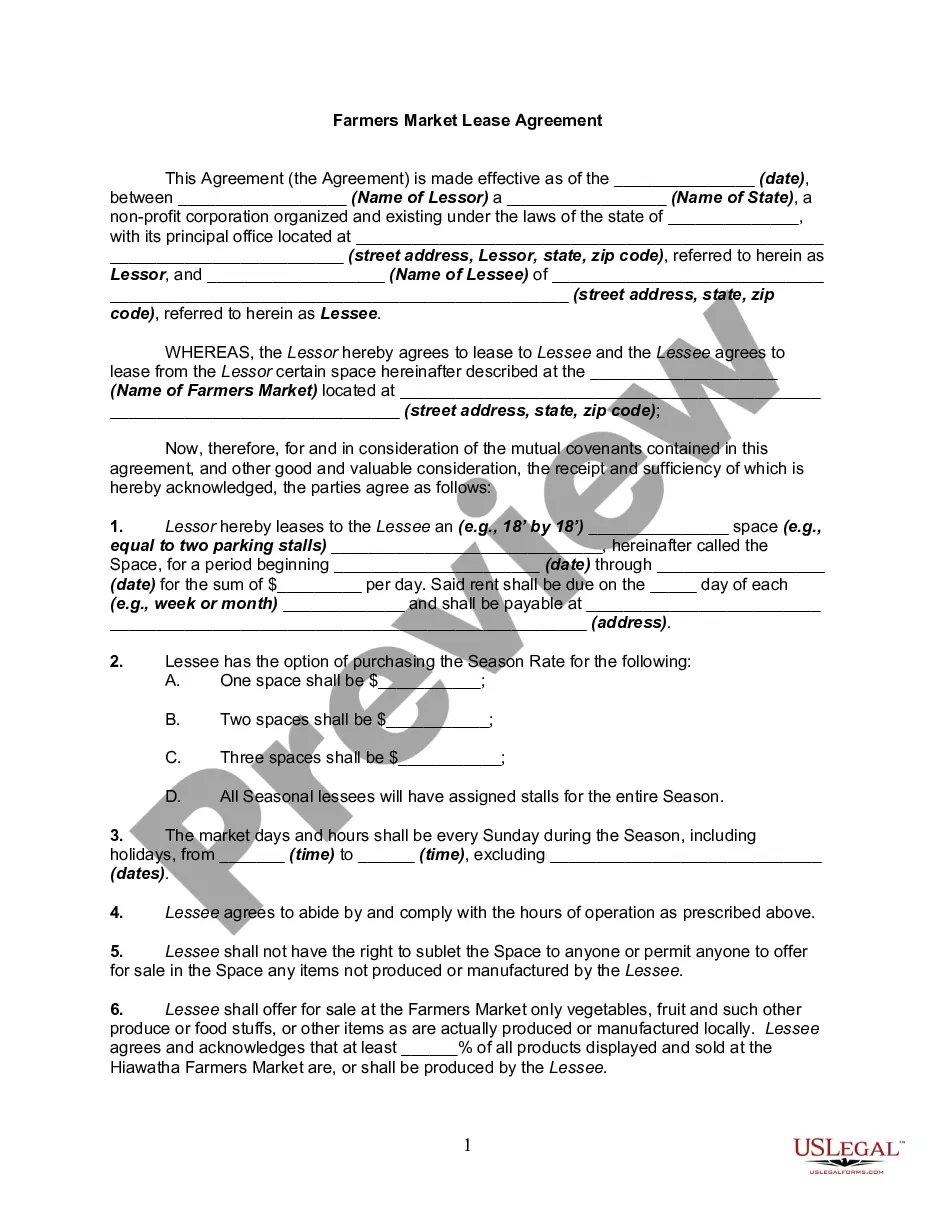
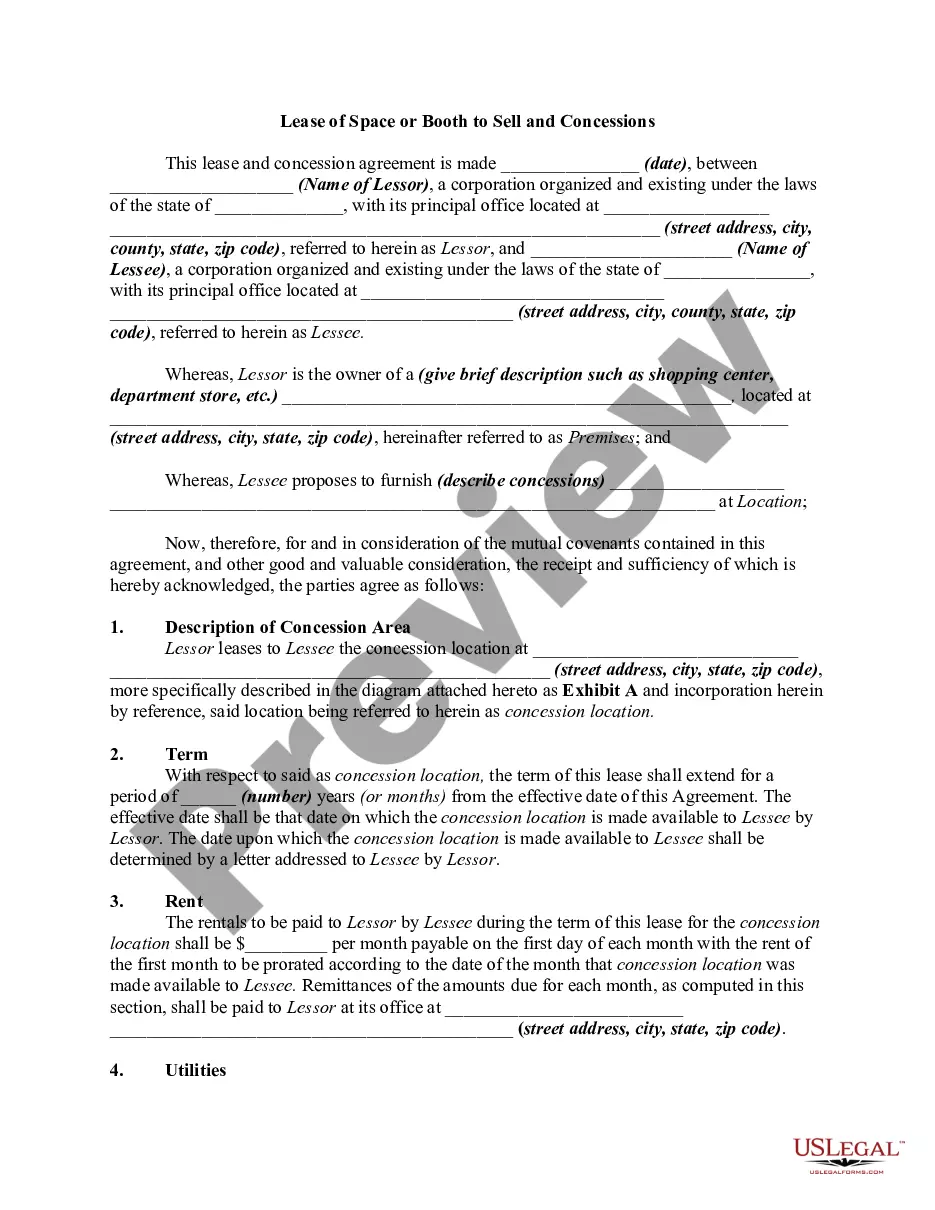
This Lease of Space or Booth to Sell and Concessions form is a legal agreement allowing a lessee to rent a designated area for selling concessions, such as food and drinks, at a location not owned by them. Unlike traditional rental agreements, this form specifically caters to short-term leasing scenarios often found at farmers' markets, flea markets, or similar events. It outlines the responsibilities and rights of both the lessor and lessee, ensuring clarity in the operations within the concession space.
Key parts of this document
- Description of concession area and term duration.
- Rent amount, due dates, and payment instructions.
- Specific rights for utility payments and waste disposal.
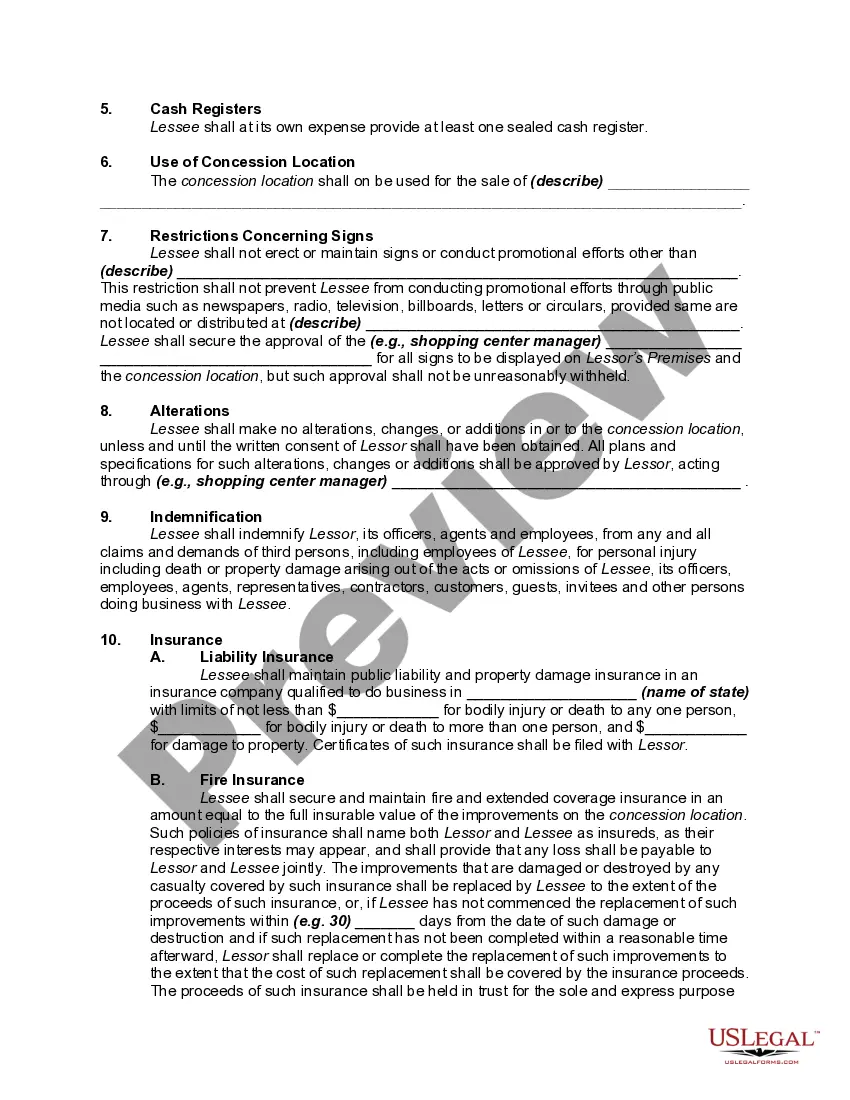
- Insurance requirements for liability and fire coverage.
- Conditions related to signage and promotional activities.
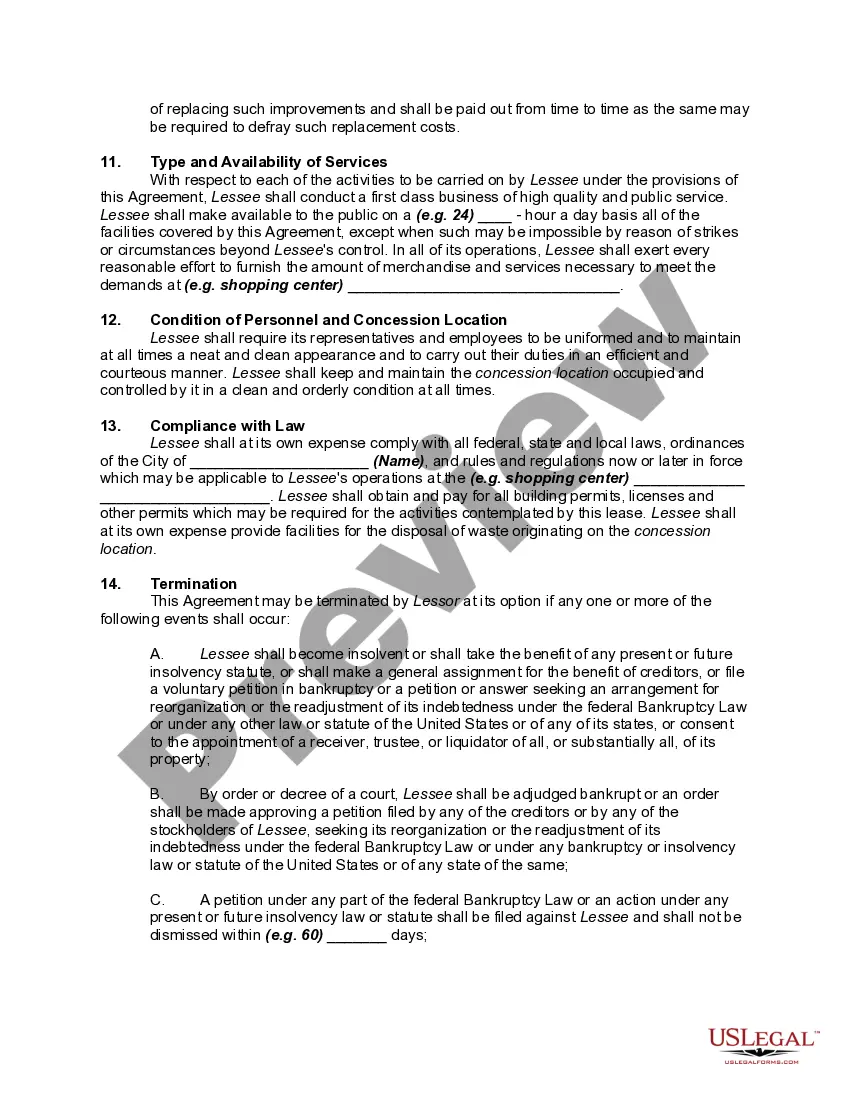
- Termination clauses and compliance with local laws.

When to use this document
This form should be used when you plan to engage in the sale of goods at temporary venues, such as farmers' markets or flea markets. If you are a vendor looking to set up a booth to sell food or other concessions in a space operated by another party, this lease agreement is essential for outlining your rights and obligations. Using this form ensures legal protection for both the lessor and lessee during the rental period.
Who this form is for
This form is intended for:
- Individuals or businesses seeking to lease a space for concession sales.
- Property owners or managers offering space for temporary rentals.
- Vendors at events looking for a clear agreement on terms and conditions.
- Any party involved in a transaction that includes sales of food and drinks at a designated space.
Instructions for completing this form
- Identify and fill in the names of both the lessor and lessee along with their addresses.
- Specify the description of the concession area and the effective date of the agreement.
- Enter the agreed rental amount and payment schedule.
- Detail the types of concessions to be sold and any restrictions on signage.
- Provide information on the necessary insurance coverage required.
Notarization guidance
This form does not typically require notarization to be legally valid. However, some jurisdictions or document types may still require it. US Legal Forms provides secure online notarization powered by Notarize, available 24/7 for added convenience.
Get your form ready online
Our built-in tools help you complete, sign, share, and store your documents in one place.
Make edits, fill in missing information, and update formatting in US Legal Forms—just like you would in MS Word.
Download a copy, print it, send it by email, or mail it via USPS—whatever works best for your next step.
Sign and collect signatures with our SignNow integration. Send to multiple recipients, set reminders, and more. Go Premium to unlock E-Sign.
If this form requires notarization, complete it online through a secure video call—no need to meet a notary in person or wait for an appointment.
We protect your documents and personal data by following strict security and privacy standards.

Make edits, fill in missing information, and update formatting in US Legal Forms—just like you would in MS Word.

Download a copy, print it, send it by email, or mail it via USPS—whatever works best for your next step.

Sign and collect signatures with our SignNow integration. Send to multiple recipients, set reminders, and more. Go Premium to unlock E-Sign.

If this form requires notarization, complete it online through a secure video call—no need to meet a notary in person or wait for an appointment.

We protect your documents and personal data by following strict security and privacy standards.
Typical mistakes to avoid
- Failing to specify the rental amount clearly, leading to confusion over payments.
- Not including all parties' legal names and contact information.
- Omitting necessary insurance details required by the lessor.
- Neglecting to outline specific use restrictions for the concession area.
- Ignoring state and local regulations relevant to the concession business.
Benefits of completing this form online
- Convenient access to a legal form that adapts to various state requirements.
- Editable templates allow customization to suit specific circumstances.
- Reliable legal framework ensures both parties understand their rights and obligations.
- Instant download enables immediate use without needing to visit a lawyer.
Looking for another form?

Form popularity
FAQ
A booth costs between $20 and $30 for the day. Be sure to factor that into your overhead, and make sure you feel you have enough items to recoup those costs so you'll make a profit. You can also always keep an eye online for a free community garage sale days if you have a place to store your stuff until then.
Traditional Farming and Produce Sales. The fact that farming would come into play at a farmers market is no surprise. Beekeeping and Honey Sales. Honey is money when it comes to farmers markets. Selling Jams and Jellies.
Make sure the merchandise you want to sell is permitted. Make sure the flea market isn't already saturated with the type of merchandise you want to sell. Make note of pricing on items similar to yours. Find out when each flea market is open. Learn how booth space reserved and how much it costs.
Be Out of Season. Wait, what? Pile It High and Kiss It Goodbye. This old saying is a farmer favorite because it's accurate. Have Visible Signs. Use Tablecloths and Tent Canvases. Be Clean and Organized. Stand Up and Greet Customers.
Set Up In a High Traffic Area. Place Popular Products Front and Center. Utilize Cases to Display and Organize Items. Keep Fragile Items Toward the Back. Consider Using Racks for Clothing. Create Clear Signage. Keep Your Table Clean and Covered. Make Sure Products Are Clean.
First make sure you contact your local tourism bureau or farmer's market coordinator. You will definitely need a table. Some farmer's markets provide an overhead canopy; others require you bring your own. My husband had a sign made online.
So just because you have access to a farmers market doesn't mean it's the best thing for your business. A farmers market has to be a viable part of your business model. If you're investing five to eight hours every weekend to sell food, it should sell. If it doesn't sell, that's not viable.
Determine What You're Going to Sell. Plan Your Stall and Make a Startup Budget. Secure All Necessary Permits and Licenses. Confirm That You Meet Target Markets' Selection Criteria. Get Your Spot at the Market.
Because farmers' markets keep money local, and because vendors can retain 100 percent of their profits, a local economic impact can be quite robust.