HIPAA Business Associates Agreement
Understanding this form
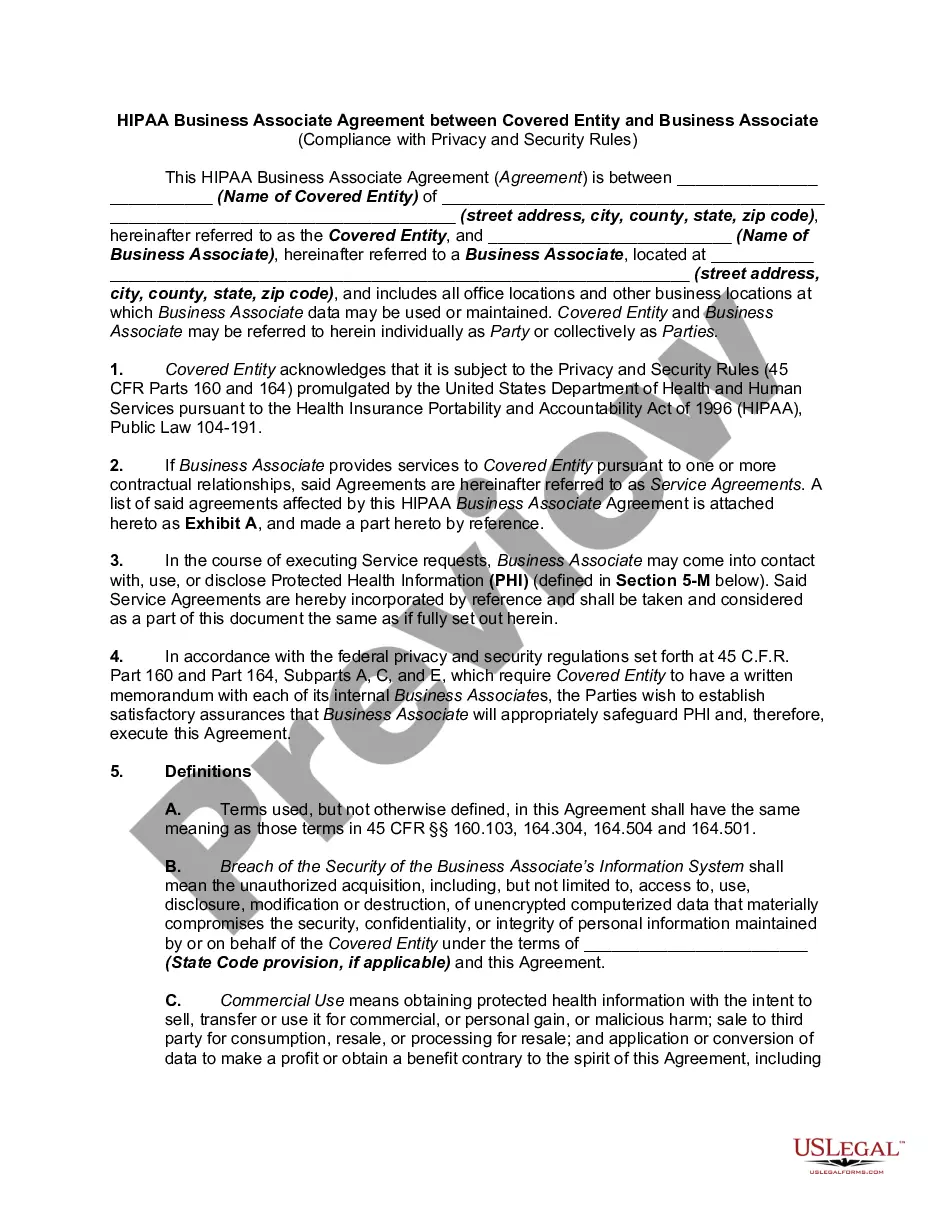
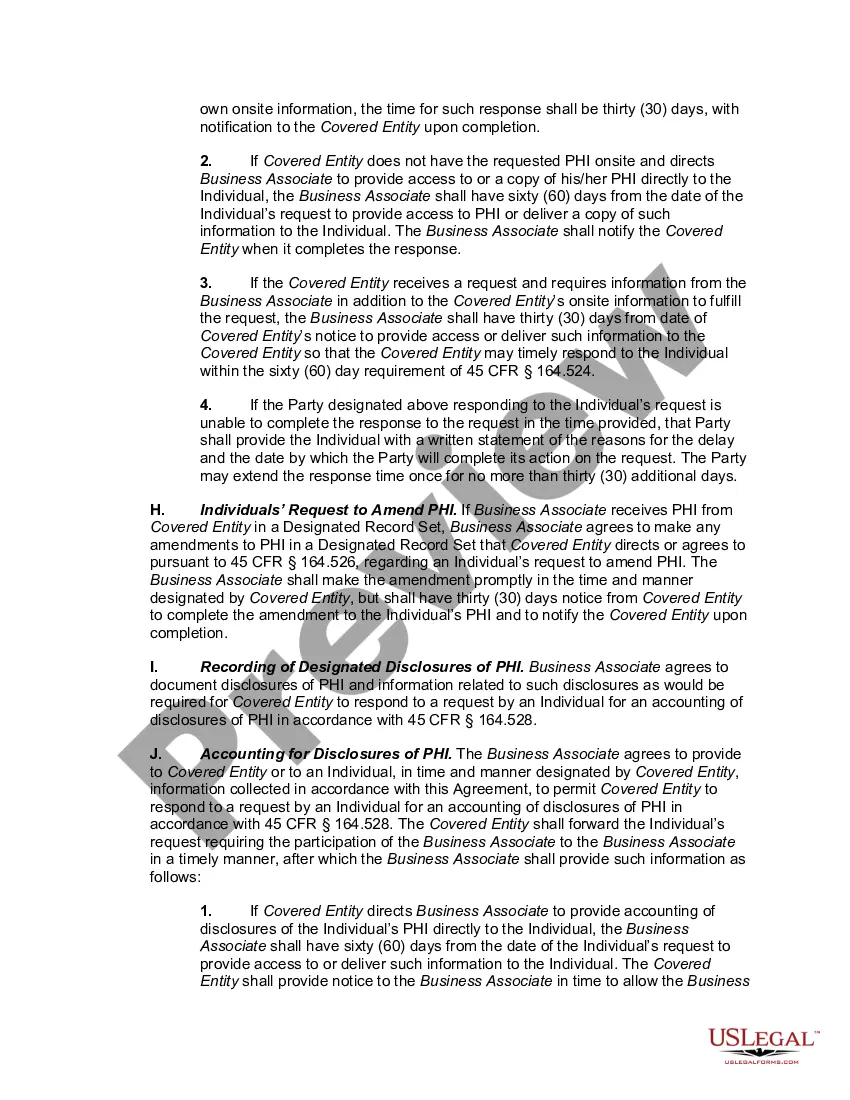
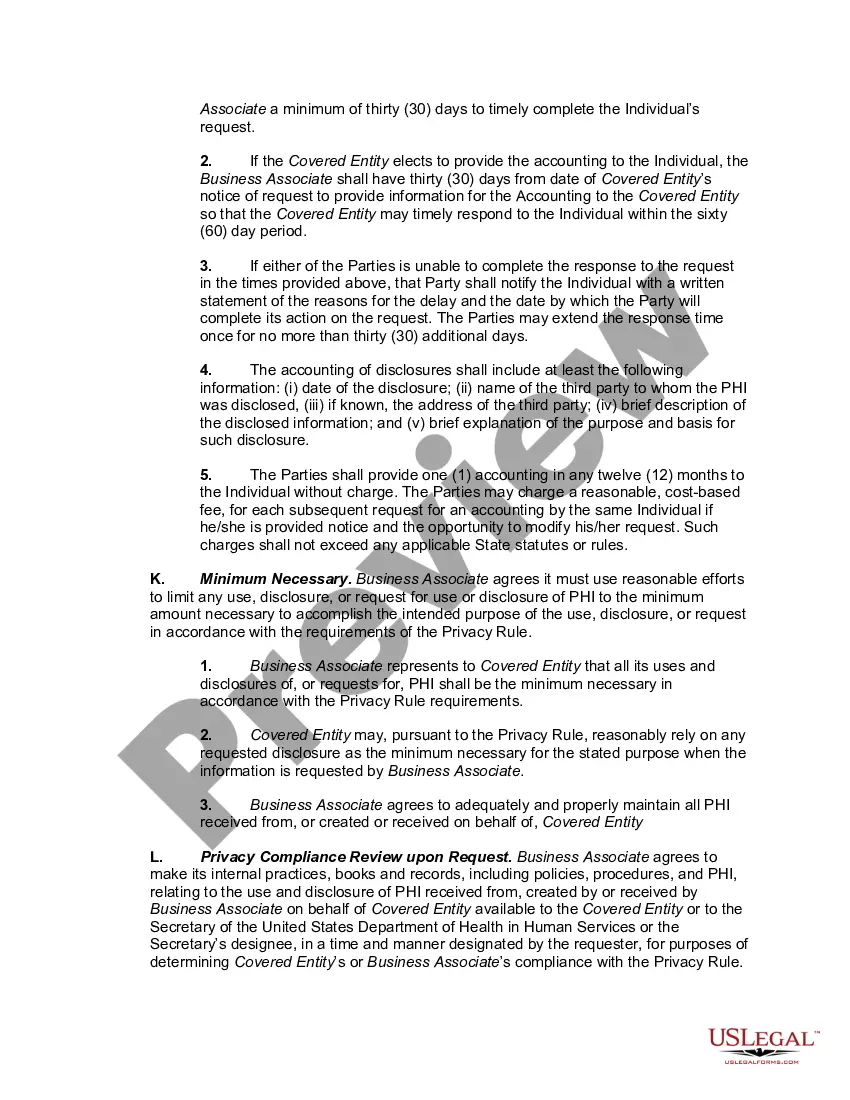
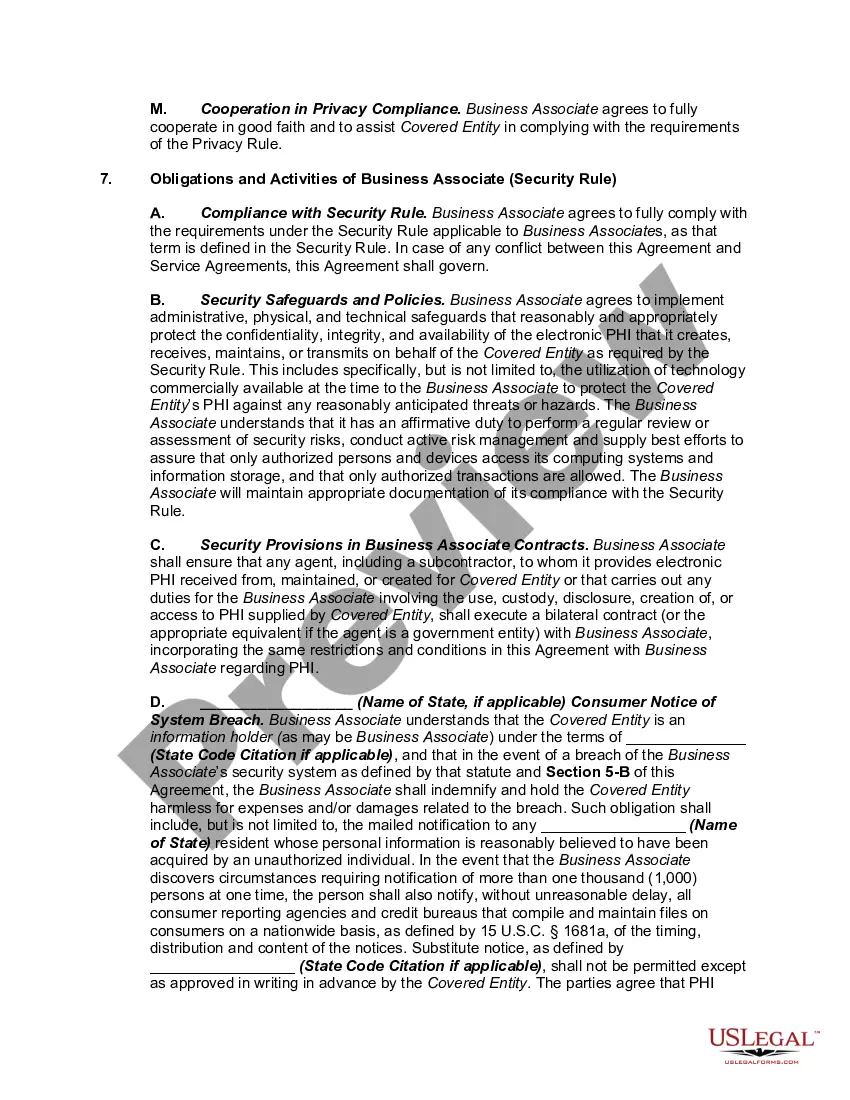
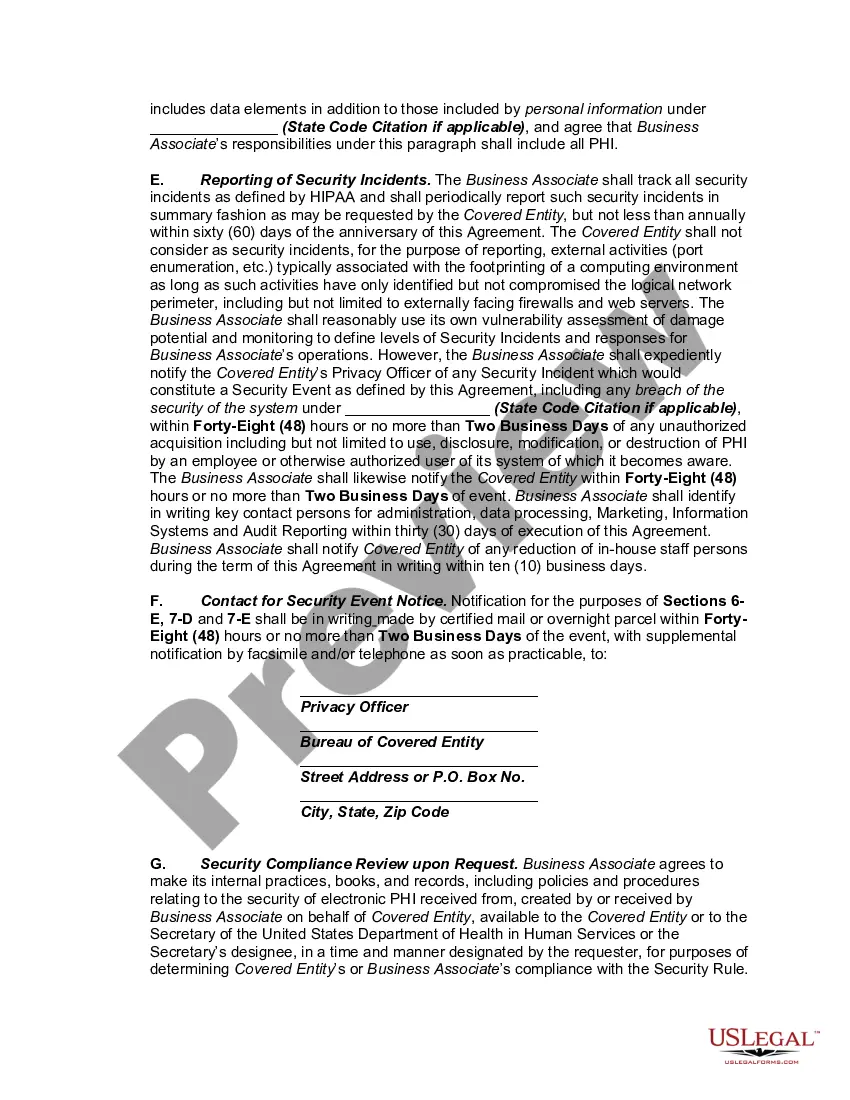
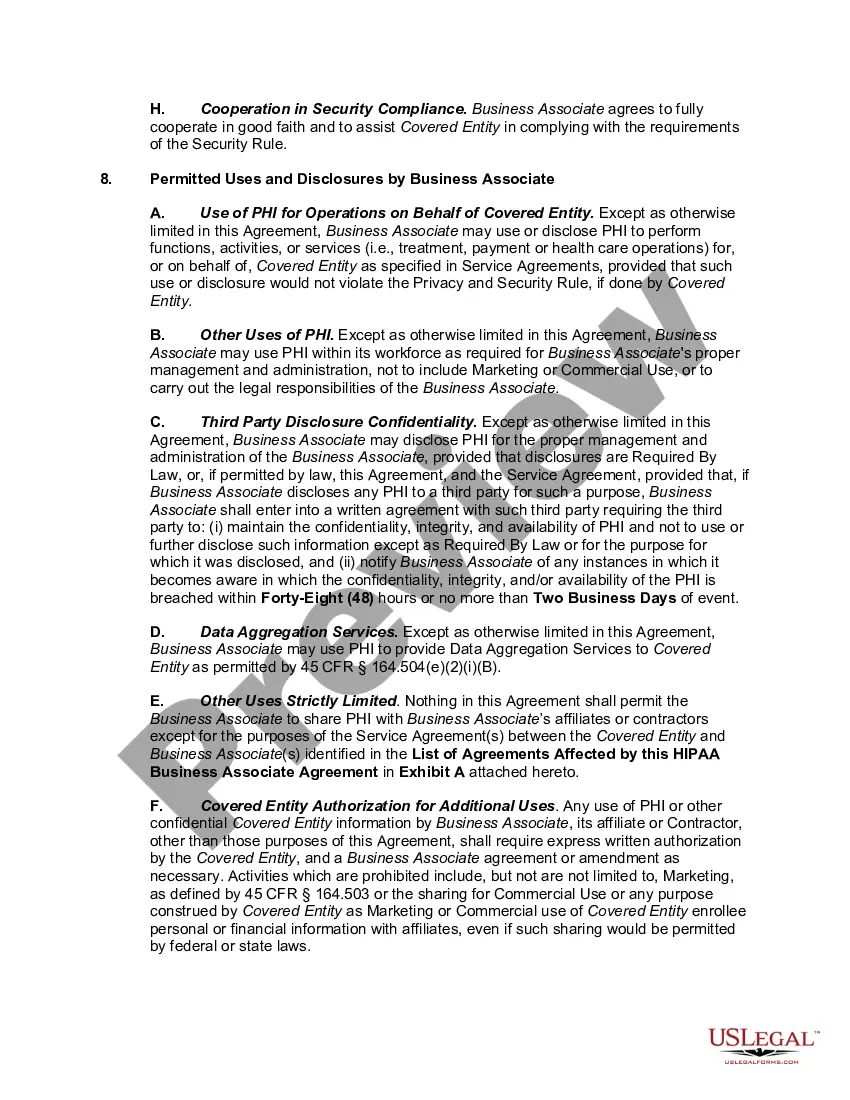
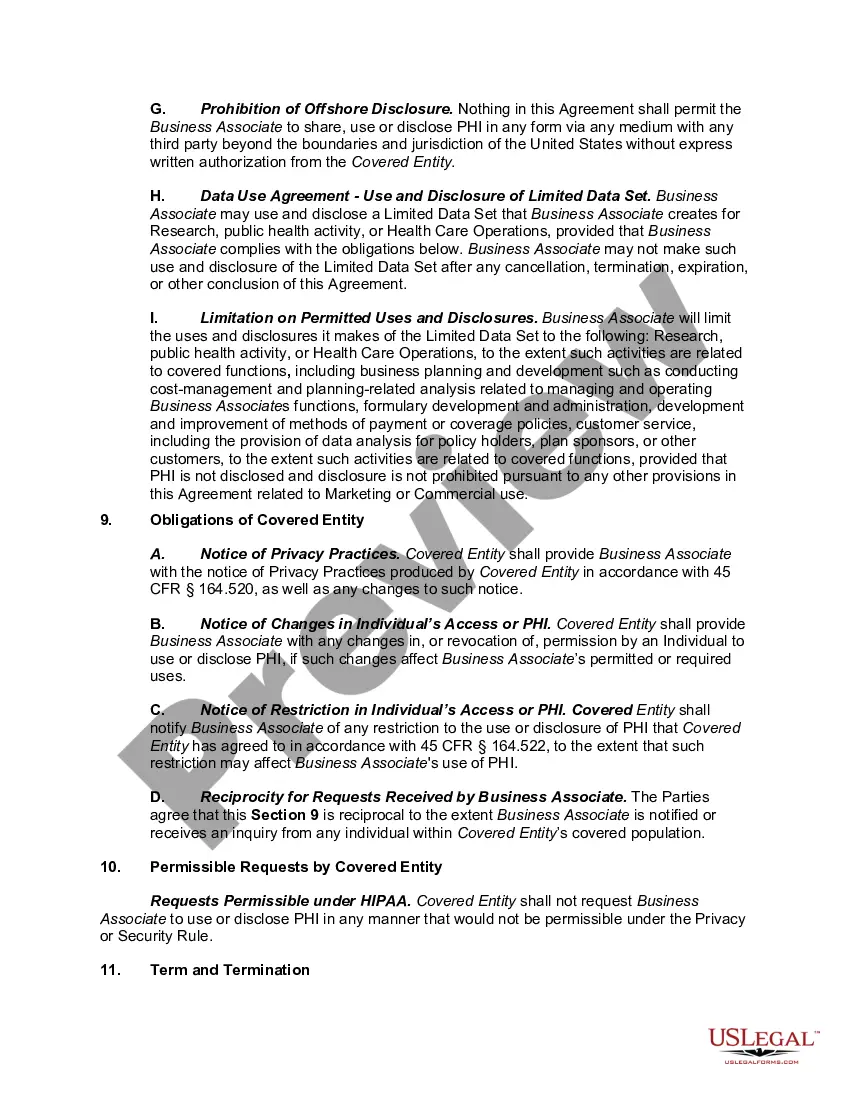
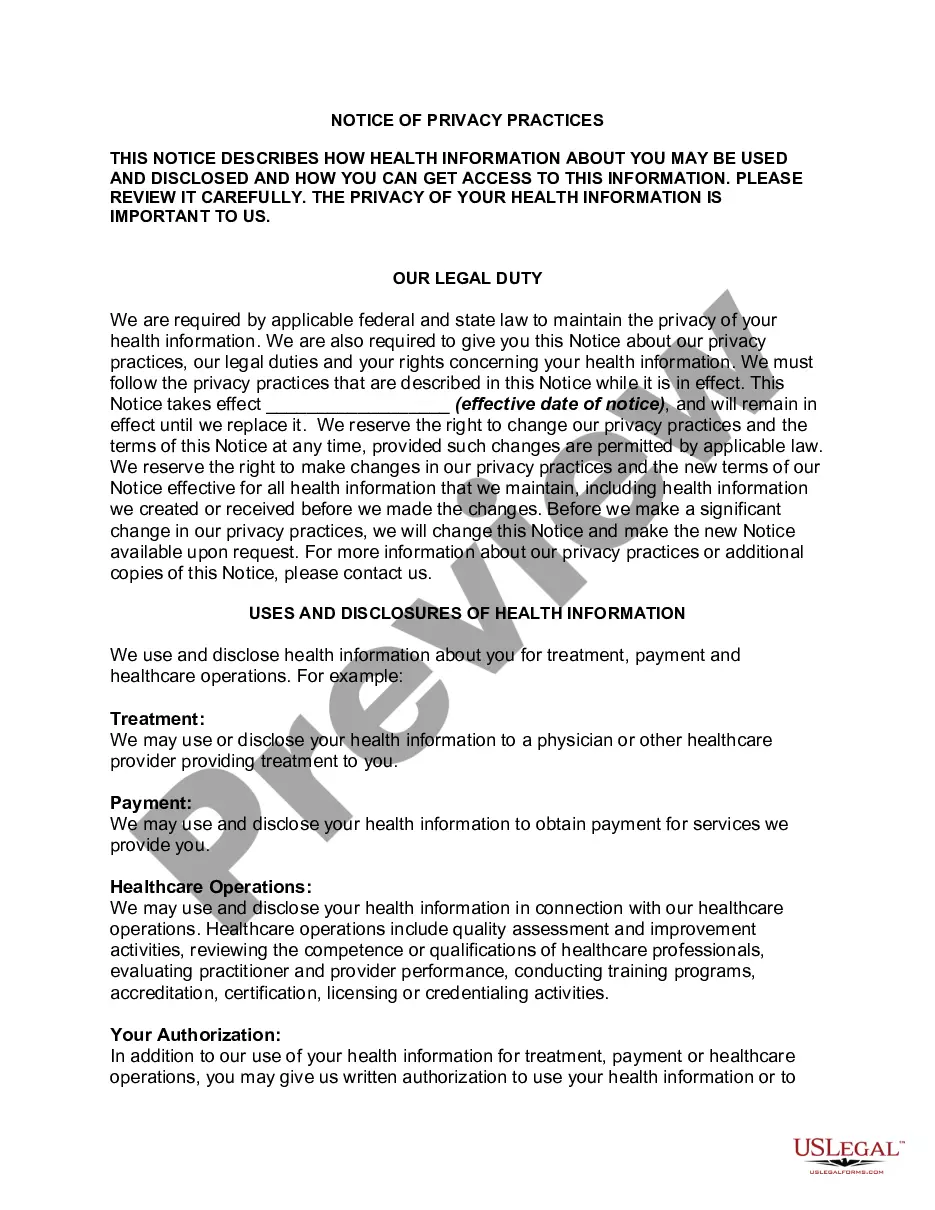
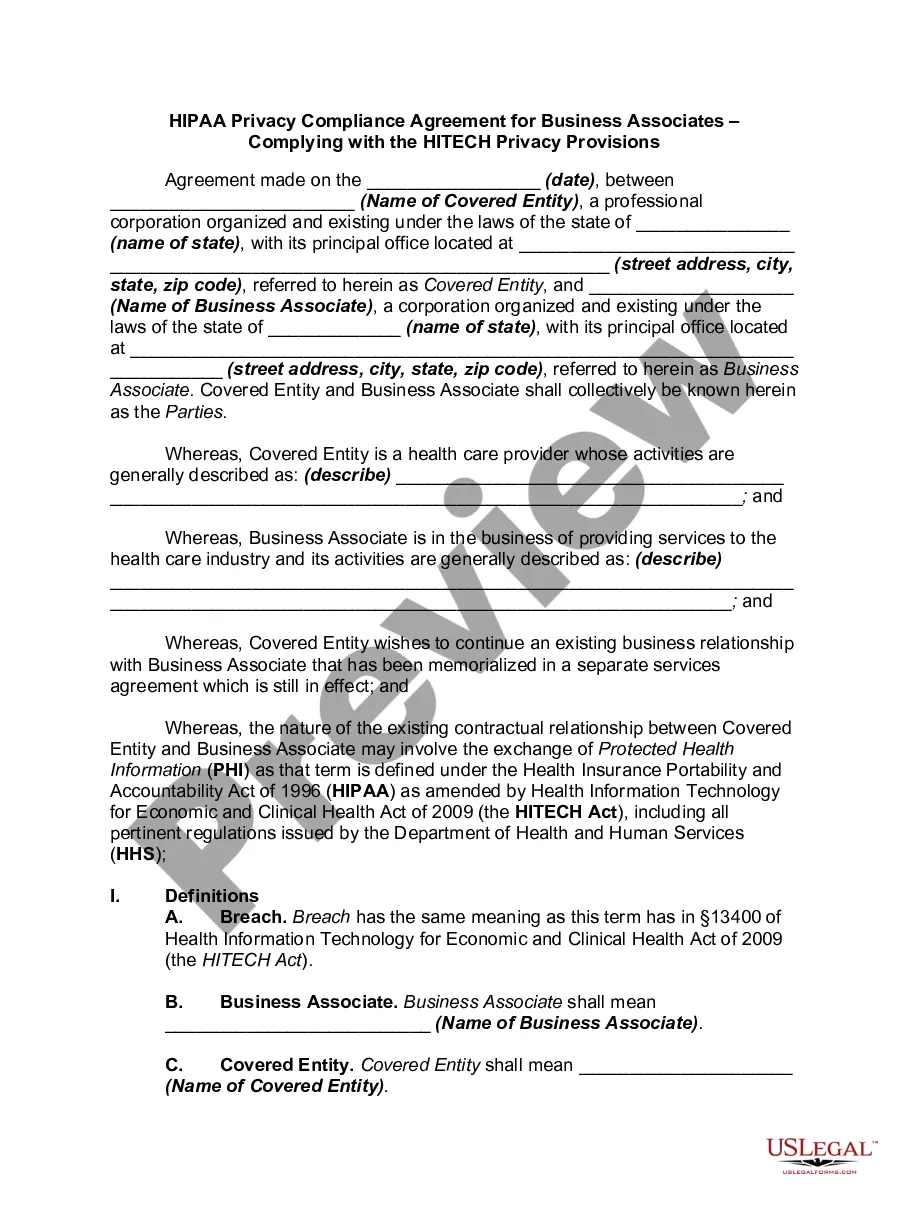
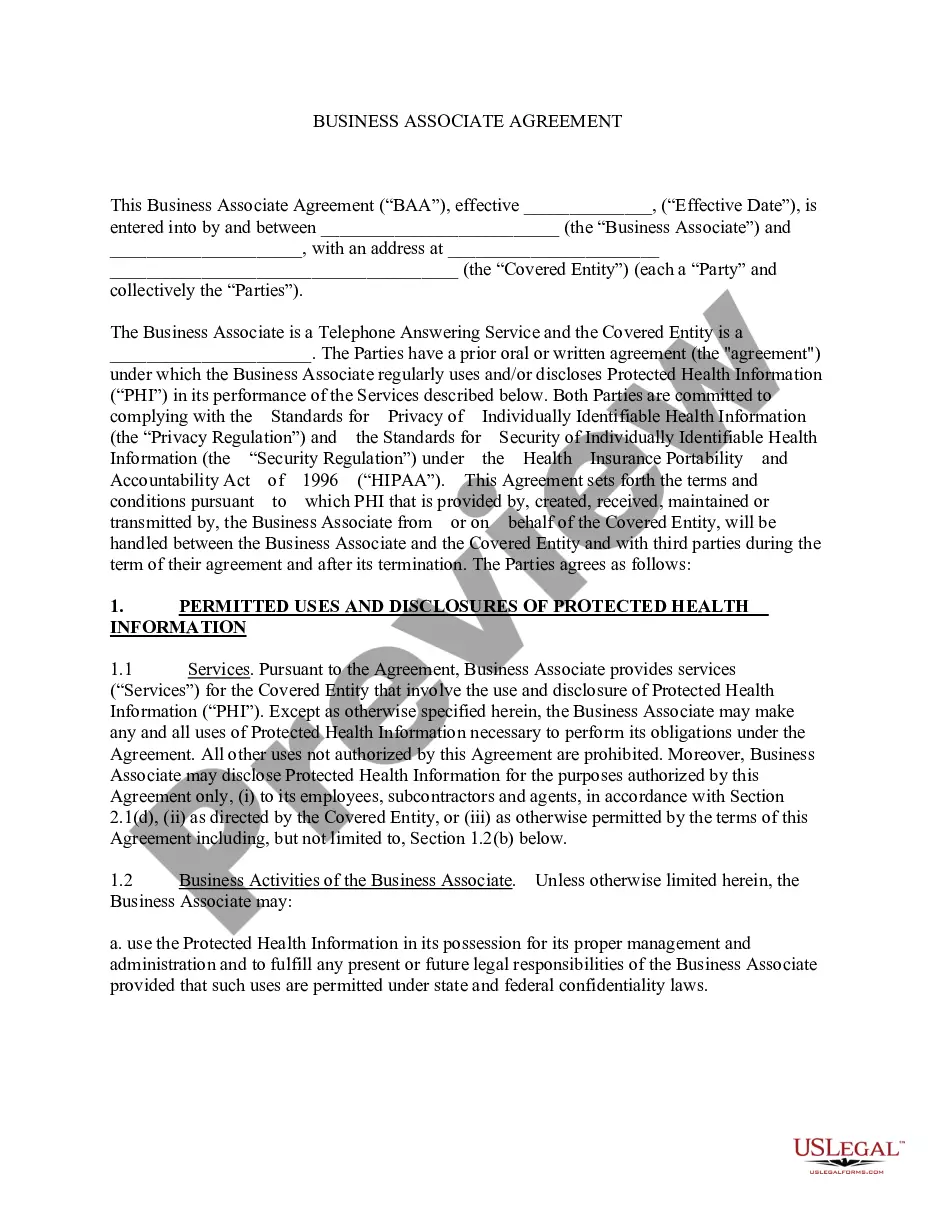
The HIPAA Business Associates Agreement is a legal document that establishes guidelines for the use and disclosure of protected health information (PHI) between a covered entity (like healthcare providers) and a business associate (service providers handling PHI). This agreement is crucial to ensure compliance with the Health Insurance Portability and Accountability Act (HIPAA), safeguarding sensitive health information while outlining the responsibilities of each party regarding privacy and security. The HIPAA Business Associate Agreement distinguishes itself from other legal forms by specifically addressing the handling of health information, making it vital for any entity that interacts with healthcare data.
Form components explained
- Parties involved: Names and addresses of the covered entity and business associate.
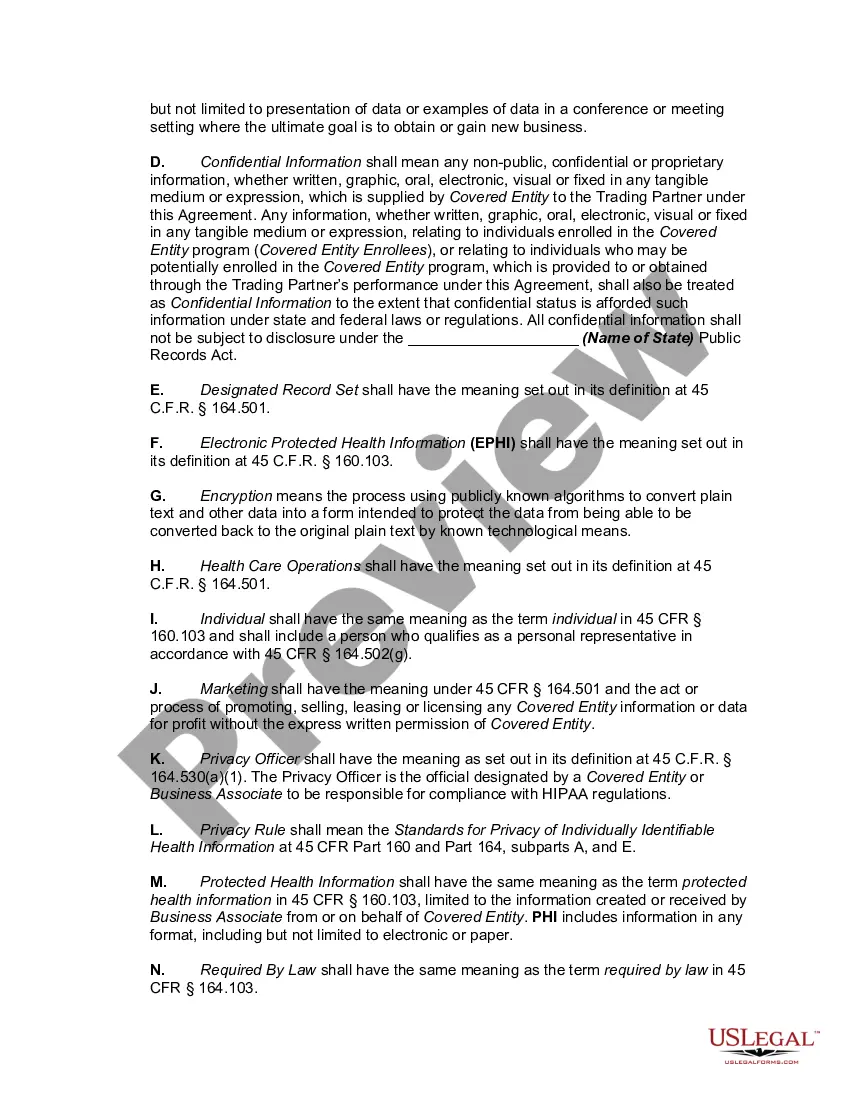
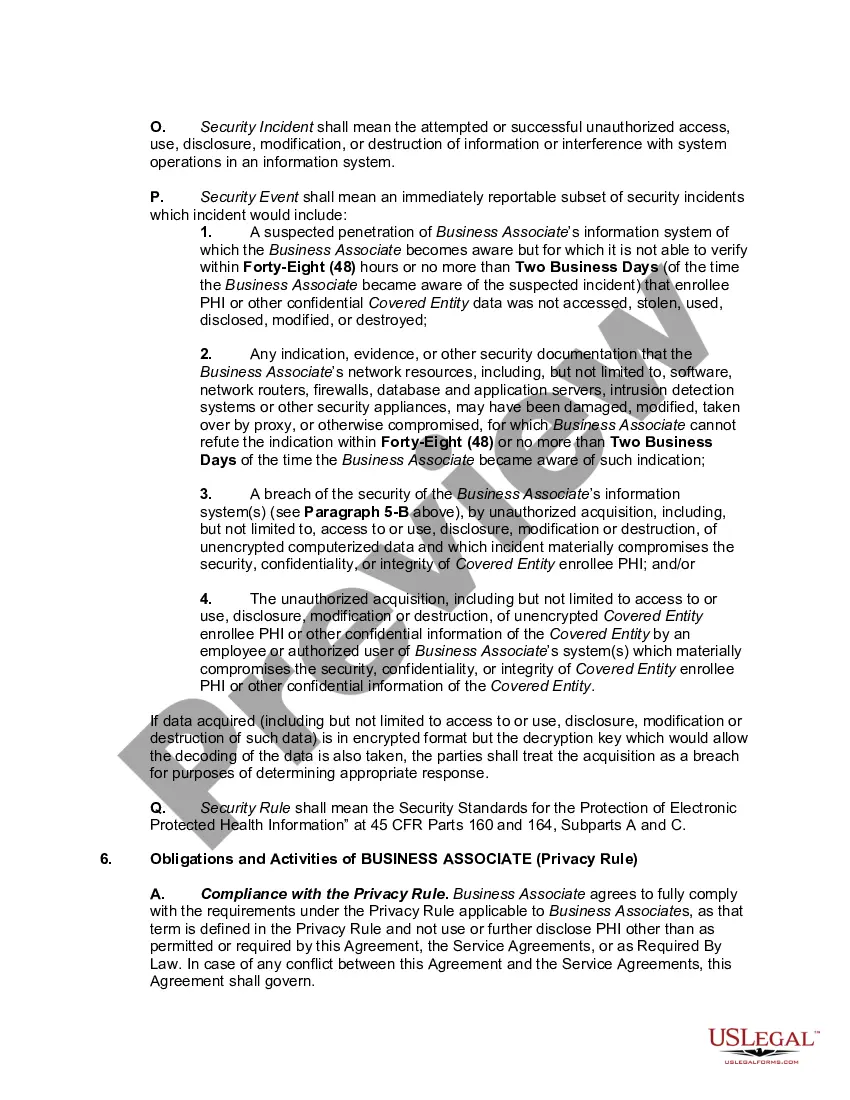
- Definitions of key terms: Important concepts like protected health information (PHI) and security incidents.
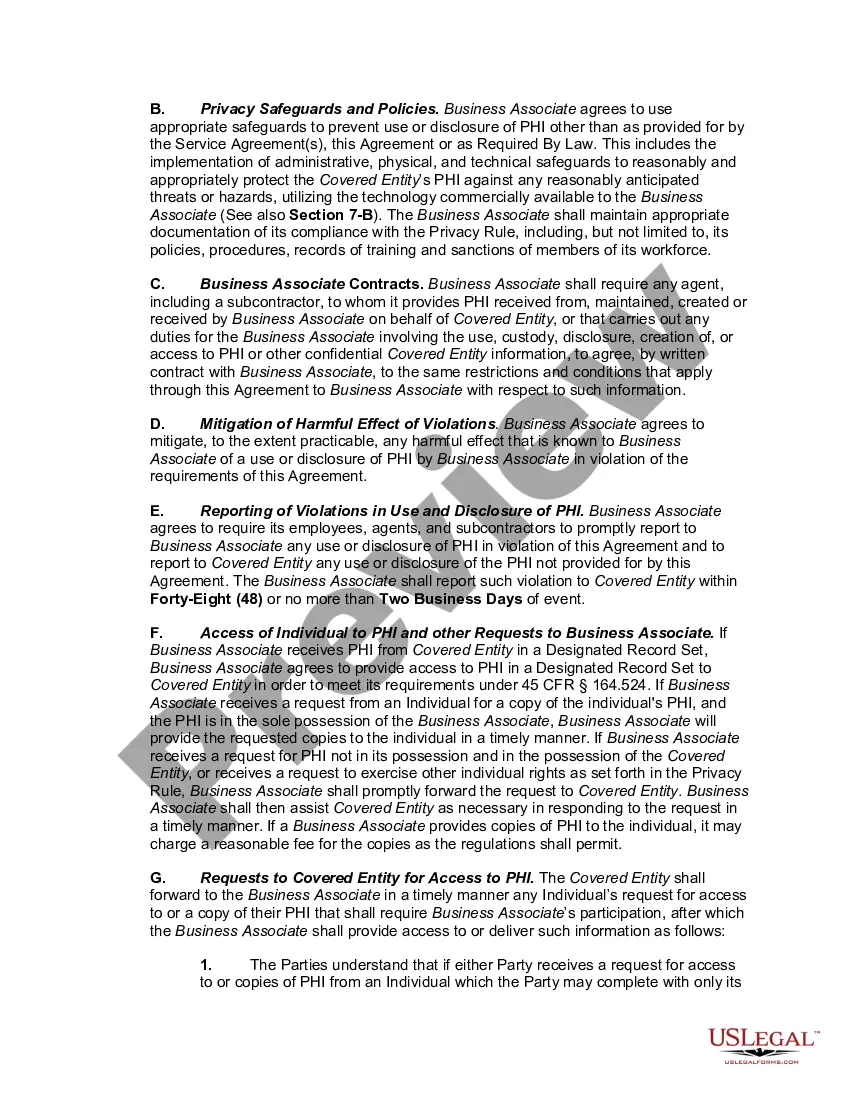
- Obligations of business associate: Responsibilities for safeguarding PHI and reporting violations.
- Permitted uses and disclosures: Conditions under which PHI can be used or shared.
- Termination clauses: Conditions that allow for termination of the agreement.

When to use this form
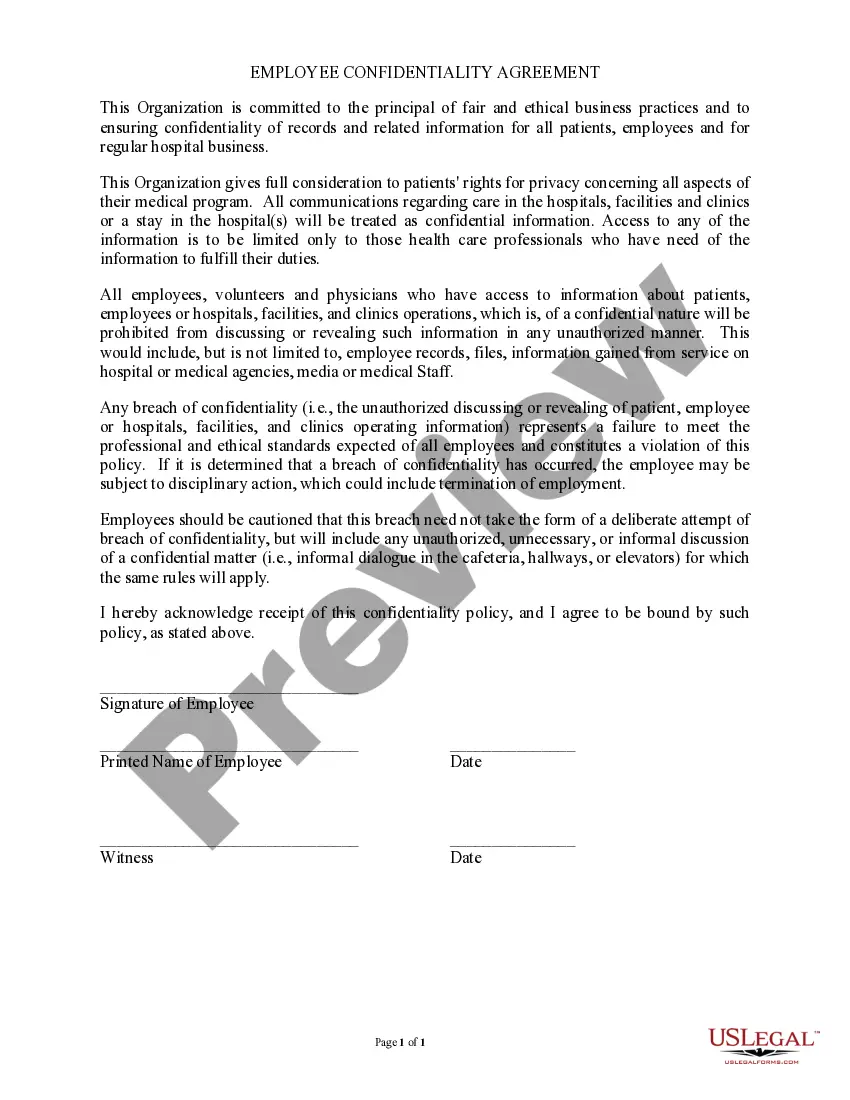
You should use the HIPAA Business Associates Agreement when your organization engages with a third-party service provider that will have access to protected health information. Common scenarios include outsourcing medical billing, using cloud storage for patient records, or hiring a consultant who requires access to sensitive health data. This agreement helps ensure that both parties comply with federal laws regarding data privacy and security.
Who can use this document
- Healthcare providers who handle PHI and work with outside vendors.
- Health insurance companies that engage third-party vendors.
- Any entity required to comply with HIPAA regulations around privacy and data security.
- Business associates offering services that necessitate access to health information.
Instructions for completing this form
- Identify and enter the full names and addresses of the covered entity and business associate.
- Clearly define the terms and agreements regarding the handling of protected health information.
- Specify the obligations of the business associate concerning the safeguarding of PHI.
- Outline the permitted uses and disclosures of PHI in compliance with HIPAA.
- Obtain signatures from authorized representatives of both parties to execute the agreement.
Does this form need to be notarized?
This form does not typically require notarization unless specified by local law. It is essential to ensure that both parties fully understand their obligations under the agreement and that all terms are agreed upon prior to signing, even if notarization is not a requirement.
Get your form ready online
Our built-in tools help you complete, sign, share, and store your documents in one place.
Make edits, fill in missing information, and update formatting in US Legal Forms—just like you would in MS Word.
Download a copy, print it, send it by email, or mail it via USPS—whatever works best for your next step.
Sign and collect signatures with our SignNow integration. Send to multiple recipients, set reminders, and more. Go Premium to unlock E-Sign.
If this form requires notarization, complete it online through a secure video call—no need to meet a notary in person or wait for an appointment.
We protect your documents and personal data by following strict security and privacy standards.

Make edits, fill in missing information, and update formatting in US Legal Forms—just like you would in MS Word.

Download a copy, print it, send it by email, or mail it via USPS—whatever works best for your next step.

Sign and collect signatures with our SignNow integration. Send to multiple recipients, set reminders, and more. Go Premium to unlock E-Sign.

If this form requires notarization, complete it online through a secure video call—no need to meet a notary in person or wait for an appointment.

We protect your documents and personal data by following strict security and privacy standards.
Common mistakes to avoid
- Failing to accurately identify all parties involved in the agreement.
- Neglecting to include specific obligations and responsibilities for safeguarding PHI.
- Not addressing termination conditions appropriately.
- Misunderstanding the permitted uses and disclosures, leading to potential violations of HIPAA.
- Forgetting to sign and date the agreement, making it legally unenforceable.
Benefits of completing this form online
- Convenience of immediate access and downloading the form at any time.
- Editability allows customization to fit your specific needs quickly.
- Security features help protect sensitive information during completion.
- Guidance on legal terms ensures proper understanding and compliance.
- This agreement is legally binding and necessary for ensuring compliance with HIPAA regulations.
- Failure to have a signed agreement can lead to penalties, including fines and legal repercussions for both the covered entity and business associate.
Key takeaways
- The HIPAA Business Associates Agreement is essential for protecting PHI when outsourcing services.
- It outlines the responsibilities of both the covered entity and business associate.
- Compliance with HIPAA standards is critical to avoid legal issues.
Looking for another form?

Form popularity
FAQ
The HIPAA Rules apply to covered entities and business associates.In addition to these contractual obligations, business associates are directly liable for compliance with certain provisions of the HIPAA Rules.
A Business Associate Contract, or Business Associate Agreement, is a written arrangement that specifies each party's responsibilities when it comes to PHI.This means that organizations must have a Business Associate Agreement (BAA) for all three levels in order to meet the requirements of HIPAA.
The HIPAA Rules apply to covered entities and business associates.In addition to these contractual obligations, business associates are directly liable for compliance with certain provisions of the HIPAA Rules.
Create Privacy and Security Policies for the Organization. Name a HIPAA Privacy Officer and Security Officer. Implement Security Safeguards. Regularly Conduct Risk Assessments and Self-Audits. Maintain Business Associate Agreements. Establish a Breach Notification Protocol.
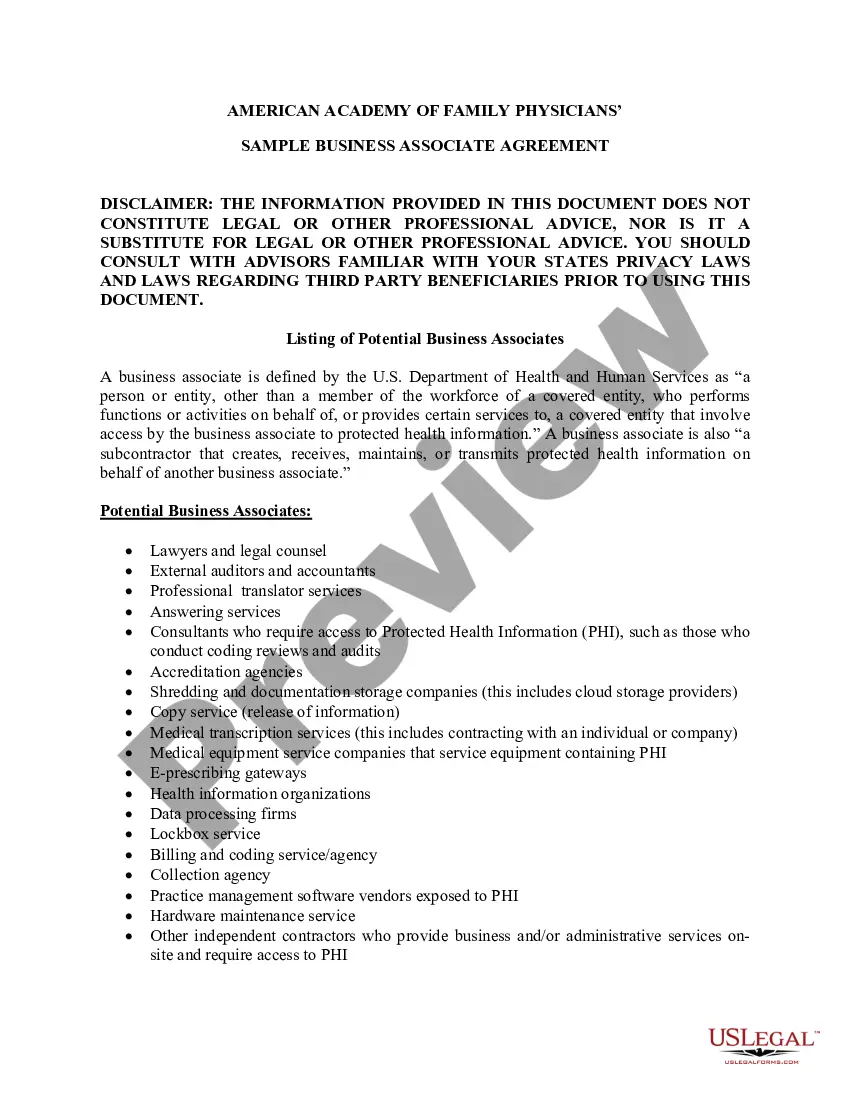
HIPAA defines businesses associates as a person or entity that provides services to a covered entity that involves the disclosure of PHI. Businesses that would be considered business associates when working with covered entities are: Software companies with access to PHI. Companies in claims processing or collections.
A BAA is a signed document that affirms a third-party service provider's willingness to accept responsibility for the safety of your clients' PHI, maintain appropriate safeguards, and comply with HIPAA requirements when they handle PHI on your behalf. BAAs are necessary if you're a covered entity.
A HIPAA business associate agreement is a contract between a HIPAA-covered entity and a vendor used by that covered entity.A signed HIPAA business associate agreement must be obtained by the covered entity before allowing a business associate to come into contact with PHI or ePHI.
What Is a Business Associate? A business associate is a person or entity that performs certain functions or activities that involve the use or disclosure of protected health information on behalf of, or provides services to, a covered entity. A member of the covered entity's workforce is not a business associate.
Business associates of HIPAA covered entities include third-party administrators, billing companies, transcriptionists, cloud service providers, data storage firms electronic and physical records, EHR providers, consultants, attorneys, CPA firms, pharmacy benefits managers, claims processors, collections agencies,