Assignment of Rights in Invention Prior to Execution of Application
What is this form?
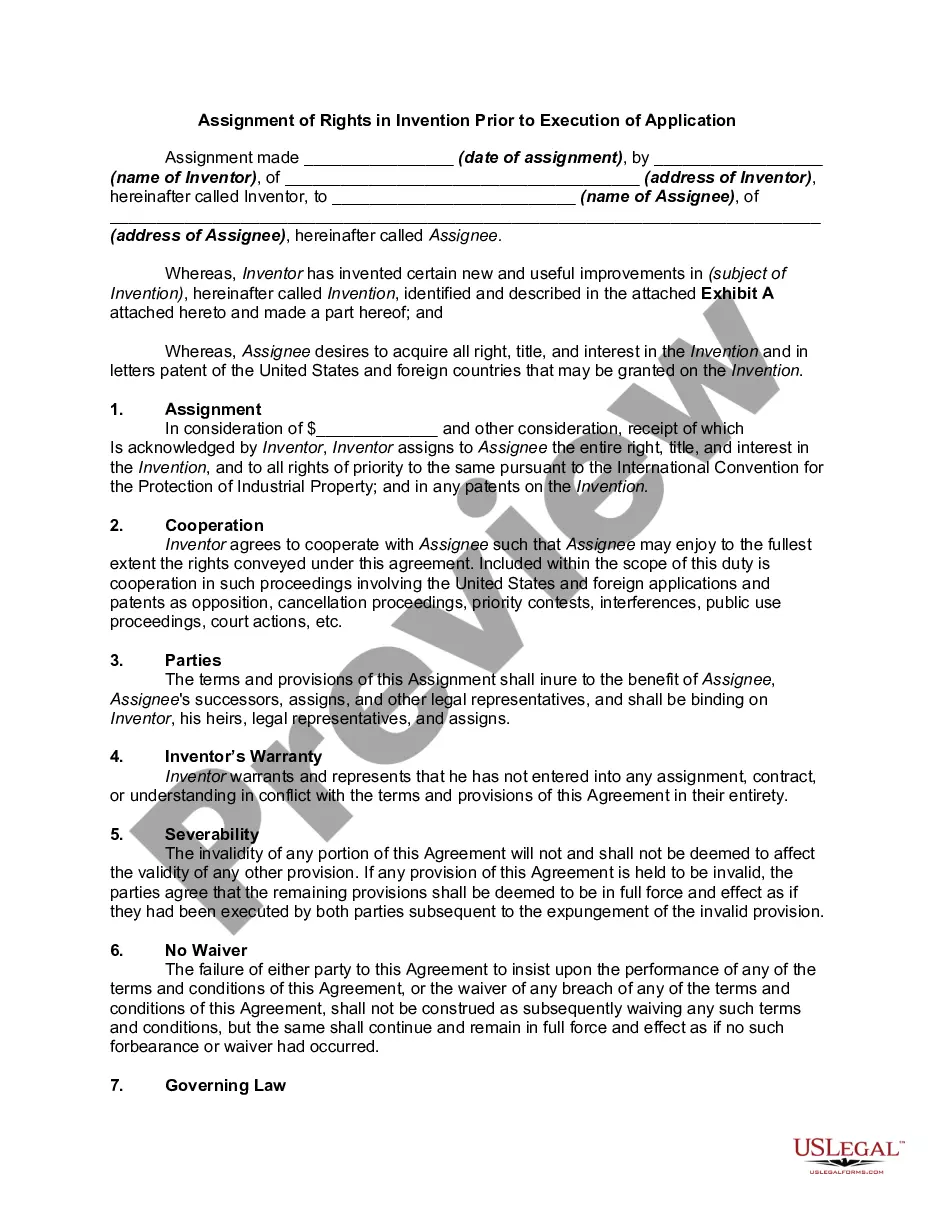
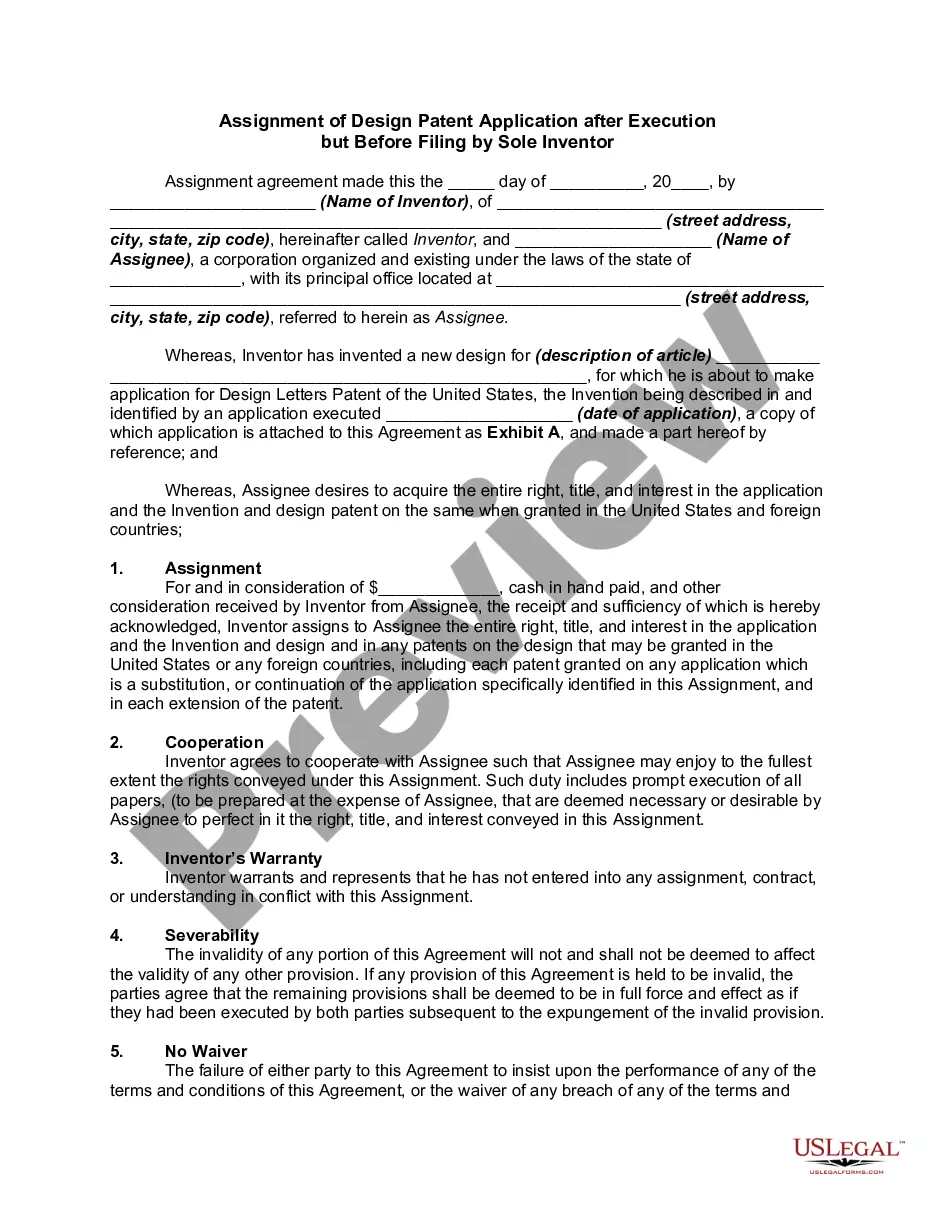
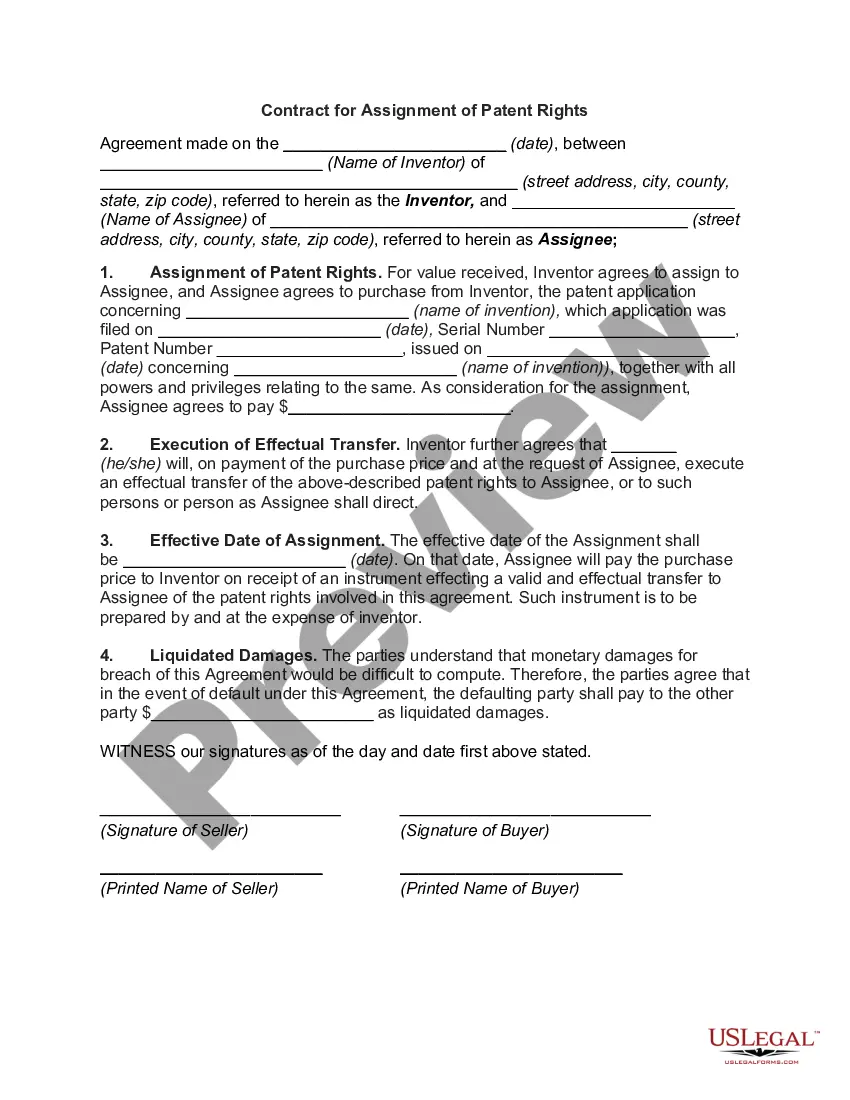
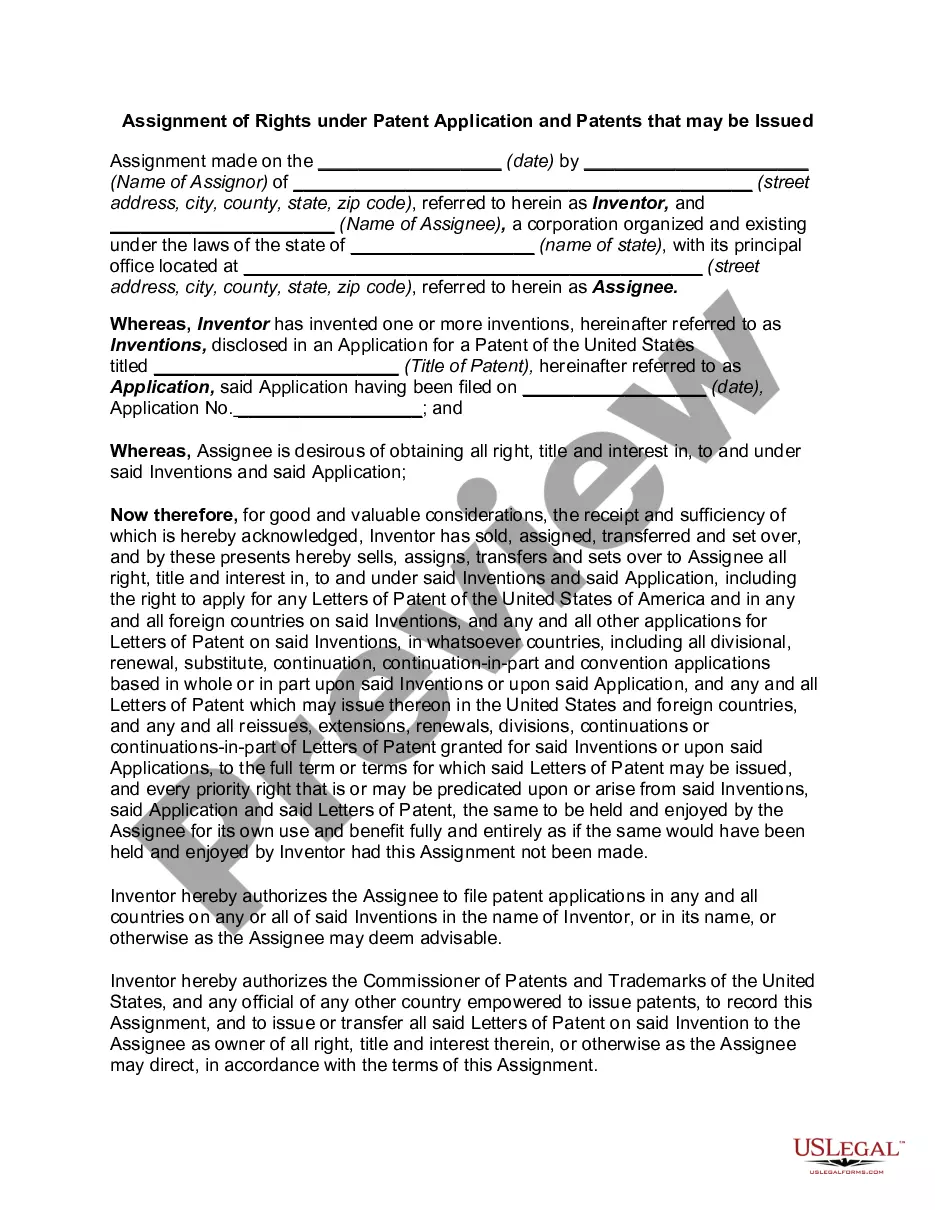
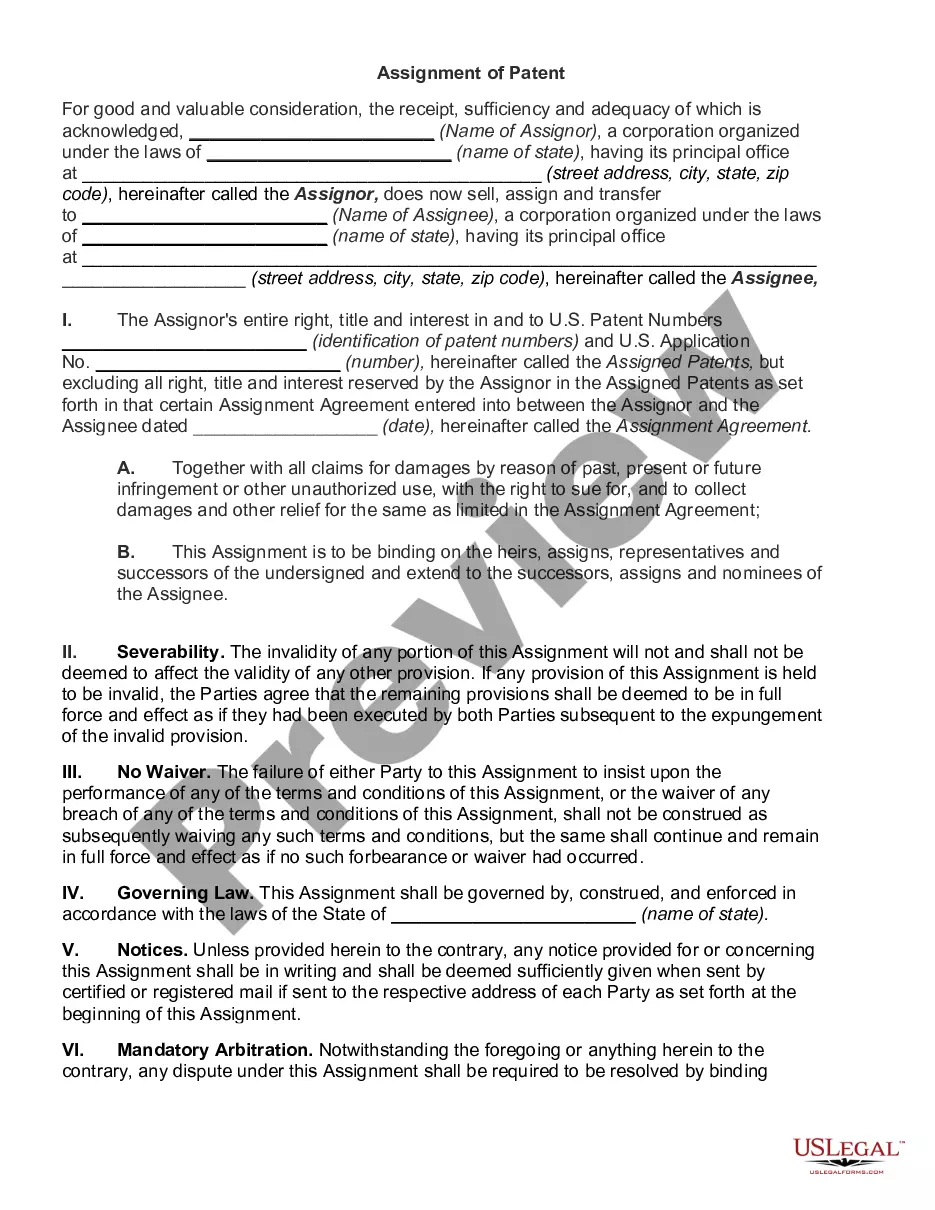
The Assignment of Rights in Invention Prior to Execution of Application is a legal document that transfers ownership of an invention from the inventor to another party, known as the assignee. This form ensures that the assignee has full rights to the invention, including the right to apply for patents. Unlike other forms of agreements, this specific assignment focuses solely on inventions and their associated patent rights, making it essential for inventors who wish to formalize the transfer of their rights.
Key components of this form
- Date of assignment
- Name and address of the inventor
- Name and address of the assignee
- Description of the invention
- Consideration received in exchange for the assignment
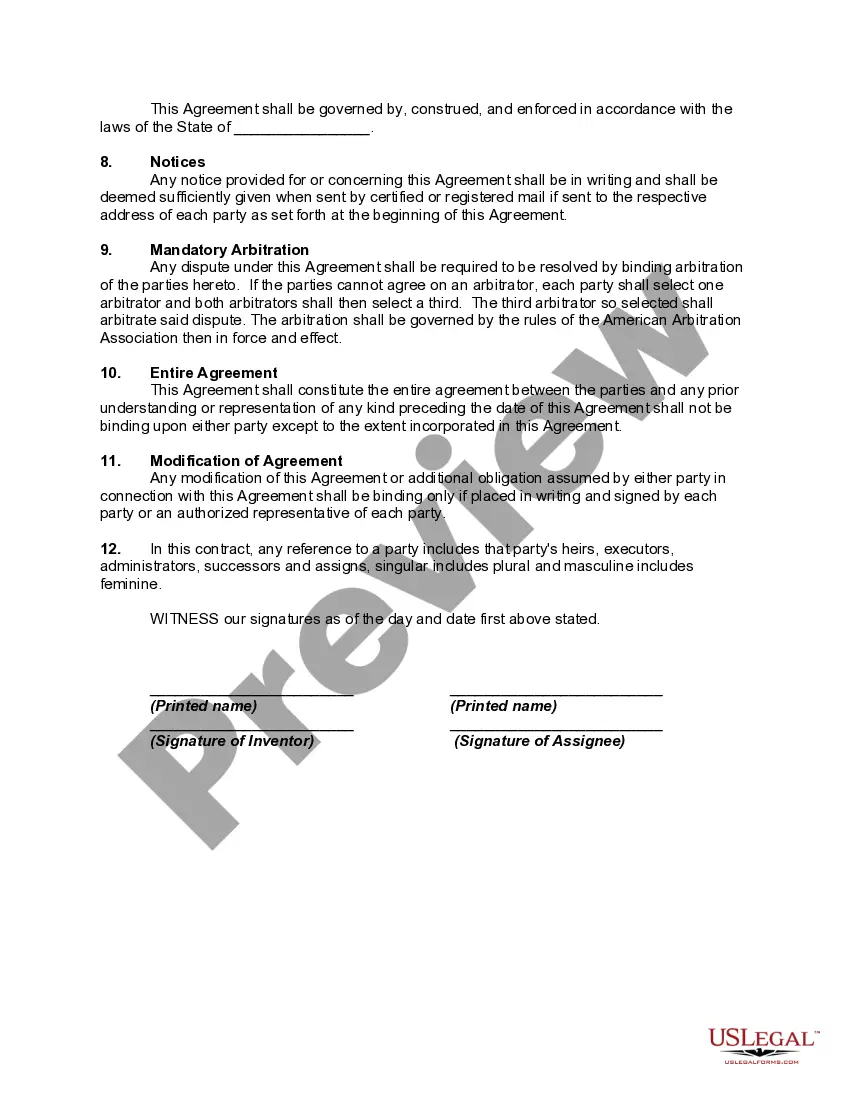
- Clauses on cooperation, warranty, severability, and governing law
When to use this document
This form is used when an inventor wishes to transfer ownership of their invention to another party before filing a patent application. It is commonly utilized in business partnerships, collaborative projects, or when inventors are seeking investors who will own the rights to the invention. Proper use of this form can help prevent disputes regarding patent ownership in the future.
Who can use this document
- Inventors who have developed new inventions and wish to transfer their rights
- Companies or individuals interested in acquiring rights to inventions from inventors
- Entrepreneurs looking to secure funding or partnership agreements involving their inventions
Steps to complete this form
- Identify the date of the assignment.
- Fill in the names and addresses of both the inventor and the assignee.
- Describe the invention clearly in the designated section.
- Specify the consideration agreed upon for the assignment.
- Sign the document in the presence of witnesses if required.
Notarization guidance
In most cases, this form does not require notarization. However, some jurisdictions or signing circumstances might. US Legal Forms offers online notarization powered by Notarize, accessible 24/7 for a quick, remote process.
Get your form ready online
Our built-in tools help you complete, sign, share, and store your documents in one place.
Make edits, fill in missing information, and update formatting in US Legal Forms—just like you would in MS Word.
Download a copy, print it, send it by email, or mail it via USPS—whatever works best for your next step.
Sign and collect signatures with our SignNow integration. Send to multiple recipients, set reminders, and more. Go Premium to unlock E-Sign.
If this form requires notarization, complete it online through a secure video call—no need to meet a notary in person or wait for an appointment.
We protect your documents and personal data by following strict security and privacy standards.

Make edits, fill in missing information, and update formatting in US Legal Forms—just like you would in MS Word.

Download a copy, print it, send it by email, or mail it via USPS—whatever works best for your next step.

Sign and collect signatures with our SignNow integration. Send to multiple recipients, set reminders, and more. Go Premium to unlock E-Sign.

If this form requires notarization, complete it online through a secure video call—no need to meet a notary in person or wait for an appointment.

We protect your documents and personal data by following strict security and privacy standards.
Common mistakes to avoid
- Not providing a clear description of the invention.
- Failing to specify the consideration exchanged.
- Omitting necessary signatures or dates.
- Not ensuring the compliance with state-specific regulations.
Advantages of online completion
- Convenient access to the document at any time.
- Editability to customize the form to fit specific needs.
- Reliable legal templates crafted by licensed attorneys.
Main things to remember
- The Assignment of Rights in Invention officially transfers ownership from the inventor to the assignee.
- It is essential for securing patent rights and protects both parties' interests.
- Proper completion of the form avoids common legal pitfalls and misunderstandings regarding rights.
Looking for another form?





Form popularity
FAQ
An application form (paper or online form) a description of your invention. claims. an abstract. drawings if they illustrate your invention. an indication of a deposit if the application involves a deposit of biological material as referred to in section 8 a of the Finnish Patents Act.
A Deed of Assignment should be filed with the patent office in the country in which the patent or patent application has been filed. The assignment is then recorded in the patent office register and may be viewed by third parties. Failure to record the assignment may limit its effects against third parties.
US law presumes that a patent application is owned by the individual inventor(s) unless another person or entity is properly identified and substantiated as the patent owner. So, the inventor is assumed the owner unless otherwise indicated.
Legal Assignment: An assignment (or an agreement to assign) of an existing patent is a legal assignment, where the assignee may enter his name as the patent owner. A patent which is created by deed can only be assigned by a deed. A legal assignee entitled as the proprietor of the patent acquires all rights thereof.
In this form, you will have to furnish information, such as, name and address of the inventor(s), name and address of the applicant(s), information corresponding to prior patent applications relating to the current invention, which you or any authorized entity has filed, and some declarations, among other information.
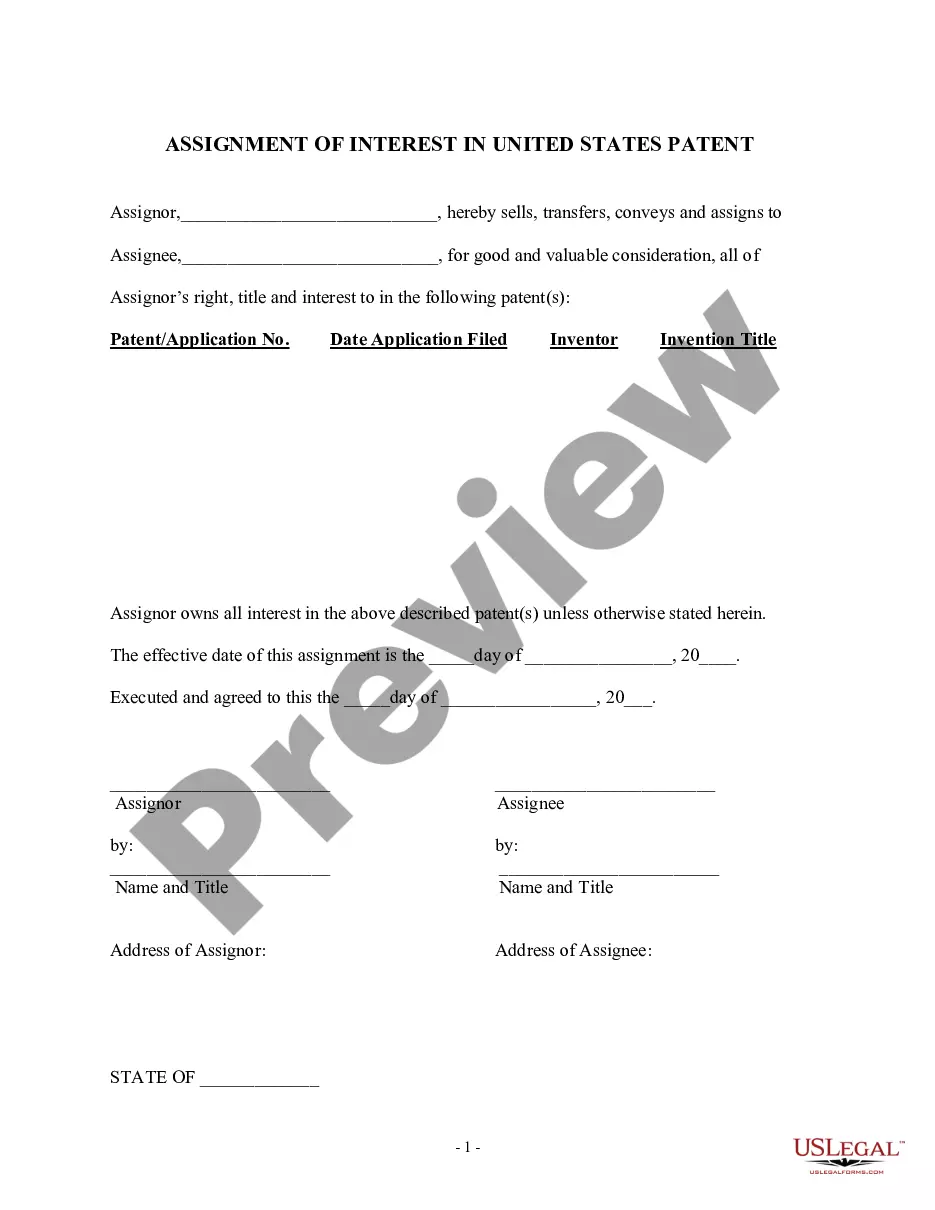
Assignments are transfers of the entire interest in a patent from one entity to another. They are distinguished from licenses, which give another person a limited right to the patent. In the US, there is no requirement that an assignment be notarized.
A patent assignment is an agreement where one entity (the assignor) transfers all or part of their right, title and interest in a patent or application to another entity (the assignee).But under U.S. law, only an inventor or an assignee can own a patent and businesses cannot be listed as an inventor.
A patent or patent application is assignable by an instrument in writing, and the assignment of the patent, or patent application, transfers to the assignee(s) an alienable (transferable) ownership interest in the patent or application. 35 U.S.C. 261.
It is possible for the patent owner to reinstate the patent, if it expires, by paying a surcharge in addition to the maintenance fee. It's also possible for the patent holder to put the expired patent up for sale and sell the patent and their rights to someone else who could renew the expired patent by paying the fees.