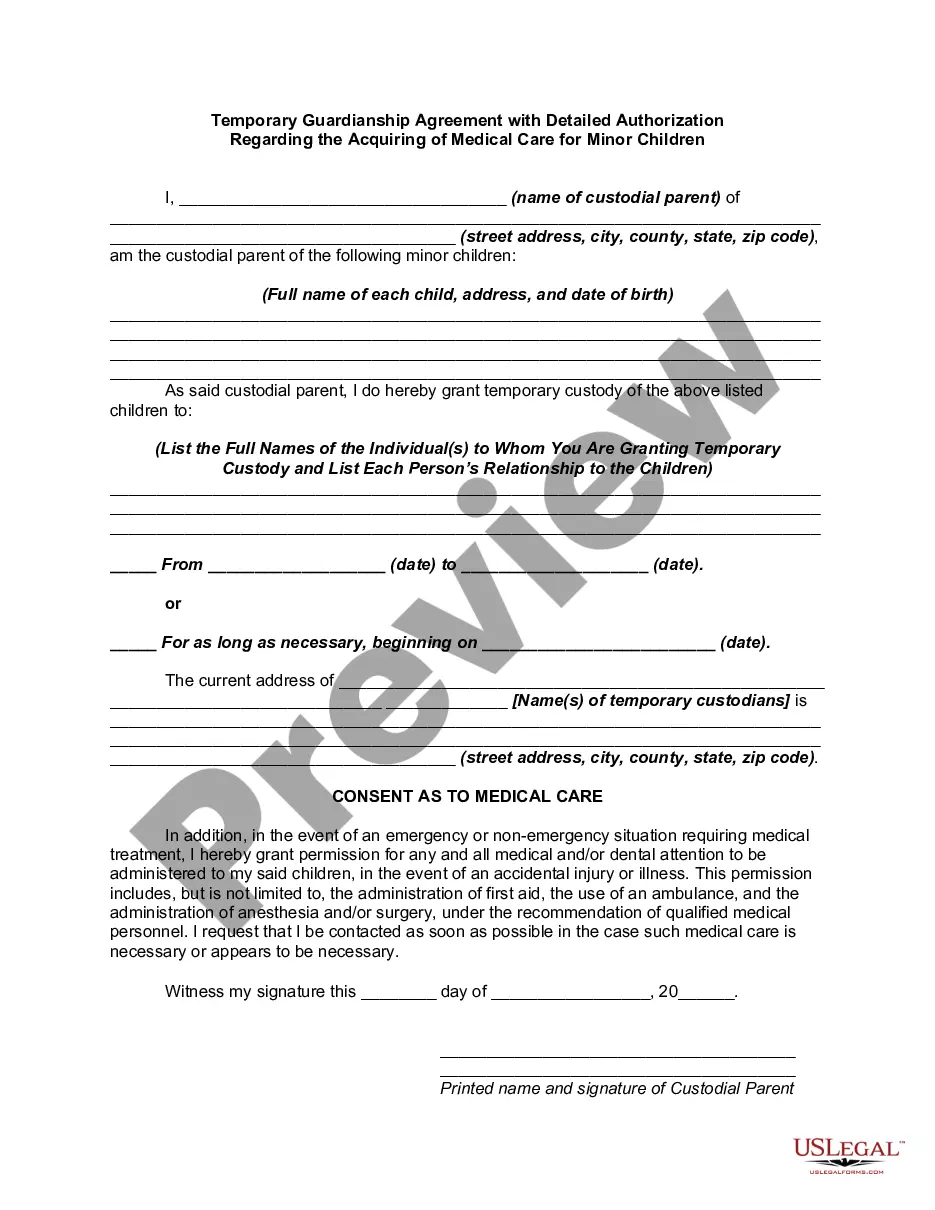
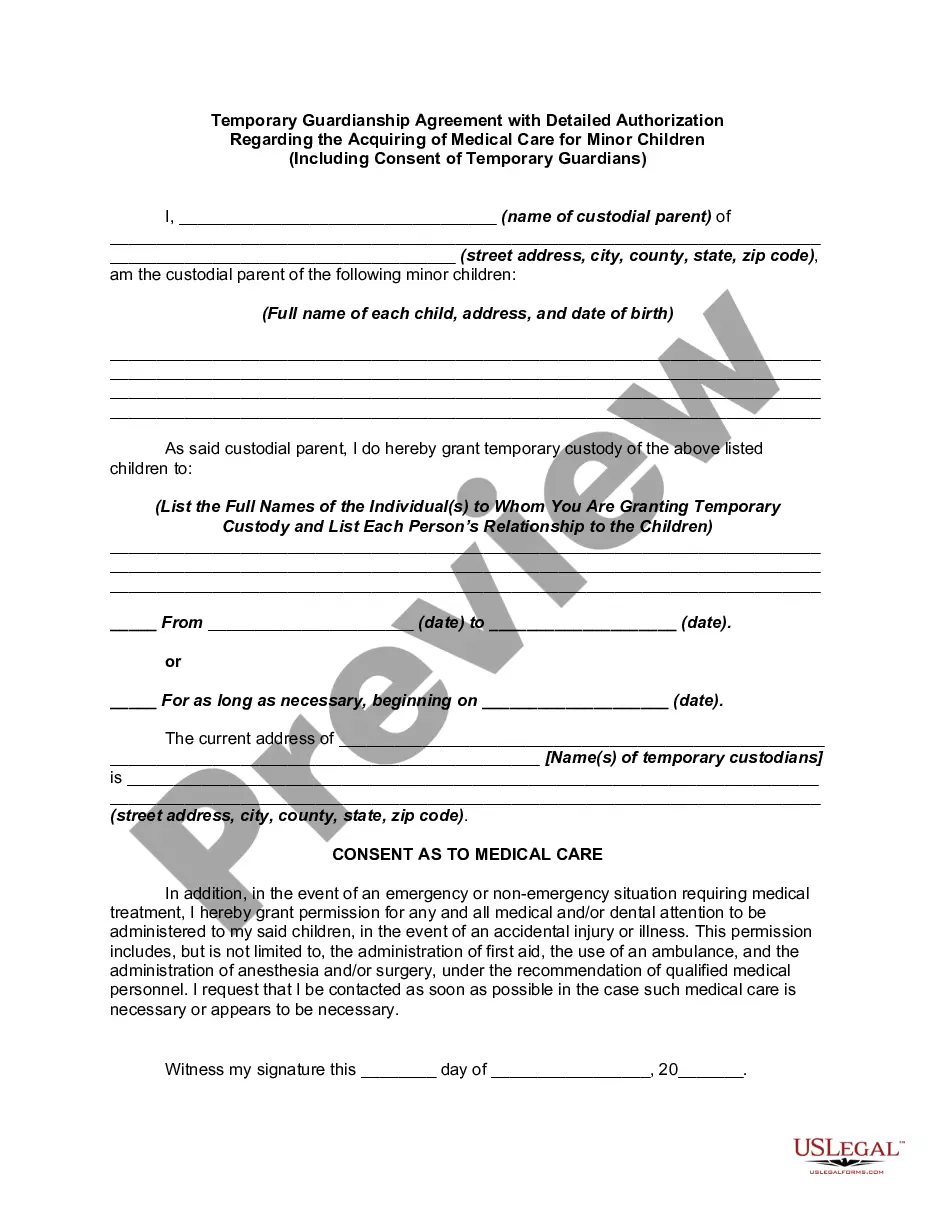
Temporary Guardianship Agreement with Detailed Authorization Regarding the Acquiring of Medical Care for Minor Children
What this document covers
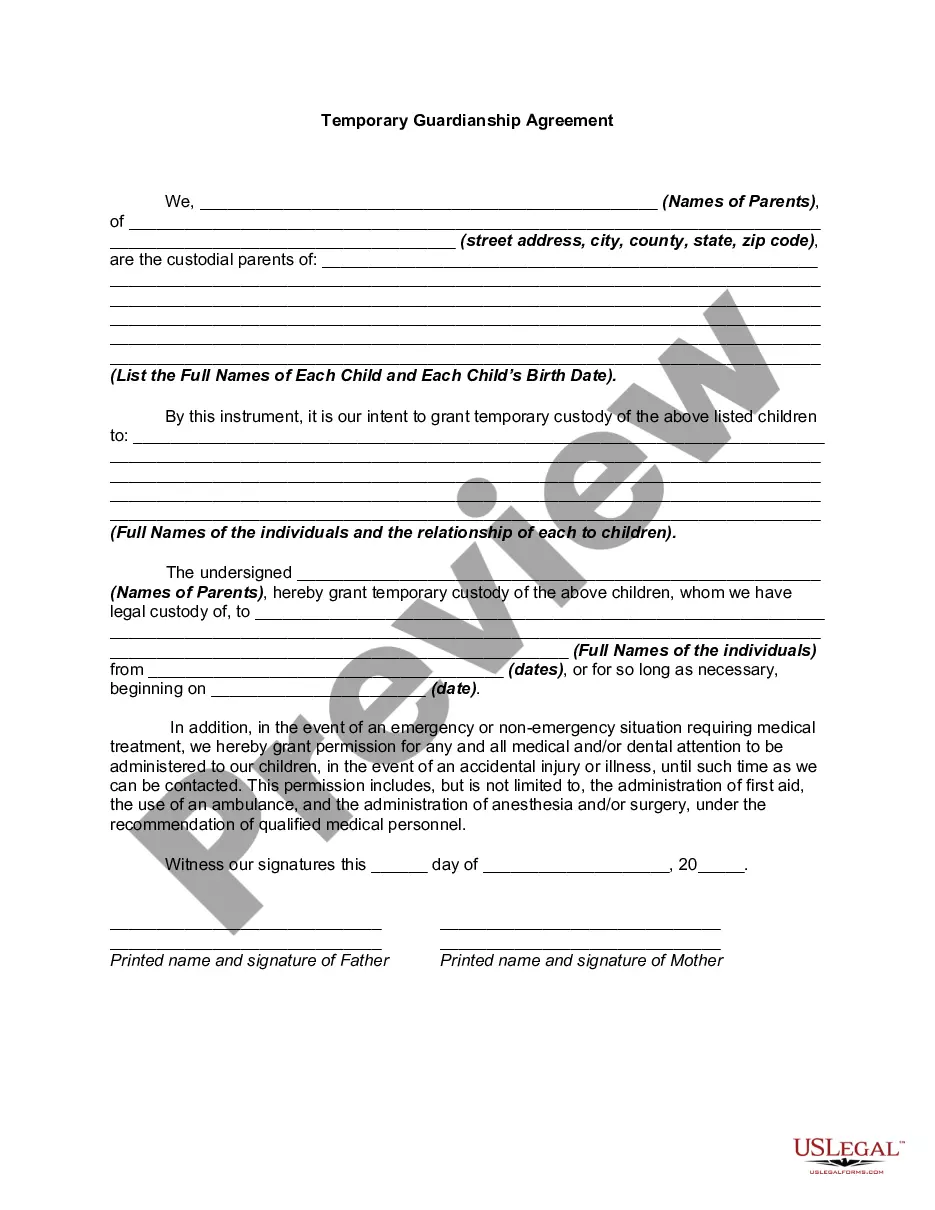
The Temporary Guardianship Agreement with Detailed Authorization Regarding the Acquiring of Medical Care for Minor Children is a legal document that allows a parent to grant temporary custody of their child to another individual. This form defines the temporary guardian's authority, detailing their responsibilities, particularly concerning medical care, for a specified period not exceeding six months. Unlike permanent guardianship, this arrangement is generally established without court intervention, making it practical for situations like military deployment or short-term absences.
Main sections of this form
- Details of the custodial parent and their address
- Names and dates of birth of the minor children
- Names and relationship of the temporary guardians
- Duration of the temporary guardianship
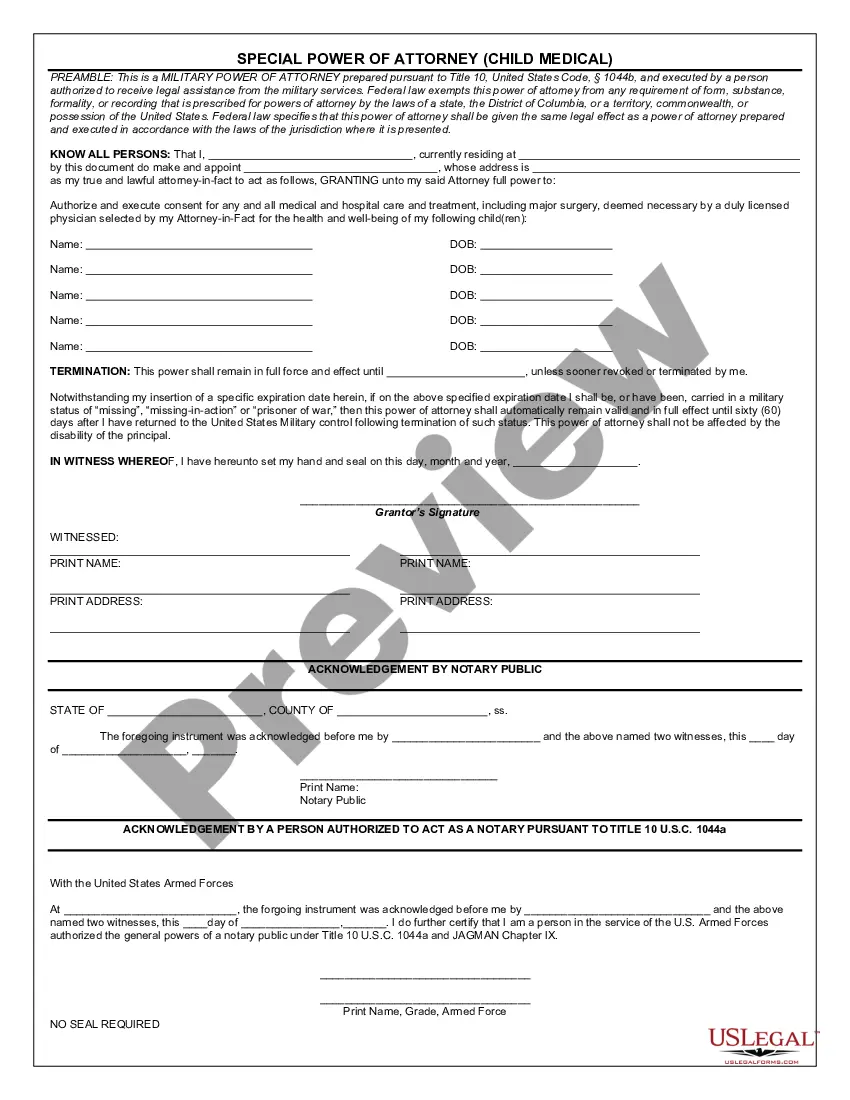
- Consent for medical care and emergency treatment
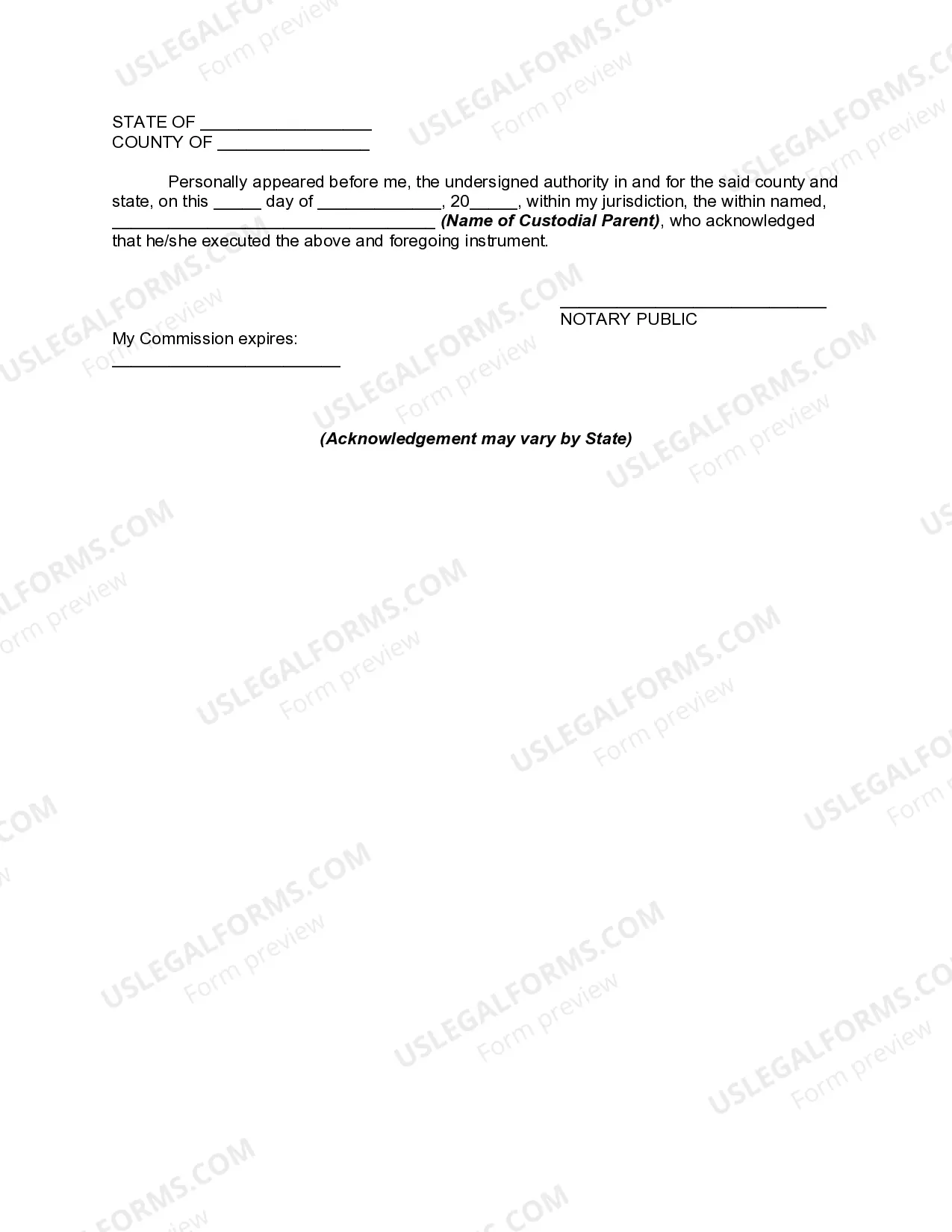
- Notarization section for legal validation
When to use this form
This form is useful when a parent needs to appoint a temporary guardian for their child during situations such as a military deployment, hospitalization, or travel. It is also appropriate in cases where the parent cannot provide immediate care due to emergencies or short-term obligations. By completing this form, the guardian can legally make decisions regarding the child's welfare, especially in medical emergencies.
Who should use this form
- Parents who need to assign temporary guardianship of their minor children
- Military personnel deployed away from their families
- Parents undergoing medical treatment who will be unable to care for their child
- Relatives or friends chosen to take temporary responsibility for a child
How to prepare this document
- Identify the custodial parent and provide their address.
- List each minor child's full name, address, and date of birth.
- Specify the individual(s) receiving temporary custody and their relationship to the child.
- Enter the start and end dates for the guardianship period.
- Provide the current address of the temporary custodian(s).
- Include consent for medical care and the custodial parent's signature followed by notarization.
Notarization requirements for this form
To make this form legally binding, it must be notarized. Our online notarization service, powered by Notarize, lets you verify and sign documents remotely through an encrypted video session.
Get your form ready online
Our built-in tools help you complete, sign, share, and store your documents in one place.
Make edits, fill in missing information, and update formatting in US Legal Forms—just like you would in MS Word.
Download a copy, print it, send it by email, or mail it via USPS—whatever works best for your next step.
Sign and collect signatures with our SignNow integration. Send to multiple recipients, set reminders, and more. Go Premium to unlock E-Sign.
If this form requires notarization, complete it online through a secure video call—no need to meet a notary in person or wait for an appointment.
We protect your documents and personal data by following strict security and privacy standards.

Make edits, fill in missing information, and update formatting in US Legal Forms—just like you would in MS Word.

Download a copy, print it, send it by email, or mail it via USPS—whatever works best for your next step.

Sign and collect signatures with our SignNow integration. Send to multiple recipients, set reminders, and more. Go Premium to unlock E-Sign.

If this form requires notarization, complete it online through a secure video call—no need to meet a notary in person or wait for an appointment.

We protect your documents and personal data by following strict security and privacy standards.
Mistakes to watch out for
- Failing to specify end dates for guardianship can lead to uncertainty.
- Not listing all minor children accurately.
- Missing the notarization step if required by state law.
- Neglecting to clearly outline medical care permissions.
Advantages of online completion
- Convenience of downloading and completing forms from home.
- Editability allows for quick adjustments as circumstances change.
- Reliability of forms drafted by licensed attorneys ensures legal soundness.
Looking for another form?
Form popularity
FAQ
HIPAA authorization is consent obtained from a patient or health plan member that permits a covered entity or business associate to use or disclose PHI to an individual/entity for a purpose that would otherwise not be permitted by the HIPAA Privacy Rule.
No, a HIPAA Authorization does not need to be notarized. In fact, you don't even need a witness to see you sign the form.
Since the 1990s, California law has afforded minors the right to consent to certain types of medical care, such as the diagnosis and treatment of sexually transmitted diseases, without the consent of their parent or guardian.
The grandparents' medical consent form allows a parent or legal guardian to hand over all responsibility regarding their child's health care decisions to one of the child's grandparents.
The core elements of a valid authorization include: A meaningful description of the information to be disclosed. The name of the individual or the name of the person authorized to make the requested disclosure. The name or other identification of the recipient of the information.
MINOR MUST BE EMANCIPATED (GENERALLY 14 YEARS OF AGE OR OLDER) LAW/DETAILS MAY/MUST THE HEALTH CARE PROVIDER INFORM A PARENT ABOUT THIS CARE OR DISCLOSE RELATED MEDICAL INFORMATION TO THEM? An emancipated minor may consent to medical, dental and psychiatric care.
A care provider may perform a routine test or treatment on a minor who is over the age of 14 without parental consent and without accompaniment, on condition that the minor him/herself gives informed consent for the medical procedure.
Q: Do I need to notarize the signed form? A: No. The HIPAA Privacy Rule does not require you to notarize authorization forms or have a witness. Though taking the time to fill out an authorization form and get a patient's signature is an extra step, it's an important one that you can't afford to overlook.
The main difference between custody and guardianship is the child's parents - custody is provided to the child's biological parents while guardianship is given to a non-biological parent.