Report of Independent Accountants after Audit of Financial Statements
What this document covers
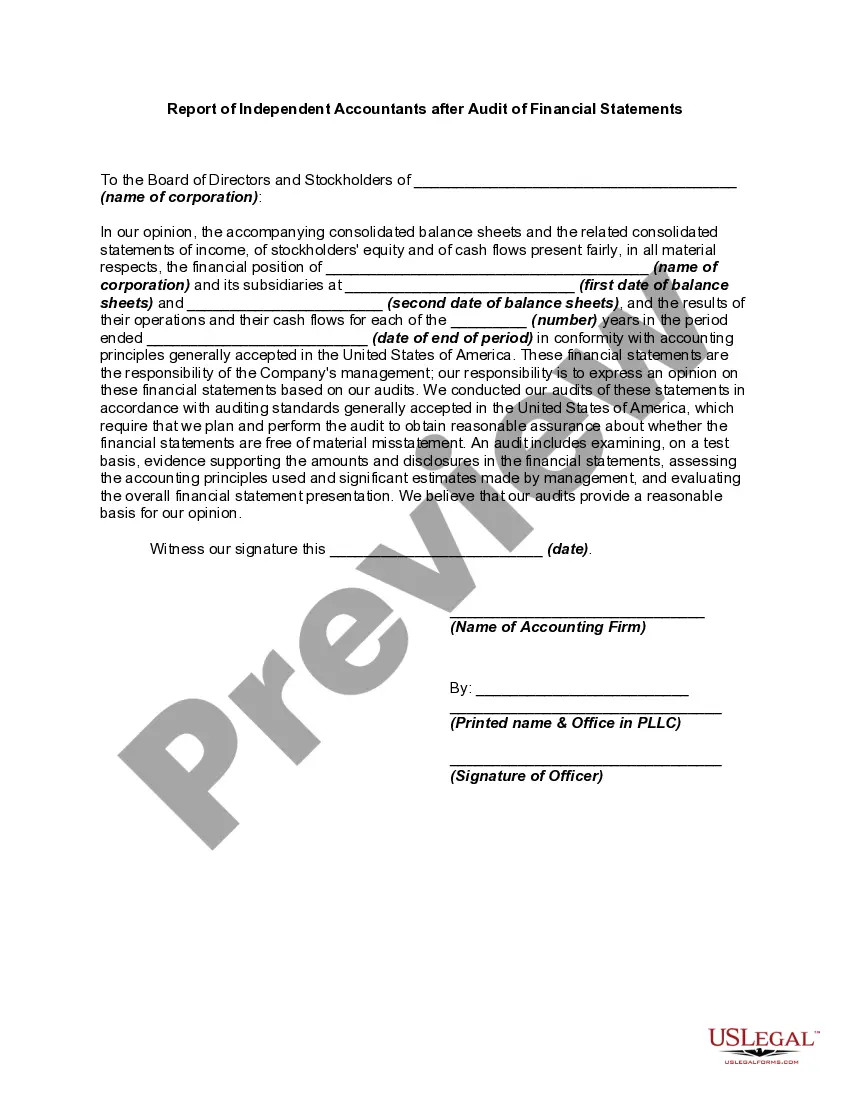
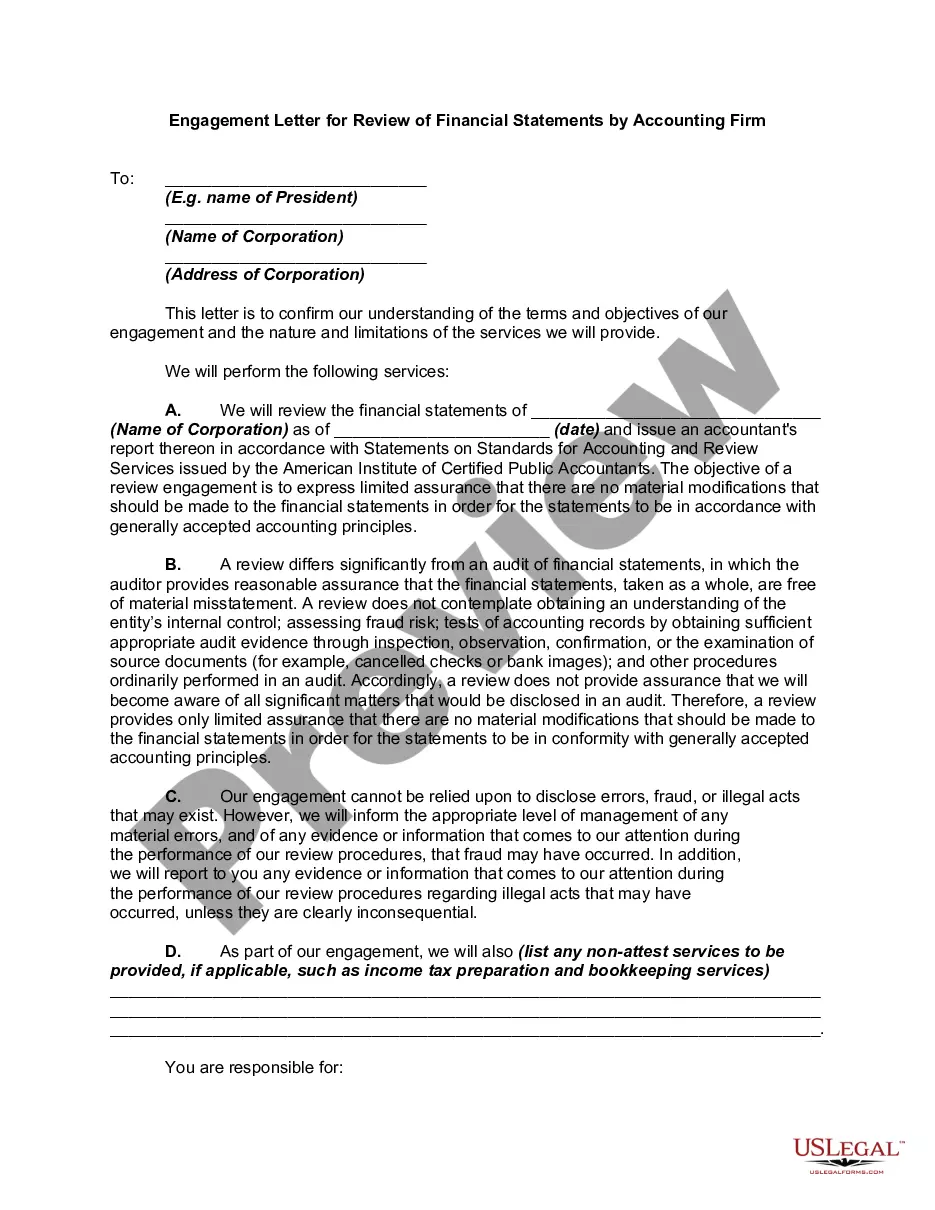
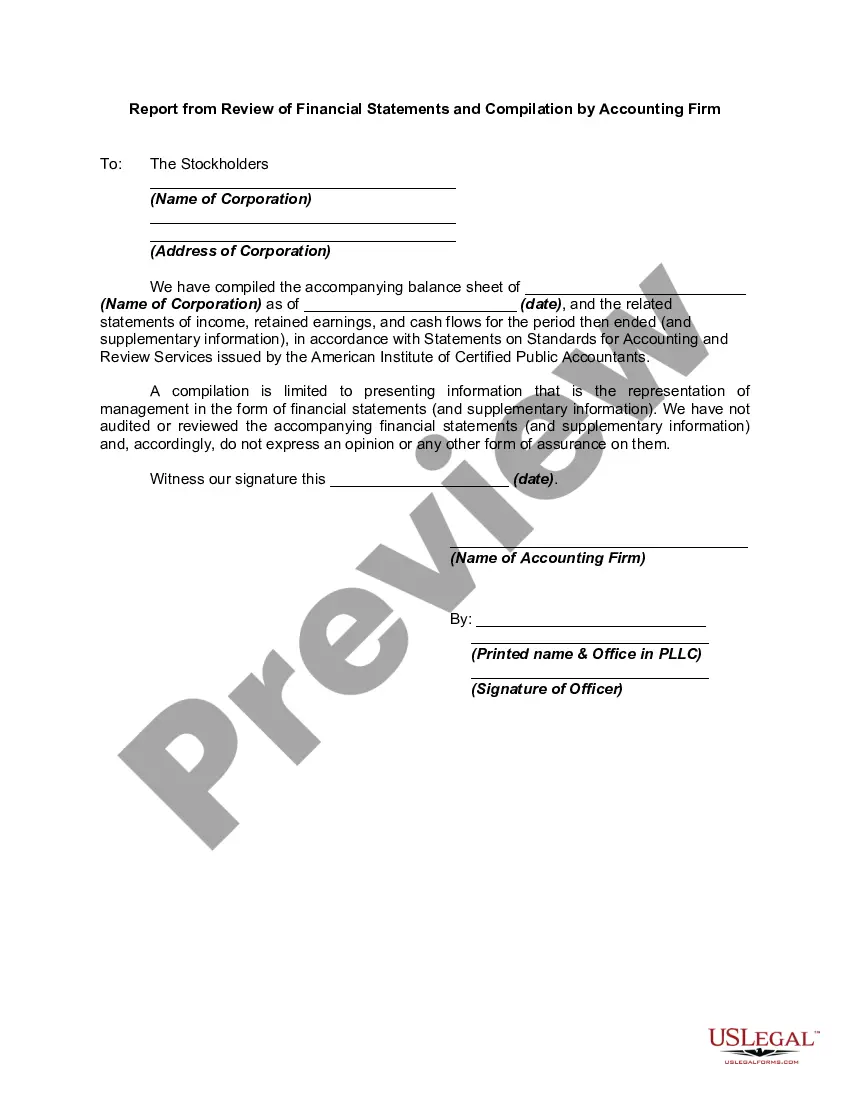
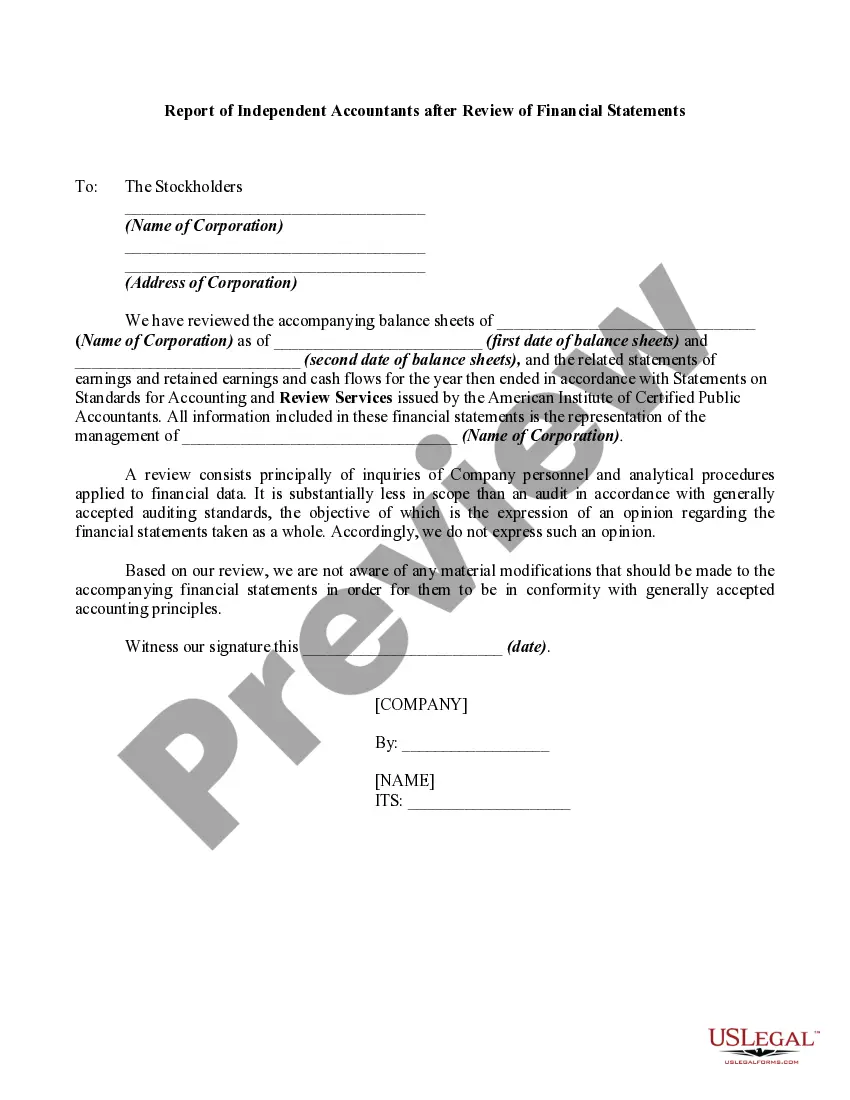
The Report of Independent Accountants after Audit of Financial Statements is a formal document that provides an objective assessment of a company's financial statements by an external auditor. This report confirms that the financial statements are presented fairly in accordance with generally accepted accounting principles. Unlike internal audits conducted by company employees, this report is prepared by independent auditors to ensure impartiality and accuracy, making it a vital tool for stakeholders who rely on transparent financial reporting.
Key components of this form
- Date of the audit completion.
- Name of the corporation being audited.
- Details of the accountant firm conducting the audit.
- Physical representation of financial positions over specified dates.
- Statement regarding the responsibility of the company's management and the auditor's opinion.
- Signature of the authorized officer and audit firm representative.
When to use this document
Who should use this form
- Corporations required to submit audited financial statements to stakeholders.
- Business entities seeking compliance with regulatory standards.
- Financial institutions reviewing auditor reports for lending decisions.
- Accountants and auditing firms responsible for providing the report.
How to prepare this document
- Begin by entering the name of the corporation being audited.
- Specify the dates of the balance sheets you are reporting on.
- Clearly articulate the auditor's opinion on the financial statements.
- Ensure all required signatures are collected, including those of the accounting firm and an authorized officer.
- Date the report to reflect when the audit was completed.
Does this document require notarization?
This form usually doesn’t need to be notarized. However, local laws or specific transactions may require it. Our online notarization service, powered by Notarize, lets you complete it remotely through a secure video session, available 24/7.
Get your form ready online
Our built-in tools help you complete, sign, share, and store your documents in one place.
Make edits, fill in missing information, and update formatting in US Legal Forms—just like you would in MS Word.
Download a copy, print it, send it by email, or mail it via USPS—whatever works best for your next step.
Sign and collect signatures with our SignNow integration. Send to multiple recipients, set reminders, and more. Go Premium to unlock E-Sign.
If this form requires notarization, complete it online through a secure video call—no need to meet a notary in person or wait for an appointment.
We protect your documents and personal data by following strict security and privacy standards.

Make edits, fill in missing information, and update formatting in US Legal Forms—just like you would in MS Word.

Download a copy, print it, send it by email, or mail it via USPS—whatever works best for your next step.

Sign and collect signatures with our SignNow integration. Send to multiple recipients, set reminders, and more. Go Premium to unlock E-Sign.

If this form requires notarization, complete it online through a secure video call—no need to meet a notary in person or wait for an appointment.

We protect your documents and personal data by following strict security and privacy standards.
Common mistakes
- Failing to include all necessary signatures, which may render the report invalid.
- Incorrectly completing the dates, leading to confusion regarding the reporting period.
- Omitting critical financial details that auditors have identified during the audit.
- Not following the specific guidelines for presentation as required by state law or accounting standards.
Benefits of completing this form online
- Convenient access to the form allows for quick completion and downloading.
- Editable templates can be customized to fit individual business needs.
- Reliable formats ensure compliance with legal standards and requirements.
- Easy storage and sharing options help maintain organized financial records.
Looking for another form?
Form popularity
FAQ
Answer C. To reissue the 20X1 auditor's report on financial statements that have been neither restated nor revised, the auditor should use the original report date on the reissued report. Dual dating is used when a subsequent event occurs after the date of the report, but the report has not been issued.
A conclusion that speaks to your audit objective. The summary of two or three of the most important issues and recommendations. A description of the significance of the issues and of the report itself. A summary of the client's response to the recommendations.
Use pre-made financial audit report templates. Visualize your data. Add your business or organization branding designs. Use simple language. Edit. Fact-check all information presented.
Review the information systems. Look at record-keeping policies. Review the accounting system. Review internal controls policies. Compare the internal records. Review the tax returns. Perform tests of controls and the substantive test.
Be positive. Be specific. Identify who should act. Keep recommendations brief.
Conclude your audit by entering concluding remarks, forming an overall opinion/rating, and including recommendations based on your findings. Create a final report. Create a custom report for all issues related to health and safety.
Auditors generally assign findings as major, moderate, and minor to observations; some companies only assign levels of major or minor. Depending on the type of audit being performed, auditors can also assign audit findings as opportunities for improvement (OFI) or recommendations.
A financial statement audit is the examination of an entity's financial statements and accompanying disclosures by an independent auditor.The purpose of a financial statement audit is to add credibility to the reported financial position and performance of a business.
To highlight the results of the audit and allow the reader to cut to the chase, use an executive summary. This opening section of the report should highlight the scope and objectives of the audit, provide a summarization of critical findings, key management actions and overall evaluation statement.