Installment Sale not covered by Federal Consumer Credit Protection Act with Security Agreement
What is this form?
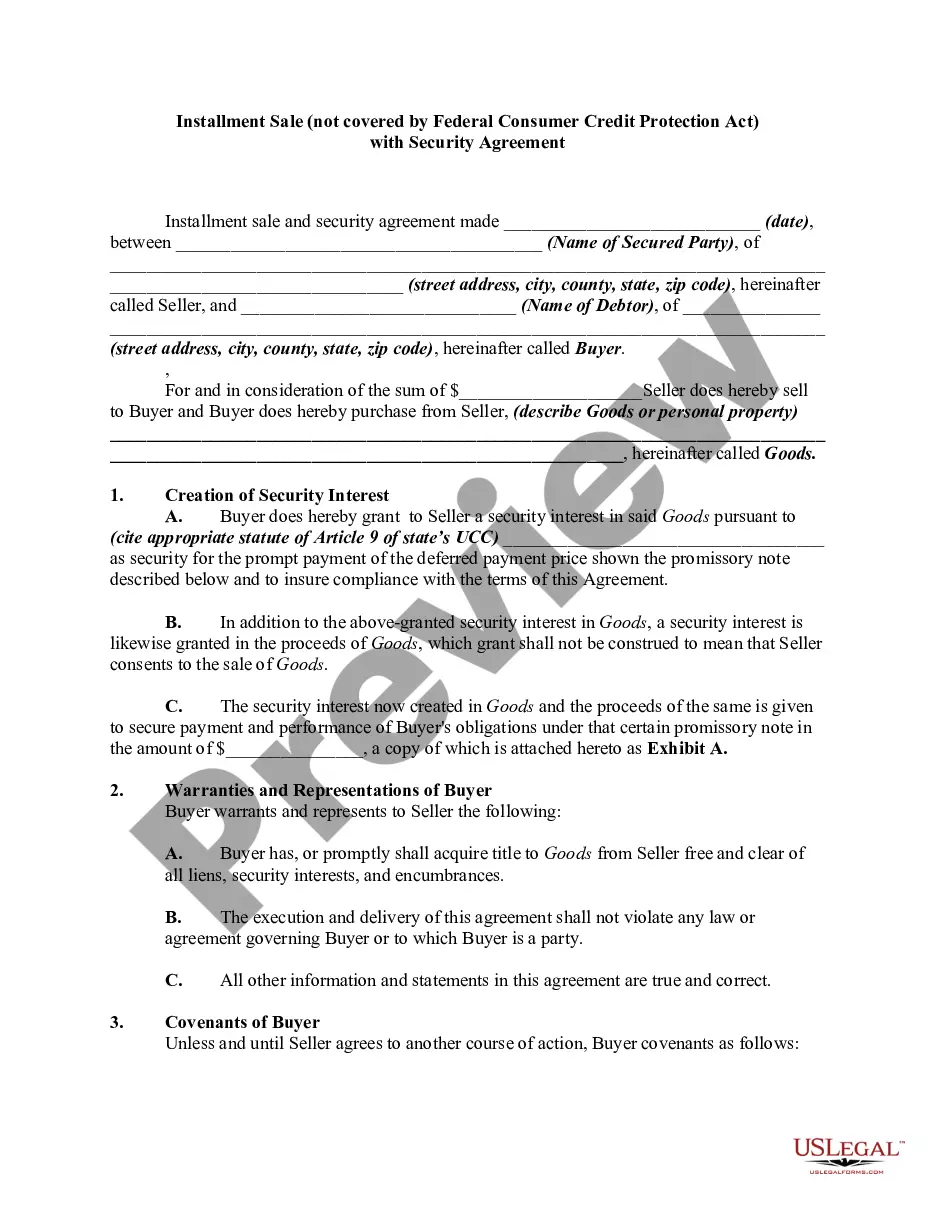
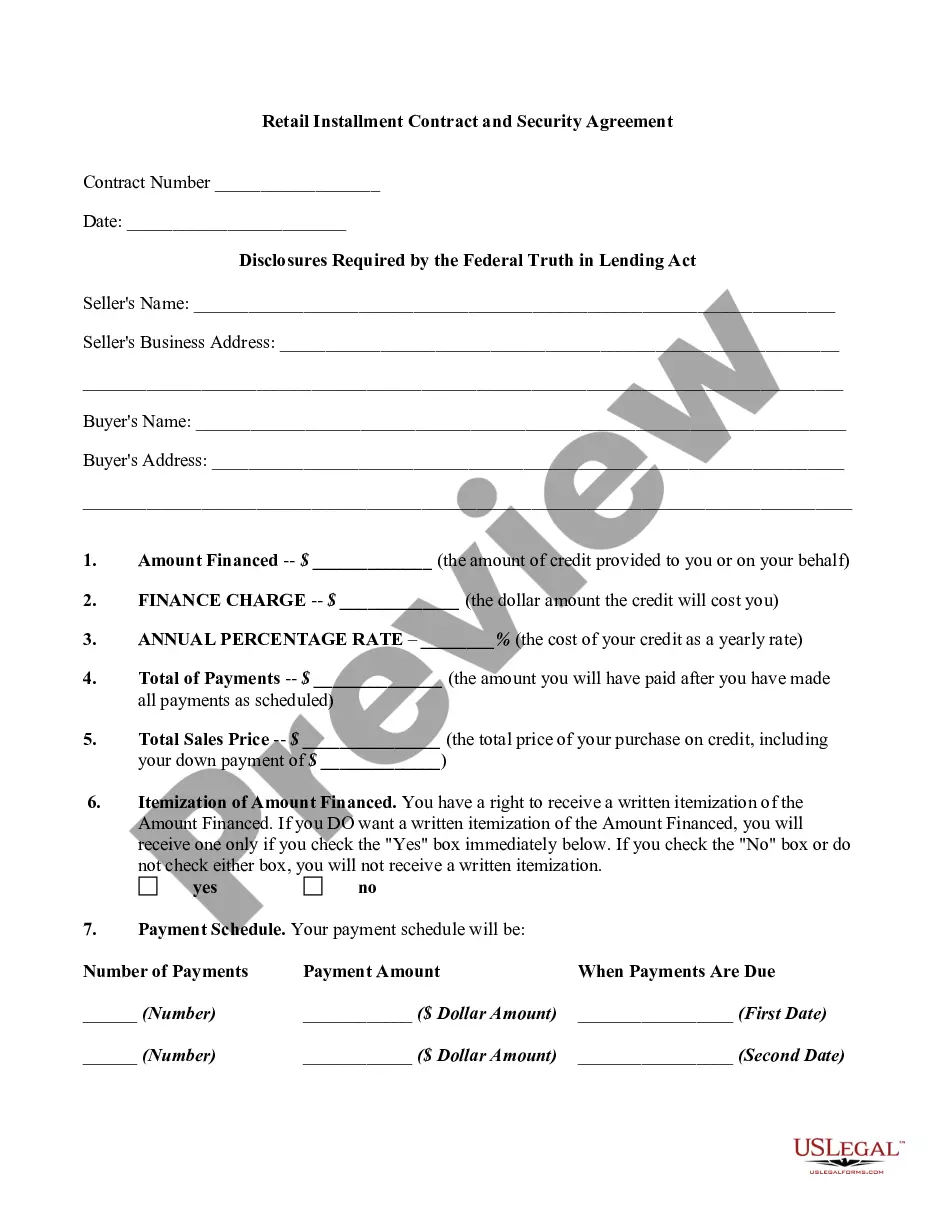
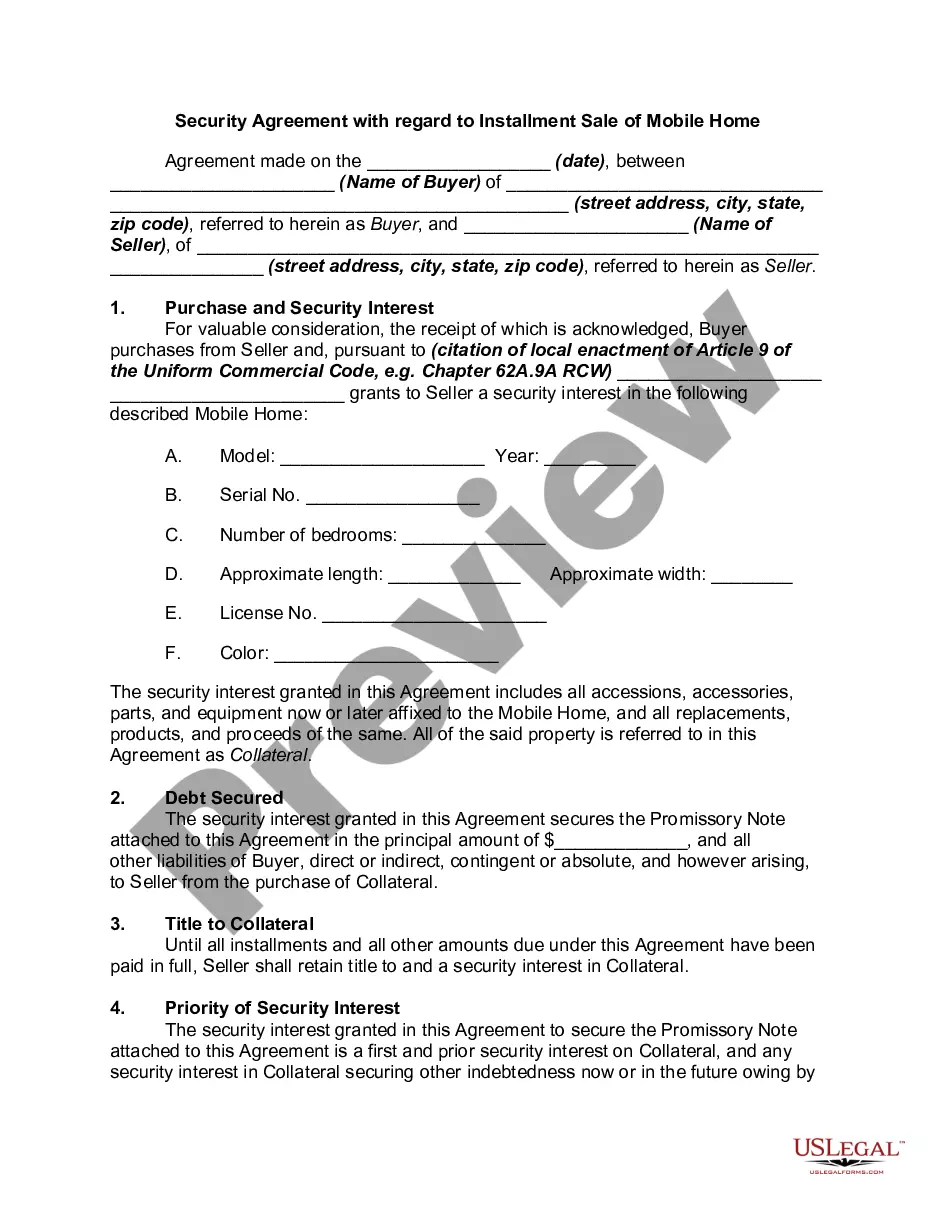
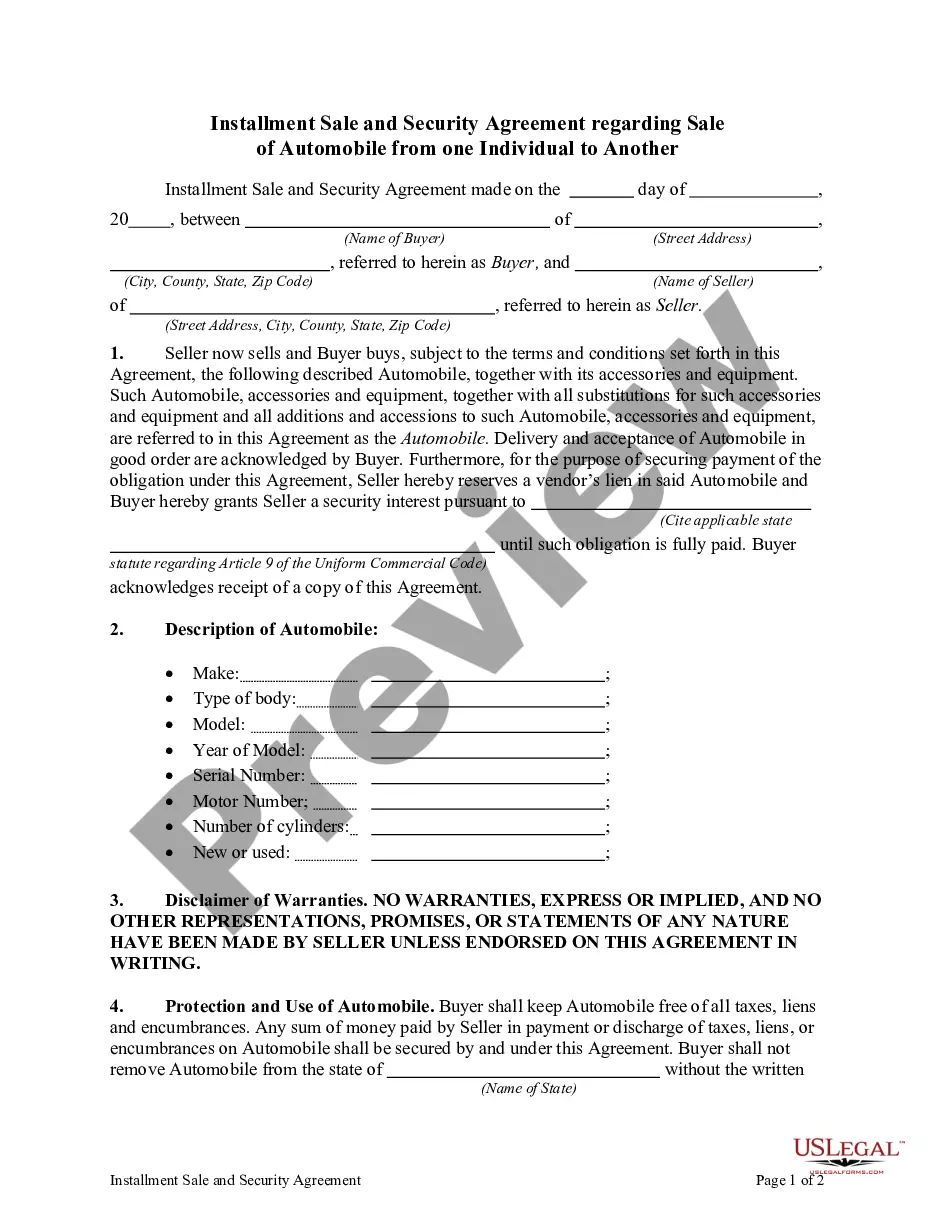
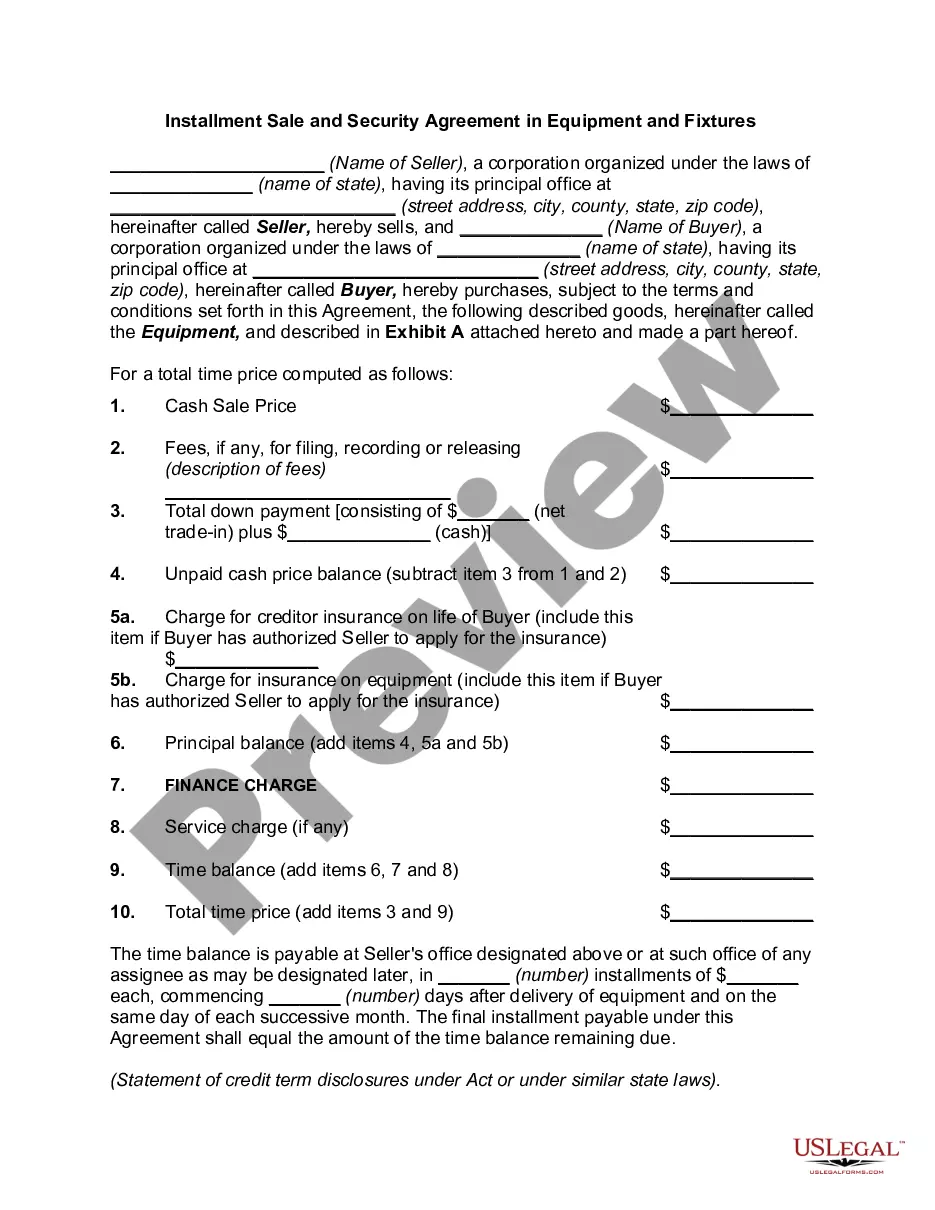
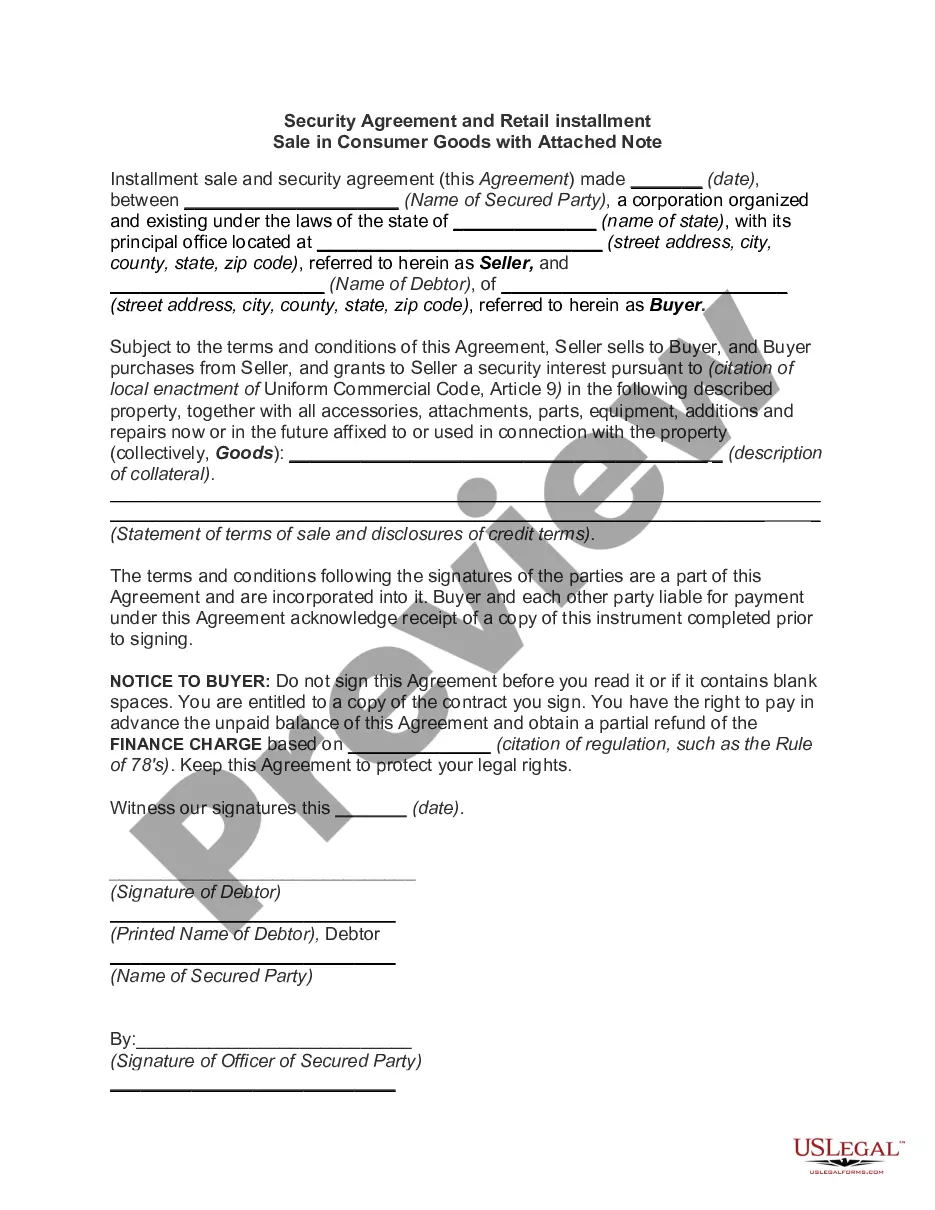
This form is an Installment Sale not covered by the Federal Consumer Credit Protection Act with Security Agreement. Its purpose is to create a security interest between the seller and buyer for goods sold on an installment basis when the seller does not qualify as a creditor under the Truth-in-Lending Act. Unlike standard consumer credit transactions, this agreement is tailored for scenarios that do not fall under federal consumer protection guidelines.
Key parts of this document
- Identification of the parties involved: seller (secured party) and buyer (debtor).
- Description of the goods being sold, which are subject to installment payments.
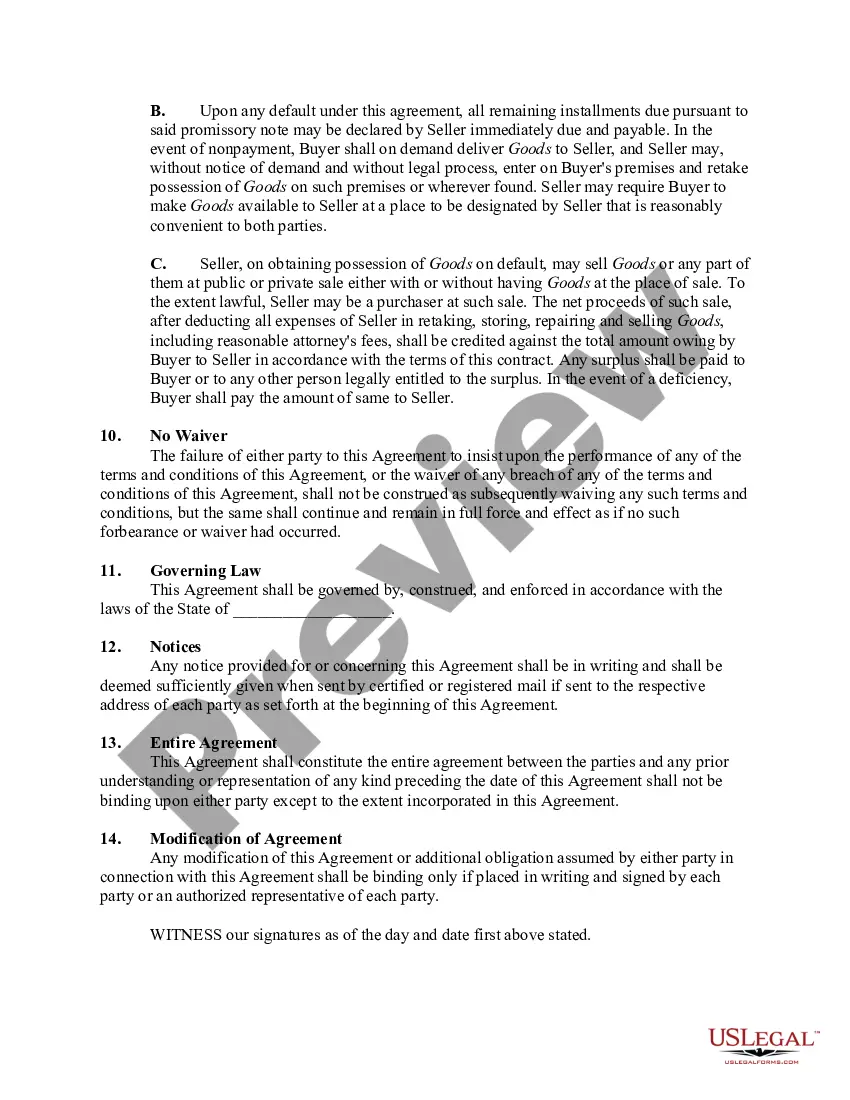
- Creation of security interest, securing the seller's rights in the goods until payment is made.
- Warranties and representations made by the buyer regarding the ownership and condition of the goods.
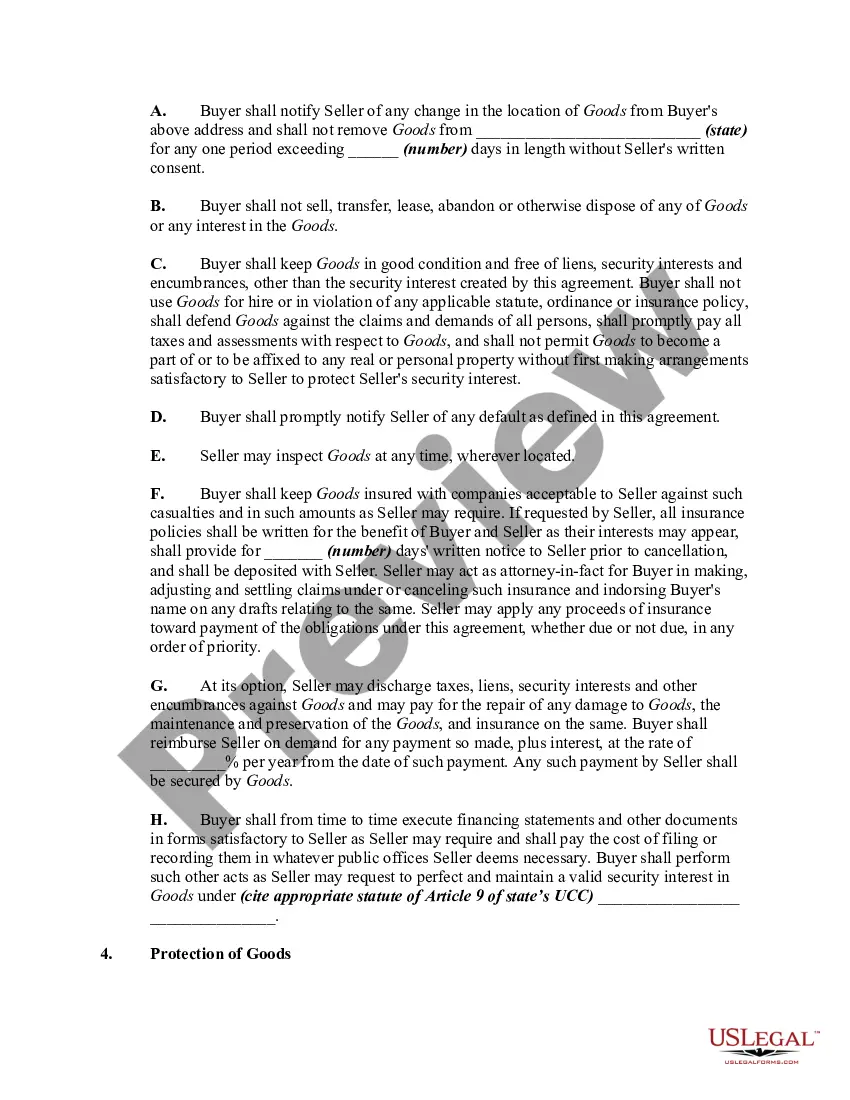
- Buyer's covenants, detailing responsibilities to maintain the goods and notify the seller of changes.
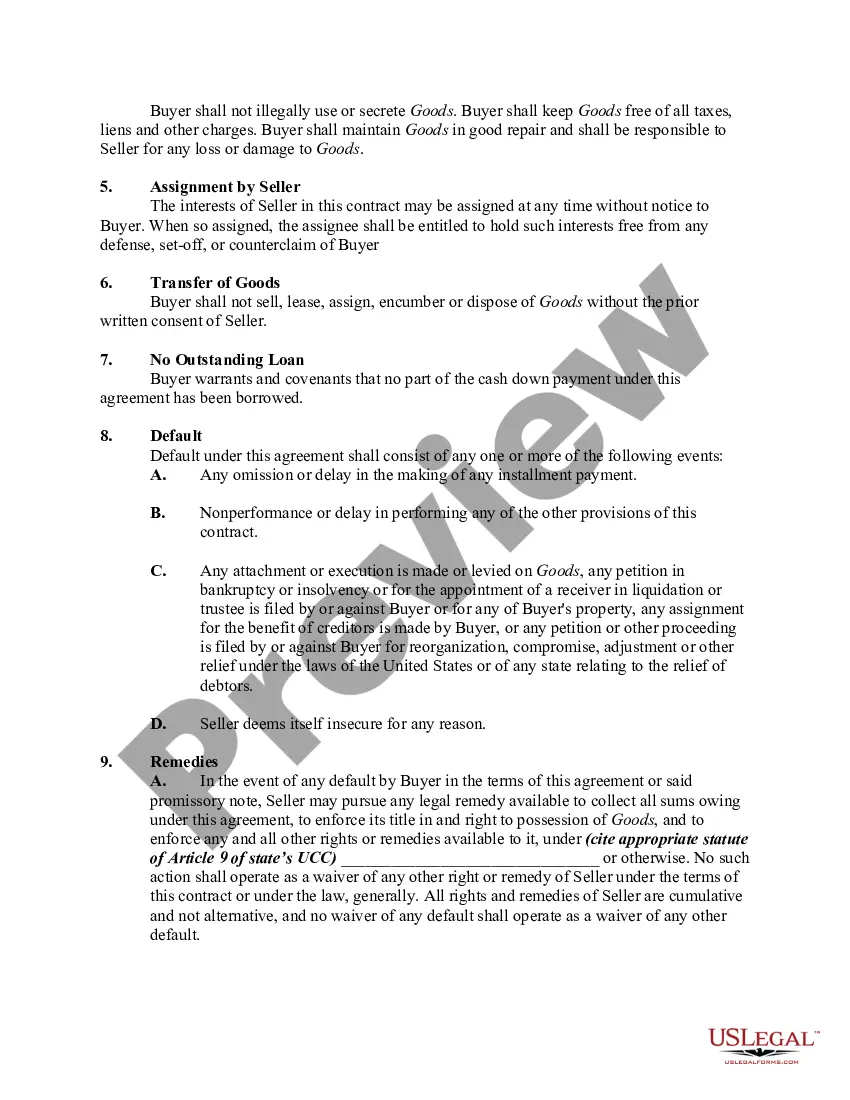
- Default conditions and remedies available to the seller in case of non-payment or other breaches.
When to use this document
This form should be used when a seller is providing goods to a buyer on an installment basis and wants to establish a security interest in the goods sold. It is particularly beneficial when the transaction does not qualify as consumer credit under the Truth-in-Lending Act. This agreement protects the sellerâs investment by ensuring that they can reclaim the goods if the buyer defaults on payment.
Intended users of this form
- Sellers who wish to sell goods on an installment plan without entering into a consumer credit transaction.
- Buyers interested in purchasing goods and agreeing to installment payments secured by the goods.
- Individuals or businesses needing formal documentation for the sale of goods while retaining security interest.
How to complete this form
- Identify and enter the names and addresses of the seller and buyer.
- Describe the goods being sold clearly and completely.
- Specify the date of the agreement and the total purchase price.
- Include details regarding the security interest and any relevant state statutes.
- Sign the agreement, ensuring both parties have initials where required.
Is notarization required?
This form does not typically require notarization unless specified by local law. However, it's advisable to check your state's requirements to confirm.
Get your form ready online
Our built-in tools help you complete, sign, share, and store your documents in one place.
Make edits, fill in missing information, and update formatting in US Legal Forms—just like you would in MS Word.
Download a copy, print it, send it by email, or mail it via USPS—whatever works best for your next step.
Sign and collect signatures with our SignNow integration. Send to multiple recipients, set reminders, and more. Go Premium to unlock E-Sign.
If this form requires notarization, complete it online through a secure video call—no need to meet a notary in person or wait for an appointment.
We protect your documents and personal data by following strict security and privacy standards.

Make edits, fill in missing information, and update formatting in US Legal Forms—just like you would in MS Word.

Download a copy, print it, send it by email, or mail it via USPS—whatever works best for your next step.

Sign and collect signatures with our SignNow integration. Send to multiple recipients, set reminders, and more. Go Premium to unlock E-Sign.

If this form requires notarization, complete it online through a secure video call—no need to meet a notary in person or wait for an appointment.

We protect your documents and personal data by following strict security and privacy standards.
Mistakes to watch out for
- Failing to accurately describe the goods, which can lead to disputes.
- Not specifying the proper state citation for the UCC, which may affect enforceability.
- Neglecting to sign the agreement or to obtain signatures from both parties.
- Overlooking the buyer's warranties and covenants, leading to potential liability issues.
Benefits of completing this form online
- Convenience of accessing the form anytime and anywhere for immediate use.
- Editability allows customization to meet specific transaction needs without starting from scratch.
- Reliability with documents drafted by licensed attorneys and updated as laws change.
Legal use & context
- This agreement serves to protect the sellerâs interest in the goods until full payment has been received.
- It's crucial for both parties to understand their rights and obligations as outlined, especially regarding default provisions.
- Always consult legal counsel to ensure compliance with local laws and to address any complexities in your specific transactions.
Main things to remember
- This form is essential for secure installment sales where the seller needs assurance of payment.
- Proper completion and understanding of the clauses are vital for both partiesâ protection.
- Always check for state-specific requirements to avoid potential legal issues.
Looking for another form?


Form popularity
FAQ
The provisions of the act apply to most types of consumer credit, including closed-end credit, such as car loans and home mortgages, and open-end credit, such as a credit card or home equity line of credit.
TRID rules apply to MOST consumer credit transactions secured by real property. These include mortgages, refinancing, construction-only loans closed-end home-equity loans, and loans secured by vacant land or by 25 or more acres.
Some examples of violations are the improper disclosure of the amount financed, finance charge, payment schedule, total of payments, annual percentage rate, and security interest disclosures. Under TILA, a creditor can be strictly liable for any violations, meaning that the creditor's intent is not relevant.
Identity of the creditor. Amount financed, Itemization of amount financed. Annual percentage rate, including applicable variable-rate disclosures, Finance charge, Total of payments, Payment schedule, Prepayment/late payment penalties,
Clearly and conspicuously In meaningful sequence, In writing, and. In a form the consumer may keep.
Credit given primarily for a business, commercial, or agricultural purpose; Credit extended to any entity other than a natural person (including credit to government agencies or instrumentalities);
The Truth in Lending Act (TILA) is a federal law enacted in 1968 to help protect consumers in their dealings with lenders and creditors.
Lenders must provide a Truth in Lending (TIL) disclosure statement that includes information about the amount of your loan, the annual percentage rate (APR), finance charges (including application fees, late charges, prepayment penalties), a payment schedule and the total repayment amount over the lifetime of the loan.
Generally, TILA requires creditors to disclose certain information things like APR, term of loan and total cost to borrower in a visible, noticeable way.If your creditor fails to provide you with these disclosures, they can be held liable for any financial harm you may suffer as a result.