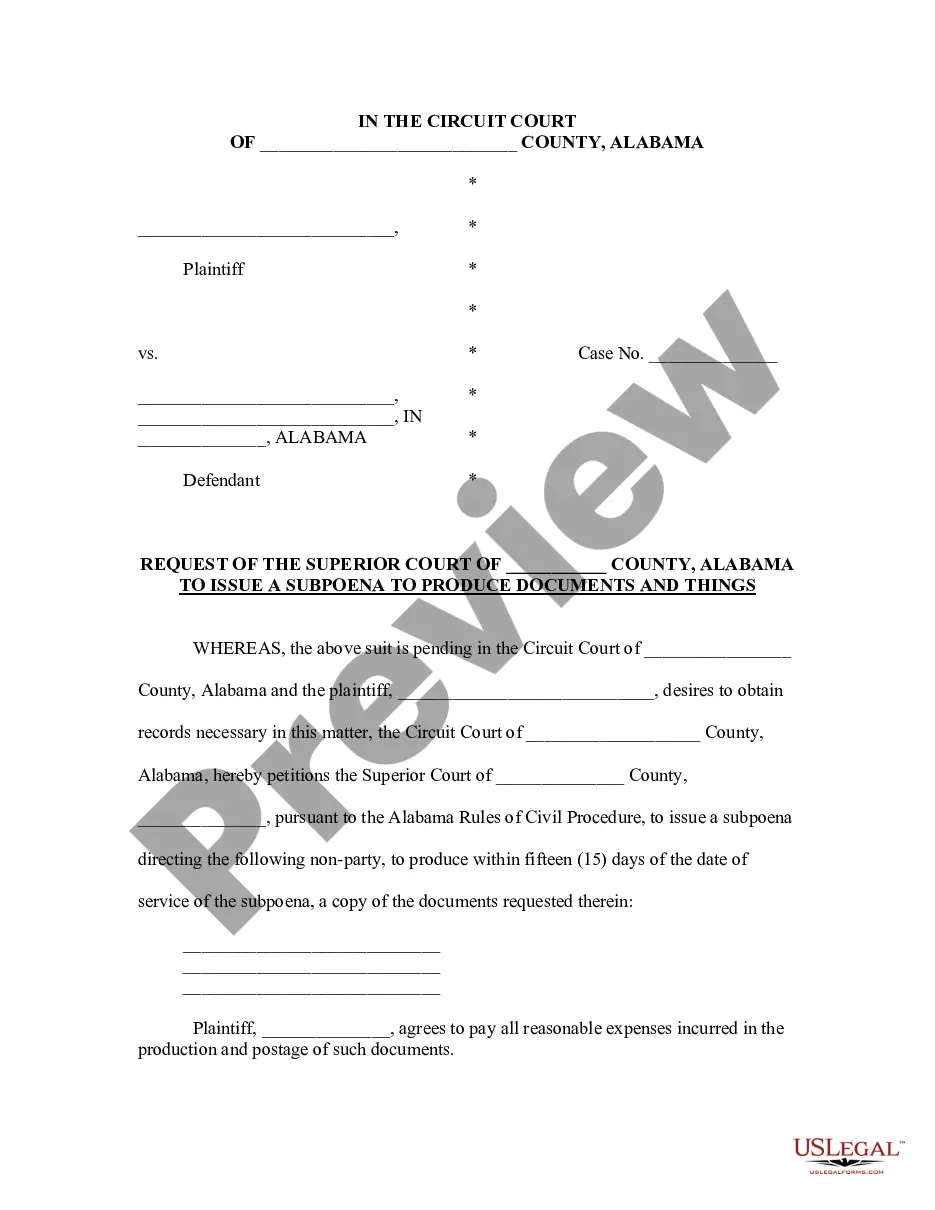
Assignment of Portion for Specific Amount of Money of Interest in Estate in Order to Pay Indebtedness
About this form
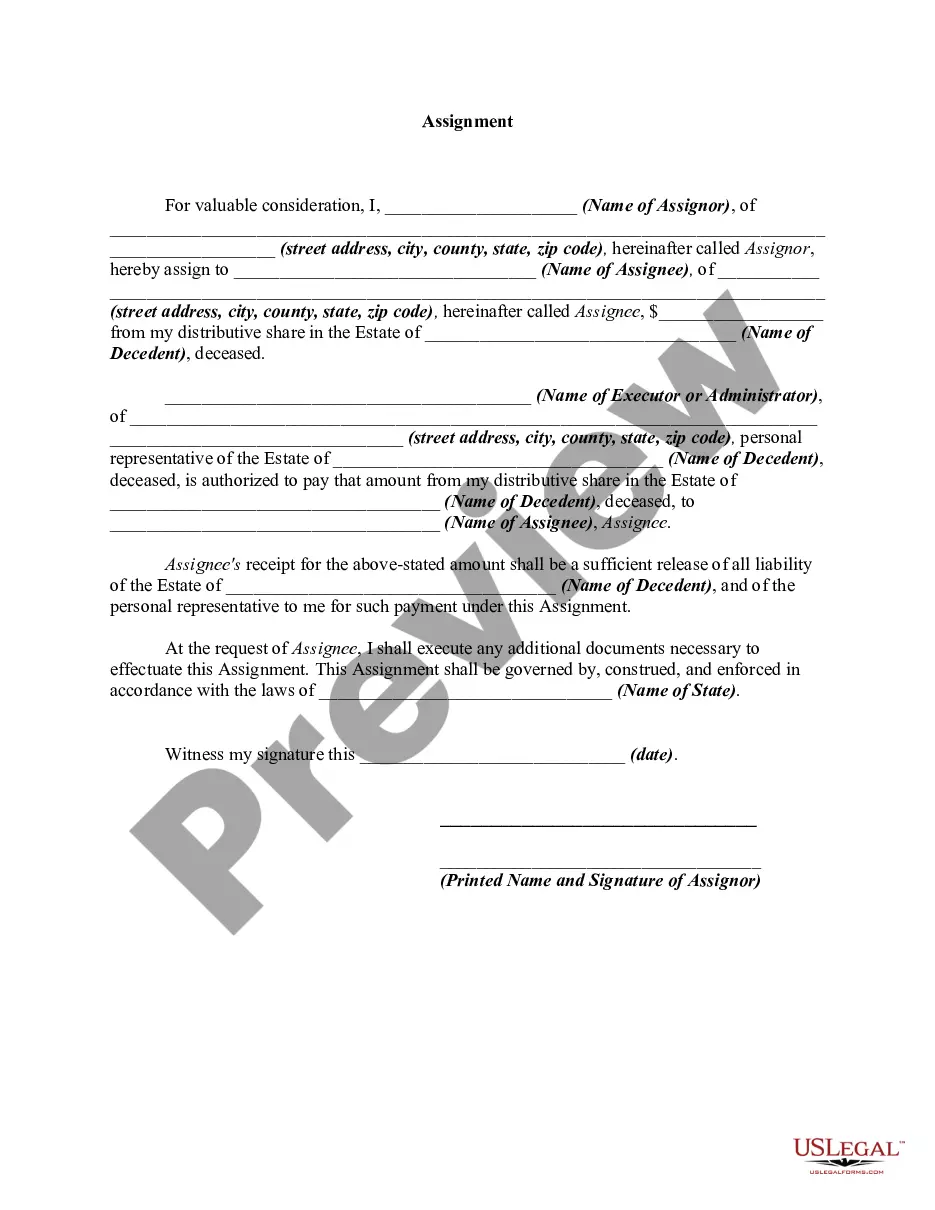
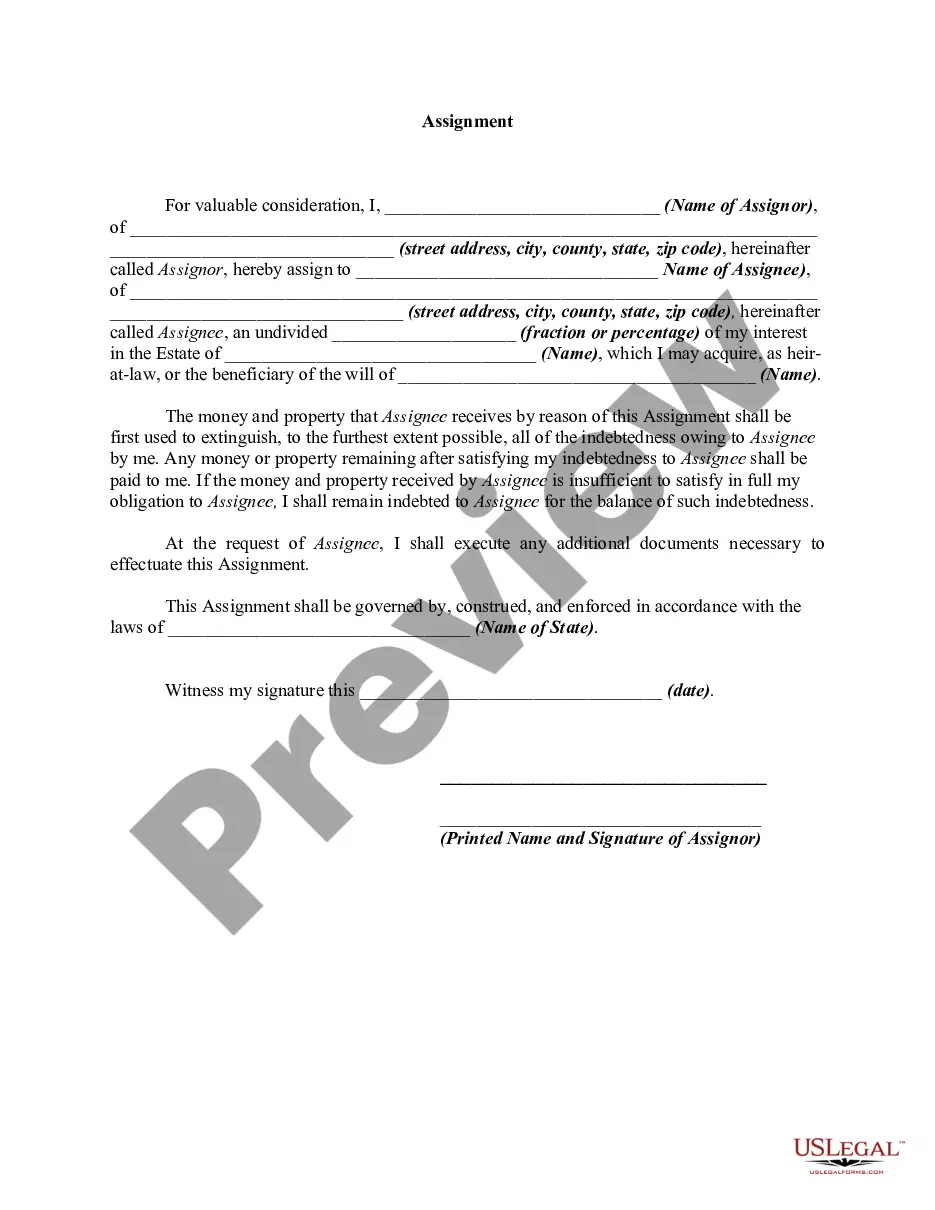
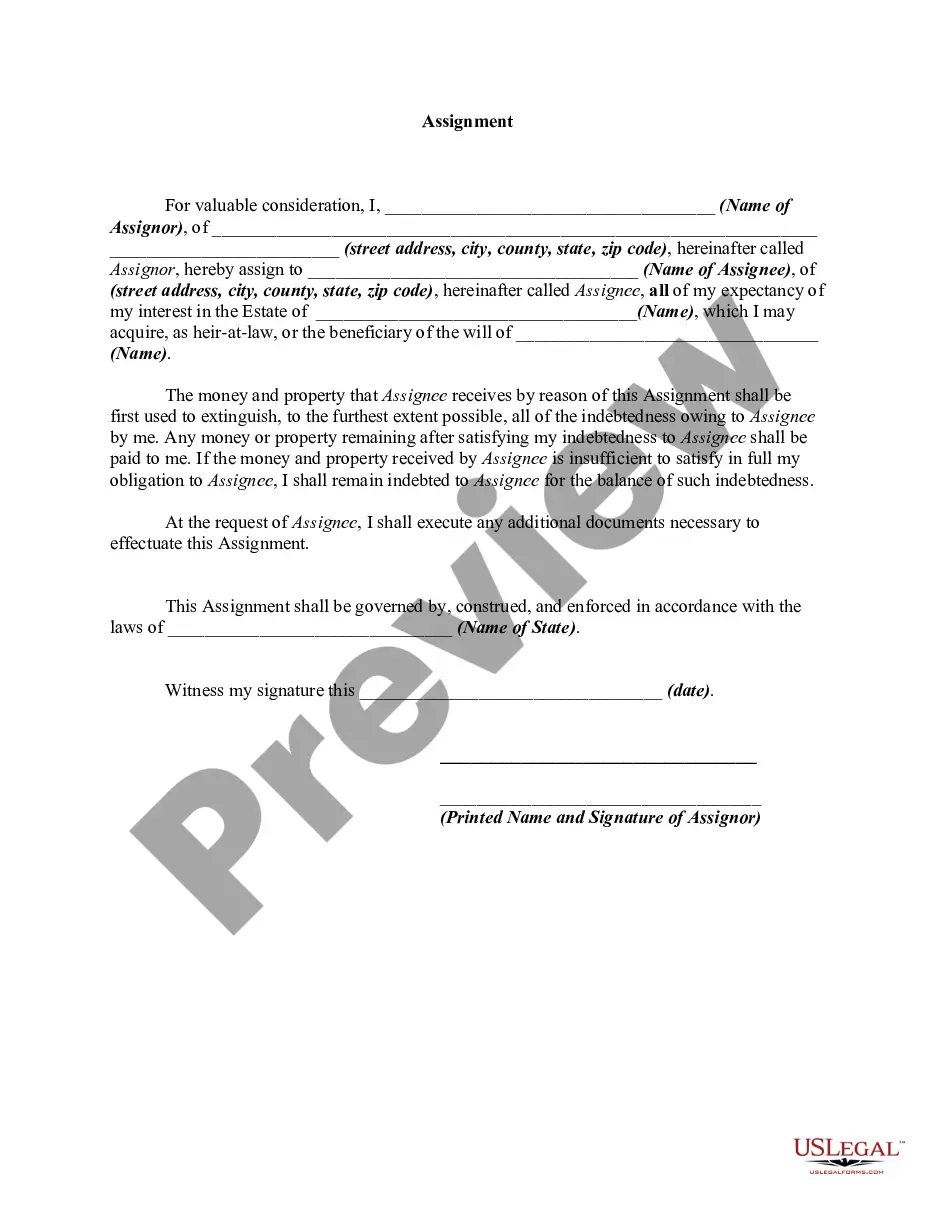
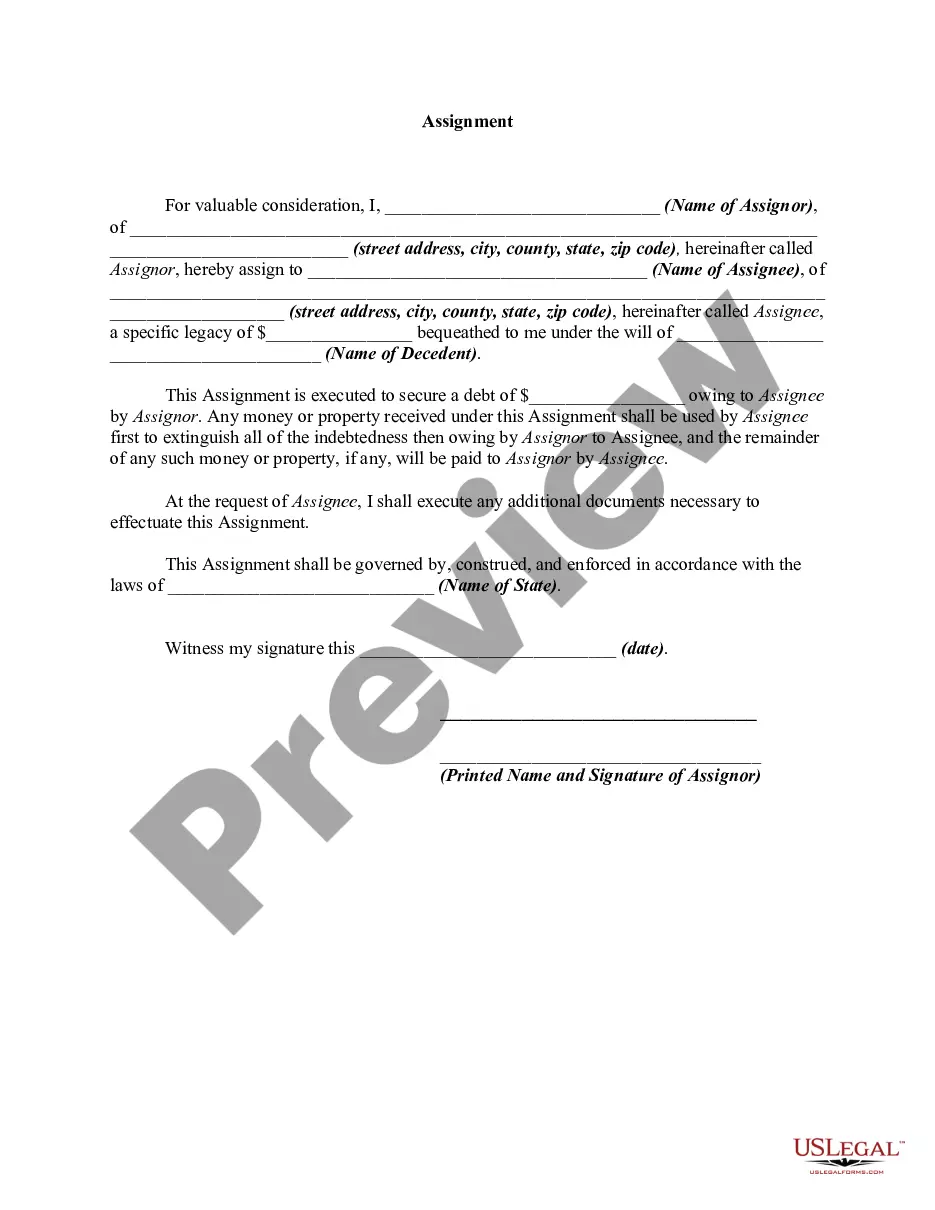
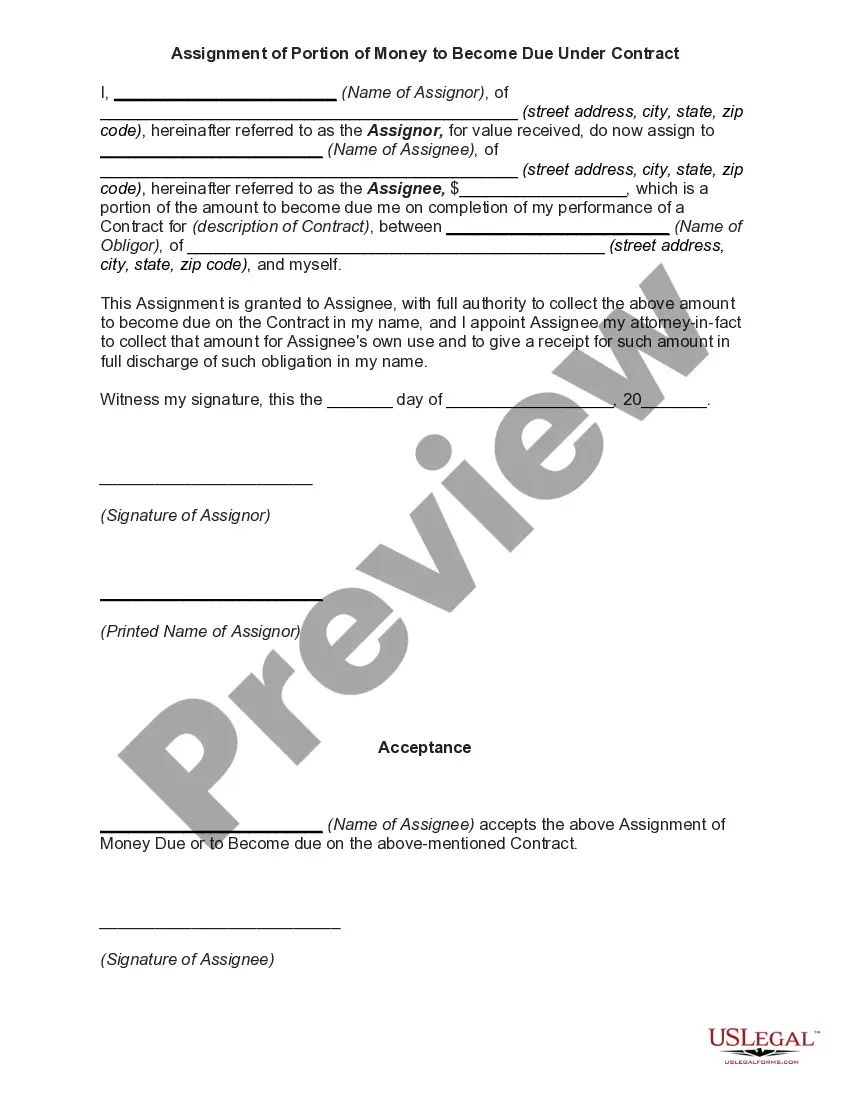
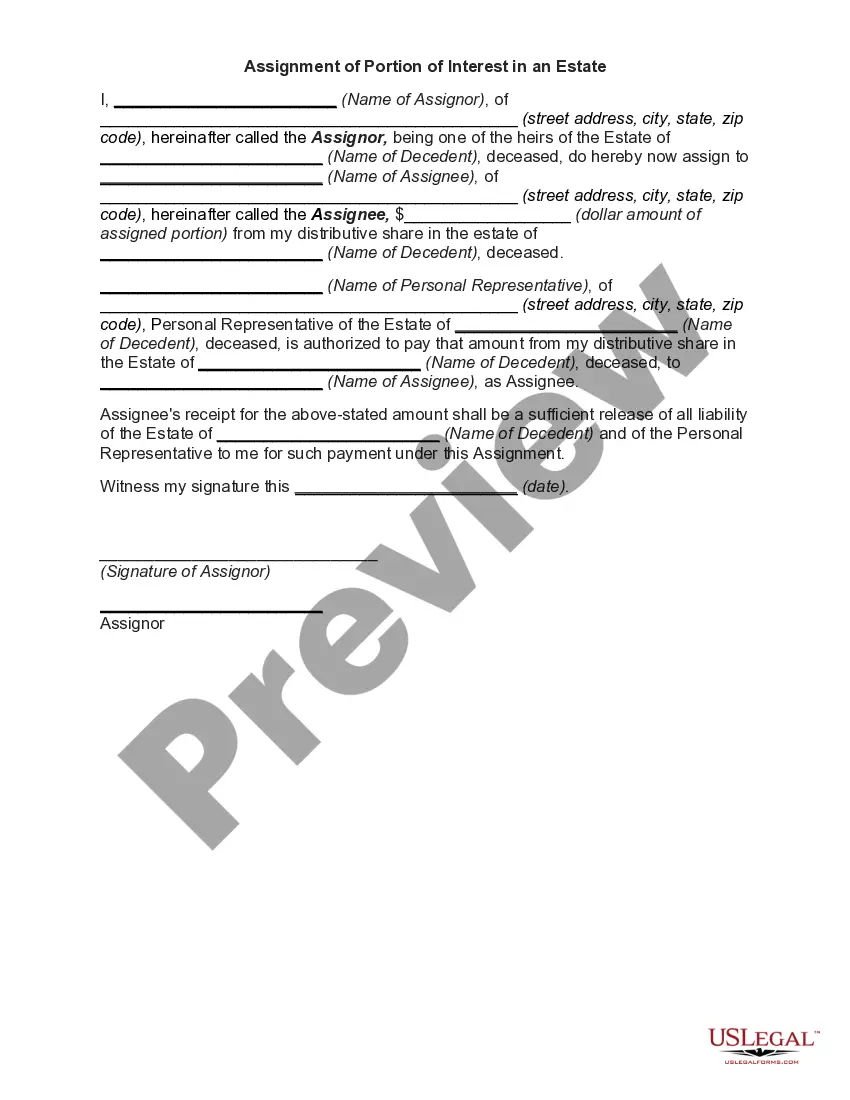
The Assignment of Portion for Specific Amount of Money of Interest in Estate in Order to Pay Indebtedness is a legal document used to transfer a specific portion of an individual's right to an estate to another party, usually to settle debts or obligations. This form is particularly important for estate beneficiaries looking to assign their rights in a way that complies with local laws, allowing for the efficient management of their distributive share in the estate of a deceased person. It differs from other estate-related forms by focusing specifically on the assignment of a monetary interest rather than other rights or properties.
Key components of this form
- Names and addresses of the Assignor and Assignee
- Name of the decedent and the estate
- Details on the specific amount assigned from the estate's distributive share
- Authorization clause for the executor or administrator to make payments
- Signature and printed name of the Assignor
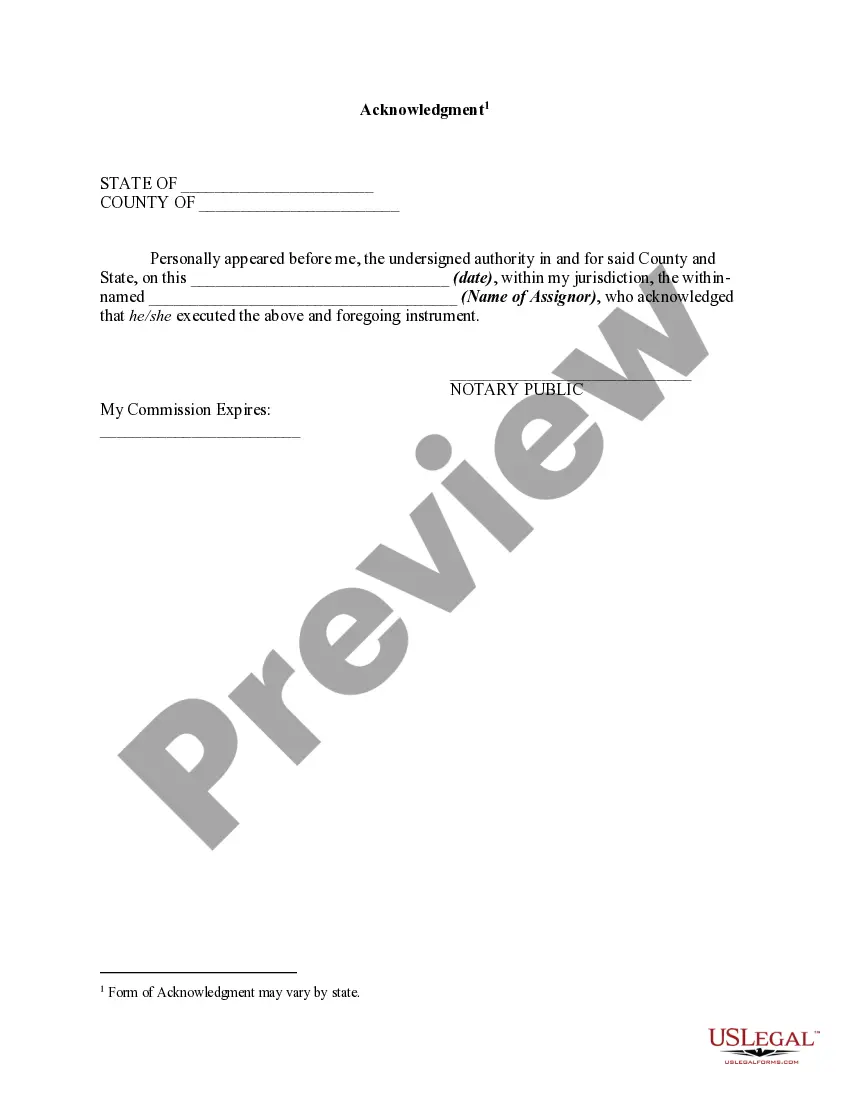
- Notary acknowledgment section for legal validation
When this form is needed
This form is used when an individual, as a beneficiary of an estate, needs to assign a portion of their interest to another person or entity to satisfy a debt or obligation. It is applicable in scenarios such as when an estate is distributing assets and the beneficiary prefers to settle debts outside the estate, or when a creditor requires secured payment from the estate's distribution. Additionally, it may be used when beneficiaries wish to facilitate financial transactions related to their inheritance.
Who needs this form
- Beneficiaries of an estate seeking to assign their interest
- Individuals needing to pay off debts using their share from an estate
- Executors or administrators managing estate distributions
- Creditors looking to secure payments from estate beneficiaries
How to prepare this document
- Identify the Assignor and Assignee by entering their full names and addresses.
- Specify the name of the decedent and their estate.
- Complete the section detailing the specific amount being assigned.
- Ensure the executor's name and address are correctly noted for authorization.
- Have the Assignor sign and date the form in the designated areas.
- Arrange for the notarization of the document to ensure its legal validity.
Does this document require notarization?
To make this form legally binding, it must be notarized. Our online notarization service, powered by Notarize, lets you verify and sign documents remotely through an encrypted video session.
Get your form ready online
Our built-in tools help you complete, sign, share, and store your documents in one place.
Make edits, fill in missing information, and update formatting in US Legal Forms—just like you would in MS Word.
Download a copy, print it, send it by email, or mail it via USPS—whatever works best for your next step.
Sign and collect signatures with our SignNow integration. Send to multiple recipients, set reminders, and more. Go Premium to unlock E-Sign.
If this form requires notarization, complete it online through a secure video call—no need to meet a notary in person or wait for an appointment.
We protect your documents and personal data by following strict security and privacy standards.

Make edits, fill in missing information, and update formatting in US Legal Forms—just like you would in MS Word.

Download a copy, print it, send it by email, or mail it via USPS—whatever works best for your next step.

Sign and collect signatures with our SignNow integration. Send to multiple recipients, set reminders, and more. Go Premium to unlock E-Sign.

If this form requires notarization, complete it online through a secure video call—no need to meet a notary in person or wait for an appointment.

We protect your documents and personal data by following strict security and privacy standards.
Common mistakes
- Failing to include the full names and addresses of all parties involved.
- Neglecting to specify the exact amount being assigned.
- Omitting the executor or administrator's details.
- Not obtaining notarization if required by local law.
- Forgetting to sign and date the document before submission.
Why complete this form online
- Convenient access to customizable form templates.
- Editable online format that allows users to fill out details easily.
- Instant download capability, saving time over traditional methods.
- Forms created by licensed attorneys for added reliability.
- Guidance provided to ensure proper completion and compliance.
Looking for another form?
Form popularity
FAQ
Usually, a trust prohibits beneficiaries from assigning their interest in the trust before distribution.
Those requirements are: That the estate assets are distributed at least 6 months after the deceased's date of death; That the executor has published a 30 day notice of his/her intent to distribute the estate; and. That the time specified in the notice has expired.
A personal representative has the discretion to make a partial distribution of assets during the administration of the estate.Once final expenses have been made and the estate is ready to close, the personal representative can distribute the remaining assets to the beneficiaries.
The assignment has to be filed with the probate court before the distribution can be made to the assignee. Note that inheritances from a trust typically cannot be assigned to someone else. Most trusts prohibit assigning an undistributed trust inheritance.There are legal restrictions on disclaiming an inheritance.
A beneficiary can also transfer his interest in the trust property and every person to whom a beneficiary transfers his interest acquires the rights and liabilities of the beneficiary at the date of the transfer.
After someone dies, it can be a number of months before the assets are distributed to the beneficiaries. If a Grant of Probate is necessary, the Supreme Court needs to be informed of the current assets and liabilities of the deceased before probate can occur.
Generally, beneficiaries have to wait a certain amount of time, say at least six months. That time is used to allow creditors to come forward and to pay them off with the estate assets. (In some cases, an executor may make partial distributions to the heirs after he or she estimates the debts.
Divide up assets based on their value. Instruct your executor to divide assets equally. Instruct your executor to sell everything and then distribute the proceeds to your beneficiaries equally.
Most assets can be distributed by preparing a new deed, changing the account title, or by giving the person a deed of distribution. For example: To transfer a bank account to a beneficiary, you will need to provide the bank with a death certificate and letters of administration.