Secrecy, Nondisclosure and Confidentiality Agreement - Promoter to Inventor
Understanding this form
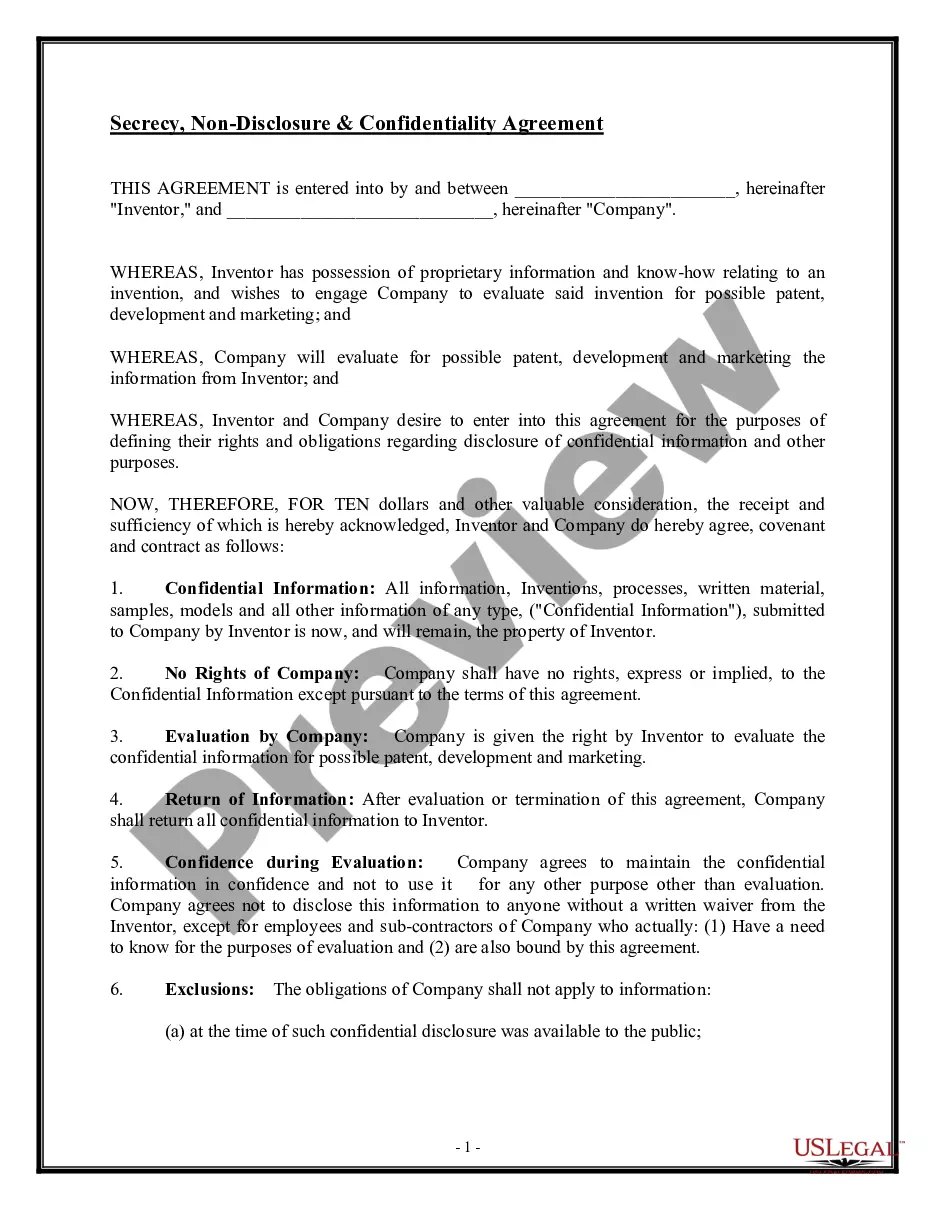
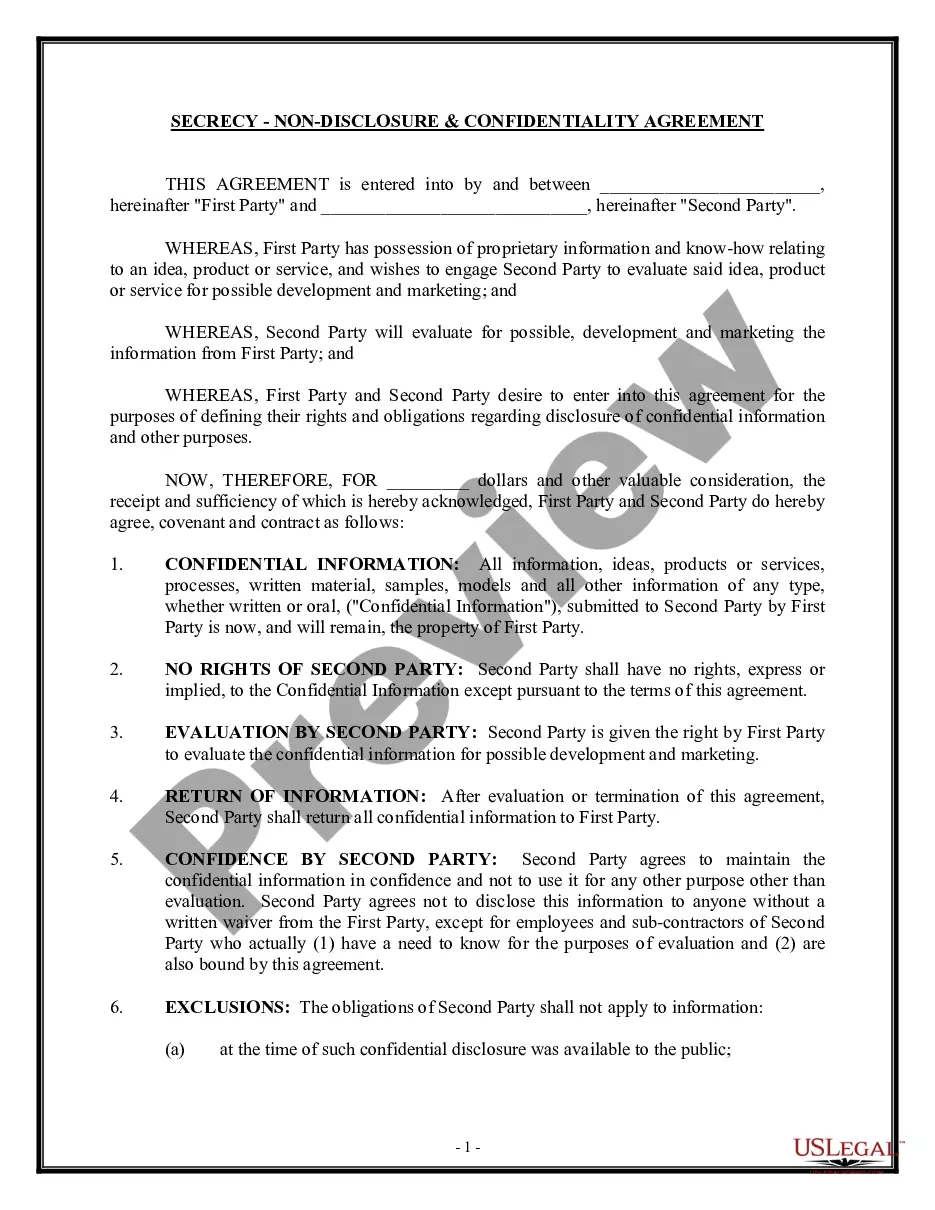
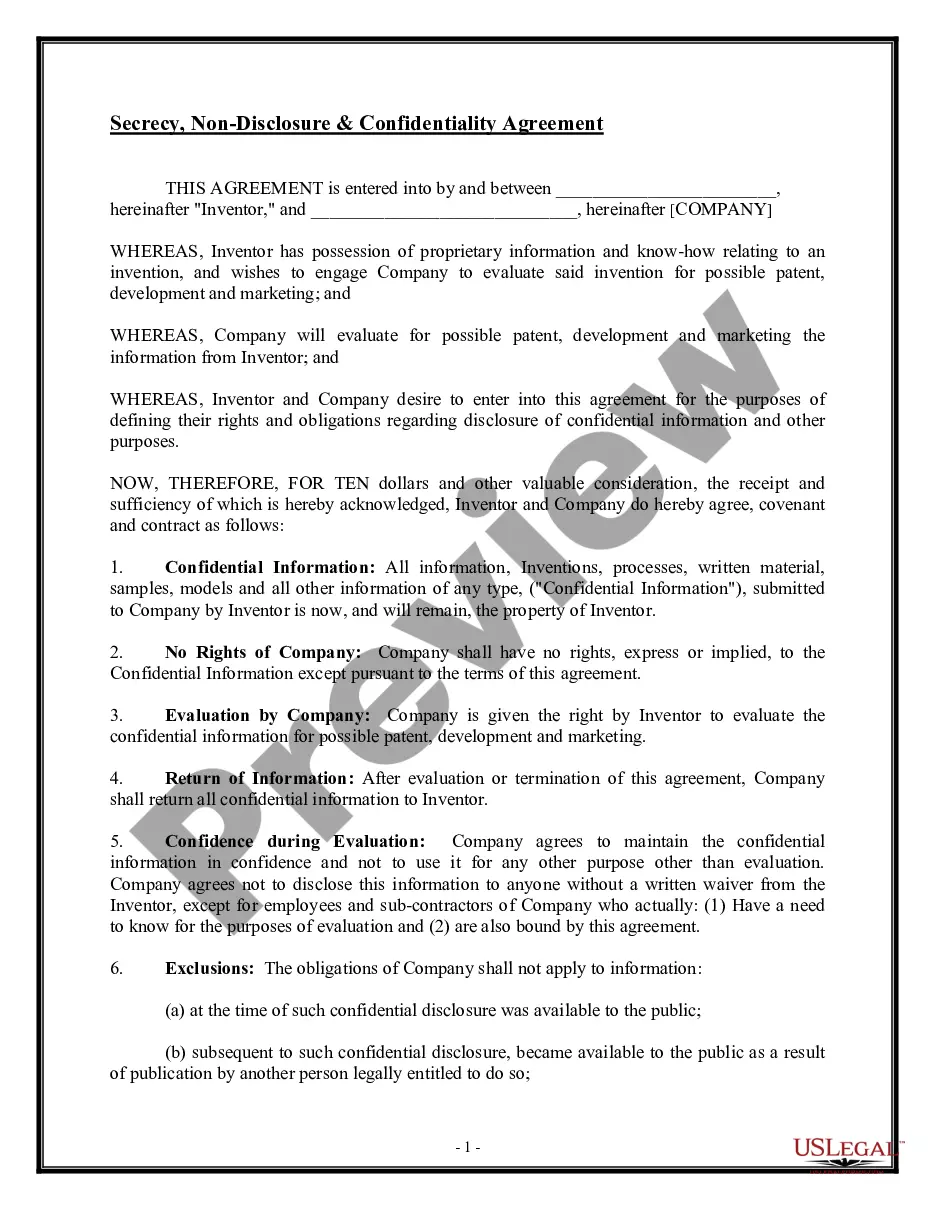
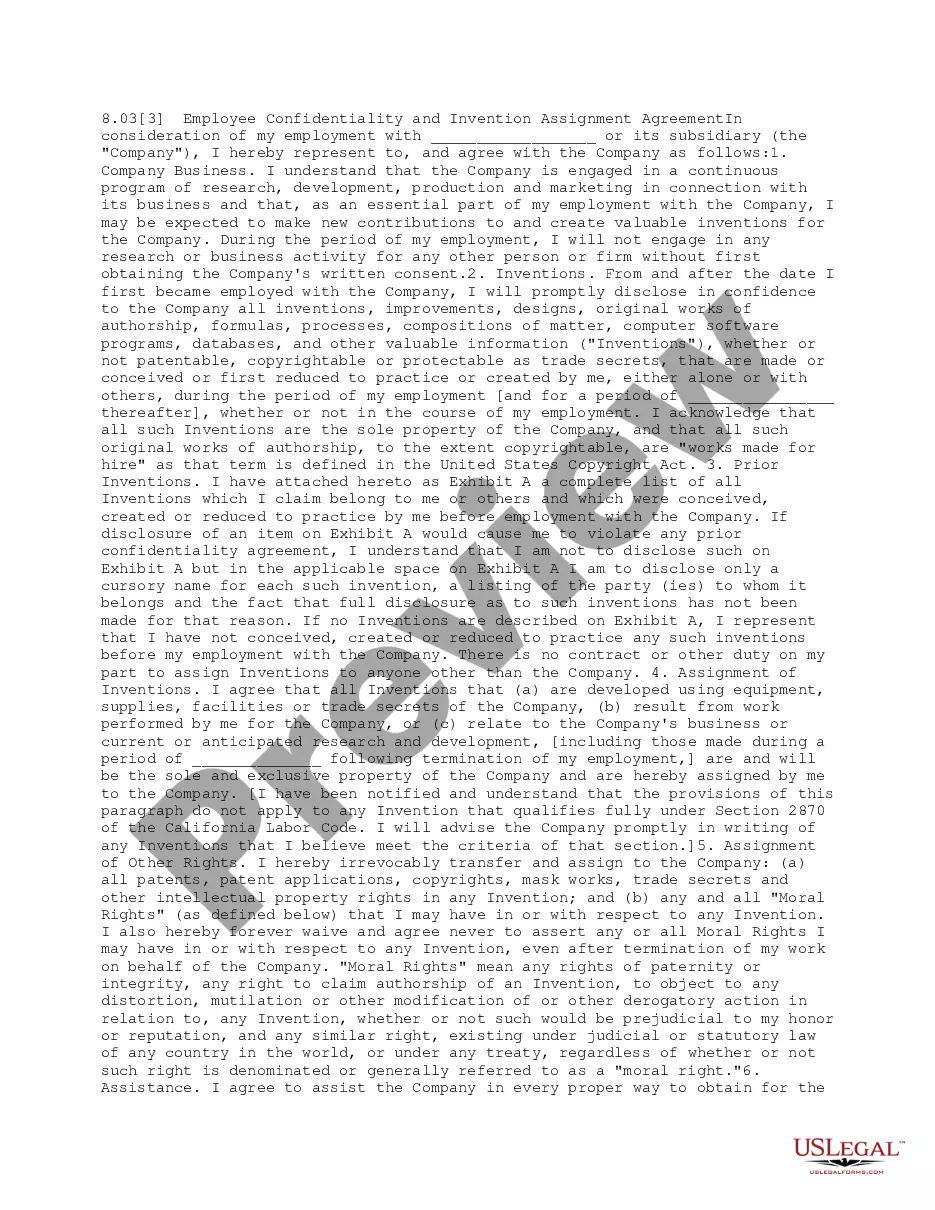
The Secrecy, Nondisclosure and Confidentiality Agreement - Promoter to Inventor is a legal document designed to protect proprietary information between an inventor and a company. This agreement ensures that any confidential information shared during the evaluation of an invention remains confidential and is only used for its intended purpose of evaluation for potential patent, development, and marketing. Unlike other non-disclosure agreements, this form specifically emphasizes the rights of inventors and the limitations placed on companies in relation to the confidential information disclosed.
Main sections of this form
- Definition of Confidential Information: Defines what constitutes confidential information and asserts it remains the inventor's property.
- No Rights of Company: Stipulates that the company holds no rights to the information outside the terms of the agreement.
- Evaluation Permission: Grants the company permission to evaluate the confidential information for specified purposes.
- Return of Information: Requires the company to return all confidential information after the evaluation or termination of the agreement.
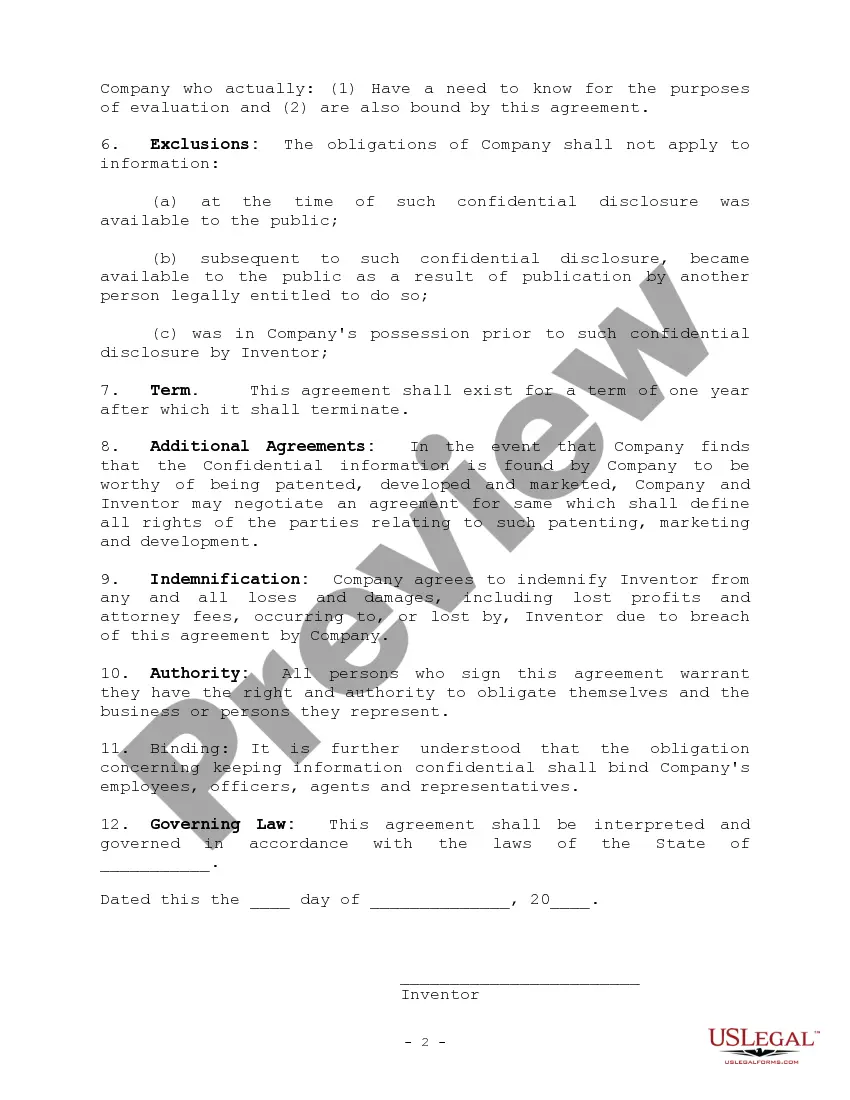
- Indemnification: Protects the inventor by holding the company responsible for any losses due to breaches of the agreement.
- Governing Law: Specifies the state law governing the agreement and its interpretation.
When to use this form
This form should be used when an inventor considers sharing proprietary information with a company for evaluation purposes, such as seeking potential patenting, development, and marketing opportunities. It is essential in scenarios where the inventor wants to ensure their confidential information is protected and cannot be used or disclosed without proper consent.
Who should use this form
- Inventors who possess unique inventions or proprietary information that they wish to discuss with a company.
- Companies evaluating inventions for potential patenting, development, and marketing.
- Legal professionals assisting inventors or companies in drafting agreements to protect confidential information.
Steps to complete this form
- Identify the parties involved, providing the names of the inventor and the company.
- Define the scope of the confidential information being shared.
- Specify the duration of the agreement, typically one year from the date of signing.
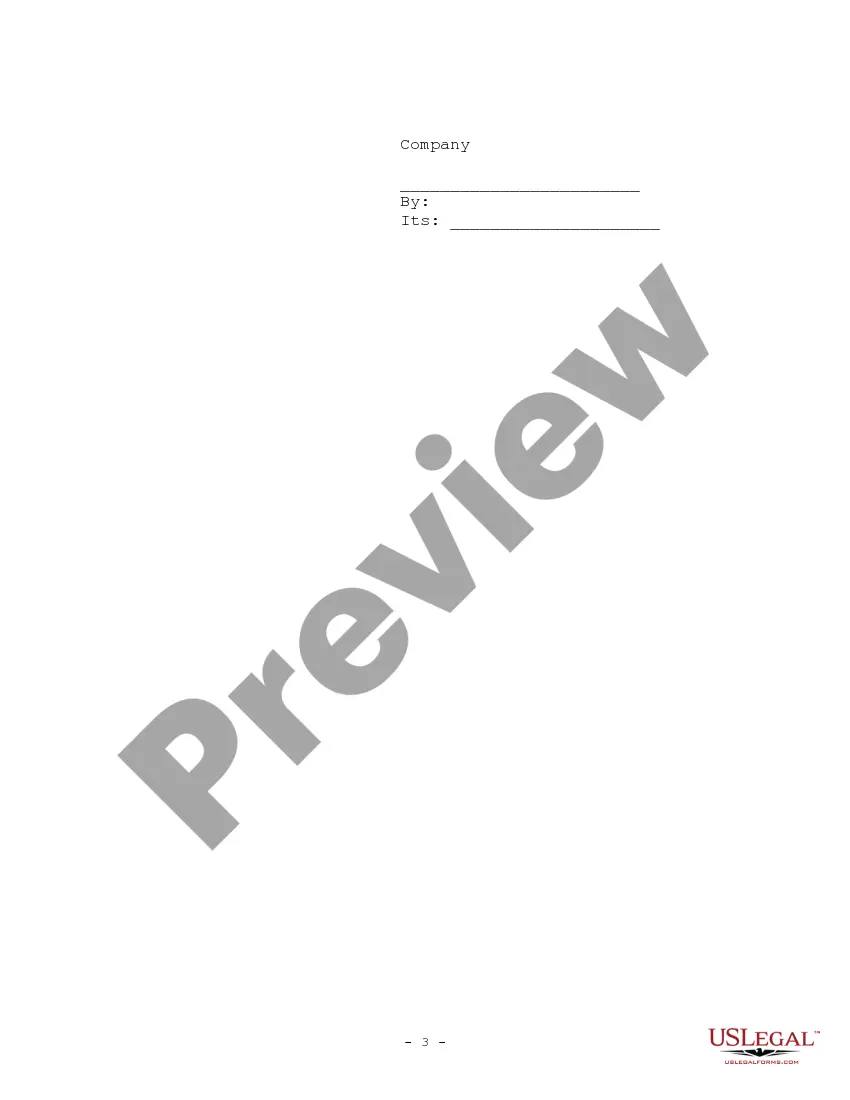
- Ensure all parties sign and date the agreement to confirm their consent to the terms.
- Include any necessary acknowledgments regarding authority to sign on behalf of the company.
Is notarization required?
Notarization is not commonly needed for this form. However, certain documents or local rules may make it necessary. Our notarization service, powered by Notarize, allows you to finalize it securely online anytime, day or night.
Get your form ready online
Our built-in tools help you complete, sign, share, and store your documents in one place.
Make edits, fill in missing information, and update formatting in US Legal Forms—just like you would in MS Word.
Download a copy, print it, send it by email, or mail it via USPS—whatever works best for your next step.
Sign and collect signatures with our SignNow integration. Send to multiple recipients, set reminders, and more. Go Premium to unlock E-Sign.
If this form requires notarization, complete it online through a secure video call—no need to meet a notary in person or wait for an appointment.
We protect your documents and personal data by following strict security and privacy standards.

Make edits, fill in missing information, and update formatting in US Legal Forms—just like you would in MS Word.

Download a copy, print it, send it by email, or mail it via USPS—whatever works best for your next step.

Sign and collect signatures with our SignNow integration. Send to multiple recipients, set reminders, and more. Go Premium to unlock E-Sign.

If this form requires notarization, complete it online through a secure video call—no need to meet a notary in person or wait for an appointment.

We protect your documents and personal data by following strict security and privacy standards.
Common mistakes
- Failing to clearly define what constitutes confidential information, leading to potential disputes.
- Not ensuring that all relevant parties sign the agreement, which could nullify its effectiveness.
- Neglecting to include a return of information clause, which is crucial after the evaluation period.
- Not specifying the governing law, which could create legal issues if disputes arise.
Why complete this form online
- Convenience of instant access to a legally sound form that can be downloaded and completed at your convenience.
- Editability allows you to tailor the agreement to your specific needs before finalization.
- Reliability of having a form drafted by licensed attorneys, ensuring its legal soundness.
Legal use & context
- This agreement helps protect intellectual property and encourages sharing of ideas with minimized risk of information theft.
- Enforceability depends on the clarity of definitions within the agreement and adherence to the agreed-upon terms.
- Parties must comply with relevant jurisdictional laws to ensure that the confidentiality obligations hold up in court.
Key takeaways
- This agreement protects the inventor's proprietary information during evaluations.
- It clarifies the limits of the company's use of the confidential information.
- Ensure all parties understand their rights and obligations under this agreement.
Looking for another form?
Form popularity
FAQ
Non-disclosure agreements are an important legal framework used to protect sensitive and confidential information from being made available by the recipient of that information. Companies and startups use these documents to ensure that their good ideas won't be stolen by people they are negotiating with.
An employer will often require an employee to sign an NDA because it allows their company to operate at a higher level, with less risk.Understand, your employer is not asking you to sign an NDA out of mistrust, they are asking you to sign one because it is essential to conducting business smoothly and efficiently.
The cold hard truth is that most NDAs do not hold up in court. Non-Disclosure Agreements are most effective in establishing a paper trail of confidential information as it relates to partnerships, and discouraging partners from misappropriating proprietary information.
NDAs are legally enforceable contracts, but they're now coming under increased scrutiny from lawmakers, attorneys and legal experts.Companies often use them as part of an employment contract or settlement agreement to protect sensitive information like trade secrets.
It clearly states (in written format), anything that comes under the bracket of 'confidential', in the long run avoiding any ambiguity or loss of information. It maintains the secrecy of the information shared between two or more parties and reduces the chances of important information going out of the organisation.
You can use an NDA with your employees to protect your company's confidential data. The NDA requires the Receiving Party of confidential information, in this case your employees, to maintain secrecy and not to misuse the information. Trust is like blood pressure.
The nondisclosure agreement should identify the parties to the agreement and which one is the disclosing party, or side sharing the information, and the recipient. Names and addresses of the parties should be included. The agreement should also identify other individuals who may be parties to the agreement.