Promoter to Inventor Confidentiality Agreement
What is this form?
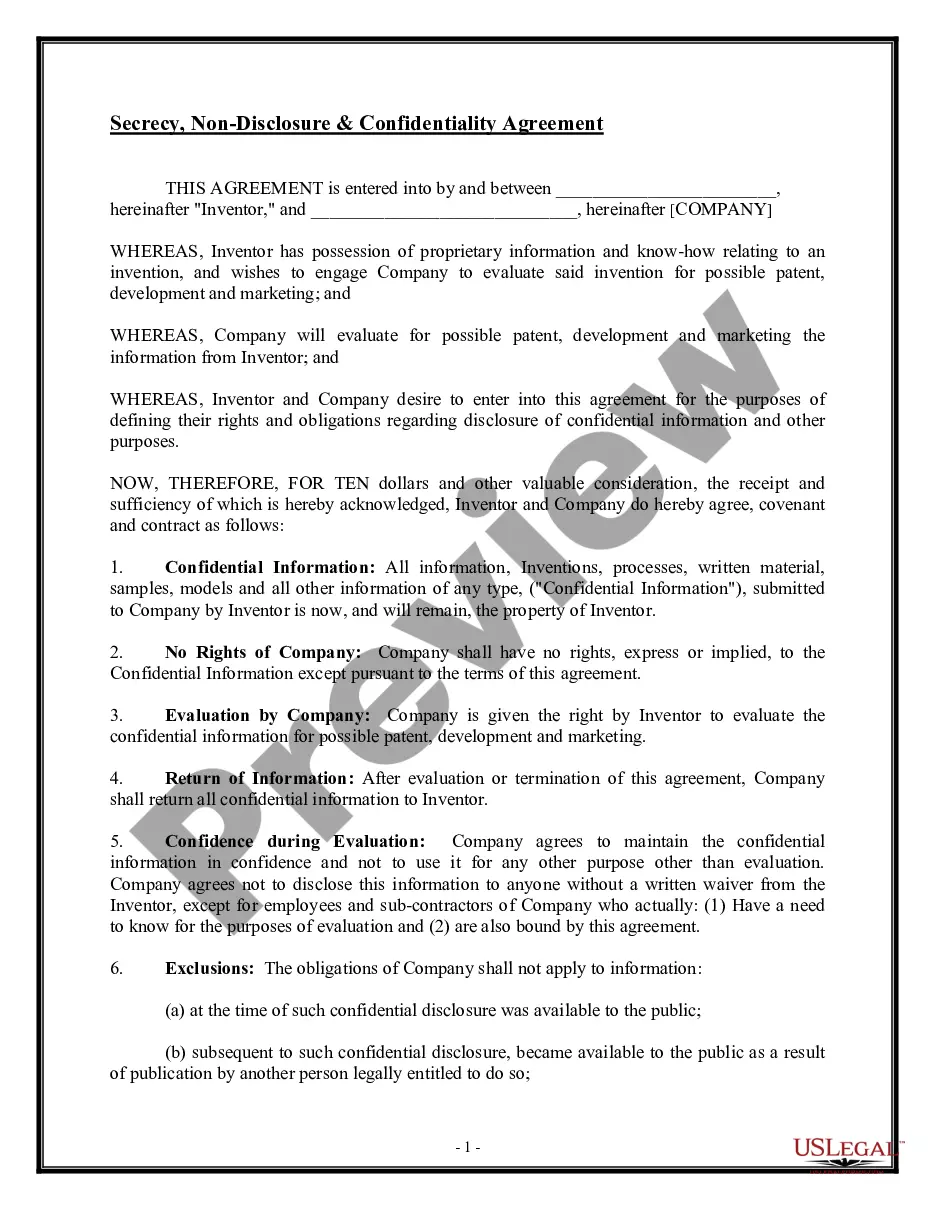
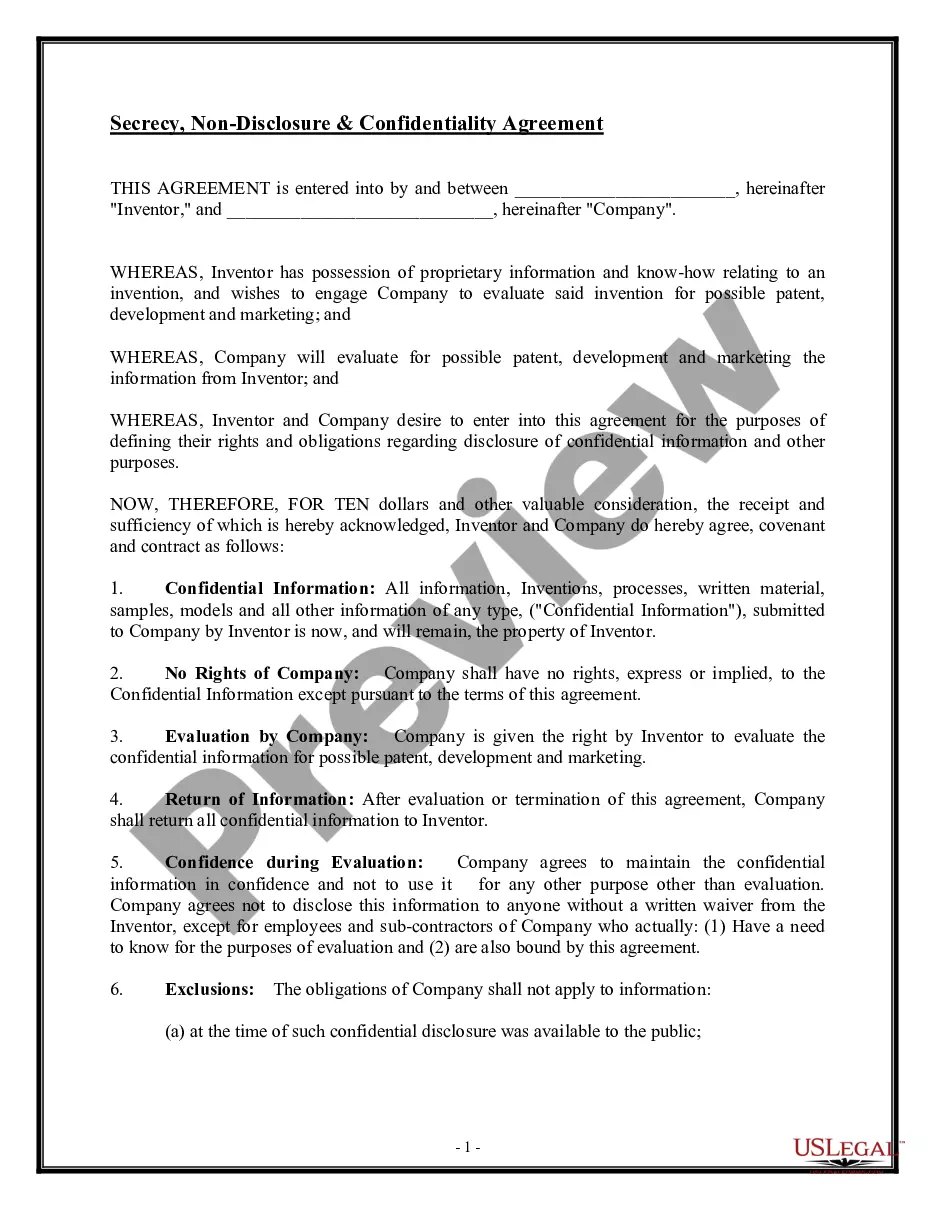
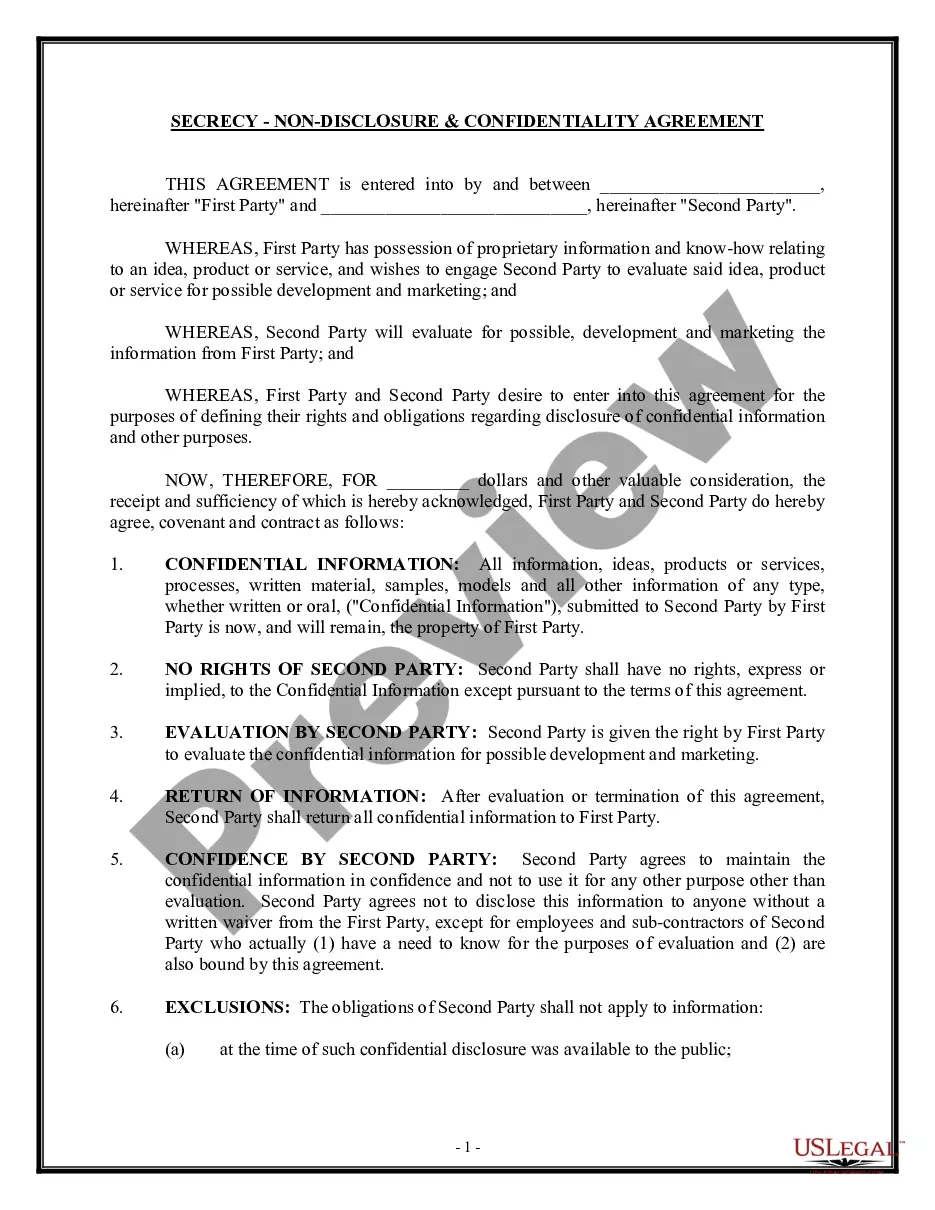
The Promoter to Inventor Confidentiality Agreement is a legal instrument designed to protect the proprietary information of an inventor when engaging a company for evaluation of their invention. This form ensures that sensitive details related to the invention remain confidential and outlines the rights and obligations of both parties during this evaluation process. Unlike general confidentiality agreements, this form specifically targets the relationship between inventors and companies evaluating inventions for potential patent and development opportunities.
Form components explained
- Definitions of 'Confidential Information' regarding sensitive materials shared by the inventor.
- Clarification that the company has no rights to the confidential information beyond the evaluation scope.
- Terms outlining the evaluation period and the company's responsibilities in handling the confidential information.
- Provisions for returning confidential materials after the evaluation or termination of the agreement.
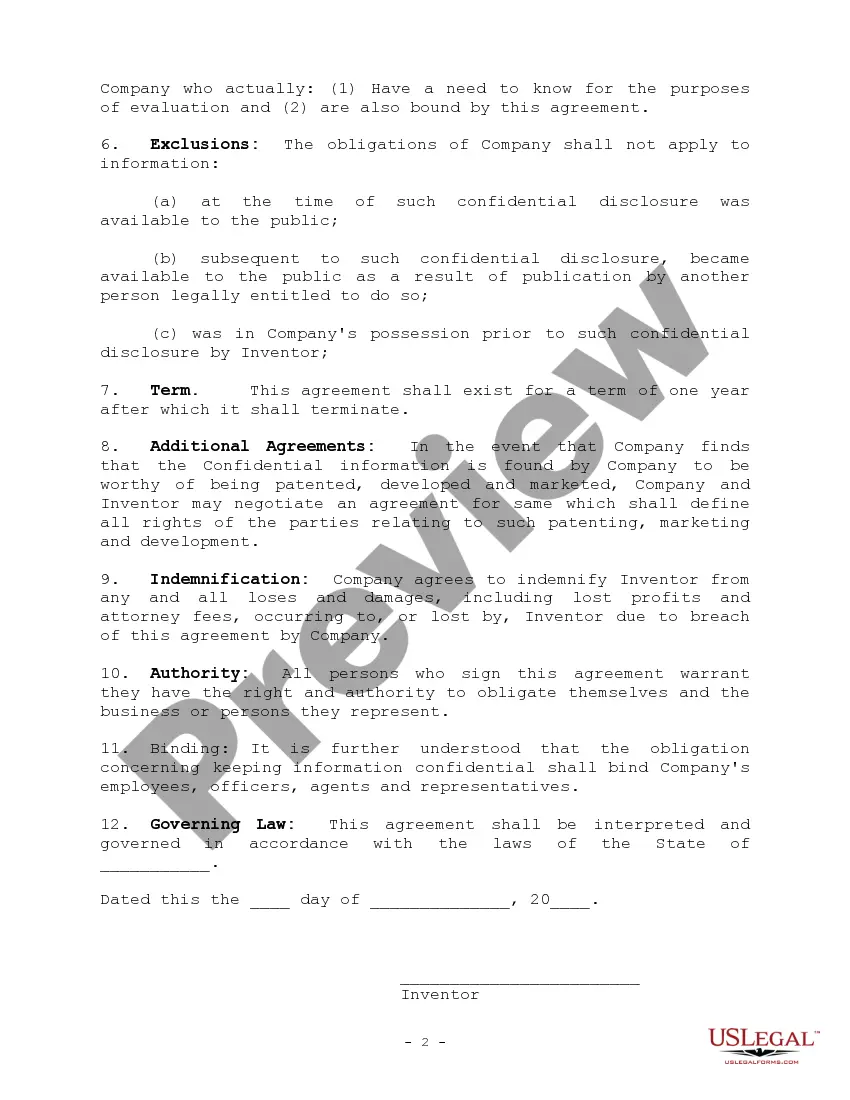
- Exclusions detailing circumstances under which the confidentiality obligations do not apply.
- Indemnification clause protecting the inventor from losses due to the company's breach of the agreement.
When to use this document
This agreement is particularly useful when an inventor seeks to collaborate with a company to explore the viability of their invention. It is appropriate in scenarios like technology licensing, joint ventures in product development, or when presenting a new idea to potential investors. It safeguards the inventor's proprietary information while enabling the company to assess the invention's merit for patenting and commercialization.
Who this form is for
- Inventors or creators looking to protect their intellectual property when discussing their inventions with businesses.
- Companies interested in evaluating new inventions and products for potential investment or development.
- Collaborators who need a clear framework for confidentiality before engaging in discussions about inventions.
How to prepare this document
- Identify and enter the names of the parties involved, including the inventor and the company.
- Clearly define what constitutes 'Confidential Information' that will be shared.
- Specify the evaluation period for how long the agreement will remain in force.
- Include any exclusions regarding the confidentiality obligations as applicable.
- Sign and date the agreement to establish its validity.
Notarization requirements for this form
This form does not typically require notarization unless specified by local law. However, having notarized signatures can enhance the document's validity and enforceability in certain jurisdictions.
Get your form ready online
Our built-in tools help you complete, sign, share, and store your documents in one place.
Make edits, fill in missing information, and update formatting in US Legal Forms—just like you would in MS Word.
Download a copy, print it, send it by email, or mail it via USPS—whatever works best for your next step.
Sign and collect signatures with our SignNow integration. Send to multiple recipients, set reminders, and more. Go Premium to unlock E-Sign.
If this form requires notarization, complete it online through a secure video call—no need to meet a notary in person or wait for an appointment.
We protect your documents and personal data by following strict security and privacy standards.

Make edits, fill in missing information, and update formatting in US Legal Forms—just like you would in MS Word.

Download a copy, print it, send it by email, or mail it via USPS—whatever works best for your next step.

Sign and collect signatures with our SignNow integration. Send to multiple recipients, set reminders, and more. Go Premium to unlock E-Sign.

If this form requires notarization, complete it online through a secure video call—no need to meet a notary in person or wait for an appointment.

We protect your documents and personal data by following strict security and privacy standards.
Common mistakes
- Failing to clearly define what information is considered confidential.
- Not specifying the evaluation period, leading to ambiguity about the agreement's duration.
- Neglecting to obtain all necessary signatures before sharing confidential information.
Advantages of online completion
- Convenient access to the form can save time in drafting and ensures you start with a professional template.
- Editable format allows for quick customization to fit specific needs or circumstances.
- Reliable legal framework provided by licensed attorneys helps ensure the adequacy of legal protections.
What to keep in mind
- The Promoter to Inventor Confidentiality Agreement protects sensitive information shared during evaluations.
- The agreement defines the rights and obligations of both parties involved.
- Using this form helps prevent unauthorized disclosure of proprietary information.
Looking for another form?
Form popularity
FAQ
While an NDA gives you a limited level of protection (which in many cases can easily be bypassed), a patent offers you rock-solid, legally binding, enforceable-by-stiff-penalties PROOF of idea ownership.
The forms of confidentiality agreements In mutual confidentiality agreements, each party is treated as both a discloser of its?and a recipient of the other party's?confidential information (such as when two companies form a strategic marketing alliance).
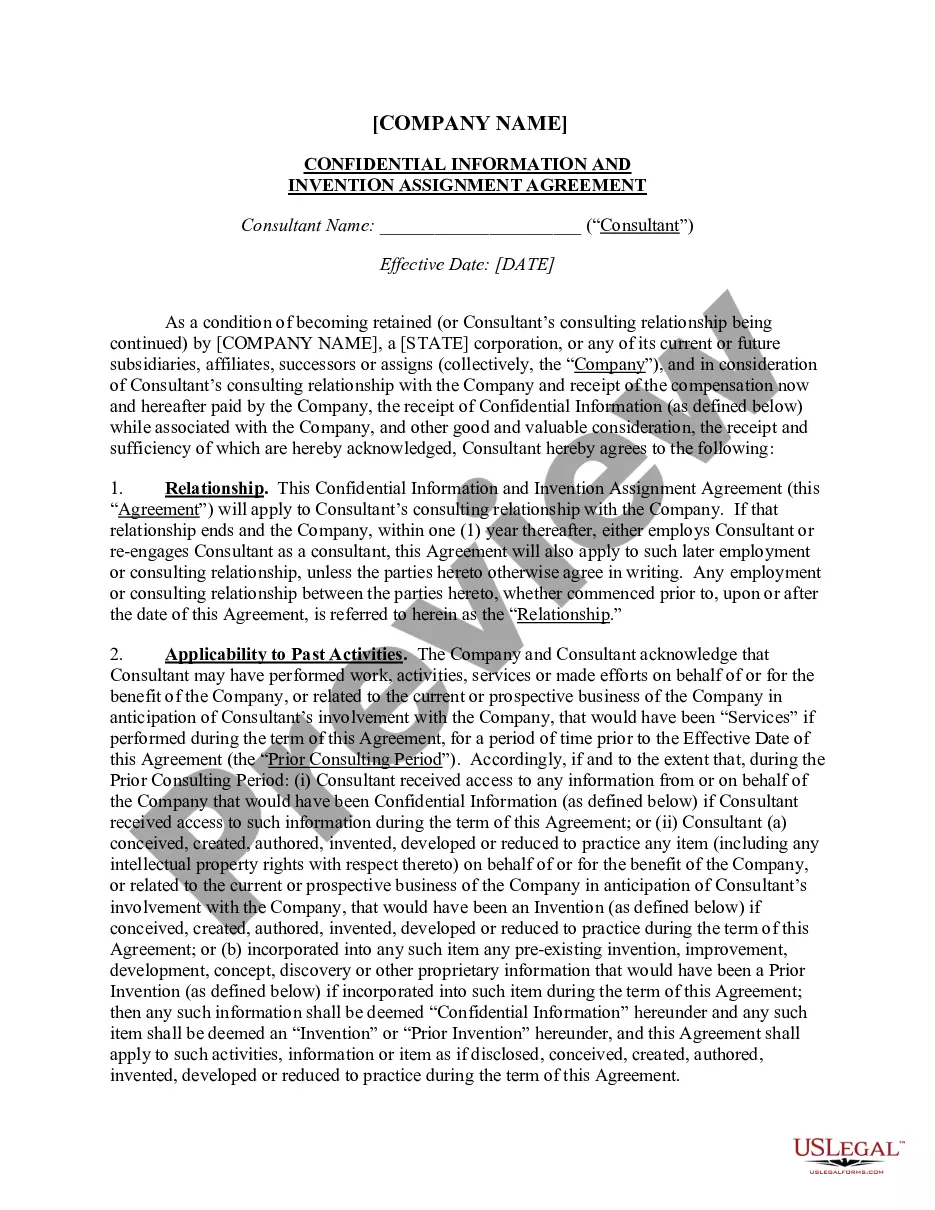
A Confidential Information and Invention Assignment Agreement is an agreement between a company and its employees, contractors, consultants, and business partners. It details how a company's confidential information and intellectual property is to be handled.
Not having an NDA in place when you tell someone else about your invention means your idea could be easily stolen. If you disclose your invention to someone but don't make them sign an NDA, they could turn around and patent your idea for themselves, leaving you with little legal recourse.
You do not need to use a non-disclosure agreement (NDA) when discussing your invention with a USPTO registered patent practitioner, such as a patent attorney or patent agent.
NDAs are generally required when two companies enter into discussions about doing business together but want to protect their own interests and the details of any potential deal.
Talking to a lawyer about private company matters is never a breach of your NDA. What you say to a lawyer, from your first words, is protected by the client-attorney privilege.?
You do not need a lawyer to create and sign a non-disclosure agreement. However, if the information you are trying to protect is important enough to warrant an NDA, you may want to have the document reviewed by someone with legal expertise.