Security Agreement in Accounts and Contract Rights
What is this form?
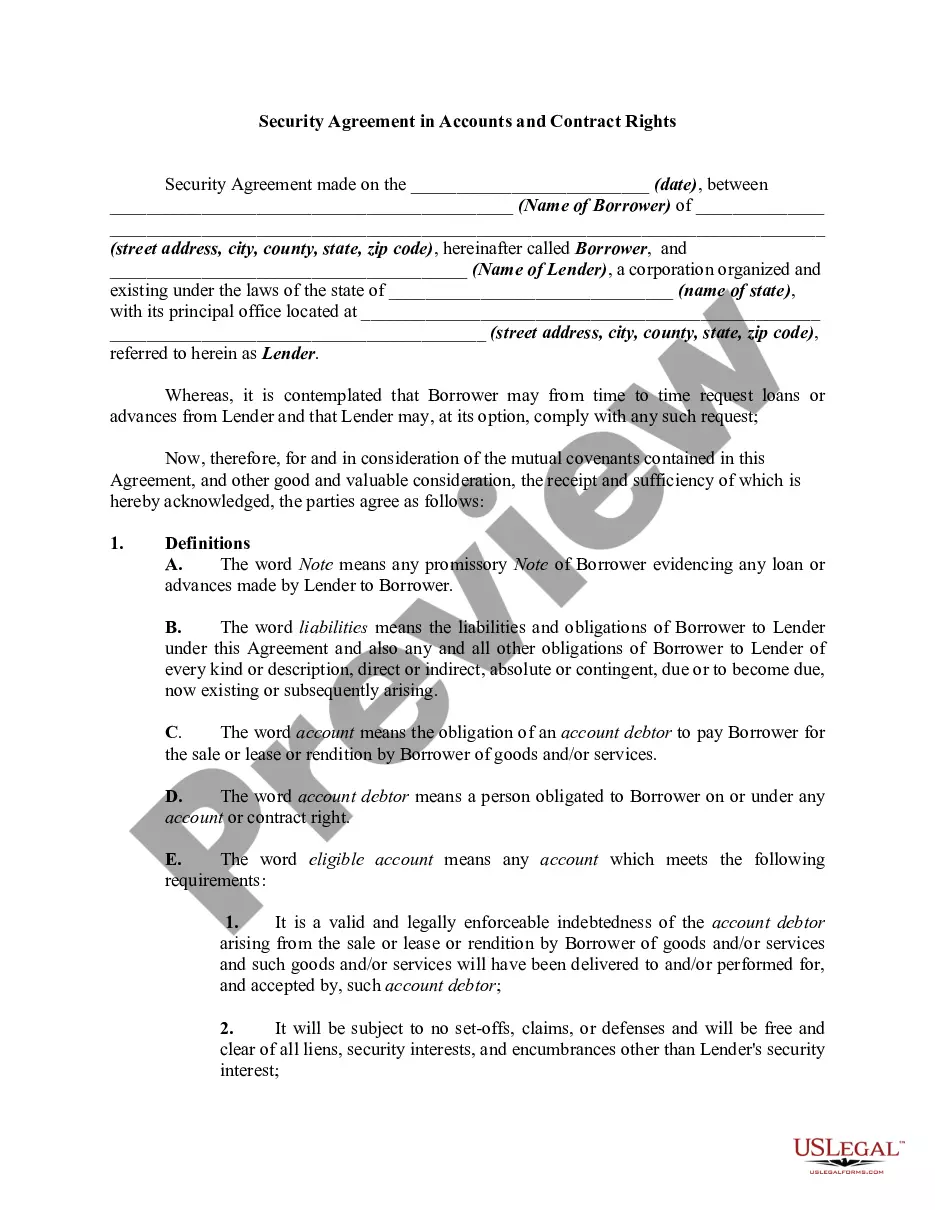
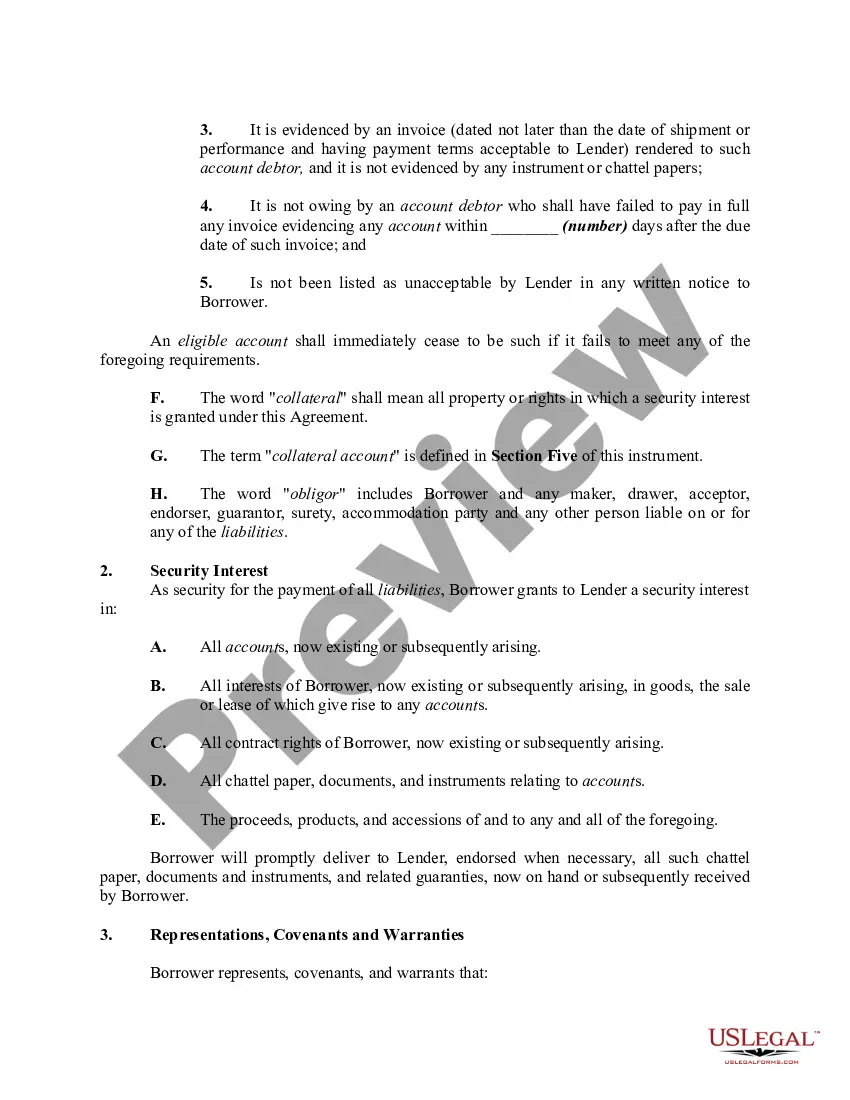
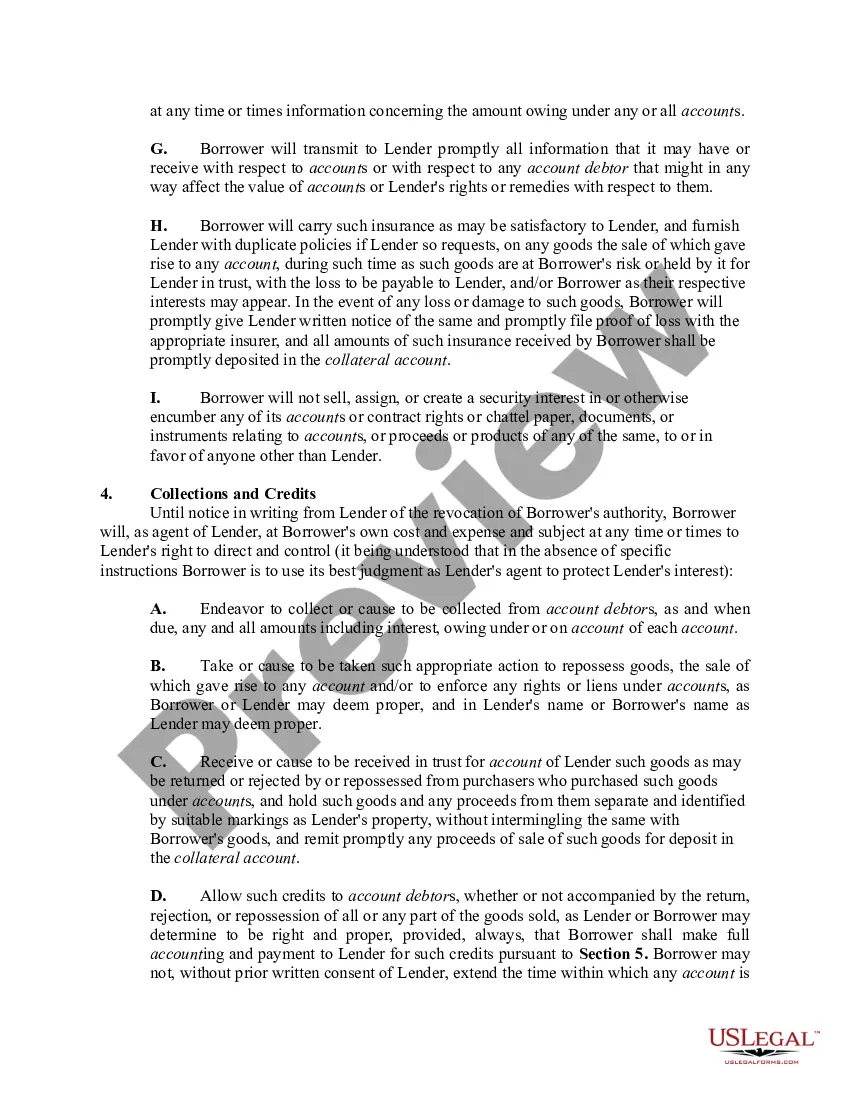
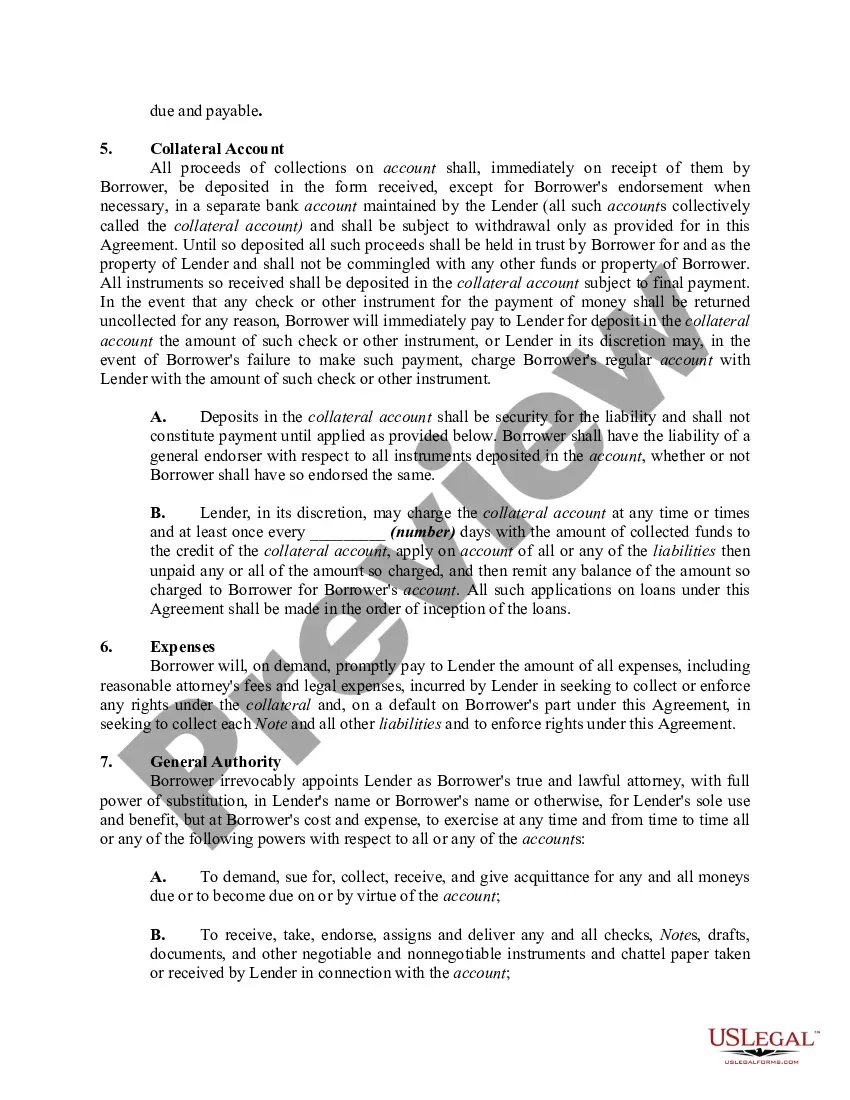
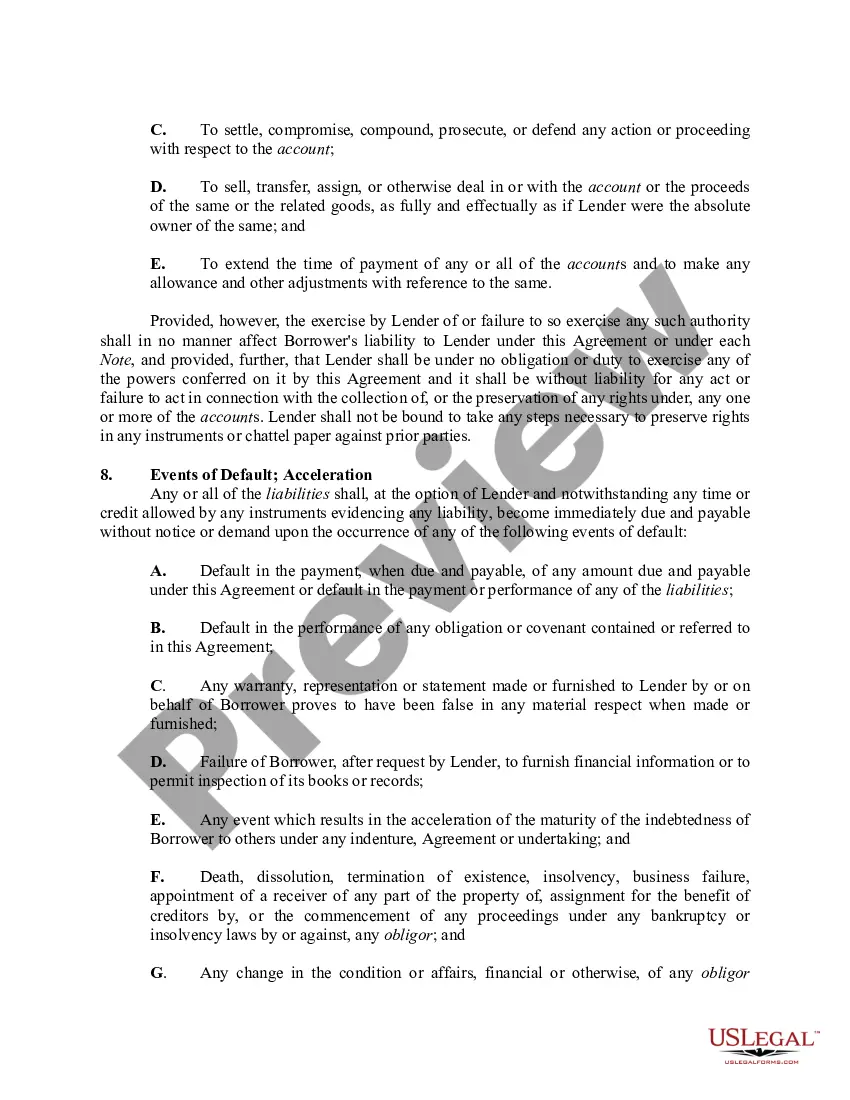
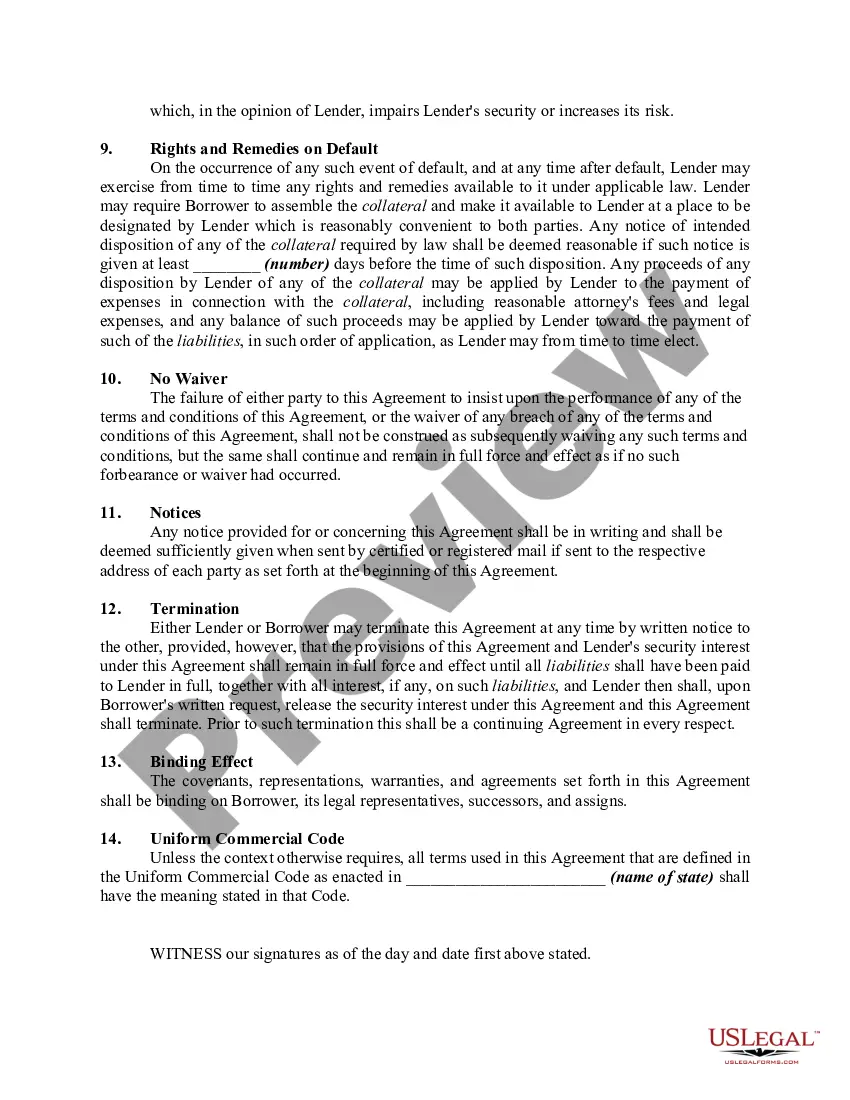
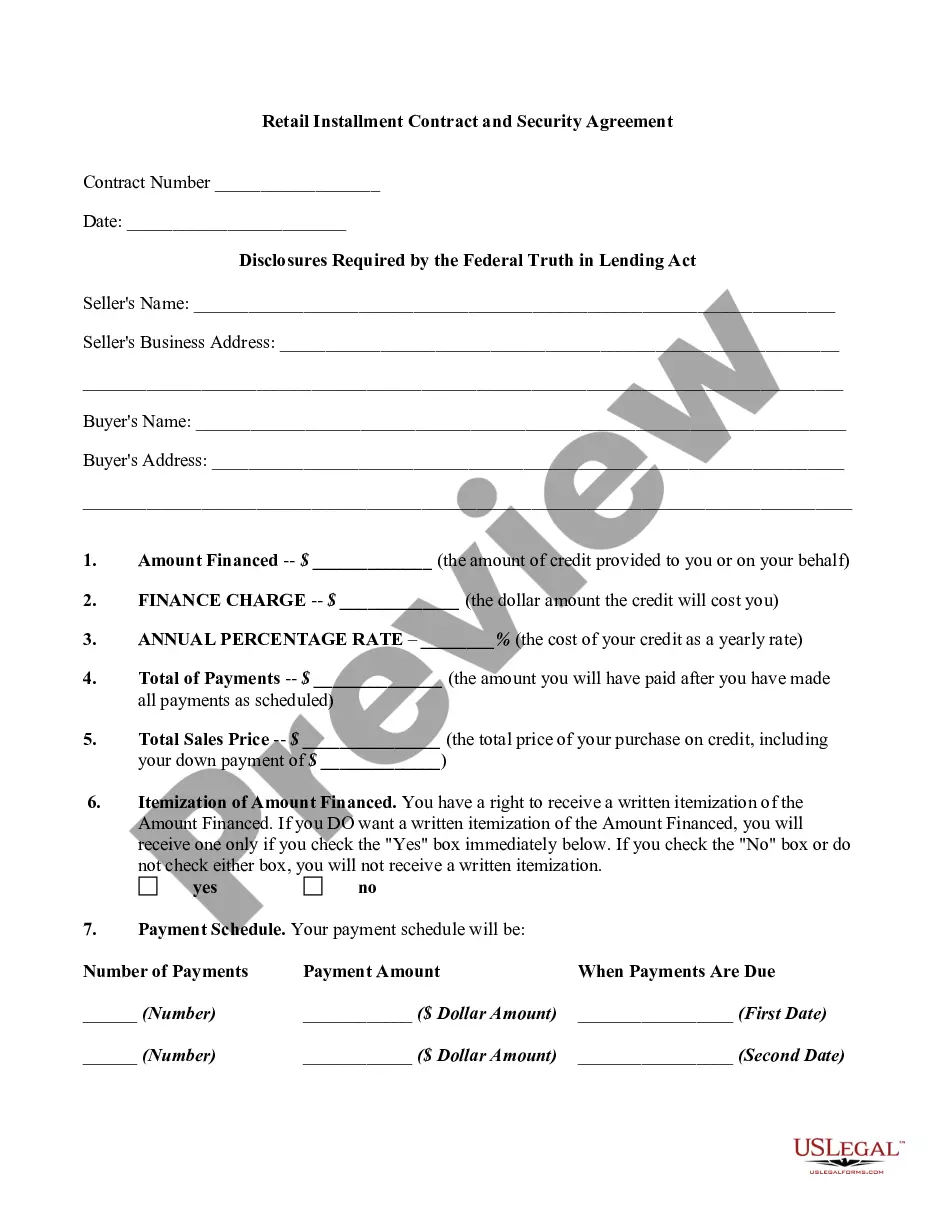
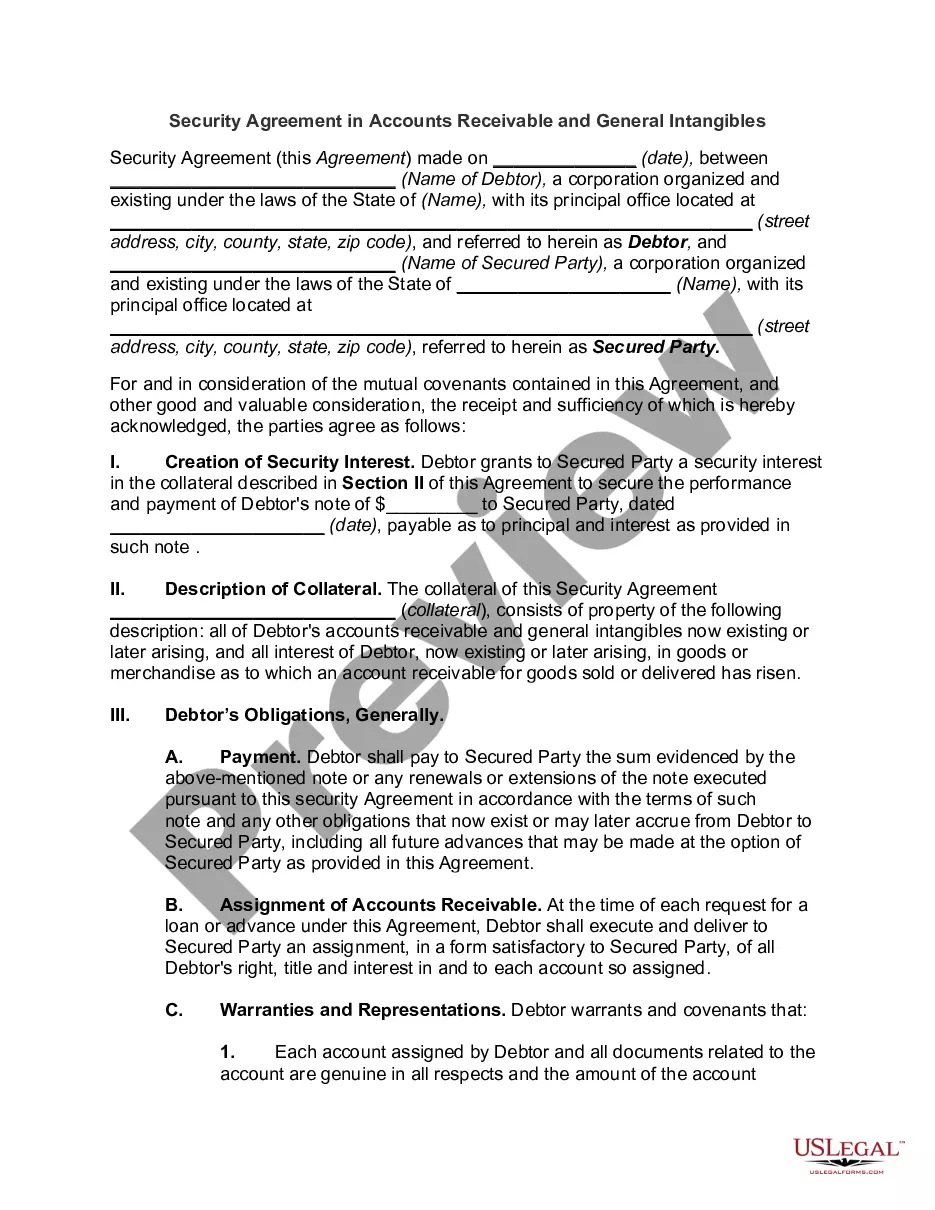
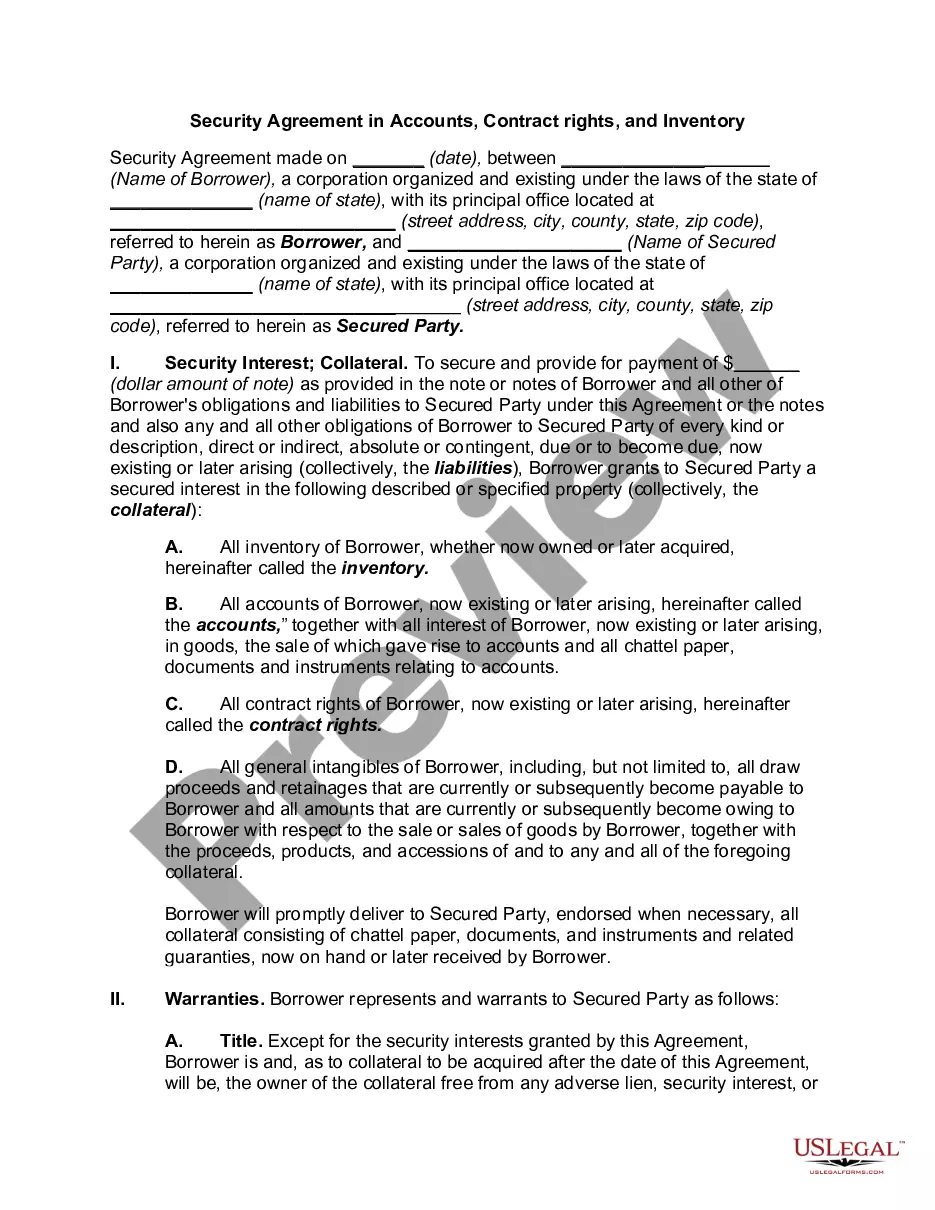
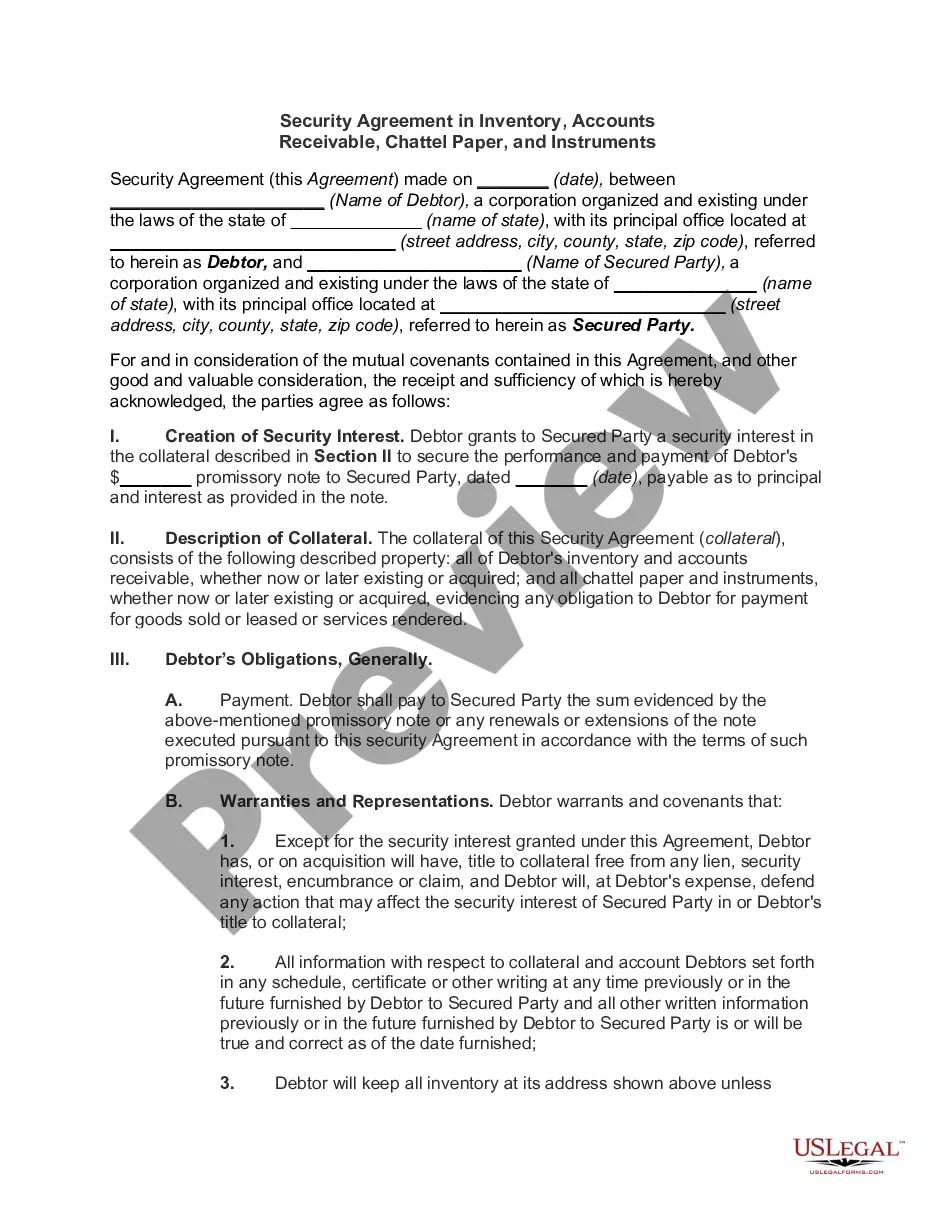
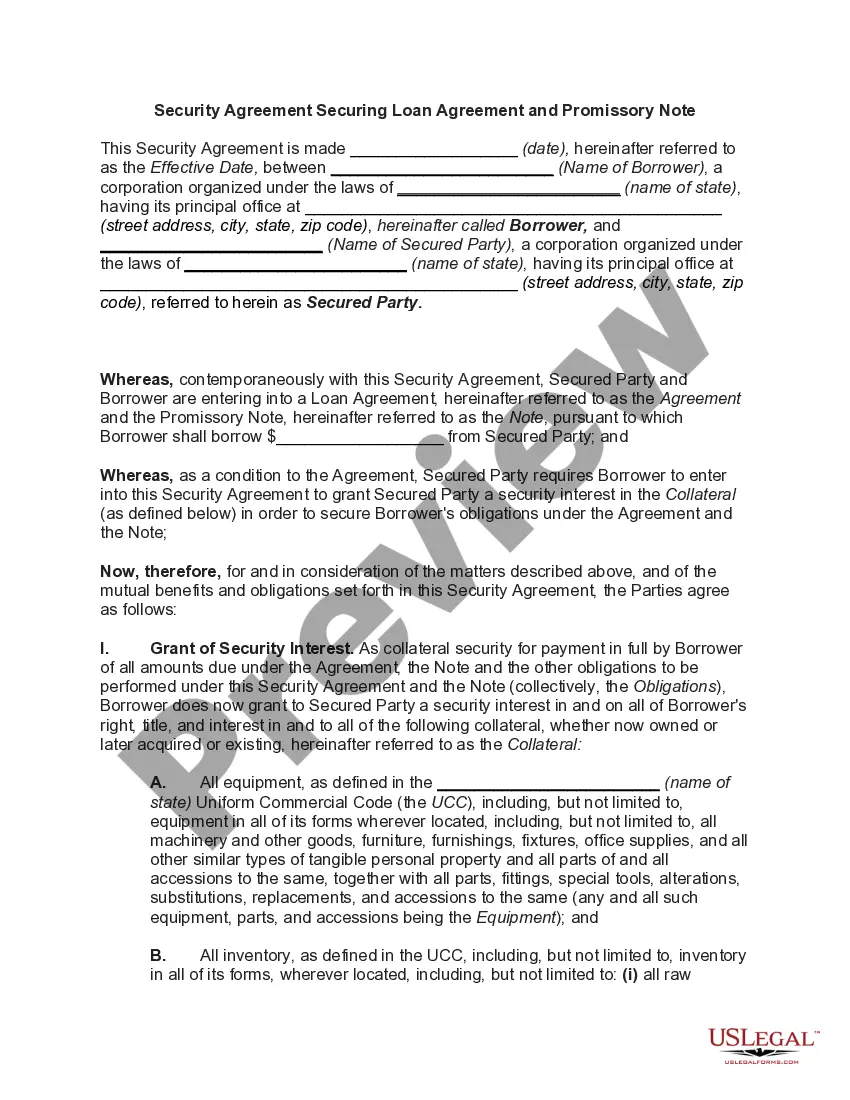
The Security Agreement in Accounts and Contract Rights is a legal document that establishes a secured transaction between a borrower and a lender. This agreement allows the lender to obtain a security interest in the borrower's personal property or rights, which serves as collateral. If the borrower fails to fulfill the payment obligations, the lender has the right to repossess the collateral to recover the debt. This form is specifically designed to secure loans, turning the borrower's contractual rights and accounts into collateral for the loan, differentiating it from unsecured agreements where no collateral is offered.
Form components explained
- Identification of Borrower and Lender, including their addresses and corporate status.
- Definitions of key terms such as "Note," "liabilities," "accounts," and "collateral."
- Granting of a security interest by the Borrower in various types of accounts and rights.
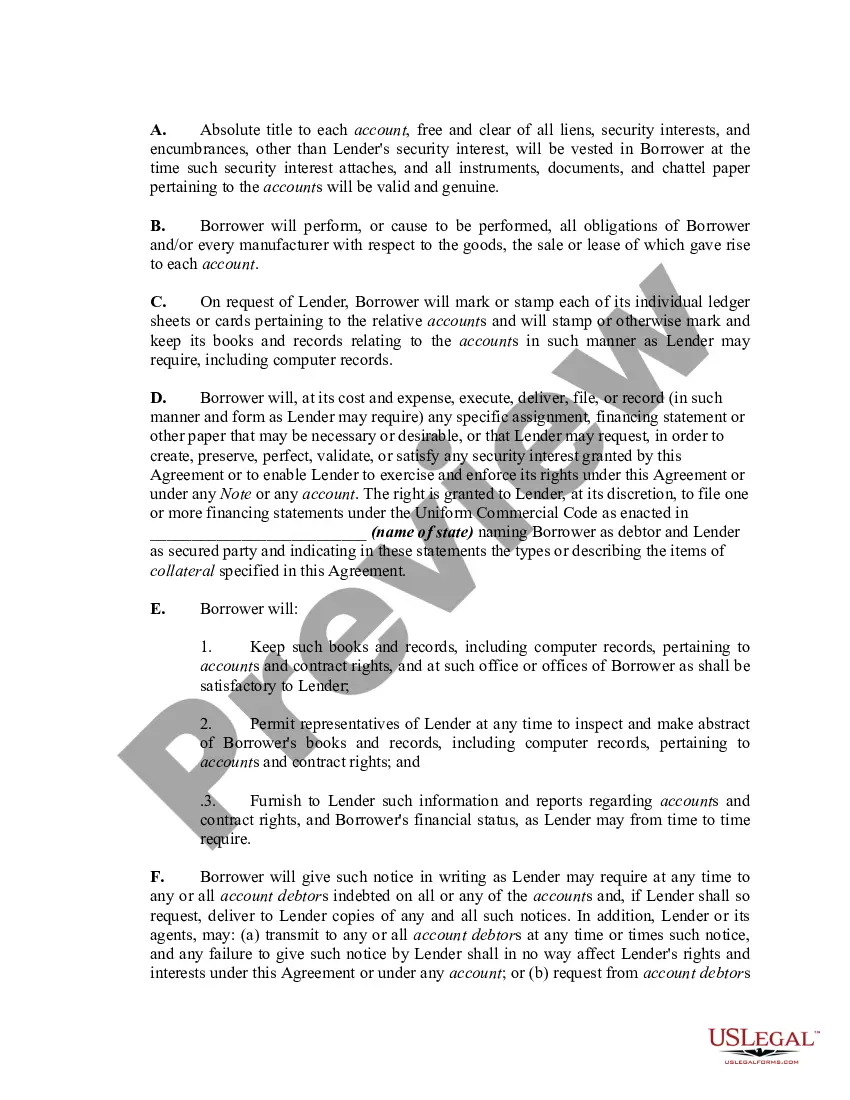
- Provisions related to collections and the handling of collateral.
- Events of default and the associated rights and remedies for the lender.
- Requirements related to notices and the binding nature of the agreement.
Situations where this form applies
This form should be used when a borrower seeks a loan and the lender requires collateral to secure the repayment of the debt. It is particularly relevant in situations where the borrower has accounts receivable or contract rights that can be legally pledged as security. Ideal scenarios include small businesses seeking financing to manage cash flow or individuals who need a loan backed by specific assets to ensure repayment.
Who can use this document
- Borrowers looking for a loan who possess accounts or contract rights.
- Lenders requiring security for the loans they offer.
- Businesses engaged in transactions that involve selling goods or services on credit.
- Corporations and individuals needing to formalize a secured transaction under the law.
Instructions for completing this form
- Identify the parties by entering the date, name, and addresses of both the Borrower and the Lender.
- Define key terms such as "Note," "liabilities," and "accounts" as they pertain to the transaction.
- Describe the collateral by specifying the types of accounts and contract rights being secured.
- Complete any additional clauses regarding collections, default events, and borrower obligations.
- Ensure both parties sign the agreement to make it legally binding.
Does this form need to be notarized?
This form usually doesn’t need to be notarized. However, local laws or specific transactions may require it. Our online notarization service, powered by Notarize, lets you complete it remotely through a secure video session, available 24/7.
Get your form ready online
Our built-in tools help you complete, sign, share, and store your documents in one place.
Make edits, fill in missing information, and update formatting in US Legal Forms—just like you would in MS Word.
Download a copy, print it, send it by email, or mail it via USPS—whatever works best for your next step.
Sign and collect signatures with our SignNow integration. Send to multiple recipients, set reminders, and more. Go Premium to unlock E-Sign.
If this form requires notarization, complete it online through a secure video call—no need to meet a notary in person or wait for an appointment.
We protect your documents and personal data by following strict security and privacy standards.

Make edits, fill in missing information, and update formatting in US Legal Forms—just like you would in MS Word.

Download a copy, print it, send it by email, or mail it via USPS—whatever works best for your next step.

Sign and collect signatures with our SignNow integration. Send to multiple recipients, set reminders, and more. Go Premium to unlock E-Sign.

If this form requires notarization, complete it online through a secure video call—no need to meet a notary in person or wait for an appointment.

We protect your documents and personal data by following strict security and privacy standards.
Typical mistakes to avoid
- Failing to accurately identify all parties and their contact information.
- Not specifying the collateral clearly, leading to potential disputes.
- Omitting required signatures, which can invalidate the agreement.
- Neglecting to review state-specific requirements regarding secured transactions.
Benefits of completing this form online
- Convenience of downloading and completing the form at your own pace.
- Editable format that allows for easy adjustments to meet specific needs.
- Access to templates drafted by licensed attorneys, ensuring legal validity.
- Immediate access without the need to schedule appointments with legal professionals.
Looking for another form?







Form popularity
FAQ
Sign two copies of the agreement, one for you and one for the other party. Depending on the nature of its terms, you may decide to have your agreement witnessed or notarized. This will limit later challenges to the validity of a party's signature. If your agreement is complicated, do not use the enclosed form.
By filing a financing statement with the appropriate public office. by possessing the collateral. by controlling the collateral; or. it's done automatically upon attachment of the security interest.
Accounts Receivable Therefore, most lenders perfect a security interest in receivables by filing a financing statement. It is not necessary to file a financing statement, however, for a security interest in an account receivable that is not a significant part of the outstanding accounts of the debtor.
Overview: The debtor typically represents and warrants to the secured party that: the debtor has suf- ficient rights in, or power to transfer rights in, the collateral for the secured party's security interest to attach (§9-203(b)(2)); the collateral is either not encumbered or, if encumbered, the encumbrances are
A security agreement, in the law of the United States, is a contract that governs the relationship between the parties to a kind of financial transaction known as a secured transaction.
Executing Your Security Agreement Again, although a notary and witness are not required in most jurisdictions, it is always a good idea to include them. When the document has been signed and witnessed, you are done! Make sure each debtor, secured party, and co-signer (if any) get a copy.
To perfect a security interest in a general intangible, you must file a UCC-1 financing statement with the Secretary of State's office in the state in which the individual resides, or in which the entity was formed, depending on whether the borrower is an individual or an entity.
(4) The local law of the commodity intermediary's jurisdiction governs perfection, the effect of perfection or nonperfection, and the priority of a security interest in a commodity contract or commodity account.
The UCC establishes two main ways to perfect a security interest in goods: Filing an appropriate UCC financing statement (this is the typical way). Possession of the goods by the secured party (generally uncommon).