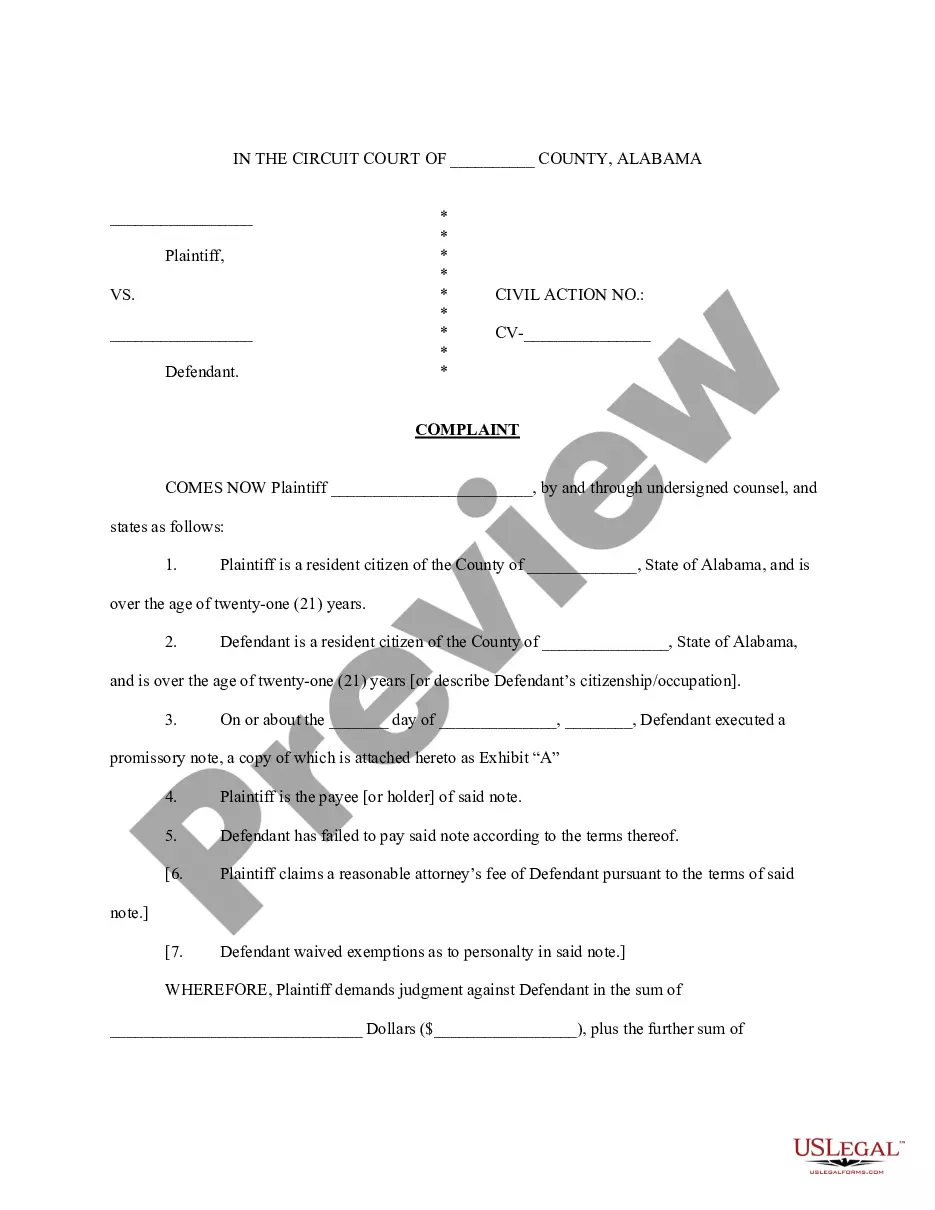
Agreement Regarding Employment of Student-Athlete in Accordance with College Compliance Program
About this form
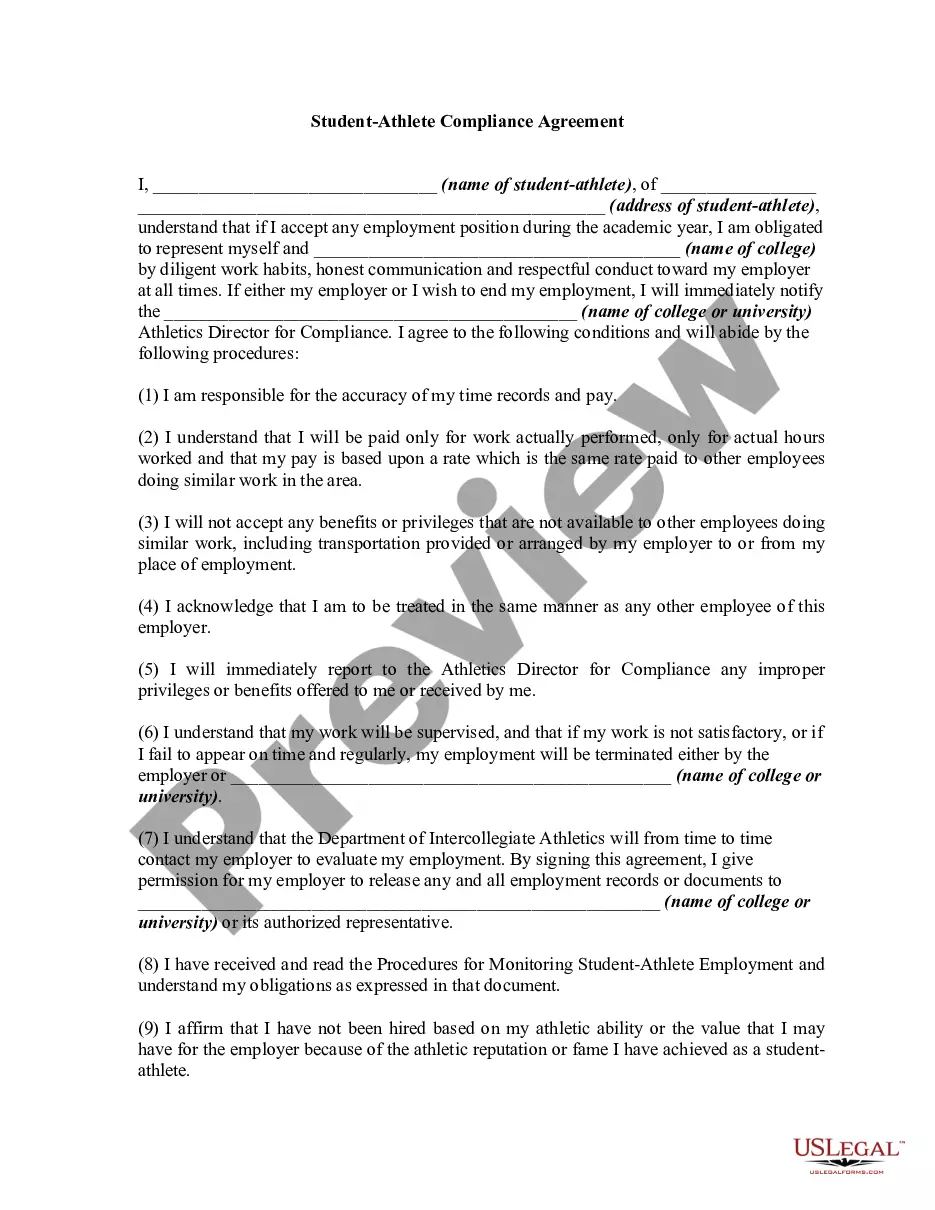
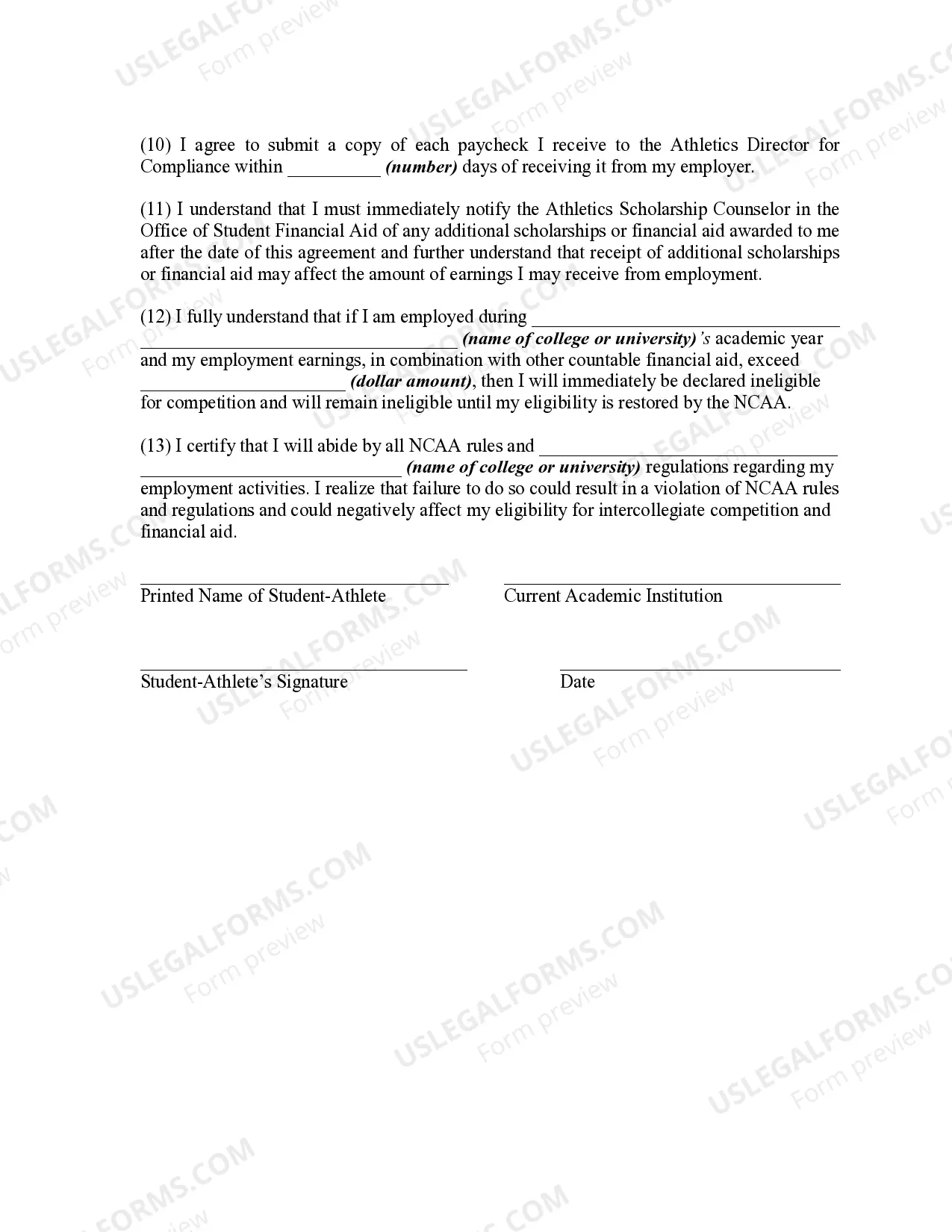
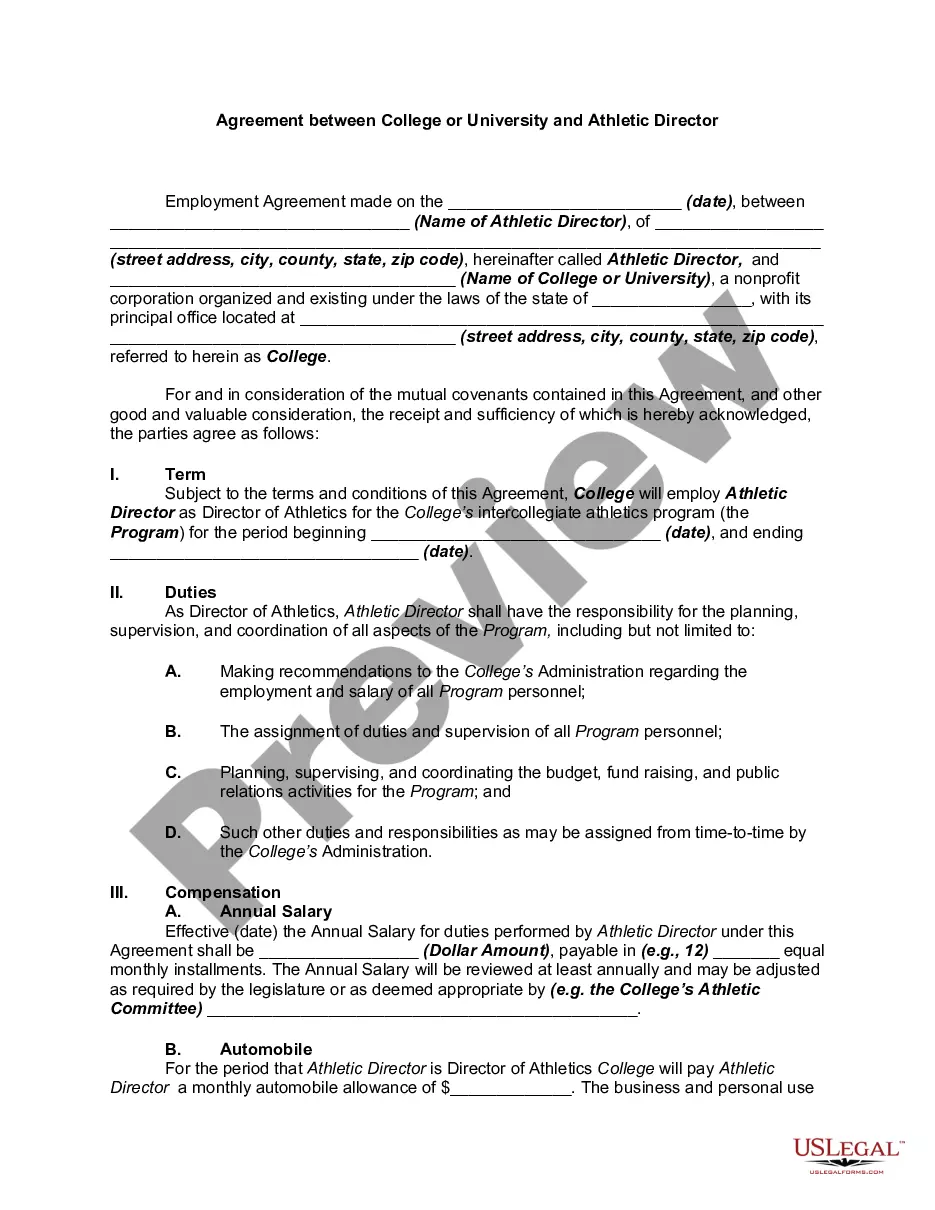
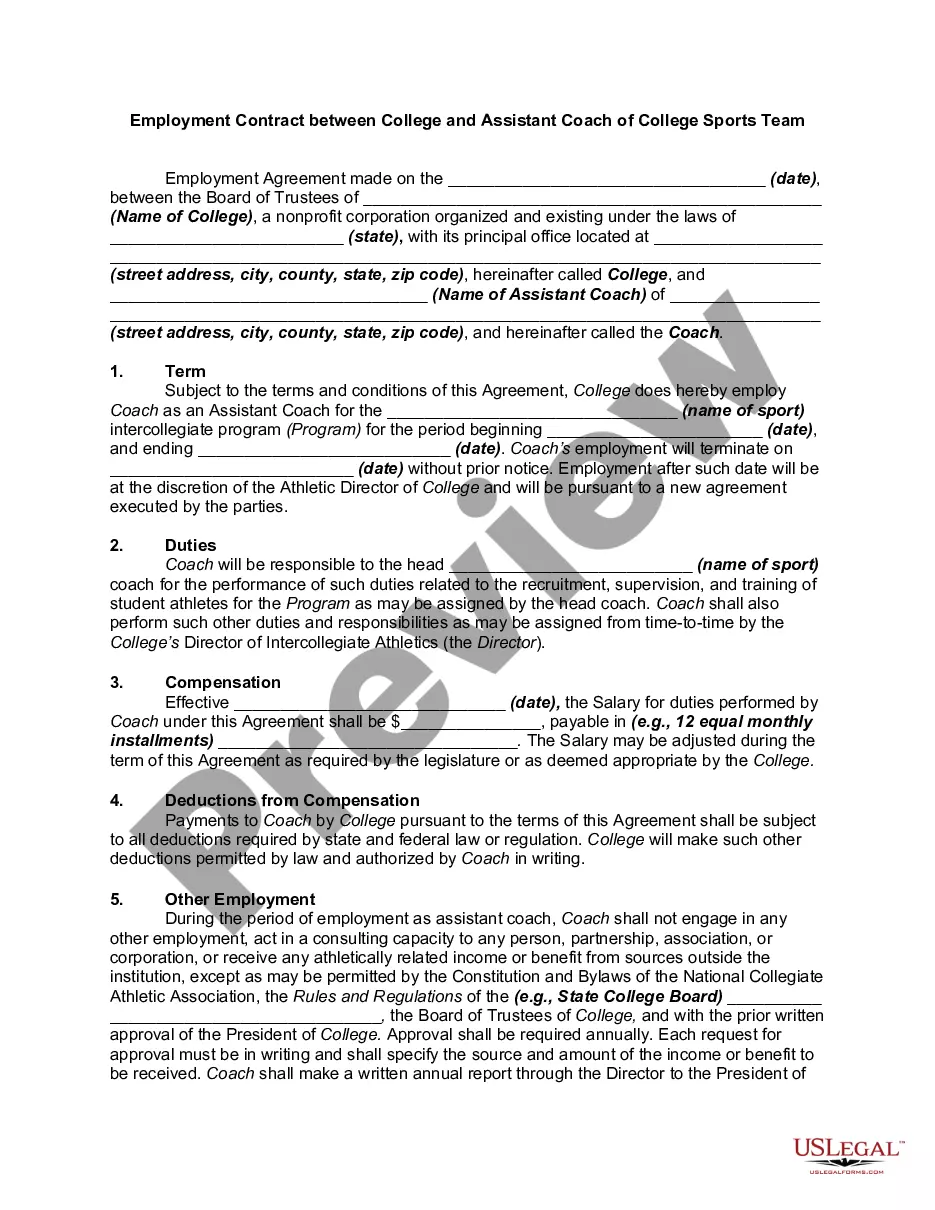
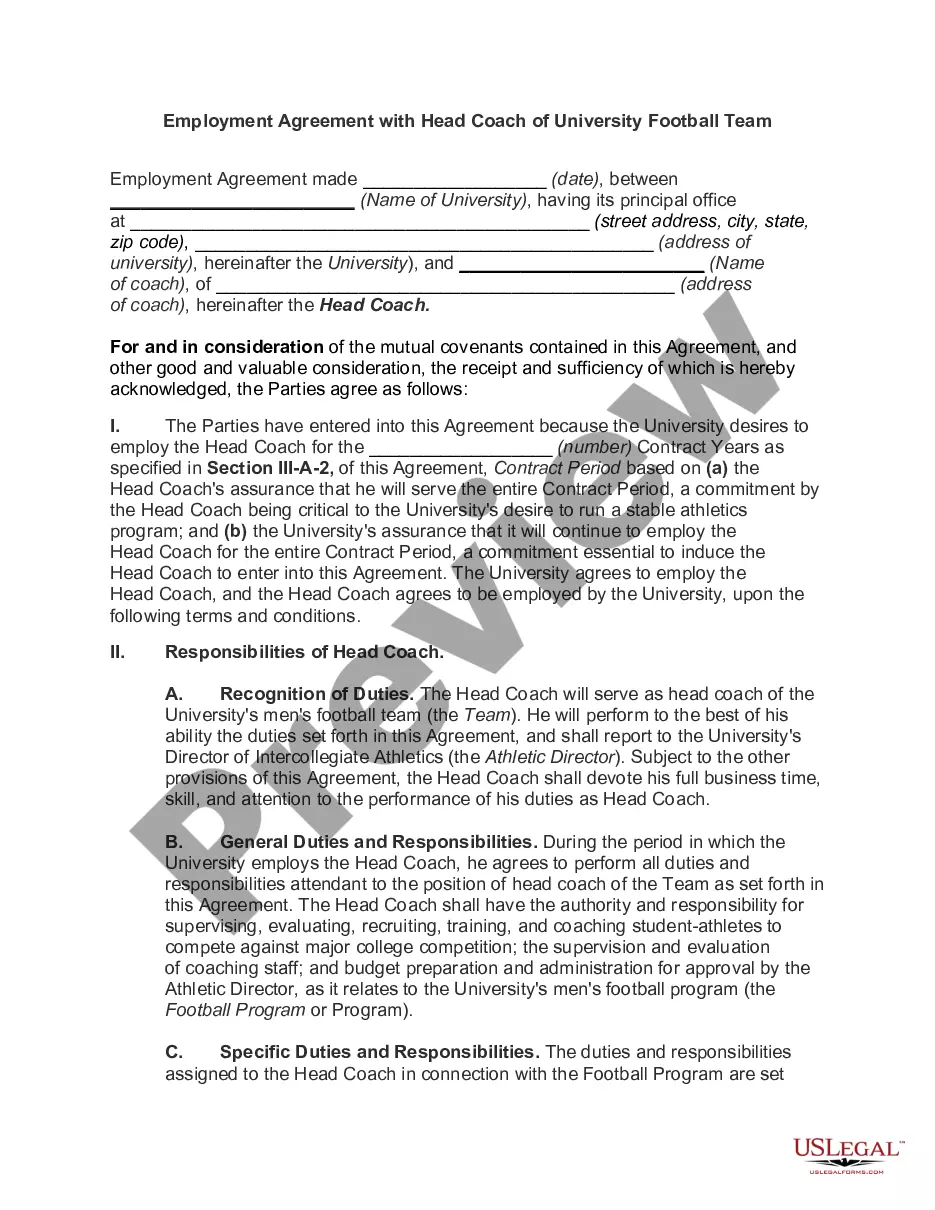
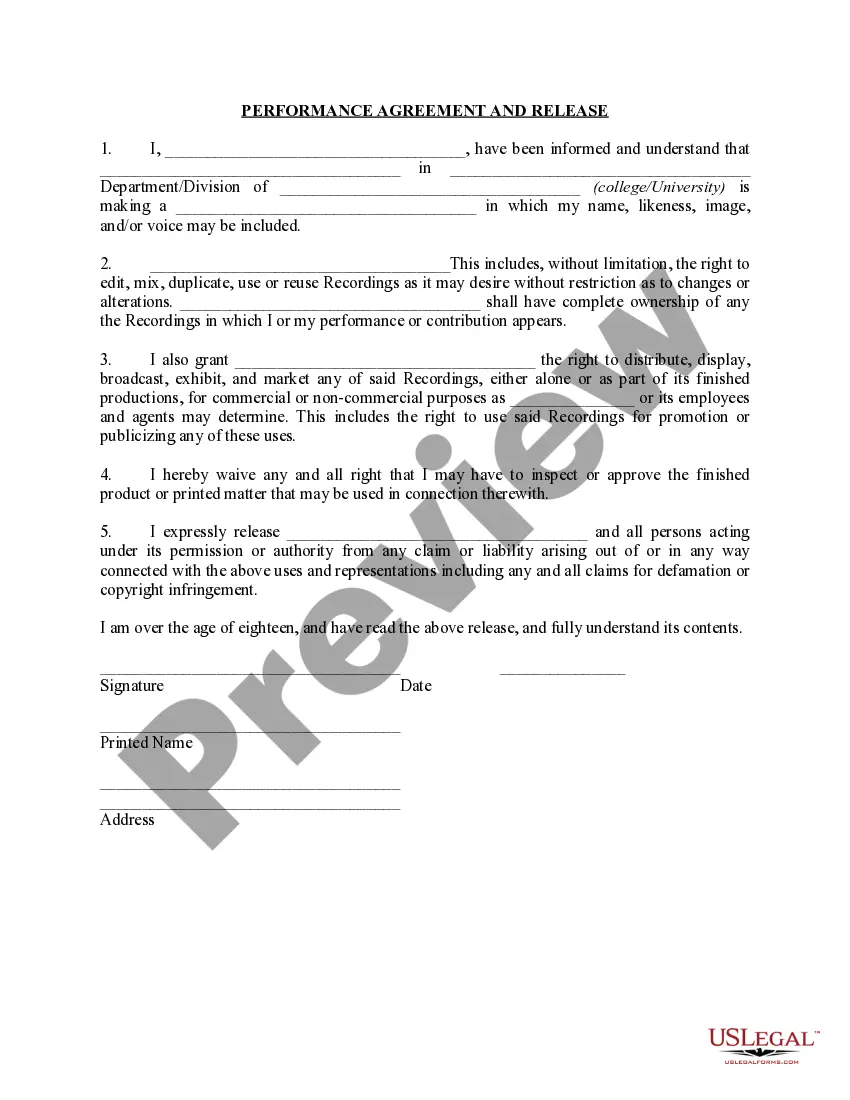
The Agreement Regarding Employment of Student-Athlete is a legal document designed to ensure compliance with NCAA regulations for student-athletes employed during their academic year. This agreement outlines the responsibilities of the student-athlete and their employer, differentiating it from general employment contracts by addressing specific NCAA criteria that must be met to maintain eligibility for athletic scholarships and competition.
What’s included in this form
- Name and address of the student-athlete.
- Agreement to represent the college through diligent work habits and respectful conduct.
- Conditions and obligations related to employment and payment.
- Reporting requirements for time records and compliance with NCAA rules.
- Termination terms for employment and potential ineligibility for competition.
- Rights to contact for evaluation of employment records by the college.
When to use this form
This agreement is necessary for student-athletes who are considering accepting employment while receiving an athletic scholarship at an NCAA member institution. It serves to clarify their obligations and ensure they do not jeopardize their eligibility to compete in intercollegiate athletics due to employment issues.
Intended users of this form
- Student-athletes receiving athletic scholarships from NCAA member institutions.
- Employers who intend to hire student-athletes and comply with NCAA regulations.
- Compliance officers at educational institutions overseeing student-athlete employment.
How to complete this form
- Enter the name and address of the student-athlete at the beginning of the agreement.
- Specify the name of the college or university involved.
- Review and agree to the listed conditions and obligations regarding employment.
- Initial or sign where indicated, confirming understanding of the responsibilities.
- Submit the completed form to the Athletics Director for Compliance at the institution.
Notarization guidance
Notarization is not commonly needed for this form. However, certain documents or local rules may make it necessary. Our notarization service, powered by Notarize, allows you to finalize it securely online anytime, day or night.
Get your form ready online
Our built-in tools help you complete, sign, share, and store your documents in one place.
Make edits, fill in missing information, and update formatting in US Legal Forms—just like you would in MS Word.
Download a copy, print it, send it by email, or mail it via USPS—whatever works best for your next step.
Sign and collect signatures with our SignNow integration. Send to multiple recipients, set reminders, and more. Go Premium to unlock E-Sign.
If this form requires notarization, complete it online through a secure video call—no need to meet a notary in person or wait for an appointment.
We protect your documents and personal data by following strict security and privacy standards.

Make edits, fill in missing information, and update formatting in US Legal Forms—just like you would in MS Word.

Download a copy, print it, send it by email, or mail it via USPS—whatever works best for your next step.

Sign and collect signatures with our SignNow integration. Send to multiple recipients, set reminders, and more. Go Premium to unlock E-Sign.

If this form requires notarization, complete it online through a secure video call—no need to meet a notary in person or wait for an appointment.

We protect your documents and personal data by following strict security and privacy standards.
Common mistakes to avoid
- Failing to accurately report employment hours worked.
- Not notifying the Athletics Director for Compliance about employment changes.
- Ignoring the need to submit paycheck copies in a timely manner.
Advantages of online completion
- Convenience of obtaining and completing the form from anywhere.
- Ability to edit and customize the document as needed for specific employment situations.
- Access to resources and support to ensure compliance with NCAA regulations.
Legal use & context
- This form helps protect student-athletes by ensuring they adhere to NCAA regulations.
- It establishes clear expectations for both the student-athlete and the employer.
- Failure to comply with the terms outlined in this agreement may result in ineligibility for competition.
Key takeaways
- Properly fill out the agreement to maintain compliance with NCAA rules.
- Timely reporting and accurate record-keeping are critical elements in this process.
- Understanding and adhering to the employment terms protects student-athletes from potential penalties.
Looking for another form?


Form popularity
FAQ
NCAA rules do not cover unemployment benefits, and a representative confirmed to The Times that such assistance would not affect an athlete's eligibility. Munir McClain is not the only college student to file for temporary unemployment benefits under PUA.
The Federal Financial Aid Consortium Agreement is a written agreement between two or more Title IV eligible institutions enabling students to take coursework at different institutions simultaneously for the purpose of completing a degree while recognizing registration at each location for financial aid purposes.
Please DO NOT2026 provide awards or gifts to a student-athlete for his or her athletic performances. All awards must conform to NCAA regulations and must be approved by Michigan Technological University.
COVID-19 is highlighting just how unjust NCAA rules are.NCAA rules heavily restrict the types of jobs players can secure. Additionally, college athletes pay their way through college but aren't eligible for unemployment when they lose their scholarship.
D1 athletes will receive any and every type of gear you can possibly think of. This includes socks, shoes, compression pants, shorts, joggers, sweatpants, undershirts, t-shirts, long-sleeve shirts, polos, rain jackets, sweatshirts, coats, beanies, hats, and any other accessories related to the sport you play.
Athletic Aid Agreements are Athletic Scholarship Contracts That is not the case. The actual scholarship contract is known as an Athletic Aid Agreement. This contract outlines how much your scholarship will be worth and covers what you must do in order to keep your scholarship.
Student-athletes are allowed to work during the academic year, but must be monitored by the Athletics Department to ensure that all rules regarding employment are followed.All contacts with prospective employers and final job placement must comply with the guidelines established by the University and the NCAA.
This means that college athletes cannot receive payment for playing a sport, funding to offset training expenses, accept prize money based on performance, be represented or marketed by a sports agent or professional, promote or endorse commercial products and much more.