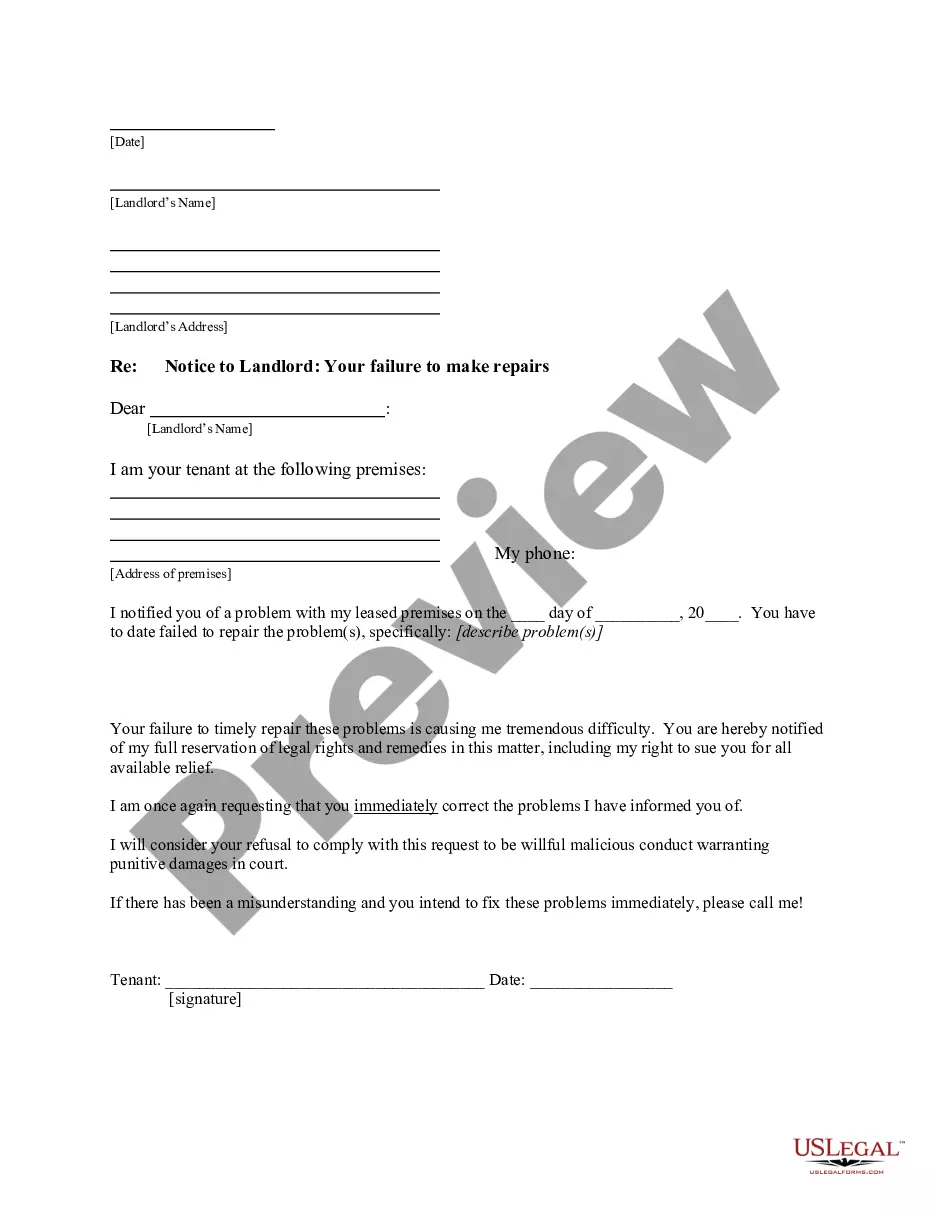
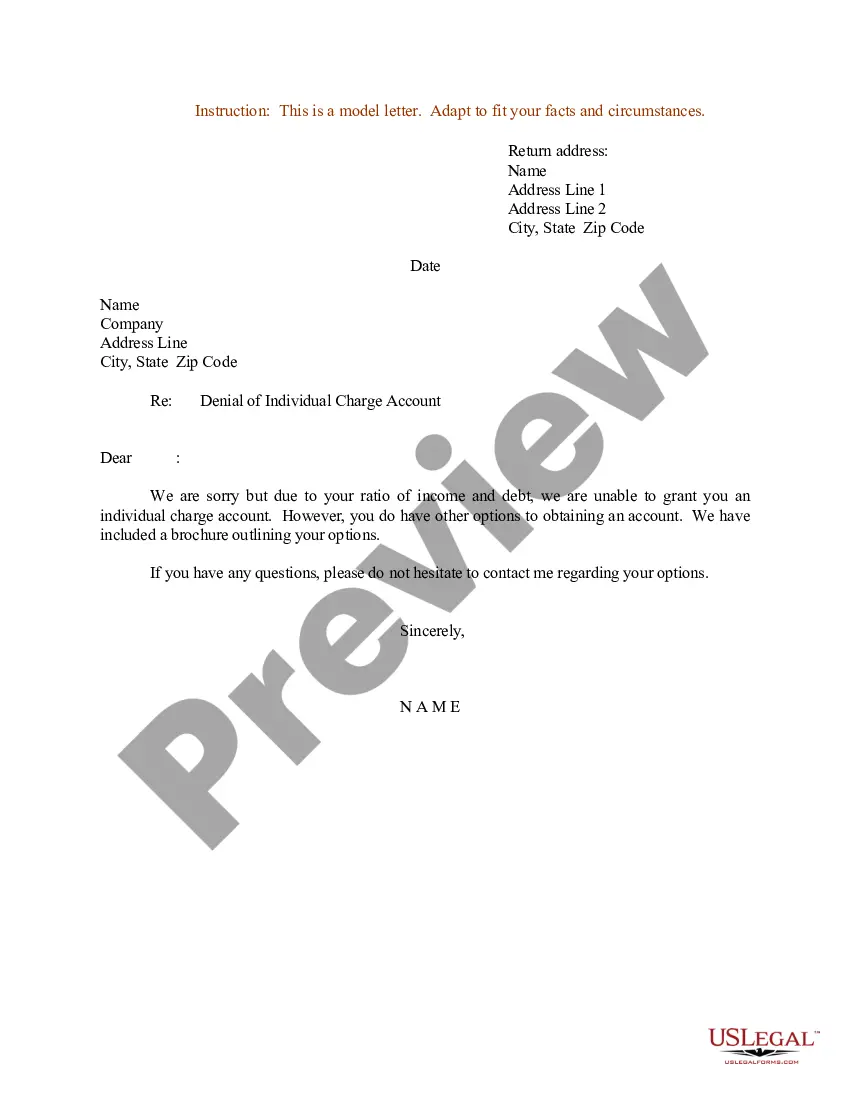
Sample Letter for Denial of Individual Charge Account
Overview of this form
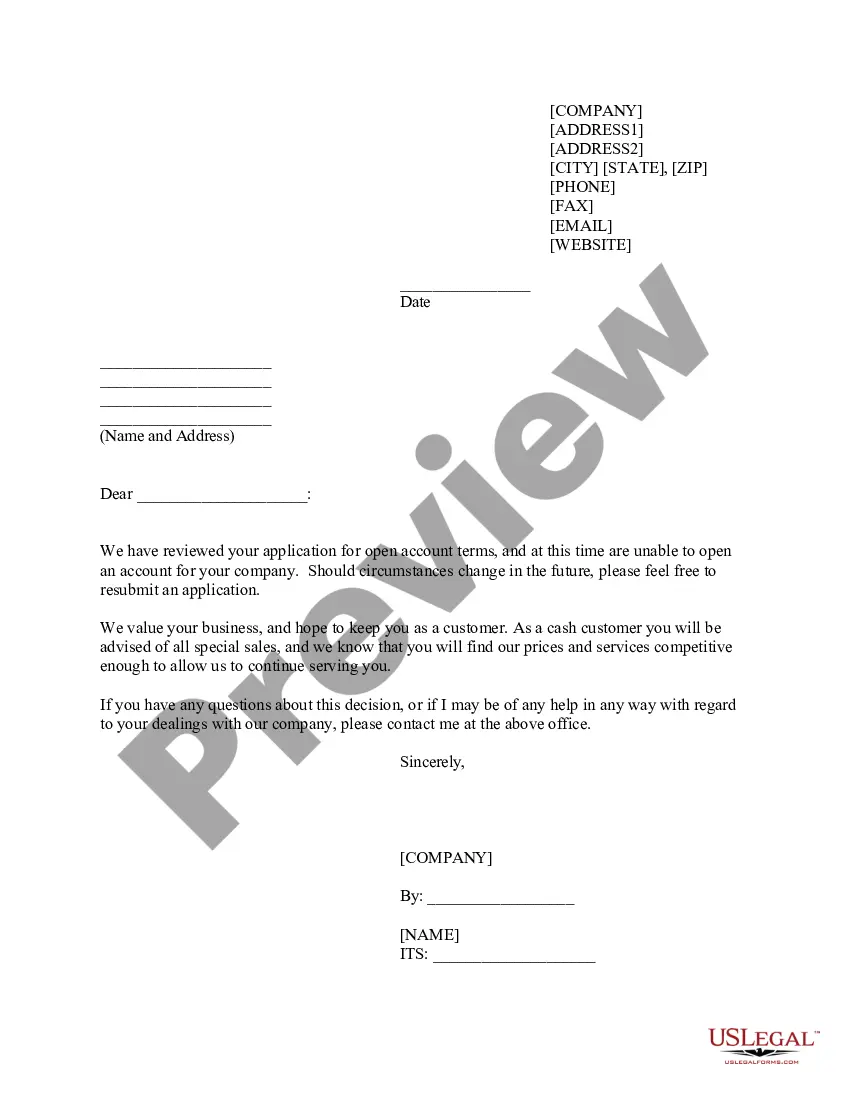
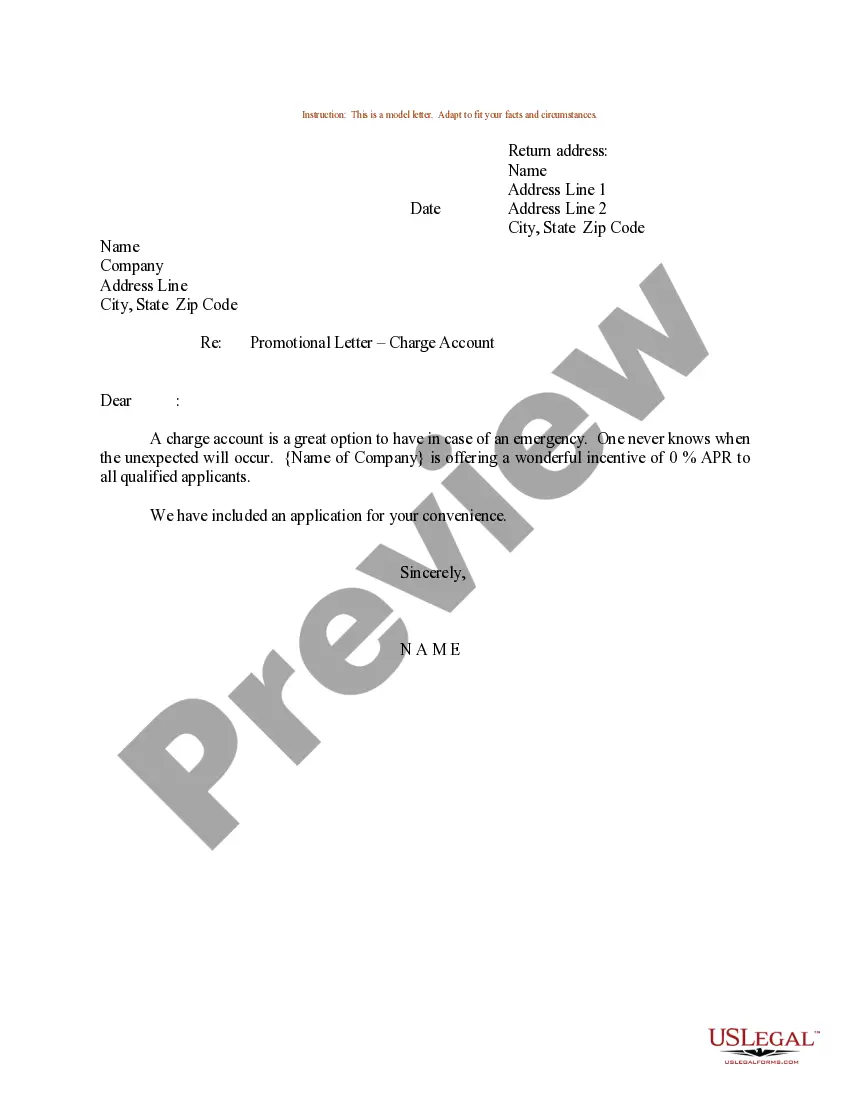
This Sample Letter for Denial of Individual Charge Account serves as a formal communication to inform an applicant that their request for an individual charge account has been denied. This letter provides a template to streamline the communication process, ensuring clarity and professionalism. Unlike informal rejection notices, this letter is structured and legally formatted, making it suitable for business use.
Key components of this form
- Return address: Includes the sender's name and contact details
- Date: The date the letter is written
- Recipient information: Includes the name and address of the individual or company receiving the letter
- Subject line: Clearly states the purpose of the letter regarding the denial of the charge account
- Closing: A professional sign-off with the sender's name
When to use this form
This form is used when a business needs to formally deny an individual's application for a charge account. It is applicable in various scenarios such as when an applicant does not meet credit requirements, has past due accounts, or when it does not align with corporate policy to extend credit. Utilizing this letter ensures that the communication remains professional and consistent across cases of account denials.
Who should use this form
Individuals and businesses that may consider using this letter include:
- Business owners who offer credit accounts
- Credit managers responsible for account decisions
- Administrative professionals handling client communications
- Any entity needing to document a formal denial of credit
How to prepare this document
- Identify the sender's address, including the name and contact information.
- Enter the date of writing the letter.
- Fill in the recipient's details, including their name and address.
- Draft a concise subject line to specify the purpose of the letter.
- Include a professional closing and sign with the sender's name.
Does this document require notarization?
In most cases, this form does not require notarization. However, some jurisdictions or signing circumstances might. US Legal Forms offers online notarization powered by Notarize, accessible 24/7 for a quick, remote process.
Get your form ready online
Our built-in tools help you complete, sign, share, and store your documents in one place.
Make edits, fill in missing information, and update formatting in US Legal Forms—just like you would in MS Word.
Download a copy, print it, send it by email, or mail it via USPS—whatever works best for your next step.
Sign and collect signatures with our SignNow integration. Send to multiple recipients, set reminders, and more. Go Premium to unlock E-Sign.
If this form requires notarization, complete it online through a secure video call—no need to meet a notary in person or wait for an appointment.
We protect your documents and personal data by following strict security and privacy standards.

Make edits, fill in missing information, and update formatting in US Legal Forms—just like you would in MS Word.

Download a copy, print it, send it by email, or mail it via USPS—whatever works best for your next step.

Sign and collect signatures with our SignNow integration. Send to multiple recipients, set reminders, and more. Go Premium to unlock E-Sign.

If this form requires notarization, complete it online through a secure video call—no need to meet a notary in person or wait for an appointment.

We protect your documents and personal data by following strict security and privacy standards.
Typical mistakes to avoid
- Using informal language instead of maintaining a professional tone.
- Failing to include necessary contact information for follow-up.
- Not personalizing the letter with the recipient's name.
- Omitting the date, which is essential for record-keeping.
Why complete this form online
- Convenience of instant download and editing to suit specific needs.
- Reliability of a professionally drafted template crafted by licensed attorneys.
- Easy to customize with essential details before sending it out.
- Reduces the risk of legal mistakes associated with poorly worded communications.
Legal use & context
- This letter serves as a formal record documenting the denial of credit.
- It helps protect the issuer from potential disputes by providing a clear reason for the denial.
- Using this template ensures compliance with business communication standards.
Summary of main points
- The letter serves a critical role in communicating denial of credit.
- Ensure clarity and professionalism in the message to maintain good customer relationships.
- This form is applicable across multiple jurisdictions without state-specific changes.
Looking for another form?

Form popularity
FAQ
A thank you Always thank an applicant for their interest in the company and any time they spent completing an application or interviewing with staff. Personalization. Use the applicant's first name and the title of the position. Feedback. Invitation to apply again.
A letter of denial is usually written to notify the recipient that your certain request has been denied or it is not possible under certain parameters to fulfill the request.A letter of denial is usually a formal letter, it should be brief, amiable and direct.
Let the customer know you understand his or her position or that you have given his or her complaint serious consideration. Present an explanation of why you are unable to approve his or her request. If possible, offer the reader an alternate plan or suggest a compromise. Close on a positive note.
Respond by first restating the original request to prevent confusion. Be specific about the reason the request has been denied and offer an alternative if applicable, such as a different date when an absence would be feasible. Use polite and professional language. Being blunt could cause undue offence.
Respond by first restating the original request to prevent confusion. Be specific about the reason the request has been denied and offer an alternative if applicable, such as a different date when an absence would be feasible. Use polite and professional language. Being blunt could cause undue offence.
Get straight to the point. Give them feedback. Let the candidate know that there may still be a chance. Wish them good luck. Send it as soon as possible. Write different rejection letters for each stage in the hiring process. Keep it personal. Thank the candidate.
Let the customer know you understand his or her position or that you have given his or her complaint serious consideration. Present an explanation of why you are unable to approve his or her request. If possible, offer the reader an alternate plan or suggest a compromise. Close on a positive note.
Thank the candidate warmly. Cold: Thank you for applying to the POSITION at COMPANY. Leave the door open. Cold: We'll keep your application on file should another position become available. Try to provide a satisfying explanation. Identify a strength. Conclusion.