Complaint for malicious prosecution
What this document covers
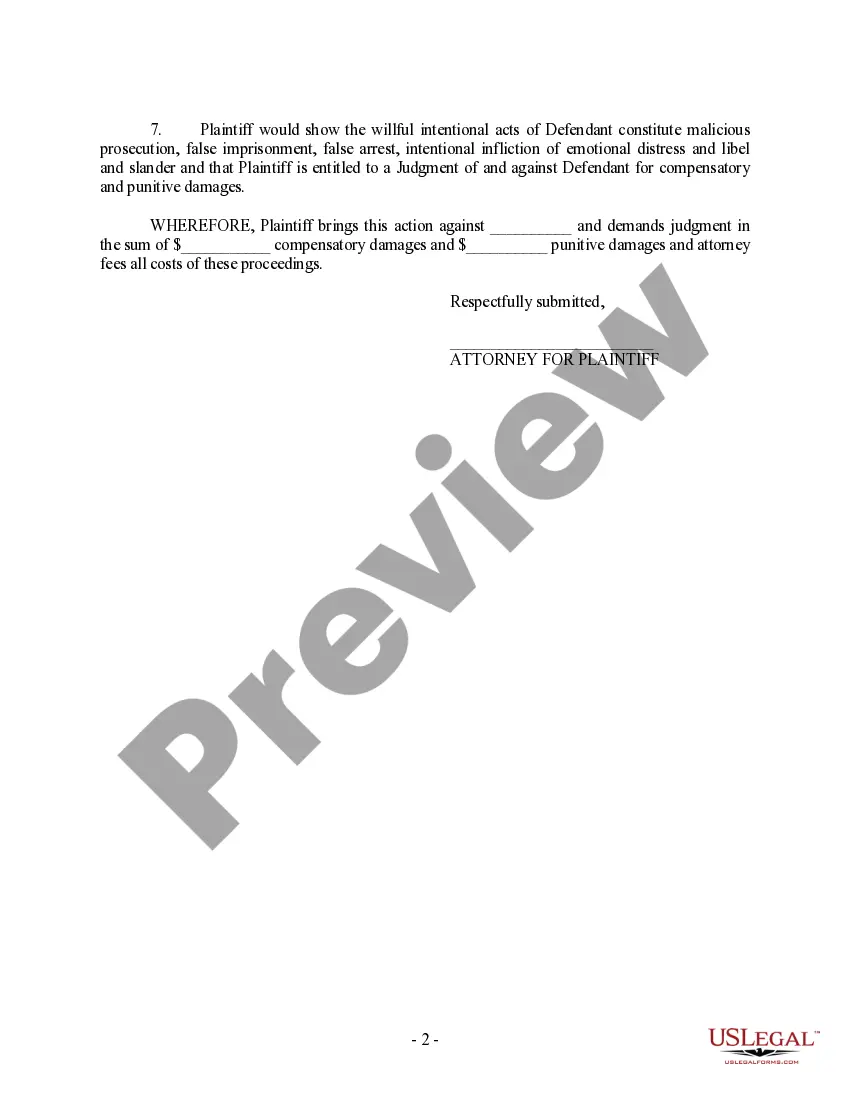
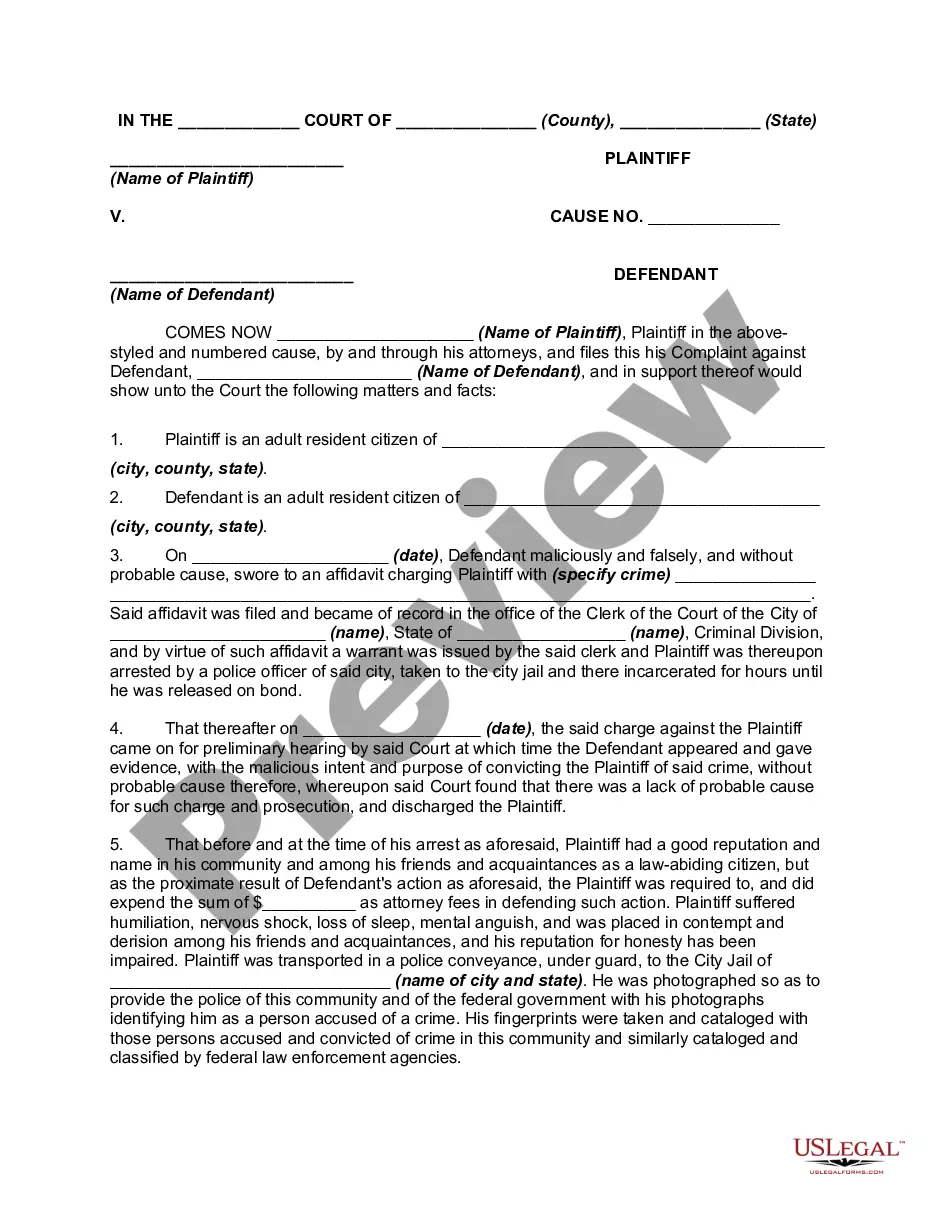
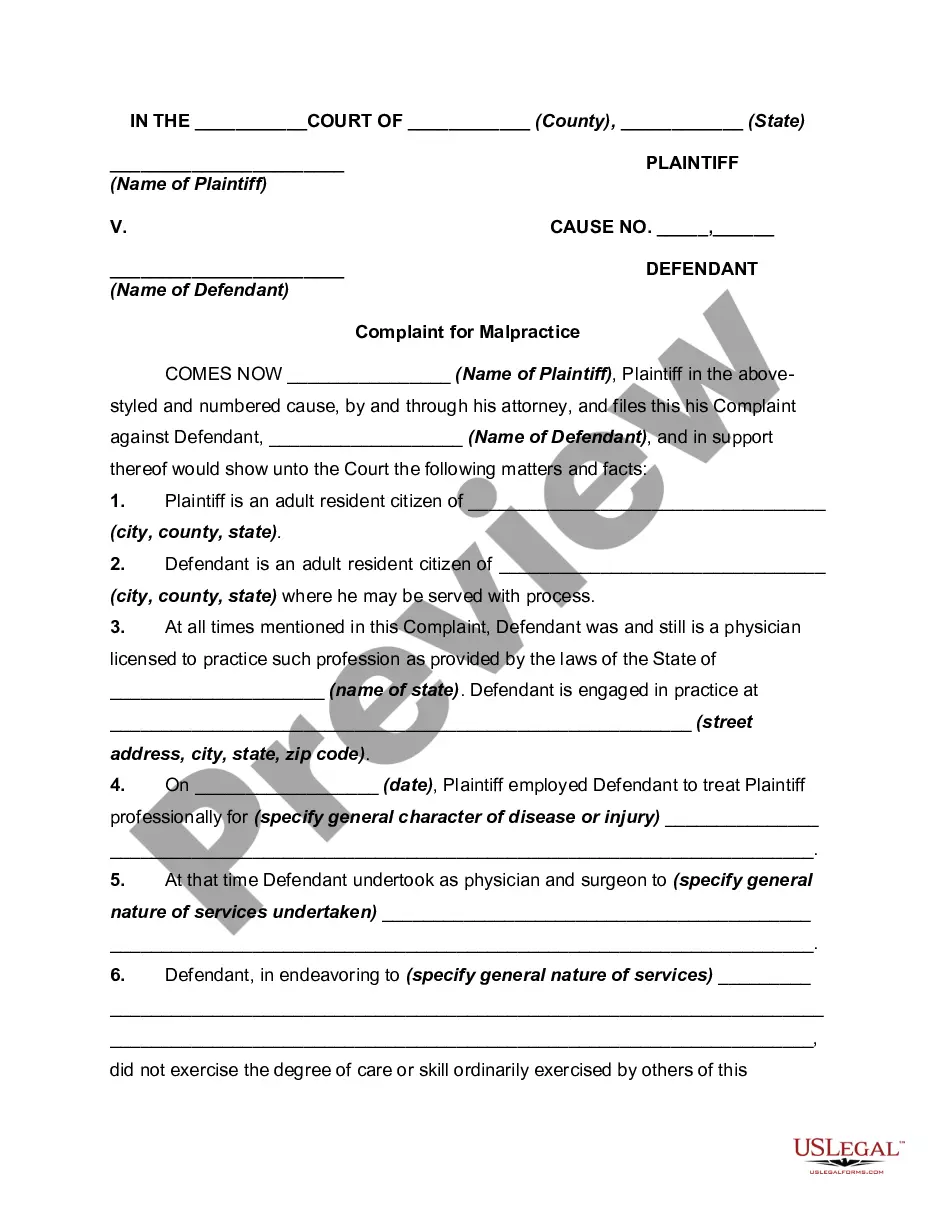
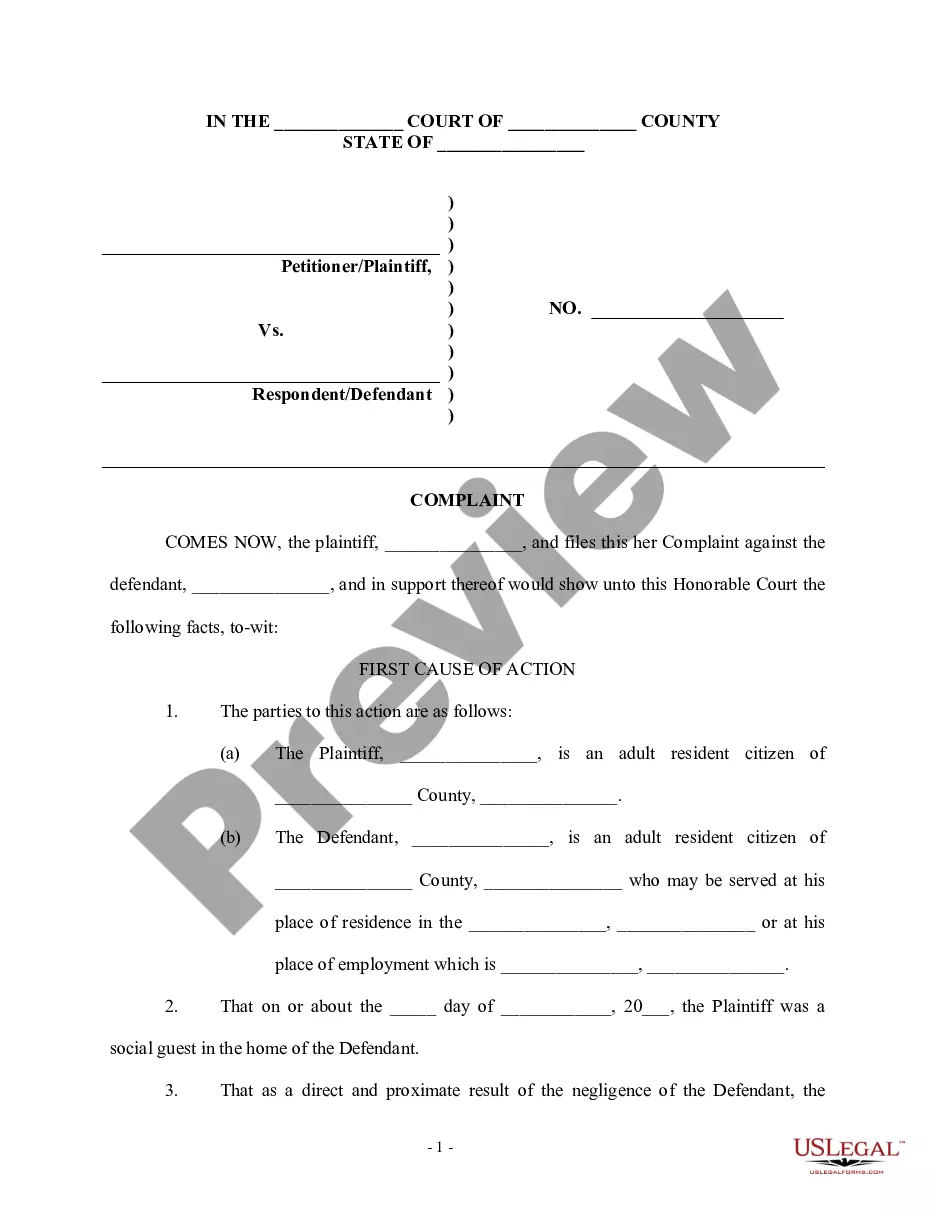
The Complaint for malicious prosecution is a legal document used to initiate a lawsuit against a defendant for wrongful actions that have caused harm to the plaintiff. This form specifically addresses claims related to false arrest, malicious prosecution, trespassing, slander, libel, and intentional infliction of emotional distress. It is important for plaintiffs to understand that this complaint is distinct from other legal actions, as it focuses on the malicious intent behind the prosecution.
What’s included in this form
- Identification of the parties involved, including the plaintiff and defendant.
- Details regarding the circumstances of the alleged false arrest and prosecution.
- Claims of emotional distress and damages incurred by the plaintiff.
- Request for compensatory and punitive damages.
- Signature area for the attorney representing the plaintiff.



Situations where this form applies
This form should be used by individuals who have faced wrongful charges or actions resulting in emotional and financial harm due to another person's malicious conduct. Scenarios include being falsely accused of a crime that led to an arrest, experiencing defamation through slander or libel, or suffering from emotional distress due to anotherâs wrongful actions.
Who should use this form
- Individuals who believe they have been wrongfully accused or prosecuted.
- People seeking to recover damages for emotional distress and loss of reputation.
- Anyone looking to hold a party accountable for malicious actions resulting in arrest or defamation.
Completing this form step by step
- Identify and enter the names of the plaintiff and defendant accurately.
- Specify the date and facts surrounding the false arrest and prosecution.
- Detail the emotional and financial damages suffered as a result of the defendant's actions.
- Calculate and state the amount of compensatory and punitive damages sought.
- Ensure the form is signed by the attorney representing the plaintiff.
Does this form need to be notarized?
In most cases, this form does not require notarization. However, some jurisdictions or signing circumstances might. US Legal Forms offers online notarization powered by Notarize, accessible 24/7 for a quick, remote process.
Get your form ready online
Our built-in tools help you complete, sign, share, and store your documents in one place.
Make edits, fill in missing information, and update formatting in US Legal Forms—just like you would in MS Word.
Download a copy, print it, send it by email, or mail it via USPS—whatever works best for your next step.
Sign and collect signatures with our SignNow integration. Send to multiple recipients, set reminders, and more. Go Premium to unlock E-Sign.
If this form requires notarization, complete it online through a secure video call—no need to meet a notary in person or wait for an appointment.
We protect your documents and personal data by following strict security and privacy standards.

Make edits, fill in missing information, and update formatting in US Legal Forms—just like you would in MS Word.

Download a copy, print it, send it by email, or mail it via USPS—whatever works best for your next step.

Sign and collect signatures with our SignNow integration. Send to multiple recipients, set reminders, and more. Go Premium to unlock E-Sign.

If this form requires notarization, complete it online through a secure video call—no need to meet a notary in person or wait for an appointment.

We protect your documents and personal data by following strict security and privacy standards.
Typical mistakes to avoid
- Failing to detail the specific actions taken by the defendant that led to the complaint.
- Not providing evidence or examples of emotional distress or damages.
- Using vague language or leaving out critical details about the incidents.
- Not verifying if the form complies with local court requirements.
Why use this form online
- Convenient access to a form developed by licensed attorneys.
- Easy customization to fit your specific legal circumstances.
- Ability to download and print the form instantly for filing in court.
- Assurance of using a reliable, accurate legal document template.
Summary of main points
- The Complaint for malicious prosecution addresses wrongful legal actions and their consequences.
- Ensure compliance with your state's legal requirements when using this form.
- Detail the specific damages and facts surrounding your claim for better effectiveness.
Looking for another form?
Form popularity
FAQ
Prosecution by the defendant. Absence of reasonable and probable cause. Defendant acted maliciously. Termination of proceedings in the favour of the plaintiff. Plaintiff suffered damage as a result of the prosecution.
A plaintiff can sue for malicious prosecution when a defendant "maliciously" prosecutes a criminal case or uses a civil proceeding against the plaintiff when the defendant knows he or she doesn't have a case.
Prosecution by the defendant.Absence of reasonable and probable cause.Defendant acted maliciously.Termination of proceedings in the favour of the plaintiff.Plaintiff suffered damage as a result of the prosecution.
Malicious prosecution is a civil cause of action in California that you bring when a person files a frivolous claim against you; the lawsuit was filed not to win, but rather for some other purposes; and you suffered damages as a result.
A plaintiff can sue for malicious prosecution when a defendant "maliciously" prosecutes a criminal case or uses a civil proceeding against the plaintiff when the defendant knows he or she doesn't have a case.
To win a suit for malicious prosecution, the plaintiff must prove four elements: (1) that the original case was terminated in favor of the plaintiff, (2) that the defendant played an active role in the original case, (3) that the defendant did not have probable cause or reasonable grounds to support the original case,
What is the Statute of Limitations on Malicious Prosecution Actions? California courts generally apply a two-year statute of limitations to malicious prosecution actions; however, claims against attorneys may be governed by the shorter one-year statute of limitations on legal malpractice claims.
To show that prosecutorial misconduct requires dismissal of the indictment or a mistrial, the defendant usually has to show that the prosecutor willfully engaged in misconduct and that the misconduct prejudiced the defendant.