Sample Letter for Fellow Employee's Break in Confidence
Understanding this form
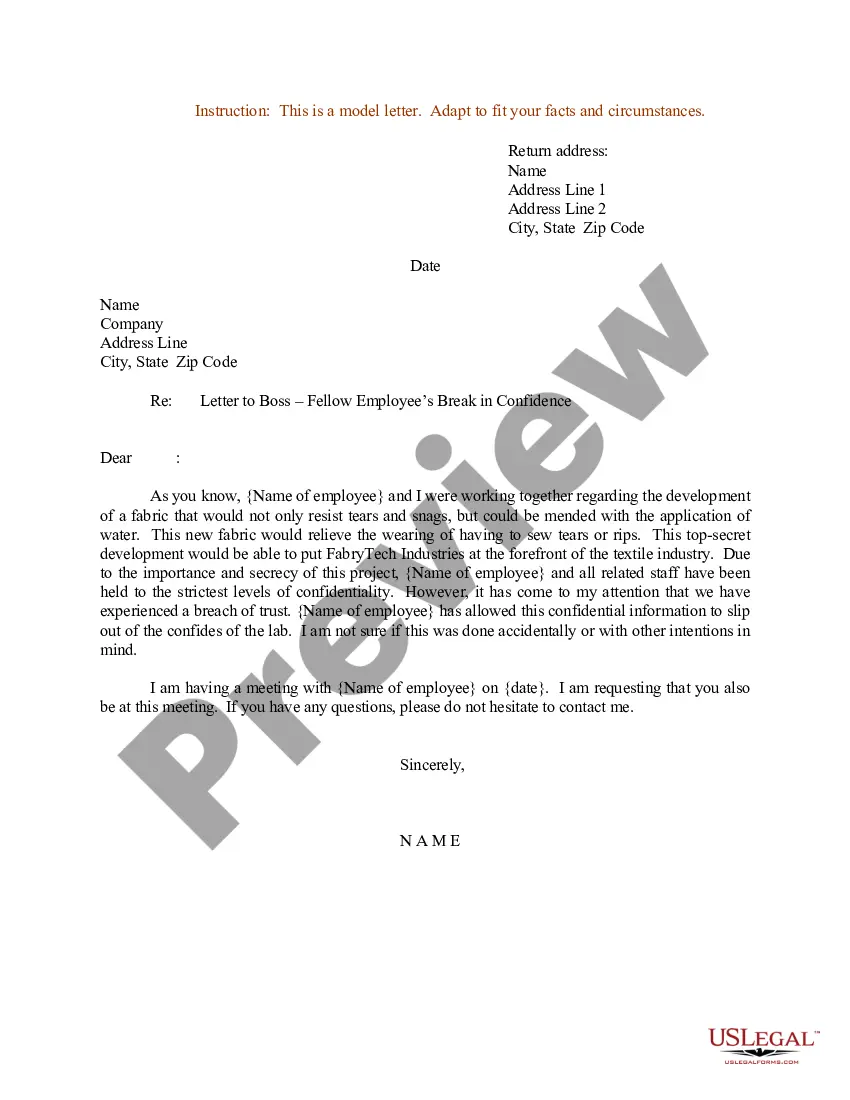
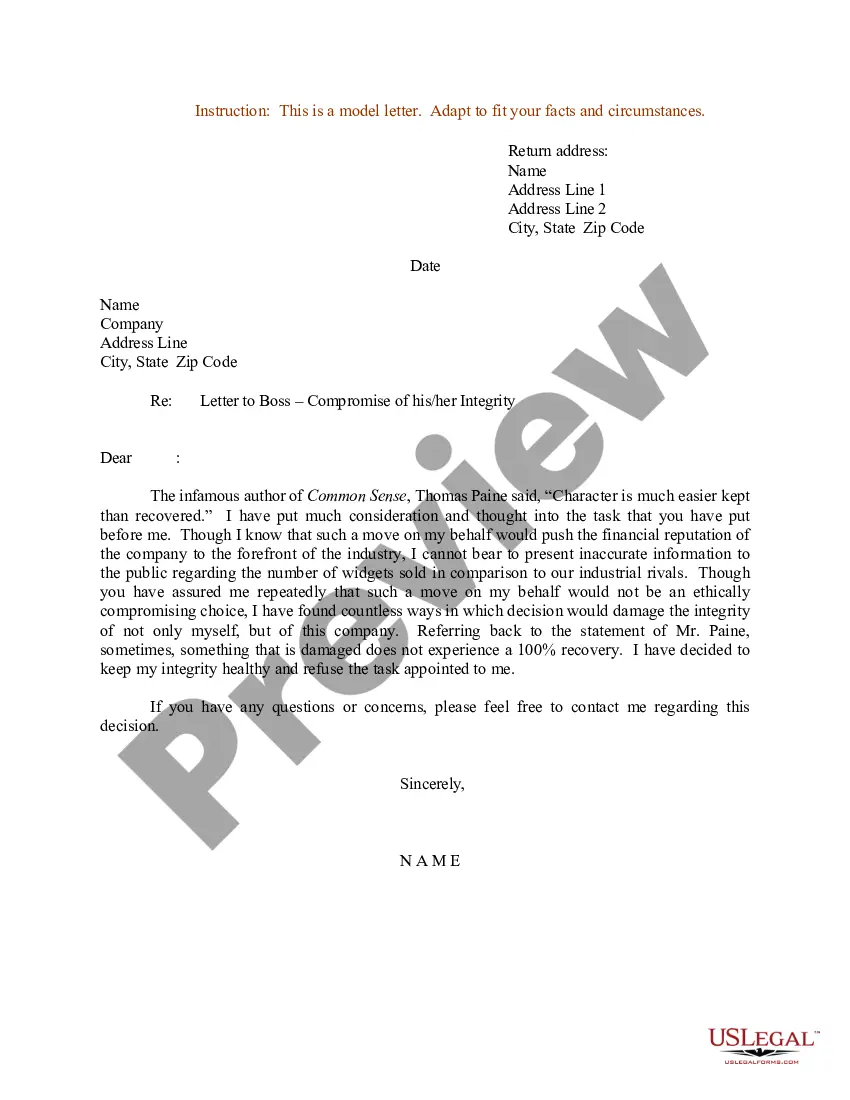
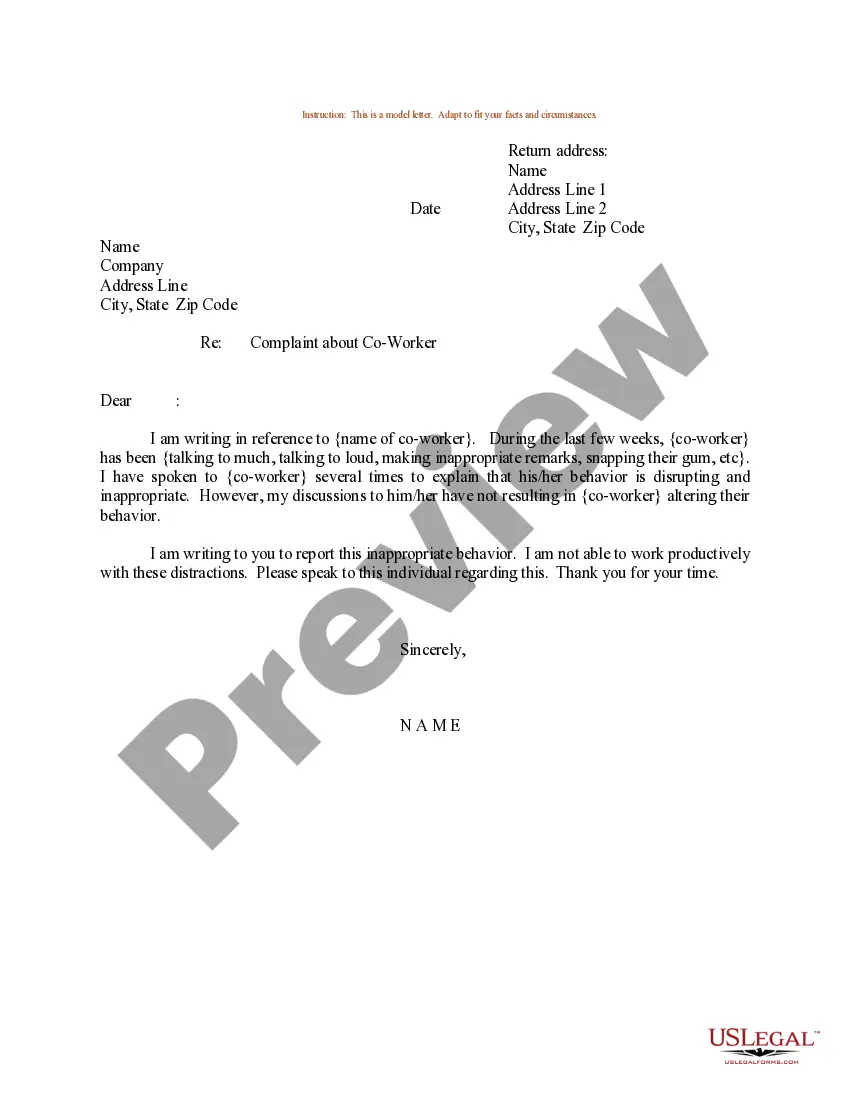
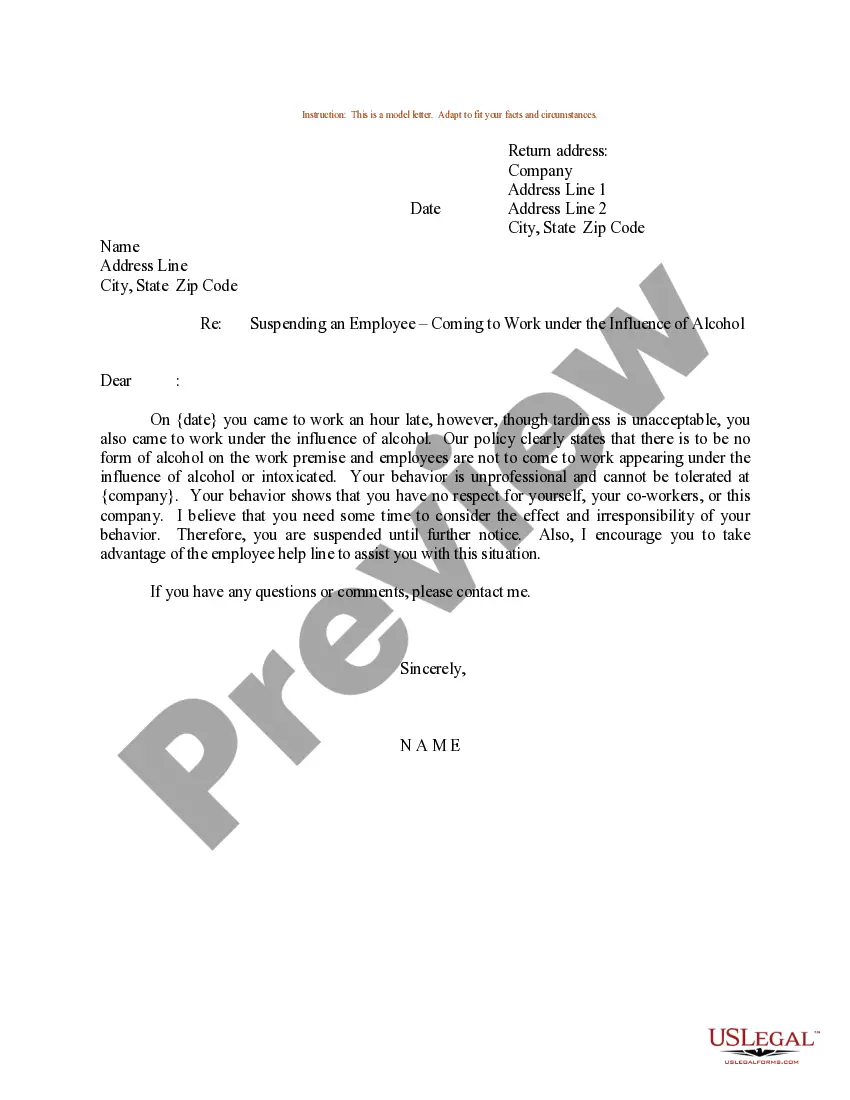
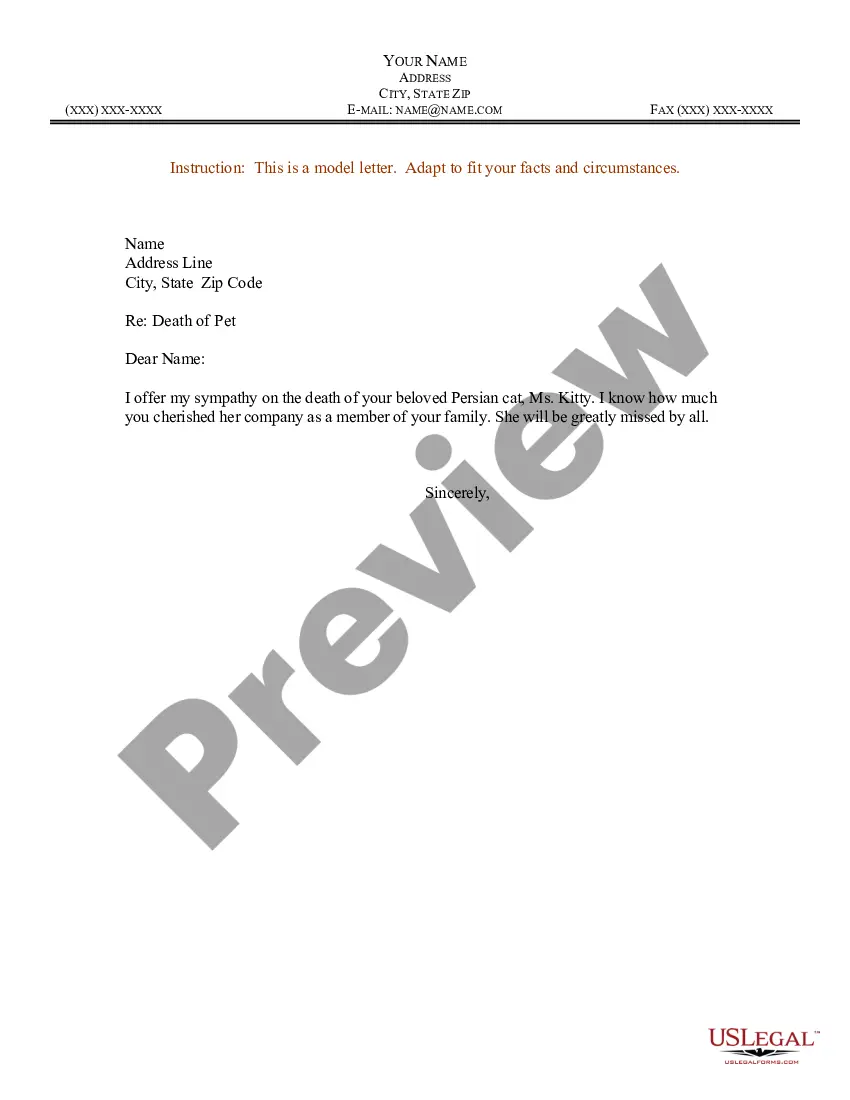
The Sample Letter for Fellow Employee's Break in Confidence is a template designed to assist employees in communicating with their supervisors regarding a breach of trust or confidentiality by a fellow employee. This letter serves as a formal request for a meeting, clearly stating the issues at hand and emphasizing the need for dialogue. Unlike other form types that may focus on general communication, this sample letter specifically addresses concerns regarding trust in a workplace setting.
Key parts of this document
- Return address: Includes the sender's name and address.
- Date: The date of writing the letter.
- Recipient's address: Information about the supervisor or relevant personnel.
- Re: A clear subject line indicating the letter's purpose.
- Meeting request: A paragraph explicitly asking for the supervisor's presence at the meeting regarding the breach of confidence.
- Contact information: An invitation for any questions or clarifications.
- Signature: A space for the sender's name for official representation.
When to use this document
This form is useful when an employee notices a breach of confidence within their workplace, such as unauthorized disclosure of sensitive information. It can be employed to formally address the issue with a supervisor and request a meeting to discuss the matter further. Situations that might warrant this letter include sharing confidential work-related information with unauthorized individuals or discussing sensitive subjects without appropriate clearance.
Who should use this form
This form is suitable for:
- Any employee who feels that their trust has been compromised by a colleague.
- Supervisors and managers who need to address breaches of confidence in their teams.
- Human resources personnel managing workplace integrity and trust issues.
- Anyone wishing to formally document concerns about confidentiality breaches in a professional setting.
How to complete this form
- Write your return address at the top of the letter.
- Insert the current date below your address.
- Include the recipient's address in the appropriate section.
- Write a clear subject line indicating the letter's purpose.
- State the purpose of the meeting and explicitly request the recipient's presence.
- Provide your name at the bottom to sign off the letter.
Notarization guidance
Notarization is generally not required for this form. However, certain states or situations might demand it. You can complete notarization online through US Legal Forms, powered by Notarize, using a verified video call available anytime.
Get your form ready online
Our built-in tools help you complete, sign, share, and store your documents in one place.
Make edits, fill in missing information, and update formatting in US Legal Forms—just like you would in MS Word.
Download a copy, print it, send it by email, or mail it via USPS—whatever works best for your next step.
Sign and collect signatures with our SignNow integration. Send to multiple recipients, set reminders, and more. Go Premium to unlock E-Sign.
If this form requires notarization, complete it online through a secure video call—no need to meet a notary in person or wait for an appointment.
We protect your documents and personal data by following strict security and privacy standards.

Make edits, fill in missing information, and update formatting in US Legal Forms—just like you would in MS Word.

Download a copy, print it, send it by email, or mail it via USPS—whatever works best for your next step.

Sign and collect signatures with our SignNow integration. Send to multiple recipients, set reminders, and more. Go Premium to unlock E-Sign.

If this form requires notarization, complete it online through a secure video call—no need to meet a notary in person or wait for an appointment.

We protect your documents and personal data by following strict security and privacy standards.
Avoid these common issues
- Failing to include a clear subject line can lead to confusion about the letter's purpose.
- Omitting the date may result in misunderstandings regarding the timeliness of the request.
- Not specifying the details of the breach may weaken the impact of the letter.
- Leaving out contact information can hinder communication for follow-up questions.
Why use this form online
- Convenience: Download and fill out the form from anywhere, at any time.
- Editability: Customize the content easily to suit your specific situation.
- Reliability: Use a legally vetted template prepared by licensed attorneys.
What to keep in mind
- Use this letter to formally address concerns about breaches of confidentiality.
- Ensure clarity in your communication to prompt timely action.
- This form can facilitate important conversations about trust in the workplace.
Looking for another form?


Form popularity
FAQ
This common practice is not required everywhere, however: The federal wage and hour law, called the Fair Labor Standards Act (FLSA), doesn't require employers to provide meal or rest breaks.your break lasts 20 minutes or less; generally, these shorter breaks are considered part of your work day and must be paid.
In California, nonexempt employees who work at least 5 hours per day must be provided at least a 30-minute unpaid meal break.When an employee works 10 hours in a day, they must be provided with a second 30-minute unpaid meal break. If the total workday is less than 12 hours, then the second meal break can be waived.
When breaks aren't stipulated by law, employers may have company policies in place that provide for a certain amount of break time per work shift.For example, an employee could be given a 30-minute lunch break (unpaid) and two 15-minute breaks (paid) during each eight-hour shift.
10 answers You would receive two 15 minute breaks and one 30 minute lunch. In a 10 hour shift you get 2 breaks and a lunch. Two 15, one 10 minute and one 1/2 hour break.
15 minute break for 4-6 consecutive hours or a 30 minute break for more than 6 consecutive hours. If an employee works 8 or more consecutive hours, the employer must provide a 30-minute break and an additional 15 minute break for every additional 4 consecutive hours worked.
Under California law, non-exempt employees are entitled to one unpaid 30-minute meal break, and two paid 10-minute rest breaks, during a typical 8-hour shift.
This common practice is not required everywhere, however: The federal wage and hour law, called the Fair Labor Standards Act (FLSA), doesn't require employers to provide meal or rest breaks.your break lasts 20 minutes or less; generally, these shorter breaks are considered part of your work day and must be paid.
Under California law, non-exempt employees are entitled to one unpaid 30-minute meal break, and two paid 10-minute rest breaks, during a typical 8-hour shift.