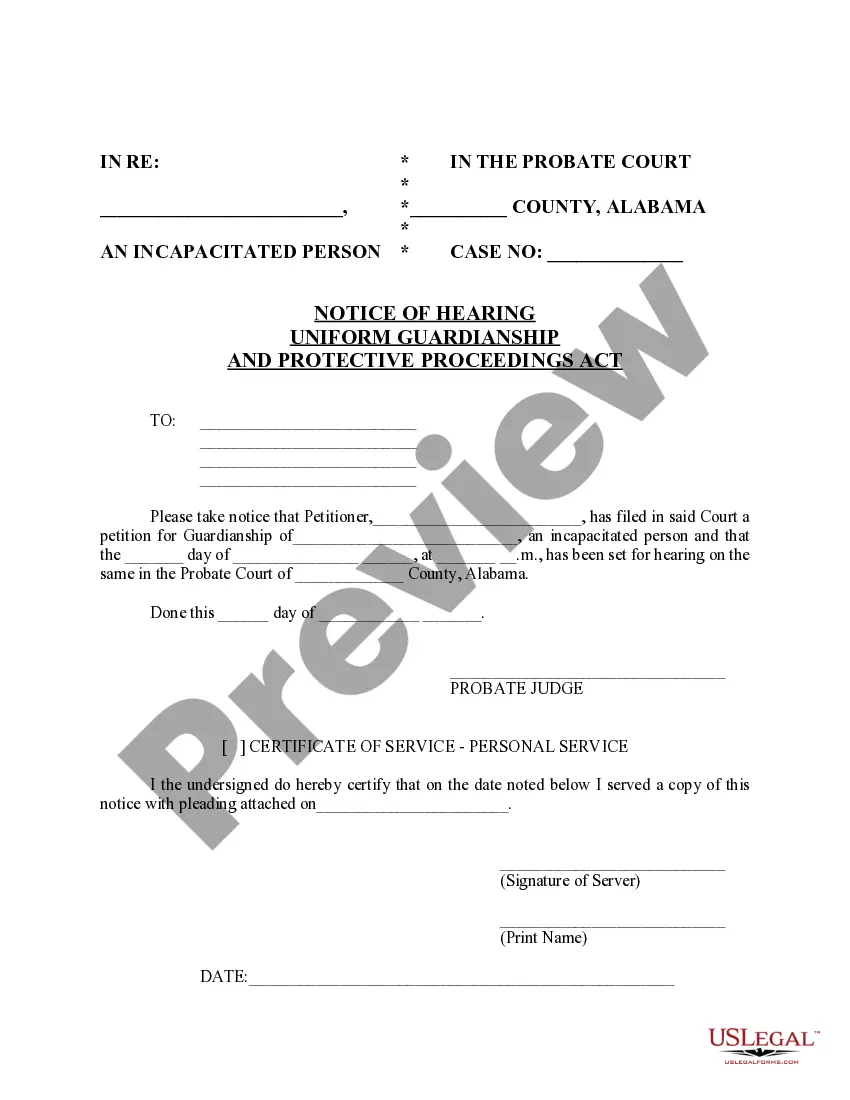
Answers To Defendant's First Interrogatories To Plaintiff
Understanding this form
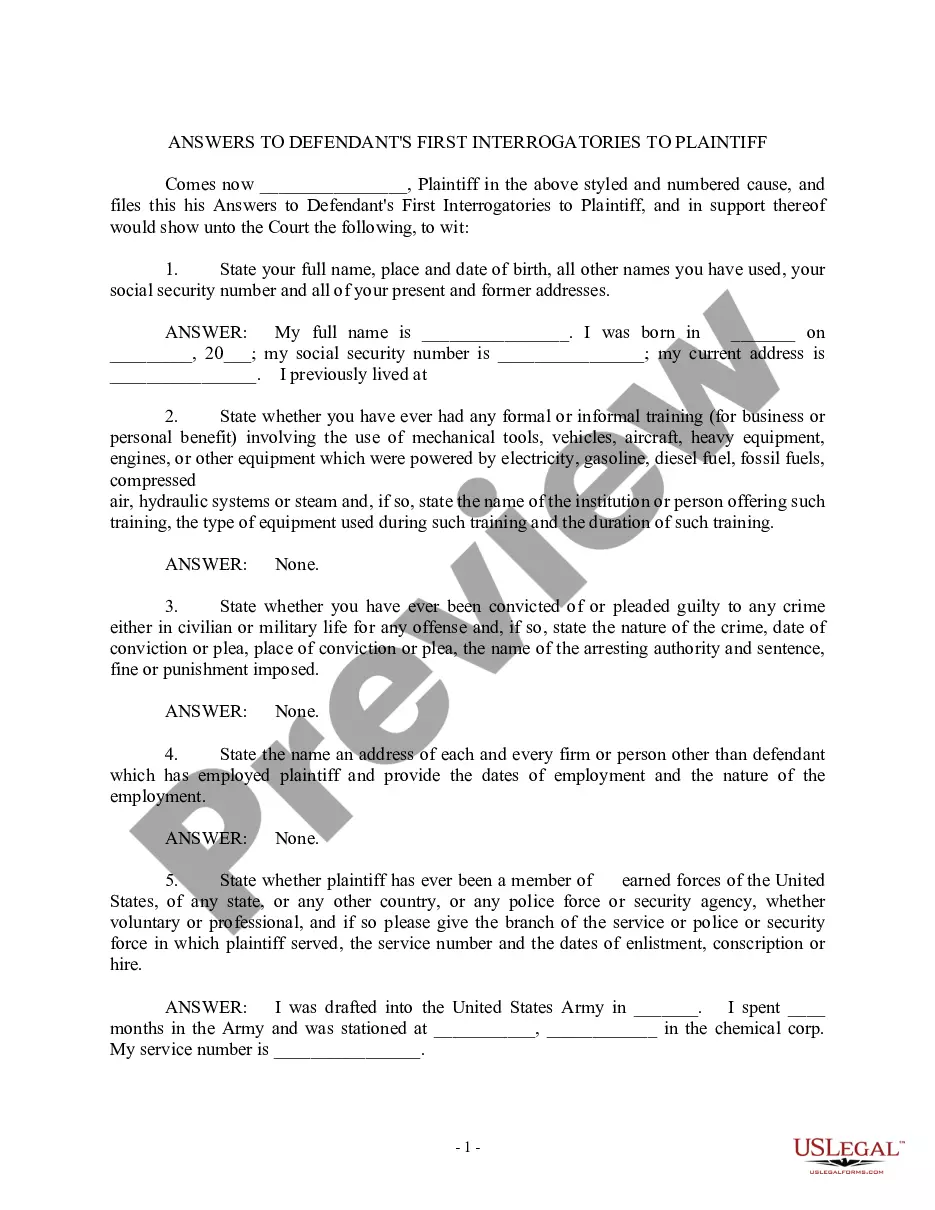
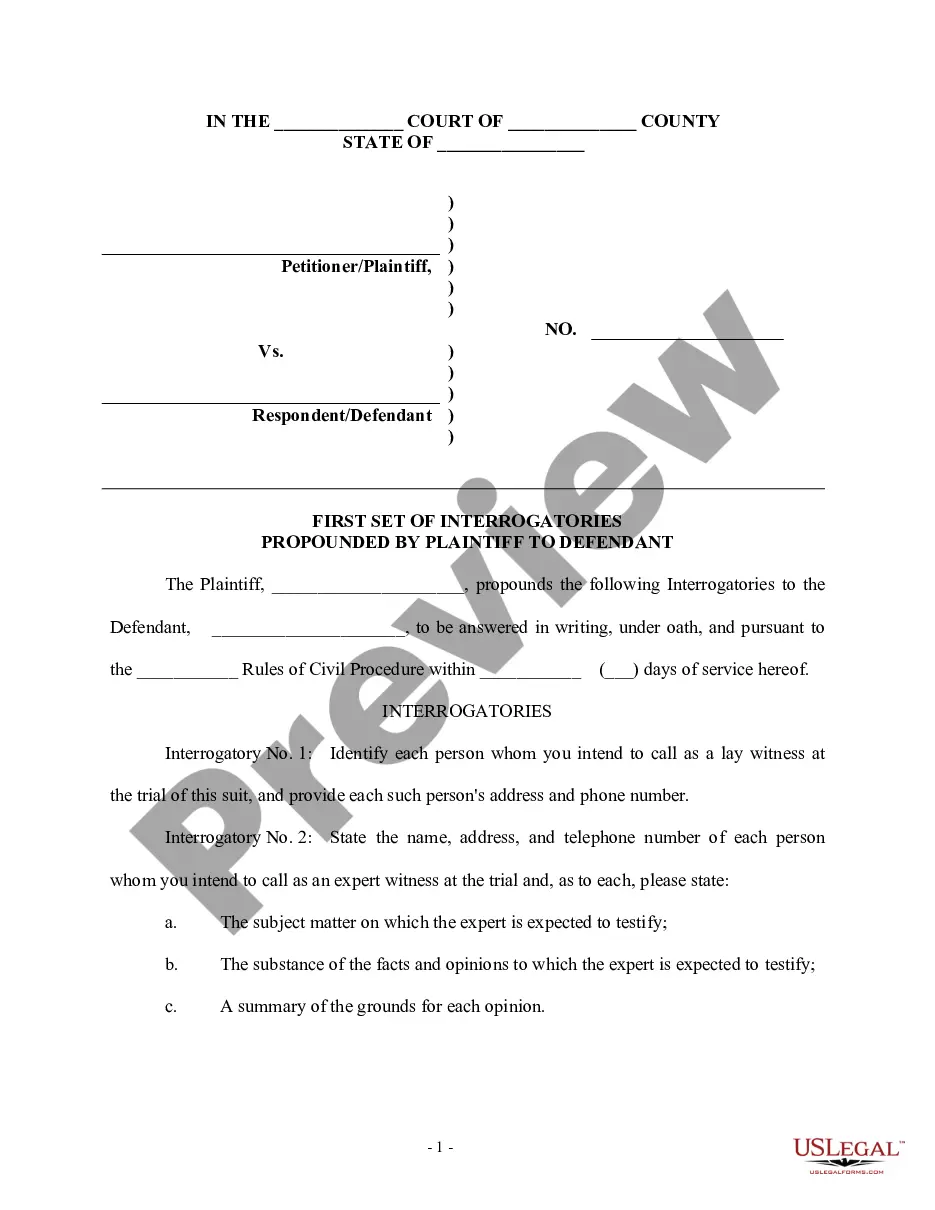
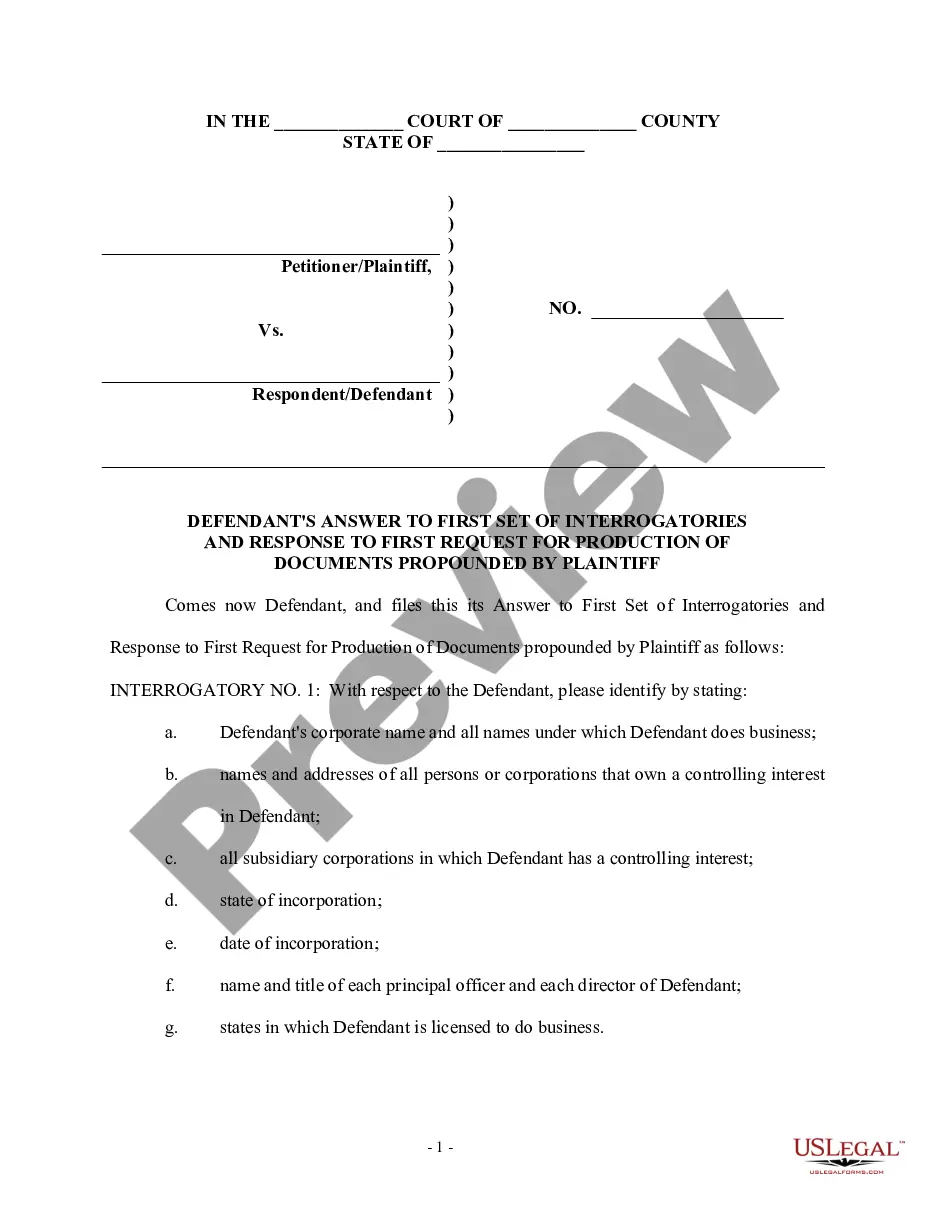
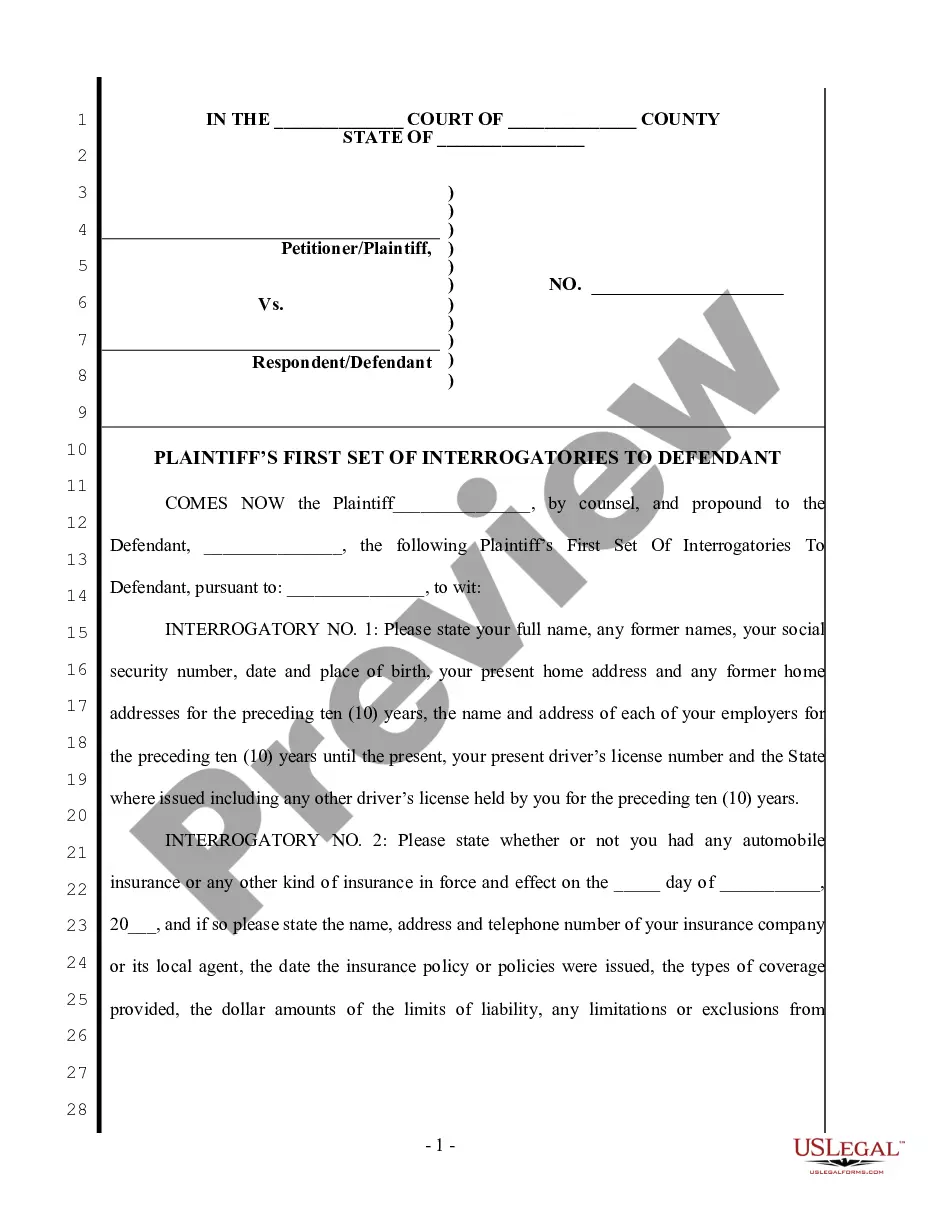
The Answers to Defendant's First Interrogatories to Plaintiff is a legal form used in civil litigation. It enables the plaintiff to respond to the defendant's specific questions regarding the case. This form serves to clarify the facts, gather evidence, and provide transparency in the judicial process. Unlike other discovery documents, this form focuses solely on the plaintiff's responses to the defendant's inquiries, ensuring that both parties have a clear understanding of the issues at hand.
Main sections of this form
- Plaintiff's personal information: Full name, birth date, social security number, and addresses.
- Employment history: Details of any prior employment outside of the defendant.
- Criminal history: Disclosure of any criminal convictions or pleas.
- Military service: Information regarding service in the armed forces or any police forces.
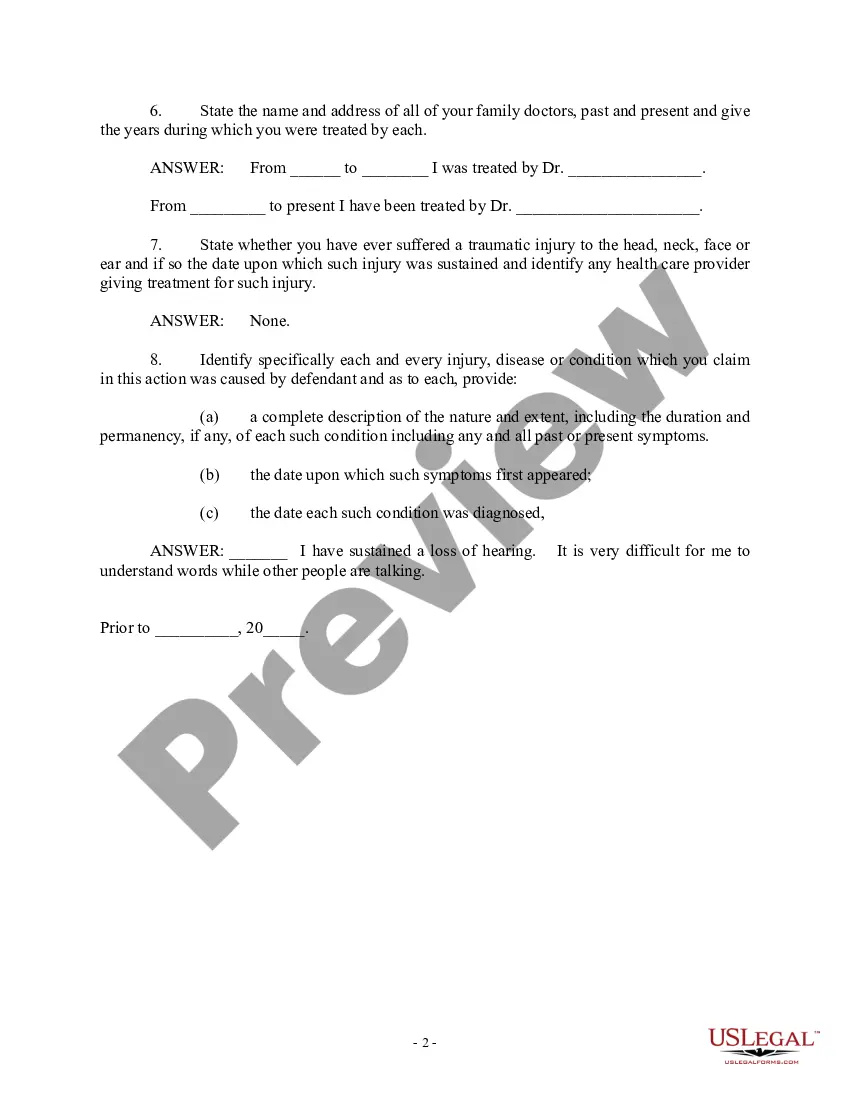
- Medical treatment: Names and addresses of healthcare providers treating the plaintiff.
- Claims of injury: Description of injuries, including their nature, duration, and any symptoms experienced.

Common use cases
This form should be used after a defendant has served interrogatories to the plaintiff in a civil lawsuit. It is a crucial step during the discovery phase when parties exchange relevant information and evidence prior to trial. If you are the plaintiff and have received interrogatories from the defendant, completing this form is necessary to comply with court procedures and to provide answers that support your claims.
Intended users of this form
- Individuals filing a civil lawsuit as a plaintiff.
- Plaintiffs who have been served with the defendant's interrogatories.
- Persons seeking to clarify their claims and injuries in court proceedings.
- Individuals who wish to ensure their responses are documented legally and properly during discovery.
Completing this form step by step
- Identify the parties: Fill in your full name and details as the plaintiff at the beginning of the form.
- Answer the questions: Take your time to respond truthfully to each interrogatory question, ensuring accuracy.
- Include supporting details: If applicable, provide additional context or explanations for the answers given.
- Review your responses: Check for any errors or omissions before finalizing the document.
- Sign and date the form: Ensure to provide your signature and the date to validate the document.
Is notarization required?
This form does not typically require notarization to be legally valid. However, some jurisdictions or document types may still require it. US Legal Forms provides secure online notarization powered by Notarize, available 24/7 for added convenience.
Get your form ready online
Our built-in tools help you complete, sign, share, and store your documents in one place.
Make edits, fill in missing information, and update formatting in US Legal Forms—just like you would in MS Word.
Download a copy, print it, send it by email, or mail it via USPS—whatever works best for your next step.
Sign and collect signatures with our SignNow integration. Send to multiple recipients, set reminders, and more. Go Premium to unlock E-Sign.
If this form requires notarization, complete it online through a secure video call—no need to meet a notary in person or wait for an appointment.
We protect your documents and personal data by following strict security and privacy standards.

Make edits, fill in missing information, and update formatting in US Legal Forms—just like you would in MS Word.

Download a copy, print it, send it by email, or mail it via USPS—whatever works best for your next step.

Sign and collect signatures with our SignNow integration. Send to multiple recipients, set reminders, and more. Go Premium to unlock E-Sign.

If this form requires notarization, complete it online through a secure video call—no need to meet a notary in person or wait for an appointment.

We protect your documents and personal data by following strict security and privacy standards.
Mistakes to watch out for
- Failing to answer all questions completely or inaccurately.
- Not adhering to state-specific formatting or legal requirements.
- Missing the deadline for submission to the court or other parties involved.
- Omitting necessary details that could support your claims.
Benefits of using this form online
- Convenience: Download the form anytime and anywhere for your legal needs.
- Editability: Easily fill in the form online before saving it as a document.
- Reliability: Forms are drafted by licensed attorneys for accuracy and compliance with legal standards.
Quick recap
- The Answers to Defendant's First Interrogatories to Plaintiff is crucial for responding to a defendant's legal inquiries.
- Complete and accurate answers are vital for the legal process and can impact the outcome of the case.
- Utilizing an online form ensures ease of access and customization for your specific situation.
Looking for another form?
Form popularity
FAQ
Responding to Form InterrogatoriesAnswer each question, being careful to answer each subpart, if one exists. Read the question carefully, and answer only what it asks. You may attach exhibits, if necessary. The response must be verified, meaning you must swear that the responses given are true.
The purpose of interrogatories is to learn a great deal of general information about a party in a lawsuit. For example, the defendant in a personal injury lawsuit about a car accident might send you interrogatories asking you to disclose things like: Where you live. Where you work.
Motions to Compel If a party doesn't respond to interrogatories or requests for production, then the party seeking those answers must file a motion to compel with the court. If the court grants the motion to compel, then the party who objected or failed to answer must then do so.
You must answer each interrogatory separately and fully in writing under oath, unless you object to it. You must explain why you object. You must sign your answers and objections.
Written questions submitted to a party from his or her adversary to ascertain answers that are prepared in writing and signed under oath and that have relevance to the issues in a lawsuit.No party can be compelled to answer interrogatories that involve matters beyond the party's control.
In law, interrogatories (also known as requests for further information) are a formal set of written questions propounded by one litigant and required to be answered by an adversary in order to clarify matters of fact and help to determine in advance what facts will be presented at any trial in the case.
So, can you refuse to answer interrogatories? The answer is, no, you may not. You must answer a Rule 33 interrogatory within 30 days of being served with it. That answer must either permit inspection of the requested information or object to the production of the information for a specific reason.