Agreement for Sale of Goods on an Ongoing Basis
Understanding this form
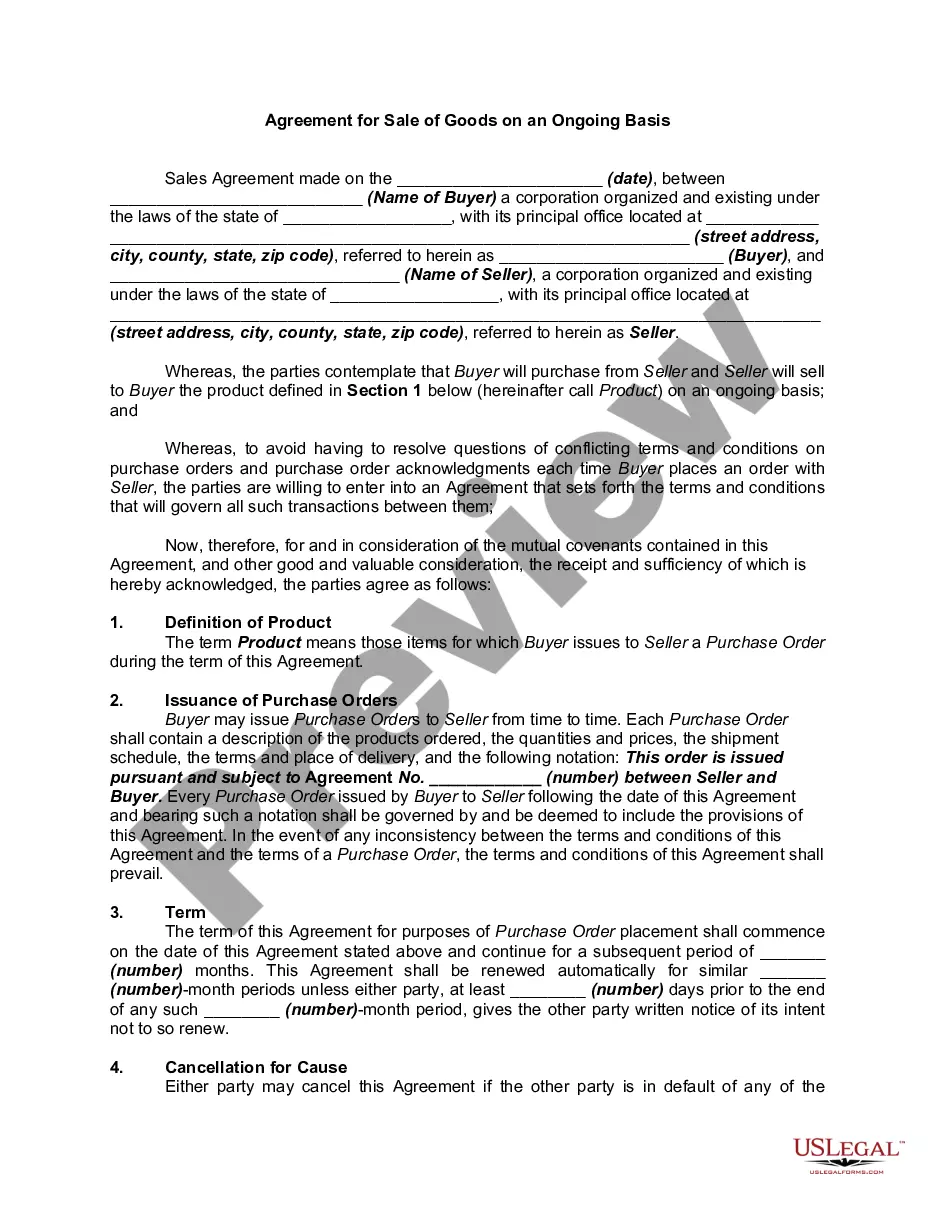
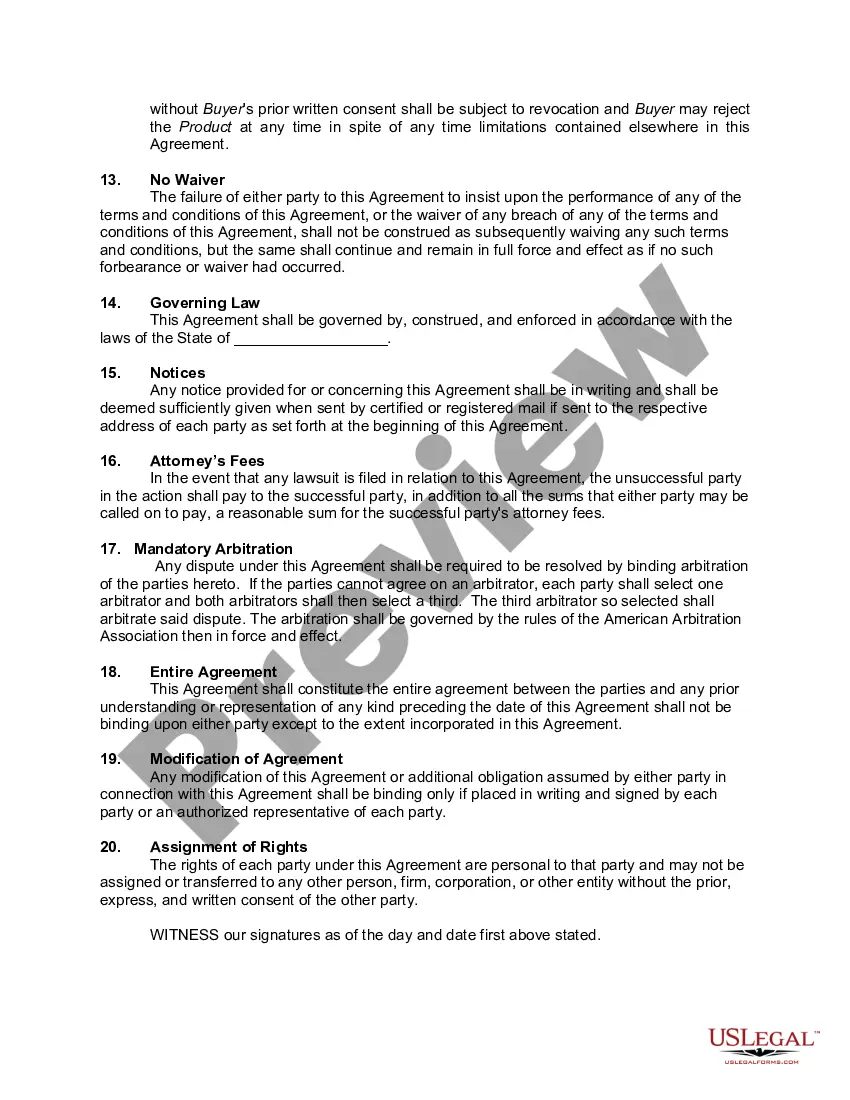
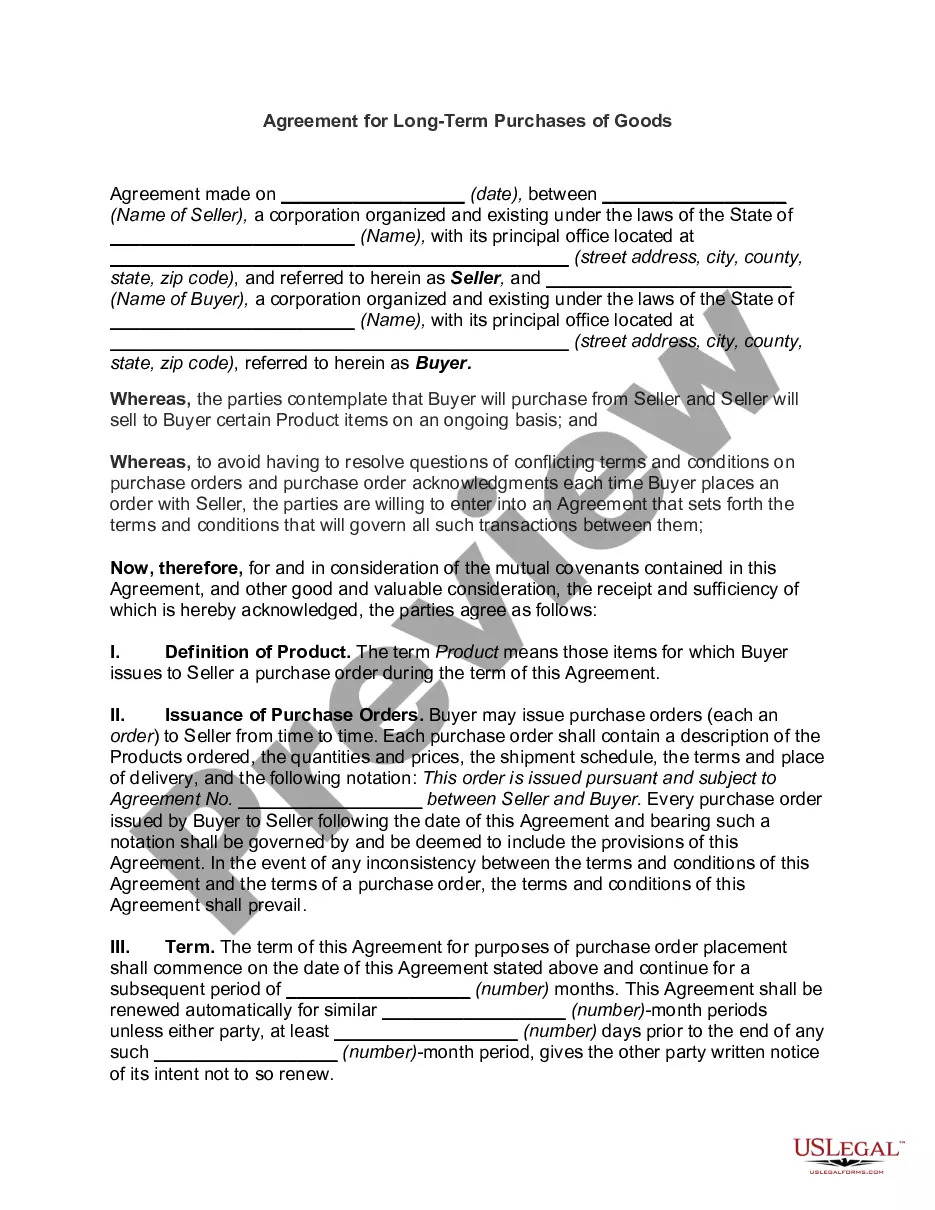
The Agreement for Sale of Goods on an Ongoing Basis is a legal document that outlines the terms and conditions under which a seller agrees to provide goods to a buyer on a continuous basis. This form is essential for businesses that engage in regular purchases and sales, setting clear expectations for both parties and reducing the risk of disputes over delivery, pricing, and product quality. It differs from standard sales agreements by focusing specifically on ongoing transactions rather than one-time sales.
Key parts of this document
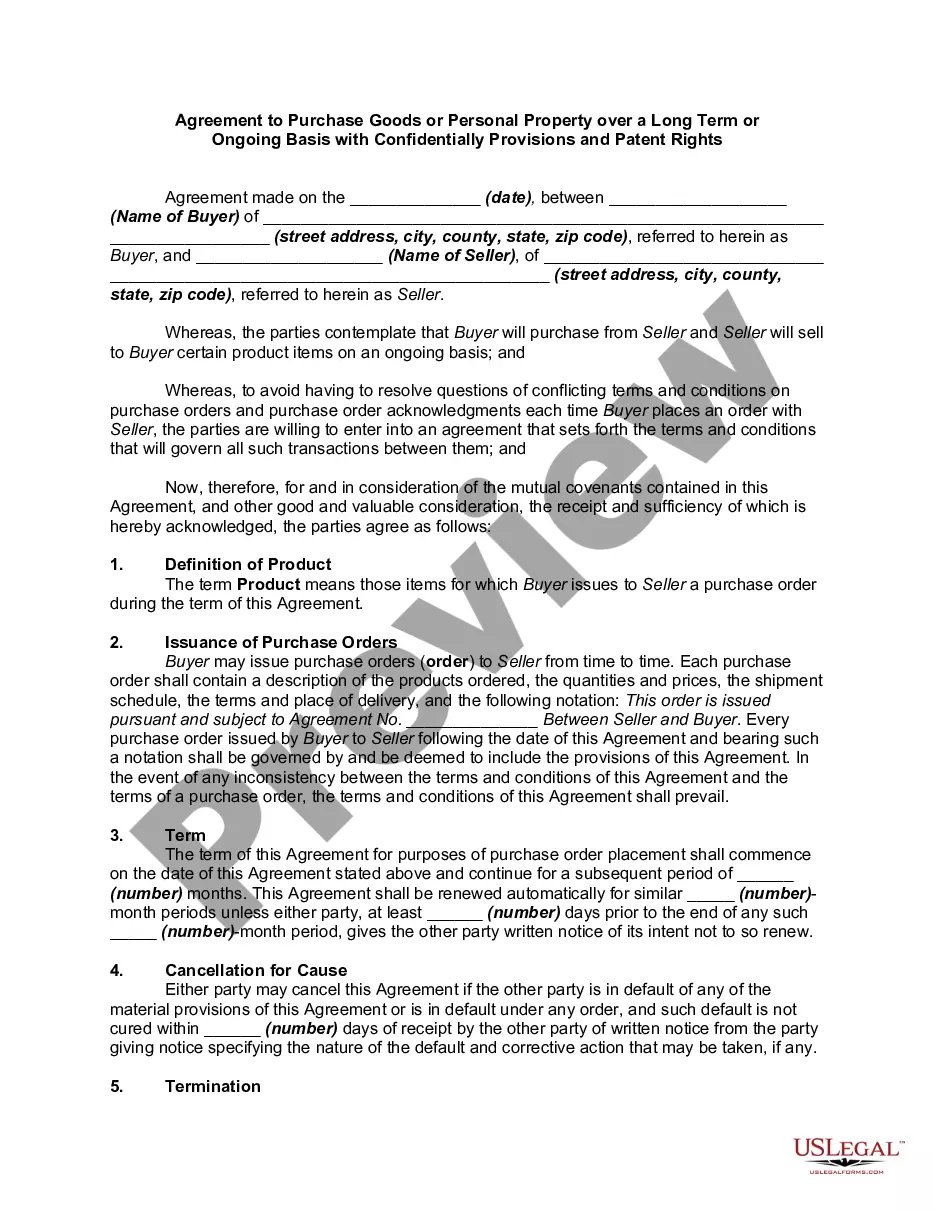
- Definition of Product: Specifies what items are included in the agreement.
- Issuance of Purchase Orders: Details regarding how purchase orders will be made and governed by this agreement.
- Term of Agreement: Establishes the duration of the agreement and renewal terms.
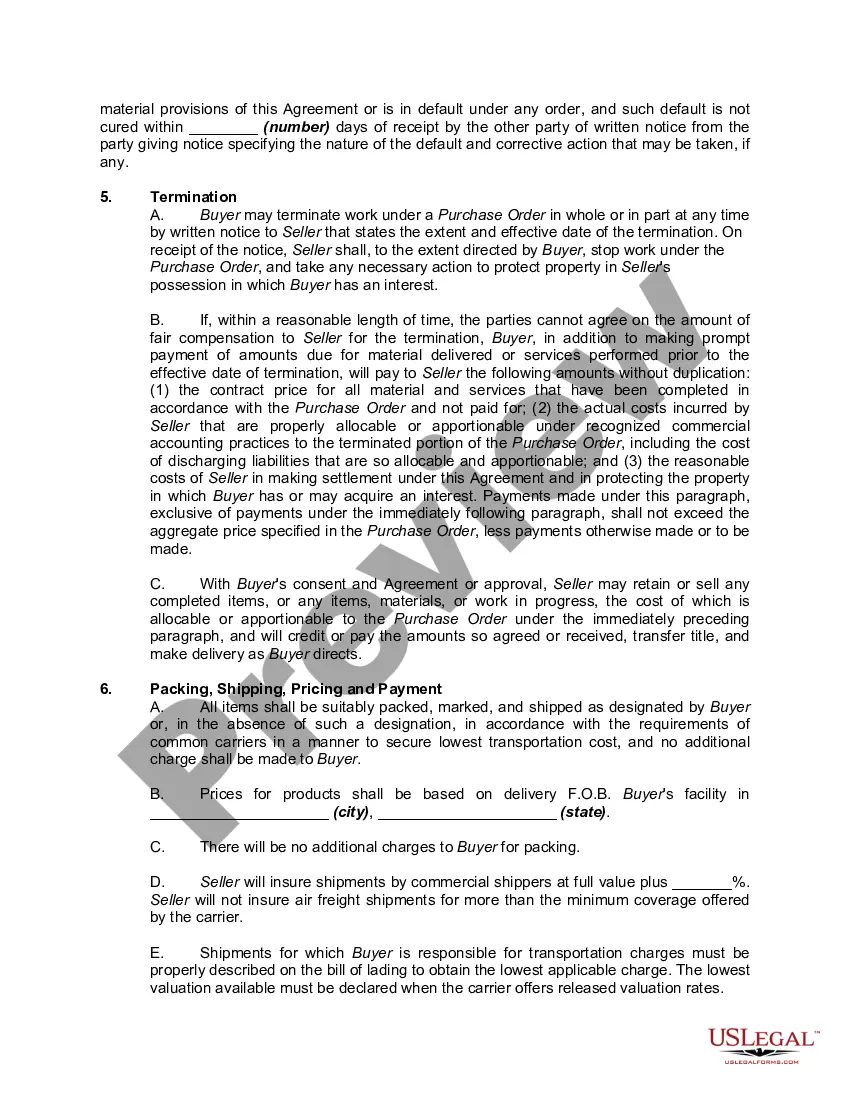
- Cancellation for Cause: Conditions under which either party may cancel the agreement.
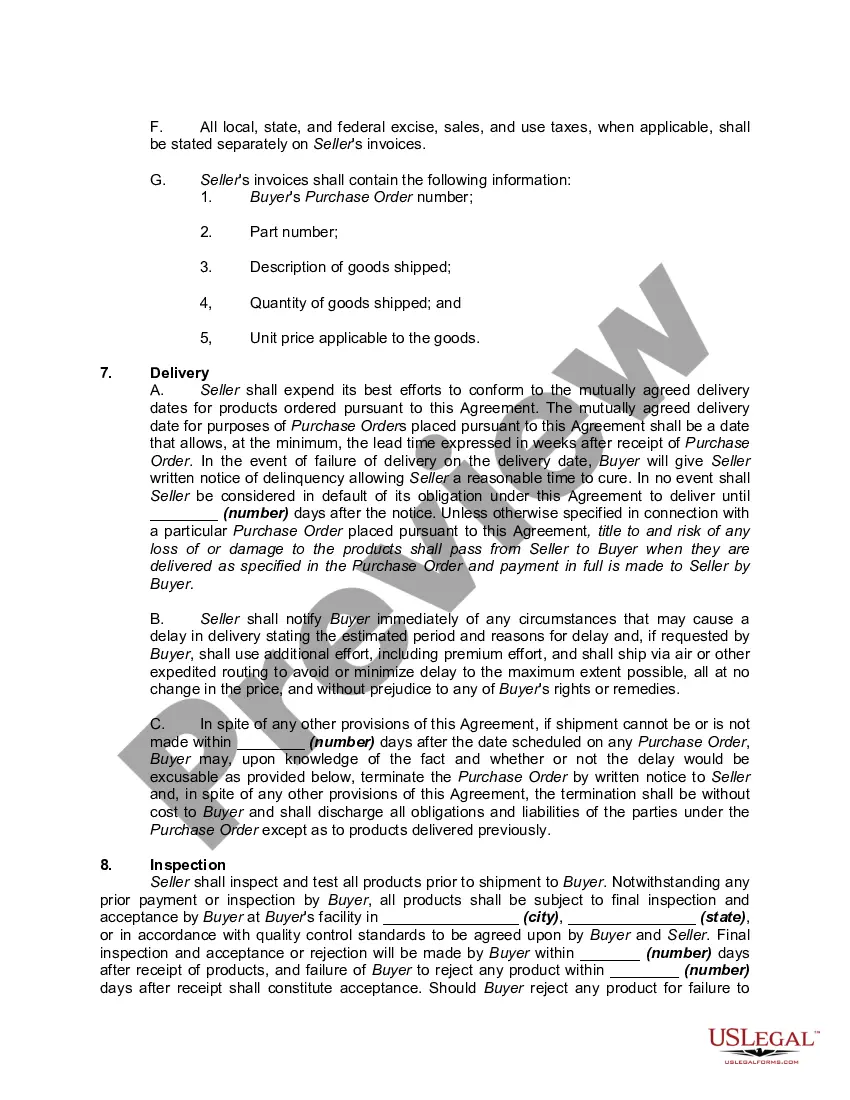
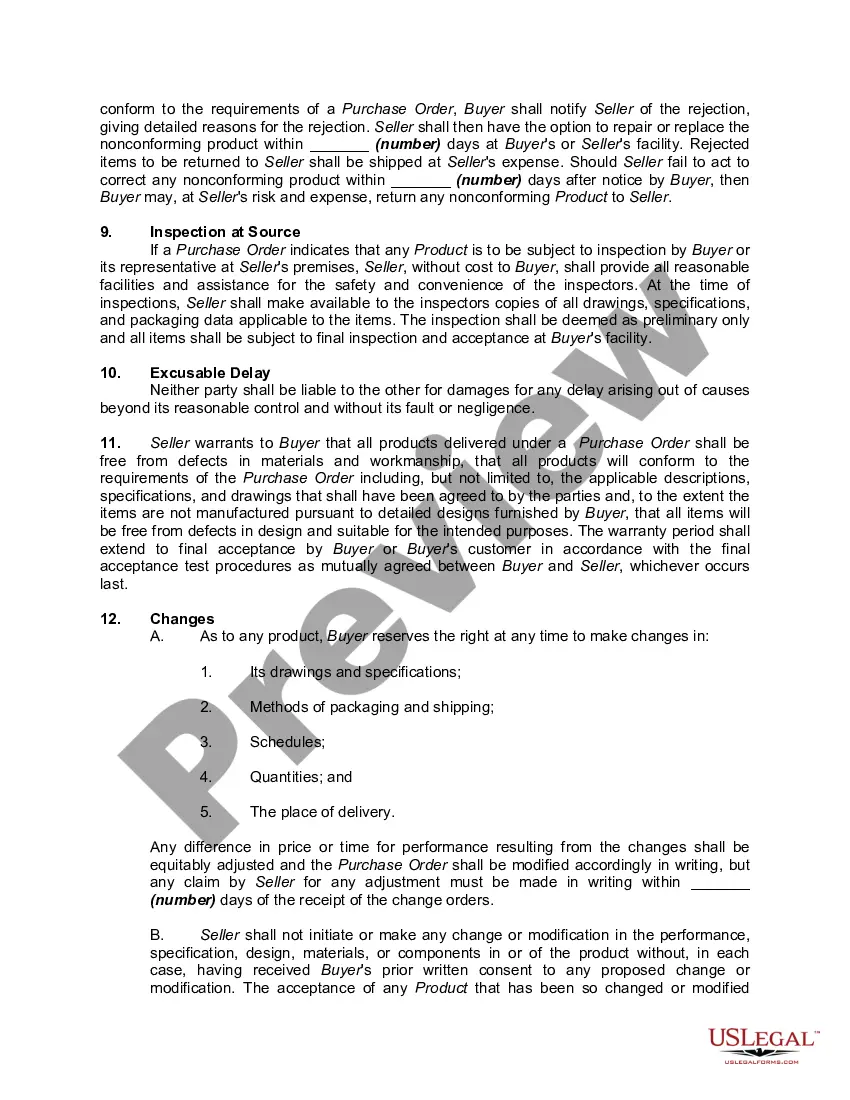
- Inspection: Outlines the processes for inspecting goods and handling nonconformities.
Common use cases
This form is useful in scenarios where a business intends to engage in repeated transactions with a supplier for specific goods. It is particularly relevant in manufacturing, wholesale, or retail sectors where consistent supply and clear terms of delivery and payment are crucial for operational efficiency.
Who can use this document
- Businesses that plan to purchase goods regularly from a supplier.
- Corporations entering agreements to ensure orderly and ongoing supply chains.
- Sellers who want to establish clear terms for multiple sales transactions with a buyer.
How to complete this form
- Identify the parties: Fill in the names and addresses of the buyer and seller.
- Specify the product details: Define the items that will be sold under the agreement.
- Determine the term of the agreement: Indicate the duration and renewal terms.
- Outline payment terms: Clarify pricing, invoicing, and tax responsibilities.
- Include inspection procedures: Describe how products will be inspected and accepted.
Does this document require notarization?
In most cases, this form does not require notarization. However, some jurisdictions or signing circumstances might. US Legal Forms offers online notarization powered by Notarize, accessible 24/7 for a quick, remote process.
Get your form ready online
Our built-in tools help you complete, sign, share, and store your documents in one place.
Make edits, fill in missing information, and update formatting in US Legal Forms—just like you would in MS Word.
Download a copy, print it, send it by email, or mail it via USPS—whatever works best for your next step.
Sign and collect signatures with our SignNow integration. Send to multiple recipients, set reminders, and more. Go Premium to unlock E-Sign.
If this form requires notarization, complete it online through a secure video call—no need to meet a notary in person or wait for an appointment.
We protect your documents and personal data by following strict security and privacy standards.

Make edits, fill in missing information, and update formatting in US Legal Forms—just like you would in MS Word.

Download a copy, print it, send it by email, or mail it via USPS—whatever works best for your next step.

Sign and collect signatures with our SignNow integration. Send to multiple recipients, set reminders, and more. Go Premium to unlock E-Sign.

If this form requires notarization, complete it online through a secure video call—no need to meet a notary in person or wait for an appointment.

We protect your documents and personal data by following strict security and privacy standards.
Typical mistakes to avoid
- Failing to clearly define the product, leading to misunderstandings.
- Not specifying delivery terms or timelines adequately.
- Omitting cancellation or termination conditions, risking uncertainty.
Advantages of online completion
- Convenient access to legal form templates drafted by attorneys.
- Editable format allows for customization based on specific needs.
- Alleviates the need for legal consultation for straightforward agreements.
Looking for another form?

Form popularity
FAQ
Identity of the Parties/Date of Agreement. The first topic a sales contract should address is the identity of the parties. Description of Goods and/or Services. A sales contract should also address what is being bought or sold. Payment. Delivery. Miscellaneous Provisions. Samples.
Buyer and seller information. Property details. Pricing and financing. Fixtures and appliances included/excluded in the sale. Closing and possession dates. Earnest money deposit amount. Closing costs and who is responsible for paying.
The seller's agent is typically the person who draws up a real estate purchase agreement.
The identity of the buyer and seller. A description of the property being purchased. The purchase price. The terms as to how and when payment is to be made. The terms as to how, when, and where the goods will be delivered to the purchaser.
A real estate deal can take a turn for the worst if the contract is not carefully written to include all the legal stipulations for both the buyer and seller.You can write your own real estate purchase agreement without paying any money as long as you include certain specifics about your home.
The identity of the buyer and seller. A description of the property being purchased. The purchase price. The terms as to how and when payment is to be made. The terms as to how, when, and where the goods will be delivered to the purchaser.
PropGuide explains buyer-seller agreement. Details to be filled for such an agreement include names and address of the parties concerned, the date of transaction, various costs involved in the transaction, the payment plan, terms of the purchase and date of possession, etc.
Get it in writing. Keep it simple. Deal with the right person. Identify each party correctly. Spell out all of the details. Specify payment obligations. Agree on circumstances that terminate the contract. Agree on a way to resolve disputes.