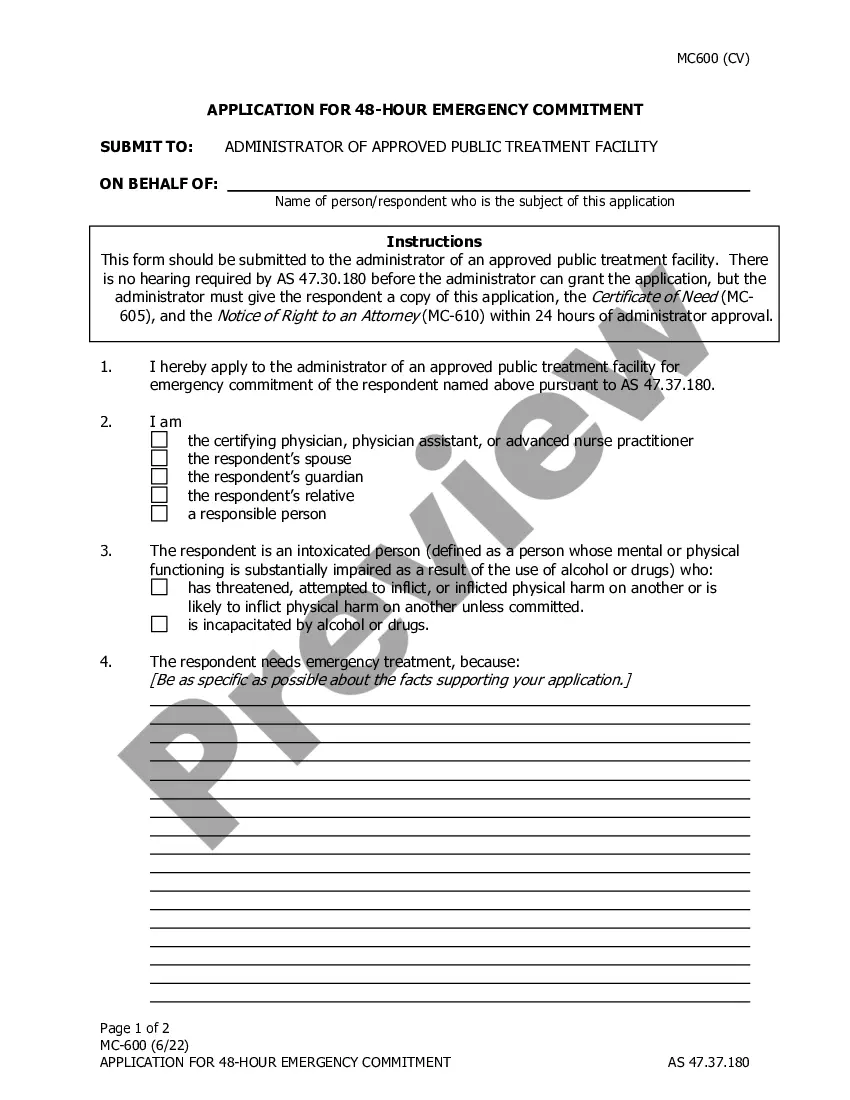
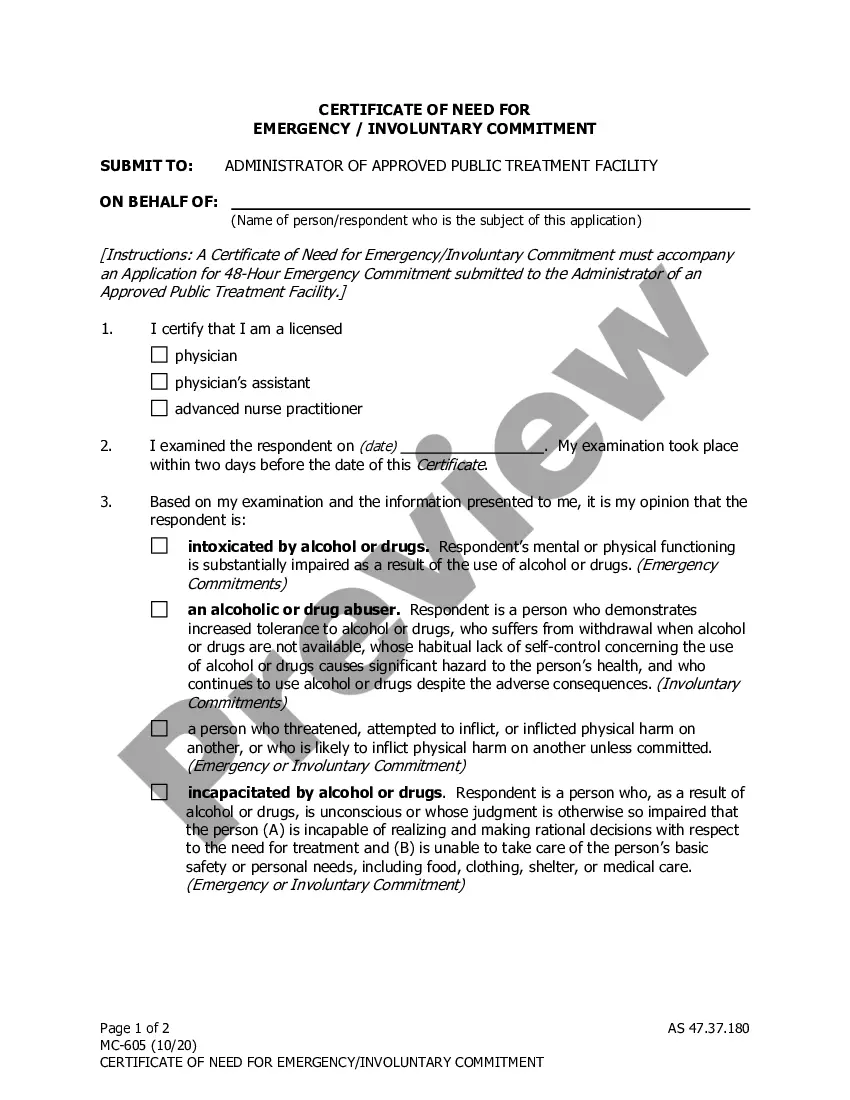
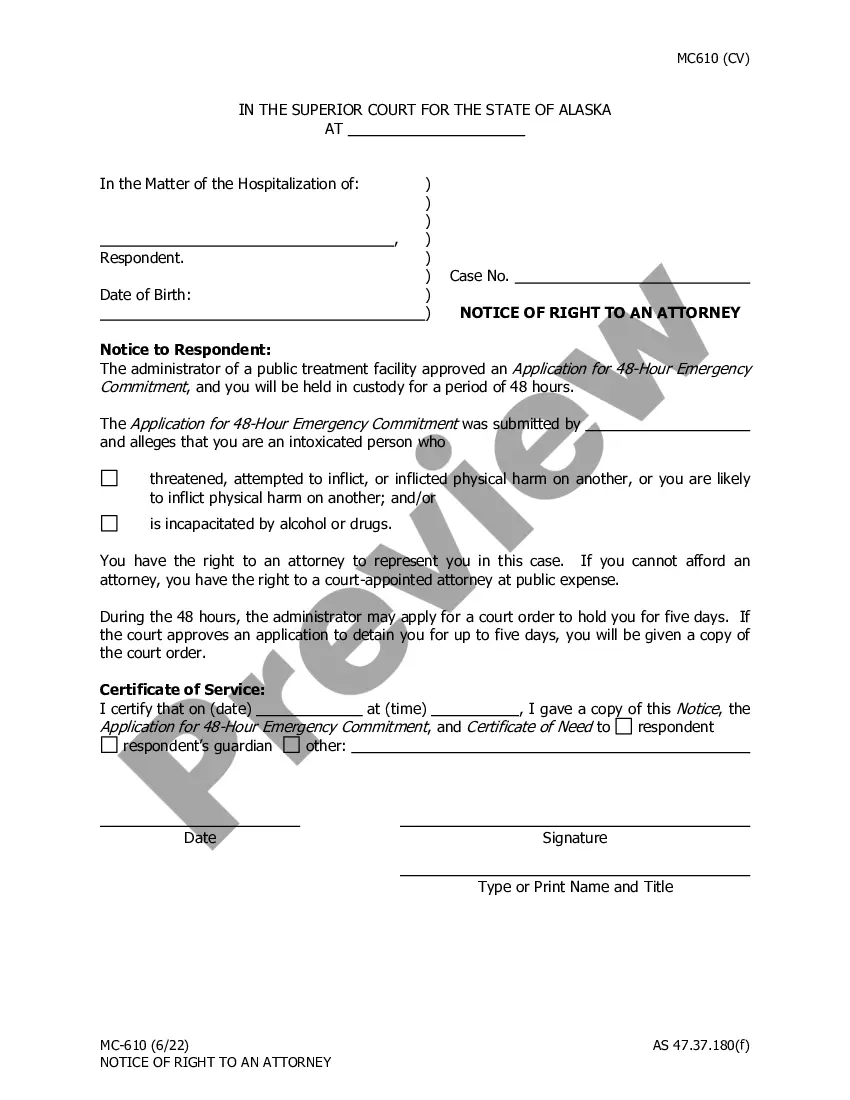
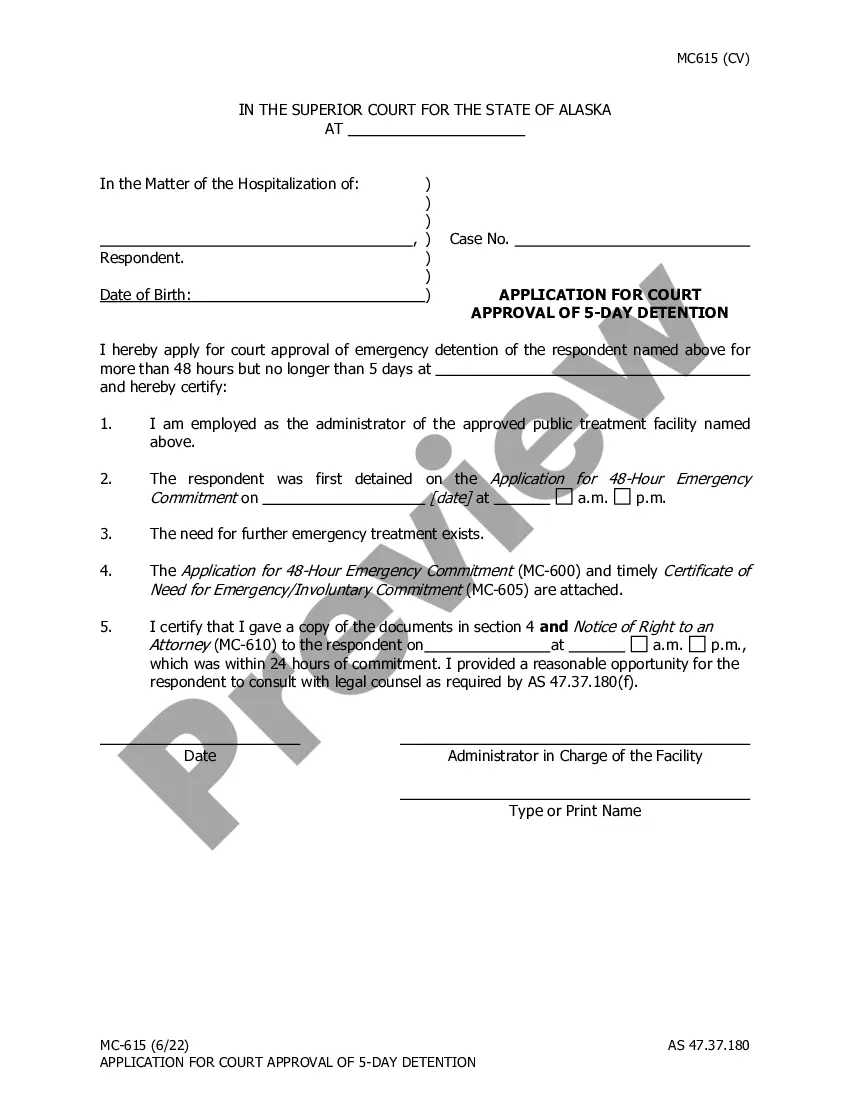
Private Criminal Complaint for Arrest Warrant and/or Summons
About this form
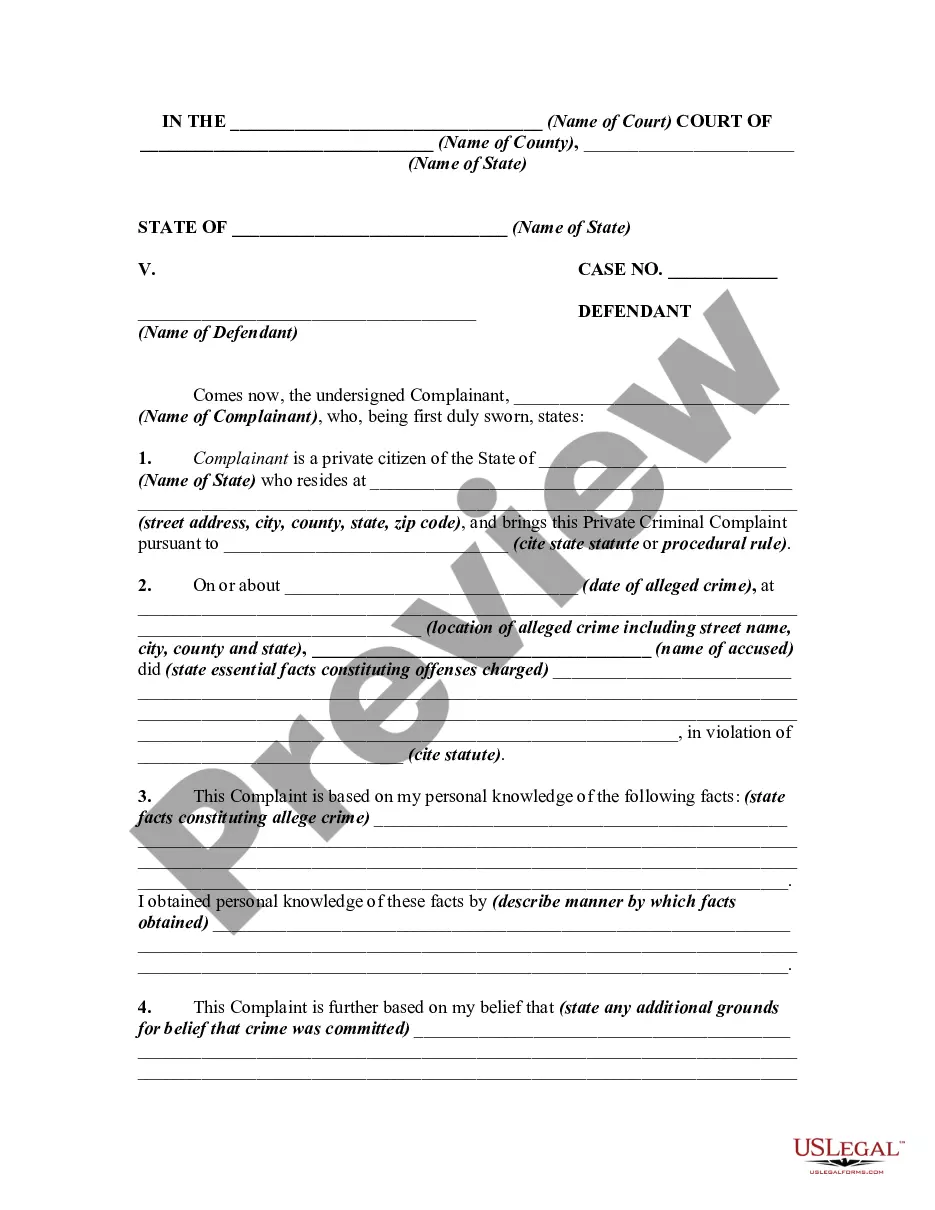
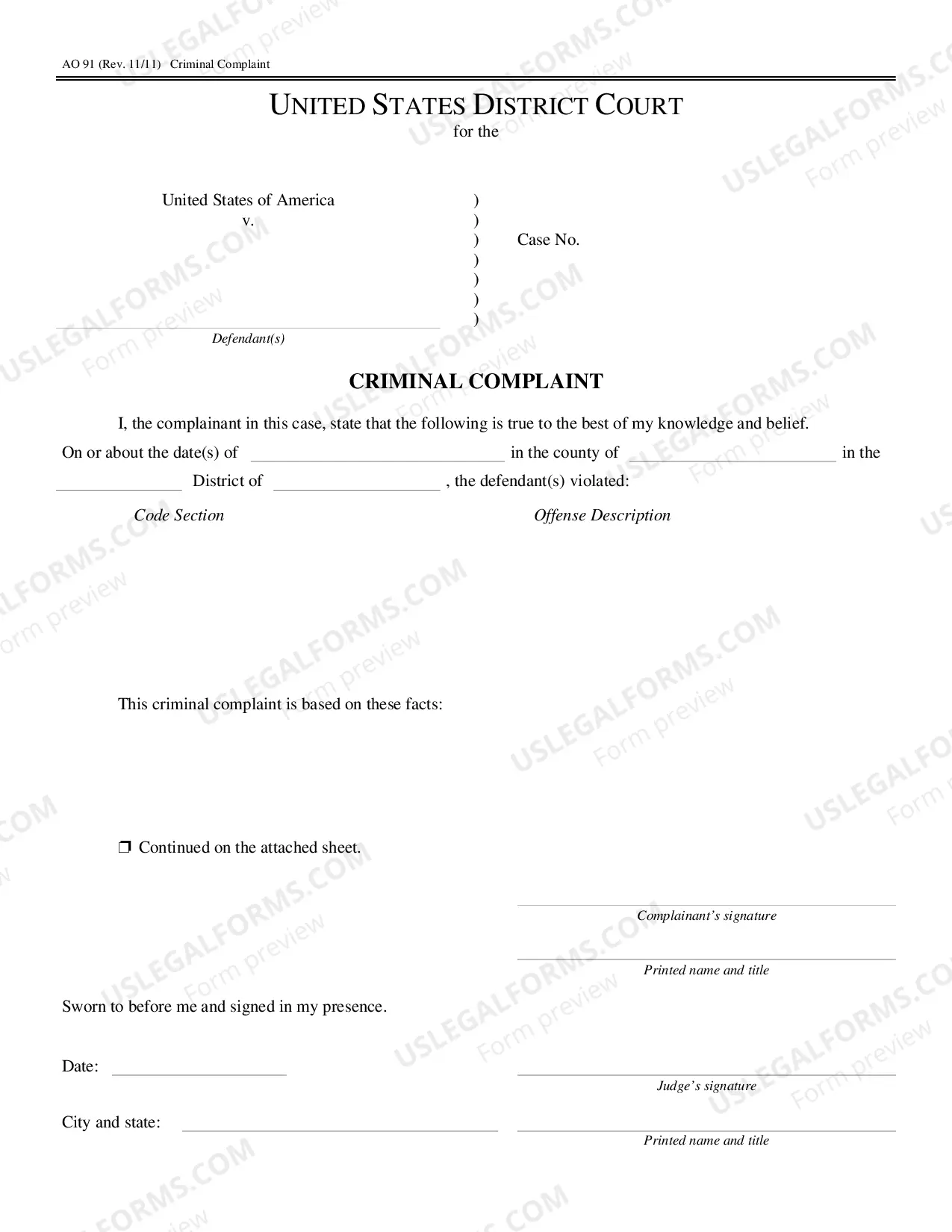
The Private Criminal Complaint for Arrest Warrant and/or Summons is a legal document that allows a private citizen to alert the court about alleged criminal activity deserving investigation. This form is distinct from a civil lawsuit, as it pertains specifically to criminal accusations based on personal knowledge of an offense, seeking either a warrant or summons for the accused individual. It empowers citizens to take an active role in enforcing criminal law when the state has not initiated action.
Main sections of this form
- Complainant's identification: Name, address, and residency details of the individual filing the complaint.
- Details of the alleged crime: Date, location, and essential facts of the offense.
- Citation of legal grounds: Reference to the relevant state statute or procedural rule.
- Basis of knowledge: Personal knowledge or belief regarding the crime's occurrence.
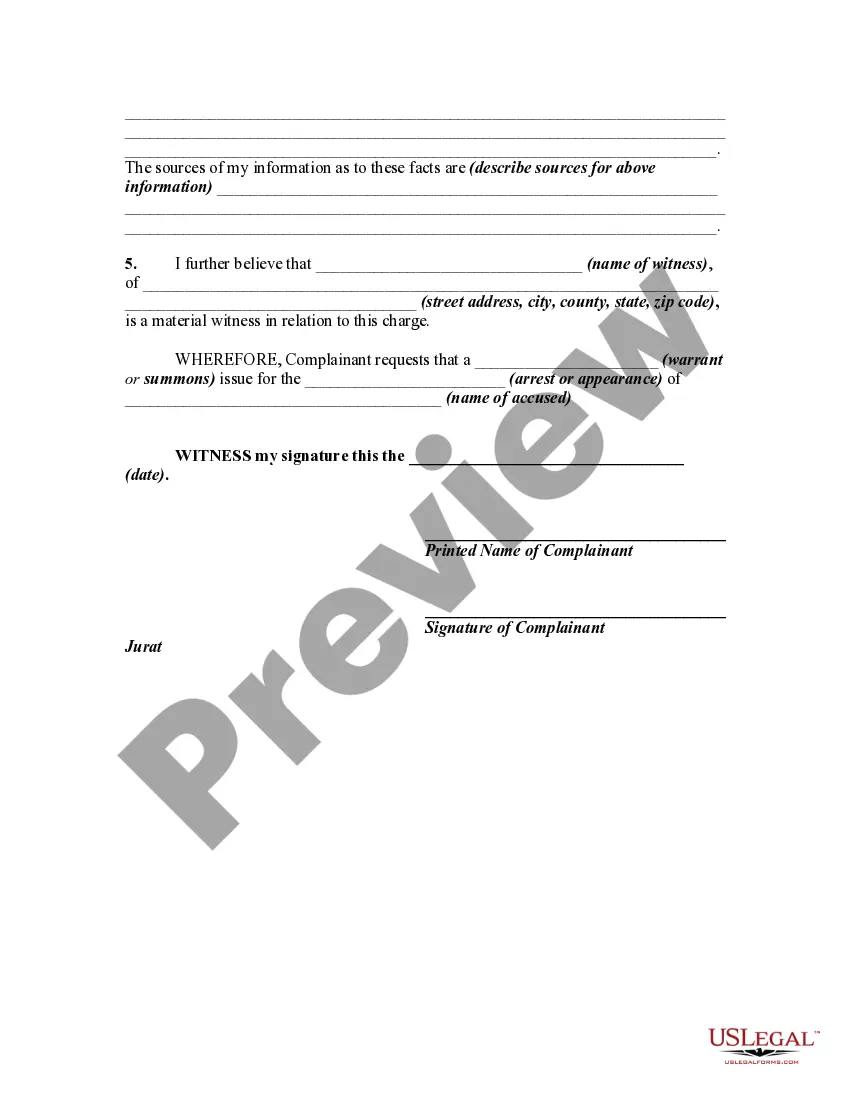
- Information about witnesses: Names and addresses of individuals who can provide material testimony.
- Request for a warrant or summons: Clear indication of whether you seek an arrest or appearance of the accused.

Common use cases
This form should be used when a private individual wishes to bring a criminal complaint against another person for suspected illegal activities. It is particularly relevant in situations where law enforcement has not acted on the person's own knowledge of a crime. Scenarios may include observing a theft, being aware of drug-related activities, or knowing of a situation involving abuse or assault where immediate legal action is warranted.
Who needs this form
- Individuals who have witnessed or have knowledge of a criminal act.
- Citizens seeking to report crime to the authorities when law enforcement has not taken action.
- Private parties who believe specific criminal laws have been violated can provide adequate testimony.
Completing this form step by step
- Identify yourself as the Complainant: Fill in your name, address, and the state of residency.
- Provide details about the alleged crime: Specify the date, location, and a clear description of the events.
- Cite the law: Identify the statute under which you believe the crime falls.
- Document how you know about the alleged crime: Describe your knowledge or the basis for your belief regarding the offense.
- List potential witnesses: Include their names and addresses to support your claim.
- Sign and date the form: Ensure you complete the jurat section for proper notarization if required.
Notarization requirements for this form
This form must be notarized to be legally valid. US Legal Forms provides secure online notarization powered by Notarize, allowing you to complete the process through a verified video call.
Get your form ready online
Our built-in tools help you complete, sign, share, and store your documents in one place.
Make edits, fill in missing information, and update formatting in US Legal Forms—just like you would in MS Word.
Download a copy, print it, send it by email, or mail it via USPS—whatever works best for your next step.
Sign and collect signatures with our SignNow integration. Send to multiple recipients, set reminders, and more. Go Premium to unlock E-Sign.
If this form requires notarization, complete it online through a secure video call—no need to meet a notary in person or wait for an appointment.
We protect your documents and personal data by following strict security and privacy standards.

Make edits, fill in missing information, and update formatting in US Legal Forms—just like you would in MS Word.

Download a copy, print it, send it by email, or mail it via USPS—whatever works best for your next step.

Sign and collect signatures with our SignNow integration. Send to multiple recipients, set reminders, and more. Go Premium to unlock E-Sign.

If this form requires notarization, complete it online through a secure video call—no need to meet a notary in person or wait for an appointment.

We protect your documents and personal data by following strict security and privacy standards.
Mistakes to watch out for
- Failing to provide sufficient details about the alleged crime.
- Not citing the relevant statute, which can lead to rejection.
- Neglecting to include witness information or personal knowledge.
- Omitting signatures or dates that validate the form.
Benefits of using this form online
- Immediate access to downloadable templates tailored by attorneys.
- Convenience of filling out forms from home without needing legal assistance.
- Easy editing capabilities allow for accurate information entry.
- Reliable format that ensures compliance with legal standards.
Looking for another form?
Form popularity
FAQ
Only a Prosecutor Can Press Charges in a Criminal Lawsuit. As mentioned earlier, only the prosecutor's office has the power to file criminal charges against the accused. File a Police Report. Collect & Preserve Evidence. Cooperating With Police & Prosecutors. Statues of Limitations.
If you receive a summons and do not appear in court, you will become familiar with the second way people are bought to court on criminal charges: a warrant will be issued for your arrest. An arrest warrant is a court order for law enforcement to arrest a person and bring them before the court to answer the charge.
A summons must be served at least 7 days before the court date if it is served by personal delivery, or 21 days before the court date if it is served by postal delivery. If a summons has not been correctly served, you are not obliged to appear in court in response to it.
Every summon shall be served by a police officer, or by an officer of the court issuing it or any other public servant. The summon shall if practical, be served personally on the person summoned, by delivering or tendering to him one of the duplicates of the summons.
If a court summons is granted, it must then be served on the person ordered to attend court. The summons can be served either in person, ie. by hand; or in the case of a minor offence a summons may be served by recorded delivery or registered post.
In general, a summons is the beginning of a legal case. It signals the issue that needs to be adjudicated (tried in court). A summons can be used in either a civil or a criminal case. Specifically, a summons is a document that is an order by a court requiring someone to appear in court.
Every summon shall be served by a police officer, or by an officer of the court issuing it or any other public servant. The summon shall if practical, be served personally on the person summoned, by delivering or tendering to him one of the duplicates of the summons.
A Summons is an official notice of a lawsuit. It is given to the person being sued. If you sue someone, they need to know about it. This way, they can come to court and fight the lawsuit. When you serve the defendant with a Summons, you officially tell that you are suing them.