Waiver and Release from Liability for Using Indoor Softball and Baseball Batting Cage
About this form
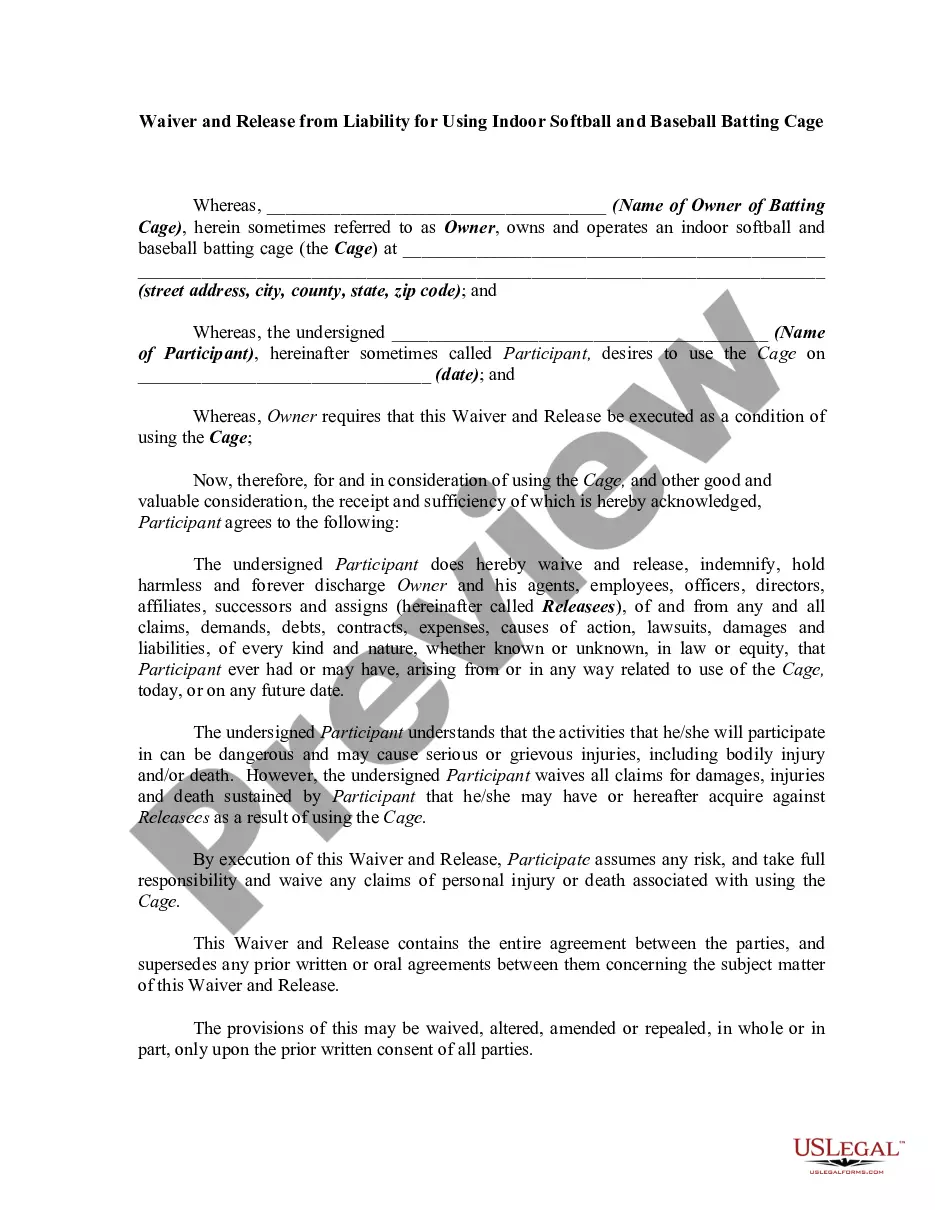
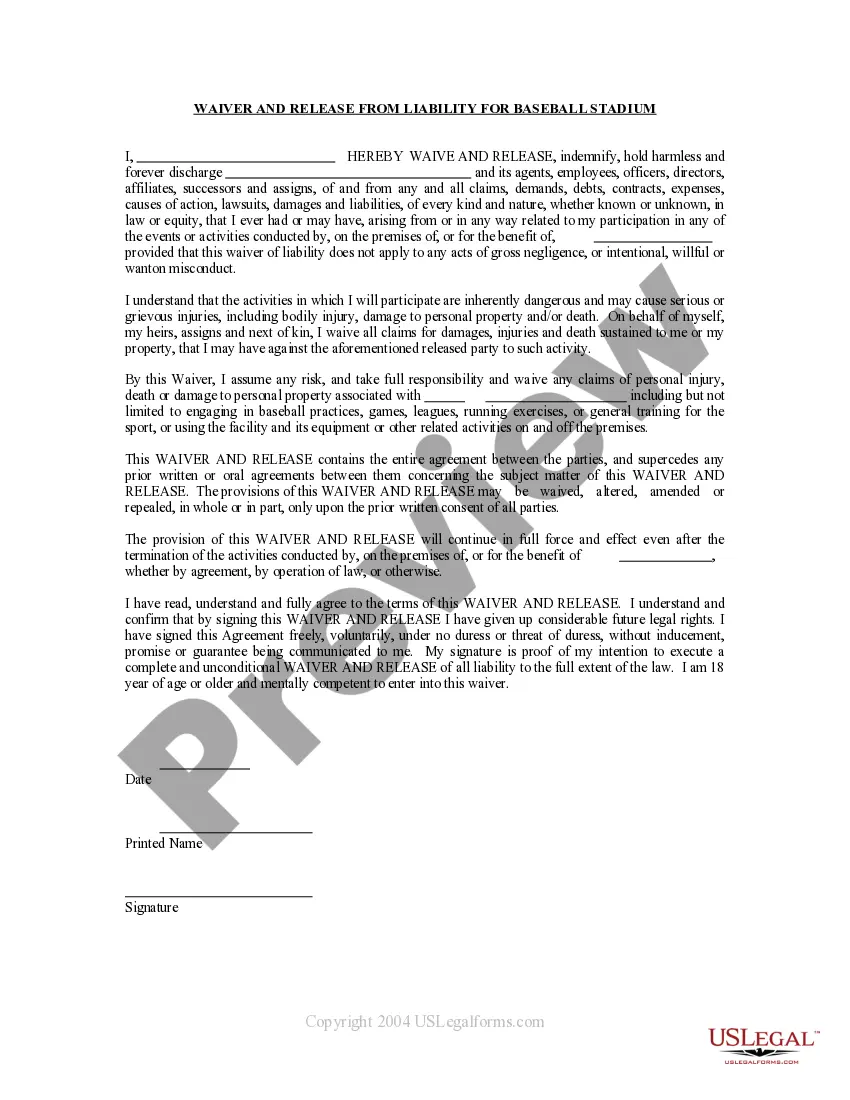
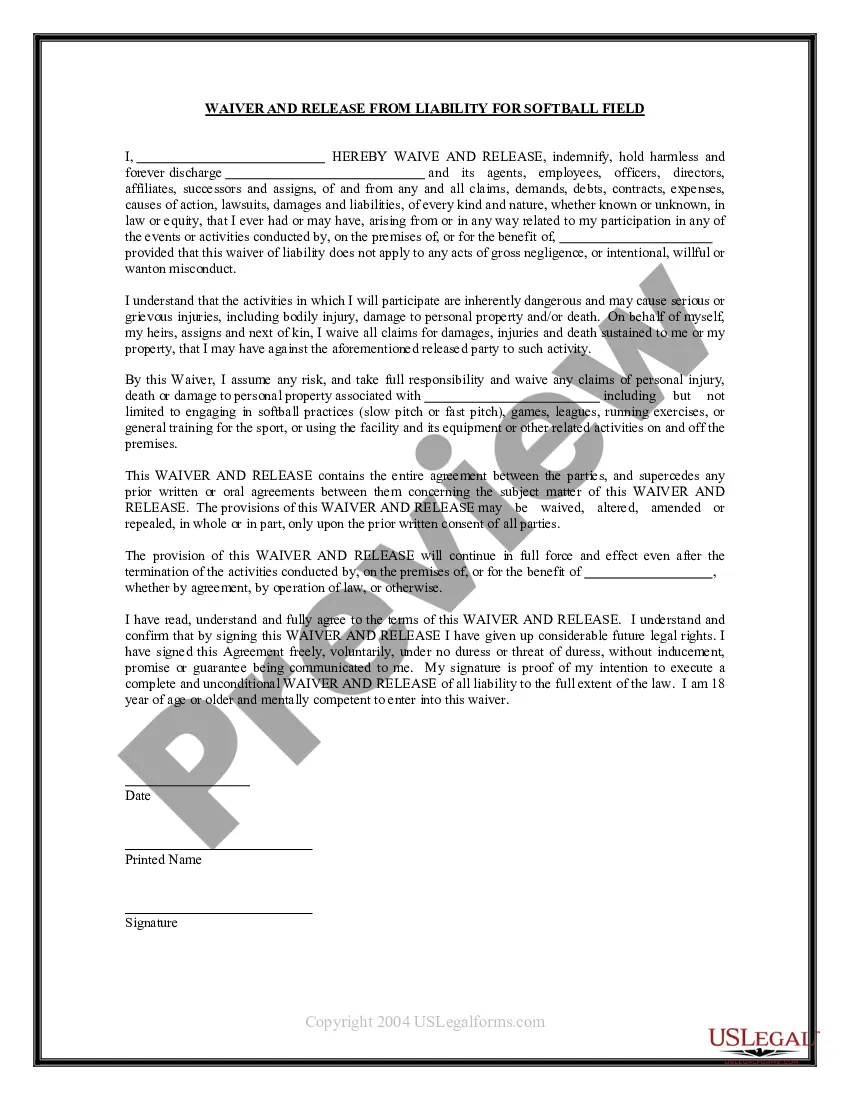
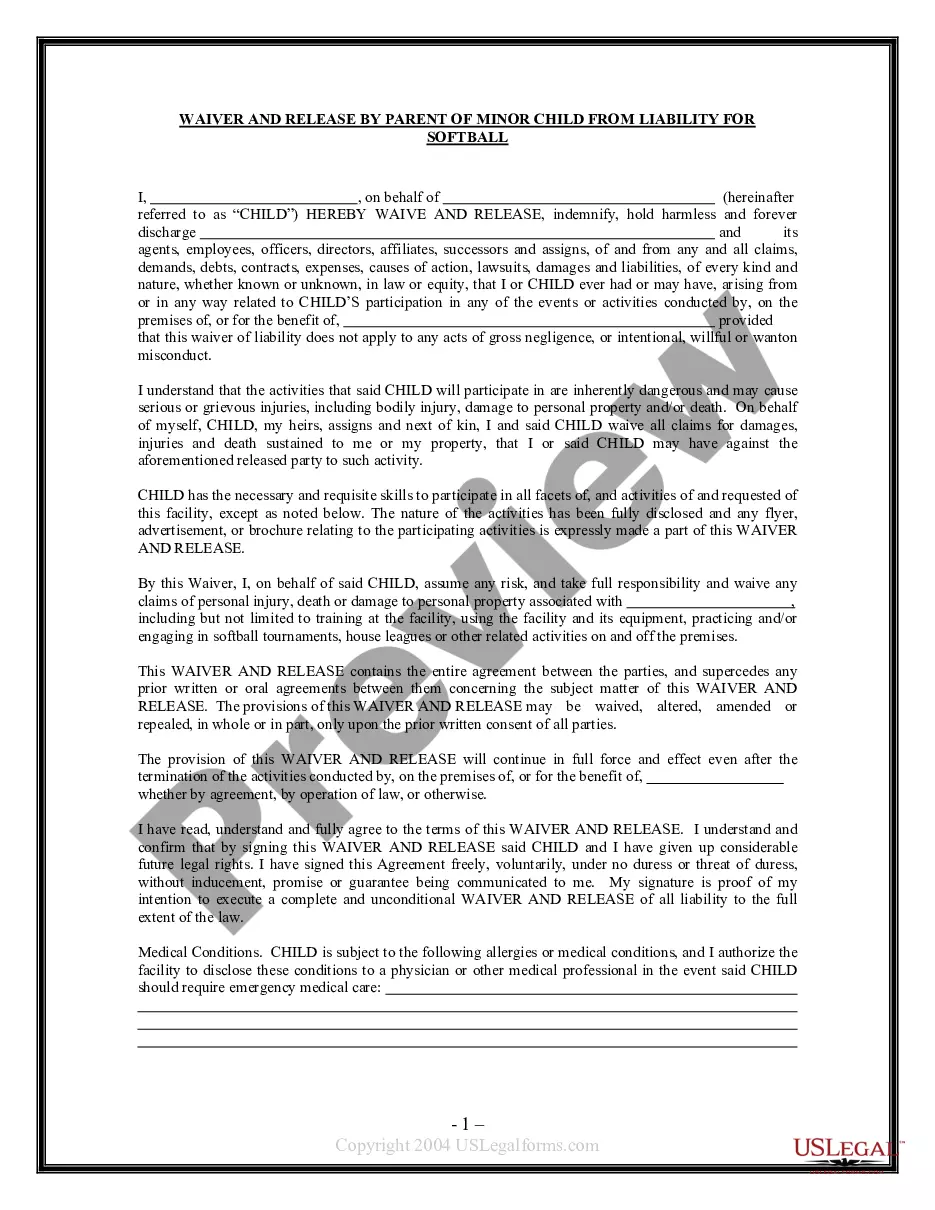
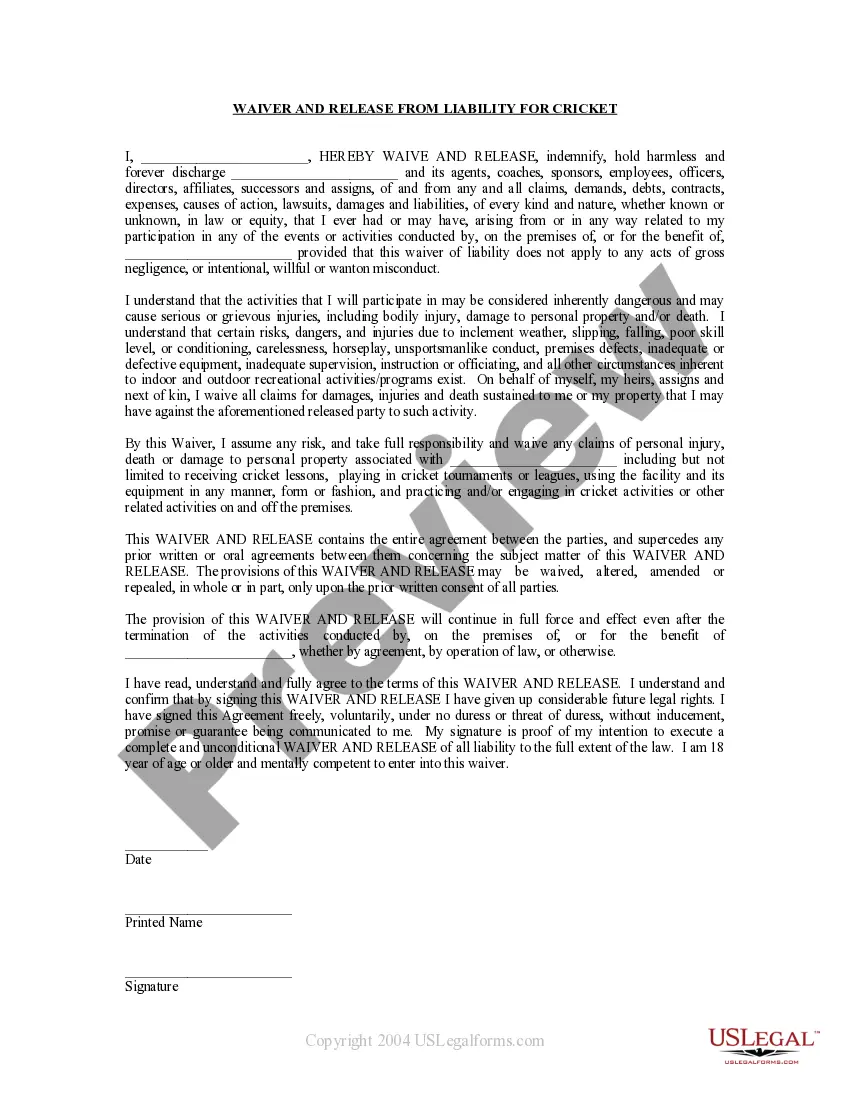
The Waiver and Release from Liability for Using Indoor Softball and Baseball Batting Cage is a legal document that participants sign to relinquish their right to sue the owner of a batting cage for any injuries that may occur while using the facility. This form is essential for protecting the facility owner from legal claims resulting from accidents or injuries during participation in activities. It ensures that the participants acknowledge and accept the inherent risks associated with using the facility before engaging in any activities.
Form components explained
- Identification of the Owner and the Participant
- Details regarding the specific location of the batting cage
- Date of participation
- Waiver and release of claims against the Owner and associated parties
- Participant's acknowledgment of the risks involved
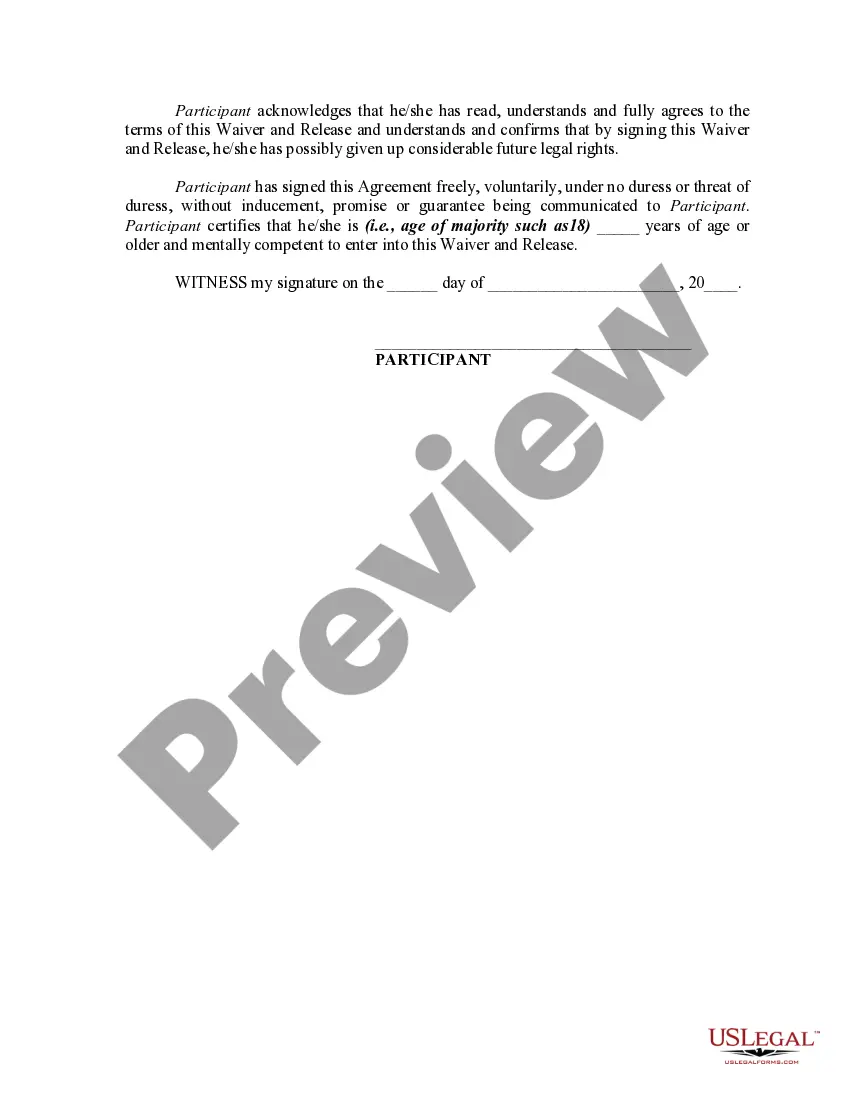
- Certification of participant's age and mental competence
When to use this form
This form should be used whenever a person wishes to use an indoor softball or baseball batting cage. It is typically required by the facility owner to ensure that all participants understand the risks involved and agree to waive their right to seek legal recourse against the owner for any injuries sustained during their use of the batting cage.
Who this form is for
- Participants who plan to use the batting cage for recreational purposes
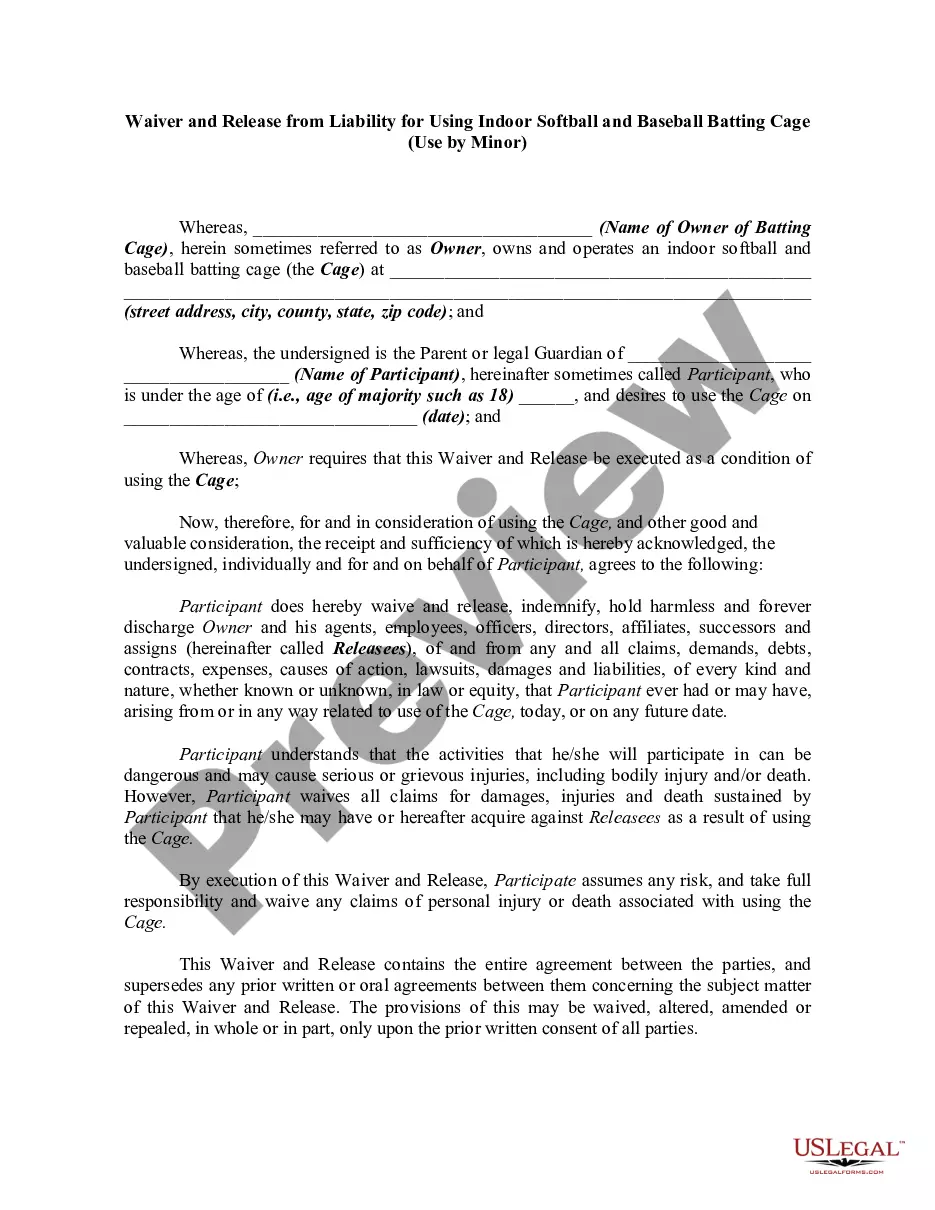
- Parents or guardians signing on behalf of minors
- Facility owners looking to protect themselves from liability claims
Steps to complete this form
- Identify the Owner of the batting cage by providing their name and address.
- Fill in the name of the Participant who intends to use the cage.
- Specify the date of intended use.
- Read through the waiver and release section carefully, ensuring all terms are understood.
- Sign the document to indicate acceptance of the terms and conditions.
- If applicable, ensure that a guardian signs on behalf of minor participants.
Notarization guidance
This form does not typically require notarization to be legally valid. However, some jurisdictions or document types may still require it. US Legal Forms provides secure online notarization powered by Notarize, available 24/7 for added convenience.
Get your form ready online
Our built-in tools help you complete, sign, share, and store your documents in one place.
Make edits, fill in missing information, and update formatting in US Legal Forms—just like you would in MS Word.
Download a copy, print it, send it by email, or mail it via USPS—whatever works best for your next step.
Sign and collect signatures with our SignNow integration. Send to multiple recipients, set reminders, and more. Go Premium to unlock E-Sign.
If this form requires notarization, complete it online through a secure video call—no need to meet a notary in person or wait for an appointment.
We protect your documents and personal data by following strict security and privacy standards.

Make edits, fill in missing information, and update formatting in US Legal Forms—just like you would in MS Word.

Download a copy, print it, send it by email, or mail it via USPS—whatever works best for your next step.

Sign and collect signatures with our SignNow integration. Send to multiple recipients, set reminders, and more. Go Premium to unlock E-Sign.

If this form requires notarization, complete it online through a secure video call—no need to meet a notary in person or wait for an appointment.

We protect your documents and personal data by following strict security and privacy standards.
Avoid these common issues
- Failing to read the entire document before signing.
- Not providing the date of participation.
- Omitting the signature of a guardian when signing on behalf of a minor.
Why use this form online
- Convenient access to legal forms without the need for in-person visits.
- Easy to fill out and edit as necessary before finalizing.
- Guaranteed reliability from documents drafted by licensed attorneys.
Legal use & context
- The form serves as a binding agreement, limiting the liability of the owner when properly executed.
- Participants must be aware that by signing, they relinquish certain legal rights regarding personal injury claims.
- Minors often require parental consent to execute such waivers, as courts may invalidate waivers signed on their behalf.
What to keep in mind
- The waiver is essential for protecting the owner of the batting cage from legal claims.
- Participants must understand the risks associated with using the batting cage.
- Proper completion of the form is crucial for its validity and enforceability.
Looking for another form?









Form popularity
FAQ
If you've been injured due to negligent actions, you can sue even if you signed a waiver. Winning a lawsuit concerning negligence is not uncommon. Many celebrities have sued for negligence even though they signed documents stating they understood the risks.
A liability waiver, or release of liability, is a legal document that a company or organization has you sign in order to protect them from being sued in the event that you are injured.
While it's recommended that you set aside nine to twelve months of cash to carry your business the first year, many batting cage owners have reported a profit at the end of their first year. $40,000 is the average first-year annual profit, with profits jumping to over $70,000 by the end of year three.
Release Versus Waiver The main difference between releases and waivers is the transferring of ownership. When rights are released, they are transferred to another party. When rights are waived, they are gone altogether.In the case of the skydiver, they might be asked to sign a release form rather than a waiver.
A release and waiver agreement is an enforceable promise not to pursue legal action in exchange for compensation. The releasee gives money or some other form of compensation to the releasor, who then agrees not to press charges, sue, or take any other legal action against the releasee.
Which person invented the batting cage, used today for baseball and softball practice? Wellington Titus of Hopewell, New Jersey, United States, was the forefather of the batting cage.
Here is a closer look at the invention of the batting cage: Wellington Titus, of Hopewell, New Jersey, was the forefather of the batting cage. Known as Welling to his friends and family, Titus worked as a mover of housesan unconventional trade at which, according to legend, he was phenomenally talented!
A liability waiver, or release waiver, is a legal document that a company or organization requires members of the public to sign in order to protect their organization from being sued if you sustain an injury.Depending on the facts of your case, you may still be able to file a lawsuit and recover damages.
You should not use your new bat in the batting cage. Batting cage balls are made of a more dense material than is used in a regulation baseball or softball and will cause denting.