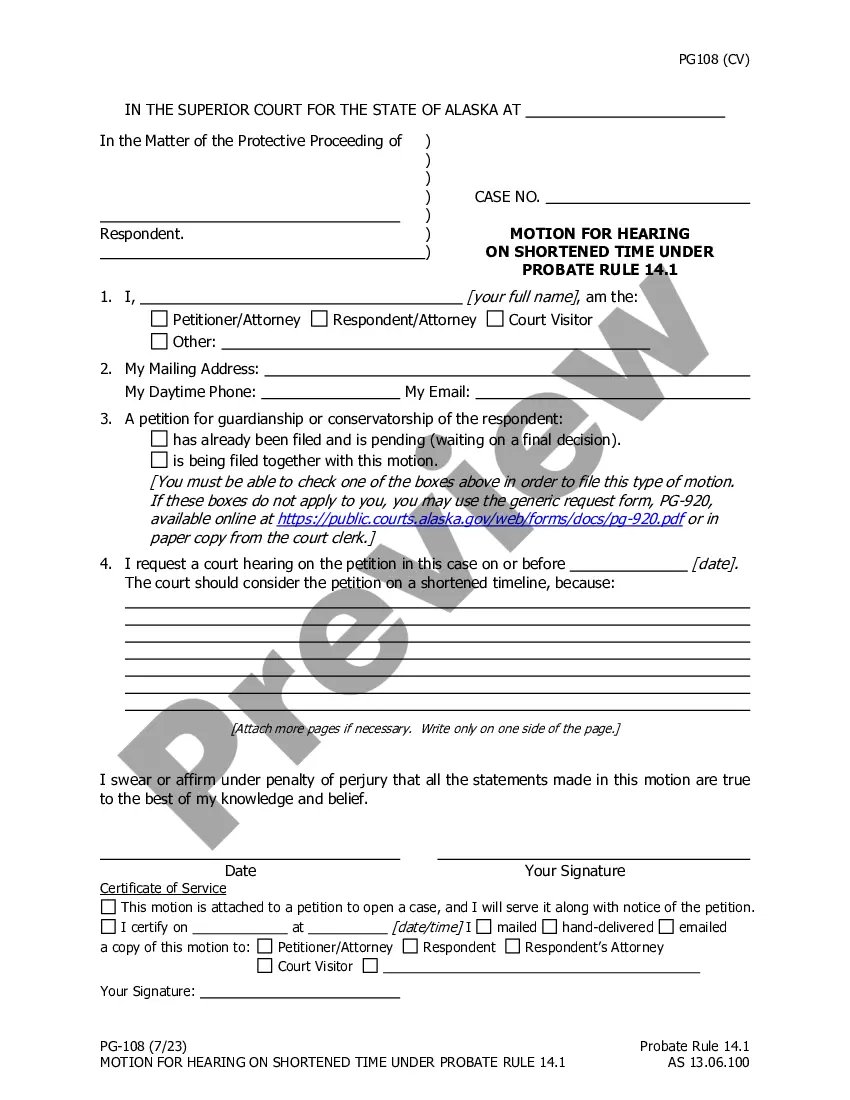
Agreement Granting Exclusive License to Sell a Line of Apparel
What this document covers
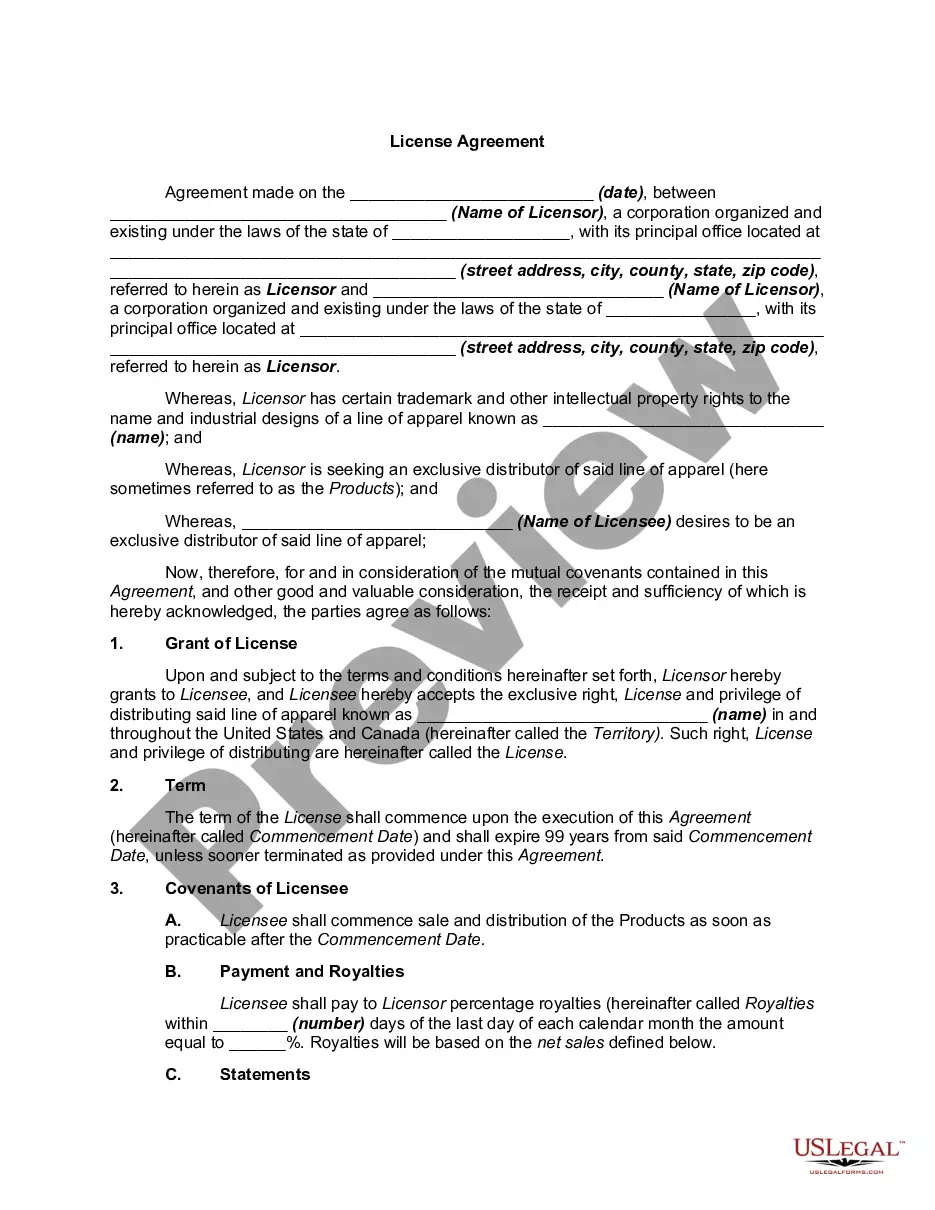
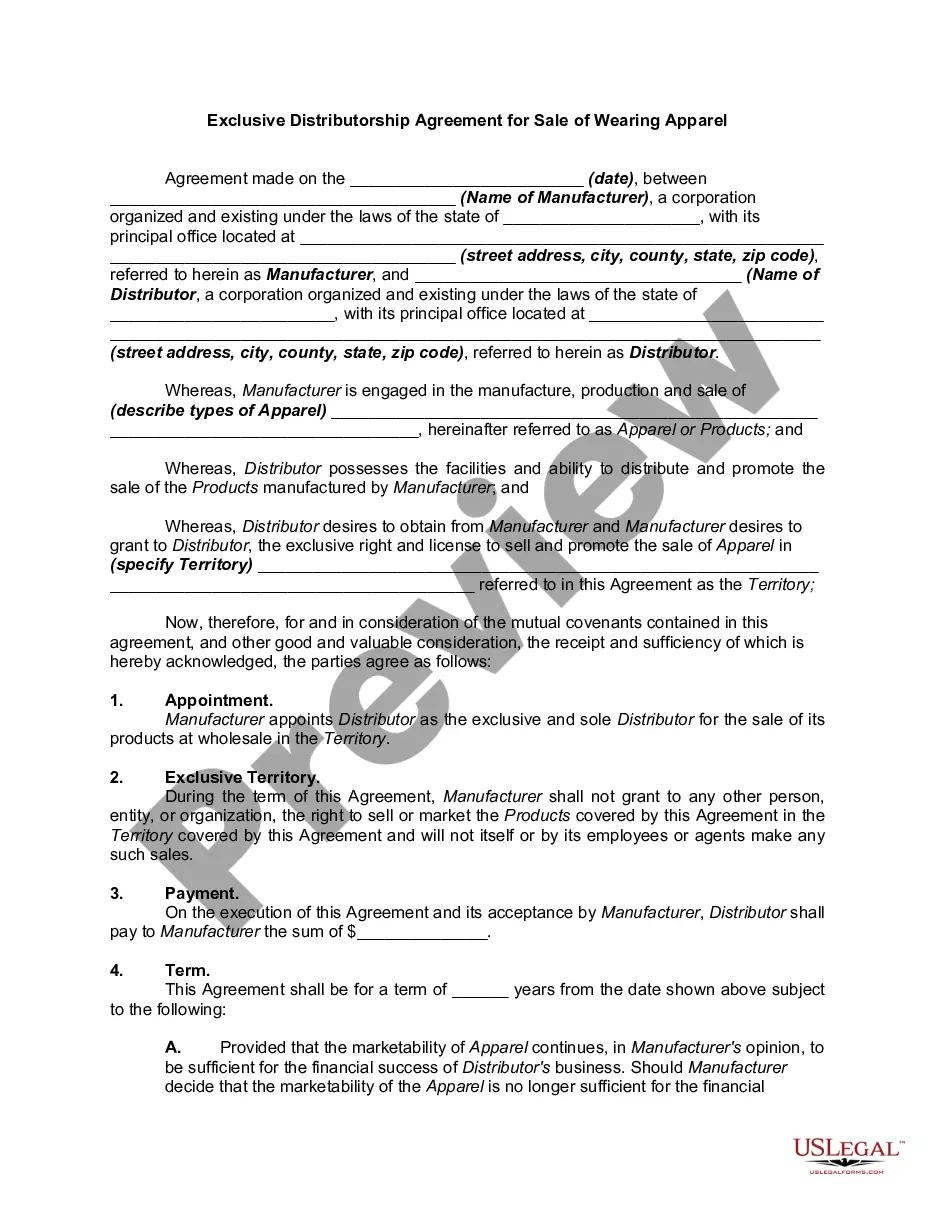
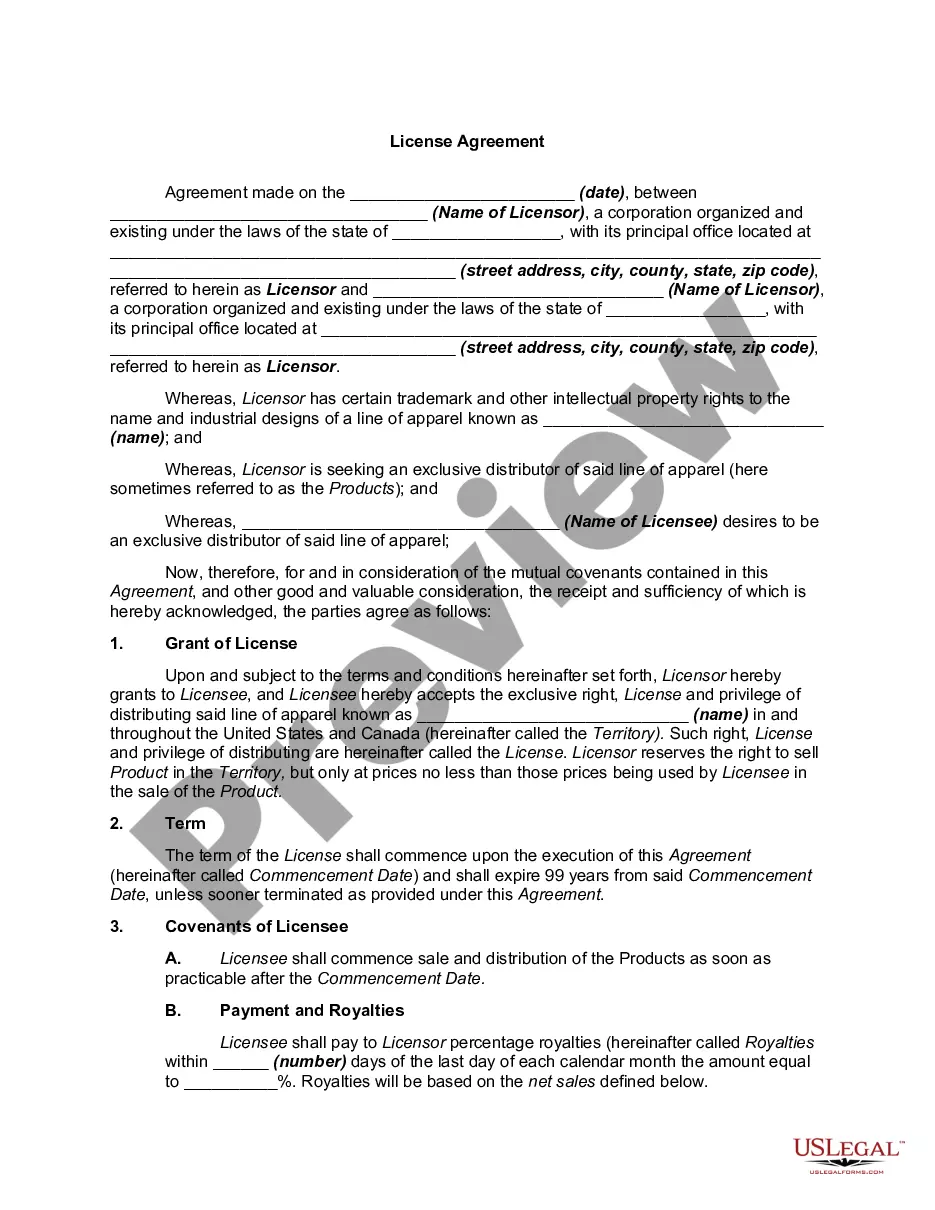
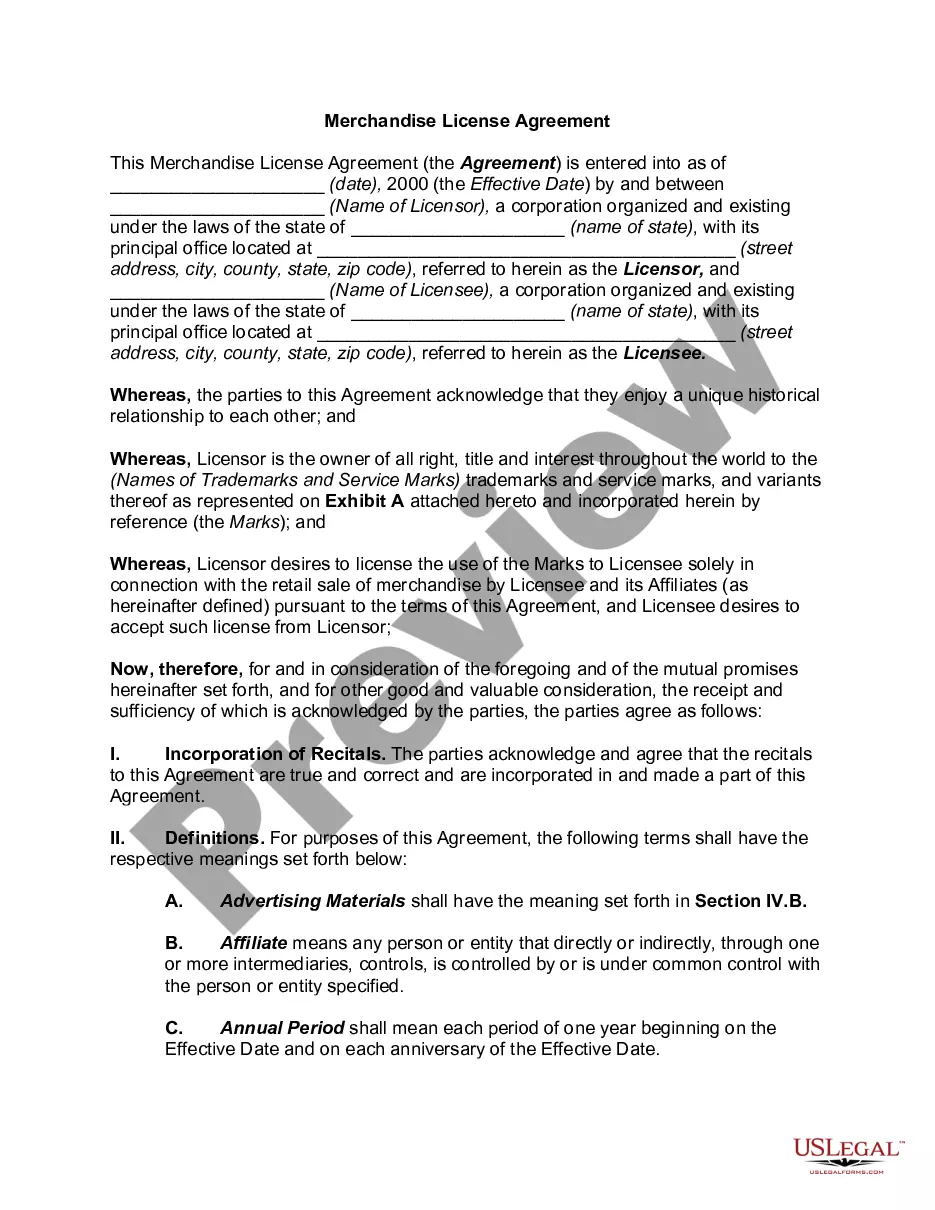
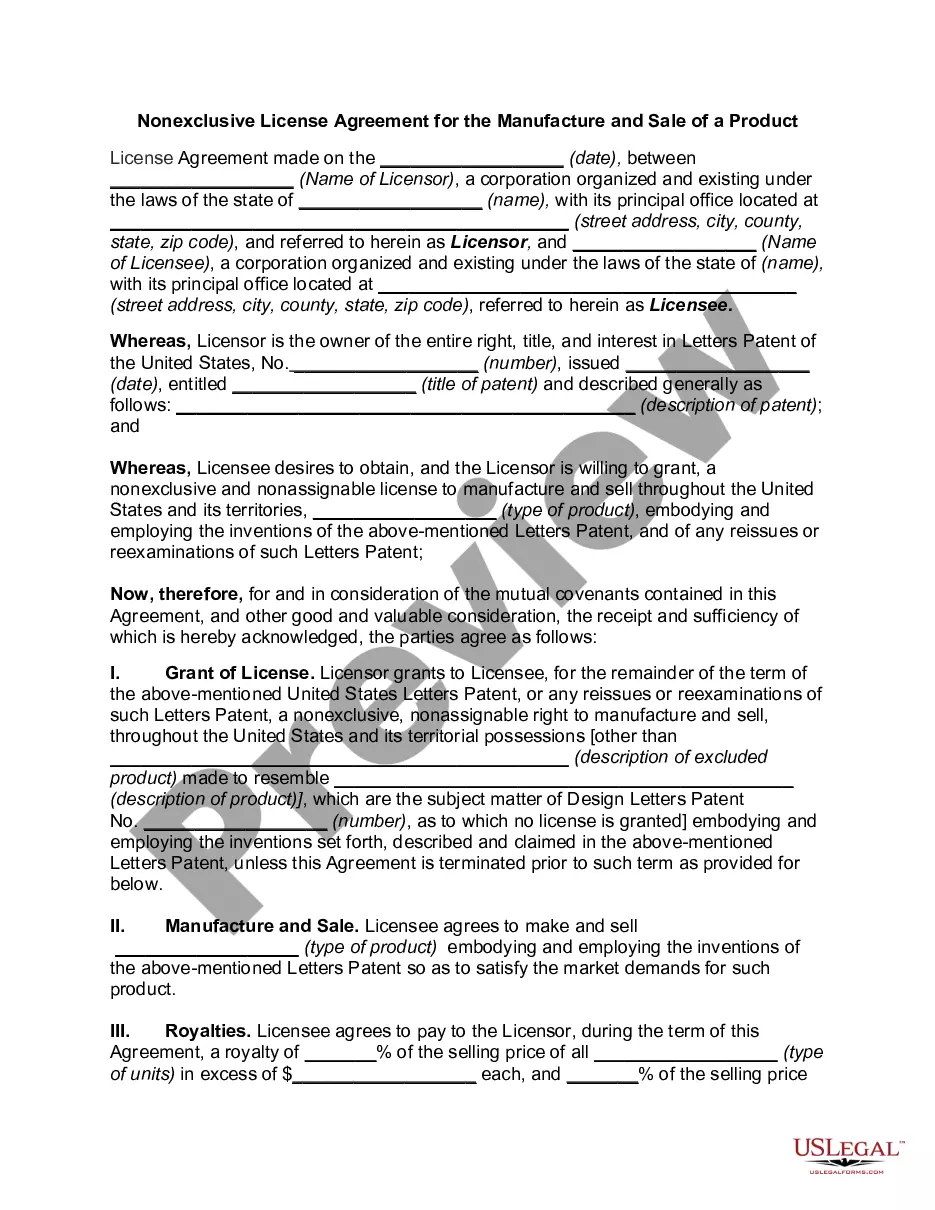
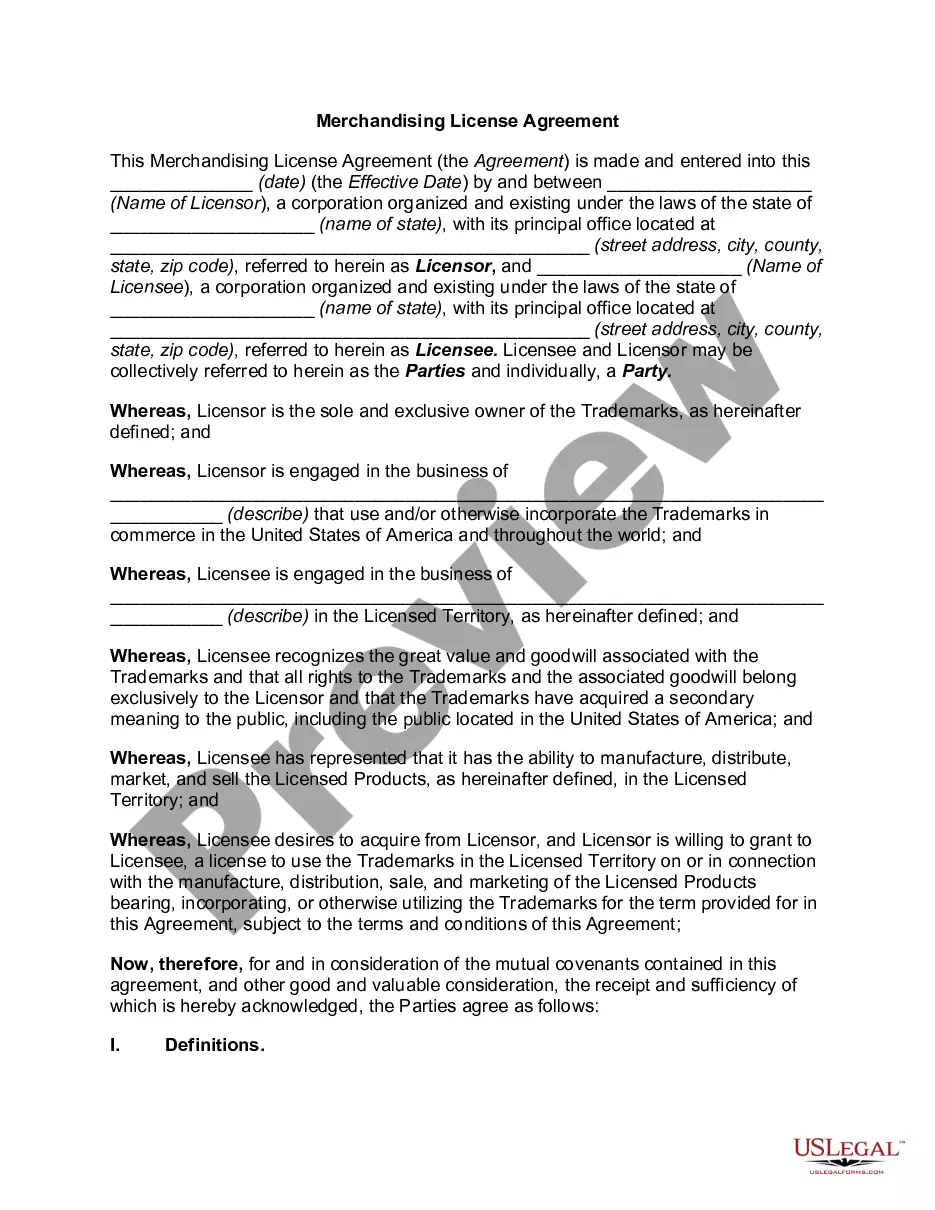
The Agreement Granting Exclusive License to Sell a Line of Apparel is a legal document that allows a brand owner (the licensor) to grant exclusive rights to another party (the licensee) to distribute a specific line of apparel. This form is essential for protecting brand interests while enabling the licensee to market the products under the trademark or brand name. Unlike an outright transfer of rights, this agreement allows the licensor to retain ownership, granting usage for a limited period while ensuring obligations are met by the licensee.
Key components of this form
- Identification of the parties involved: Licensor and Licensee.
- Grant of License: Details the exclusive rights to distribute the apparel line.
- Term: Duration of the license, typically up to 99 years.
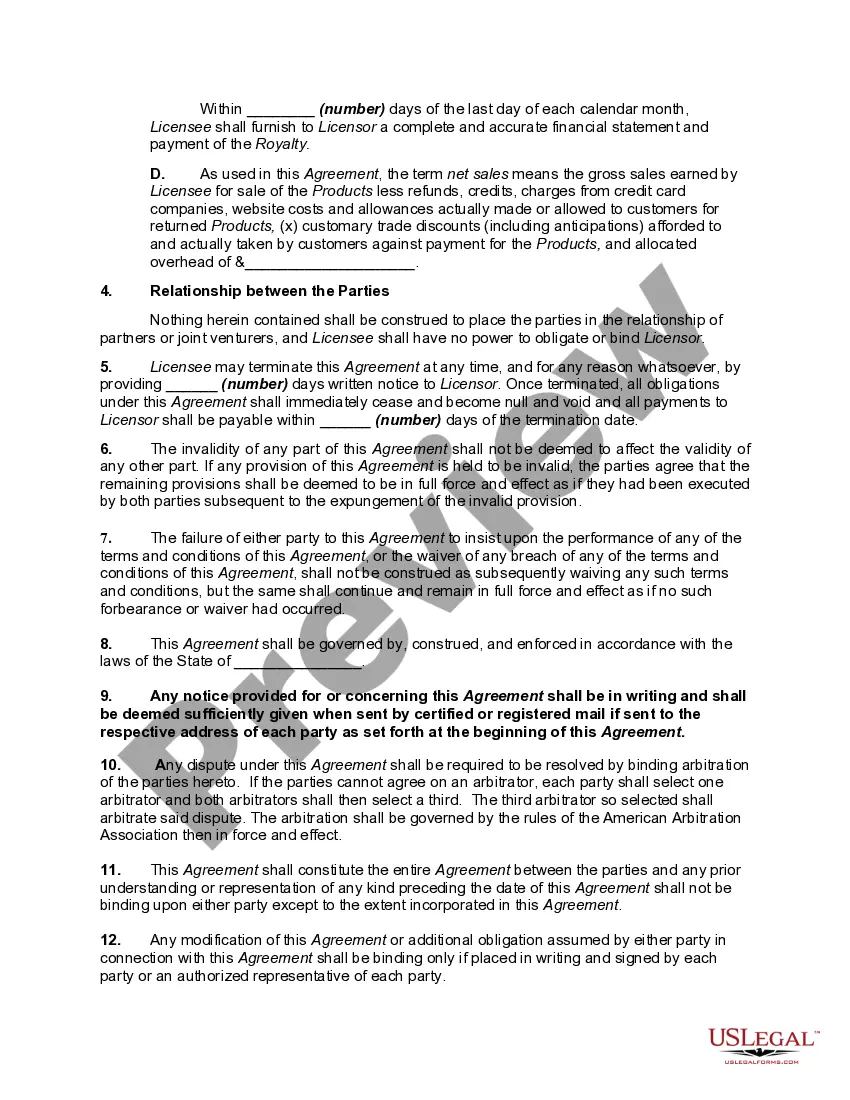
- Covenants of Licensee: Obligations regarding sales, payment of royalties, and financial reporting.
- Termination clause: Conditions under which the agreement can be terminated by the licensee.
- Governing law: Jurisdiction under which the agreement is enforced.
When this form is needed
This agreement is necessary when a business wants to expand the reach of its apparel brand by permitting another company to sell its products. It is particularly useful in scenarios where the brand is well-known and the licensor wants to maintain control over the distribution while generating revenue through royalties. This form is also applicable when seeking to formalize an exclusive partnership for marketing and distributing apparel lines.
Who can use this document
- Brand owners who wish to license their apparel line to third parties.
- Businesses looking to diversify their distribution channels through exclusive agreements.
- Entrepreneurs seeking to enter into the apparel market using established brand names.
How to complete this form
- Identify the parties: Fill in the names and addresses of the licensor and licensee.
- Specify the apparel line: Clearly state the name of the apparel that is subject to the license.
- Enter the dates: Include the date of agreement and the effective term of the license.
- Detail payment and royalties: Indicate terms related to payments and the percentage of royalties owed to the licensor.
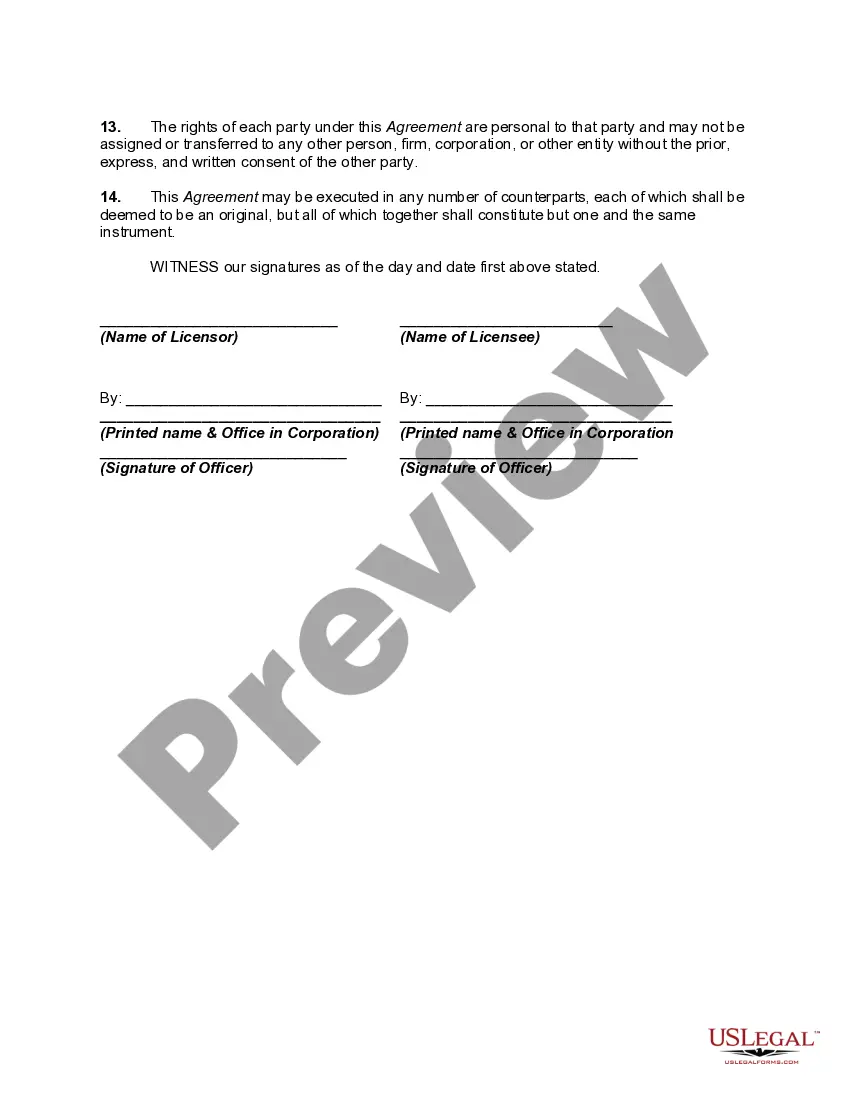
- Sign and date: Ensure both parties sign the document to validate the agreement.
Does this form need to be notarized?
This form does not typically require notarization unless specified by local law. However, having it notarized can add an extra layer of authenticity and may be beneficial in certain jurisdictions.
Get your form ready online
Our built-in tools help you complete, sign, share, and store your documents in one place.
Make edits, fill in missing information, and update formatting in US Legal Forms—just like you would in MS Word.
Download a copy, print it, send it by email, or mail it via USPS—whatever works best for your next step.
Sign and collect signatures with our SignNow integration. Send to multiple recipients, set reminders, and more. Go Premium to unlock E-Sign.
If this form requires notarization, complete it online through a secure video call—no need to meet a notary in person or wait for an appointment.
We protect your documents and personal data by following strict security and privacy standards.

Make edits, fill in missing information, and update formatting in US Legal Forms—just like you would in MS Word.

Download a copy, print it, send it by email, or mail it via USPS—whatever works best for your next step.

Sign and collect signatures with our SignNow integration. Send to multiple recipients, set reminders, and more. Go Premium to unlock E-Sign.

If this form requires notarization, complete it online through a secure video call—no need to meet a notary in person or wait for an appointment.

We protect your documents and personal data by following strict security and privacy standards.
Common mistakes
- Failing to clearly define the apparel line being licensed.
- Not specifying the terms of royalty payment or deadlines for financial reporting.
- Omitting details about termination rights or conditions.
- Not having the agreement reviewed by a legal professional.
Benefits of using this form online
- Convenient access to professionally drafted forms available for immediate download.
- Editability allows for customization based on specific business needs.
- Reliability ensures compliance with legal standards and requirements.
Legal use & context
- This agreement is legally binding once signed by both parties.
- It is enforceable as long as it complies with state laws regarding contracts and licensing.
- Understand that the exclusivity of the license may have limitations based on governing law.
Summary of main points
- The Agreement Granting Exclusive License allows for a brand to retain ownership while granting others distribution rights.
- Clear terms on royalties and obligations of the licensee are crucial for successful implementation.
- Customizable for various states, ensuring compliance with local practices and laws.
Looking for another form?

Form popularity
FAQ
The 3 P's of collegiate licensing are protection, promotion, and profit.
Exclusive or non-exclusive. In an exclusive license, the intellectual property holder is licensing the work only to one person, for that particular use/territory. Territory. Use. Attribution. Derivative works. Confidentiality. Time frame. Termination.
The only way to legally sell items with a trademark that you do not own is to obtain a license from the trademark owner. Trademarks are valuable property rights and are vigorously protected by their owners in most cases -- even against a small, localized business.
An example of a licensing agreement is a contract between the copyright holders of software and another company, allowing the latter to use the computer software for their daily business operations.
An exclusive license agreement covers a license that is limited to a specific field or subject, such as a market, territory, length of time, or context.The licensor can issue an unlimited number of licenses that have different rights within the same field, or licenses with the same rights in a different field.
Download a template for a licensing agreement. Choose your role as the licensor or licensee. Define the license(s) in the agreement. Decide whether the license is exclusive or not. Settle the matter of fees and payment schedule. Add a renewal date and rules.
A license agreement is a business contract between two parties. The licensor (the seller of the license) owns the asset being licensed and the licensee (the buyer) pays for the right to use the license. The licensee pays royalties to the owner in exchange for the right to sell the product or use the technology.
The exclusivity gives the licensee the incentive to invest in developing the market potential of the technology.This is because the licensor could sell licenses to all of the company's competitors after the first licensee educates and cultivates the market for the product.
An example of a licensing agreement is a contract between the copyright holders of software and another company, allowing the latter to use the computer software for their daily business operations.