Agreement Not to Disclose Confidential Information
Understanding this form
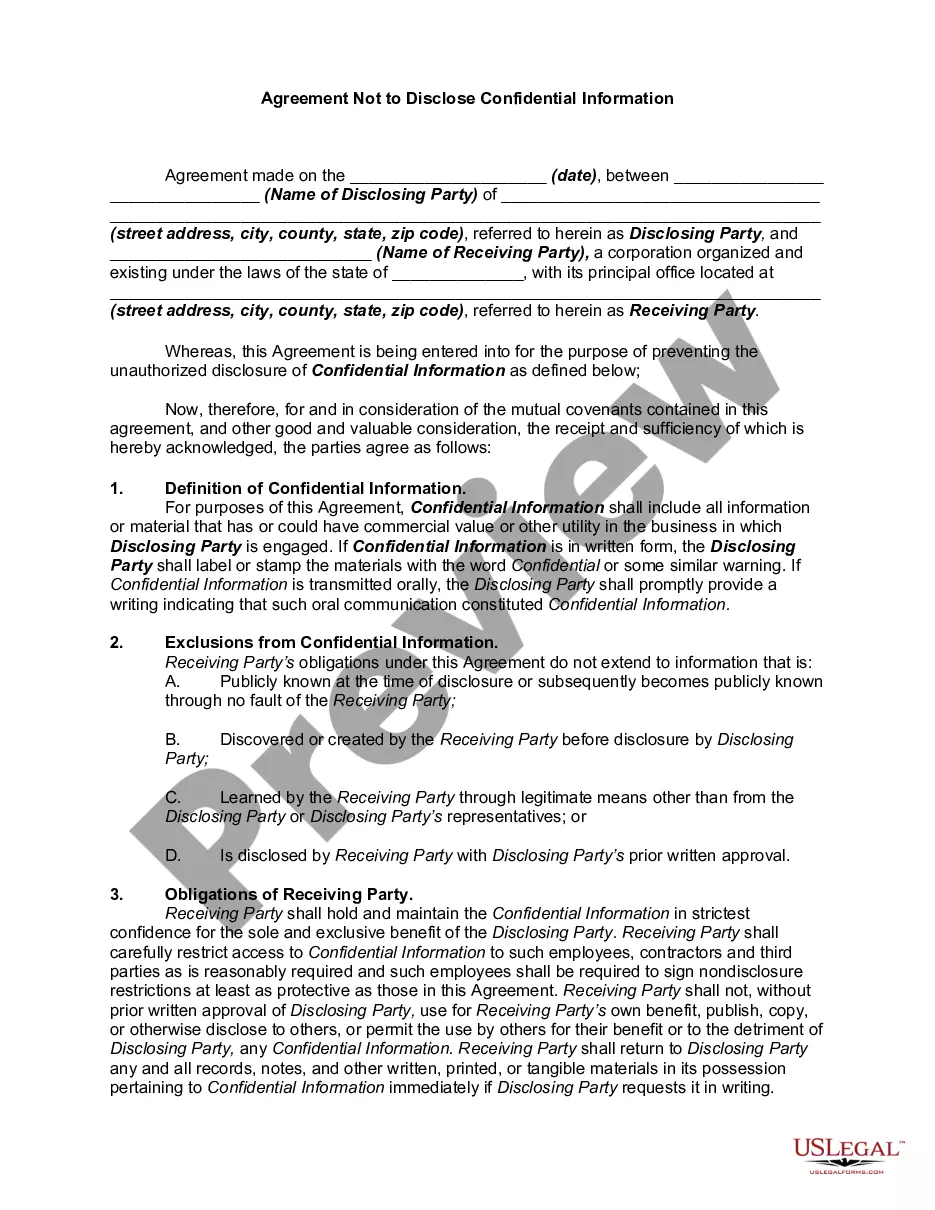
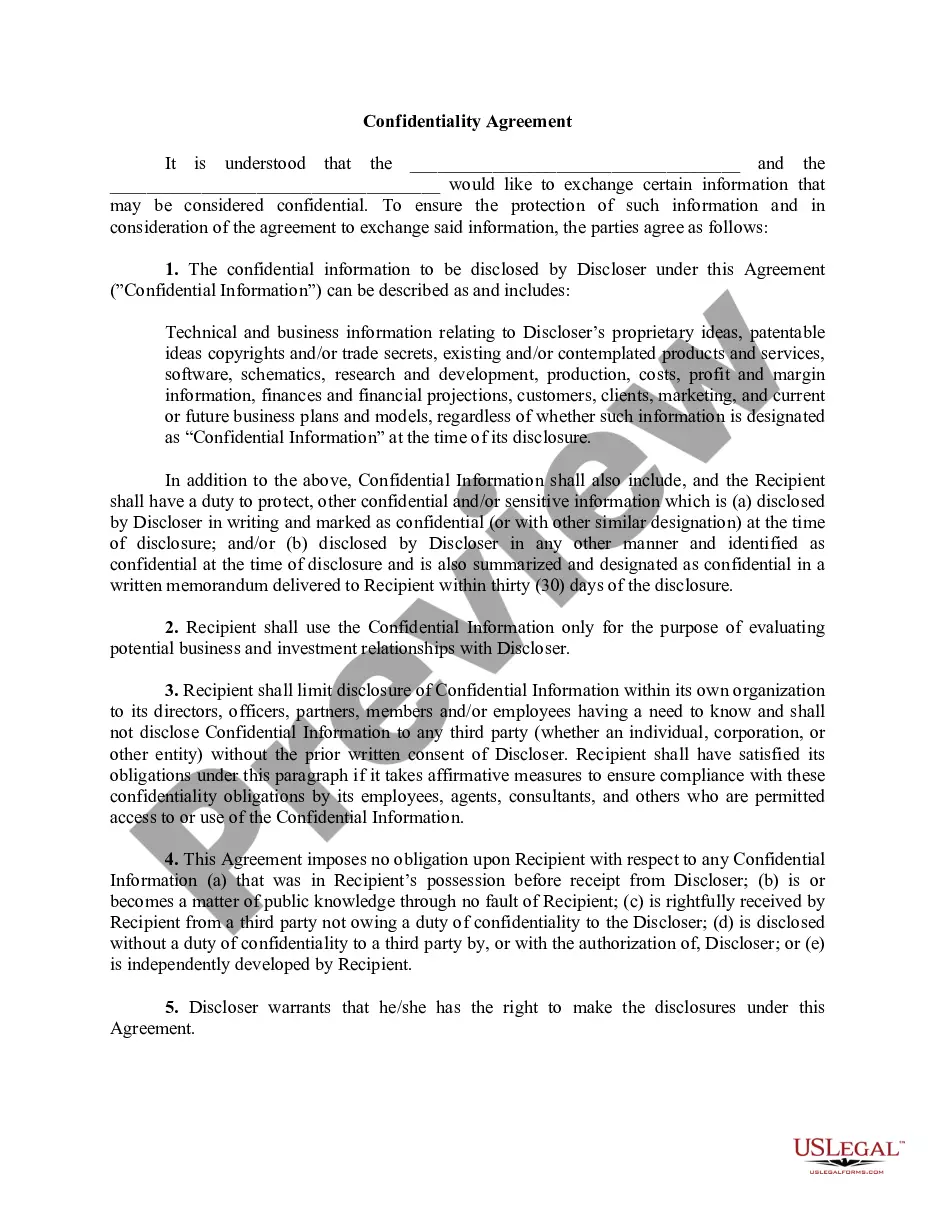
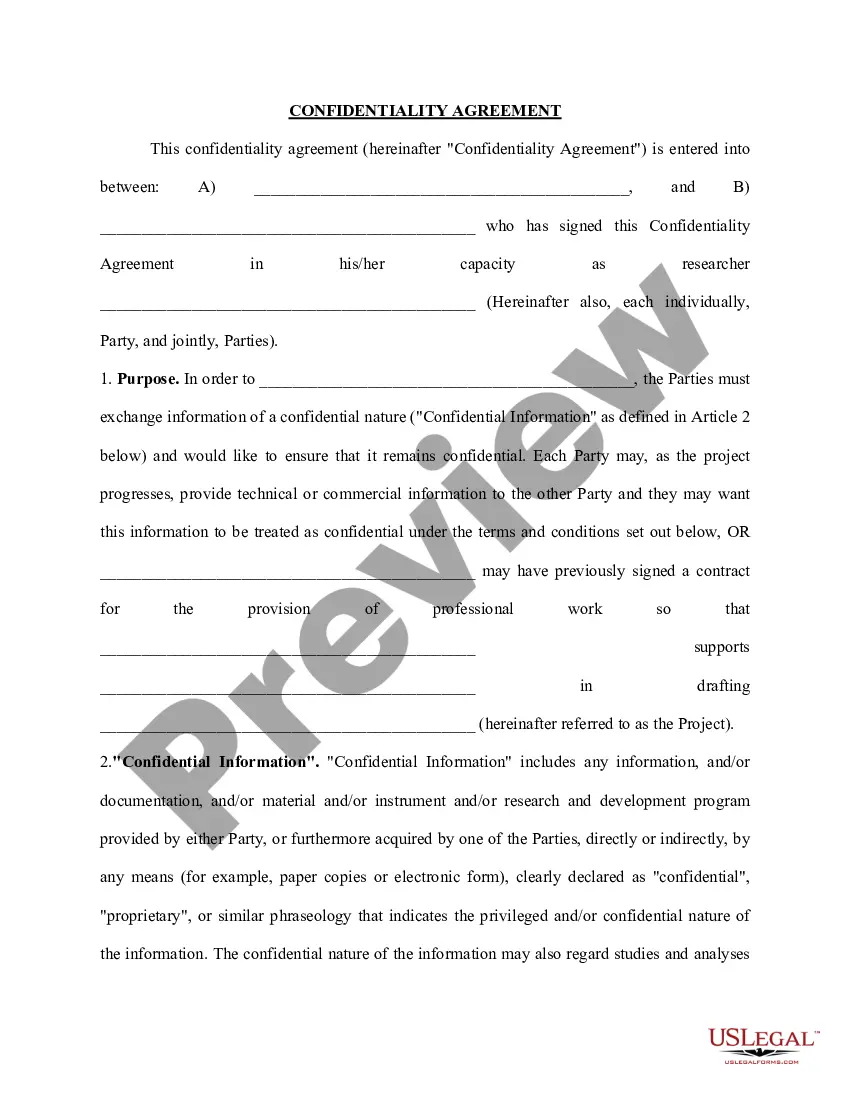
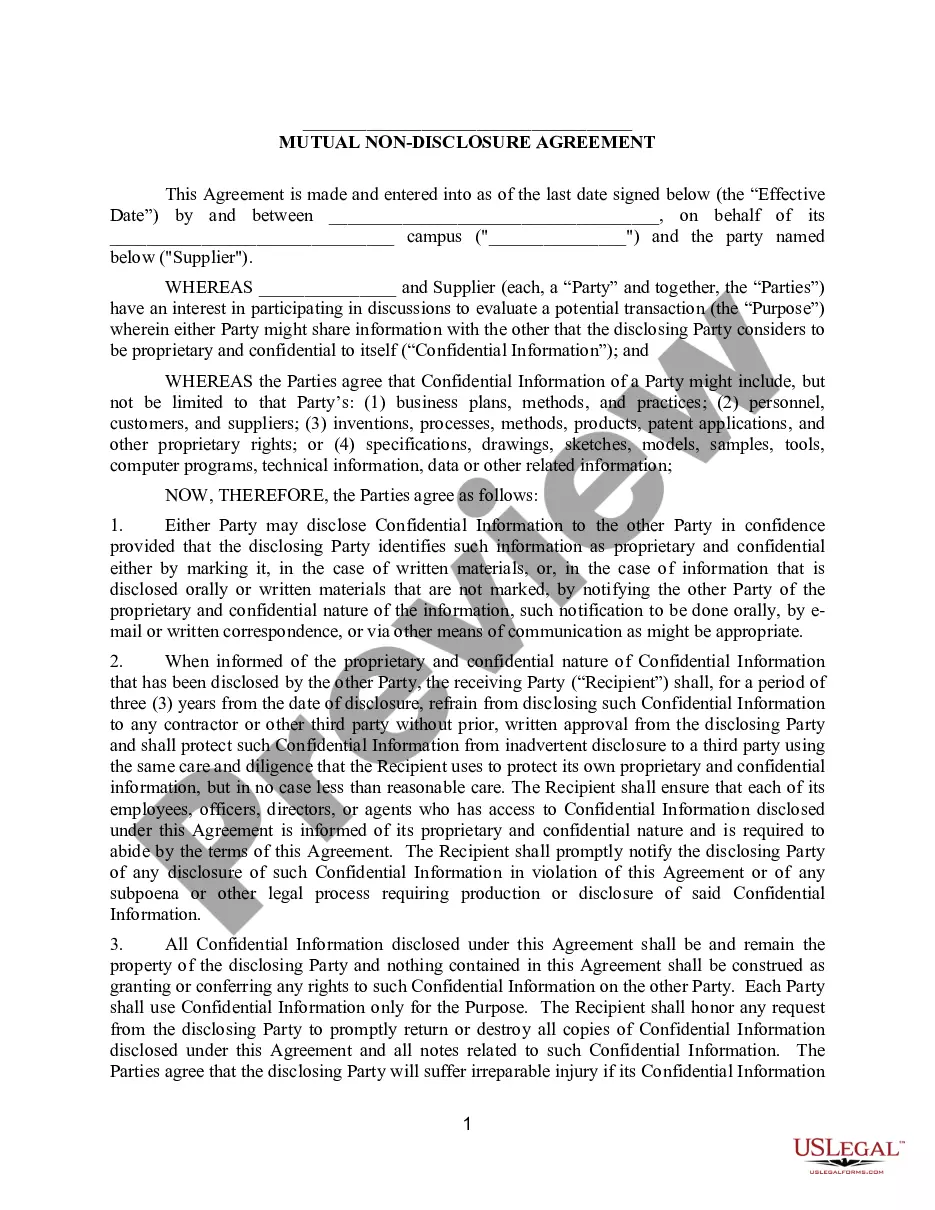
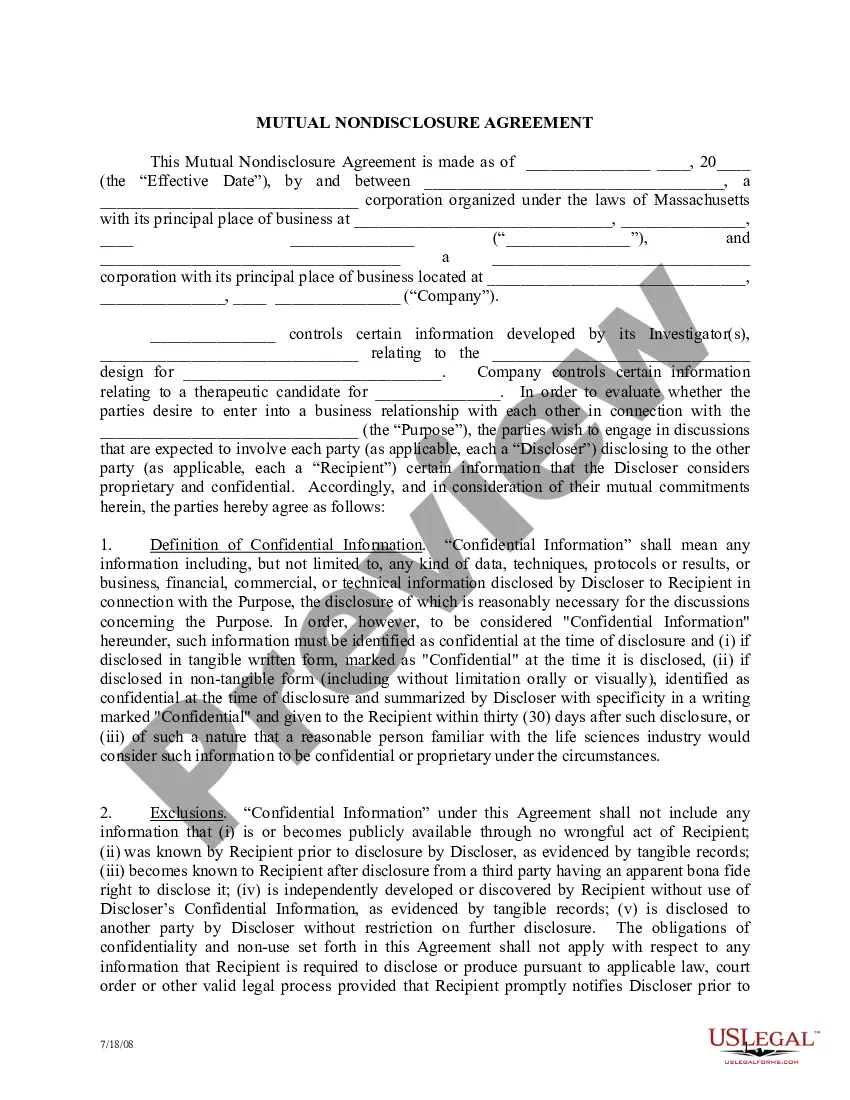
The Agreement Not to Disclose Confidential Information, commonly known as a non-disclosure agreement (NDA), is a legal contract that establishes a confidential relationship between the parties involved. This form protects sensitive information that either party may share during their collaboration, ensuring that proprietary or non-public business information remains confidential. Unlike general contracts, this NDA focuses specifically on preventing unauthorized disclosure of sensitive information.
Key parts of this document
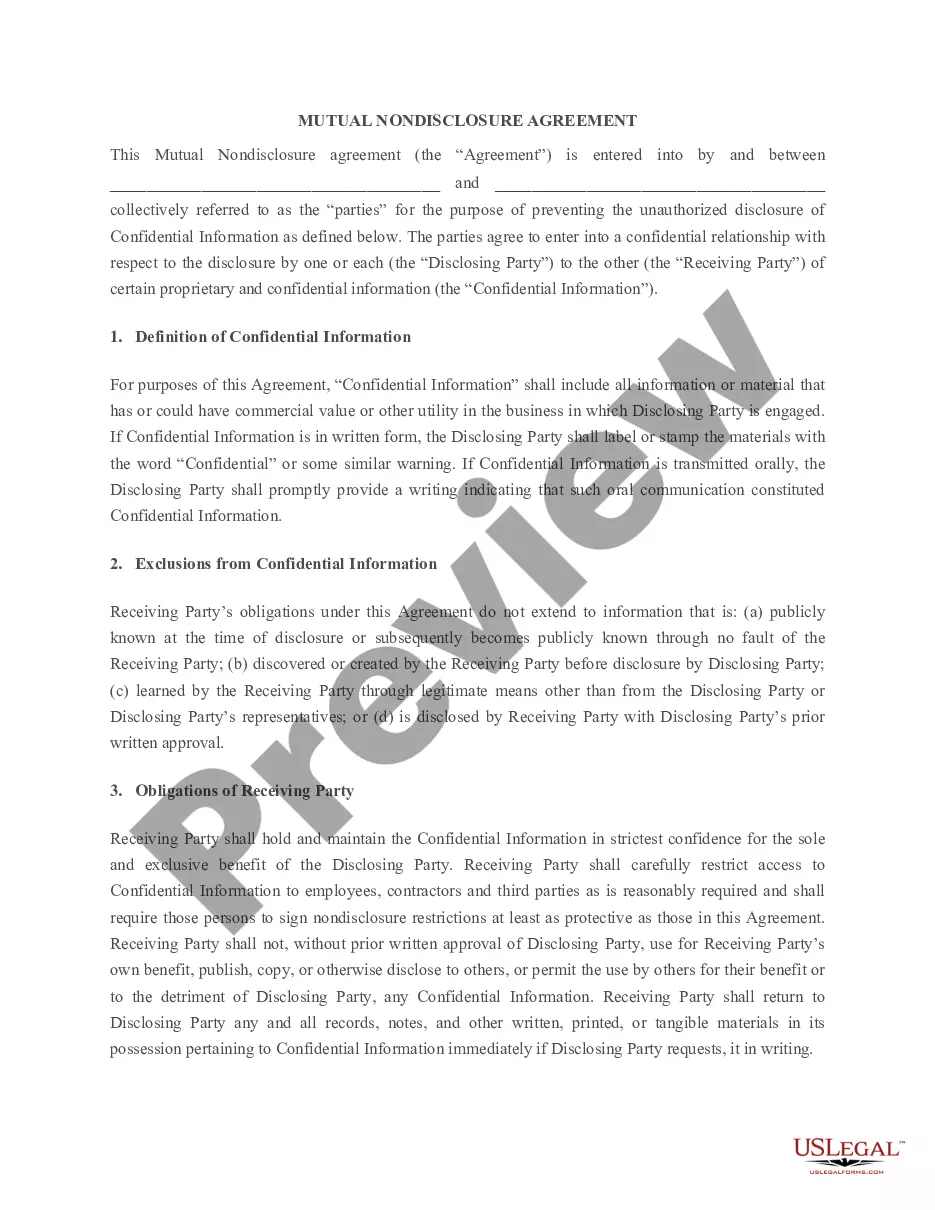
- Definition of Confidential Information: Specifies what constitutes confidential information covered by the agreement.
- Exclusions: Outlines information that is not considered confidential.
- Obligations of Receiving Party: Details the responsibilities of the receiving party to protect the confidential information.
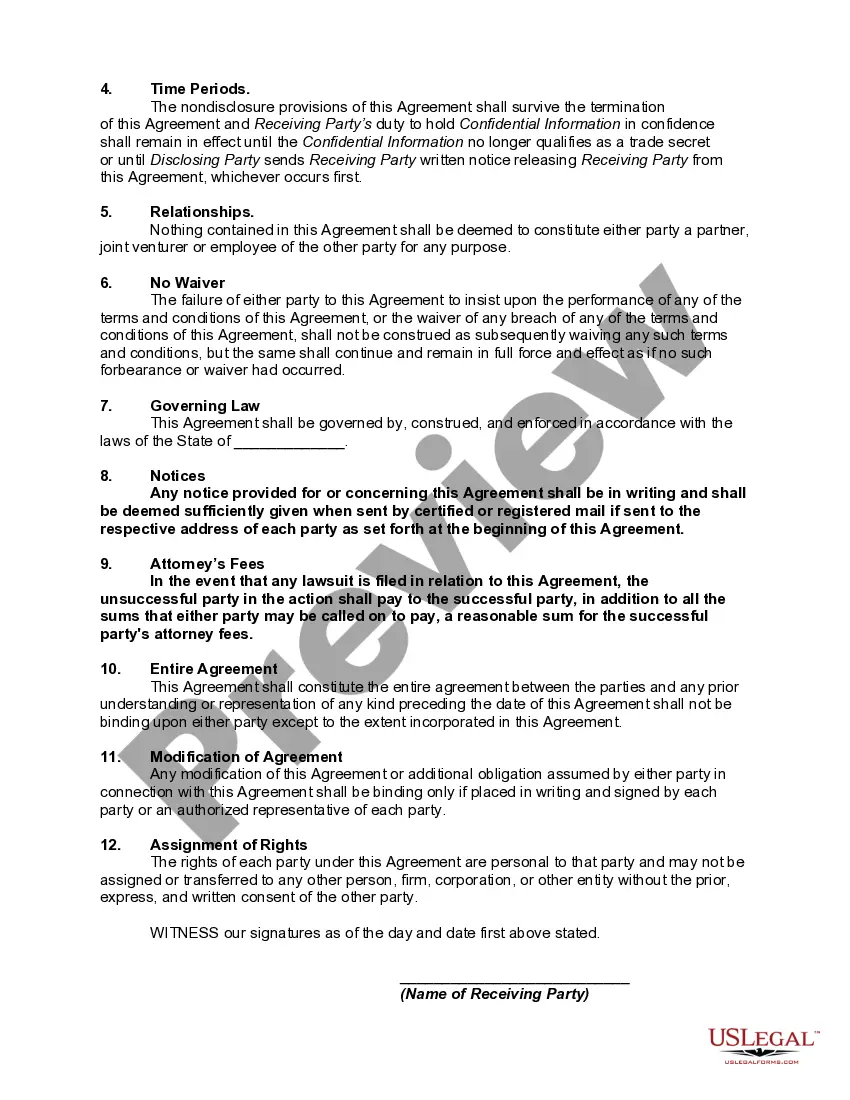
- Time Periods: States how long the confidentiality obligations last.
- Governing Law: Indicates the jurisdiction under which the agreement is interpreted.
Situations where this form applies
This form is useful when two parties are entering into a relationship where they plan to share information that is sensitive or proprietary. Examples include business partnerships, client-vendor arrangements, or collaborations on projects requiring the exchange of trade secrets. Using an NDA helps establish trust and secure both parties against potential breaches of confidentiality.
Who should use this form
- Businesses looking to protect proprietary information before disclosing it to potential partners.
- Individuals sharing sensitive information that requires confidentiality, such as inventors or consultants.
- Companies hiring contractors or employees who will have access to confidential materials.
Steps to complete this form
- Identify the parties involved, including their names and addresses.
- Specify the definition of confidential information as per your agreement.
- Insert the date the agreement is made.
- Detail the obligations of the receiving party regarding the confidential information.
- Include the governing law that will apply to the agreement.
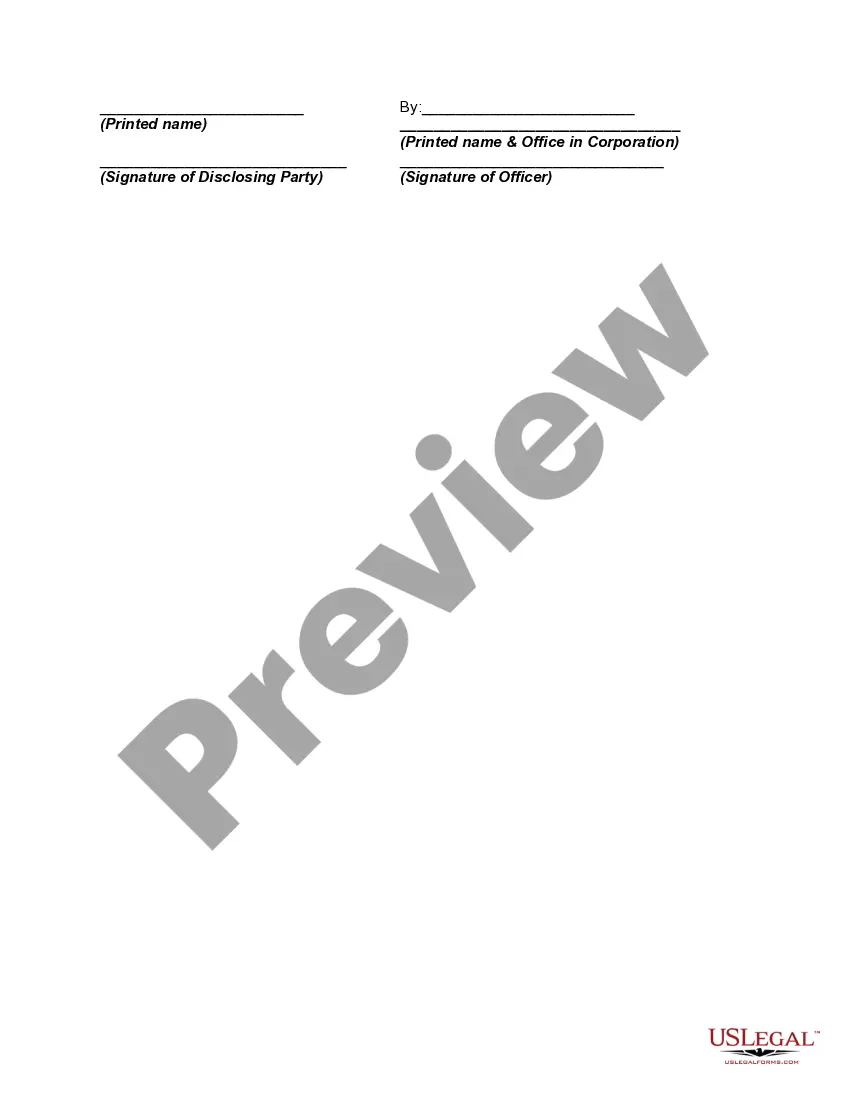
- Obtain signatures from both parties, ensuring all representatives sign as needed.
Notarization requirements for this form
This form does not typically require notarization to be legally valid. However, some jurisdictions or document types may still require it. US Legal Forms provides secure online notarization powered by Notarize, available 24/7 for added convenience.
Get your form ready online
Our built-in tools help you complete, sign, share, and store your documents in one place.
Make edits, fill in missing information, and update formatting in US Legal Forms—just like you would in MS Word.
Download a copy, print it, send it by email, or mail it via USPS—whatever works best for your next step.
Sign and collect signatures with our SignNow integration. Send to multiple recipients, set reminders, and more. Go Premium to unlock E-Sign.
If this form requires notarization, complete it online through a secure video call—no need to meet a notary in person or wait for an appointment.
We protect your documents and personal data by following strict security and privacy standards.

Make edits, fill in missing information, and update formatting in US Legal Forms—just like you would in MS Word.

Download a copy, print it, send it by email, or mail it via USPS—whatever works best for your next step.

Sign and collect signatures with our SignNow integration. Send to multiple recipients, set reminders, and more. Go Premium to unlock E-Sign.

If this form requires notarization, complete it online through a secure video call—no need to meet a notary in person or wait for an appointment.

We protect your documents and personal data by following strict security and privacy standards.
Avoid these common issues
- Failing to clearly define what constitutes confidential information.
- Not specifying the duration of the confidentiality obligations.
- Neglecting to have all parties sign the agreement.
- Using generic terms instead of legal language tailored to specific circumstances.
Benefits of completing this form online
- Convenient download and immediate access to the form.
- Editable templates allow customization based on specific needs.
- Reliable and legally vetted content crafted by licensed attorneys.
Legal use & context
- This NDA is enforceable in a court of law, provided it meets legal standards in the jurisdiction where it is executed.
- The agreement can protect trade secrets and proprietary information in case of legal disputes.
- Always ensure compliance with state-specific laws regarding non-disclosure to avoid potential complications.
Quick recap
- NDAs protect sensitive information shared between parties.
- Clear definitions and obligations are crucial for enforceability.
- This form can be tailored for specific jurisdictions to meet local legal standards.
Looking for another form?






Form popularity
FAQ
Depending on the complexity of what you need protected and the number of parties involved, the cost of having an NDA drafted can vary significantly. When you hire a lawyer in the Priori network, drafting an NDA typically costs anywhere from $175-$1,500.
It is a contract through which the parties agree not to disclose information covered by the agreement. An NDA creates a confidential relationship between the parties, typically to protect any type of confidential and proprietary information or trade secrets. As such, an NDA protects non-public business information.
Identification of the parties. Definition of what is deemed to be confidential. The scope of the confidentiality obligation by the receiving party. The exclusions from confidential treatment. The term of the agreement.
A confidentiality agreement (also called a nondisclosure agreement or NDA) is a legally binding contract in which a person or business promises to treat specific information as a trade secret and promises not to disclose the secret to others without proper authorization.
If you have any questions about what's contained in an NDA, it's OK to consult with a lawyer for advice. It's important to be aware how legal agreements work before signing or creating a document, as being well-informed can help you make the best legal decisions now and down the road.
Read the Duration clauses. Good NDAs will have two different terms of duration. Read the termination clause. Like any other relationship, business partnerships can come to an early end unexpectedly. Read the Return of Information clause.
Confidentiality agreements usually allow the recipient to disclose confidential information if required to do so by court order or other legal process.
Set the date of the agreement. Describe the two parties, sometimes called the Disclosing Party and the Receiving Party.7feff Include names and identification, so there can be no misunderstanding about who signed the agreement.
A definition of confidential information. Who is involved. Why the recipient knows the information. Exclusions or limits on confidential information. Receiving party's obligations. Time frame or term. Discloser to the recipient.