NonDisclosure Agreement regarding Invention that has not been Patented
What this document covers
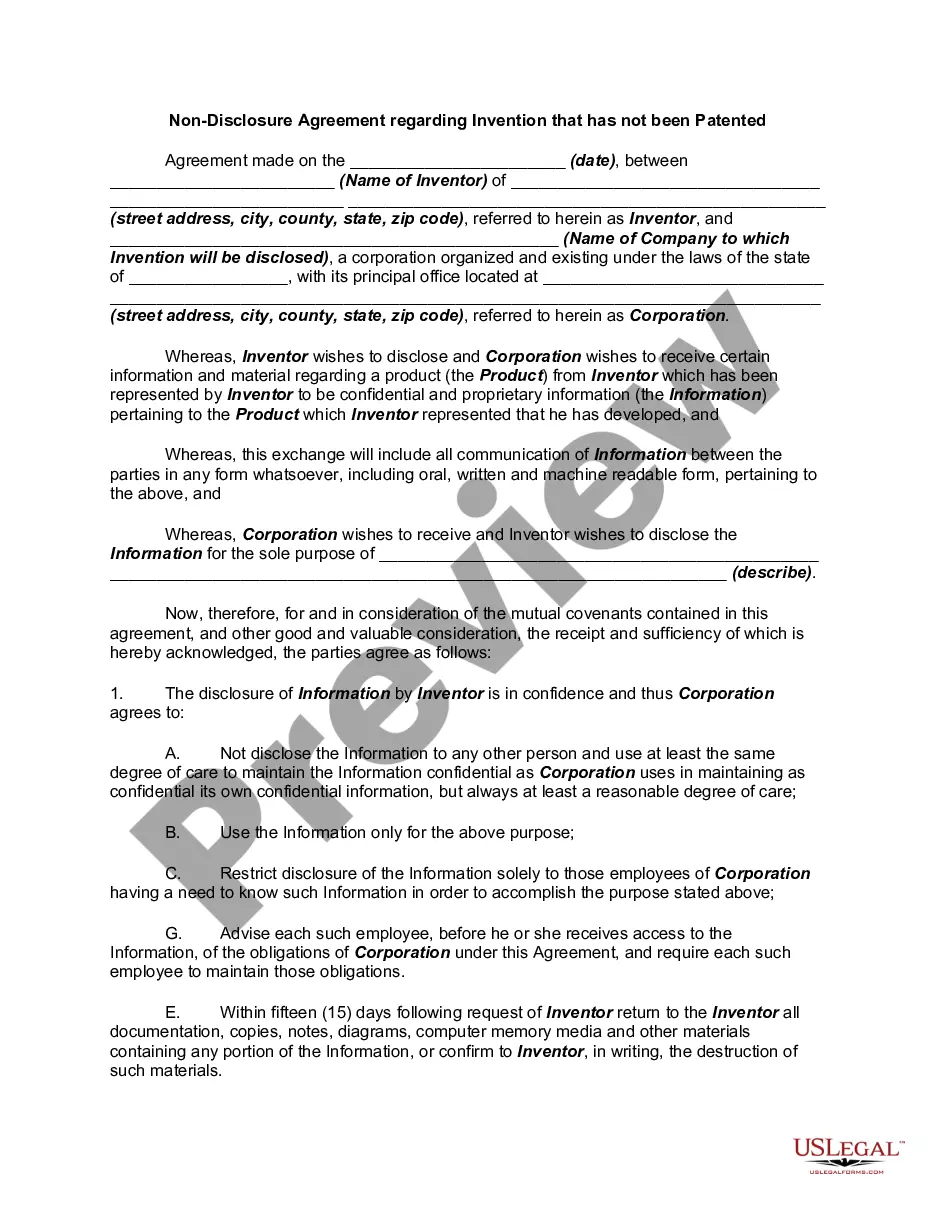
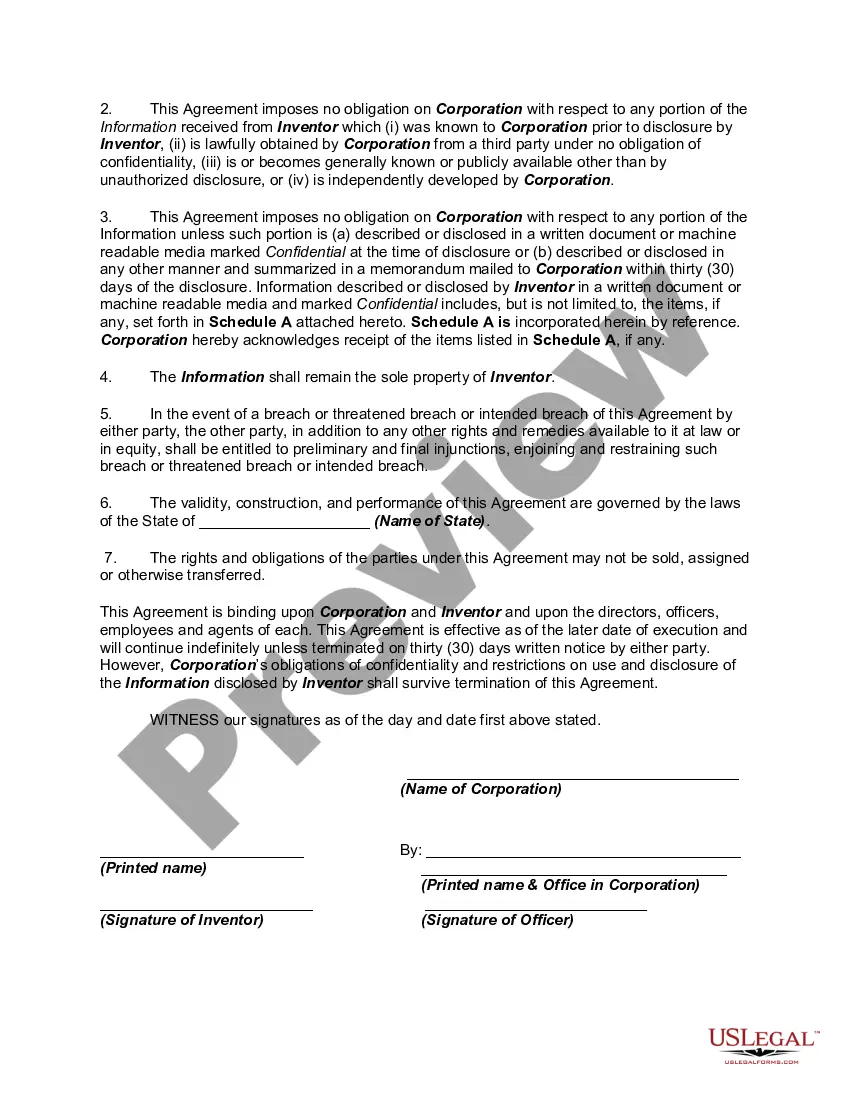
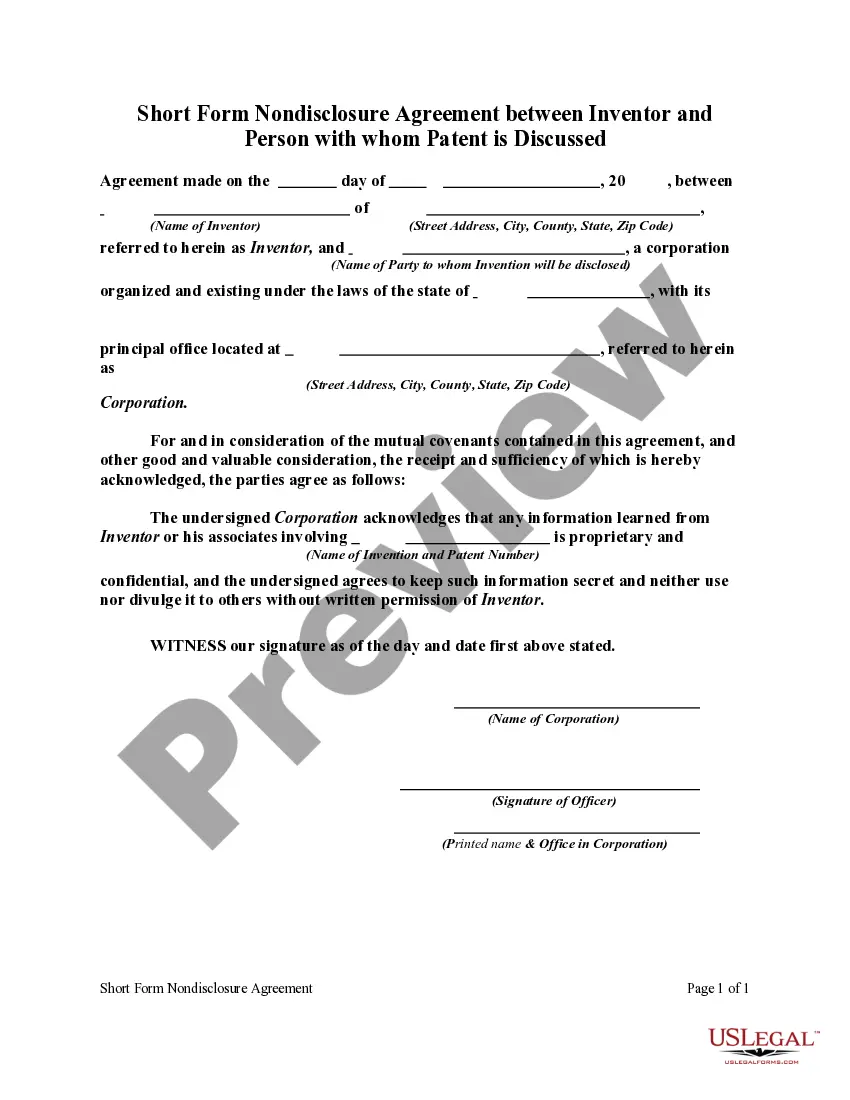
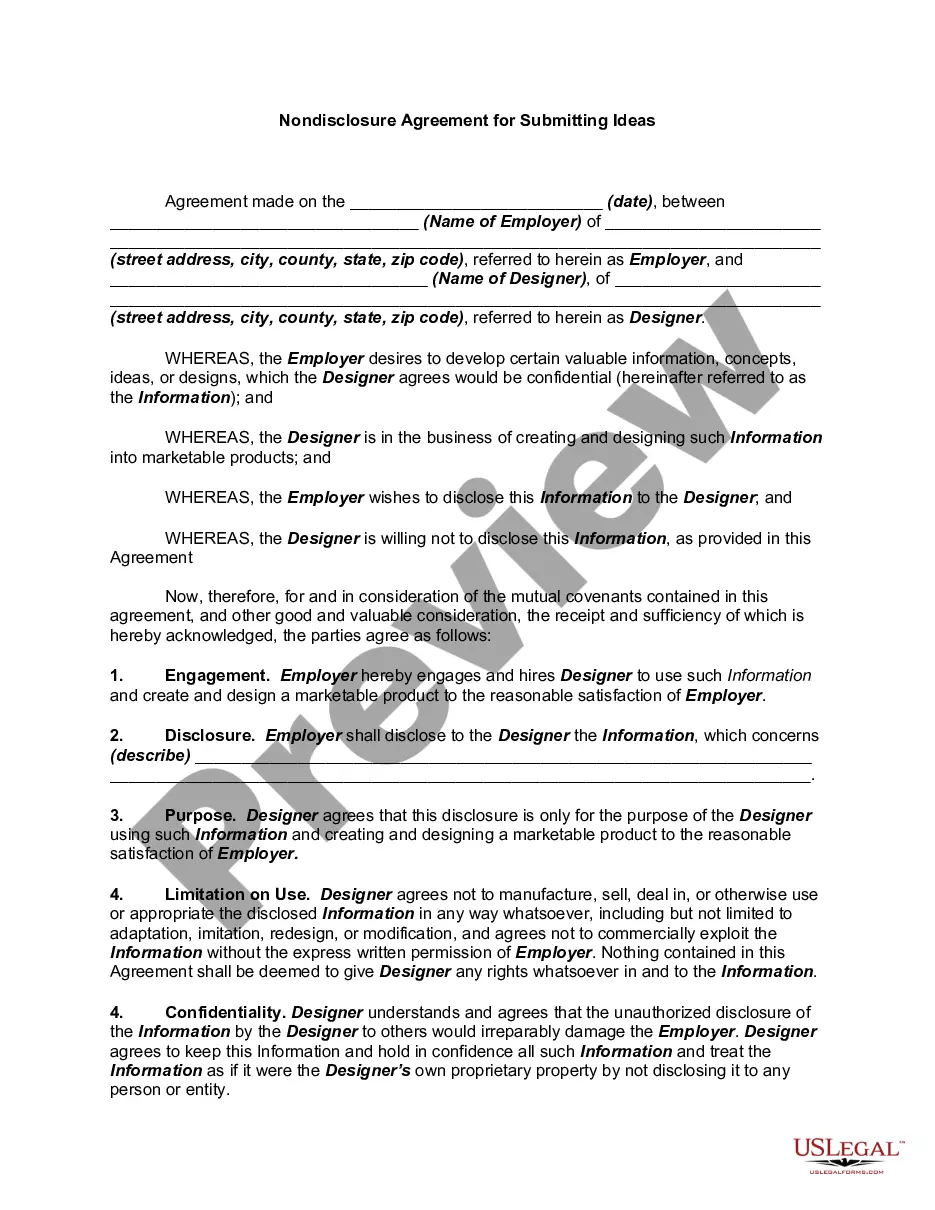
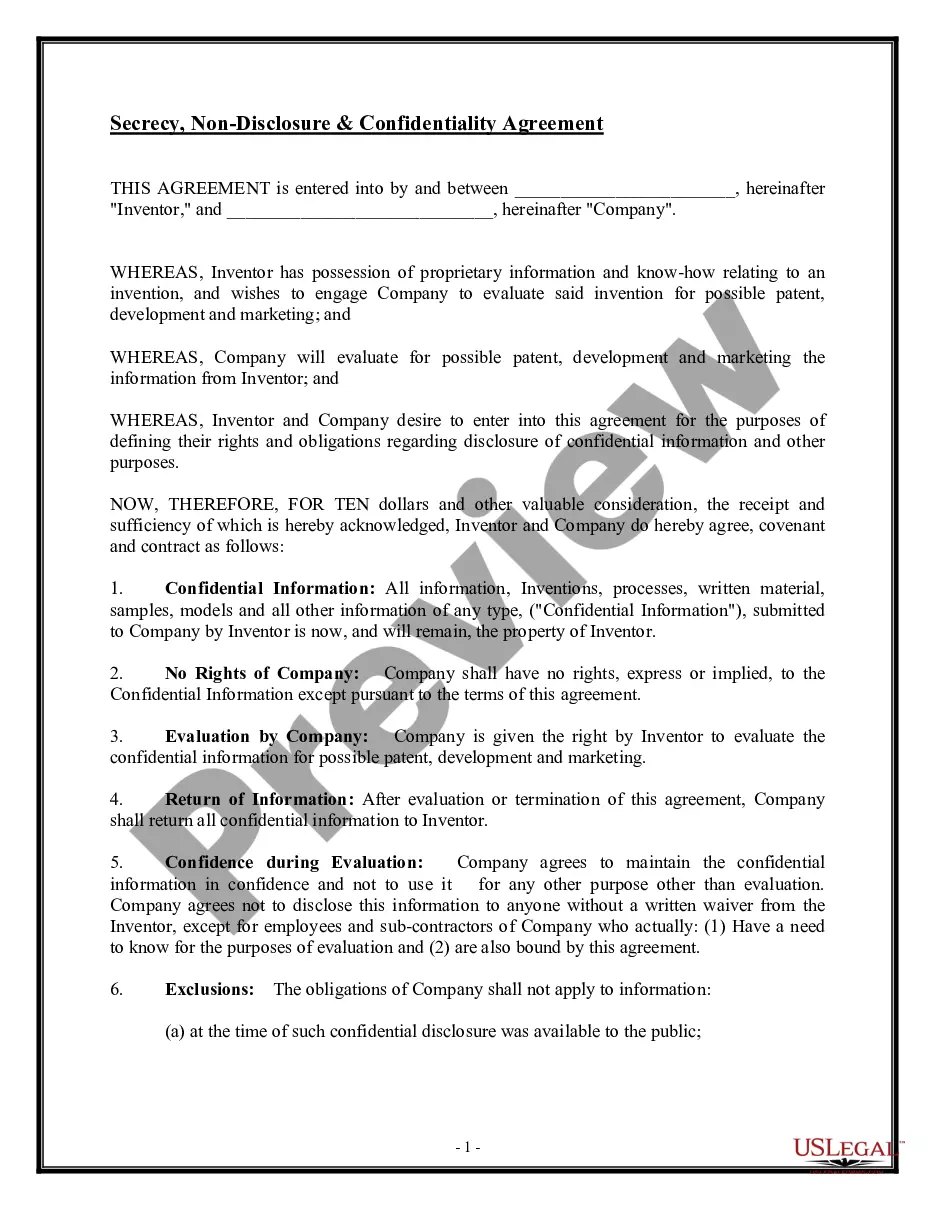
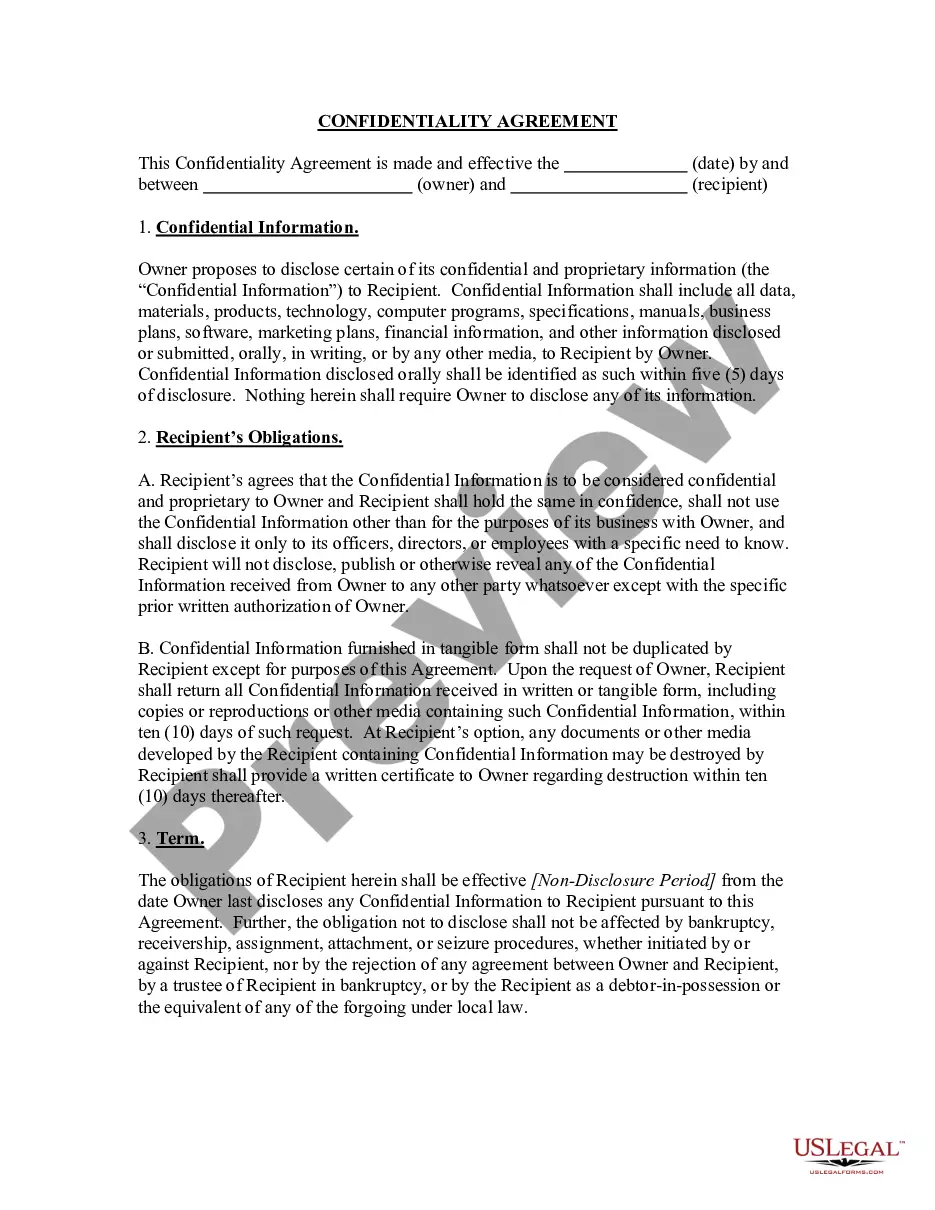
A Non-Disclosure Agreement (NDA) regarding an invention that has not been patented is a legal contract that helps protect confidential information shared between parties. This specific NDA is designed for situations where an inventor discloses information about an invention while ensuring that the receiving party, typically a business entity, agrees to maintain confidentiality. This form is crucial for inventors who wish to share their ideas without the risk of unauthorized disclosure or use of their proprietary information.
What’s included in this form
- Date of agreement and names of the parties involved.
- Definition of confidential information being disclosed.
- Purpose for which the information is shared.
- Obligations of the receiving party to maintain confidentiality.
- Conditions under which the NDA is void.
- Indication that the information remains the sole property of the inventor.
When to use this document
This form is needed when an inventor intends to share details about a potential invention with a company or individual that is not yet patented. It is useful in scenarios such as negotiating partnerships, seeking investors, or discussing product development, where the protection of sensitive ideas is essential to prevent misuse or theft.
Who can use this document
- Inventors looking to protect their unpatented inventions.
- Startups seeking partnerships or investment while sharing confidential information.
- Businesses engaging in discussions about joint ventures involving proprietary ideas.
- Individuals or organizations wishing to ensure their ideas remain protected before legal protections are established.
Instructions for completing this form
- Identify and enter the date of the agreement.
- Complete the names and addresses of both the inventor and the corporation receiving the information.
- Clearly specify the purpose of the information exchange.
- Outline the obligations of the receiving party with respect to the information.
- Include details about the return or destruction of documents containing confidential information.
- Collect necessary signatures from all parties involved to finalize the agreement.
Is notarization required?
This form does not typically require notarization to be legally valid. However, some jurisdictions or document types may still require it. US Legal Forms provides secure online notarization powered by Notarize, available 24/7 for added convenience.
Get your form ready online
Our built-in tools help you complete, sign, share, and store your documents in one place.
Make edits, fill in missing information, and update formatting in US Legal Forms—just like you would in MS Word.
Download a copy, print it, send it by email, or mail it via USPS—whatever works best for your next step.
Sign and collect signatures with our SignNow integration. Send to multiple recipients, set reminders, and more. Go Premium to unlock E-Sign.
If this form requires notarization, complete it online through a secure video call—no need to meet a notary in person or wait for an appointment.
We protect your documents and personal data by following strict security and privacy standards.

Make edits, fill in missing information, and update formatting in US Legal Forms—just like you would in MS Word.

Download a copy, print it, send it by email, or mail it via USPS—whatever works best for your next step.

Sign and collect signatures with our SignNow integration. Send to multiple recipients, set reminders, and more. Go Premium to unlock E-Sign.

If this form requires notarization, complete it online through a secure video call—no need to meet a notary in person or wait for an appointment.

We protect your documents and personal data by following strict security and privacy standards.
Avoid these common issues
- Failing to accurately define what constitutes confidential information.
- Not specifying the purpose for which the information will be used.
- Neglecting to include a timeline for the return or destruction of confidential materials.
- Allowing unauthorized individuals to access the confidential information.
Benefits of using this form online
- Easy access to templates drafted by licensed attorneys.
- Immediate download options for quick use.
- Editable fields that allow customization to meet specific needs.
- Saves time and reduces the hassle of legal paperwork.
- Provides peace of mind with legally sound agreements.
Legal use & context
This NDA is enforceable in a court of law as long as it meets the general criteria for contracts, such as offer, acceptance, and consideration. However, the confidentiality clauses are only effective if the information is clearly defined and reasonable measures for protecting that information are maintained.
Main things to remember
- An NDA protects sensitive information related to inventions that are not yet patented.
- This agreement fosters a secure environment for discussing potential collaborations or evaluations.
- Proper execution and clarity in the contract terms are critical for enforceability.
Looking for another form?






Form popularity
FAQ
The first person or enterprise to file a patent for an invention will have the right to the patent. This may in fact mean that, if you do not patent your inventions or inventions made the employees of your company, somebody else who may have developed the same or an equivalent invention later may do so.
For an invention to be patentable, it does not need to be the most efficient, effective, or perfected form of a particular use (whether it is a medication, a piece of software code, or a machine). It merely needs to work as described.
The short answer is no. Unfortunately, despite what you may have heard from late night television commercials, there is no effective way to protect an idea with any form of intellectual property protection. Copyrights protect expression and creativity, not innovation. Patents protect inventions.
15 WAYS TO STOP YOUR INVENTION FROM BEING STOLEN.2File a provisional patent application. Protect your idea before receiving a patent.3Put the public on notice of your ownership.4Keep accurate communication records.5Create an IP culture.6Vet your partners and investors.
Not exactly. You cannot make the Patent Office apply your disclosure as prior art to the patent application filed by the investor or licensee. Your disclosure may not be prior art to their patent application.
The simple answer is noyou cannot patent an idea for an invention. The invention itself has to be produced or a patent application containing the invention must be filed with the U.S. Patent and Trademark Office (USPTO). While all inventions start with an idea, not every idea can be called an invention.
If you determine that the invention is probably not patentable, the most effective way to protect yourself is to have prospective licensees sign a nondisclosure agreement before you reveal your invention. This document is sometimes called an "NDA" or a "confidentiality agreement," but the terms are similar.
No. You are not required to obtain a patent in order to sell a product or service embodying your invention. Many products and services are sold that are not patented. A U.S. patent provides the right to stop others from making marketing, selling, or importing your invention in the United States.
If you determine that the invention is probably not patentable, the most effective way to protect yourself is to have prospective licensees sign a nondisclosure agreement before you reveal your invention. This document is sometimes called an "NDA" or a "confidentiality agreement," but the terms are similar.