Right of First Refusal to Purchase All Shares of Corporation from Sole Shareholder
Understanding this form
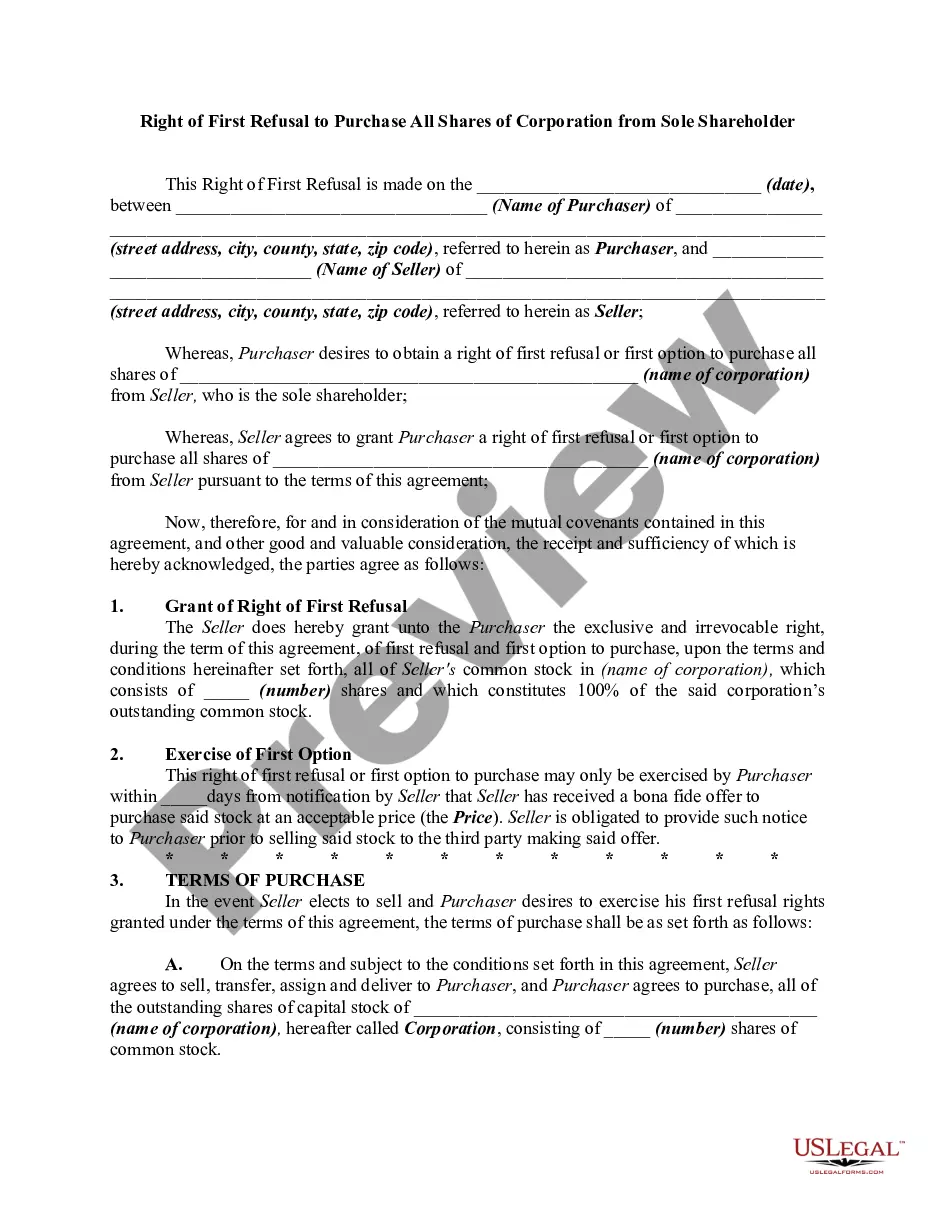
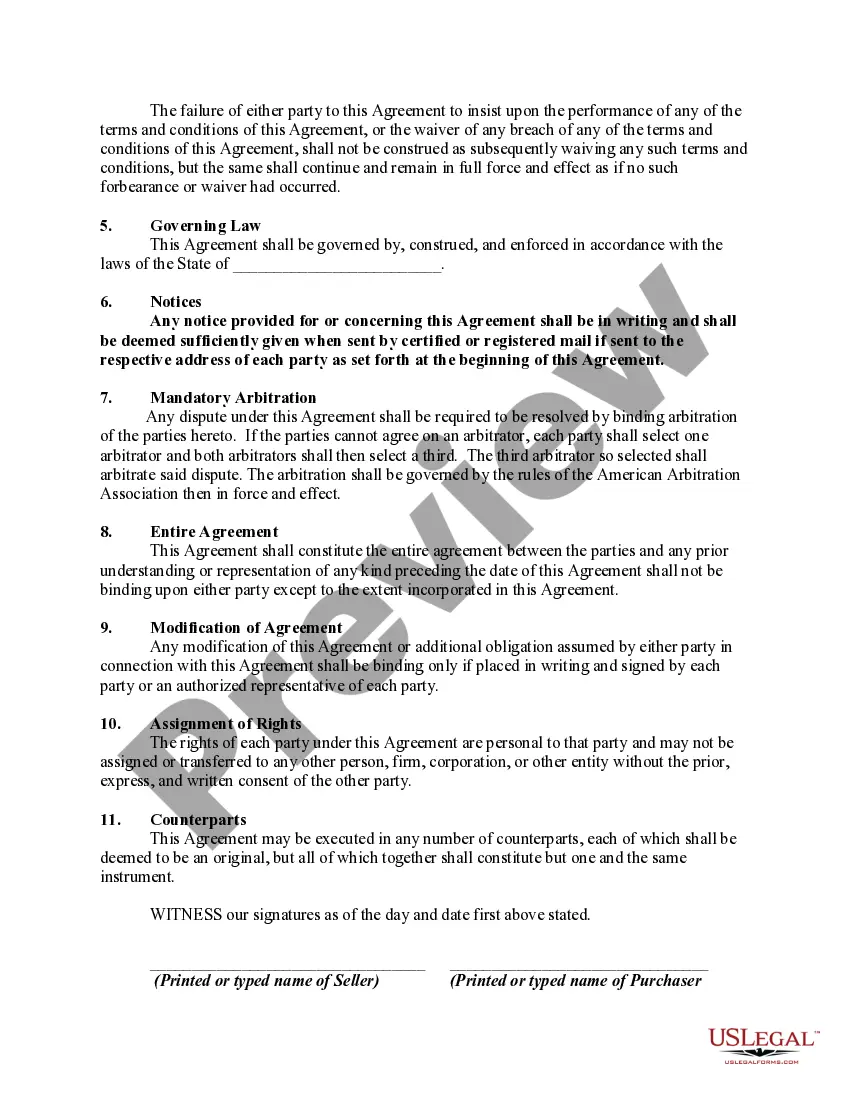
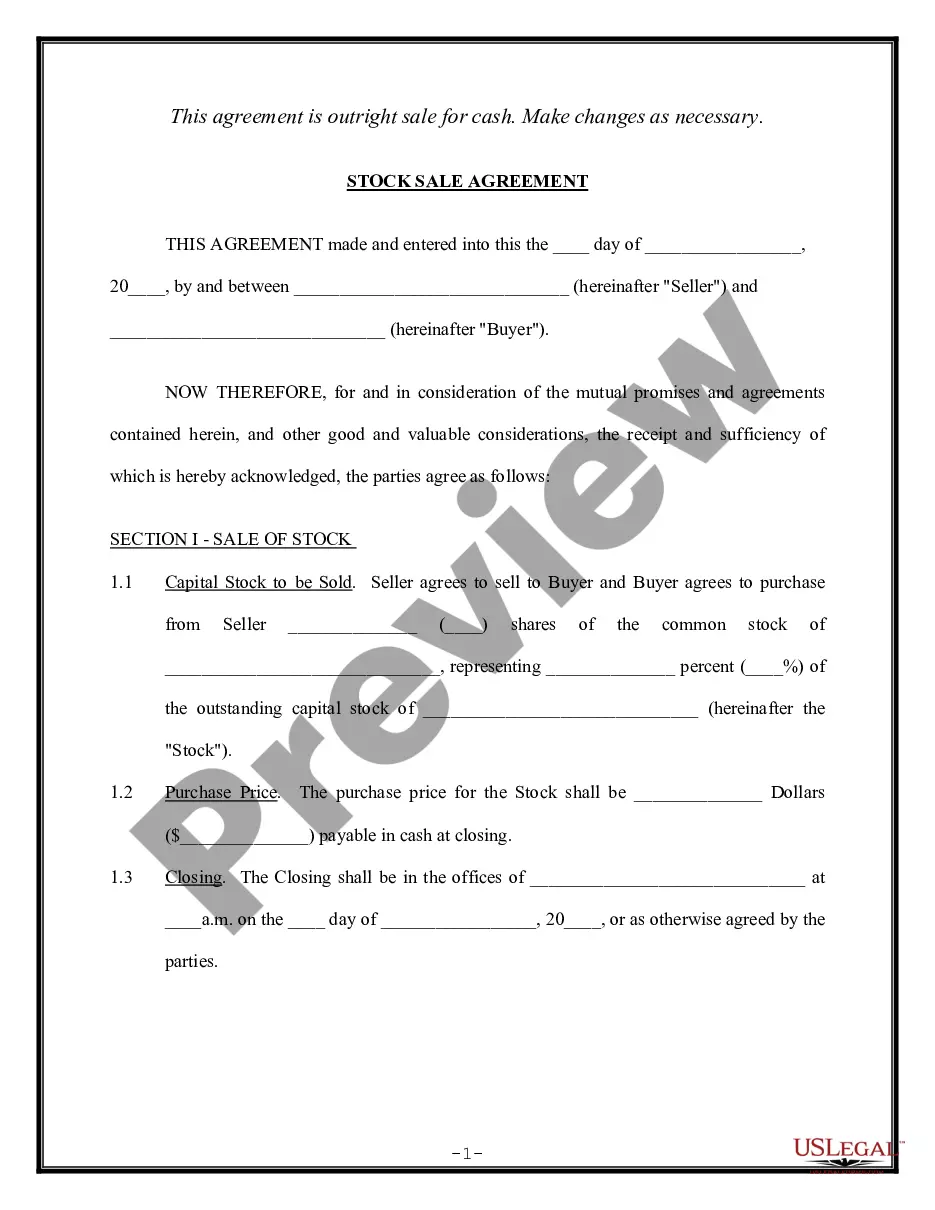
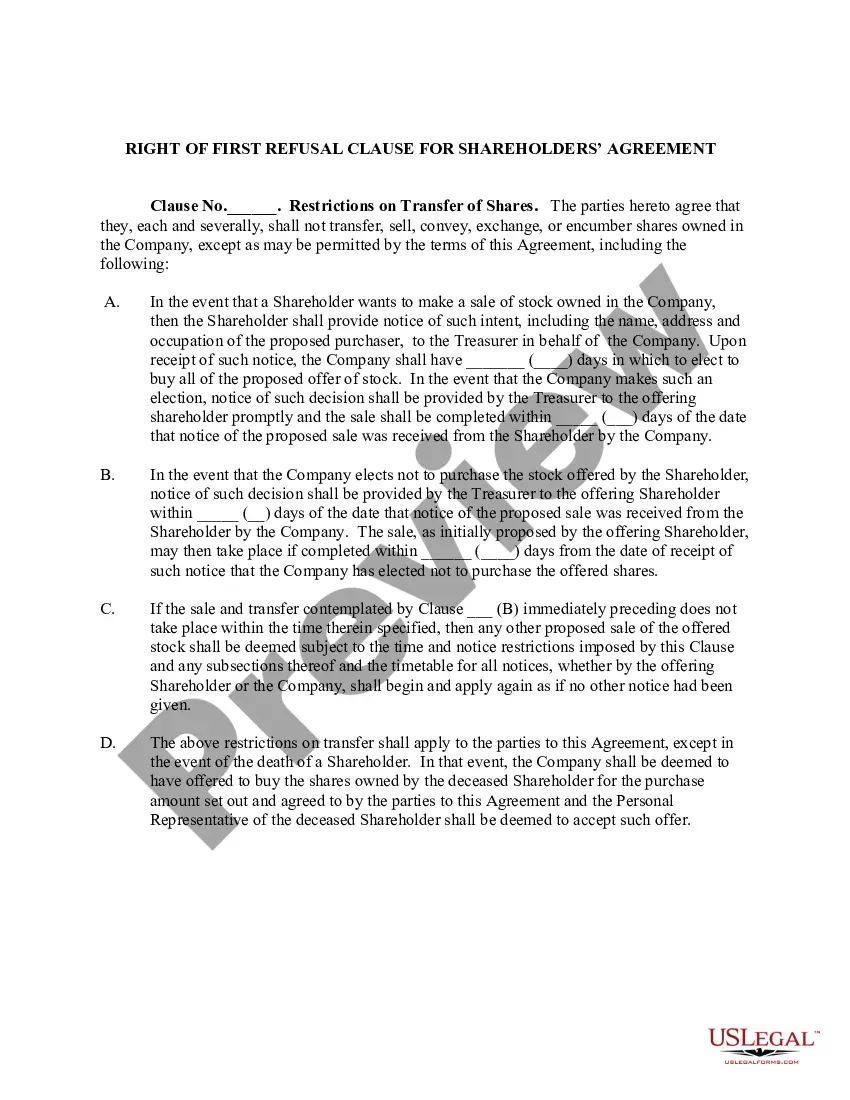
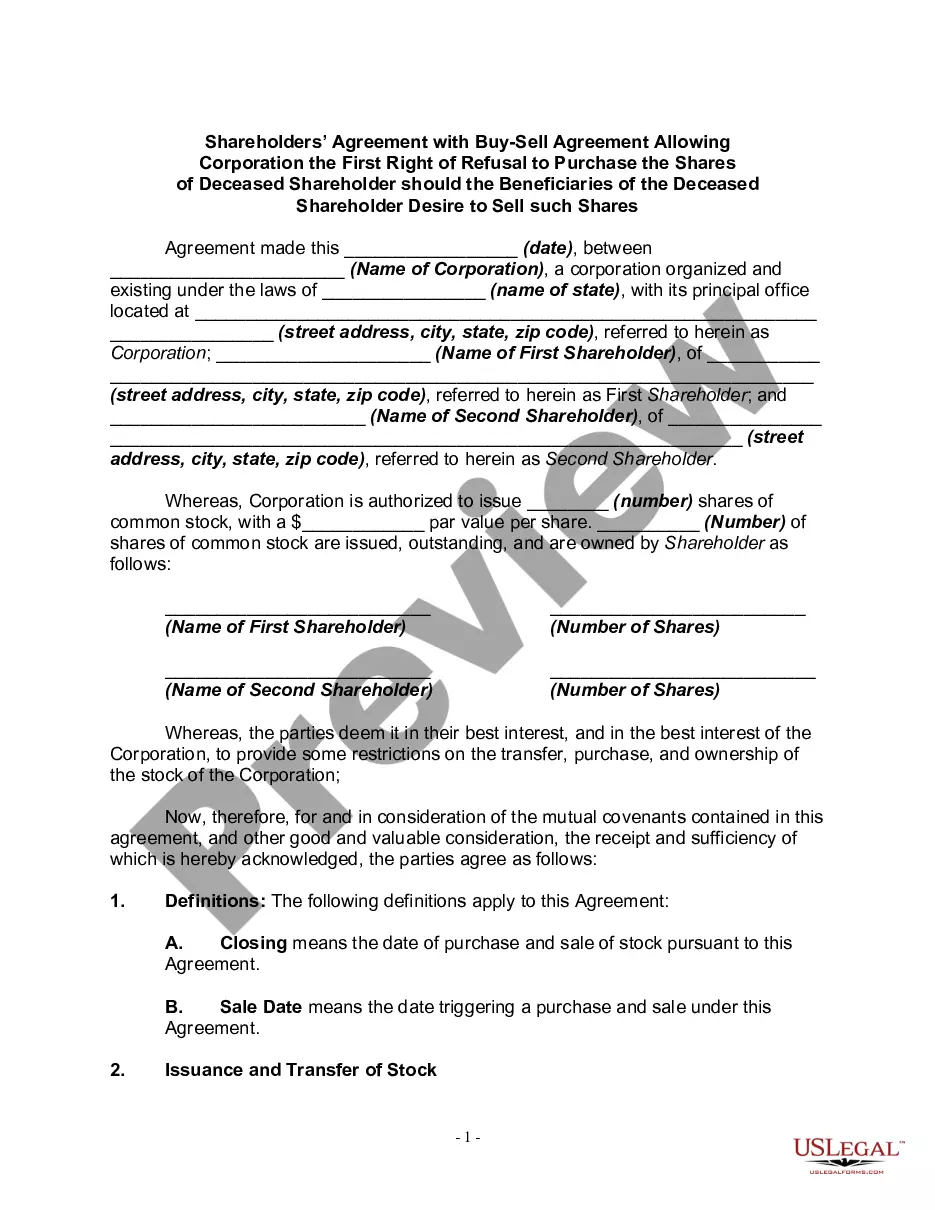
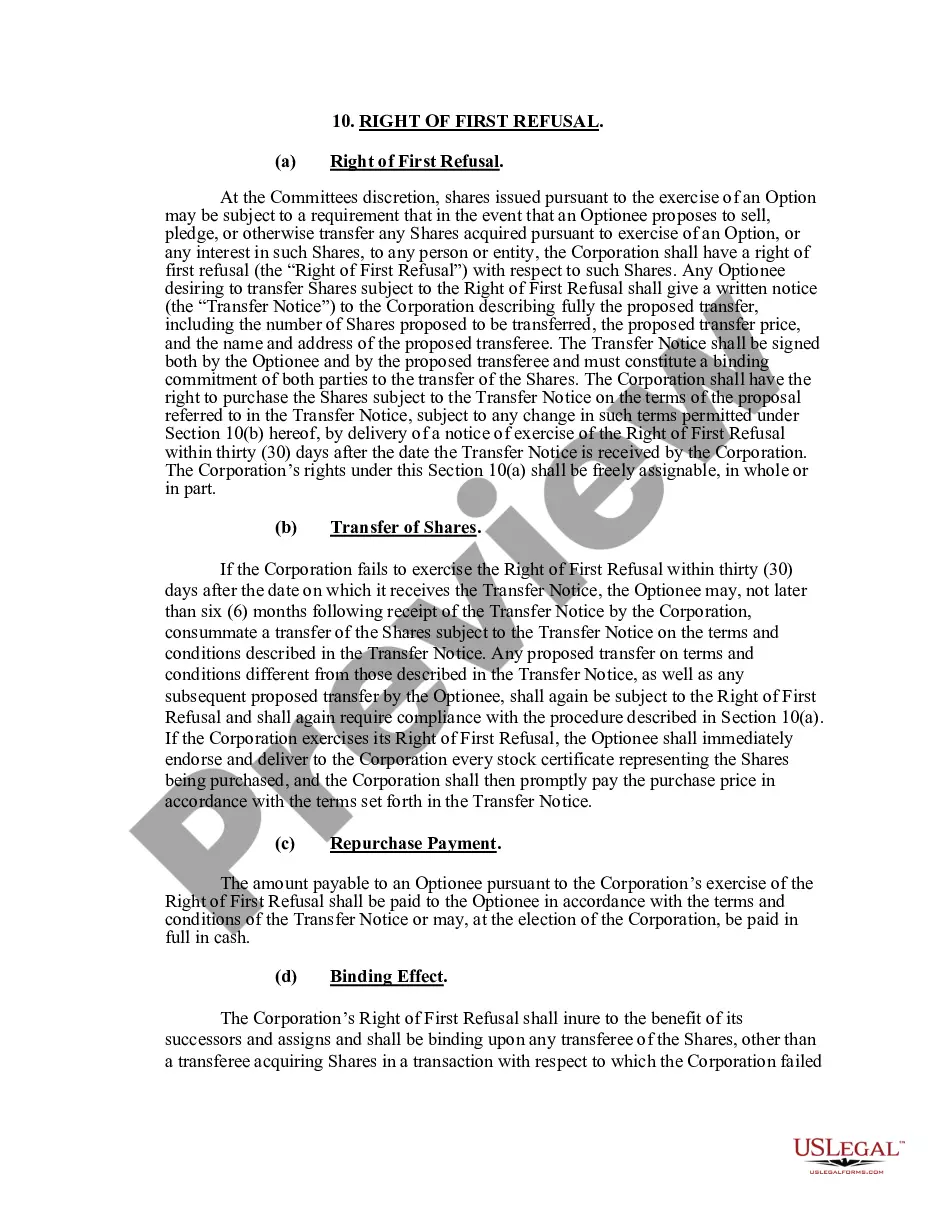
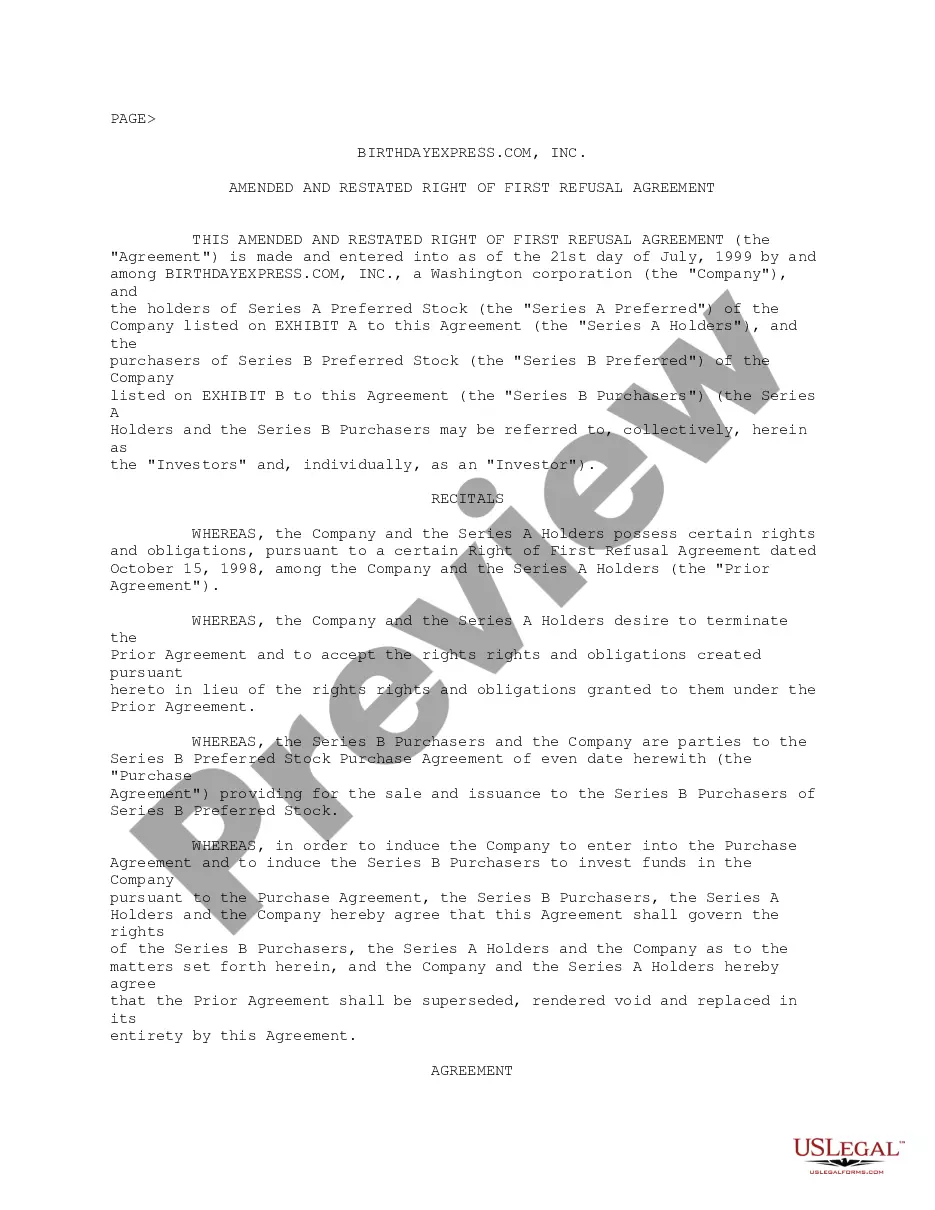
The Right of First Refusal to Purchase All Shares of Corporation from Sole Shareholder is a legal document that grants a purchaser the first opportunity to buy all shares of a corporation from a sole shareholder before the seller can consider offers from other potential buyers. This form is essential in stock transfers to safeguard the interests of the buyer, ensuring they are informed and have the chance to match any bona fide offers received by the seller. This differs from other agreements as it specifically addresses the right of first refusal within the context of corporate share ownership.
Key components of this form
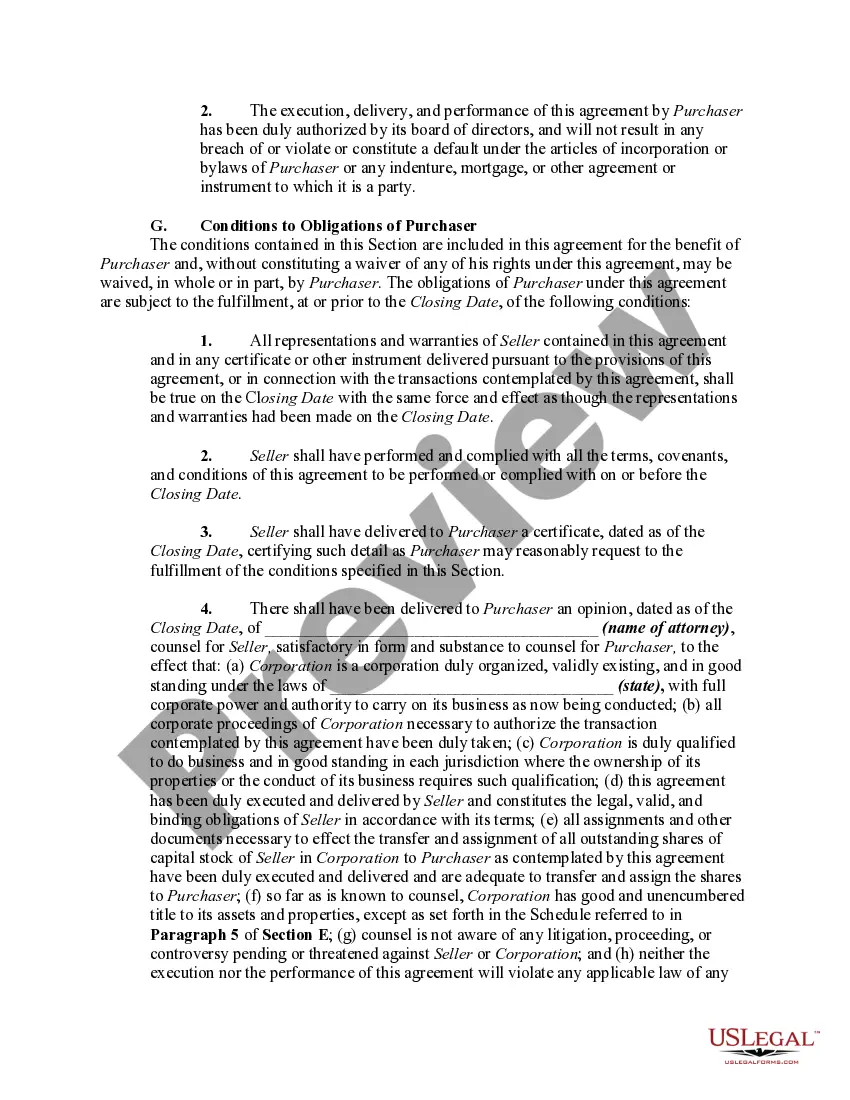
- Grant of Right of First Refusal: This section details the exclusive right given to the purchaser to buy shares.
- Exercise of First Option: Describes the time frame in which the purchaser can exercise their right to buy.
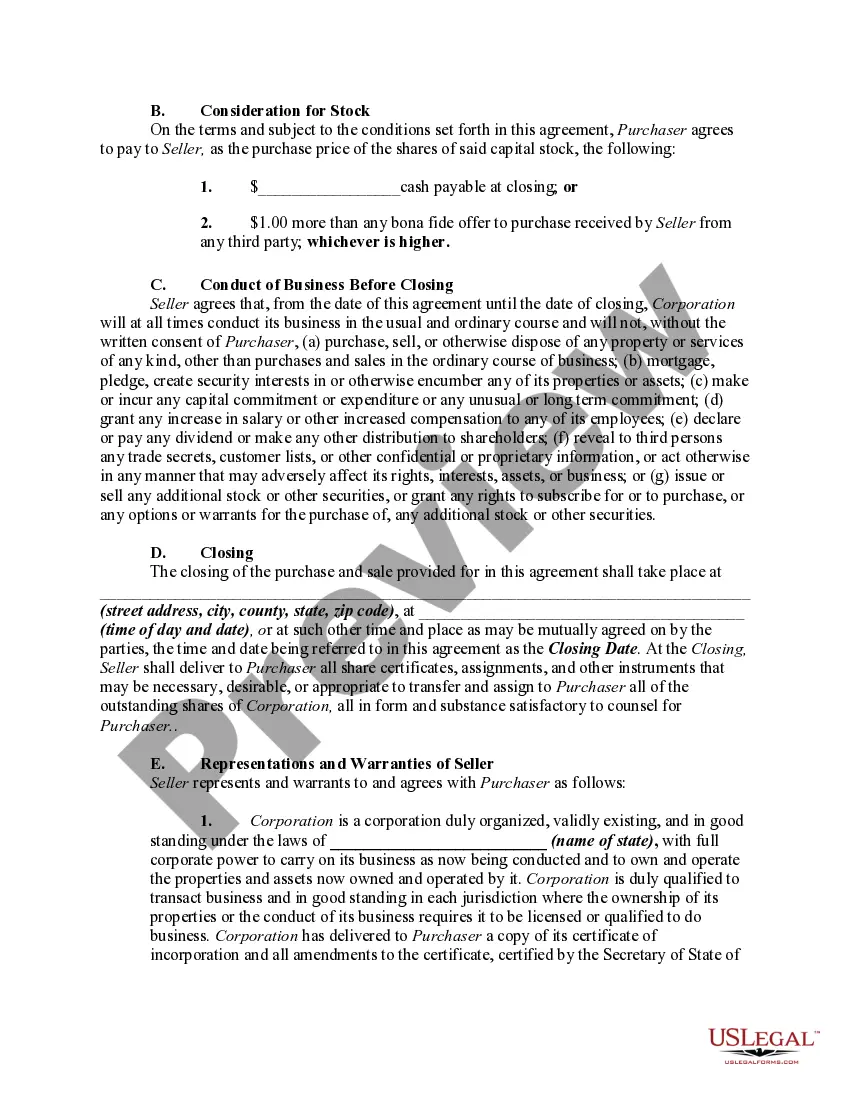
- Terms of Purchase: Outlines the conditions and price for purchasing the shares of the corporation.
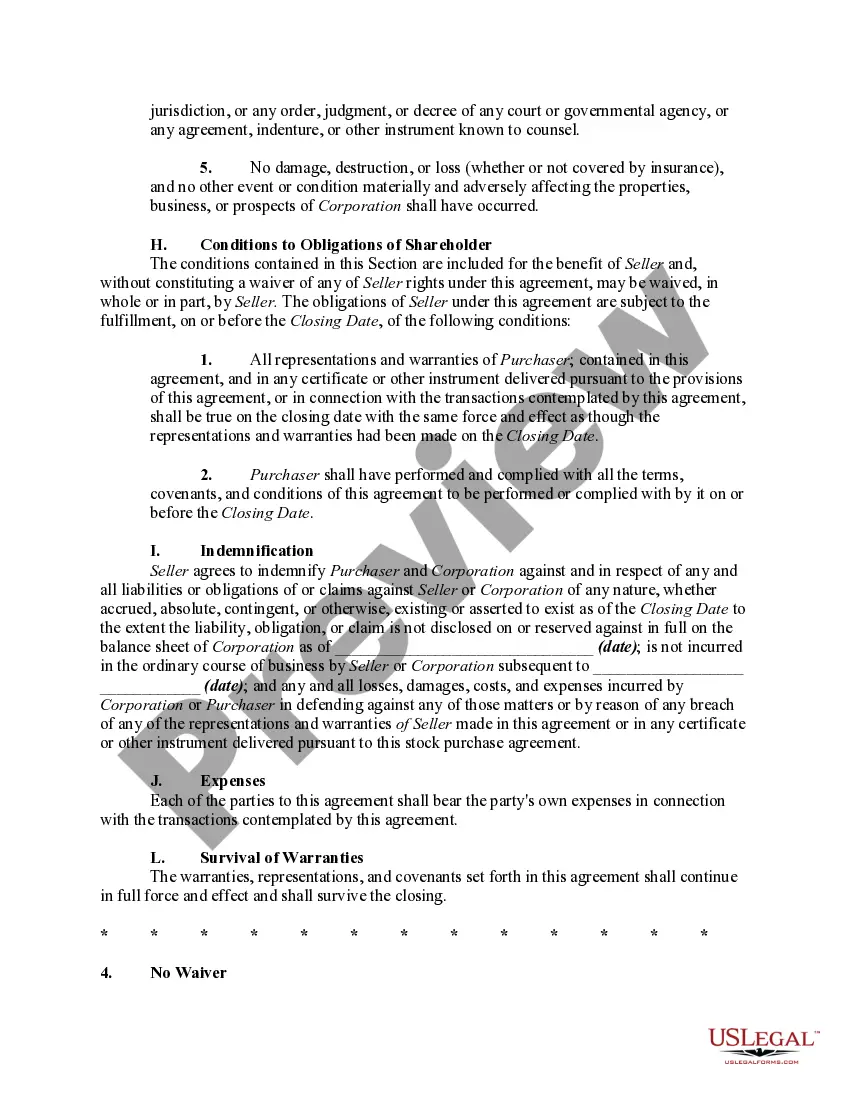
- Closing Procedures: Details how and where the closing of the sale will take place.
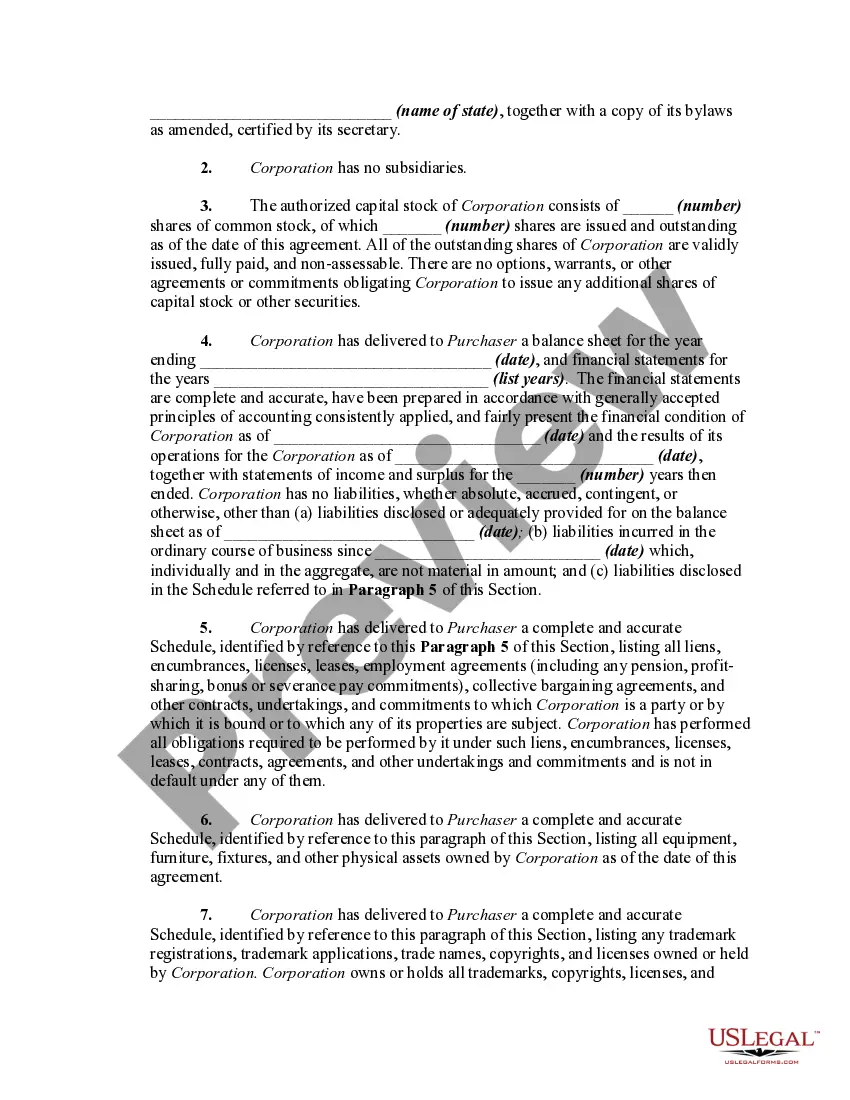
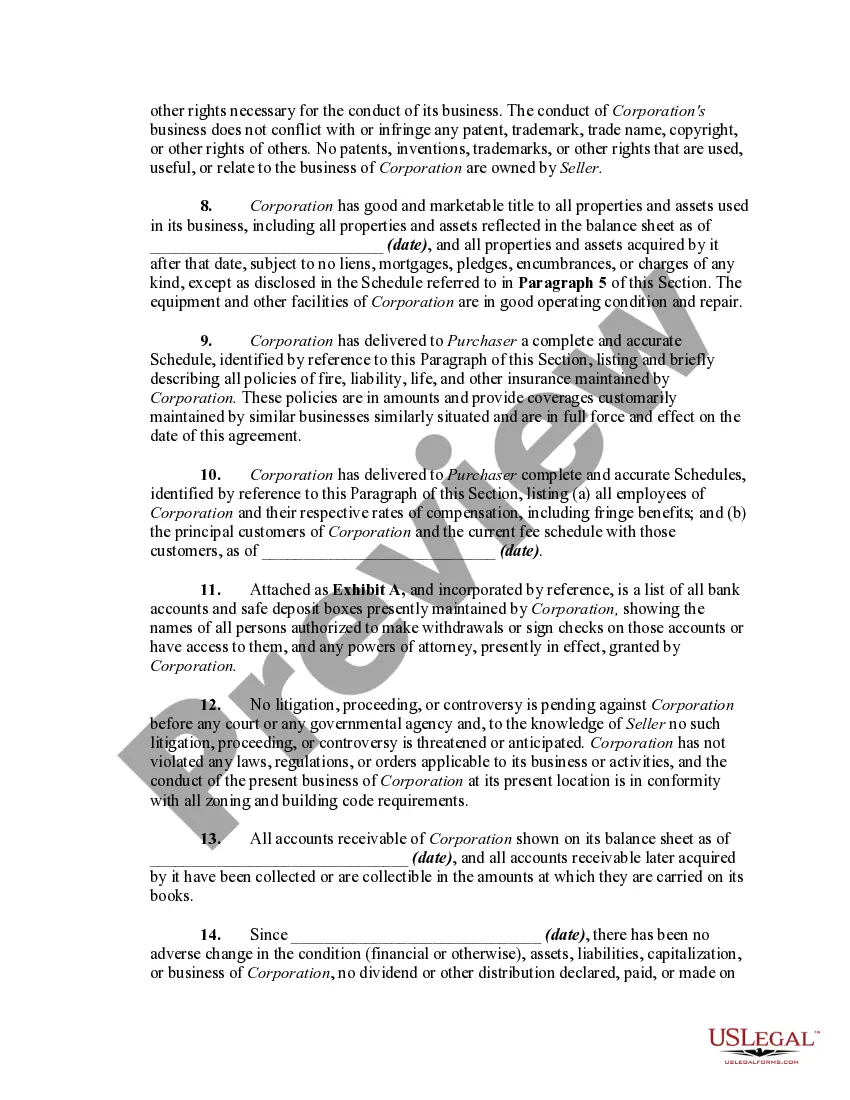
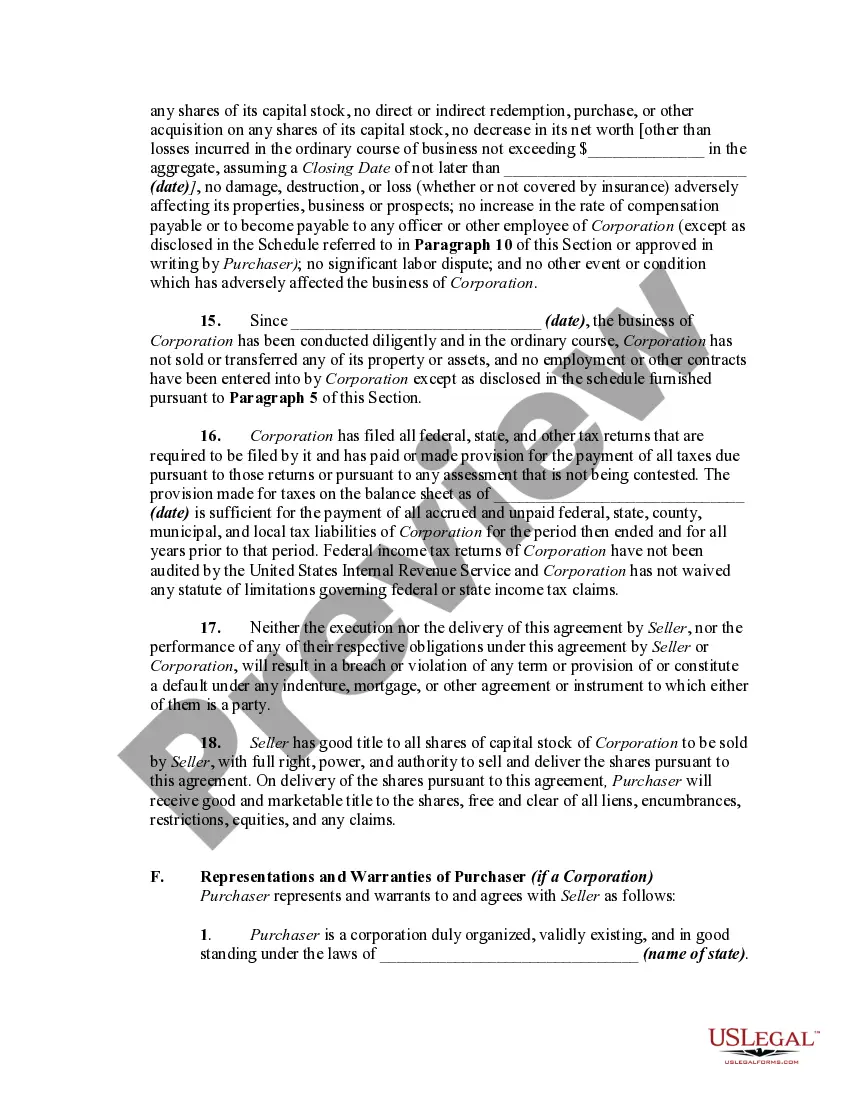
- Warranties and Representations: Lists assurances the seller must guarantee regarding the corporation and its shares.
When to use this document
This form is used when a sole shareholder intends to sell their shares in a corporation and wants to ensure that a prospective buyer has the right to purchase those shares before they are offered to others. It is particularly useful in scenarios where a business's ownership is sensitive, and the shareholder has identified a specific individual or entity as a preferred buyer. This document can also help establish trust and clarity between both parties regarding the sale process.
Who should use this form
- Potential purchasers of a corporation's shares who wish to secure the first option to buy.
- Sole shareholders looking for a transparent and structured process for selling shares.
- Businesses and corporations involved in stock transfers where ownership changes hands.
- Legal representatives assisting clients with corporate share transactions.
Instructions for completing this form
- Identify the parties involved by entering the names and addresses of the Purchaser and Seller.
- Specify the corporation's name and the total number of shares involved in the transaction.
- Outline the terms under which the shares are to be purchased, including pricing details.
- Include conditions for exercising the right of first refusal, such as time frames and notification procedures.
- Provide a location and date for the closing of the sale.
Does this form need to be notarized?
This form does not typically require notarization unless specified by local law. However, it is advisable to have it notarized to ensure validity and for added legal assurance.
Get your form ready online
Our built-in tools help you complete, sign, share, and store your documents in one place.
Make edits, fill in missing information, and update formatting in US Legal Forms—just like you would in MS Word.
Download a copy, print it, send it by email, or mail it via USPS—whatever works best for your next step.
Sign and collect signatures with our SignNow integration. Send to multiple recipients, set reminders, and more. Go Premium to unlock E-Sign.
If this form requires notarization, complete it online through a secure video call—no need to meet a notary in person or wait for an appointment.
We protect your documents and personal data by following strict security and privacy standards.

Make edits, fill in missing information, and update formatting in US Legal Forms—just like you would in MS Word.

Download a copy, print it, send it by email, or mail it via USPS—whatever works best for your next step.

Sign and collect signatures with our SignNow integration. Send to multiple recipients, set reminders, and more. Go Premium to unlock E-Sign.

If this form requires notarization, complete it online through a secure video call—no need to meet a notary in person or wait for an appointment.

We protect your documents and personal data by following strict security and privacy standards.
Mistakes to watch out for
- Failing to clearly define the rights granted, leading to confusion about the purchase terms.
- Not specifying a time frame for exercising the right of first refusal.
- Omitting crucial information about the corporation's financial status and liabilities.
- Allowing ambiguity in the closing terms, which can lead to legal disputes.
Why use this form online
- Easy and quick access to legally vetted documents.
- Editable templates to suit specific needs or circumstances.
- Cost-effective compared to hiring legal help for standard agreements.
- Immediate download for prompt use in business transactions.
Legal use & context
- This form is legally binding once signed by both parties, ensuring that the purchaser has the right to buy shares before they are offered to others.
- Clear representations and warranties protect both parties from potential disputes regarding the ownership and financial status of the corporation.
Main things to remember
- The Right of First Refusal is essential for buyers seeking control over potential shares within a corporation.
- Completing the form accurately safeguards legal interests during share transactions.
- Understanding state requirements is vital for the enforceability of this agreement.
Looking for another form?




Form popularity
FAQ
Co-sale rights give investors the right to join in a transaction when the founders sell their stock to a third-party. Co-sale rights, also called tag-along rights, allow investors to sell their shares on the same terms as the founders.
It is also known as last look provision. A ROFR furnishes non-disposing investors with the privilege to acknowledge or reject a proposal by a selling investor after the selling investor has called for an offer for their shares from an outsider purchaser.
The right of first refusal is usually triggered when a third party offers to buy or lease the property owner's asset. Before the property owner accepts this offer, the property holder (the person with the right of first refusal) must be allowed to buy or lease the asset under the same terms offered by the third party.
A right of first refusal agreement allows a buyer and seller to enter into an arrangement by which the potential buyer is given the first crack at a property when it goes up for sale.
Right of first refusal (ROFR), also known as first right of refusal, is a contractual right to enter into a business transaction with a person or company before anyone else can. If the party with this right declines to enter into a transaction, the obligor is free to entertain other offers.
A right of first refusal, different from a right of first offer, gives the right holder the option to match an offer already received by the seller. A right of first offer is said to favor the seller, while a right of first refusal favors the buyer.
A right of first refusal, different from a right of first offer, gives the right holder the option to match an offer already received by the seller. A right of first offer is said to favor the seller, while a right of first refusal favors the buyer.
What is it? A first right of refusal is used to describe an option given to the tenant to purchase the freehold in priority to anyone else.An alternative clause could be along the lines that the tenant has the option to purchase at a price to be determined by a registered valuer.
The right of first refusal and co-sale (ROFR/Co-sale) work together to prevent a founder or major common shareholder for selling shares without the company and the investors being allowed to purchase the shares or participate in the sale of the shares.