Contract for Construction of a Commercial Building
Overview of this form
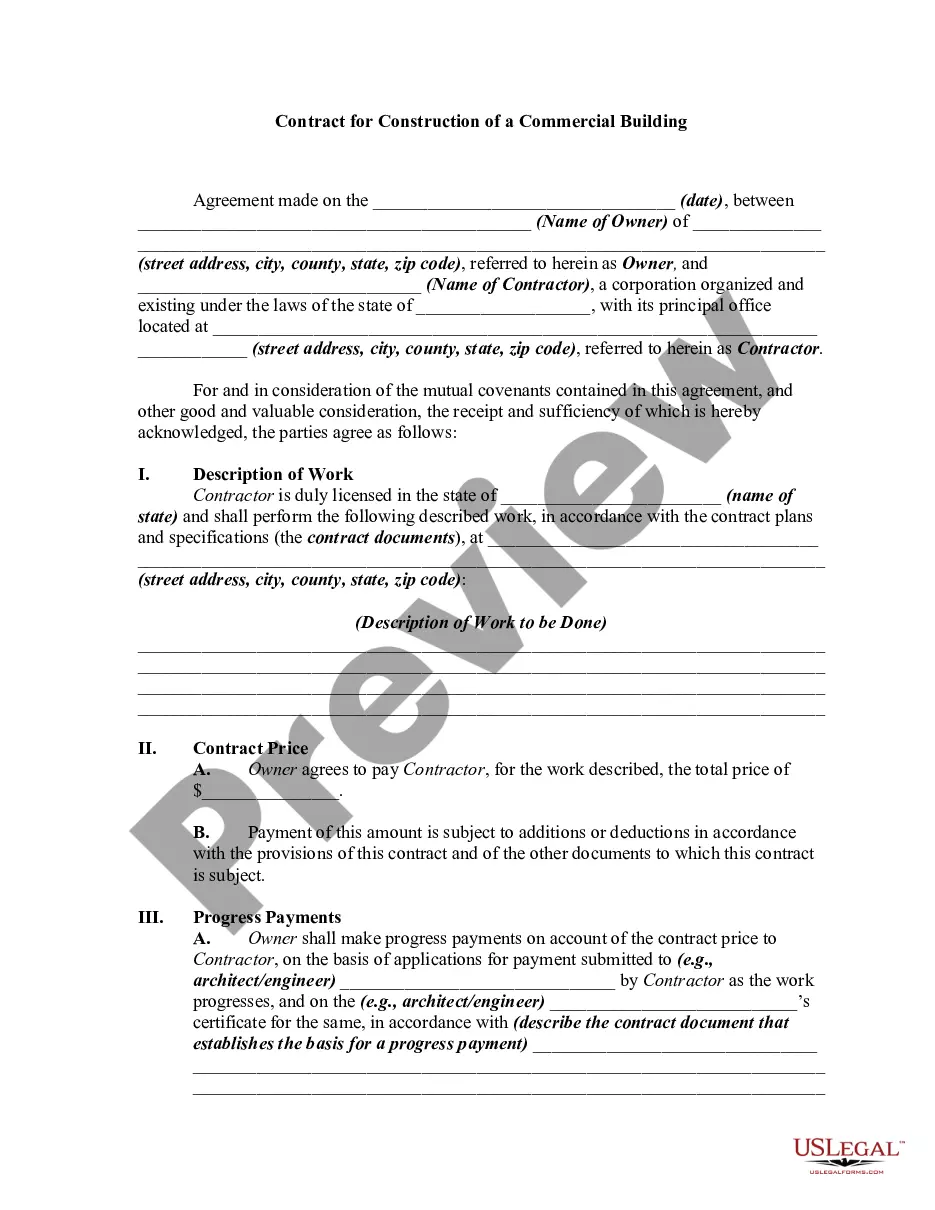
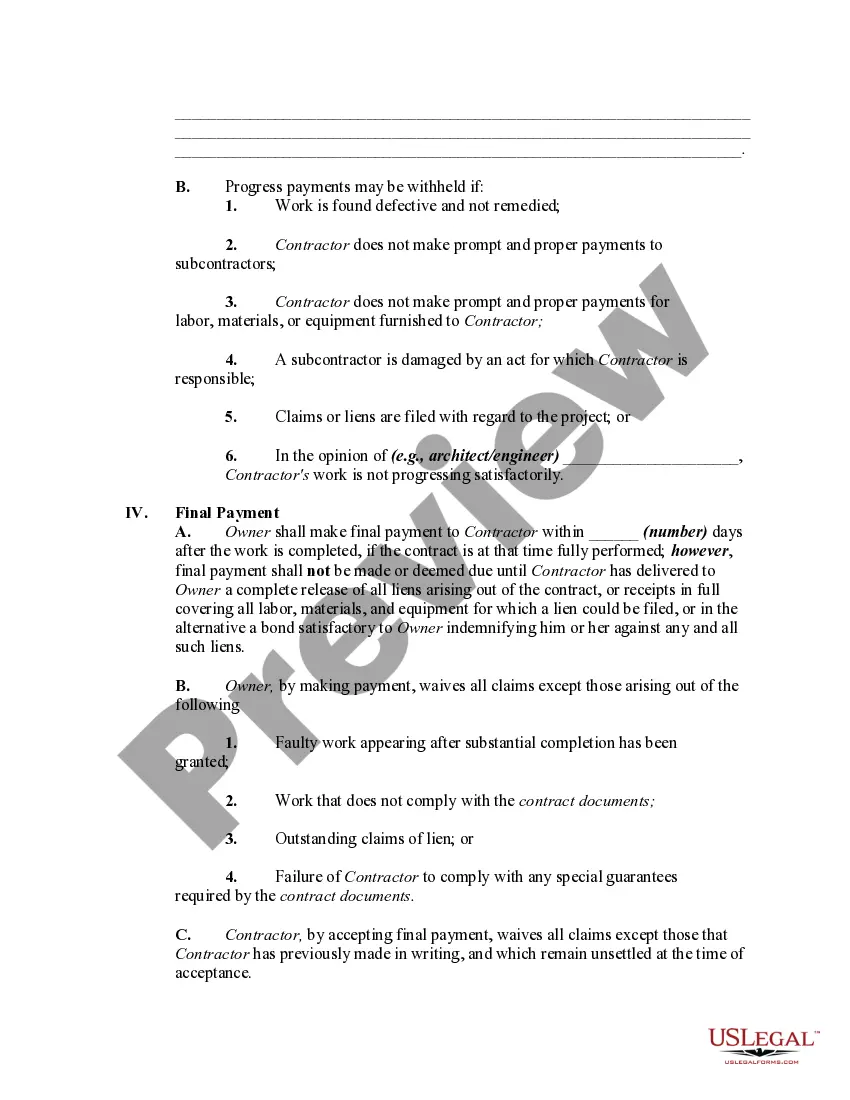
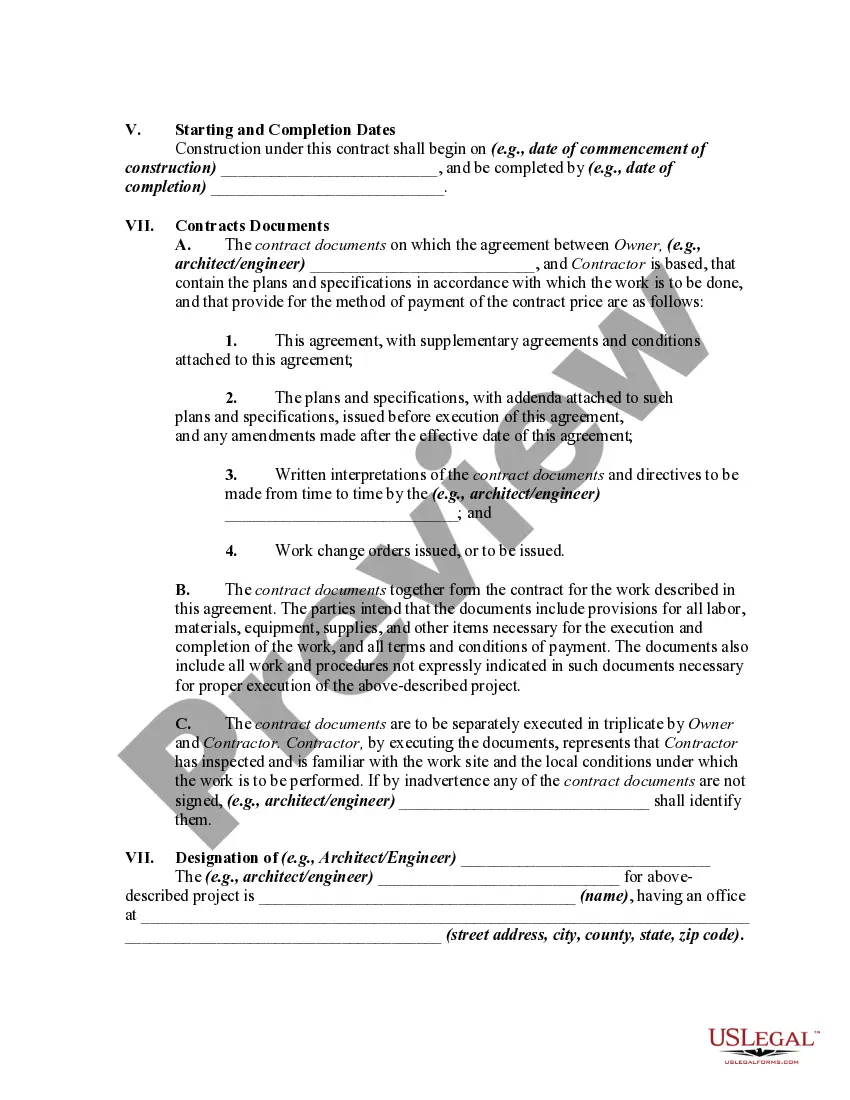
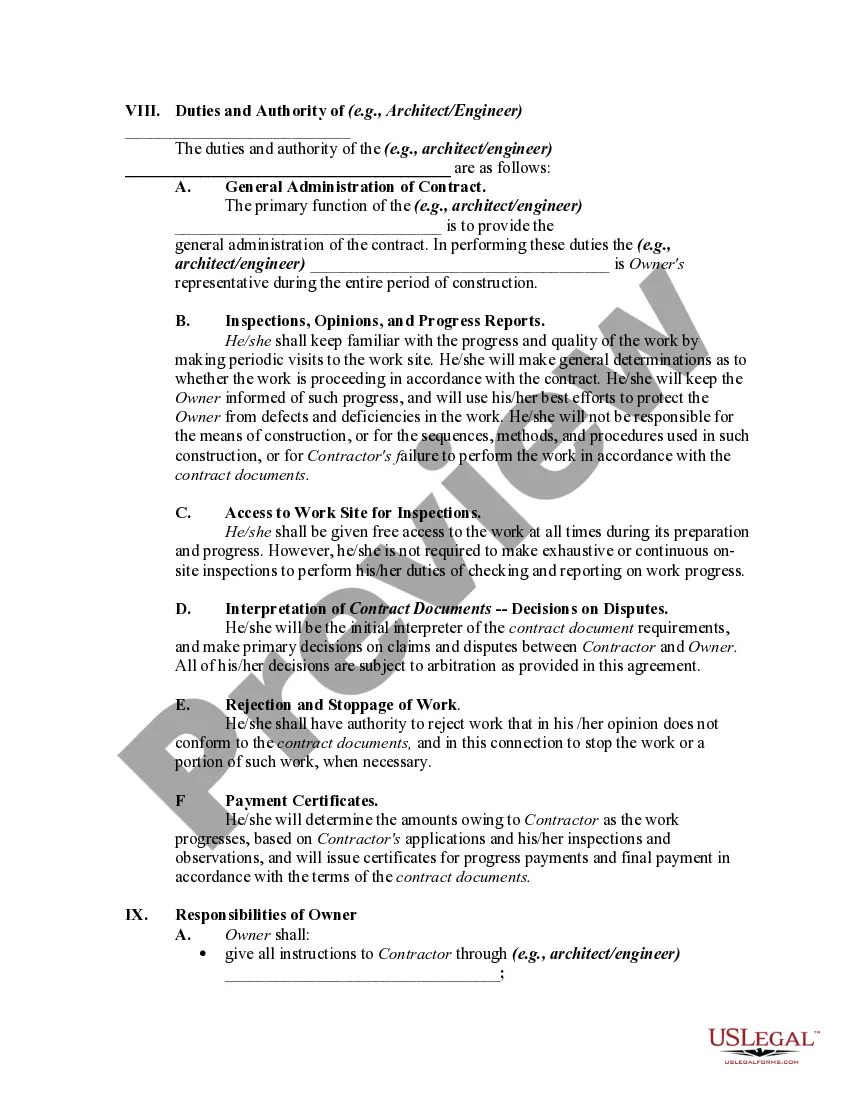
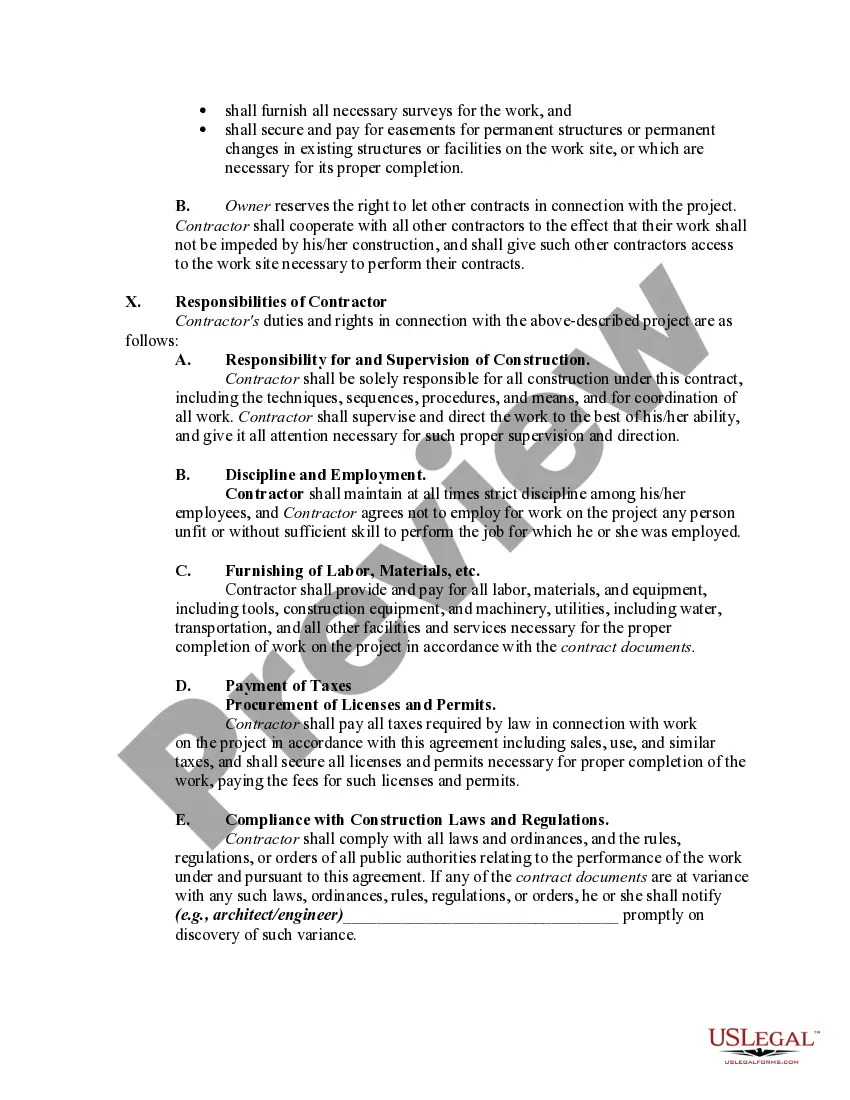
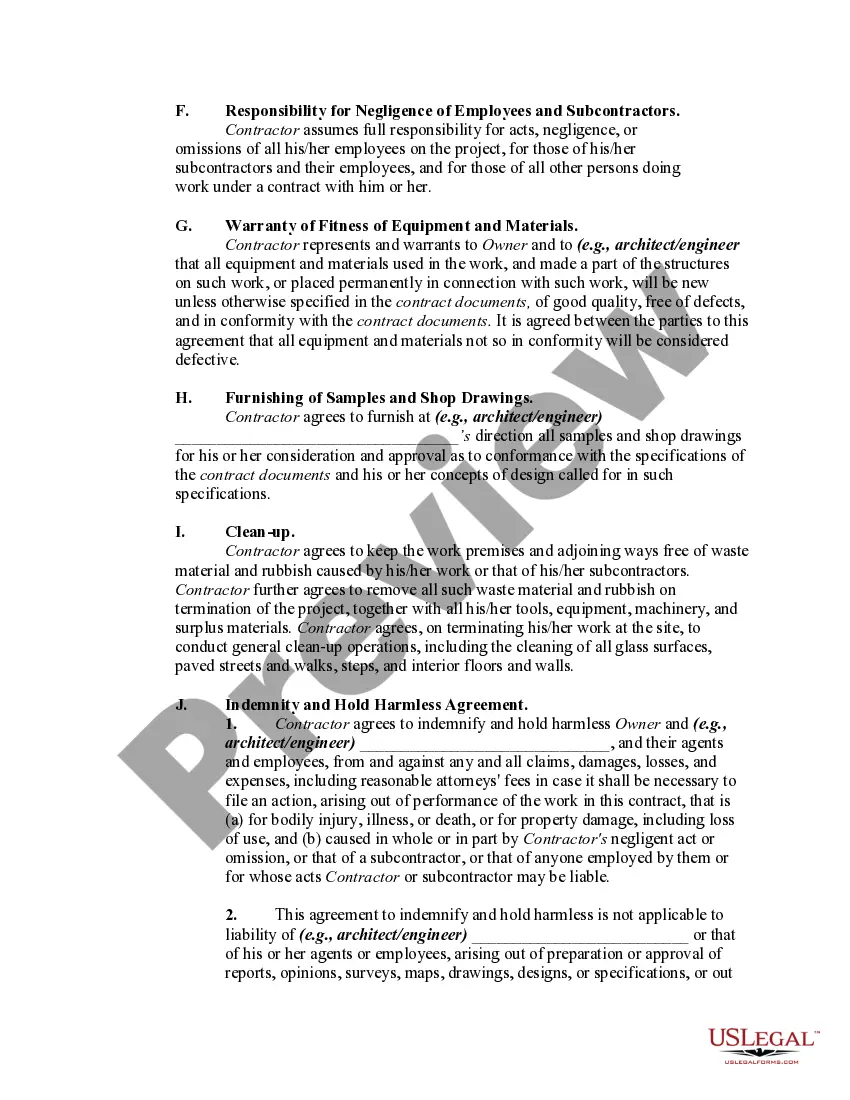
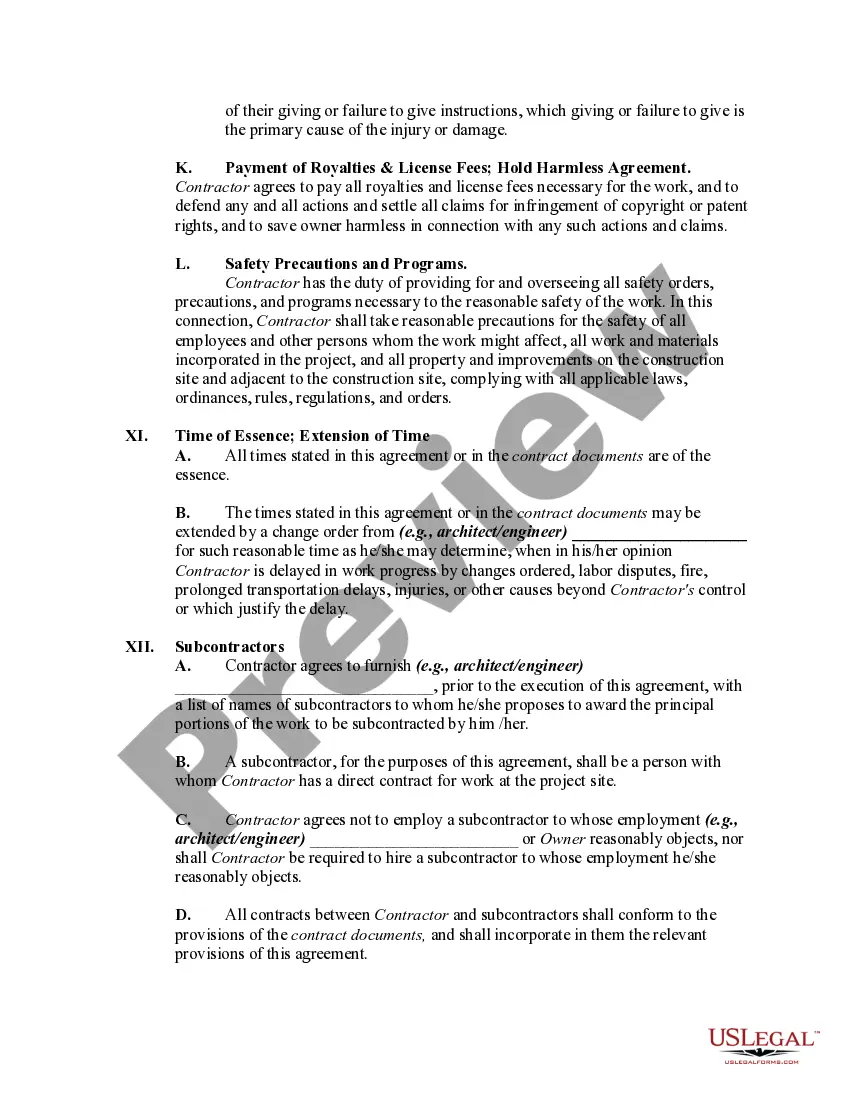
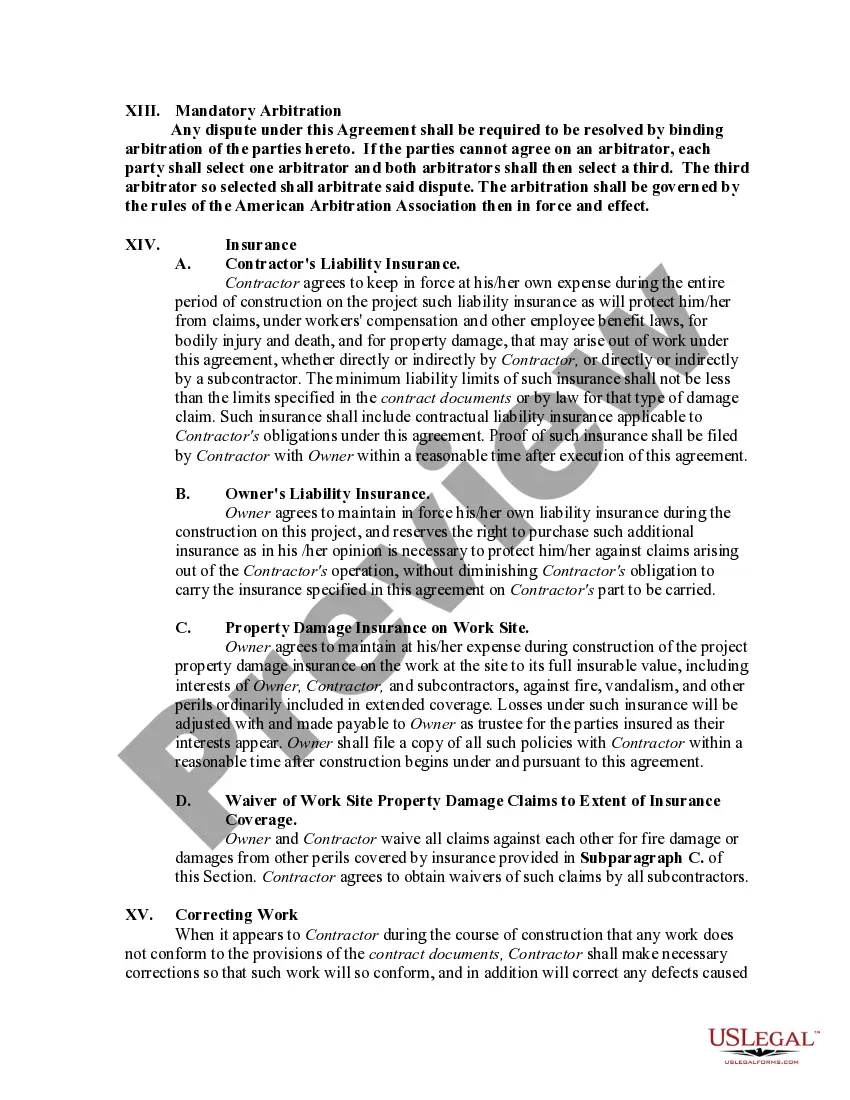
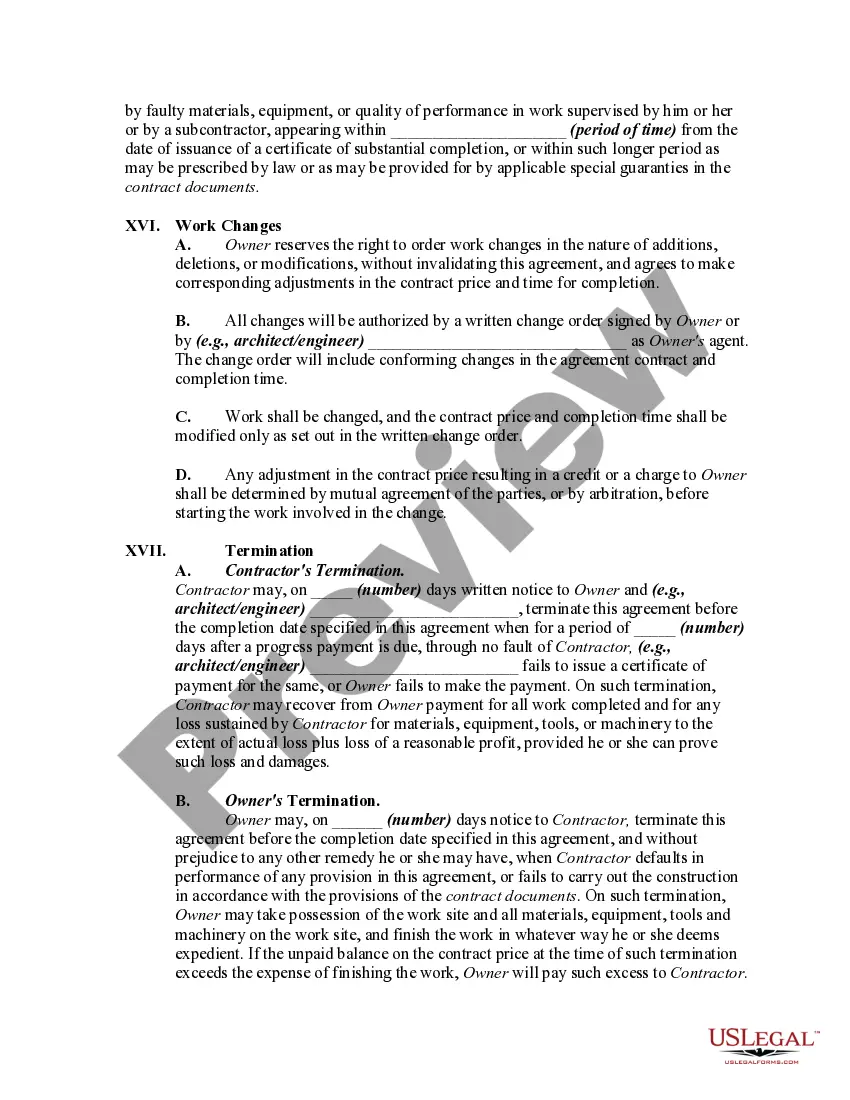
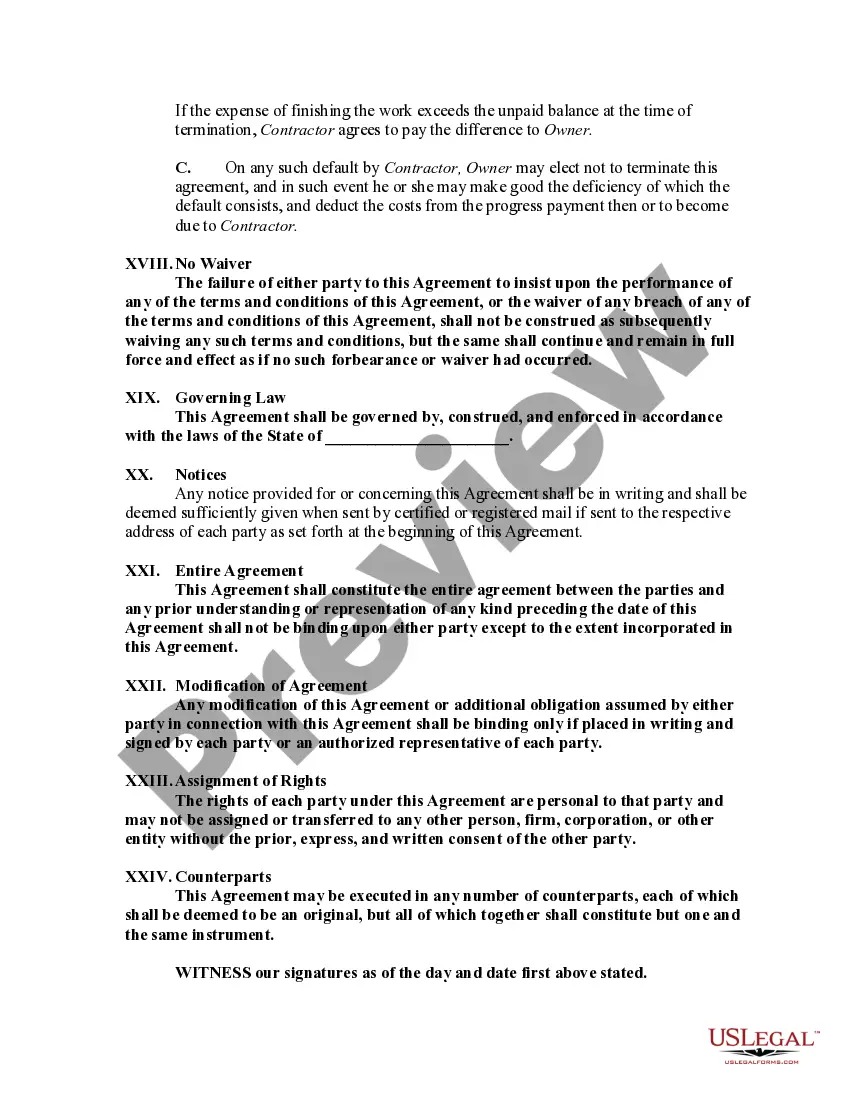
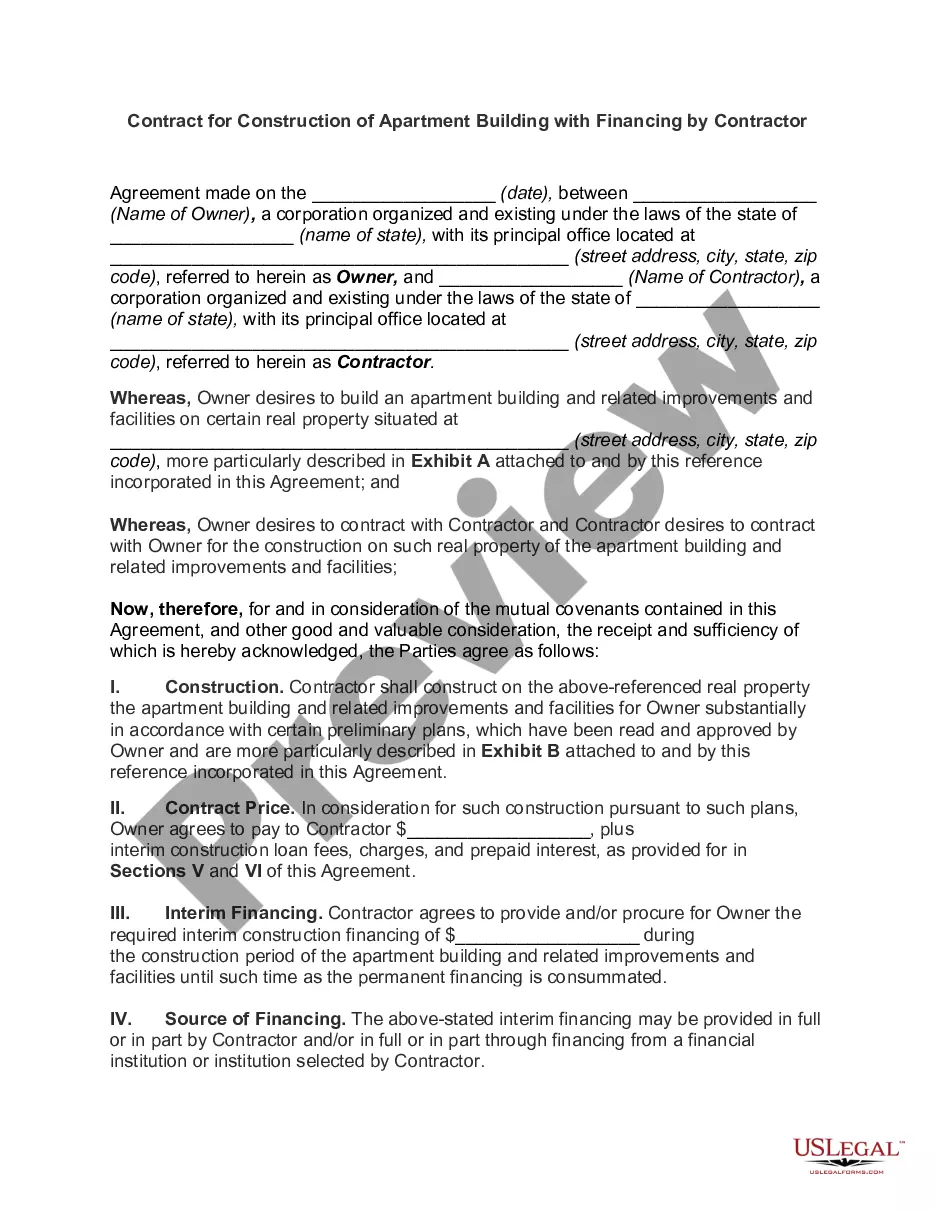
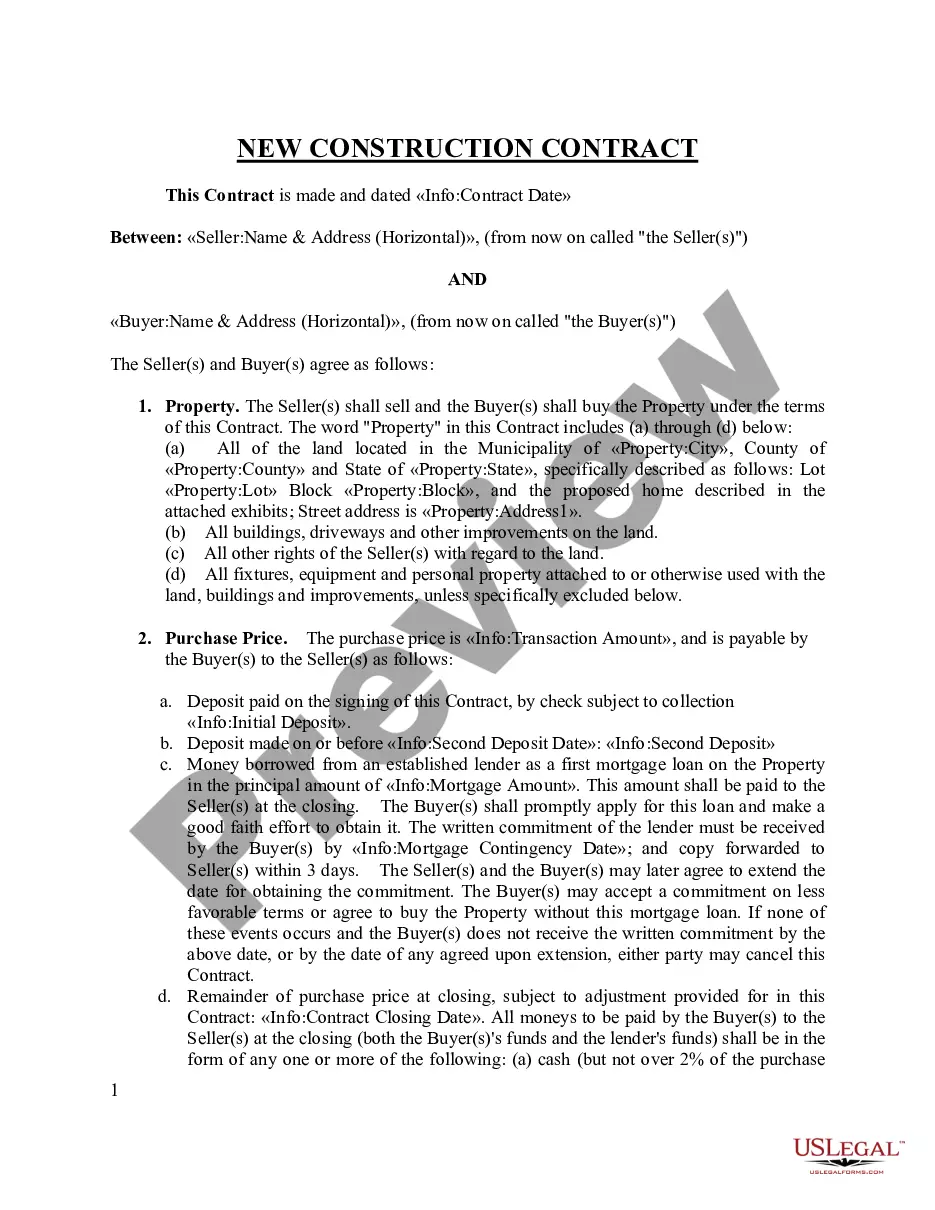
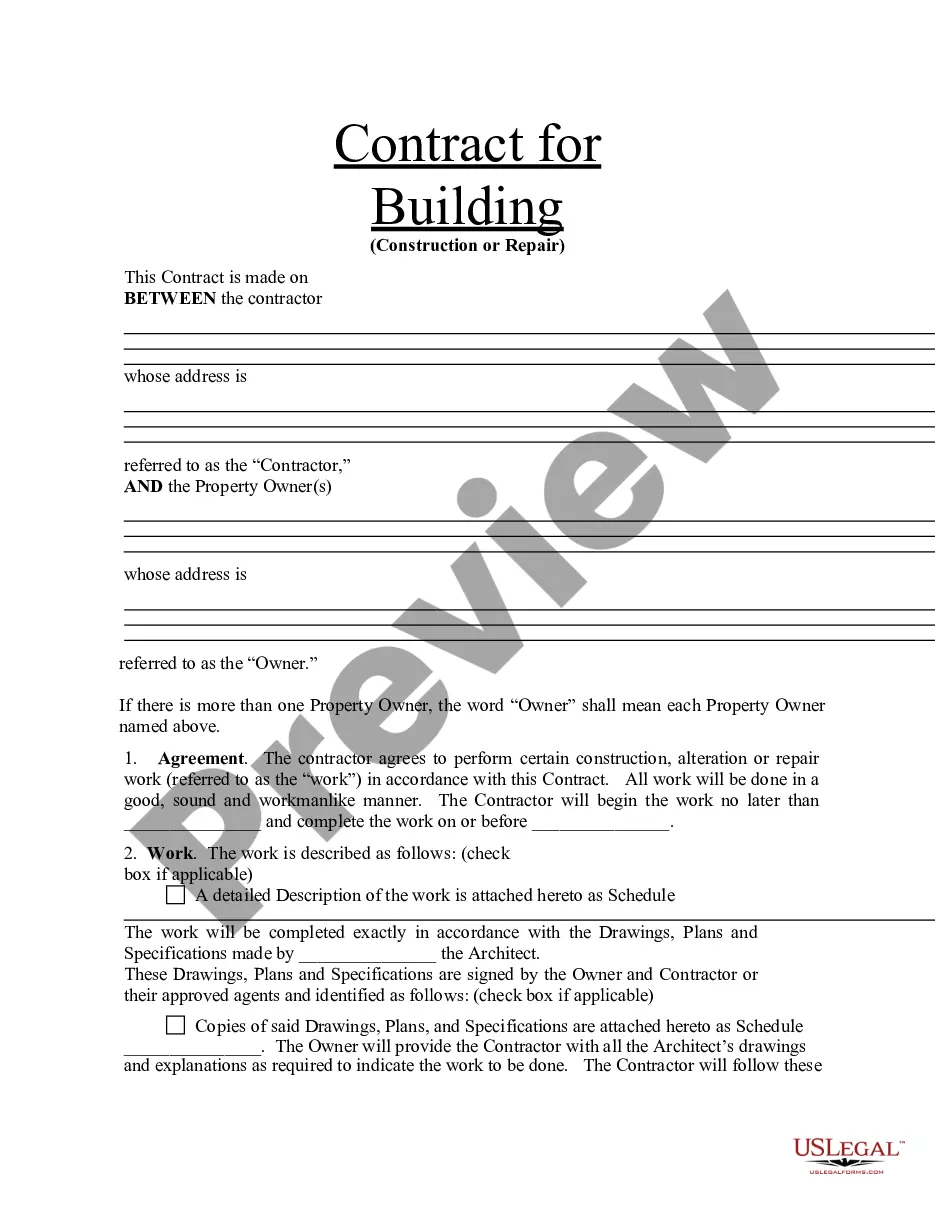
The Contract for Construction of a Commercial Building is a legal agreement that outlines the responsibilities and commitments of both the owner and the contractor for constructing a commercial property. This form specifies the work to be performed, the payment terms, and the conditions under which the contract can be modified or terminated. It is vital for ensuring that all parties are clear on their roles and expectations, which helps prevent disputes and misunderstandings during the construction process.
What’s included in this form
- Description of work to be completed by the contractor.
- Contract price and payment structure, including progress payments.
- Timeline for the start and completion of construction.
- Responsibilities of both the owner and contractor.
- Procedures for making changes to the contract.
- Termination conditions for both parties.


When to use this document
This form should be used when an owner and a contractor enter into an agreement for the construction of a commercial building. Common scenarios include new construction projects, renovations of existing commercial spaces, or when a developer is hiring a contractor for building compliance. It is essential to have this agreement in place to establish clear expectations, manage costs effectively, and safeguard the interests of both parties involved.
Who can use this document
This form is suitable for:
- Property owners looking to commission a commercial construction project.
- Contractors who need a framework to formalize their engagement with an owner.
- Architects and engineers acting as representatives in construction projects.
Instructions for completing this form
- Identify the parties involved in the contract, including the owner and contractor.
- Specify the scope of work, including detailed descriptions of the construction tasks required.
- Detail the contract price and outline payment schedules for progress and final payments.
- Insert the start and completion dates for the project.
- Review both parties' responsibilities and ensure all terms are clearly defined.
Does this document require notarization?
Notarization is generally not required for this form. However, certain states or situations might demand it. You can complete notarization online through US Legal Forms, powered by Notarize, using a verified video call available anytime.
Get your form ready online
Our built-in tools help you complete, sign, share, and store your documents in one place.
Make edits, fill in missing information, and update formatting in US Legal Forms—just like you would in MS Word.
Download a copy, print it, send it by email, or mail it via USPS—whatever works best for your next step.
Sign and collect signatures with our SignNow integration. Send to multiple recipients, set reminders, and more. Go Premium to unlock E-Sign.
If this form requires notarization, complete it online through a secure video call—no need to meet a notary in person or wait for an appointment.
We protect your documents and personal data by following strict security and privacy standards.

Make edits, fill in missing information, and update formatting in US Legal Forms—just like you would in MS Word.

Download a copy, print it, send it by email, or mail it via USPS—whatever works best for your next step.

Sign and collect signatures with our SignNow integration. Send to multiple recipients, set reminders, and more. Go Premium to unlock E-Sign.

If this form requires notarization, complete it online through a secure video call—no need to meet a notary in person or wait for an appointment.

We protect your documents and personal data by following strict security and privacy standards.
Common mistakes to avoid
- Failing to specify detailed descriptions of the work to be done.
- Not clearly outlining payment terms, leading to disputes over finances.
- Omitting timelines for project completion or milestones.
- Neglecting to include clauses for change orders or contract termination.
Benefits of using this form online
- Convenience of instant download and access anytime.
- Editability allows customization to fit specific project details.
- Documents drafted by licensed attorneys ensure legal validity.
Legal use & context
The Contract for Construction of a Commercial Building is enforceable as a legally binding document when appropriately completed and signed by both parties. It serves as a formal agreement that outlines expectations and protects the interests of both the owner and the contractor, provided that all local laws and regulations are followed.
Main things to remember
- A well-defined contract prevents misunderstandings during construction.
- Inclusion of detailed work descriptions and payment terms is crucial.
- Both parties should be aware of their rights and responsibilities.
- Ensure to check local laws for specific construction contract requirements.
Looking for another form?
Form popularity
FAQ
Name of contractor and contact information. Name of homeowner and contact information. Describe property in legal terms. List attachments to the contract. The cost. Failure of homeowner to obtain financing. Description of the work and the completion date. Right to stop the project.
The building contract should contain your tender, building specifications, home owners warranty, your house (building) plans, engineering plans, special conditions and the building contract itself. Without all of these documents you should not enter into your building contract.
Identifying/Contact Information. Title and Description of the Project. Projected Timeline and Completion Date. Cost Estimate and Payment Schedule. Stop Work Clause and Stop Payment Clause. Act of God Clause. Change Order Agreement. Warranty.
Construction contracts do not necessarily have to be in writing.If contracts listed in the statute of frauds are not in writing, they cannot be enforced. Construction contracts sometimes fall within the terms of a state's statute of frauds and therefore must be in writing in some instances.
A contract is formed when one party makes an offer which is unconditionally accepted by the other.A purported acceptance which contains terms different to the offer is not acceptance. This is called a counter offer which may be accepted by the other party or subject to a further counter offer.
#1: Review Your Bid. #2: Review Complete Plans. #3: Review All Specifications. #4: Visit the Job Site. #5: Review the Job Schedule. #6: Complete a Project Checklist. #7: Verify Project Funding. #8: Read Complete Contract.
Identifying/Contact Information. Title and Description of the Project. Projected Timeline and Completion Date. Cost Estimate and Payment Schedule. Stop Work Clause and Stop Payment Clause. Act of God Clause. Change Order Agreement. Warranty.
Contract Drafting Process: Before writing, clarity about what parts the contract must be included and what situations the contract must cover. Parties requirement should be crystalized; Precisely because this is an obvious point, it is often overlooked.