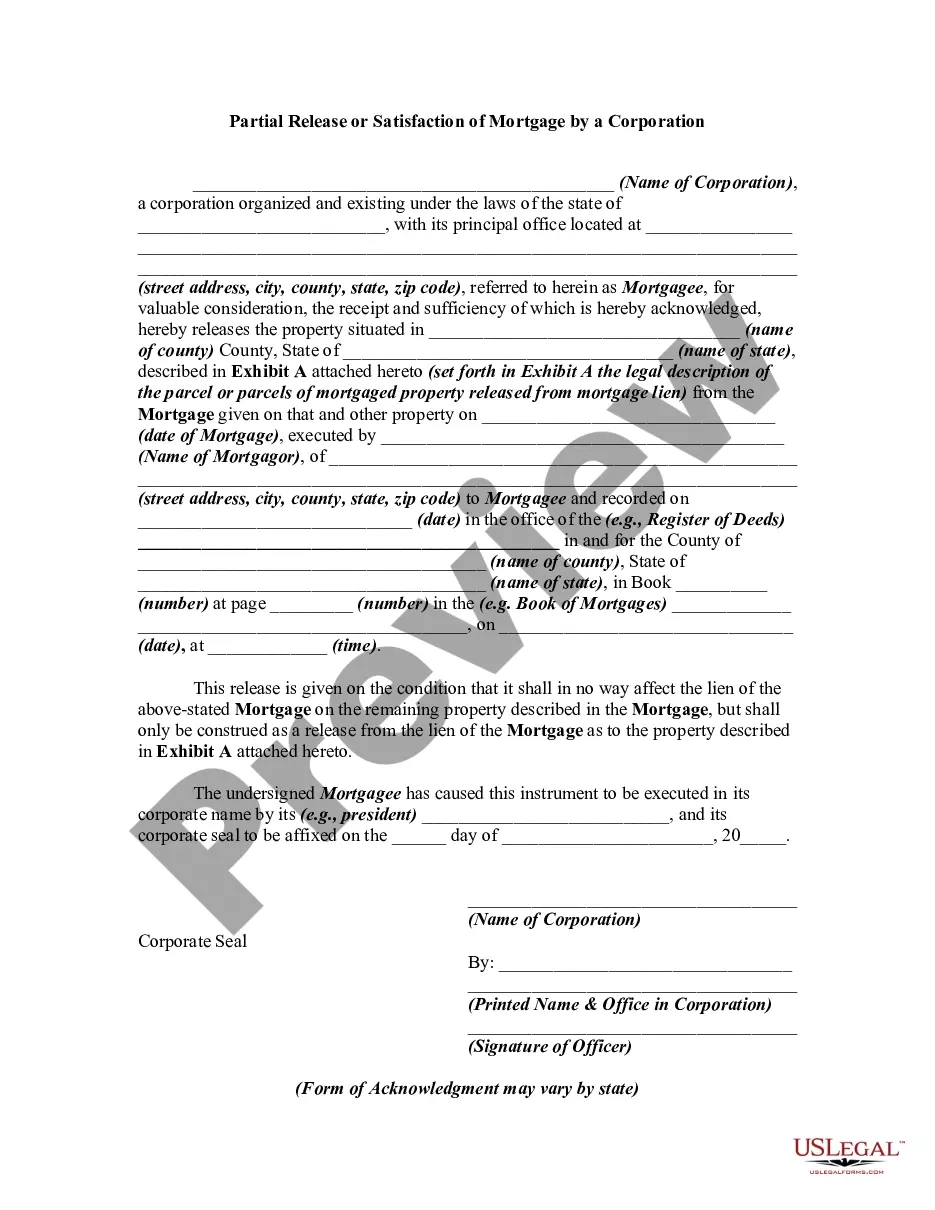
Partial Release or Satisfaction of Mortgage by a Corporation
What is this form?
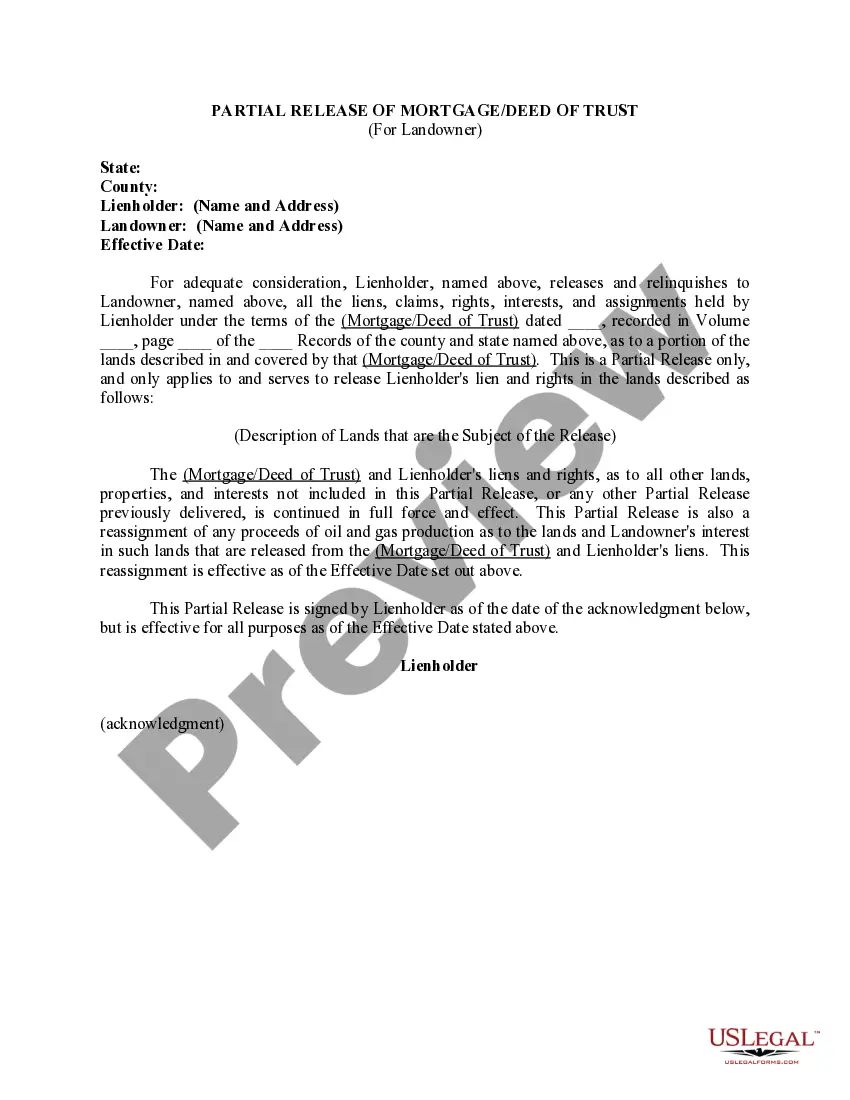
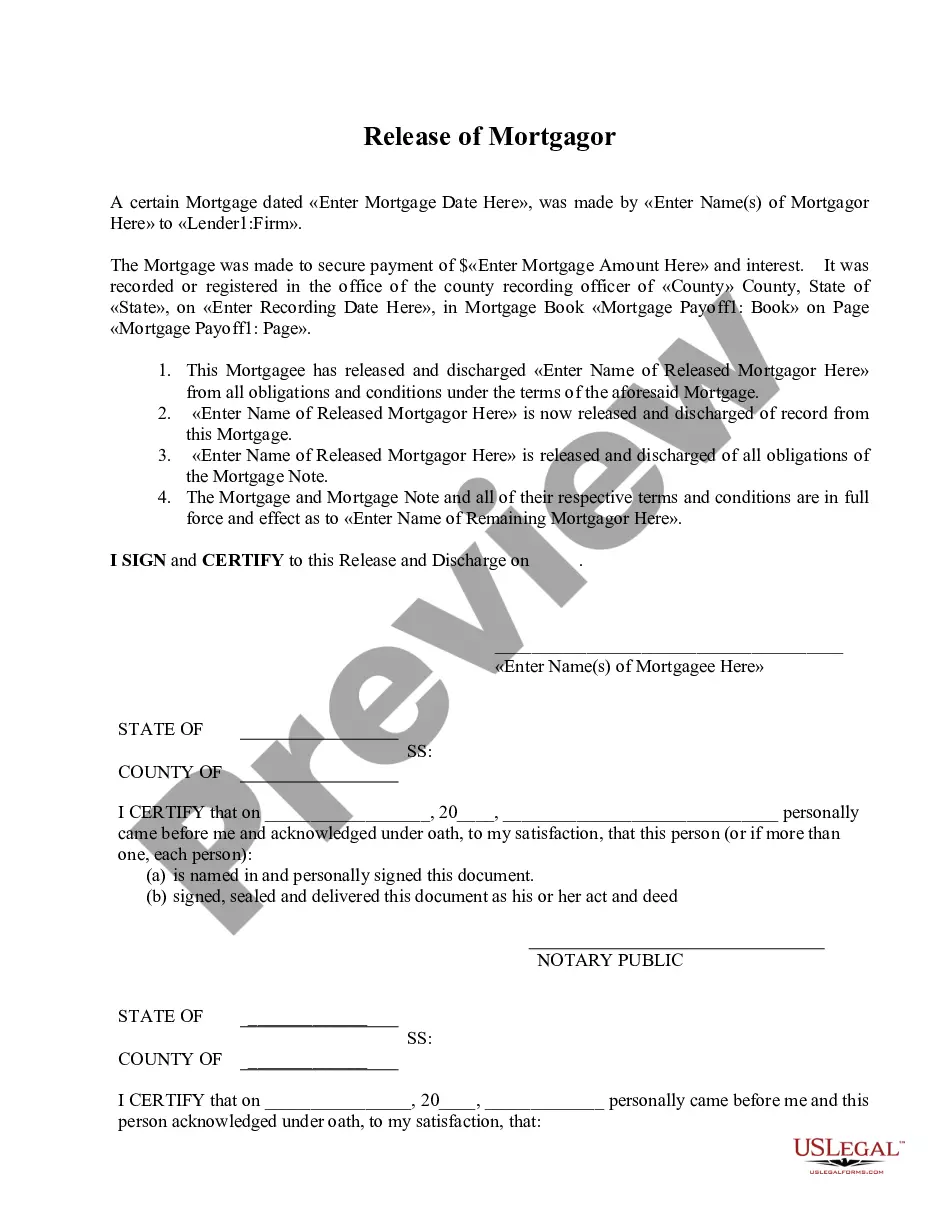
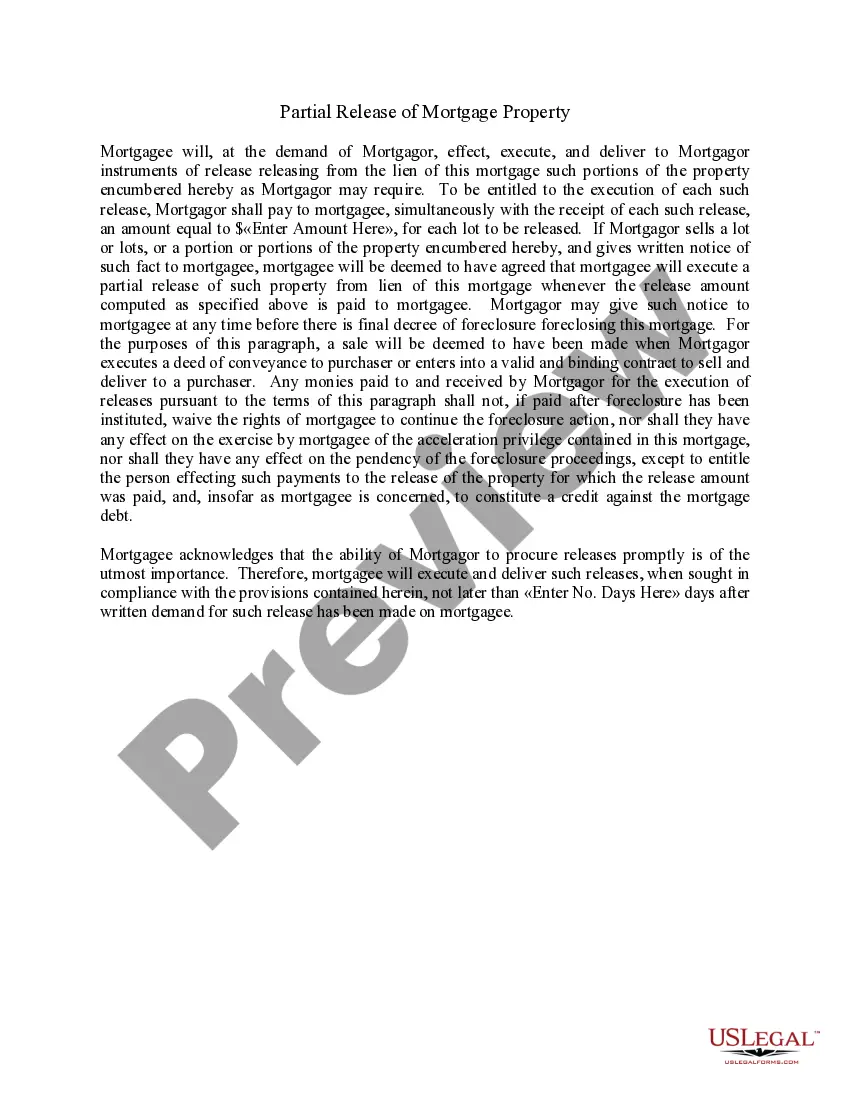
The Partial Release or Satisfaction of Mortgage by a Corporation is a legal document used to release a portion of the property from a mortgage lien. This form is particularly useful when a corporation wishes to free up specific assets without affecting the overall mortgage. Unlike a full satisfaction of mortgage, which discharges the entire obligation, this form allows for a partial discharge of the mortgage on designated property. It is essential for acknowledging the release in the county land records to maintain clear and accurate ownership records.
Form components explained
- Name and details of the corporation (Mortgagee).
- Description of the property being released, as outlined in Exhibit A.
- Date of the mortgage and details of the original transaction.
- Conditions specifying that the release applies only to the property described and does not affect other properties under the same mortgage.
- Signature of an authorized officer of the corporation, along with corporate seal.
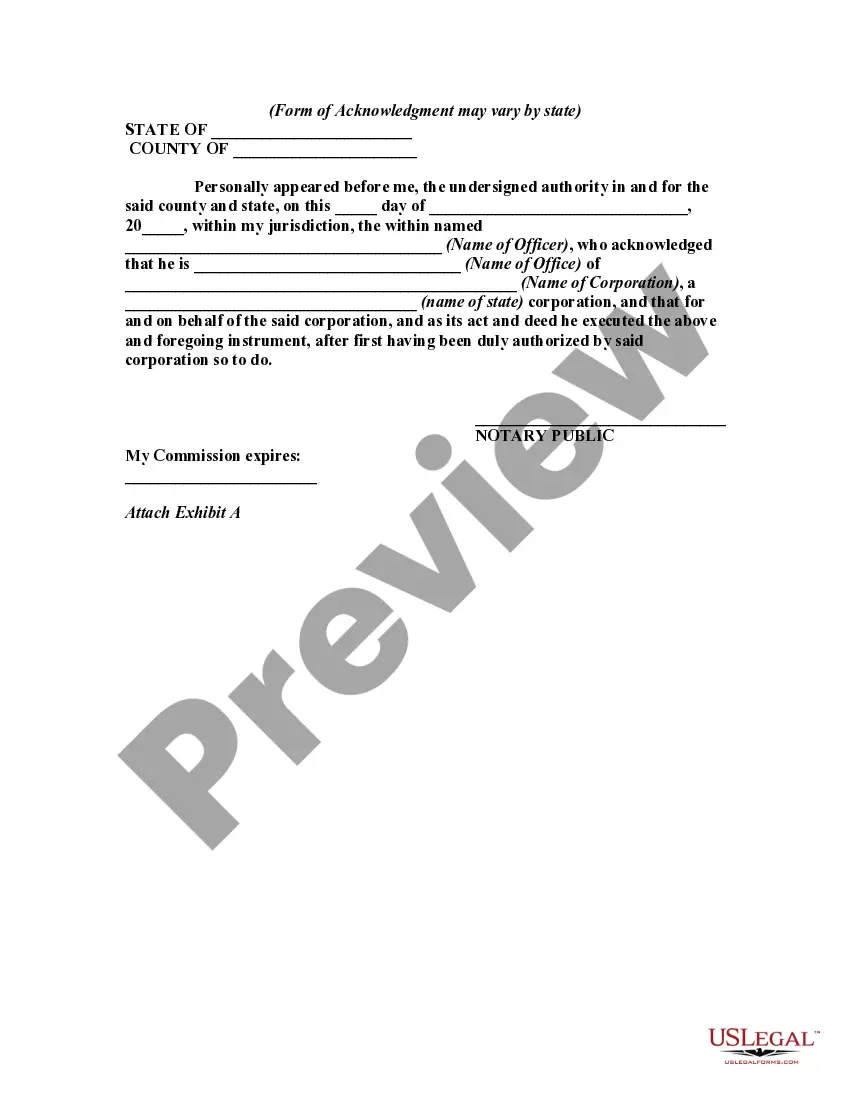
- Notary acknowledgment to verify the legitimacy of the execution.

Common use cases
This form is used when a corporation wants to release a portion of a mortgaged property from its mortgage obligations. It is applicable in situations where the corporation has sold, donated, or otherwise transferred ownership of part of the property but still has a mortgage covering remaining assets. This document ensures that the released portion is officially recognized and recorded in local land records.
Who can use this document
This form is intended for use by:
- Corporations that hold mortgages on properties and wish to partially release collateral.
- Legal representatives of corporations managing property transactions.
- Mortgagees needing to formally acknowledge a partial release of lien for property management.
How to complete this form
- Identify the corporation that holds the mortgage (Mortgagee) and provide its details.
- Specify the property being released from the mortgage obligation in Exhibit A.
- Enter the date of the original mortgage, along with the names of parties involved.
- Ensure the document is signed by an authorized corporate officer and affix the corporate seal.
- Complete the notary section, confirming the identity and authority of the signing officer.
Notarization guidance
Notarization is required for this form to take effect. Our online notarization service, powered by Notarize, lets you verify and sign documents remotely through an encrypted video session, available 24/7.
Get your form ready online
Our built-in tools help you complete, sign, share, and store your documents in one place.
Make edits, fill in missing information, and update formatting in US Legal Forms—just like you would in MS Word.
Download a copy, print it, send it by email, or mail it via USPS—whatever works best for your next step.
Sign and collect signatures with our SignNow integration. Send to multiple recipients, set reminders, and more. Go Premium to unlock E-Sign.
If this form requires notarization, complete it online through a secure video call—no need to meet a notary in person or wait for an appointment.
We protect your documents and personal data by following strict security and privacy standards.

Make edits, fill in missing information, and update formatting in US Legal Forms—just like you would in MS Word.

Download a copy, print it, send it by email, or mail it via USPS—whatever works best for your next step.

Sign and collect signatures with our SignNow integration. Send to multiple recipients, set reminders, and more. Go Premium to unlock E-Sign.

If this form requires notarization, complete it online through a secure video call—no need to meet a notary in person or wait for an appointment.

We protect your documents and personal data by following strict security and privacy standards.
Common mistakes
- Failing to include a complete legal description of the property in Exhibit A.
- Not having the document signed by an authorized officer of the corporation.
- Omitting the corporate seal, which may be required for validity.
- Neglecting to properly notarize the document, if required by state law.
Why complete this form online
- Convenience of downloading the form instantly.
- Ability to customize the document to fit specific corporate needs.
- Access to templates reviewed by licensed attorneys for legal accuracy.
- Time-saving with straightforward, guided filling instructions.
Summary of main points
- The Partial Release or Satisfaction of Mortgage allows for the removal of the mortgage lien on specified property while maintaining liens on others.
- Understanding local legal requirements ensures compliance when filing this form.
- Notarization is required for legal validity, ensuring the document's enforceability.
Looking for another form?
Form popularity
FAQ
Partial Release or Satisfaction of Mortgage by a Corporation is a legal document used to release a portion of real property from a mortgage lien while leaving the remaining property under the mortgage. It is used when a corporation wants to free up specific assets without discharging the entire loan, and the release must be recorded in county land records to reflect the change in ownership encumbrances.
To clarify, a partial release means the mortgage lien is removed from only the property described in Exhibit A, while the mortgage continues to encumber the rest of the collateral. The release creates a clear record that the specified portion is no longer encumbered.
The document identifies the corporation as the mortgagee, describes the released property as shown in Exhibit A, and states the release applies only to that described portion. It references the original mortgage date and terms, requires the authorized officer’s signature and corporate seal, and includes a notary acknowledgment. Once signed, the release must be recorded in the county land records.
A full satisfaction discharges the entire mortgage lien, removing any encumbrance against all described property. By contrast, this form releases only the specific property described in Exhibit A and leaves the remainder of the mortgage in place for other property covered by the same loan.
The released property must be described precisely as indicated in Exhibit A, including its legal description and identifying details so it can be distinguished from other assets encumbered by the same mortgage. This description defines the scope of the partial release and ensures the county records reflect the correct parcel.
Unlike a full release, this form provides a partial discharge tied to the property described in Exhibit A, leaving the rest of the mortgage intact for other assets. It includes specific release terms, requires an authorized officer’s signature and corporate seal, and requires notary acknowledgment for recording in land records.