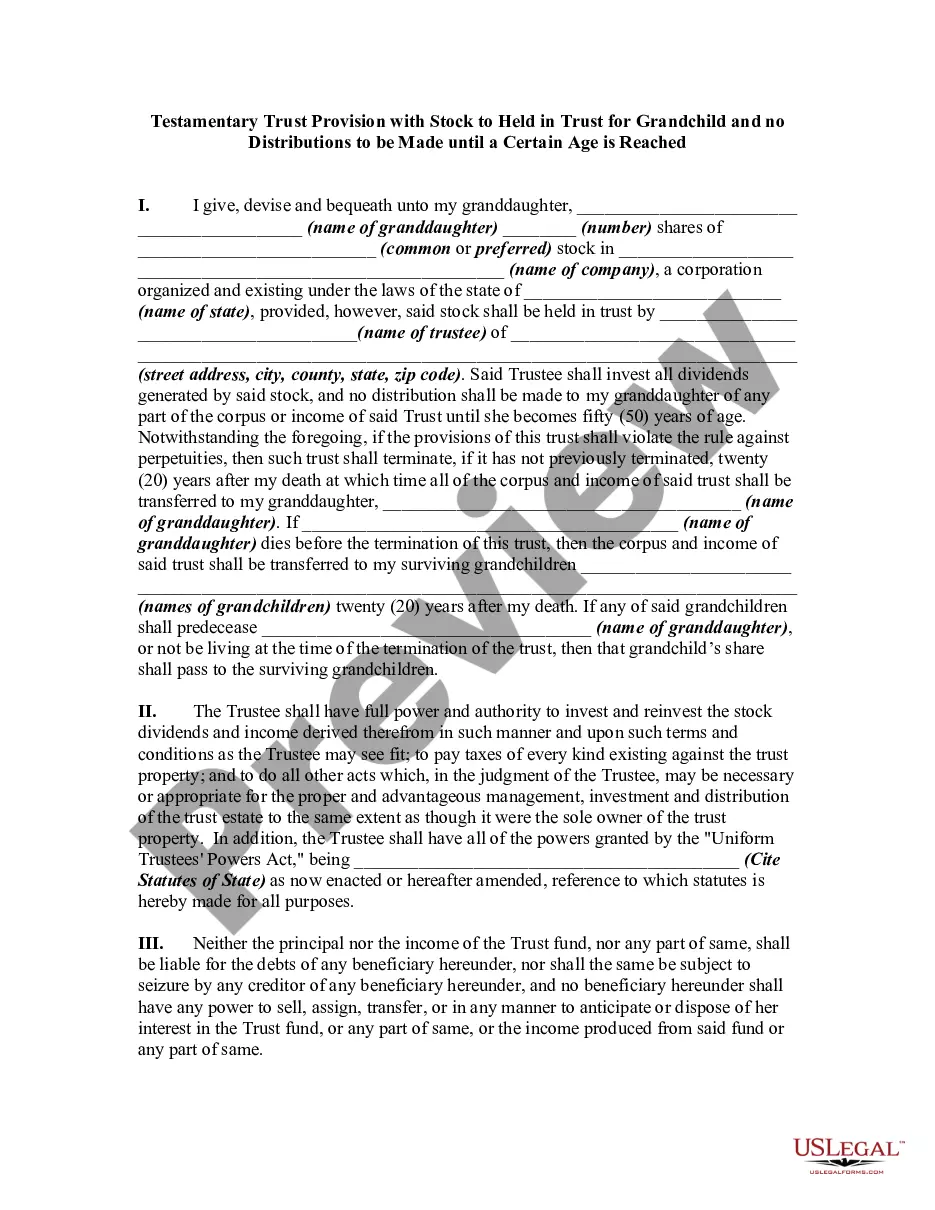
Testamentary Trust Provision with Stock to Held in Trust for Grandchild and no Distributions to be Made until a Certain Age is Reached
What is this form?
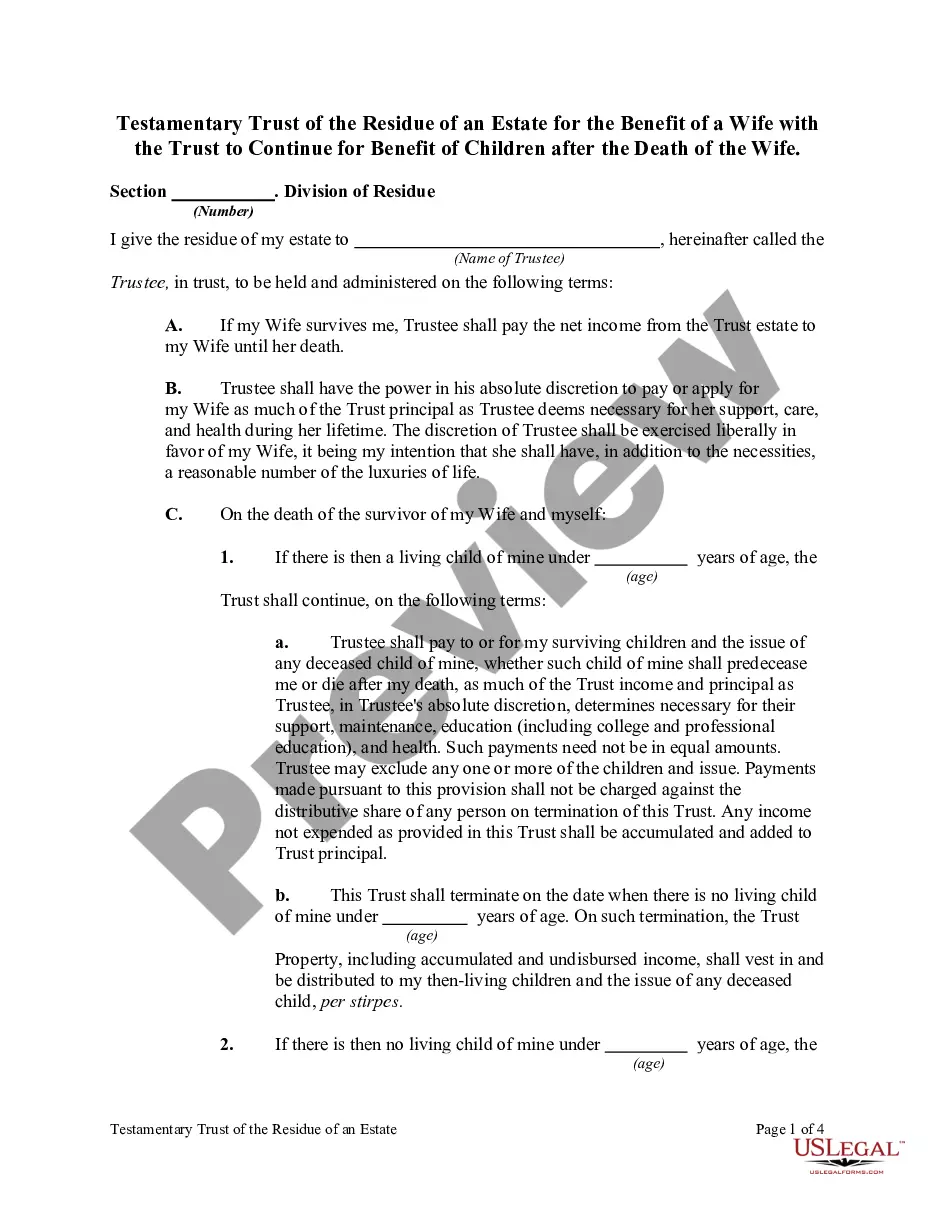
A testamentary trust provision with stock held in trust for a grandchild outlines how certain assets, such as stock, are managed and distributed when the grantor passes away. Unlike standard wills, this form specifically sets conditions for when distributions are made to the beneficiary, ensuring financial support is delayed until the grandchild reaches a certain age. This helps safeguard the beneficiary's inheritance while allowing the trustee to manage the trust's assets responsibly until that age requirement is fulfilled.
Key parts of this document
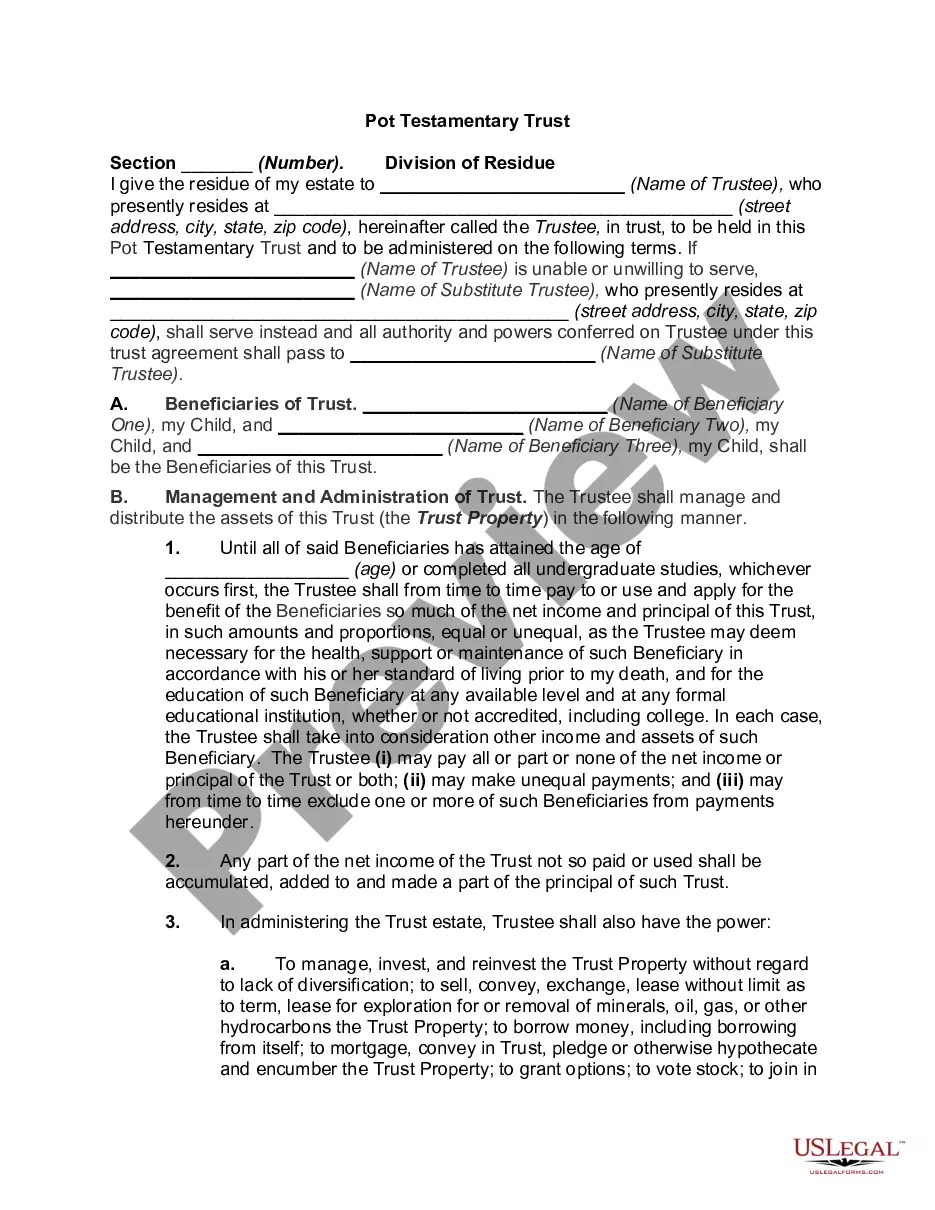
- Identification of the granddaughter as the beneficiary.
- Specification of the stock, including number of shares and company name.
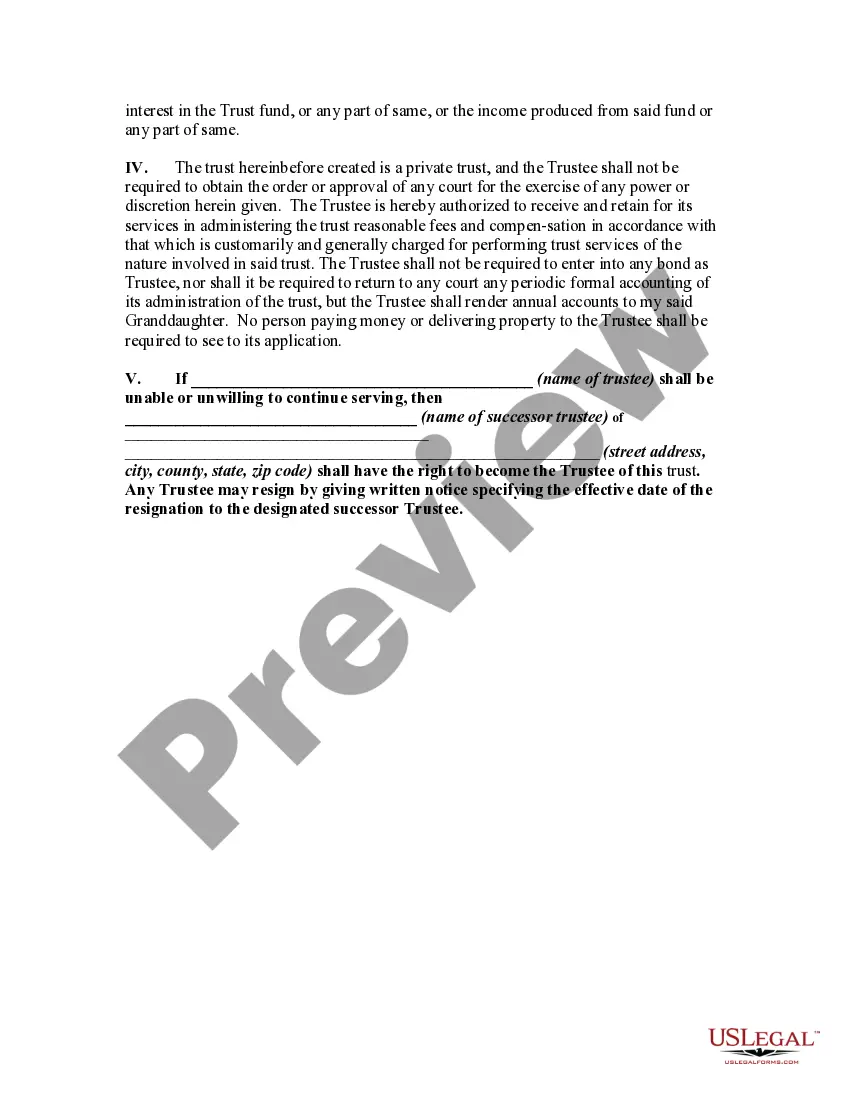
- Designation of the trustee and their address, responsible for managing the trust.
- Provision detailing the age at which the granddaughter can receive distributions.
- Instructions for managing dividends and reinvestment by the trustee.
- Clauses covering the succession of trustees and conditions for incapacity or resignation.
Situations where this form applies
This form is ideal when an individual wishes to establish a trust specifically to manage assets for their grandchild. It is particularly useful when the grantor wants to ensure that the beneficiary does not receive access to significant financial assets until they reach a predetermined age, thus promoting responsible financial management and planning for their future needs.
Intended users of this form
- Grandparents who want to secure their grandchild's financial future.
- Individuals looking to manage distributions from an estate or trust until a specific age is reached.
- Persons wanting to set up a trust without seeking extensive legal counsel, while still adhering to state laws.
How to complete this form
- Identify and enter the name of the granddaughter as the primary beneficiary.
- Specify the number of shares and the type of stock being allocated.
- Designate your chosen trustee and provide their complete address.
- Clearly state the age at which the beneficiary will receive distributions from the trust.
- Include any instructions regarding the powers and responsibilities of the trustee.
Notarization guidance
This form does not typically require notarization to be legally valid. However, some jurisdictions or document types may still require it. US Legal Forms provides secure online notarization powered by Notarize, available 24/7 for added convenience.
Get your form ready online
Our built-in tools help you complete, sign, share, and store your documents in one place.
Make edits, fill in missing information, and update formatting in US Legal Forms—just like you would in MS Word.
Download a copy, print it, send it by email, or mail it via USPS—whatever works best for your next step.
Sign and collect signatures with our SignNow integration. Send to multiple recipients, set reminders, and more. Go Premium to unlock E-Sign.
If this form requires notarization, complete it online through a secure video call—no need to meet a notary in person or wait for an appointment.
We protect your documents and personal data by following strict security and privacy standards.

Make edits, fill in missing information, and update formatting in US Legal Forms—just like you would in MS Word.

Download a copy, print it, send it by email, or mail it via USPS—whatever works best for your next step.

Sign and collect signatures with our SignNow integration. Send to multiple recipients, set reminders, and more. Go Premium to unlock E-Sign.

If this form requires notarization, complete it online through a secure video call—no need to meet a notary in person or wait for an appointment.

We protect your documents and personal data by following strict security and privacy standards.
Mistakes to watch out for
- Failing to specify the exact number of shares and company name for the stock.
- Not clearly defining the age at which distributions will start.
- Omitting the trustee's address or not properly designating a successor trustee.
Why complete this form online
- Convenience of filling out the form from home, at any time.
- Editability allows for easy updates or changes before finalizing.
- Access to templates drafted by licensed attorneys ensures legal compliance.
What to keep in mind
- A testamentary trust allows you to control when your grandchild receives assets from your estate.
- Specify the type and number of shares held in the trust to avoid future disputes.
- Ensure compliance with state laws when completing the form to enhance its validity.
- Consider potential changes to the trustee or beneficiary, and include provisions for those situations.
Looking for another form?



Form popularity
FAQ
A testamentary trust does not take effect until the settlor dies. To create a testamentary trust, the settlor first must select the trustee and the beneficiary and specify the assets that are to be placed in trust. The settlor also has the ability to specify when and how to disburse the trust to the beneficiary.
The Trusts can also provide tax benefits, in particular to beneficiaries who are minors. However, before setting up a Testamentary Trust, the cost of the Trust should be considered. Firstly, to draft a Testamentary Trust, the legal fees would be anywhere between $2,000.00 to $5,000.00 or above per Will.
Testamentary Trusts are taxed as a whole, though beneficiaries will not be forced to pay taxes on distributions from the Trust. Note that you could be responsible for the capital gains tax, depending on your state.
The Trusts can also provide tax benefits, in particular to beneficiaries who are minors. However, before setting up a Testamentary Trust, the cost of the Trust should be considered. Firstly, to draft a Testamentary Trust, the legal fees would be anywhere between $2,000.00 to $5,000.00 or above per Will.
The adult pays the top marginal tax rate on their non-inheritance income. the beneficiaries of the testamentary trust include three. the low income rebate applies to the distributions to minors and.
A living trust (sometimes called an inter vivos trust) is one created by the grantor during his or her lifetime, while a testamentary trust is a trust created by the grantor's will.In a testamentary trust, property must pass into the trust by way of the will and, thus, must go through the probate court process.
While the primary purpose of most living trusts is to avoid probate, testamentary trusts, unlike living trusts, do not avoid probate. A will must go through probate before the testamentary trust is created. The executor will probate the will and create the trust in the process.