Motion of Plaintiff Requesting Court to Reconsider an Order and Reimburse Attorney's Fees and Medical Costs - Notice of Motion to Defendant
Overview of this form
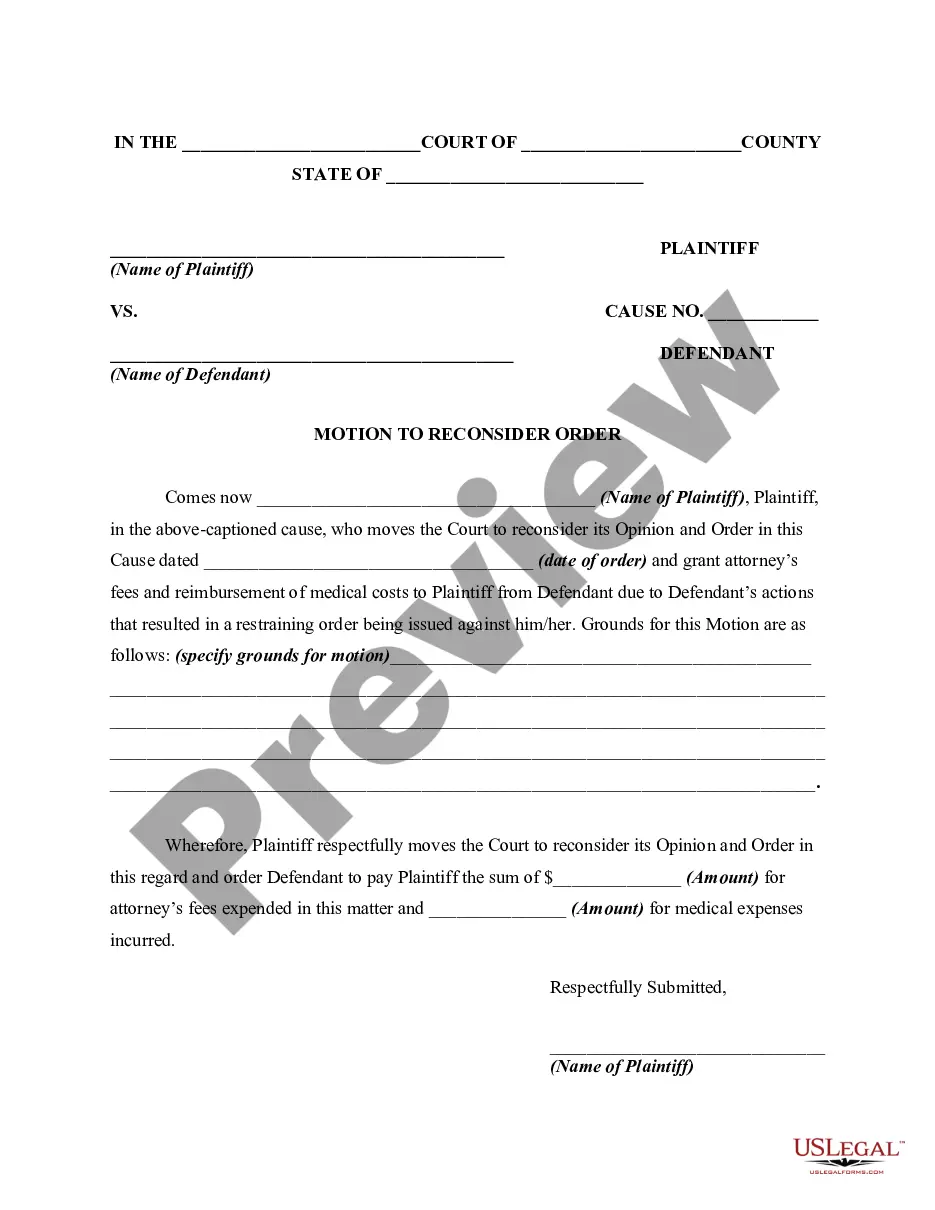
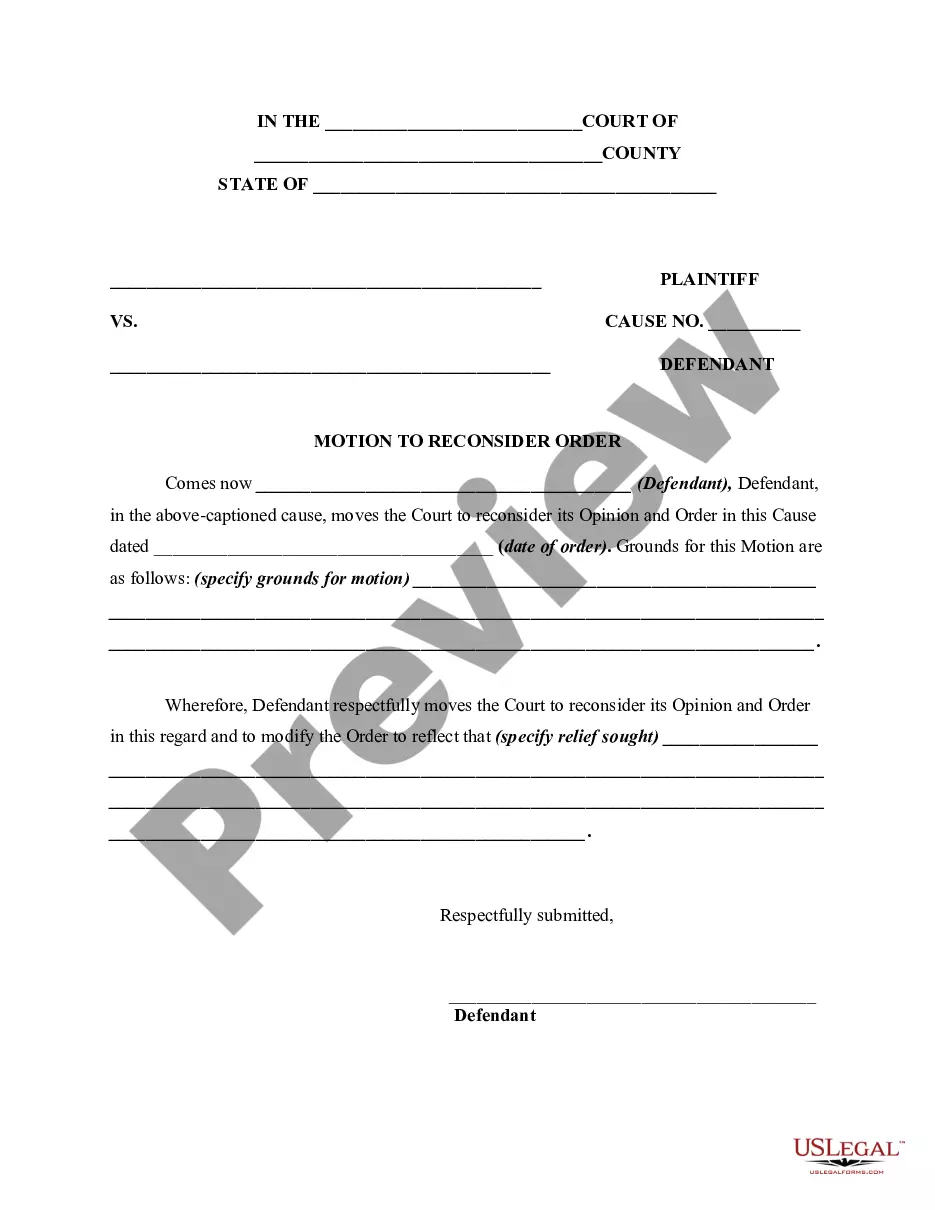
This Motion of Plaintiff Requesting Court to Reconsider an Order and Reimburse Attorney's Fees and Medical Costs is a legal document used to ask a court to revisit a previous order. It typically aims to secure compensation for attorney's fees and medical expenses incurred due to the defendant's actions. This motion is distinct from standard appeal processes as it directly addresses specific orders rather than the overall case outcome. It offers an opportunity for the plaintiff to seek financial relief based on newly presented arguments or evidence related to the original ruling.
Form components explained
- Case information: Includes the names and case number of the plaintiff and defendant.
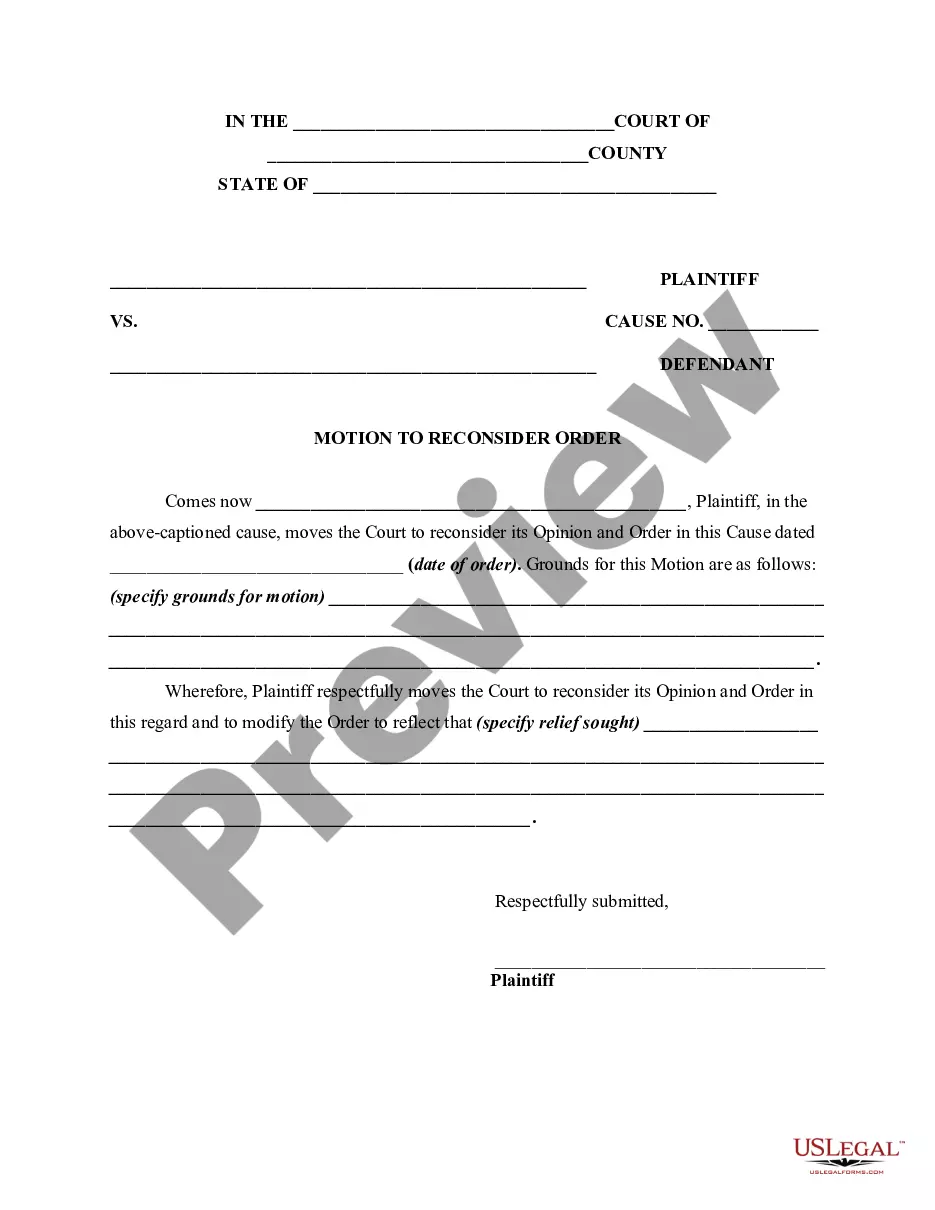
- Motion details: A section where the plaintiff states the request for the court to reconsider its prior order.
- Grounds for motion: A space to explain the reasons supporting the request for reconsideration.
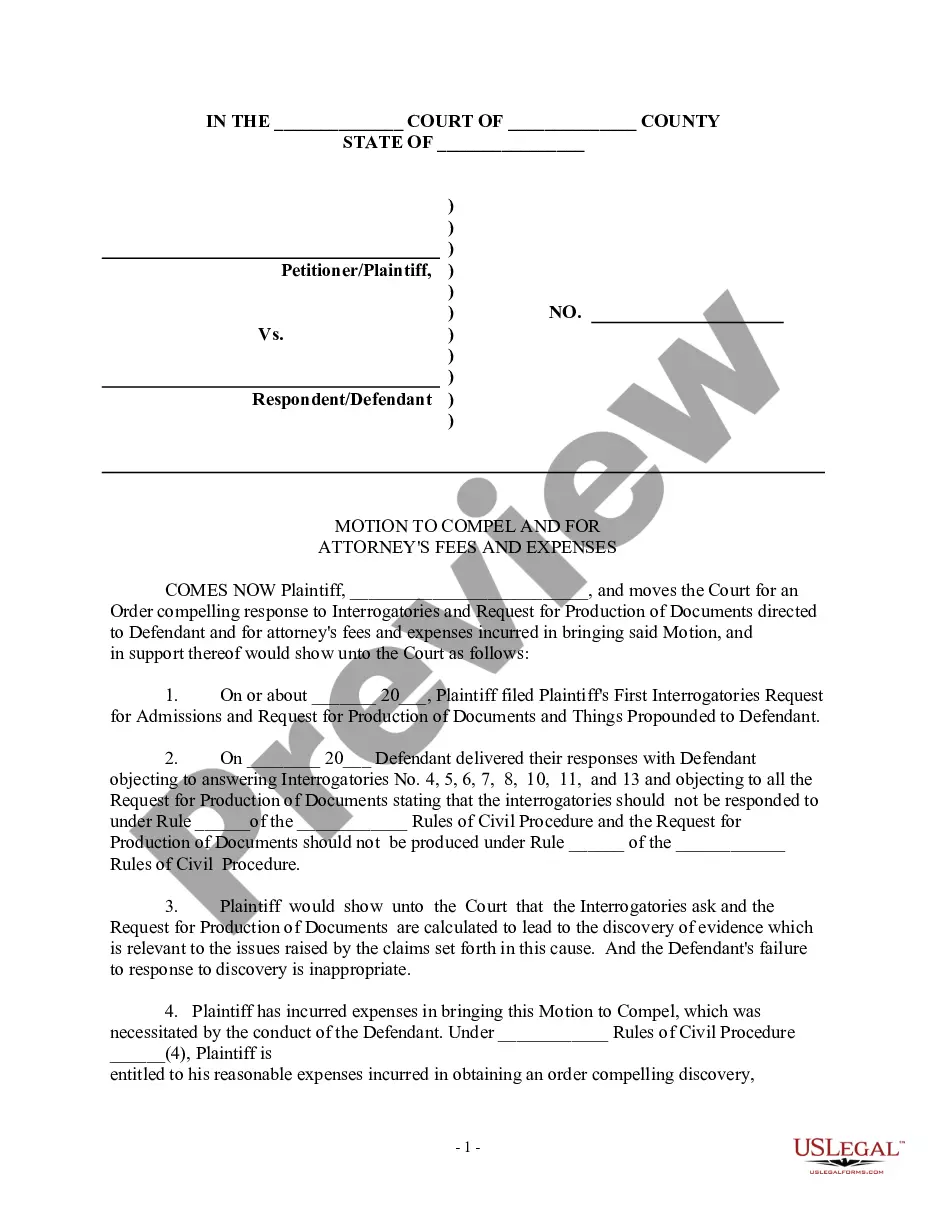
- Requested amounts: Fields for the plaintiff to specify the attorney's fees and medical expenses being claimed.
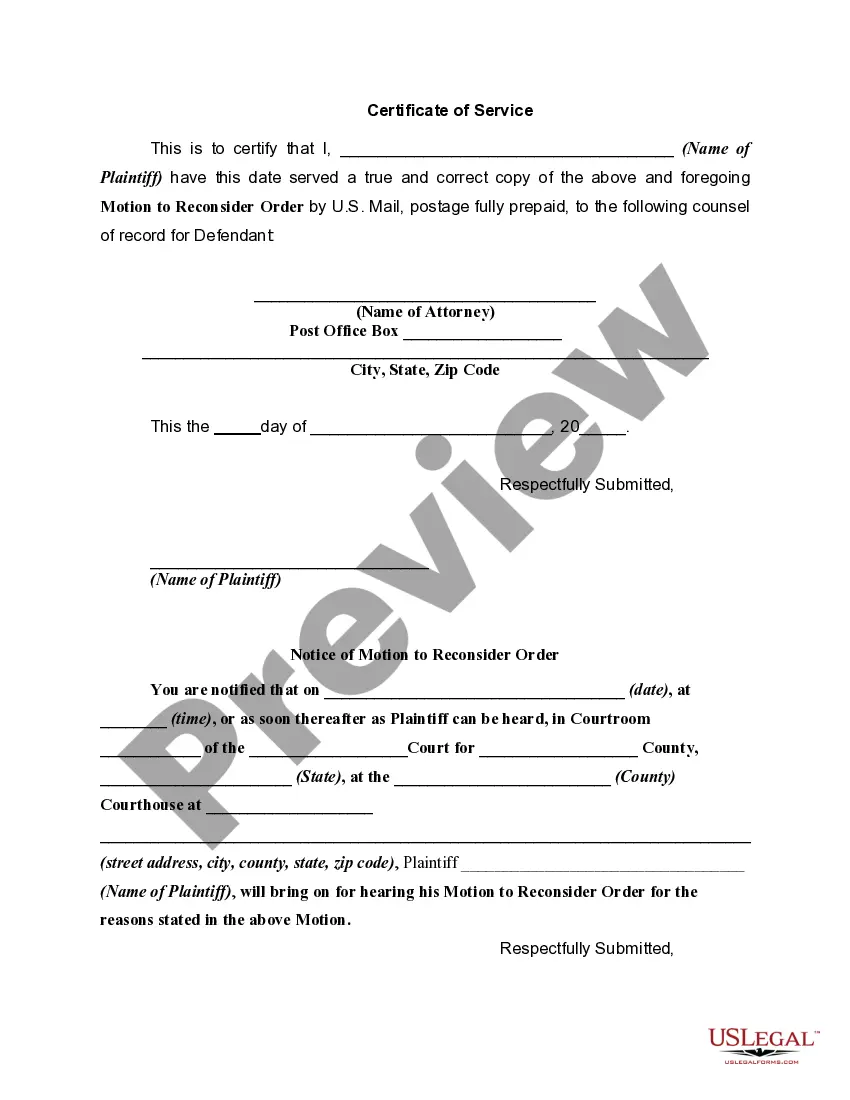
- Certificate of service: A declaration confirming that a copy of the motion has been sent to the defendant's attorney.
- Notice of motion: Notices the defendant of the time and place where the motion will be heard.


When to use this form
Who this form is for
- Individuals who have been awarded a court order but believe it should be modified due to new information.
- Plaintiffs seeking to recover attorney's fees and medical costs associated with the case.
- Parties involved in legal actions where the defendant's actions necessitated the original court order.
- Those requiring a formal request for a court to consider additional arguments before finalizing a decision.
Steps to complete this form
- Identify the parties: Fill in the names of both the plaintiff and the defendant, along with the case number.
- State the motion: Clearly articulate the request for the court to reconsider its previous order.
- Specify grounds for reconsideration: Provide detailed reasons justifying the need for the reconsideration.
- Enter the amounts: Indicate the attorney's fees and medical costs you are asking the court to reimburse.
- Complete the certificate of service: Confirm that you have provided a copy of the motion to the defendant's attorney.
- Prepare the notice: Indicate the date, time, and location for the motion hearing.
Notarization guidance
This form usually doesn’t need to be notarized. However, local laws or specific transactions may require it. Our online notarization service, powered by Notarize, lets you complete it remotely through a secure video session, available 24/7.
Get your form ready online
Our built-in tools help you complete, sign, share, and store your documents in one place.
Make edits, fill in missing information, and update formatting in US Legal Forms—just like you would in MS Word.
Download a copy, print it, send it by email, or mail it via USPS—whatever works best for your next step.
Sign and collect signatures with our SignNow integration. Send to multiple recipients, set reminders, and more. Go Premium to unlock E-Sign.
If this form requires notarization, complete it online through a secure video call—no need to meet a notary in person or wait for an appointment.
We protect your documents and personal data by following strict security and privacy standards.

Make edits, fill in missing information, and update formatting in US Legal Forms—just like you would in MS Word.

Download a copy, print it, send it by email, or mail it via USPS—whatever works best for your next step.

Sign and collect signatures with our SignNow integration. Send to multiple recipients, set reminders, and more. Go Premium to unlock E-Sign.

If this form requires notarization, complete it online through a secure video call—no need to meet a notary in person or wait for an appointment.

We protect your documents and personal data by following strict security and privacy standards.
Typical mistakes to avoid
- Failing to clearly state the grounds for reconsideration, which may lead to rejection of the motion.
- Omitting relevant dates or amounts related to expenses, clouding the request for reimbursement.
- Not serving the motion correctly to the defendant's attorney, risking procedural issues.
- Using vague language that does not adequately support the motion's purpose.
- Failing to check local court rules for specific requirements related to the motion.
Why complete this form online
- Convenience: Easily downloadable at any time, allowing for quick access.
- Editability: Customize the form to meet specific case requirements before finalizing.
- Reliability: Templates are created by licensed attorneys, ensuring legal soundness.
- Time-saving: Streamlined process for completing and filing necessary documents.
- Guidance: Provides a clear framework for what must be included in the motion.
Key takeaways
- The Motion of Plaintiff Requesting Court to Reconsider is a critical legal tool for seeking judicial review and financial reimbursement.
- Completing this form accurately is essential to ensure consideration by the court.
- Check your state's specific requirements to ensure compliance when filing the motion.
Looking for another form?










Form popularity
FAQ
The motion must include a separate "Notice of Motion" which includes a brief summary of the nature of the motion, the deadline for filing a response, and if there is a hearing, the date, time, and location of the hearing.
Each court has different rules about how long you have to respond to this motion, but usually you will have at least two or three weeks to file an opposition to the defendant's motion to dismiss.
In order to vacate a judgment in California, You must file a motion with the court asking the judge to vacate or set aside the judgment. Among other things, you must tell the judge why you did not respond to the lawsuit (this can be done by written declaration).
General format - each motion generally consists of a case caption, a title that briefly identifies the relief sought, a series of numbered paragraphs that explains -- in a logical way -- why you are entitled to that relief, a prayer for relief, a signature block, a certification that a copy of the motion was sent to
An appeal occurs when one party to a case asks a higher court to review the decision on a lower court, such as family court.When you appeal, the higher court reviews your entire case, meaning all of the documents and evidence presented to the family court. An appeal is not a re-do of your trial.
Only "final judgments" may be appealed. A final judgment disposes completely of the case, leaving no further issues for the court to decide.Cases which are resolved through motions for summary judgment or motions to dismiss are also considered final judgments.
A plaintiff can file a motion to voluntarily dismiss the case before the defendant has filed their answer. After the defendant has filed their answer to the complaint, the plaintiff and the defendant can come to an agreement and file a motion with the court to dismiss the case.
Ask the court for a motion date. Identify and fill out your motion forms. Serve and file your motion forms. Confirm that you will attend the motion. Go to your motion hearing. Receive the judge's decision.
Voluntary dismissal is termination of a lawsuit by voluntary request of the plaintiff (the party who originally filed the lawsuit).Simply stated, Rule 41(a) allows the plaintiff to make a dismissal as long as the defendant has not filed an answer or filed a motion for summary judgment.